Event Technology Trends Africa
Event Technology Trends Africa – Innovations Transforming Conferences & Corporate Events

Event Technology Trends Africa
Event technology trends in Africa are transforming how conferences, exhibitions, summits, corporate meetings, product launches, AGMs, trade shows, hybrid events, festivals, and MICE events are planned, produced, and experienced. As African destinations strengthen their business-events sectors, growing investment in digital infrastructure, audiovisual production, internet connectivity, event platforms, LED displays, livestreaming, artificial intelligence, and data-driven event management is creating new possibilities for organizers. Technology is no longer simply supporting events behind the scenes; it is increasingly becoming a central part of how audiences interact with content, speakers, brands, sponsors, and other delegates.
Event organizers are increasingly using technology to improve audience engagement, accessibility, operational efficiency, content quality, networking, security, sponsorship value, and measurable event outcomes. Hybrid platforms can connect physical and remote delegates, LED screens can create more dynamic visual experiences, livestreaming can extend an event beyond the venue, while AI and event data can support registration, personalization, analytics, content management, and attendee communication. However, event technology requirements across Africa can vary significantly depending on venue infrastructure, internet availability, power reliability, event size, audience location, budget, and technical complexity. Careful technical planning, backup connectivity, redundant power solutions, equipment testing, and experienced production teams therefore remain essential for reliable event delivery.
Peak Audio supports technology-driven events through professional Event Technology and Audiovisual Production Solutions in Kenya and across East Africa. From professional sound systems, LED screens, staging, and creative lighting to simultaneous interpretation, livestreaming, hybrid event technology, multi-camera video production, recording, and on-site technical support, Peak Audio helps organizations integrate technology effectively into modern events. This guide explores the major event technology trends shaping Africa, how emerging innovations are changing the delegate experience, and what organizers should consider when adopting new technologies for conferences and corporate events.
Understood. I’ll keep the breakdown-point format for each subsection, add relevant images, and make the Mini Conclusion a paragraph rather than bullet points.
1. Growth of Event Technology in Africa

Event Technology Trends Africa
Event technology is becoming increasingly important across conferences, exhibitions, summits, corporate meetings, product launches, AGMs, trade shows, hybrid events, festivals, and MICE events throughout Africa.
Growth in the events industry, improving digital connectivity, increasing corporate expectations, and changing delegate behaviour are creating greater demand for professional sound, LED screens, staging, lighting, livestreaming, hybrid-event technology, video production, simultaneous interpretation, digital platforms, and professional technical support.
1.1 Expansion of Africa’s MICE Industry
- Growth in Conferences and Business Events
- African destinations are hosting corporate conferences, association meetings, government forums, exhibitions, professional conventions, investment forums, and other business events.
- Growth in these events creates demand for professional audiovisual systems capable of supporting different venue sizes, event formats, and audience requirements.
- Expansion of Trade Shows and Exhibitions
- Exhibitions increasingly incorporate product demonstrations, digital displays, exhibitor presentations, registration systems, branding, and interactive experiences.
- LED screens, digital signage, interactive displays, professional sound, and event-management technologies can improve both exhibitor and visitor experiences.
- Increasing Demand for Professional Conference Technology
- Larger conferences often require considerably more than basic speakers, microphones, and projectors.
- Professional sound systems, LED screens, conference microphones, staging, lighting, cameras, livestreaming, and presentation-management systems are becoming increasingly important.
- Growth of Large-Scale Events
- Major summits, conventions, exhibitions, and corporate forums can bring together hundreds or thousands of participants.
- Large audiences require carefully planned sound coverage, large visual displays, professional staging, cameras, lighting, and technical-control areas.
- More Complex Event Formats
- Modern MICE events can combine conferences, exhibitions, networking, entertainment, breakout sessions, product demonstrations, and online participation.
- Integrated event technology helps organizers connect these different components into one coordinated experience.
- Growth of Specialized Event Suppliers
- Expanding MICE activity creates opportunities for audiovisual companies, staging specialists, lighting companies, livestreaming providers, video-production teams, and interpretation providers.
- This contributes to the continued development of Africa’s professional event-production ecosystem.
1.2 Increasing Corporate Technology Expectations
- Higher Audiovisual Standards
- Companies increasingly expect professional sound, clear displays, reliable microphones, quality lighting, and polished stage production.
- High-quality audiovisual production can help reinforce the professionalism of the organization hosting the event.
- Stronger Corporate Branding
- Corporate events are increasingly used to communicate company identity, products, achievements, strategies, and brand messages.
- LED screens, stage designs, digital graphics, lighting, videos, and animations can create a consistent branded environment.
- Demand for Seamless Presentations
- Corporate audiences expect presentations, videos, speaker transitions, remote contributions, and other content to operate smoothly.
- Professional presentation management helps coordinate laptops, screens, video playback, microphones, lighting cues, and speaker content.
- Growth of Executive-Level Events
- Board meetings, investor forums, leadership conferences, AGMs, launches, and executive gatherings can require particularly high production standards.
- Reliable technology becomes especially important when senior executives, investors, government representatives, international partners, or media are attending.
- Greater Use of Digital Content
- Corporate events increasingly incorporate videos, animations, data visualizations, product demonstrations, and interactive presentations.
- LED screens and professional video systems allow this content to be presented effectively to both physical and online audiences.
- Events as Content-Producing Platforms
- Conferences can generate keynote recordings, executive interviews, highlight videos, social-media clips, product demonstrations, and promotional material.
- Professional event technology therefore creates value during the event while supporting marketing and communication afterward.
1.3 Growth of Regional and International Events
- More Cross-Border Conferences
- Regional organizations, multinational companies, governments, development institutions, and professional associations organize events involving participants from several countries.
- These conferences can require more advanced technical systems than conventional local meetings.
- Growing Need for Simultaneous Interpretation
- International conferences may bring together delegates who communicate in different languages.
- Interpreter booths, consoles, receivers, headsets, and multiple language channels allow participants to follow presentations in their preferred languages.
- Remote International Speakers
- Speakers who cannot travel can participate through video-conferencing and hybrid-event technology.
- Remote speakers can deliver keynotes, participate in panels, conduct training, and interact with physical audiences.
- Multi-Camera Video Production
- Large conferences can use multiple cameras to capture speakers, panel discussions, audience questions, demonstrations, and wide stage views.
- Camera feeds can then be distributed to LED screens, livestreams, recordings, media platforms, and social channels.
- Professional Livestreaming
- Livestreaming allows conferences to reach audiences beyond the physical venue.
- Organizations can include remote employees, customers, association members, investors, partners, and international audiences.
- Greater Media Requirements
- Major international events may attract journalists, television crews, photographers, online publishers, and corporate communication teams.
- Technical production may therefore need to support media feeds, interviews, livestreaming, recording, photography, and broadcast-quality audio.
1.4 Improved Internet Connectivity
- Growth of Livestreaming
- Improved connectivity allows conferences and corporate events to broadcast sessions to audiences beyond the venue.
- This can significantly expand the potential reach of conferences without increasing physical venue capacity.
- Expansion of Hybrid Events
- Hybrid events connect physical audiences with participants joining through digital platforms.
- Cameras, microphones, screens, streaming systems, conferencing platforms, and internet connectivity must operate together effectively.
- Remote Speaker Participation
- Better connectivity enables keynote speakers, executives, trainers, and panelists to participate from different countries.
- This can give African events greater access to international specialists and industry leaders.
- Digital Registration and Check-In
- Online registration, QR codes, digital badges, and electronic check-in systems can simplify delegate management.
- Organizers can use these systems to improve attendance tracking and reduce registration queues.
- Cloud-Based Event Platforms
- Digital platforms can provide programs, speaker profiles, schedules, notifications, presentations, surveys, and networking features.
- Delegates can access event information directly through smartphones, tablets, and laptops.
- Greater Need for Connectivity Backup
- Internet availability does not automatically guarantee the reliability required for livestreaming or hybrid conferences.
- Organizers should consider dedicated connections, backup internet, mobile-network alternatives, and sufficient upload capacity.
1.5 Growth of Professional Event Production
- Greater Need for Specialized Technical Teams
- Modern events may require audio engineers, lighting technicians, LED technicians, camera operators, streaming specialists, stage managers, and video-production crews.
- Specialized professionals help ensure technical systems are correctly installed, tested, operated, and monitored.
- Professional Audio Production
- Audio engineers manage PA systems, mixing consoles, wireless microphones, conference microphones, entertainment audio, and livestream feeds.
- Their role is essential for maintaining clear and consistent sound throughout the event.
- Professional Video Production
- Video teams manage cameras, video switching, screen feeds, recordings, presentations, and livestream content.
- Multi-camera production improves stage visibility for large audiences while creating professional content for remote viewers.
- Professional Lighting Production
- Lighting specialists manage stage lighting, speaker lighting, entertainment lighting, decorative lighting, and lighting cues.
- Effective lighting also improves photography, video production, livestreaming, and overall stage presentation.
- Integrated Technical Production
- Sound, LED screens, lighting, cameras, streaming, presentations, interpretation, power, and internet increasingly function as interconnected systems.
- Professional production teams coordinate these technologies so that they operate as one complete production.
- Importance of Technical Site Surveys
- Production teams can inspect venues to assess stage positions, audience layouts, sound coverage, LED locations, power, internet, cameras, lighting, and cable routes.
- Early site surveys help identify technical limitations and allow suitable solutions to be developed before event day.
1.6 Rising Delegate Expectations
- Clear and Consistent Sound
- Delegates expect to hear keynote speakers, panels, presentations, videos, audience questions, and announcements clearly.
- Professional sound design helps provide consistent coverage across different sections of the venue.
- Large and Visible Displays
- Audiences increasingly expect presentations, videos, speaker information, data, branding, and live camera feeds to be clearly visible.
- Large LED screens become particularly valuable when delegates are seated far from the main stage.
- Seamless Presentations
- Delegates expect smooth transitions between speakers, presentations, videos, panels, and entertainment.
- Professional presentation management can reduce delays caused by laptop connections, missing files, incorrect formats, or playback problems.
- Reliable Internet Connectivity
- Delegates may require connectivity for event apps, email, social media, networking, surveys, downloads, and online participation.
- Large conferences therefore need internet infrastructure capable of supporting substantial numbers of simultaneous users.
- Interactive Event Experiences
- Audiences increasingly expect opportunities to participate instead of simply listening to presentations.
- Live polling, digital Q&A, surveys, QR codes, event apps, gamification, and digital networking can improve engagement.
- Access to Content After the Event
- Delegates may want to revisit keynote speeches, panel discussions, presentations, interviews, and training sessions.
- Professional recording allows organizers to produce full-session recordings, highlight videos, social-media clips, podcasts, and on-demand content.
Event technology is becoming a fundamental part of Africa’s modern events industry as MICE growth, improving digital connectivity, increasing corporate expectations, regional and international conferences, and changing delegate behaviour create demand for more sophisticated production. Organizers are increasingly moving beyond basic sound and projection toward integrated experiences combining professional audio, LED screens, staging, lighting, livestreaming, hybrid participation, simultaneous interpretation, video production, digital platforms, and audience-engagement technology.
As these technologies become more interconnected, professional planning and technical expertise will become increasingly important. Event-production companies such as Peak Audio can support this development by providing integrated audiovisual production, technical planning, livestreaming, video production, interpretation, staging, lighting, and on-site support for technology-driven events in Kenya and across East Africa.
2. Hybrid Events and Advanced Live Streaming

Event Technology Trends Africa
Hybrid events are becoming an important part of modern event production across Africa by combining the benefits of physical attendance with the accessibility of digital participation. Conferences, summits, corporate meetings, AGMs, exhibitions, training sessions, and other professional events can use livestreaming and hybrid technology to connect audiences across different cities, countries, and continents
2.1 Hybrid Conferences
Hybrid conferences combine delegates gathered at a physical venue with speakers, participants, and audiences joining through online platforms. This approach can expand conference accessibility while preserving the benefits of face-to-face interaction.
- Physical Delegates – Participants at the venue can attend presentations, panel discussions, exhibitions, workshops, and networking sessions in person.
- Virtual Delegates – Remote participants can follow selected conference sessions from different locations.
- Hybrid Speakers – Physical and remote speakers can contribute to the same conference programme.
- Wider Geographic Reach – Organizers can connect audiences from different African countries and international markets.
- Flexible Attendance – Participants can choose between physical and virtual attendance depending on travel, location, budget, and availability.
- Integrated Participation – Questions, polls, presentations, and discussions can connect physical and online audiences.
Hybrid conferences combine physical attendance, virtual delegates, remote speakers, digital engagement, and wider geographic reach, creating more flexible conference experiences.
2.2 Professional Multi-Platform Streaming
Professional livestreaming allows events to reach audiences beyond the physical venue by distributing live video and audio through different digital platforms.
- Event Websites – Livestreams can be embedded into organizational or dedicated event websites.
- Dedicated Event Platforms – Professional virtual-event platforms can provide controlled access to conference streams and supporting content.
- Social Platforms – Selected event content can be broadcast through appropriate social channels to reach wider audiences.
- Private Streaming – Corporate meetings, internal conferences, and restricted events can use controlled viewing environments.
- Branded Broadcasts – Event logos, speaker names, session titles, sponsor branding, and graphics can be incorporated into the livestream.
- Presentation Integration – Slides, videos, charts, and other presentation materials can appear alongside live camera feeds.
- Audience Interaction – Online viewers can participate through comments, polls, questions, and other engagement tools where supported.
Multi-platform streaming can extend an event beyond the venue through websites, virtual-event platforms, social channels, private streams, branded broadcasts, and interactive online participation.
2.3 Remote Speakers and Panelists
Hybrid technology allows speakers, experts, executives, moderators, and panelists to participate in events without necessarily travelling to the physical venue.
- International Experts – Organizers can involve specialists from different countries without requiring every speaker to travel.
- Remote Keynote Speakers – Keynote presentations can be delivered virtually and displayed on screens at the physical venue.
- Virtual Panelists – Remote experts can participate in panel discussions alongside speakers seated on stage.
- Executive Participation – Senior executives with limited travel availability can contribute remotely.
- Reduced Travel Requirements – Virtual participation can reduce some travel, accommodation, and logistical requirements.
- Greater Speaker Choice – Organizers can potentially access a wider range of speakers when physical travel is not essential.
- Live Audience Interaction – Remote speakers can receive questions and interact with delegates at the venue.
Remote speaker technology can connect events with international experts, executives, keynote speakers, moderators, and panelists while reducing geographical and travel limitations.
2.4 Multi-Camera Live Production
Multi-camera production can make a hybrid event feel more like a professional broadcast by capturing different speakers, audience reactions, presentations, and stage activities from several perspectives.
- Speaker Cameras – Dedicated cameras can capture keynote speakers and presenters.
- Panel Coverage – Different camera angles can capture individual panelists, moderators, and wider panel shots.
- Audience Cameras – Audience questions, reactions, and participation can be included in the broadcast.
- Wide Stage Shots – Wider camera angles can show the complete stage, screens, branding, and conference environment.
- Live Camera Switching – Video directors can switch between camera feeds according to what is happening on stage.
- Presentation Integration – Slides, videos, graphics, and other digital content can be incorporated into the live production.
- Professional Recording – Camera feeds can simultaneously be recorded for future editing and distribution.
Multi-camera production can create a more professional broadcast experience through multiple viewing angles, live switching, speaker coverage, audience shots, presentation integration, and high-quality recording.
2.5 Virtual Breakout Sessions
Virtual breakout sessions allow remote participants to move from large conference sessions into smaller digital rooms for focused discussions, workshops, networking, and collaborative activities.
- Small Group Discussions – Participants can discuss specific topics in smaller virtual groups.
- Interactive Workshops – Facilitators can conduct exercises, training activities, and collaborative sessions online.
- Specialized Discussions – Breakout rooms can focus on particular industries, topics, projects, or delegate interests.
- Virtual Networking – Remote delegates can meet and communicate in smaller networking groups.
- Parallel Sessions – Multiple virtual sessions can operate simultaneously alongside the main event programme.
- Moderator Support – Facilitators can guide discussions and ensure remote delegates remain engaged.
- Physical-Virtual Connections – Selected breakout rooms can connect physical groups at the venue with remote participants.
Virtual breakout sessions can strengthen remote participation through small-group discussions, workshops, networking, specialized sessions, collaboration, and direct interaction between delegates.
2.6 On-Demand Event Content
Professional recording allows conference and event content to remain available after the livestream has ended, extending the value of the original event.
- Recorded Sessions – Keynotes, panels, presentations, and workshops can be professionally recorded.
- Post-Event Viewing – Delegates can watch sessions they missed or revisit important presentations.
- International Access – Audiences in different time zones can view recorded sessions when convenient.
- Digital Content Libraries – Organizations can create online archives containing previous event sessions and presentations.
- Training Resources – Recorded workshops and presentations can become educational or professional-development materials.
- Marketing Content – Event footage can be converted into promotional videos, speaker clips, interviews, and social content.
- Future Event Promotion – Highlights from previous events can help promote future editions.
On-demand content extends the event lifecycle by turning keynotes, presentations, panels, workshops, and interviews into reusable digital resources for education, marketing, communication, and future-event promotion.
2.7 Connectivity and Backup Systems
Reliable technical infrastructure is critical for hybrid events because remote participation, livestreaming, cloud platforms, and digital communication depend heavily on stable internet connectivity and power.
- Primary Internet Connection – High-speed and stable connectivity is required for reliable livestreaming and remote participation.
- Backup Internet Connection – A secondary connection can provide redundancy if the main internet service experiences problems.
- Dedicated Streaming Connectivity – Where possible, production systems can use dedicated connectivity rather than depending entirely on general delegate Wi-Fi.
- Power Backup – UPS systems, generators, battery systems, or other backup power solutions can protect critical production equipment.
- Backup Equipment – Additional laptops, microphones, cables, adapters, cameras, and other essential equipment can reduce the impact of technical failures.
- Remote Speaker Testing – Speakers joining virtually should be tested before the event for internet quality, microphones, cameras, lighting, and platform compatibility.
- Continuous Technical Monitoring – Technicians can monitor audio, video, connectivity, streaming quality, and remote feeds throughout the event.
- Pre-Event Testing – Full technical rehearsals can identify potential problems before the livestream begins.
Professional hybrid production depends on reliable internet, backup connectivity, power redundancy, backup equipment, pre-event testing, remote-speaker preparation, and continuous technical monitoring to reduce the risk of disruption.
Hybrid event technology is expanding the reach of African events by connecting physical venues, remote speakers, international delegates, online audiences, and on-demand viewers within the same event experience.
Through professional livestreaming, multi-platform broadcasting, remote speaker integration, multi-camera production, virtual breakout sessions, on-demand recording, and reliable technical redundancy, conferences and corporate events can reach audiences far beyond the physical venue while maintaining professional production standards.
3. Audiovisual Technology Trends for African Events

Event Technology Trends Africa
Audiovisual technology is becoming increasingly important in the production of conferences, corporate meetings, exhibitions, product launches, gala dinners, award ceremonies, summits, festivals, and other professional events across Africa. Event organizers are using advanced sound, LED displays, lighting, video, projection, digital control, and integrated production systems to improve communication, audience engagement, branding, and the overall event experience.
3.1 LED Screens and Video Walls
Large-format LED screens and video walls are increasingly becoming central visual elements at modern African events. They can provide bright, flexible displays for presentations, branding, videos, live camera feeds, and digital stage design.
- Conference Presentations – Slides, charts, reports, photographs, and videos can be displayed clearly to large audiences.
- Live Camera Feeds – Speakers, panelists, performers, and audience interactions can be displayed in real time.
- Event Branding – Logos, themes, colours, event names, and branded graphics can be incorporated into screen content.
- Sponsor Visibility – Sponsor logos, promotional videos, advertisements, and branded messages can receive prominent exposure.
- Digital Stage Backgrounds – LED screens can replace or complement traditional printed backdrops with dynamic visual content.
- Multiple Screen Configurations – Screens can be configured as one large display, several individual screens, side screens, or creative stage structures.
- Multimedia Content – Videos, animations, graphics, presentations, countdowns, and other content can be integrated into the event programme.
LED screens and video walls provide flexible platforms for presentations, branding, sponsor visibility, live camera feeds, multimedia content, and digital stage design, making them increasingly important in modern event production.
3.2 Advanced Professional Sound Systems
Clear sound remains one of the most important requirements for professional events. Modern sound systems can be designed according to venue size, audience capacity, seating arrangement, acoustics, and the type of event being produced.
- Speech Intelligibility – Professional systems help ensure keynote speeches, presentations, announcements, and discussions remain clear.
- Audience Coverage – Speakers can be positioned and configured to provide more consistent sound across different areas of a venue.
- Venue Adaptability – Audio systems can be configured for conference rooms, ballrooms, exhibition halls, outdoor venues, and large event spaces.
- Panel Discussion Audio – Multiple microphones can be managed for moderators and panelists.
- Music Playback – Professional audio systems can support background music, entertainment, performances, and event transitions.
- Hybrid Event Audio – Physical event sound can be integrated with remote speakers, video-conferencing platforms, and livestreams.
- Audio Monitoring – Engineers can monitor and adjust sound throughout the event as audience levels, speakers, and programme requirements change.
Advanced sound systems can improve speech clarity, audience coverage, panel discussions, entertainment, hybrid participation, and overall audio consistency across different event environments.
3.3 Digital and Wireless Microphone Systems
Modern microphone technology provides greater flexibility for speakers, moderators, performers, panelists, and delegates while reducing dependence on fixed microphone positions.
- Wireless Handheld Microphones – Useful for presenters, moderators, audience Q&A, interviews, and mobile speakers.
- Lapel Microphones – Allow keynote speakers and presenters to speak while keeping their hands free.
- Headset Microphones – Can provide consistent microphone positioning for presenters who move frequently around the stage.
- Conference Microphone Systems – Tabletop microphone systems can support board meetings, AGMs, summits, and formal panel discussions.
- Audience Q&A – Wireless microphones can be moved around the venue to encourage delegate participation.
- Panel Discussions – Multiple microphone channels can accommodate several speakers simultaneously.
- Frequency Management – Professional wireless systems can be coordinated to reduce interference when many microphones operate within the same venue.
Digital and wireless microphones support keynote presentations, panels, audience participation, interviews, mobile presenters, and formal conference discussions while providing greater flexibility for event production.
3.4 Intelligent Event Lighting
Lighting is increasingly being used as both a functional and creative event-production tool. Programmable lighting systems can change the appearance and atmosphere of venues according to different programme segments.
- Stage Lighting – Speakers, performers, panelists, and stage elements can be illuminated appropriately.
- Conference Lighting – Lighting can provide comfortable visibility while maintaining a professional atmosphere.
- Gala Dinner Lighting – Colour, movement, and ambient lighting can transform ballrooms and dining spaces.
- Exhibition Lighting – Exhibition stands, products, branding, and displays can be highlighted strategically.
- Entertainment Lighting – Moving lights and programmable effects can support performances, award ceremonies, and entertainment segments.
- Brand Colour Integration – Lighting can reflect corporate colours, event themes, and sponsor branding.
- Dynamic Scene Changes – Different lighting scenes can be programmed for presentations, panels, entertainment, networking, and awards.
- Camera-Ready Lighting – Appropriate lighting can improve livestreaming, photography, interviews, and video recording.
Intelligent lighting can transform stages, conference rooms, gala dinners, exhibitions, awards, and entertainment spaces while supporting visibility, branding, atmosphere, photography, and video production.
3.5 Digital Mixing and Audio Processing
Digital audio technology gives sound engineers greater control over the many audio sources involved in modern events, including microphones, music, videos, interpretation, recordings, and livestream feeds.
- Microphone Management – Multiple microphones can be individually adjusted according to different speakers and programme requirements.
- Digital Mixing Consoles – Engineers can control many audio channels from centralized mixing systems.
- Audio Processing – Equalization, compression, noise control, routing, and other processing can improve overall audio quality.
- Music Management – Background music, walk-in music, stings, and entertainment audio can be controlled separately.
- Interpretation Audio – Different language feeds can be routed into interpretation and delegate-listening systems.
- Livestream Audio – Separate audio mixes can be created for online audiences where required.
- Conference Recording – Clean audio feeds can be captured for video production, archives, podcasts, and post-event content.
- Remote Control – Some digital systems allow technicians to monitor or adjust audio from different locations within the venue.
Digital mixing and processing provide greater control over microphones, music, interpretation, livestreaming, recordings, audio routing, and venue sound, supporting more consistent professional production.
3.6 Projection and Multimedia Systems
Although LED displays are becoming increasingly common, projection remains useful for conferences, exhibitions, creative installations, presentations, and specialized visual applications.
- Conference Presentations – Projectors can display slides, documents, videos, charts, and other presentation materials.
- Large-Screen Projection – Projection screens can provide cost-effective visual display options in suitable venue environments.
- Projection Mapping – Visual content can be mapped onto stages, structures, walls, buildings, or creative surfaces.
- Event Branding – Logos, themes, and branded graphics can be projected onto selected surfaces.
- Creative Visual Experiences – Projection can be combined with lighting, staging, sound, and video to create immersive environments.
- Exhibition Displays – Multimedia projections can support product demonstrations, installations, and exhibition content.
- Video Playback – Pre-recorded videos, animations, advertisements, and promotional content can be incorporated into event programmes.
Projection remains a useful event technology for presentations, large-screen displays, projection mapping, branding, exhibitions, multimedia content, and creative visual experiences.
3.7 Integrated AV Control Systems
As event productions become more technologically complex, integrated control systems can help coordinate different audiovisual components from centralized technical environments.
- Centralized Audio Control – Microphones, music, videos, interpretation, and other audio sources can be coordinated from professional mixing positions.
- Video Management – Cameras, presentations, LED screens, videos, graphics, and livestream feeds can be controlled as part of one visual workflow.
- Lighting Control – Programmable lighting scenes can be synchronized with different programme segments.
- Presentation Management – Speaker presentations can be prepared, previewed, switched, and displayed from centralized systems.
- Livestream Integration – Camera feeds, presentations, graphics, remote speakers, and audio can be combined for online broadcasts.
- Show Cue Management – Technical teams can coordinate specific audio, video, lighting, and presentation cues throughout the programme.
- Technical Monitoring – Engineers can monitor system performance and identify potential problems during the event.
- Production Coordination – Sound engineers, lighting technicians, video teams, stage managers, camera operators, and streaming technicians can work from a coordinated production plan.
Integrated AV control helps coordinate audio, video, lighting, presentations, livestreaming, cameras, graphics, and technical cues, creating more consistent and professionally managed event productions.
Audiovisual technology is becoming increasingly integrated across African events, allowing producers to create more professional, immersive, visually engaging, interactive, and technically consistent experiences.
The combination of LED screens and video walls, advanced professional sound systems, digital and wireless microphones, intelligent lighting, digital audio mixing, projection and multimedia technology, and integrated AV control systems allows conferences and events to operate as coordinated productions rather than collections of separate technical services.
As audience expectations continue to develop, effective audiovisual production can play an increasingly important role in communication, branding, audience engagement, content delivery, livestreaming, entertainment, and the overall event experience.
4. AI, Automation and Smart Event Management

Event Technology Trends Africa
Artificial intelligence and automation are beginning to change how conferences, corporate meetings, exhibitions, summits, trade shows, hybrid events, festivals, and other professional events across Africa are planned, managed, delivered, and evaluated. AI tools can support organizers with administrative tasks, attendee communication, personalization, transcription, translation, content production, and event analytics while allowing event teams to focus more attention on strategy, creativity, production, and delegate experience
4.1 AI-Assisted Event Planning
Event planning involves large amounts of information, coordination, communication, scheduling, documentation, and repetitive administrative work. AI tools can support event teams by helping organize information and accelerate selected planning activities.
- Event Research – AI tools can assist with researching event themes, industry trends, audience interests, speakers, destinations, and programme ideas.
- Programme Development – Organizers can use AI to brainstorm session topics, panel themes, workshop concepts, and programme structures.
- Scheduling Support – AI-assisted systems can help organize speakers, sessions, rooms, meetings, and other programme activities.
- Content Development – Draft event descriptions, speaker introductions, promotional copy, emails, agendas, and other materials can be developed more efficiently.
- Administrative Workflows – Repetitive tasks involving documentation, data organization, meeting notes, and internal communication can be partially automated.
- Supplier Coordination – Information from venues, audiovisual providers, caterers, transport companies, and other suppliers can be organized more efficiently.
- Planning Documentation – AI tools can assist in creating checklists, production schedules, briefing documents, meeting summaries, and task lists.
AI-assisted planning can help event teams manage research, scheduling, programme development, communications, documentation, supplier information, and repetitive administrative tasks more efficiently.
4.2 AI-Powered Event Personalization
Large events may contain dozens of sessions, exhibitors, speakers, workshops, and networking opportunities. AI-powered platforms can use attendee interests and behaviour to help delegates identify experiences that may be most relevant to them.
- Personalized Agendas – Platforms can recommend sessions based on a delegate’s selected interests, industry, profession, or previous activity.
- Session Recommendations – Attendees can receive suggestions for presentations, workshops, and discussions that may be relevant to them.
- Exhibitor Recommendations – Delegates can be directed toward exhibitors, products, or services connected to their interests.
- Networking Recommendations – Event platforms can suggest potential professional connections based on shared industries, interests, or objectives.
- Content Recommendations – Recorded sessions, articles, presentations, and other digital resources can be recommended according to attendee activity.
- Personalized Notifications – Delegates can receive reminders about sessions, meetings, networking opportunities, and programme changes.
- Post-Event Recommendations – Relevant recordings, presentations, contacts, and resources can continue to be recommended after the event.
AI-powered personalization can help delegates navigate complex events by providing more relevant session, exhibitor, networking, content, agenda, and communication recommendations.
4.3 Automated Attendee Communication
Delegates frequently require information before, during, and after an event. Automated communication systems can help organizers provide routine information quickly while reducing pressure on event-support teams.
- Event Chatbots – Chatbots can answer common questions about schedules, venues, speakers, registration, transport, and other event information.
- Registration Confirmation – Automated systems can send confirmation messages after attendees register.
- Programme Updates – Delegates can receive notifications when session times, speakers, or venues change.
- Event Reminders – Automated messages can remind participants about upcoming sessions, meetings, workshops, or networking activities.
- Venue Information – Delegates can receive directions, room information, maps, parking instructions, and other logistical details.
- Frequently Asked Questions – Common questions can be answered automatically without requiring individual responses from event staff.
- Post-Event Communication – Automated messages can distribute surveys, recordings, certificates, presentations, and follow-up information.
Automated attendee communication can provide faster access to registration information, schedules, reminders, venue details, programme changes, FAQs, and post-event resources while reducing repetitive communication tasks.
4.4 AI Transcription and Captioning
AI-powered speech recognition is making it easier to convert spoken conference content into written text. This can support accessibility while also creating useful material for documentation and post-event content.
- Live Captions – Spoken presentations can be converted into text displayed during conference sessions.
- Accessibility Support – Captions can make content more accessible to participants who are deaf or hard of hearing and may also help delegates following unfamiliar accents.
- Session Transcripts – Keynotes, panels, interviews, and workshops can be converted into written transcripts.
- Speaker Documentation – Recorded presentations can be documented for organizational archives and reference.
- Searchable Content – Transcripts can make it easier to locate specific discussions or topics within long conference recordings.
- Post-Event Summaries – Transcription can provide source material for creating session summaries and reports.
- Content Repurposing – Transcripts can support articles, social posts, quotations, subtitles, reports, and other digital content.
AI transcription and captioning can improve accessibility, documentation, searchable conference archives, reporting, subtitles, and post-event content creation.
4.5 AI-Assisted Translation
International events often bring together speakers and delegates using different languages. AI-assisted translation can provide additional digital tools for multilingual communication, particularly for written information and selected event content.
- Written Translation – Event programmes, notifications, digital content, and selected documents can be translated more quickly.
- Digital Platform Translation – Event websites and applications can provide information in multiple languages.
- Caption Translation – Automated systems can translate selected live or recorded captions into additional languages.
- International Delegate Communication – Multilingual digital information can help international delegates navigate the event.
- Post-Event Content – Recorded sessions, transcripts, summaries, and articles can potentially be translated for wider audiences.
- Support for Hybrid Audiences – Digital translation tools can help make online event content accessible across different regions.
- Professional Interpretation Integration – For complex, high-stakes, technical, diplomatic, or formal multilingual events, AI tools can complement rather than automatically replace professional interpreters and simultaneous interpretation systems.
AI-assisted translation can expand multilingual accessibility through translated event information, captions, digital platforms, online content, and post-event materials, while professional interpretation remains important where accuracy, context, and real-time communication are critical.
4.6 Automated Content Creation
Modern events can generate hours of valuable video, audio, presentations, interviews, photographs, and discussions. AI-assisted tools can help transform this material into different types of post-event content.
- Session Summaries – Long presentations and discussions can be converted into shorter written summaries.
- Highlight Identification – AI-assisted tools can help identify potentially useful moments within long recordings.
- Short Video Clips – Conference footage can be repurposed into shorter videos for digital and social platforms.
- Automatic Captions – Recorded video can be captioned for accessibility and social-media distribution.
- Speaker Content – Key speaker insights can be developed into articles, quotations, graphics, and short videos.
- Event Highlights – Recorded footage can support conference recap and highlight content.
- Articles and Blogs – Presentations, transcripts, and panel discussions can provide source material for longer written content.
- Promotional Content – Previous-event footage can support promotion of future conferences, exhibitions, and summits.
AI-assisted content creation can help extend the value of events by transforming recordings, presentations, interviews, and discussions into summaries, clips, captions, articles, highlights, and promotional materials.
4.7 Predictive Event Analytics
Events increasingly generate data through registration systems, event applications, websites, livestreaming platforms, digital tickets, surveys, networking systems, and audience-engagement tools. Analytics can help organizers understand what happened during an event and improve future planning.
- Registration Analysis – Organizers can analyze registration patterns and delegate profiles.
- Attendance Patterns – Historical and current data can help identify attendance trends across different events and sessions.
- Session Popularity – Organizers can identify presentations, workshops, and discussions attracting stronger delegate interest.
- Audience Engagement – Polls, questions, downloads, app usage, and other interactions can provide indicators of participation.
- Delegate Behaviour – Data can help organizers understand how attendees move through programmes, platforms, and event experiences where appropriate and lawfully collected.
- Capacity Planning – Previous attendance patterns can inform room allocation, seating, staffing, catering, and technical requirements.
- Networking Analytics – Event platforms can provide information about meetings, connections, and networking activity.
- Future Event Planning – Historical information can help organizers make more informed decisions about programmes, venues, schedules, marketing, and event formats.
Event analytics can help organizers understand registration, attendance, session popularity, engagement, networking, capacity requirements, and delegate behaviour, supporting more informed future planning.
AI and automation can reduce administrative workloads while helping event organizers improve personalization, accessibility, communication, content production, analytics, and delegate experience.
Rather than operating as a single event technology, AI can increasingly support different stages of the event lifecycle — from research, programme development and registration to attendee communication, personalized recommendations, transcription, translation, content repurposing, analytics, and post-event reporting.
The strongest applications are likely to combine AI and automation with experienced event professionals, audiovisual technicians, interpreters, content teams, planners, and human decision-making, allowing technology to improve efficiency while people remain responsible for strategy, creativity, relationships, and the overall event experience.
5. Digital Audience Engagement and Networking Technology

Event Technology Trends Africa
Digital technology is changing how delegates participate in conferences, exhibitions, trade shows, corporate meetings, summits, product launches, festivals, and other professional events across Africa. Instead of simply watching presentations, delegates can increasingly interact with speakers, ask questions, participate in polls, connect with other attendees, explore exhibition content, share event experiences, and continue networking through digital platforms before, during, and after the event.
5.1 Live Polling
Live polling allows speakers and organizers to collect responses from delegates during presentations, panel discussions, workshops, and other sessions. Results can often be displayed immediately, creating a more interactive experience.
- Real-Time Audience Participation – Delegates can respond to questions while presentations and discussions are taking place.
- Instant Results – Poll results can be displayed immediately on LED screens, projection systems, or digital platforms.
- Audience Opinions – Speakers can quickly understand delegate opinions about particular topics.
- Knowledge Testing – Presenters can use polls to test how well participants understand specific concepts.
- Session Icebreakers – Simple questions can encourage participation at the beginning of presentations or workshops.
- Panel Discussions – Audience responses can help moderators introduce additional questions or discussion topics.
- Delegate Feedback – Polling can provide immediate feedback about sessions, speakers, or conference topics.
Live polling can transform presentations into two-way conversations by enabling real-time participation, instant feedback, audience voting, knowledge testing, and interactive discussion.
5.2 Digital Q&A Platforms
Digital Q&A platforms allow delegates to submit questions using smartphones, tablets, laptops, or event applications instead of relying entirely on physical microphones.
- Mobile Question Submission – Delegates can submit questions directly from their devices.
- Question Voting – Participants can vote for questions they would most like speakers or panelists to answer.
- Anonymous Questions – Where appropriate, attendees can submit questions without displaying their identity.
- Moderated Q&A – Event teams can review and organize questions before displaying or presenting them to speakers.
- Remote Participation – Virtual delegates can submit questions alongside attendees at the physical venue.
- Large Audience Management – Digital platforms can make it easier to manage questions during conferences with hundreds or thousands of participants.
- Question Records – Submitted questions can provide useful information about topics that attracted the strongest audience interest.
Digital Q&A platforms can make audience participation more accessible and manageable through mobile submissions, question voting, moderation, anonymous participation, and integration of physical and virtual audiences.
5.3 Event Mobile Apps
Event applications can become central digital information hubs where delegates access schedules, speaker information, venue details, documents, notifications, networking tools, and other event resources.
- Digital Agendas – Delegates can view conference programmes and session schedules from their phones.
- Speaker Profiles – Applications can provide speaker biographies, session information, and professional backgrounds.
- Venue Information – Maps, room locations, exhibition layouts, parking information, and other venue details can be provided digitally.
- Event Notifications – Organizers can communicate schedule changes, reminders, announcements, and important updates.
- Conference Documents – Presentations, reports, brochures, programmes, and other materials can be made available digitally.
- Personalized Schedules – Delegates can create individual agendas based on sessions they want to attend.
- Networking Tools – Participants can identify and communicate with other delegates through the platform.
- Sponsor and Exhibitor Information – Applications can provide company profiles, stand locations, product information, and contact details.
Event mobile apps can bring together agendas, speakers, venue information, notifications, documents, personalized schedules, exhibitors, and networking tools within a single digital environment.
5.4 Gamification
Gamification introduces game-like elements into conferences and events to encourage participation, exploration, learning, networking, and interaction.
- Interactive Quizzes – Delegates can participate in quizzes connected to presentations, industries, products, or event themes.
- Challenges – Participants can complete specific activities throughout the event.
- Competitions – Friendly competitions can encourage delegates to interact with sessions, exhibitors, or other attendees.
- Points Systems – Participants can earn points for attending sessions, visiting exhibition stands, answering questions, or networking.
- Leaderboards – Digital rankings can display active participants and encourage continued engagement.
- Rewards and Prizes – Organizers and sponsors can provide incentives for completing selected activities.
- Exhibition Engagement – Gamification can encourage delegates to visit more exhibition stands or interact with sponsor content.
- Learning Activities – Quizzes and challenges can reinforce important information presented during workshops or training events.
Gamification can encourage participation through quizzes, competitions, challenges, points, leaderboards, rewards, exhibition activities, and interactive learning experiences.
5.5 AI-Assisted Networking and Matchmaking
Networking is one of the main reasons many professionals attend conferences and exhibitions. AI-assisted platforms can help delegates identify people, organizations, exhibitors, sponsors, and opportunities that may be relevant to their objectives.
- Delegate Matching – Platforms can recommend attendees with similar industries, interests, or professional objectives.
- Business Matchmaking – Buyers, suppliers, investors, entrepreneurs, and potential partners can be connected according to selected criteria.
- Exhibitor Recommendations – Delegates can receive suggestions for exhibitors whose products or services may be relevant.
- Sponsor Connections – Event platforms can help interested delegates discover participating sponsors and their offerings.
- Meeting Scheduling – Delegates can arrange one-to-one meetings before or during the event.
- Interest-Based Networking – Participants can be grouped according to industries, topics, professions, or shared interests.
- Networking Recommendations – AI-assisted systems can suggest potential connections based on attendee profiles and event activity.
- Post-Event Connections – Networking platforms can allow professional conversations to continue after the physical event ends.
AI-assisted networking can make event connections more targeted by helping delegates discover relevant attendees, exhibitors, sponsors, potential partners, meetings, and business opportunities.
5.6 Interactive Exhibition Technology
Exhibitions are increasingly using digital technology to create more engaging product demonstrations, information displays, lead-generation experiences, and visitor interactions.
- Interactive Touchscreens – Visitors can explore product catalogues, company information, videos, specifications, and other digital content.
- Digital Displays – LED screens and digital signage can present promotional videos, demonstrations, advertisements, and branded content.
- QR Codes – Delegates can scan codes to access brochures, websites, product information, contact details, registration pages, and other resources.
- Product Demonstrations – Technology can support live or digital demonstrations of products and services.
- Interactive Installations – Creative digital experiences can encourage visitors to interact directly with exhibition stands.
- Digital Lead Capture – Exhibitors can collect visitor information electronically instead of relying entirely on printed forms or business cards.
- Virtual Product Experiences – Digital platforms can help demonstrate products that may be difficult to transport or display physically.
- Real-Time Information – Digital displays can be updated throughout an exhibition without replacing printed materials.
Interactive exhibition technology can improve visitor experiences through touchscreens, digital displays, QR codes, product demonstrations, interactive installations, digital lead capture, and real-time information.
5.7 Social Media Integration
Social media can extend an event beyond the physical venue by allowing delegates, speakers, sponsors, exhibitors, organizers, and online audiences to share and interact with event content in real time.
- Event Hashtags – Dedicated hashtags can help organize conversations and user-generated content around an event.
- Live Event Content – Photographs, videos, speaker quotations, announcements, and event highlights can be shared while the event is taking place.
- Social Media Walls – Selected posts can be displayed on LED screens or digital displays at the venue.
- Speaker Interviews – Short interviews with speakers, executives, exhibitors, and delegates can provide additional digital content.
- Short-Form Videos – Key moments can be converted into short videos for digital and social platforms.
- Behind-the-Scenes Content – Setup, rehearsals, production activities, and other behind-the-scenes moments can provide additional storytelling opportunities.
- Delegate-Generated Content – Participants can share photographs, videos, insights, and experiences with their own networks.
- Sponsor Visibility – Sponsors can receive additional digital exposure through branded content and online event coverage.
- Post-Event Highlights – Social platforms can continue distributing interviews, highlights, photographs, and recorded content after the event.
Social media integration can extend event engagement through hashtags, live updates, social walls, interviews, short-form videos, delegate-generated content, sponsor visibility, and post-event storytelling
Event technology is transforming delegates from passive spectators into active participants through polling, networking, gamification, interactive content, mobile platforms, and digital communication.
By combining live polling, digital Q&A, mobile event apps, gamification, AI-assisted matchmaking, interactive exhibition technology, and social media integration, organizers can create events where delegates participate throughout the experience rather than simply watching presentations.
These technologies can also extend engagement beyond the event itself by supporting pre-event networking, real-time participation, exhibition interaction, business matchmaking, digital content sharing, and post-event communication, helping African events create more connected and interactive delegate experiences.
6. Data, Digital Registration and Measurable Event ROI

Event Technology Trends Africa
Digital event-management technology is making conferences, exhibitions, trade shows, summits, corporate meetings, festivals, and other professional events across Africa increasingly measurable. From online registration and QR-code check-in to lead capture, audience analytics, sponsor measurement, and post-event reporting, organizers can use event data to understand delegate behaviour, improve future planning, demonstrate value to stakeholders, and evaluate return on investment.
6.1 Online Event Registration
Online registration can simplify how organizers collect attendee information, manage bookings, communicate with delegates, and prepare for event attendance before participants arrive at the venue.
- Online Registration Forms – Delegates can provide their details through websites, event platforms, or registration portals.
- Delegate Information Collection – Organizers can collect names, organizations, job titles, contact details, interests, and other relevant registration information.
- Registration Categories – Attendees can be grouped as delegates, speakers, exhibitors, sponsors, media, VIPs, staff, or other categories.
- Ticket Management – Paid events can integrate ticket selection, payment, confirmation, and attendee records.
- Automated Confirmation – Registration systems can automatically send confirmation emails, tickets, QR codes, or event information.
- Capacity Management – Organizers can monitor registrations against venue capacity and session limits.
- Pre-Event Communication – Registered delegates can receive programmes, venue information, reminders, travel information, and other updates.
- Registration Reporting – Organizers can monitor registration numbers and patterns before the event begins.
Online registration can simplify delegate information collection, ticketing, confirmations, attendee categories, capacity management, communication, and pre-event reporting, creating a more organized starting point for event management.
6.2 QR Code and Contactless Check-In
QR codes and other contactless technologies can make delegate arrival faster and provide organizers with more accurate information about actual event attendance.
- QR Code Tickets – Registered delegates can receive unique digital codes before the event.
- Fast Check-In – Codes can be scanned at registration points to confirm attendance quickly.
- Reduced Queues – Multiple scanning stations can help process delegates more efficiently during busy arrival periods.
- Contactless Registration – Digital check-in reduces dependence on printed attendance lists and manual registration processes.
- Real-Time Attendance Records – Organizers can identify which registered participants have actually arrived.
- Self-Service Check-In – Some events can provide kiosks where delegates complete selected registration processes themselves.
- Digital Confirmation – Systems can immediately verify registration status and delegate categories.
- Integration with Badges – Successful check-in can trigger badge printing or digital accreditation.
QR-code and contactless check-in can improve the arrival experience through faster registration, reduced queues, real-time attendance tracking, digital verification, and integration with event accreditation systems.
6.3 Digital Badges and Access Management
Digital accreditation can help organizers identify different attendee categories and manage access to specific conference rooms, exhibitions, VIP spaces, workshops, backstage areas, and other controlled event zones.
- Delegate Identification – Badges can display attendee names, organizations, categories, and other appropriate information.
- Different Access Levels – Delegates, speakers, exhibitors, VIPs, media, staff, and suppliers can receive different permissions.
- Session Access – Selected workshops, meetings, or premium sessions can be limited to authorized participants.
- VIP Areas – Access technology can help manage lounges, hospitality spaces, and restricted areas.
- Exhibition Access – Organizers can monitor entry into exhibition halls or specialized event zones.
- Digital Badge Scanning – Badges can be scanned when participants enter selected spaces.
- Attendance Tracking – Where appropriately disclosed and managed, access data can provide information about session attendance.
- Improved Event Security – Accreditation can help event teams identify authorized participants and control restricted areas.
Digital badges and access systems can support delegate identification, different accreditation levels, controlled areas, session management, attendance tracking, and event security.
6.4 Lead Capture Technology
For exhibitors and sponsors, one of the main objectives of participating in professional events is often generating potential customers, partnerships, and business opportunities. Digital lead-capture systems can make this process more organized and measurable.
- Badge Scanning – Exhibitors can scan delegate badges, subject to appropriate consent and event data practices.
- Digital Contact Collection – Relevant attendee information can be captured electronically instead of relying entirely on business cards.
- Lead Qualification – Exhibitors can categorize contacts according to interest, priority, product requirements, or follow-up needs.
- Interaction Notes – Sales teams can add notes about conversations and delegate requirements.
- Product Interest Tracking – Exhibitors can record which products or services attracted a particular visitor’s interest.
- Lead Organization – Collected contacts can be categorized and prepared for structured follow-up.
- Faster Follow-Up – Sales teams can contact qualified leads after the event while discussions remain recent.
- Lead Reporting – Exhibitors can measure how many relevant contacts were generated through event participation.
Digital lead-capture technology can turn exhibition interactions into more structured business opportunities through contact collection, lead qualification, interest tracking, interaction notes, reporting, and post-event follow-up.
6.5 Audience Engagement Analytics
Digital event platforms can provide organizers with information about how delegates interact with sessions, speakers, networking activities, applications, livestreams, and event content.
- Session Attendance – Organizers can identify which sessions attracted higher attendance where appropriate tracking systems are used.
- Poll Participation – Live polling systems can measure the number of delegates participating in questions and votes.
- Q&A Activity – Digital platforms can show how many questions were submitted or supported by attendees.
- Networking Activity – Event applications can provide information about meetings, connections, and networking participation.
- Content Views – Organizers can monitor views of presentations, videos, documents, and other digital resources.
- Event App Usage – Data can show which app features delegates used most frequently.
- Livestream Engagement – Online attendance, viewing duration, and other platform metrics can provide insight into remote audience behaviour.
- Session Comparisons – Engagement information can help identify topics and formats that generated stronger participation.
Audience analytics can help organizers understand session attendance, polling, Q&A, networking, content consumption, app activity, livestream engagement, and delegate interests.
6.6 Sponsor Performance Measurement
Sponsors increasingly expect evidence of the value generated through their participation. Digital platforms and event analytics can provide additional ways of measuring sponsor exposure, audience interaction, and business opportunities.
- Brand Visibility – Organizers can document where sponsor branding appeared across stages, screens, digital platforms, applications, and event materials.
- Exhibition Stand Traffic – Digital systems can help estimate or measure visitor activity at sponsored exhibition spaces where appropriate.
- Lead Generation – Sponsors can track relevant business contacts collected during the event.
- Sponsored Session Attendance – Attendance and engagement can be measured for sponsored presentations, workshops, or discussions.
- Digital Content Engagement – Views, clicks, downloads, and other interactions can provide information about sponsor-related digital content.
- Networking Activity – Sponsors can assess meetings and connections generated through event platforms.
- Online Visibility – Livestreams, social content, event apps, and websites can provide additional sponsor exposure.
- Post-Event Reporting – Organizers can compile relevant performance information into sponsor reports.
Sponsor measurement can move beyond logo placement by examining brand visibility, exhibition engagement, leads, sponsored-session attendance, digital interactions, networking, and online reach.
6.7 Post-Event Analytics
The end of the physical event does not necessarily mark the end of event measurement. Post-event analysis can combine registration, attendance, engagement, surveys, leads, content performance, and financial information to evaluate overall results.
- Registration vs Attendance – Organizers can compare the number of registered participants with actual attendance.
- Delegate Engagement – Polls, questions, session attendance, networking, and other interactions can be reviewed.
- Delegate Satisfaction – Post-event surveys can measure participant opinions about speakers, content, venues, organization, and overall experience.
- Lead Generation – Business contacts and qualified opportunities can be evaluated.
- Content Consumption – Recorded sessions, presentations, videos, downloads, and on-demand content can be monitored after the event.
- Sponsor Performance – Sponsor engagement and exposure can be included in post-event reporting.
- Business Outcomes – Partnerships, meetings, proposals, sales opportunities, and other relevant outcomes can be tracked.
- Financial Performance – Ticket sales, sponsorship revenue, event expenditure, and other financial information can be evaluated where applicable.
- Future Planning – Lessons from the data can inform programme design, venue selection, marketing, budgeting, and production decisions for future events.
Post-event analytics can provide a broader understanding of event performance by combining attendance, engagement, satisfaction, leads, content performance, sponsorship results, business outcomes, and financial information.
6.8 Cybersecurity and Data Privacy
As events become increasingly digital, organizers may collect substantial amounts of information through registration platforms, payment systems, event applications, Wi-Fi networks, lead-capture systems, livestreaming platforms, and digital engagement tools. Protecting this information should therefore form part of modern event technology planning.
- Registration Data Protection – Names, contact details, organizations, job titles, and other registration information should be handled appropriately.
- Payment Information – Ticketing and payment systems should use appropriate security measures when processing financial transactions.
- Access Controls – Only authorized personnel should have access to sensitive attendee and event information.
- Secure Event Platforms – Registration systems, mobile applications, virtual-event platforms, and other technologies should use appropriate security practices.
- Lead Capture Privacy – Delegates should be appropriately informed when their information may be collected or shared with exhibitors and sponsors.
- Behavioural Data – Information about sessions, networking, app activity, or other attendee behaviour should be collected and used transparently and appropriately.
- Data Minimization – Organizers should avoid collecting information that is unnecessary for legitimate event requirements.
- Staff Awareness – Event teams handling attendee information should understand appropriate data-management and security practices.
- Incident Planning – Organizers and technology providers should have procedures for responding to potential security or data incidents.
Cybersecurity and data privacy are becoming increasingly important as event technology handles more registration, payment, contact, access, engagement, and behavioural information. Responsible data management can help protect delegates while maintaining confidence in digital event systems.
Data-driven technology is making events more measurable by allowing organizers to assess attendance, engagement, leads, sponsorship performance, delegate satisfaction, content reach, and overall event ROI.
The combination of online registration, QR-code check-in, digital accreditation, lead capture, audience analytics, sponsor measurement, and post-event reporting can create a clearer picture of what happened before, during, and after an event.
At the same time, greater use of event data increases the importance of cybersecurity, transparent data practices, appropriate access controls, and delegate privacy. The future of event measurement therefore involves not only collecting more information, but using the right information responsibly to improve planning, delegate experience, sponsor value, business outcomes, and future event performance.
7. How Peak Audio Supports Event Technology Trends in Africa

Event Technology Trends Africa
As events across Africa become more technology-driven, hybrid, interactive, and visually sophisticated, professional audiovisual production is increasingly important for creating reliable and engaging experiences. Peak Audio supports this changing environment by integrating professional sound, LED screens, staging, lighting, interpretation, livestreaming, video production, and technical support for conferences and other professional events in Kenya and across East Africa.
7.1 Professional Event Sound Systems
Professional sound is fundamental to successful event communication. Whether the event involves keynote speeches, panel discussions, entertainment, product demonstrations, or audience participation, Peak Audio can provide sound systems configured according to the venue, audience size, programme, and production requirements.
- Professional PA Systems – Sound systems can be configured for conference rooms, ballrooms, exhibition halls, outdoor venues, and larger event spaces.
- Clear Speech Reproduction – Professional microphones, speakers, processing, and mixing can improve speech intelligibility for presentations and discussions.
- Audience Coverage – Speaker placement and system configuration can provide more consistent sound throughout the venue.
- Digital Audio Mixing – Modern mixing consoles allow technicians to control microphones, music, videos, presentations, remote speakers, and other audio sources.
- Panel Discussion Audio – Multiple microphones can be professionally managed for moderators and panelists.
- Audience Q&A – Wireless microphones can support questions and participation from delegates.
- Entertainment Audio – Professional systems can support performers, DJs, background music, walk-in music, and event transitions.
- Hybrid Event Audio – Physical venue sound can be integrated with livestreams, remote speakers, and virtual-event platforms.
Peak Audio’s professional event sound systems can support clear communication, consistent audience coverage, presentations, panels, entertainment, audience participation, and hybrid-event production across different venue environments.
7.2 LED Screens and Video Walls
LED screens and video walls are becoming important visual tools for technology-driven events because they can combine presentations, live video, branding, sponsor content, graphics, and digital stage design within the same production environment.
- Large-Format Presentations – Slides, charts, reports, photographs, and videos can be displayed clearly to larger audiences.
- Live Camera Feeds – Speakers, panelists, performers, and audience interactions can be shown on screens in real time.
- Event Branding – Logos, event themes, colours, speaker names, and branded graphics can be incorporated into screen content.
- Sponsor Visibility – Sponsor logos, advertisements, videos, and branded messages can receive prominent exposure.
- Digital Stage Backgrounds – LED walls can provide dynamic alternatives or complements to traditional printed backdrops.
- Multimedia Playback – Videos, animations, countdowns, presentations, and other digital content can be incorporated into the programme.
- Creative Screen Configurations – Screens can be arranged as large central displays, side screens, stage elements, or customized visual structures.
- Hybrid Event Displays – Remote speakers and virtual participants can be displayed to audiences at the physical venue.
Peak Audio’s LED screens and video walls can support presentations, branding, live camera feeds, sponsor visibility, multimedia content, remote speakers, and dynamic stage environments.
7.3 Custom Stage and Set Production
Custom staging helps transform an event venue into a professional environment suited to the event’s programme, audience, branding, and technical requirements.
- Custom Stage Design – Stage layouts can be developed according to venue dimensions, audience size, event format, and production requirements.
- Conference Stages – Professional platforms can provide suitable environments for keynote presentations and corporate sessions.
- Panel Discussion Sets – Staging, furniture, screens, microphones, and lighting can be configured for panel conversations.
- Product Launch Stages – Creative stage designs can provide stronger environments for product reveals, demonstrations, and brand presentations.
- LED Screen Integration – Video walls and digital displays can be incorporated directly into stage designs.
- Event Branding – Logos, colours, themes, graphics, and branded structures can be integrated into the set.
- Exhibition and Presentation Areas – Staging can support exhibitions, demonstrations, awards, and special programme activities.
- Modular Stage Systems – Flexible staging can be adapted to different venue sizes and event formats.
Custom stage and set production can bring together staging, screens, branding, furniture, lighting, and technical infrastructure to create professional environments suited to each event.
7.4 Professional Event Lighting
Lighting plays both a functional and creative role in modern event production. Peak Audio can integrate professional lighting with staging, LED screens, cameras, branding, entertainment, and other technical elements.
- Stage Lighting – Speakers, panelists, performers, and important stage elements can be properly illuminated.
- Conference Lighting – Lighting can provide appropriate visibility while maintaining a professional conference atmosphere.
- Gala Dinner Lighting – Colour and ambient lighting can transform ballrooms and dining environments.
- Award Ceremony Lighting – Dynamic lighting can support entrances, announcements, presentations, and entertainment.
- Exhibition Lighting – Products, stands, displays, and branding can be highlighted strategically.
- Brand Colour Integration – Lighting can reflect corporate colours and event themes.
- Camera-Ready Lighting – Appropriate lighting can improve photography, livestreaming, interviews, and video production.
- Programmable Lighting Scenes – Different lighting environments can be prepared for presentations, networking, entertainment, awards, and other programme segments.
Peak Audio’s event lighting can support stage visibility, branding, atmosphere, exhibitions, gala dinners, entertainment, photography, livestreaming, and video production.
7.5 Simultaneous Interpretation Systems
International and regional events across Africa frequently bring together delegates who communicate in different languages. Simultaneous interpretation technology can make presentations and discussions more accessible to multilingual audiences.
- Interpreter Booths – Professional booths can provide suitable working environments for conference interpreters.
- Delegate Receivers – Participants can use wireless receivers and headphones to listen to their preferred language channel.
- Multiple Language Channels – Different languages can be provided simultaneously during international events.
- Professional Audio Integration – Interpretation systems can receive clear audio feeds directly from the main conference sound system.
- International Conferences – Multilingual systems can support delegates attending from different countries.
- Panel Discussions – Interpretation can allow speakers using different languages to participate within the same session.
- Hybrid Interpretation – Interpretation feeds can also support remote and hybrid audiences where appropriate.
- Technical Monitoring – Technicians can monitor interpretation equipment and audio feeds throughout the event.
Peak Audio’s simultaneous interpretation solutions can support multilingual events through interpreter booths, delegate receivers, multiple language channels, professional audio integration, hybrid interpretation, and technical support.
7.6 Live Streaming and Hybrid Event Technology
Livestreaming and hybrid-event technology allow organizers to connect physical venues with remote speakers, virtual delegates, and online audiences across Africa and internationally
- Professional Livestreaming – Conferences and events can be broadcast to online audiences in real time.
- Remote Speaker Integration – International speakers, executives, experts, and panelists can participate virtually.
- Virtual Delegates – Participants who cannot attend physically can access selected sessions online.
- Multi-Platform Streaming – Events can be distributed through websites, dedicated platforms, or appropriate digital channels.
- Presentation Integration – Slides, videos, graphics, and speaker information can be incorporated into livestreams.
- Hybrid Q&A – Questions and contributions from remote participants can be integrated with physical sessions.
- Branded Broadcasts – Logos, titles, sponsor graphics, speaker names, and other visual elements can be incorporated into the stream.
- Technical Redundancy – Backup connectivity, equipment, and power planning can improve production reliability.
Peak Audio’s hybrid technology can connect physical audiences, remote speakers, virtual delegates, presentations, online viewers, and branded digital broadcasts within one coordinated event production.
7.7 Multi-Camera Video Production and Recording
Professional video production allows events to be experienced beyond the immediate venue while creating valuable content that can continue to be used after the event.
- Multiple Camera Angles – Cameras can capture speakers, panelists, audiences, demonstrations, entertainment, and wider venue views.
- Professional Live Switching – Video directors can switch between different camera feeds according to the live programme.
- LED Screen Feeds – Live camera images can be displayed on screens within the venue.
- Livestream Production – Multi-camera feeds can create more professional online broadcasts.
- Conference Recording – Keynotes, panels, workshops, and presentations can be recorded for future use.
- Speaker Interviews – Interviews with executives, speakers, exhibitors, sponsors, and delegates can be captured separately.
- Event Highlights – Important moments can be edited into professional recap videos.
- Post-Event Content – Recorded footage can be repurposed into short-form videos, interviews, promotional clips, social content, and digital archives.
Multi-camera production can extend event value through professional live coverage, livestreaming, recording, interviews, highlight videos, social content, and long-term digital archives.
7.8 Technical Production and On-Site Support
Advanced event technology requires experienced technical teams to plan, install, test, operate, monitor, and troubleshoot the different systems used throughout an event.
- Pre-Event Technical Planning – Requirements can be assessed according to the venue, programme, audience, speakers, event format, and production complexity.
- Site Surveys – Technical teams can assess venue dimensions, power, internet connectivity, equipment positioning, staging, and other requirements.
- Equipment Installation – Sound systems, LED screens, lighting, staging, cameras, interpretation equipment, and streaming systems can be professionally installed.
- Technical Testing – Equipment can be tested before the event to identify potential problems.
- Speaker and Presentation Support – Presentations, videos, microphones, laptops, and remote connections can be prepared before sessions begin.
- Live Technical Operation – Sound engineers, video technicians, lighting operators, camera crews, and other specialists can manage systems during the event.
- Technical Monitoring – Audio, video, livestreaming, screens, interpretation, lighting, and connectivity can be continuously monitored.
- Troubleshooting – On-site technicians can respond quickly when technical issues arise.
- Backup Planning – Backup equipment, connectivity, power, cables, microphones, computers, and other critical components can be prepared where required.
- Production Coordination – Different technical departments can work from a coordinated event programme and production plan.
Peak Audio’s technical production support can bring together planning, site surveys, installation, testing, live operation, monitoring, troubleshooting, backup systems, and production coordination to support reliable event delivery.
Peak Audio supports technology-driven events by integrating professional audiovisual solutions for corporate conferences, international summits, exhibitions, AGMs, product launches, hybrid events, association meetings, and MICE events in Kenya and across East Africa.
Through professional event sound systems, LED screens and video walls, custom stage and set production, professional lighting, simultaneous interpretation, livestreaming and hybrid technology, multi-camera video production, recording, and dedicated technical support, Peak Audio can help organizers bring different technologies together within a coordinated production environment.
As event technology continues to develop across Africa, this integrated approach can support events that are more professional, visually engaging, accessible, interactive, connected, measurable, and capable of reaching both physical and digital audiences.
8. Frequently Asked Questions About Event Technology Trends in Africa
Event organizers, corporate teams, conference planners, exhibitors, associations, NGOs, government institutions, and international organizations are increasingly using technology to improve how events are planned, produced, experienced, measured, and shared. The following frequently asked questions explain some of the major event technology trends shaping conferences and professional events across Africa
8.1 What Are the Latest Event Technology Trends in Africa?
Event technology in Africa is developing across audiovisual production, digital participation, artificial intelligence, audience engagement, event management, and data analytics. The technologies used vary depending on the event format, venue infrastructure, audience, budget, and production requirements.
- LED Screens and Video Walls – Large digital displays are increasingly used for presentations, live camera feeds, branding, videos, and sponsor content.
- Hybrid Event Technology – Livestreaming and video-conferencing technologies connect physical venues with remote speakers and virtual audiences.
- Artificial Intelligence – AI tools can support event planning, communication, transcription, personalization, content creation, and analytics.
- Event Mobile Apps – Applications can provide agendas, speaker information, notifications, networking tools, and digital event resources.
- Digital Registration – Online registration, QR codes, digital tickets, and contactless check-in are simplifying delegate management.
- Audience Engagement Technology – Live polling, digital Q&A, gamification, and interactive platforms are increasing delegate participation.
- Event Analytics – Digital platforms can help organizers measure attendance, engagement, leads, content consumption, and other event metrics.
- Advanced AV Production – Professional sound, lighting, video production, digital mixing, and integrated AV systems are becoming increasingly important.
Major event technology trends in Africa include LED screens, hybrid events, AI, mobile applications, digital registration, audience engagement tools, analytics, and advanced audiovisual production.
8.2 How Is Technology Changing Events in Africa?
Technology is changing events from largely physical, venue-based experiences into more connected environments where physical production, digital participation, audience interaction, content, and data can work together.
- Wider Audience Reach – Livestreaming can allow people outside the physical venue to participate.
- Better Visual Communication – LED screens, projection, graphics, and video can improve presentations and storytelling.
- More Interactive Events – Polling, Q&A, gamification, and mobile platforms can encourage delegates to participate.
- Improved Event Management – Digital registration and event-management systems can simplify administrative processes.
- Greater Accessibility – Captioning, interpretation, remote participation, and digital content can make events accessible to broader audiences.
- More Event Content – Video production and recording can turn events into long-term digital content resources.
- Improved Measurement – Organizers can increasingly use data to evaluate attendance, engagement, leads, and other outcomes.
Technology is changing African events by improving audience reach, visual communication, interaction, accessibility, event management, content production, and performance measurement.
8.3 Are Hybrid Events Still Important in Africa?
Yes. Hybrid technology remains useful where organizers want to combine the benefits of face-to-face events with the accessibility and reach of digital participation.
- Remote Speakers – International experts and executives can participate without travelling to the venue.
- Virtual Delegates – Participants can attend sessions remotely when physical attendance is not practical.
- International Reach – Events can connect audiences across African countries and other regions.
- Flexible Participation – Delegates can participate physically or virtually according to their circumstances.
- Livestreaming – Important sessions can be broadcast to audiences outside the venue.
- Hybrid Q&A – Online participants can contribute questions alongside physical delegates.
- Recorded Content – Sessions can remain available after the live programme.
Hybrid events remain relevant because they combine physical interaction, remote participation, international speakers, livestreaming, wider audience reach, and on-demand content.
8.4 How Is AI Being Used in African Events?
Artificial intelligence can support different stages of event planning, production, communication, content management, and analysis.
- Event Planning – AI can assist with research, programme ideas, scheduling, documentation, and administrative workflows.
- Attendee Communication – Chatbots and automated messaging can answer common questions and distribute event information.
- Event Personalization – Platforms can recommend sessions, exhibitors, content, and networking opportunities.
- Live Transcription – AI speech-recognition tools can convert presentations and discussions into text.
- Captioning – Automated captions can improve accessibility for physical and online audiences.
- Translation Support – AI-assisted translation can complement multilingual event communication.
- Content Creation – Recorded sessions can be transformed into summaries, captions, articles, clips, and promotional material.
- Event Analytics – AI-assisted analysis can help organizers identify patterns in registration, attendance, and engagement data.
AI can support African events through planning, communication, personalization, transcription, captioning, translation, content production, and event analytics.
8.5 Why Are LED Screens Becoming Popular at Corporate Events?
LED screens provide bright, flexible, large-format visual displays that can be adapted to different corporate-event environments and production requirements.
- Large Presentations – Slides, reports, charts, videos, and other information can be displayed to larger audiences.
- Live Camera Feeds – Speakers and panelists can be shown clearly throughout larger venues.
- Corporate Branding – Logos, brand colours, themes, and graphics can be displayed dynamically.
- Sponsor Visibility – Sponsor advertisements, logos, and videos can receive prominent exposure.
- Flexible Stage Design – LED walls can become part of the overall stage and set design.
- Multimedia Content – Videos, animations, presentations, graphics, and live feeds can be combined.
- Dynamic Content Changes – Visual content can change throughout the programme without physically replacing printed backgrounds.
LED screens are becoming popular because they combine presentations, live video, corporate branding, sponsor visibility, multimedia content, and digital stage design within one flexible visual platform.
8.6 What Technology Is Needed for a Hybrid Conference?
A professional hybrid conference normally requires several technologies working together to connect the physical venue with speakers and audiences participating online.
- Reliable Internet Connectivity – Stable connectivity is essential for transmitting and receiving live video and audio.
- Backup Connectivity – Secondary internet options can provide redundancy if the primary connection experiences problems.
- Professional Cameras – Multiple cameras can capture speakers, panels, audiences, and stage activity.
- Professional Sound Systems – Clear venue audio must be integrated with the online broadcast.
- Streaming Equipment – Video switching, encoding, and streaming systems are needed to produce the online feed.
- Online Event Platform – A suitable platform is required for virtual delegates and remote speakers.
- Presentation Integration – Slides, videos, graphics, and other presentation content should be incorporated into the broadcast.
- LED Screens or Displays – Remote speakers and virtual content can be displayed within the physical venue.
- Backup Power and Equipment – Redundancy can reduce the risk of interruptions.
- Technical Support – Experienced technicians are important for monitoring the complete production.
A professional hybrid conference typically combines reliable internet, backup connectivity, cameras, sound, streaming systems, online platforms, presentation integration, displays, power redundancy, and technical support.
8.7 How Can Event Technology Improve Audience Engagement?
Event technology can transform delegates from passive spectators into active participants by creating opportunities to interact with speakers, content, exhibitors, sponsors, and other attendees.
- Live Polling – Delegates can vote and respond to questions during sessions.
- Digital Q&A – Participants can submit and vote on questions from their mobile devices.
- Gamification – Quizzes, challenges, points, competitions, and rewards can encourage participation.
- Event Mobile Apps – Applications can connect delegates with schedules, content, speakers, and networking opportunities.
- Digital Networking – Matchmaking platforms can help attendees identify relevant professional connections.
- Interactive Exhibitions – Touchscreens, QR codes, digital demonstrations, and displays can improve exhibition engagement.
- Social Media Integration – Event hashtags, social walls, interviews, and short-form content can extend conversations beyond the venue.
Event technology can improve audience engagement through polling, digital Q&A, gamification, mobile applications, networking, interactive exhibitions, and social-media participation.
8.8 How Can Event Organizers Use Data to Measure Event ROI?
Organizers can combine information from registration systems, event platforms, surveys, lead-capture systems, digital content, and other sources to evaluate whether an event achieved its intended objectives.
- Registration and Attendance – Compare registrations with actual attendance.
- Session Participation – Measure attendance across presentations, workshops, and other sessions where suitable systems are used.
- Audience Engagement – Review polls, Q&A participation, networking activity, and other interactions.
- Lead Generation – Measure business contacts and qualified opportunities generated during the event.
- Sponsor Performance – Assess sponsor visibility, engagement, leads, and sponsored-session activity.
- Delegate Satisfaction – Use surveys and feedback to understand attendee experiences.
- Content Performance – Measure views, downloads, recordings, and post-event content consumption.
- Business Outcomes – Track meetings, partnerships, proposals, sales opportunities, and other relevant objectives.
- Financial Performance – Where appropriate, compare event costs with ticket revenue, sponsorship, sales, or other measurable financial returns.
Event ROI can be evaluated using a combination of attendance, engagement, leads, sponsor performance, delegate satisfaction, content reach, business outcomes, and financial results.
8.9 What Is the Future of Event Technology in Africa?
The future of event technology in Africa is likely to involve greater integration between physical event production, digital platforms, AI, audiovisual systems, audience engagement, connectivity, and data analytics.
- More Integrated AV Systems – Sound, video, lighting, LED screens, streaming, and presentations will increasingly operate within coordinated production environments.
- Continued Hybrid Participation – Remote speakers and virtual audiences can continue complementing physical events.
- Greater AI Adoption – AI can increasingly support planning, personalization, content, communication, and analytics.
- More Personalized Events – Digital platforms can provide more relevant agendas, recommendations, and networking opportunities.
- Advanced Audience Engagement – Interactive technologies can continue making events more participatory.
- Data-Driven Planning – Organizers can increasingly use event data when designing future programmes and experiences.
- Greater Content Production – Conferences can increasingly operate as sources of recorded, livestreamed, and reusable digital content.
- Improved Connectivity and Redundancy – Reliable internet and backup systems will remain important as events become more dependent on digital infrastructure.
The future of event technology in Africa is likely to be increasingly integrated, hybrid, interactive, data-driven, AI-assisted, content-focused, and connected, while professional technical planning remains essential.
8.10 Does Peak Audio Provide Event Technology Solutions in Africa?
Peak Audio provides professional audiovisual and technical production solutions for technology-driven events in Kenya and across East Africa, supporting different event formats and production requirements.
- Corporate Conferences – Integrated audiovisual production for professional meetings and conferences.
- International Summits – Sound, visual, interpretation, staging, lighting, and technical support.
- AGMs and Corporate Meetings – Professional presentation, audio, video, and hybrid-event solutions.
- Exhibitions and Trade Shows – Screens, sound, staging, lighting, and exhibition technology.
- Product Launches – Audiovisual production, staging, lighting, screens, and video.
- Association Meetings – Conference technology for professional and membership organizations.
- Hybrid Events – Livestreaming, remote-speaker integration, virtual participation, and multi-camera production.
- MICE Events – Technical production for meetings, incentives, conferences, and exhibitions.
Peak Audio supports technology-driven events through integrated sound, visual, staging, lighting, interpretation, livestreaming, video production, and technical-production solutions.
8.11 Can Peak Audio Provide LED Screens, Sound, Staging, Interpretation and Livestreaming?
Yes. Peak Audio can combine multiple audiovisual services within a coordinated technical-production environment depending on the requirements of the event.
- LED Screens and Video Walls – For presentations, live camera feeds, branding, sponsor content, videos, and digital stage backgrounds.
- Professional Sound Systems – For speeches, panels, audience Q&A, entertainment, presentations, and hybrid audio.
- Custom Staging – For conferences, panel discussions, product launches, award ceremonies, and other event formats.
- Professional Event Lighting – For speakers, stages, cameras, branding, exhibitions, gala dinners, and entertainment.
- Simultaneous Interpretation Systems – Including interpreter booths, delegate receivers, and multiple language channels.
- Professional Livestreaming – For virtual audiences and online event distribution.
- Remote Speaker Integration – For international speakers, executives, panelists, and other remote participants.
- Multi-Camera Video Production – For live screens, livestreams, recordings, interviews, and post-event content.
- Technical Production Support – For setup, testing, operation, monitoring, troubleshooting, and production coordination.
Peak Audio can integrate LED screens, professional sound, staging, lighting, simultaneous interpretation, livestreaming, remote speakers, multi-camera video production, and technical support according to the requirements of each event.
8.12 How Can I Get a Quotation for Event Technology and Audiovisual Production in Kenya?
To prepare an accurate audiovisual-production quotation, the technical team will normally need information about the event, venue, audience, programme, and required technologies.
- Event Date – Provide the planned event date or dates.
- Venue and Location – Share the venue name and event location.
- Expected Attendance – Indicate the approximate number of physical and, where applicable, virtual delegates.
- Venue Size and Layout – Information about the conference room, ballroom, exhibition hall, outdoor space, or other venue helps with technical planning.
- Sound Requirements – Specify whether the event requires conference sound, microphones, panel systems, audience Q&A, music, or entertainment audio.
- LED Screen Requirements – Indicate whether screens are required for presentations, branding, live camera feeds, remote speakers, or sponsor content.
- Stage Requirements – Provide details about stage size, panel setups, podiums, branding, furniture, or custom set requirements.
- Lighting Requirements – Identify conference, stage, camera, ambient, gala, exhibition, or entertainment-lighting needs.
- Interpretation Requirements – Provide the required languages, approximate delegate numbers, and interpretation requirements.
- Livestreaming Requirements – Indicate whether the event requires hybrid participation, remote speakers, virtual delegates, or online broadcasting.
- Video Production Requirements – Specify requirements for multi-camera production, recording, interviews, highlight videos, or post-event content.
- Internet and Connectivity Requirements – Hybrid and livestreamed events may require dedicated connectivity and backup internet planning.
- Special Technical Requirements – Include any additional requirements involving exhibitions, performances, product demonstrations, digital platforms, recording, or other technology
Providing Peak Audio with the event date, venue, attendance, programme, sound, LED screen, staging, lighting, interpretation, livestreaming, video-production, connectivity, and other technical requirements makes it easier to develop an audiovisual solution and quotation suited to the event.
Event technology in Africa is increasingly bringing together professional audiovisual production, hybrid participation, artificial intelligence, digital registration, audience engagement, networking, content production, data analytics, and measurable event performance.
For organizers, the objective is not simply to introduce more technology, but to select technologies that improve communication, accessibility, audience participation, production quality, networking, content value, operational efficiency, sponsor value, and measurable outcomes.
Peak Audio supports this technology-driven approach through professional sound systems, LED screens and video walls, custom staging, event lighting, simultaneous interpretation, livestreaming and hybrid-event technology, multi-camera video production, recording, and on-site technical support for corporate conferences, international summits, exhibitions, AGMs, product launches, association meetings, hybrid events, and MICE events in Kenya and across East Africa.
The Future of Conferences and Corporate Events
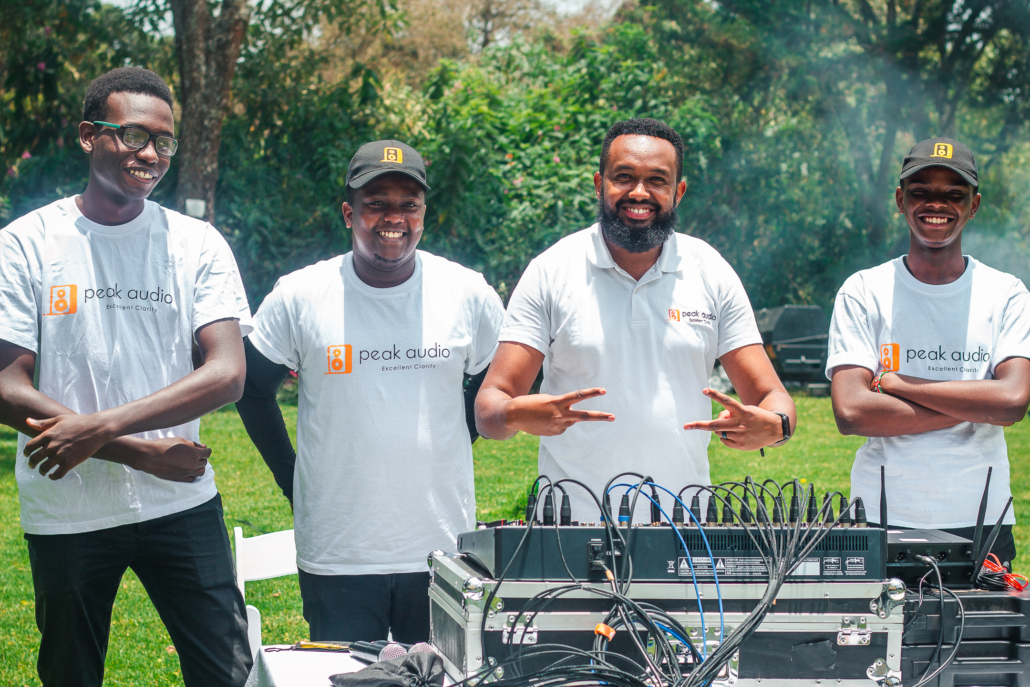
Event Technology Trends Africa
Event technology in Africa is evolving rapidly through the adoption of hybrid events, professional livestreaming, LED displays, advanced audiovisual systems, artificial intelligence, automation, digital registration, audience engagement platforms, event apps, data analytics, and multi-camera production. These technologies are transforming how conferences, exhibitions, summits, corporate meetings, product launches, and other business events are planned and delivered. Africa’s expanding MICE industry, growing corporate sector, improving digital infrastructure, regional business activity, and international conference market are also creating greater demand for reliable and professionally managed event technology.
Successful technology-driven events require more than individual pieces of equipment. Organizers need to consider how audiovisual systems, digital platforms, internet connectivity, power redundancy, cybersecurity, technical expertise, accessibility, scalability, and backup systems work together as one integrated event environment. Careful technical planning helps reduce disruptions while ensuring physical and virtual participants receive a consistent, professional experience. As expectations continue to rise, experienced technical teams and properly integrated event systems will become increasingly important for delivering complex conferences and corporate events.
At Peak Audio, we provide professional sound systems, LED screens, staging, lighting, simultaneous interpretation, livestreaming, hybrid event technology, video production, and technical support for modern events in Kenya and across East Africa. The future of event technology will increasingly focus on delivering seamless delegate experiences, wider audience reach, stronger engagement, personalized interactions, reusable digital content, and measurable event outcomes. Peak Audio helps organizations integrate professional production and modern event technology to create engaging, scalable, and technically reliable event experiences.
Leave a Reply
Want to join the discussion?Feel free to contribute!