Outdoor Corporate Event Venues in Kenya – Create Memorable Business Events in the Right Setting

Outdoor Corporate Event Venues in Kenya

Outdoor Corporate Event Venues in Kenya

Outdoor corporate events are becoming increasingly popular in Kenya as organizations look for more flexible, engaging, and memorable environments for team building, conferences, product launches, company parties, networking events, executive retreats, and corporate celebrations. Outdoor venues can create a refreshing change from traditional hotel meeting rooms while giving attendees more space to interact, relax, and participate in activities. From Nairobi and its surrounding areas to destination locations across the country, businesses can choose settings that match both the purpose and atmosphere of their event.

Kenya offers a wide variety of outdoor corporate event venues, including luxury hotels with landscaped grounds, private gardens, conference resorts, country clubs, private estates, lodges, and countryside destinations. However, choosing the right venue requires more than attractive scenery. Organizers should carefully consider accessibility, parking, seating, weather protection, power availability, internet connectivity, staging, sound coverage, lighting, catering logistics, security, and backup arrangements. These factors are especially important for events that include presentations, entertainment, live performances, speeches, hybrid participation, or large numbers of guests.

A successful outdoor corporate event depends on combining the right venue with careful planning and professional technical production. This guide explores the main types of outdoor corporate event venues in Kenya, the key factors to consider before booking, essential audiovisual and power requirements, and practical ways to manage weather, staging, seating, and event logistics. With the right venue and reliable event technology, organizations can create outdoor events that are comfortable, professional, engaging, and memorable for every participant.

1. Types of Outdoor Corporate Event Venues in Kenya

Outdoor Corporate Event Venues in Kenya

Outdoor Corporate Event Venues in Kenya

Kenya offers a wide range of outdoor venues for organizations planning corporate dinners, networking events, product launches, conferences, exhibitions, team-building activities, employee celebrations, retreats, and incentive programs. The most suitable venue depends on the event size, guest profile, location, weather conditions, accessibility, catering requirements, entertainment, and technical production needs.

Outdoor corporate events also require additional planning for sound, power, staging, lighting, weather protection, LED screens, guest seating, branding, parking, security, internet connectivity, and backup plans. The following venue types are among the most common options available in Kenya.

1.1 Hotels and Resort Gardens

Hotels and resorts with landscaped gardens are among the most convenient options for outdoor corporate events because they combine an outdoor environment with access to indoor facilities.

They are particularly suitable for:

  • Corporate dinners.
  • Networking receptions.
  • Product launches.
  • Award ceremonies.
  • Employee celebrations.
  • Cocktail events.
  • Outdoor conferences.
  • Gala dinners.
  • Team-building activities.
  • Client appreciation events.

One of the biggest advantages of a hotel garden is access to supporting services such as:

  • Accommodation.
  • Catering.
  • Restrooms.
  • Parking.
  • Security.
  • Indoor conference rooms.
  • Kitchens.
  • Electricity.
  • Guest reception areas.
  • Backup indoor spaces.

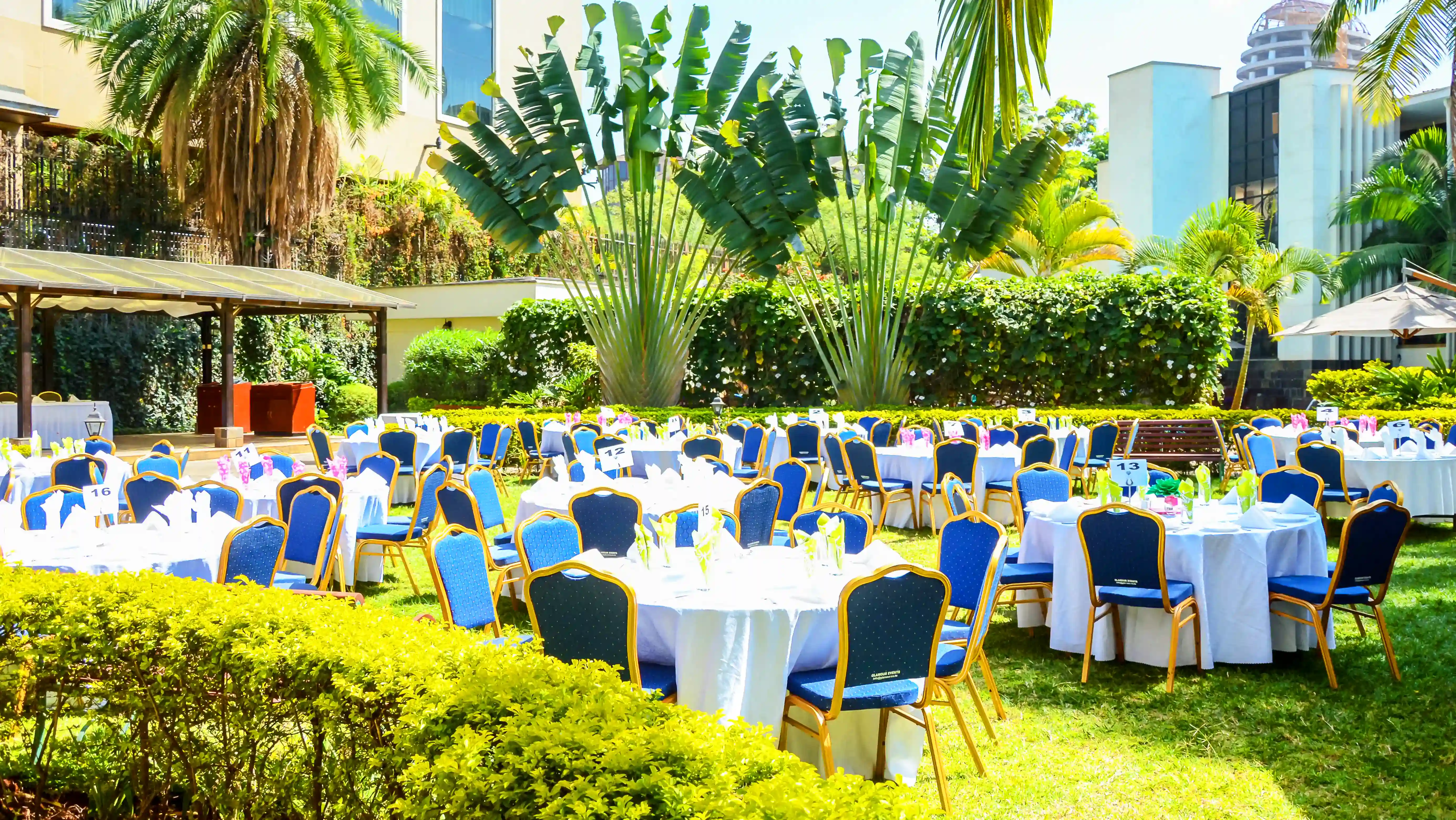
Some Nairobi hotels actively market outdoor conference gardens. For example, Eka Gardens can host outdoor events and conferences for up to about 1,000 guests and is promoted for themed dinners, luncheons, cocktail parties, performances, product launches, and incentive events. (Eka Hotel)

Why Choose a Hotel or Resort Garden?

Hotel gardens are especially useful when an event requires both indoor and outdoor components.

A typical program might include:

  • Morning conference sessions indoors.
  • Outdoor lunch.
  • Afternoon networking.
  • Cocktail reception.
  • Evening dinner or entertainment.

This allows organizers to move activities according to the program or weather conditions without relocating delegates to another property.

Technical Considerations

For outdoor hotel events, confirm:

  • Availability of outdoor power.
  • Generator backup.
  • Sound restrictions.
  • Stage location.
  • LED-screen positioning.
  • Lighting access.
  • Weather protection.
  • Tent or marquee options.
  • Cable routes.
  • Loading access.

Peak Audio can supplement hotel infrastructure with professional outdoor sound, microphones, LED screens, staging, lighting, live streaming, and technical support.

1.2 Conference and Events Centres

Conference and events centres are designed primarily for professional gatherings, making them particularly suitable for organizations that require structured meeting facilities together with outdoor spaces.

They may provide:

  • Conference halls.
  • Meeting rooms.
  • Breakout rooms.
  • Outdoor lawns.
  • Exhibition areas.
  • Registration spaces.
  • Business centres.
  • Parking.
  • Catering facilities.
  • Dedicated event coordinators.

These venues are suitable for:

  • Conferences.
  • Seminars.
  • Exhibitions.
  • Corporate meetings.
  • Networking events.
  • Product demonstrations.
  • Training programs.
  • Business forums.
  • Company gatherings.

Some conference properties combine indoor facilities with landscaped grounds specifically intended for corporate activities. For example, Oak Place in Ridgeways promotes conference facilities, high-speed internet, catering, AV support, and grounds for team-building and corporate events. (Oakplace)

Advantages of Conference Centres

Their main strength is that they are usually built around business functionality.

Organizers may find it easier to coordinate:

  • Registration.
  • Breakout sessions.
  • Presentations.
  • Exhibitions.
  • Networking.
  • Outdoor activations.
  • Catering.
  • Delegate movement.

A conference centre with both indoor halls and outdoor lawns can also provide a practical weather contingency plan.

Production Requirements

Outdoor areas may still require separate technical production, including:

  • Outdoor PA systems.
  • Wireless microphones.
  • Staging.
  • LED screens.
  • Lighting.
  • Generators.
  • Cabling.
  • Internet extension.
  • Recording or streaming equipment.

1.3 Private Gardens and Event Estates

Private gardens and event estates provide greater flexibility for organizations that want to create a customized corporate environment rather than work within the restrictions of a conventional hotel ballroom.

These venues are particularly suitable for:

  • Team-building activities.
  • Employee celebrations.
  • Corporate family days.
  • Product launches.
  • Staff parties.
  • Networking events.
  • Brand activations.
  • Award events.
  • Company anniversaries.
  • Outdoor dinners.

Private event grounds can allow organizers greater freedom over:

  • Stage positioning.
  • Seating layouts.
  • Tent installation.
  • Branding.
  • Décor.
  • Entertainment.
  • Food stations.
  • Exhibition booths.
  • Team-building zones.
  • Vehicle displays.

Some purpose-built outdoor estates offer substantial capacity. Empaash Gardens, for example, promotes several exclusive outdoor grounds near Nairobi National Park, including a lawn for up to about 800 guests and a covered deck for approximately 150–400 guests. (Empaa Sh Gardens)

Why Choose a Private Garden?

The major advantage is customization.

Instead of adapting an event to a hotel’s existing setup, organizers can often design the space around the event concept.

This is particularly useful for:

  • Experiential marketing.
  • Car launches.
  • Technology demonstrations.
  • Corporate festivals.
  • Staff appreciation events.
  • Large team-building programs.

Important Planning Considerations

Private gardens may provide fewer built-in services than hotels.

Always confirm:

  • Power supply.
  • Generator requirements.
  • Toilets.
  • Catering facilities.
  • Parking.
  • Security.
  • Lighting.
  • Water.
  • Internet.
  • Weather protection.
  • Noise restrictions.
  • Emergency access.

For technically complex events, a site survey should be completed before finalizing the production design.

1.4 Safari Lodges and Outdoor Retreats

Safari lodges and retreat properties offer a destination-style environment for organizations that want to combine business meetings with nature, leisure, team engagement, wellness, and unique Kenyan experiences.

They are particularly suitable for:

  • Executive retreats.
  • Management off-sites.
  • Board retreats.
  • Leadership programs.
  • Team-building events.
  • Incentive travel.
  • Strategy meetings.
  • Residential conferences.
  • Senior-management workshops.

Typical facilities may include:

  • Indoor meeting rooms.
  • Outdoor lawns.
  • Terraces.
  • Safari-view decks.
  • Accommodation.
  • Restaurants.
  • Swimming pools.
  • Spa facilities.
  • Team-building areas.
  • Nature trails.

Business Combined with Experience

A safari-based corporate program can combine:

  • Morning strategy sessions.
  • Outdoor lunches.
  • Team-building.
  • Game drives.
  • Sundowner networking.
  • Evening dinners.
  • Executive discussions.

This format can be particularly effective where the organization wants delegates to spend several days together away from normal workplace distractions.

Technical Challenges

Safari and remote venues require more planning for:

  • Equipment transport.
  • Power.
  • Backup generators.
  • Internet.
  • Mobile network coverage.
  • Lighting.
  • Weather.
  • Setup schedules.
  • Technician accommodation.
  • Equipment security.

Peak Audio can support destination events by planning sound, staging, LED displays, lighting, cameras, streaming, and power requirements around the venue.

1.5 Beach and Coastal Venues

Outdoor Corporate Event Venues in Kenya

Outdoor Corporate Event Venues in Kenya

Kenya’s coastline provides some of the country’s most distinctive environments for outdoor corporate events.

Beach and coastal venues are particularly suitable for:

  • Corporate retreats.
  • Incentive events.
  • Product launches.
  • Networking receptions.
  • Employee celebrations.
  • Team-building activities.
  • Gala dinners.
  • Executive gatherings.
  • Destination conferences.
  • Client appreciation events.

Popular coastal locations include:

  • Diani.
  • Mombasa.
  • Watamu.
  • Kilifi.
  • Malindi.

Why Choose a Coastal Venue?

The coast allows companies to combine formal corporate programming with:

  • Beach dinners.
  • Outdoor receptions.
  • Team activities.
  • Water-based recreation.
  • Resort accommodation.
  • Entertainment.
  • Wellness.
  • Informal networking.
  • Incentive experiences.

The relaxed environment can be particularly effective for leadership retreats, reward programs, annual company events, and destination conferences.

Outdoor Production Challenges at the Coast

Coastal environments require careful technical planning because of:

  • Wind.
  • Humidity.
  • Salt air.
  • Sand.
  • Strong sunlight.
  • Rain.
  • Tides.
  • Limited rigging locations.

Outdoor sound systems may need to be positioned carefully to maintain clear coverage without excessive volume.

LED screens may require sufficient brightness for daytime viewing, while stages and structures must be secured appropriately against wind.

Lighting becomes particularly important for:

  • Evening dinners.
  • Beach receptions.
  • Awards ceremonies.
  • Entertainment.
  • Branded activations.

Comparing Outdoor Corporate Venue Types

Venue Type Best For Main Advantage
Hotels and Resort Gardens Dinners, launches, conferences, networking Accommodation and full hospitality support
Conference and Events Centres Conferences, seminars, exhibitions Purpose-built business facilities
Private Gardens and Estates Team building, launches, staff events Greater production and layout flexibility
Safari Lodges and Retreats Executive retreats, leadership events Destination experience and privacy
Beach and Coastal Venues Retreats, incentives, celebrations Memorable coastal environment

Outdoor AV Requirements Across All Venue Types

Regardless of the type of venue selected, organizers should assess the technical requirements before confirming the event layout.

Important considerations include:

  • Professional outdoor sound.
  • Wireless microphones.
  • Stage platforms.
  • LED screens.
  • Projectors where suitable.
  • Conference lighting.
  • Ambient lighting.
  • Power distribution.
  • Generators.
  • Backup power.
  • Weather-resistant equipment positioning.
  • Livestreaming.
  • Cameras.
  • Internet connectivity.
  • Cable protection.
  • Technical control areas.

Outdoor events can be more technically demanding than indoor conferences because the production team cannot rely on the venue’s walls, ceiling, acoustics, lighting, or permanent power infrastructure.

Kenya offers outdoor corporate venues ranging from hotel gardens and conference centres to private estates, safari retreats, and coastal resorts. Each venue type provides different advantages depending on the event format, delegate numbers, level of customization, hospitality requirements, and desired guest experience.

For professionally produced outdoor events, Peak Audio can complement the venue with sound systems, microphones, LED screens, staging, lighting, live streaming, video production, power planning, and on-site technical support, helping create a corporate event that remains reliable even outside a conventional conference hall.

2. Popular Locations for Outdoor Corporate Events in Kenya

Outdoor Corporate Event Venues in Kenya

Outdoor Corporate Event Venues in Kenya

Kenya offers a wide choice of destinations for outdoor corporate events, ranging from urban hotel gardens and private estates to lakeside resorts, highland retreats, beach properties, safari destinations, and countryside venues. The right location depends on the type of event, delegate numbers, transport requirements, accommodation, weather, scenery, and technical production needs.

Organizations planning conferences, team-building activities, networking events, launches, staff celebrations, retreats, or executive gatherings should compare destinations based on accessibility, venue variety, accommodation, outdoor space, catering, power, internet connectivity, parking, security, and backup options.

2.1 Nairobi

Nairobi is one of the most convenient locations for outdoor corporate events because it combines a large concentration of hotels, gardens, conference centres, private estates, restaurants, rooftops, clubs, and purpose-built event spaces.

It is especially suitable for:

  • Corporate dinners.
  • Product launches.
  • Networking receptions.
  • Staff parties.
  • Award ceremonies.
  • Outdoor conferences.
  • Client events.
  • Brand activations.
  • Team-building programs.
  • Corporate family days.

Why Choose Nairobi?

The biggest advantage is convenience.

Companies can access:

  • Large numbers of venues.
  • Multiple catering suppliers.
  • Professional event production companies.
  • Accommodation.
  • Airport access.
  • Corporate offices.
  • Hotels.
  • Transport providers.
  • Security services.
  • Entertainment.
  • Technical equipment.

Nairobi also offers both premium and affordable outdoor venue options. For example, Eka Gardens along Mombasa Road promotes outdoor conferences, product launches, cocktail events, luncheons, and incentive functions for up to about 1,000 guests. (Eka Hotel)

Other properties combine business facilities with landscaped outdoor settings. Oak Place in Ridgeways, for instance, offers conference facilities, catering, AV support, high-speed internet, and grounds that can be used for team-building activities. (Oakplace)

Best Areas in Nairobi

Popular areas for outdoor corporate venues include:

  • Karen.
  • Lang’ata.
  • Ridgeways.
  • Runda.
  • Gigiri.
  • Westlands.
  • Mombasa Road.
  • Kiambu Road.
  • Thika Road.
  • Nairobi National Park surroundings.

Technical Advantages

Because Nairobi has a strong event-services ecosystem, it is easier to source:

  • Professional sound.
  • LED screens.
  • Staging.
  • Lighting.
  • Generators.
  • Livestreaming.
  • Cameras.
  • Branding.
  • Décor.
  • Additional tents.
  • Technical staff.

This makes Nairobi particularly suitable for technically demanding outdoor corporate events.

2.2 Limuru and Kiambu

Limuru and Kiambu are popular for organizations seeking green surroundings, cooler temperatures, larger outdoor spaces, and a quieter atmosphere while remaining relatively accessible from Nairobi.

These areas are particularly suitable for:

  • Team-building events.
  • Executive retreats.
  • Leadership workshops.
  • Staff away-days.
  • Strategy sessions.
  • Corporate picnics.
  • Employee celebrations.
  • Wellness events.
  • Outdoor training.

Why Limuru and Kiambu Work Well

The highland environment often provides:

  • Landscaped gardens.
  • Forested areas.
  • Open lawns.
  • Countryside views.
  • Cooler weather.
  • Greater privacy.
  • Less urban noise.

This can create a more relaxed atmosphere for corporate groups that want to move away from the city without travelling too far.

A good example is Brackenhurst Conference & Retreat Centre in Limuru, which provides both indoor conference facilities and outdoor meeting areas. Its forest amphitheatre accommodates around 200 delegates, while smaller forest and garden spaces are available for more intimate sessions. (Brackenhurst)

Suitable Event Formats

Limuru and Kiambu can work especially well for programs combining:

  • Morning workshops.
  • Outdoor team activities.
  • Lunch.
  • Leadership exercises.
  • Networking.
  • Evening functions.

Weather Considerations

The cooler climate is attractive, but organizers should prepare for:

  • Rain.
  • Mist.
  • Lower evening temperatures.
  • Wet ground.
  • Wind.

Marquees, tenting, flooring, heating where necessary, and protected audiovisual equipment should therefore be considered during planning.

2.3 Naivasha

Outdoor Corporate Event Venues in Kenya

Outdoor Corporate Event Venues in Kenya

Naivasha is one of Kenya’s most established destinations for corporate retreats, team-building programs, residential conferences, leadership meetings, and multi-day company events.

The area offers:

  • Resorts.
  • Conference hotels.
  • Lodges.
  • Gardens.
  • Camps.
  • Lakeside properties.
  • Large outdoor grounds.
  • Team-building venues.

Naivasha is particularly suitable for:

  • Executive retreats.
  • Strategy sessions.
  • Leadership development.
  • Management conferences.
  • Team building.
  • Annual company retreats.
  • Incentive programs.
  • Staff motivation events.
  • Outdoor dinners.
  • Residential workshops.

Recent Kenya venue guides continue to highlight Naivasha as a leading corporate retreat destination because of its mix of meeting rooms, accommodation, outdoor grounds, and leisure opportunities. (Team Building Kenya)

Why Choose Naivasha?

One of its biggest advantages is the ability to combine business and leisure.

A typical program can include:

  • Indoor conference sessions.
  • Outdoor team-building.
  • Lakeside lunch.
  • Boat excursions.
  • Evening networking.
  • Bonfires.
  • Gala dinners.
  • Overnight accommodation.

Some properties can support very large outdoor gatherings. For example, Enkapune Resort promotes expansive grounds for corporate retreats, seminars, dinners, team-building, and other events, with tented setups capable of handling very large groups. (Enkapune Resort Naivasha)

Technical Planning

For large Naivasha outdoor events, consider:

  • Generator capacity.
  • Sound coverage.
  • LED-screen brightness.
  • Evening lighting.
  • Internet.
  • Equipment transport.
  • Backup equipment.
  • Crew accommodation.
  • Weather protection.

2.4 Mombasa and the Kenyan Coast

Mombasa and the wider Kenyan coast provide a distinctive environment for organizations planning beachside conferences, retreats, incentive programs, celebrations, launches, and team-building events.

Coastal destinations can combine:

  • Business meetings.
  • Resort accommodation.
  • Beach activities.
  • Outdoor dining.
  • Networking.
  • Entertainment.
  • Team building.
  • Leisure.

This makes the coast especially attractive for multi-day corporate programs where the company wants delegates to experience more than a conventional conference.

Popular Coastal Destinations

These include:

  • Mombasa.
  • Diani.
  • Kilifi.
  • Watamu.
  • Malindi.

Diani, in particular, has properties combining conference facilities with beaches, networking spaces, leisure facilities, and team-building opportunities. The 2026 AAK Convention venue information, for example, describes a Diani beachfront resort setup offering a 600+ delegate conference hall alongside networking terraces, pools, golf, spa, and water-sports facilities. (AAK Annual Convention 2026)

Suitable Events

The coast works particularly well for:

  • Executive retreats.
  • Incentive travel.
  • Annual company retreats.
  • Client appreciation events.
  • Leadership programs.
  • Corporate celebrations.
  • Gala dinners.
  • Destination conferences.
  • Product launches.
  • Team-building activities.

Technical Considerations at the Coast

The environment can create additional challenges such as:

  • Strong wind.
  • Salt air.
  • Humidity.
  • Sand.
  • Intense sunlight.
  • Rain.
  • Tidal conditions.

Organizers should therefore carefully plan:

  • Stage anchoring.
  • Tent stability.
  • Outdoor sound coverage.
  • LED brightness.
  • Lighting.
  • Weather protection.
  • Equipment security.
  • Cable protection.
  • Power.
  • Backup systems.

2.5 Other Destination Locations

Beyond Nairobi, Limuru, Naivasha, and the coast, several other Kenyan destinations can provide memorable settings for corporate events.

Nanyuki

Nanyuki is particularly suitable for:

  • Executive retreats.
  • Board retreats.
  • Leadership programs.
  • Incentive travel.
  • Strategy sessions.
  • Premium corporate gatherings.

Its appeal includes:

  • Mount Kenya scenery.
  • Luxury lodges.
  • Resorts.
  • Golf.
  • Wildlife experiences.
  • Privacy.
  • Cooler climate.

Nanyuki works especially well for smaller senior-management groups seeking a premium destination-style experience.

Nakuru

Nakuru can be suitable for:

  • Conferences.
  • Team-building.
  • Regional corporate events.
  • Staff retreats.
  • Leadership workshops.
  • Outdoor employee gatherings.

Its location makes it useful for organizations with delegates travelling from different parts of the Rift Valley and western Kenya.

Diani

Diani is one of Kenya’s strongest destinations for:

  • Incentive events.
  • Executive retreats.
  • Destination conferences.
  • Product launches.
  • Beach dinners.
  • Corporate celebrations.
  • Team-building.

The combination of premium resorts, white-sand beaches, leisure activities, and air access through Ukunda makes it attractive for residential events.

Amboseli

Amboseli can provide a more exclusive safari environment for:

  • Leadership retreats.
  • Executive incentives.
  • Board meetings.
  • Senior-management off-sites.
  • High-value client events.

Its strongest attraction is the ability to combine corporate programming with safari experiences and views of Mount Kilimanjaro.

Machakos

Machakos is useful for companies seeking:

  • Large outdoor spaces.
  • Day retreats.
  • Team-building activities.
  • Corporate picnics.
  • Staff events.
  • Outdoor training.

Its proximity to Nairobi can make it a practical option for organizations that want a countryside setting without travelling to more distant destinations.

Comparing Popular Outdoor Corporate Event Locations

Location Best For Main Advantage
Nairobi Launches, corporate parties, conferences, networking Accessibility and wide venue choice
Limuru & Kiambu Retreats, team-building, leadership events Green environment and cooler climate
Naivasha Residential conferences, retreats, team-building Strong balance of business and leisure
Mombasa & Coast Destination conferences, retreats, celebrations Beach and resort experience
Nanyuki Executive retreats and incentives Premium mountain and safari environment
Nakuru Regional meetings and team events Central Rift Valley accessibility
Diani Incentives, retreats, destination events Premium beach setting
Amboseli Executive and leadership retreats Safari and Mount Kilimanjaro views
Machakos Team-building and staff events Large outdoor spaces near Nairobi

How to Choose Between These Locations

The best destination should be determined by the event’s priorities.

Organizations should compare:

  • Distance from the office.
  • Airport accessibility.
  • Road conditions.
  • Delegate travel time.
  • Accommodation availability.
  • Outdoor space.
  • Indoor backup facilities.
  • Catering.
  • Weather.
  • Parking.
  • Security.
  • Internet connectivity.
  • Power.
  • Team-building opportunities.
  • Leisure activities.
  • Audiovisual production access.
  • Overall budget.

A location that offers outstanding scenery may still be unsuitable if it creates excessive transport costs, weak connectivity, difficult equipment access, or insufficient accommodation.

Popular outdoor corporate-event destinations in Kenya include Nairobi, Limuru, Kiambu, Naivasha, Mombasa, Diani, Nanyuki, Nakuru, Amboseli, and Machakos. Each offers a different combination of accessibility, scenery, accommodation, privacy, leisure opportunities, and event infrastructure.

Where professional production is required, Peak Audio can support outdoor corporate events across these destinations with sound systems, microphones, LED screens, staging, lighting, livestreaming, video production, power planning, and on-site technical support.

3. What to Consider When Choosing an Outdoor Corporate Event Venue

Outdoor Corporate Event Venues in Kenya

Outdoor Corporate Event Venues in Kenya

Choosing an outdoor corporate event venue requires more than finding an attractive garden or scenic location. The venue must support the number of guests, event program, transport requirements, catering, audiovisual production, security, weather contingency, power requirements, and overall guest experience.

Outdoor events also introduce logistical considerations that are less significant in conventional conference halls. Organizers should therefore conduct a venue inspection and technical site survey before confirming major events, particularly where professional sound, LED screens, staging, lighting, entertainment, livestreaming, or video production will be required.

3.1 Location and Accessibility

Location affects attendance, transportation costs, setup logistics, and the overall convenience of the event.

The venue should be reasonably accessible to:

  • Employees.
  • Clients.
  • Executives.
  • Speakers.
  • Suppliers.
  • Entertainment teams.
  • Event-production crews.
  • Guests travelling from other counties or countries.

Consider Distance and Travel Time

For a company event, determine how long delegates will need to travel from:

  • Company offices.
  • Nairobi CBD or another business district.
  • Hotels.
  • Airports.
  • Railway stations.
  • Major highways.
  • Residential areas.

A beautiful venue may become inconvenient if guests must spend several hours travelling for a relatively short event.

For destination events in Naivasha, Nanyuki, Mombasa, Diani, Amboseli, or other regions, transport should become part of the overall event plan.

Organizers may need:

  • Corporate buses.
  • Shuttle vehicles.
  • Executive transfers.
  • Airport transfers.
  • Driver coordination.
  • Directional signage.
  • Vehicle-access schedules.

Check Road and Equipment Access

Accessibility also matters for suppliers.

Large production equipment such as:

  • LED screens.
  • Stage structures.
  • Speakers.
  • Lighting equipment.
  • Generators.
  • Tents.
  • Furniture.
  • Catering equipment.

may arrive in trucks or vans.

The venue should therefore have suitable vehicle access, loading areas, gates, pathways, and setup routes.

3.2 Venue Capacity

Outdoor Corporate Event Venues in Kenya

Outdoor Corporate Event Venues in Kenya

Confirm that the outdoor venue can comfortably accommodate the expected number of guests after the complete event infrastructure has been installed.

The maximum advertised capacity should not automatically be treated as the practical event capacity.

Space may be required for:

  • Guest seating.
  • Dining tables.
  • Stage.
  • LED screens.
  • Speakers.
  • Lighting towers.
  • Dance floor.
  • Entertainment.
  • Registration.
  • Catering stations.
  • Bars.
  • Exhibition stands.
  • Sponsor activations.
  • Networking.
  • Photography.
  • Cameras.
  • Production control.
  • Generators.
  • Toilets.
  • Emergency access.

Match Capacity to the Event Format

The same garden can accommodate very different numbers depending on the layout.

Event Format Main Space Requirements
Outdoor Conference Stage, theatre seating, screens, control area
Gala Dinner Banquet tables, stage, catering and entertainment
Networking Event Cocktail tables, bars and circulation space
Product Launch Stage, product display, media and branding
Team Building Large open activity zones
Corporate Party Stage, dining, dance floor and entertainment
Exhibition Stands, demonstration areas and visitor circulation

Avoid Overcrowding

A premium corporate event should provide enough room for guests to move comfortably between:

  • Registration.
  • Seating.
  • Catering.
  • Networking.
  • Restrooms.
  • Entertainment.
  • Activity areas.

Always evaluate the usable event area, not simply the total size of the property.

3.3 Weather and Backup Plans

Weather is one of the biggest variables when organizing outdoor corporate events in Kenya.

Organizers should prepare for:

  • Rain.
  • Strong winds.
  • Excessive sunshine.
  • Heat.
  • Cold evenings.
  • Muddy ground.
  • Sudden temperature changes.

Provide Covered Areas

Depending on the season and location, organizers may require:

  • Marquees.
  • Stretch tents.
  • Gazebos.
  • Covered stages.
  • Covered catering stations.
  • Covered technical-control areas.
  • Umbrellas.
  • Temporary flooring.

Coverage should protect both delegates and equipment.

Create a Weather Contingency Plan

The event team should decide in advance what happens if weather conditions become unsuitable.

A contingency plan might include:

  • Moving the event indoors.
  • Moving dining indoors.
  • Installing additional tenting.
  • Delaying outdoor activities.
  • Relocating entertainment.
  • Protecting technical equipment.
  • Adjusting the program.

Protect Audiovisual Equipment

Professional equipment such as:

  • Mixing consoles.
  • LED processors.
  • Amplifiers.
  • Cameras.
  • Computers.
  • Lighting controllers.
  • Power distribution equipment.

must be properly protected against rain and moisture.

Wind should also be considered when installing LED screens, stages, tents, banners, lighting structures, and other temporary structures.

3.4 Power Supply

Reliable electricity is essential for technically produced outdoor corporate events.

Power may be required for:

  • Sound systems.
  • LED screens.
  • Lighting.
  • Catering.
  • Entertainment.
  • Livestreaming.
  • Cameras.
  • Computers.
  • Registration systems.
  • Wi-Fi equipment.
  • Refrigeration.
  • Decorative installations.

Check the Venue’s Electrical Capacity

Do not simply confirm that electricity is available.

Determine:

  • Available electrical capacity.
  • Location of power outlets.
  • Distance between power and event area.
  • Distribution-board capacity.
  • Earthing.
  • Dedicated circuits.
  • Generator availability.
  • Backup arrangements.

Large LED walls, professional lighting, catering equipment, and entertainment systems can create substantial power requirements.

Use Backup Power Where Necessary

Critical systems should have an appropriate contingency.

Depending on the event, this may include:

  • Standby generators.
  • UPS systems.
  • Battery backup.
  • Separate technical power circuits.
  • Backup internet power.

For important conferences, launches, livestreams, and executive events, a power failure can interrupt presentations, sound, screens, lighting, recording, and online broadcasting simultaneously.

Separate Technical and Catering Loads

Where practical, high-demand catering equipment should not share the same electrical circuits as sensitive audiovisual equipment.

A professional technical survey can determine the event’s estimated load and establish appropriate power distribution before installation begins.

3.5 Catering and Refreshments

Food and beverage arrangements play a significant role in the guest experience, particularly for events lasting several hours or an entire day.

First determine whether the venue:

  • Provides in-house catering.
  • Allows external caterers.
  • Charges external-catering fees.
  • Has kitchen facilities.
  • Provides service staff.
  • Provides tables and chairs.
  • Allows external beverage suppliers.

Choose Catering Around the Event Format

Different events may require:

  • Welcome refreshments.
  • Tea and coffee.
  • Breakfast.
  • Buffet lunch.
  • Plated meals.
  • Barbecue.
  • Food stations.
  • Cocktail service.
  • Canapés.
  • Gala dinner.
  • Dessert stations.
  • Evening refreshments.

Consider Dietary Requirements

Organizers should collect dietary information early enough to accommodate requirements such as:

  • Vegetarian.
  • Vegan.
  • Halal.
  • Gluten-free.
  • Food allergies.
  • Other medically or culturally required dietary arrangements.

Outdoor Catering Logistics

Outdoor catering requires additional consideration for:

  • Food storage.
  • Refrigeration.
  • Water.
  • Waste disposal.
  • Hand-washing facilities.
  • Serving areas.
  • Weather protection.
  • Lighting after dark.
  • Electricity.
  • Service access.

Catering areas should also be positioned so that service staff can operate without disrupting presentations, networking, or entertainment.

3.6 Parking and Security

Parking and security can significantly affect the experience guests have before they even enter the event.

Parking Requirements

Estimate how many guests will:

  • Drive individually.
  • Use company transport.
  • Arrive by taxi or ride-hailing services.
  • Require chauffeur access.
  • Arrive in supplier vehicles.
  • Require VIP parking.

Confirm whether the venue has:

  • Sufficient parking spaces.
  • Overflow parking.
  • Secure parking.
  • Bus parking.
  • VIP parking.
  • Accessible parking.
  • Drop-off and pickup zones.
  • Supplier loading areas.

For large corporate events, parking attendants may be required to control vehicle movement.

Professional Security

Security requirements should reflect the type of event and guest profile.

Measures can include:

  • Security guards.
  • Controlled entrances.
  • Guest lists.
  • Accreditation.
  • Wristbands or badges.
  • Vehicle checks.
  • Bag screening where appropriate.
  • CCTV.
  • Equipment security.
  • VIP protection arrangements.
  • Restricted production areas.
  • Emergency response planning.

Protect Production Equipment

Outdoor events can involve valuable equipment including:

  • LED panels.
  • Cameras.
  • Computers.
  • Mixing consoles.
  • Microphones.
  • Lighting fixtures.
  • Generators.

Technical areas should therefore be controlled, particularly where equipment remains at the venue overnight.

Additional Factors to Check Before Booking

Beyond the six main considerations, organizers should also investigate:

  • Noise restrictions: Check music cut-off times and local sound limitations.
  • Internet connectivity: Essential for livestreaming, hybrid participation, registration, and digital payment systems.
  • Restrooms: Ensure facilities are sufficient for the expected attendance.
  • Accessibility: Consider guests with mobility requirements.
  • Lighting: Pathways, parking, entrances, dining and activity areas require illumination after dark.
  • Waste management: Establish collection and disposal arrangements.
  • Emergency access: Ambulances, fire services, and emergency vehicles should have clear access.
  • Accommodation: Important for destination or multi-day events.
  • Setup time: Confirm when suppliers can begin installation.
  • Breakdown time: Determine when equipment must leave the venue.
  • Sound curfew: Particularly important for evening parties and entertainment.
  • Branding permissions: Check restrictions on banners, structures, vehicle displays, and signage.

Conduct an Outdoor Event Site Survey

For technically complex events, the event organizer and audiovisual production team should inspect the venue together before finalizing the setup.

The survey should establish:

  • Stage location.
  • Audience orientation.
  • Speaker positions.
  • LED-screen position.
  • Lighting locations.
  • Generator position.
  • Power-distribution routes.
  • Production-control position.
  • Camera positions.
  • Cable routes.
  • Catering zones.
  • Registration area.
  • Entertainment area.
  • Loading access.
  • Parking.
  • Emergency routes.
  • Weather-protection requirements.

This helps prevent expensive changes once equipment has already arrived at the venue.

The best outdoor corporate event venue should provide more than attractive scenery. Organizers need to evaluate location, accessibility, practical capacity, weather protection, power, catering, parking, security, internet connectivity, supplier access, and emergency arrangements.

Particular attention should be given to weather and power. Outdoor events require contingency planning for rain, wind, strong sunlight, electrical interruptions, and changing ground conditions, especially when stages, LED screens, lighting, cameras, tents, and sound systems are involved.

Where professional production is required, Peak Audio can work with organizers and venues to assess sound, staging, LED screens, lighting, power, livestreaming, video production, equipment positioning, and technical logistics, helping ensure the outdoor corporate event is planned around the actual conditions of the venue.

4. Audiovisual Requirements for Outdoor Corporate Events

Outdoor Corporate Event Venues in Kenya

Outdoor Corporate Event Venues in Kenya

Outdoor corporate events require a different audiovisual approach from indoor conferences because there are no walls or ceilings to naturally contain sound, block sunlight, support lighting equipment, or protect technology from weather. The technical setup must therefore be designed around the venue’s size, terrain, audience layout, weather conditions, power availability, event schedule, and surrounding environment.

Whether the event is a corporate dinner, conference, product launch, networking reception, team-building program, awards ceremony, company party, or executive retreat, organizers should involve the audiovisual team early. This makes it possible to plan sound, microphones, staging, screens, lighting, power, cabling, cameras, branding, and weather protection as one coordinated production.

4.1 Professional Sound Systems

Professional sound is one of the most important technical requirements for an outdoor corporate event. Unlike an enclosed conference hall, an open garden or field does not contain or reflect sound in the same way, so equipment needs to be carefully selected and positioned.

The sound system should ensure that speeches, presentations, announcements, videos, entertainment, and audience participation can be heard clearly across the event area.

Sound Equipment May Include

Depending on the event, the system can incorporate:

  • Professional PA speakers.
  • Line-array systems.
  • Full-range speakers.
  • Front-fill speakers.
  • Delay speakers.
  • Subwoofers.
  • Stage monitors.
  • Digital mixing consoles.
  • Audio processors.
  • Wireless microphone systems.
  • Media playback equipment.
  • Professional cabling.
  • Power distribution.
  • Backup equipment.

Match the Sound System to the Venue

The technical team should consider:

  • Number of guests.
  • Size of the outdoor area.
  • Audience layout.
  • Stage location.
  • Distance between the stage and audience.
  • Nearby buildings.
  • Trees and physical obstacles.
  • Wind direction.
  • Entertainment requirements.
  • Nearby residential areas.
  • Venue sound restrictions.

A system suitable for an intimate 50-person executive dinner will be very different from one required for a 500-person company celebration or 1,000-person outdoor conference.

Use Distributed Sound for Large Areas

Simply making the speakers near the stage louder is not always the best solution for a large outdoor event.

Additional speaker positions or delay systems can help distribute sound across the venue, providing more consistent coverage while preventing the front rows from experiencing excessive volume.

The goal should be clear and even sound throughout the audience area.

4.2 Microphones

Outdoor Corporate Event Venues in Kenya

Outdoor Corporate Event Venues in Kenya

Different speakers and sessions may require different microphone types.

A professional outdoor corporate event may use:

  • Wireless handheld microphones.
  • Lapel microphones.
  • Headset microphones.
  • Podium microphones.
  • Wired microphones.
  • Audience Q&A microphones.
  • Panel microphones.

Wireless Handheld Microphones

Wireless handheld microphones are particularly useful for:

  • MCs.
  • Facilitators.
  • Presenters.
  • Award ceremonies.
  • Audience participation.
  • Question-and-answer sessions.
  • Team-building activities.

They allow speakers to move freely around the stage or event area.

Lapel and Headset Microphones

Lapel microphones can work well for:

  • Keynote presentations.
  • Executive speeches.
  • Moderators.
  • Interviews.
  • Panel discussions.

Headset microphones can be useful when presenters need even greater freedom of movement.

For panel discussions, microphone choice should be determined by the number of panelists, seating arrangement, wind conditions, recording requirements, and whether the discussion is being livestreamed.

Plan for Backup Microphones

Important corporate events should have backup microphones available.

The technical team should also coordinate wireless frequencies carefully when multiple wireless microphones, in-ear systems, communication devices, or other RF equipment are operating at the same event.

4.3 Staging and Podiums

A professionally constructed stage gives speakers, presenters, performers, and VIP guests a clear focal position while improving visibility for the audience.

Outdoor stages may be required for:

  • Conferences.
  • CEO addresses.
  • Product launches.
  • Awards ceremonies.
  • Panel discussions.
  • Company celebrations.
  • Entertainment.
  • Gala dinners.
  • Staff events.

Stage Components

Depending on the event design, staging can include:

  • Raised platforms.
  • Stage carpeting.
  • Steps.
  • Accessible ramps.
  • Podiums.
  • Lecterns.
  • Branded backdrops.
  • LED-screen structures.
  • Scenic panels.
  • Speaker furniture.
  • Panel seating.
  • Confidence monitors.
  • Stage timers.

Branded Podiums and Stage Areas

Corporate branding can be incorporated through:

  • Company logos.
  • Branded lecterns.
  • Printed backdrops.
  • LED graphics.
  • Sponsor logos.
  • Event themes.
  • Scenic panels.
  • Digital backgrounds.

The stage should visually reflect the organization’s brand while remaining clean enough for photography, video production, and media coverage.

Outdoor Stage Safety

Outdoor staging requires additional attention to:

  • Ground stability.
  • Stage levelling.
  • Wind.
  • Rain.
  • Structural stability.
  • Equipment loading.
  • Cable management.
  • Emergency access.
  • Weather protection.

Where roofing, trussing, LED structures, or other substantial temporary structures are required, appropriate professional installation and safety procedures are essential.

4.4 Screens and Visual Displays

Visual displays are important for outdoor conferences, product launches, awards ceremonies, and branded corporate events.

They can be used to display:

  • Presentations.
  • Corporate videos.
  • Speaker information.
  • Event schedules.
  • Company logos.
  • Sponsor branding.
  • Product demonstrations.
  • Live camera feeds.
  • Award graphics.
  • Entertainment content.
  • Remote participants.

LED Screens for Outdoor Events

LED screens are often preferable for larger outdoor events because they can provide the brightness and scale required for viewing in daylight.

Screen selection should consider:

  • Direct sunlight.
  • Screen orientation.
  • Audience distance.
  • Number of guests.
  • Stage width.
  • Viewing angles.
  • Content type.
  • Event start and finish times.

A screen that performs well inside a ballroom may not necessarily provide the same visibility in bright outdoor conditions.

Projection Systems

Projection can still be appropriate in some outdoor situations, particularly:

  • After sunset.
  • Inside marquees.
  • In heavily shaded spaces.
  • For smaller audiences.

However, ambient daylight can significantly reduce projected-image visibility.

Consider Multiple Screens

Large or unusually shaped venues may require:

  • Main stage screen.
  • Side screens.
  • Relay screens.
  • Confidence monitors.
  • Digital branding displays.

This helps ensure that delegates seated further from the stage can still follow presentations comfortably.

Outdoor Screens Need Proper Structural and Weather Planning

Outdoor Corporate Event Venues in Kenya

Outdoor Corporate Event Venues in Kenya

Outdoor LED installations require careful planning because large screens can create significant structural loads and may be exposed to wind and weather.

The technical team should assess:

  • Ground conditions.
  • Screen dimensions.
  • Supporting structures.
  • Wind exposure.
  • Power requirements.
  • Weather protection.
  • Cable routes.
  • Audience safety.
  • Equipment access.

Screen positioning should therefore be established during the site survey rather than decided on the day of installation.

4.5 Event Lighting

Lighting becomes particularly important when an outdoor corporate event continues into the evening.

Unlike hotel ballrooms, gardens and outdoor estates may have very limited permanent lighting.

Professional event lighting may therefore be required for:

  • Stage.
  • Speakers.
  • Performers.
  • Dining areas.
  • Networking spaces.
  • Bars.
  • Registration.
  • Pathways.
  • Trees and landscaping.
  • Venue architecture.
  • Parking areas.
  • Entrances.

Stage Lighting

Speakers and performers should be properly illuminated for both the audience and cameras.

Stage lighting can include:

  • Front lighting.
  • Stage washes.
  • Speaker key lighting.
  • Panel lighting.
  • Backlighting.
  • Moving lights.
  • LED fixtures.

Good lighting becomes even more important when the event is being photographed, recorded, or livestreamed.

Ambient Lighting

Ambient lighting helps transform an ordinary outdoor venue into a more sophisticated corporate environment.

It can include:

  • Uplighting.
  • Tree lighting.
  • Decorative lighting.
  • Festoon lighting.
  • Architectural lighting.
  • Table lighting.
  • Landscape illumination.
  • Branded color washes.
  • Gobo projection.

Ambient lighting is particularly effective for:

  • Corporate dinners.
  • Cocktail receptions.
  • Gala events.
  • Awards ceremonies.
  • Networking evenings.
  • Product launches.
  • Company celebrations.

Lighting for Guest Safety

Not all event lighting is decorative.

Functional lighting should also cover:

  • Walkways.
  • Steps.
  • Toilets.
  • Parking.
  • Entrances.
  • Emergency exits.
  • Catering areas.
  • Technical areas.

Guests should be able to move around the venue safely after dark without interfering with the atmosphere created by the decorative lighting.

Outdoor Event AV Planning Checklist

Requirement What to Check
Sound Audience size, coverage, noise limits and speaker positions
Microphones Speakers, presenters, panels and audience Q&A
Stage Dimensions, ground stability, branding and weather protection
LED Screens Brightness, viewing distance, sunlight and structural support
Lighting Stage, ambient areas, pathways and parking
Power Available capacity, distribution and backup generator
Internet Livestreaming requirements and backup connectivity
Cameras Sightlines, platforms and production-control location
Cabling Safe cable routes and pedestrian protection
Weather Rain, wind, sunlight and equipment protection
Technical Control Secure and weather-protected operating area
Backup Equipment Critical microphones, playback, power and other essential systems

How Peak Audio Can Support Outdoor Corporate Events

Outdoor Corporate Event Venues in Kenya

Outdoor Corporate Event Venues in Kenya

This is where Peak Audio can help companies create a professional and reliable outdoor event environment through coordinated sound, lighting, staging, screens, and audiovisual production.

Depending on the event, Peak Audio can support:

  • Professional outdoor sound systems.
  • Wireless and lapel microphones.
  • Podiums and lecterns.
  • Custom staging.
  • LED screens and video walls.
  • Presentation management.
  • Stage lighting.
  • Ambient and decorative lighting.
  • Power planning.
  • Live streaming.
  • Hybrid event technology.
  • Multi-camera video production.
  • Event recording.
  • Technical site surveys.
  • On-site audiovisual technicians.

For destination events outside Nairobi, technical planning can also account for equipment transportation, crew requirements, setup schedules, backup equipment, power, internet connectivity, and breakdown logistics.

Outdoor corporate events require audiovisual systems designed specifically for an open environment rather than simply transferring an indoor conference setup outside. Sound coverage, daylight, weather, ground conditions, power availability, audience layout, and equipment protection all influence the final technical design.

By coordinating sound, microphones, LED screens, staging, lighting, power, livestreaming, cameras, and technical support, Peak Audio can help companies create outdoor corporate events that are professional, visually engaging, technically reliable, and appropriate for the venue and audience.

5. Why Professional Audio Matters at Outdoor Corporate Events
 

Outdoor Corporate Event Venues in Kenya

Outdoor Corporate Event Venues in Kenya


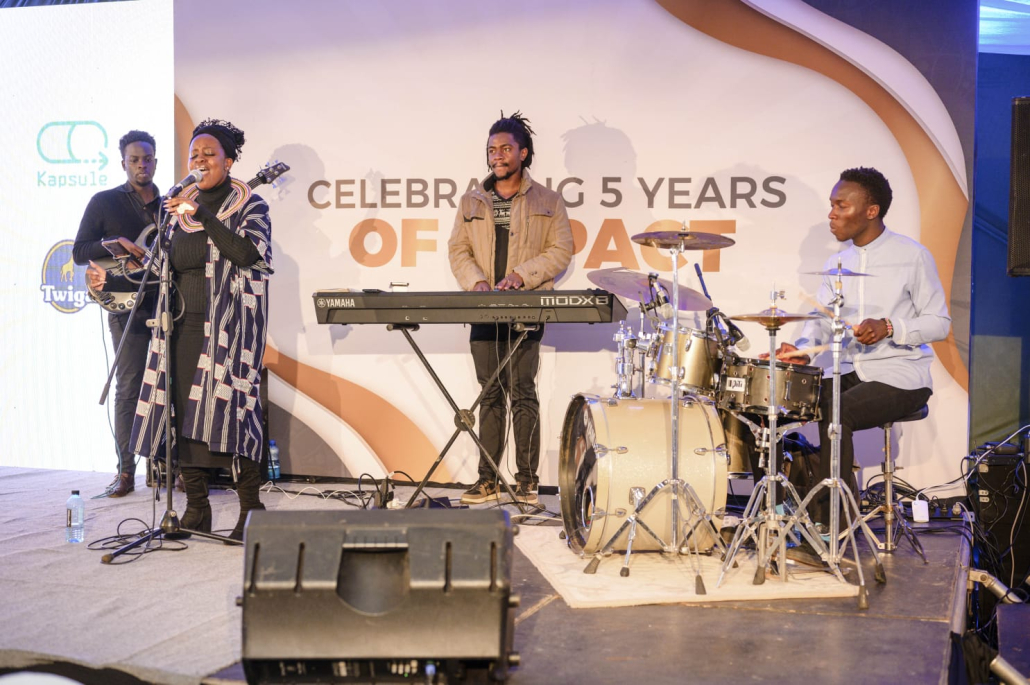
Professional audio is one of the most important elements of a successful outdoor corporate event. In an open environment, sound can easily disperse, become uneven, or be affected by wind, distance, background noise, nearby roads, landscaping, and the shape of the venue.

A well-designed sound system helps ensure that delegates can hear speeches, presentations, announcements, panel discussions, videos, entertainment, and audience questions clearly from different parts of the event area. It also supports the professional image of the organization hosting the event.

5.1 Clear Communication

Clear communication should be the first objective of any corporate event sound system.

Guests need to understand:

  • Opening remarks.
  • CEO speeches.
  • Keynote presentations.
  • Panel discussions.
  • Safety announcements.
  • Award presentations.
  • Product demonstrations.
  • MC instructions.
  • Audience questions.

Even Sound Coverage Across the Venue

Outdoor spaces can be challenging because there are no walls to contain sound.

If only one pair of speakers is placed near the stage, guests at the front may experience excessive volume while people seated further away may struggle to hear.

A professional audio design can use:

  • Main PA speakers.
  • Line-array systems.
  • Front fills.
  • Delay speakers.
  • Distributed speaker positions.
  • Digital signal processing.

This helps create more consistent sound coverage across the audience area.

Reduce Unnecessary Volume

Professional sound does not simply mean making the event louder.

The objective is to provide:

  • Clear speech.
  • Controlled volume.
  • Balanced frequencies.
  • Minimal distortion.
  • Consistent coverage.

This is particularly important at venues near hotels, residential areas, wildlife environments, offices, or other event spaces where excessive sound may create complaints or interfere with surrounding activities.

5.2 Better Presentations

High-quality microphones and professional sound systems can significantly improve how presenters communicate with an audience.

A speaker who can trust the technical system can focus more effectively on the presentation rather than worrying about whether guests can hear them.

Microphone Selection Matters

Different presentation formats may require:

  • Wireless handheld microphones.
  • Lapel microphones.
  • Headset microphones.
  • Podium microphones.
  • Panel microphones.
  • Audience Q&A microphones.

For example:

  • Lapel microphones can provide hands-free delivery for keynote speakers.
  • Handheld microphones work well for MCs and audience interaction.
  • Podium microphones are suitable for formal corporate speeches.
  • Headset microphones can work well for energetic presenters or trainers.

Audio Supports Videos and Demonstrations

Corporate presentations often include more than speech.

They may incorporate:

  • Corporate videos.
  • Product demonstrations.
  • Animation.
  • Music.
  • Pre-recorded interviews.
  • Remote speakers.
  • Video conferencing.
  • Award stings.
  • Presentation sound effects.

The audio system should therefore integrate correctly with:

  • Presentation laptops.
  • LED screens.
  • Video processors.
  • Livestreaming systems.
  • Video conferencing platforms.
  • Recording equipment.

Good integration prevents common problems such as videos playing without sound, inconsistent playback volume, delayed audio, or remote speakers being difficult to understand.

5.3 Professional Brand Image

Corporate events represent the organization hosting them.

Guests often judge the quality of an event through seemingly small details such as:

  • Sound clarity.
  • Stage appearance.
  • Screen quality.
  • Lighting.
  • Speaker transitions.
  • Presentation playback.
  • Microphone reliability.
  • Technical coordination.

A professionally produced event communicates:

  • Preparation.
  • Attention to detail.
  • Reliability.
  • Professionalism.
  • Strong brand standards.

Poor Audio Can Affect the Entire Experience

Even an attractive venue, expensive catering, elaborate décor, and impressive stage can be undermined by poor sound.

Common problems include:

  • Microphone feedback.
  • Distorted speech.
  • Intermittent wireless microphones.
  • Music playing too loudly.
  • Delegates unable to hear.
  • Videos with no audio.
  • Long technical interruptions.
  • Uneven sound across the venue.

These problems can distract from the message the company is trying to communicate.

Executive and Client-Facing Events Need Higher Reliability

Sound quality becomes particularly important during:

  • CEO addresses.
  • Investor events.
  • Product launches.
  • Client appreciation events.
  • Awards ceremonies.
  • Government events.
  • Executive forums.
  • International conferences.
  • Media events.

Technical failures during these moments can be especially noticeable because they involve senior guests, important announcements, or significant brand exposure.

5.4 Audience Engagement

Good audio helps delegates remain engaged throughout an outdoor corporate event.

When sound is difficult to understand, people may:

  • Lose concentration.
  • Start private conversations.
  • Move closer to speakers.
  • Miss important information.
  • Participate less actively.
  • Leave sessions early.

Clear sound allows guests to follow the program comfortably.

Panel Discussions

Panel discussions require careful microphone management because several people may be speaking during the same session.

The audio team may need to manage:

  • Multiple microphones.
  • Speaker levels.
  • Moderator microphones.
  • Audience Q&A.
  • Recording feeds.
  • Livestream audio.

Each panelist should remain clear without microphones creating excessive background noise or feedback.

Interactive Sessions

Professional audio also supports:

  • Audience Q&A.
  • Employee town halls.
  • Workshops.
  • Team-building activities.
  • Competitions.
  • Corporate games.
  • Polling sessions.
  • Recognition programs.

Wireless microphones can be passed between guests or operated by microphone runners so participants can contribute without shouting across the venue.

Entertainment

Corporate events may also include:

  • Live bands.
  • DJs.
  • Cultural performances.
  • Comedians.
  • Dancers.
  • Award-show music.
  • Entertainment acts.

Entertainment requires a different audio approach from conference speeches.

A professional system can be configured to transition from speech-focused corporate sessions to music and entertainment without compromising sound quality.

Professional Audio Also Supports Livestreaming and Recording

Professional event audio is not only for guests physically present at the venue.

The same audio feeds may also be required for:

  • Livestream viewers.
  • Remote delegates.
  • Hybrid participants.
  • Video recordings.
  • Media teams.
  • Event archives.
  • Highlight videos.

If the room or outdoor sound is poor, the problem can also affect the recorded or streamed version of the event.

For important corporate events, the audio production team should therefore coordinate with the video, streaming, and recording teams from the beginning.

Why an Audio Technician Matters

Professional equipment alone does not guarantee good sound.

An experienced audio technician can:

  • Conduct sound checks.
  • Set microphone gain correctly.
  • Prevent feedback.
  • Balance different speakers.
  • Manage presentation audio.
  • Monitor wireless microphones.
  • Control entertainment levels.
  • Troubleshoot technical issues.
  • Coordinate with presenters and MCs.
  • Manage backup equipment.

During the event, sound conditions may change as:

  • More guests arrive.
  • Wind increases.
  • Entertainment starts.
  • Speakers move around.
  • Program formats change.

Real-time technical monitoring helps keep the system consistent throughout the event.

Key Elements of Professional Outdoor Corporate Audio

Audio Requirement Why It Matters
Main PA System Delivers speeches, music and presentations to the audience
Distributed Speakers Improves coverage across larger outdoor areas
Wireless Microphones Gives presenters and MCs freedom of movement
Lapel/Headset Mics Supports hands-free professional presentations
Audience Microphones Enables Q&A and interactive sessions
Digital Mixing Console Allows precise control of microphones and playback
Presentation Audio Ensures videos and demonstrations are heard clearly
Streaming Audio Feed Provides clean sound for online audiences
Backup Equipment Reduces disruption if critical equipment fails
On-Site Technician Monitors and adjusts sound throughout the event

How Peak Audio Supports Professional Outdoor Sound

Peak Audio can provide professional sound solutions designed around the actual size, layout, audience, and program of an outdoor corporate event.

Depending on the event, support can include:

  • Professional PA systems.
  • Line-array systems.
  • Distributed speaker systems.
  • Wireless microphones.
  • Lapel and headset microphones.
  • Podium microphones.
  • Audience Q&A microphones.
  • Digital mixing consoles.
  • Presentation audio.
  • Entertainment sound.
  • Video and livestream audio feeds.
  • Backup equipment.
  • Sound checks.
  • On-site audio technicians.

Peak Audio can also coordinate sound with LED screens, staging, lighting, livestreaming, video production, and other audiovisual requirements, creating one integrated technical production setup.

Professional audio is essential because communication is at the centre of almost every corporate event. Guests should be able to hear executives, presenters, panelists, entertainers, and announcements clearly regardless of where they are positioned within the outdoor venue..

By using appropriately designed sound systems, professional microphones, distributed coverage, backup equipment, and experienced technicians, Peak Audio can help organizations deliver outdoor corporate events with clear communication, reliable technical performance, and a polished audience experience.

6. Outdoor Corporate Event Setup

Outdoor Corporate Event Venues in Kenya

Outdoor Corporate Event Venues in Kenya

A successful outdoor corporate event depends heavily on how the venue is physically arranged. The setup should support comfortable seating, clear sightlines, smooth guest movement, strong sound coverage, professional lighting, branding, catering, networking, entertainment, and technical production.

Unlike an indoor ballroom, an outdoor space often starts as an empty lawn or garden. Organizers therefore need to deliberately plan the position of seating, stage, speakers, LED screens, lighting, registration, catering, branding, cameras, power, technical control, and emergency routes.

6.1 Guest Seating

The seating arrangement should match the purpose and format of the event.

Common options include:

  • Theatre-style seating.
  • Classroom-style seating.
  • Banquet tables.
  • Cabaret-style seating.
  • Cocktail tables.
  • Lounge furniture.
  • Networking zones.
  • Mixed seating arrangements.

Theatre-Style Seating

Theatre-style seating is suitable for:

  • Conferences.
  • Keynote speeches.
  • Employee town halls.
  • Product presentations.
  • Awards ceremonies.
  • Large corporate briefings.

It allows more guests to face the stage while using the available space efficiently.

Important considerations include:

  • Chair spacing.
  • Central and side aisles.
  • Emergency access.
  • Stage visibility.
  • Distance from screens.
  • Sound coverage.
  • Accessibility.

Classroom-Style Seating

Classroom seating is more appropriate for:

  • Training sessions.
  • Workshops.
  • Seminars.
  • Strategy meetings.
  • Educational conferences.

Delegates receive tables for:

  • Laptops.
  • Writing materials.
  • Documents.
  • Refreshments.

Because tables occupy more space, classroom layouts usually accommodate fewer delegates than theatre-style arrangements.

Banquet Tables

Outdoor Corporate Event Venues in Kenya

Outdoor Corporate Event Venues in Kenya

Banquet seating works well for:

  • Gala dinners.
  • Corporate celebrations.
  • Awards ceremonies.
  • Networking dinners.
  • Employee recognition events.
  • Client appreciation functions.

Round or rectangular tables should be positioned so guests can still see:

  • The stage.
  • LED screens.
  • Speakers.
  • Entertainment.

Avoid placing tables directly behind large production structures or speakers where visibility may be restricted.

Lounge and Networking Areas

Lounge areas can create a more relaxed atmosphere for:

  • Cocktail receptions.
  • Executive networking.
  • VIP guests.
  • Sponsor lounges.
  • Informal discussions.

These spaces may include:

  • Sofas.
  • Lounge chairs.
  • Cocktail tables.
  • High stools.
  • Coffee tables.
  • Branded furniture.

Networking zones should be positioned away from areas where conversations could interfere with formal presentations.

6.2 Stage and Presentation Area

Outdoor Corporate Event Venues in Kenya

Outdoor Corporate Event Venues in Kenya

The stage becomes the main visual focal point of the event and should therefore be positioned carefully.

It may be used for:

  • Keynote speeches.
  • CEO addresses.
  • Panel discussions.
  • Award presentations.
  • Product demonstrations.
  • Entertainment.
  • Video presentations.
  • Corporate announcements.

Choose the Stage Position Carefully

The stage should ideally provide:

  • Clear visibility from the majority of seats.
  • Suitable background or branding opportunities.
  • Access for presenters.
  • Nearby technical connections.
  • Space for screens.
  • Appropriate speaker positions.
  • Safe entry and exit routes.

Avoid positioning the stage where delegates will be looking directly into strong sunlight for extended periods.

Consider Audience Sightlines

Sightlines can be affected by:

  • Trees.
  • Tents.
  • Columns.
  • Speakers.
  • Lighting towers.
  • Cameras.
  • LED screens.
  • Décor.
  • Branding structures.

For large audiences, organizers may need:

  • Raised staging.
  • Elevated LED screens.
  • Side screens.
  • Relay screens.
  • Raised camera platforms.

Allow Space for Speaker Movement

Presenters may need room to move across the stage during:

  • Keynotes.
  • Demonstrations.
  • Panel transitions.
  • Awards.
  • Entertainment.

The stage should not become overcrowded with podiums, monitors, cables, furniture, and branding.

6.3 Sound System Placement

Correct speaker positioning is essential for providing clear and even sound across the venue.

The sound system should be positioned according to:

  • Audience size.
  • Seating layout.
  • Stage location.
  • Venue dimensions.
  • Nearby buildings.
  • Background noise.
  • Wind.
  • Sound restrictions.

Main Speaker Positions

Main speakers are commonly positioned near the stage so sound appears to originate naturally from the presentation area.

However, they should not:

  • Block LED screens.
  • Obstruct guest views.
  • Interfere with stage entrances.
  • Restrict emergency routes.
  • Dominate photographs unnecessarily.

Use Delay Speakers for Larger Areas

For larger outdoor events, additional speakers may be positioned further back.

Delay speakers can help:

  • Improve speech clarity.
  • Reduce excessive front-stage volume.
  • Provide more consistent coverage.
  • Reach distant audience areas.

Keep Sound Equipment Out of Guest Traffic

Speaker stands, cables, amplifiers, and technical equipment should not be placed where guests may trip or where they interfere with:

  • Walkways.
  • Dining service.
  • Registration.
  • Photography.
  • Emergency access.

Cable ramps or protected cable routes should be used where cables cross pedestrian areas.

6.4 Lighting Setup

Lighting is both a functional and visual part of outdoor event design.

A complete setup may include:

  • Stage lighting.
  • Speaker lighting.
  • Pathway lighting.
  • Dining lighting.
  • Networking-area lighting.
  • Decorative lighting.
  • Architectural lighting.
  • Parking lighting.
  • Entrance lighting.

Stage Lighting

Stage lighting should ensure that:

  • Speakers are clearly visible.
  • Panelists are evenly lit.
  • Cameras capture good-quality images.
  • The stage remains visually distinct from the audience area.

Lighting options may include:

  • Front wash.
  • Key lights.
  • Backlighting.
  • LED fixtures.
  • Moving lights.
  • Accent lighting.

Pathway Lighting

Pathways should be sufficiently illuminated for guests moving between:

  • Parking.
  • Registration.
  • Seating.
  • Restrooms.
  • Catering.
  • Networking areas.
  • Accommodation.

Functional lighting should be installed without creating glare or destroying the overall atmosphere of the event.

Decorative Lighting

Decorative lighting can transform the venue after sunset.

Options include:

  • Uplighting.
  • Tree lighting.
  • Festoon lights.
  • Fairy lights.
  • Architectural washes.
  • Gobos.
  • Branded lighting.
  • Moving effects.

Dining and Networking Lighting

Dining and lounge areas should provide enough light for guests to:

  • See food.
  • Read menus.
  • Interact comfortably.
  • Move safely.

Lighting should remain warm and comfortable rather than overly bright.

6.5 Branding and Décor

Branding helps transform a generic outdoor space into an event that clearly represents the organization.

Corporate branding can appear through:

  • Stage backdrops.
  • Company logos.
  • Banners.
  • Flags.
  • Directional signage.
  • Branded screens.
  • Podiums.
  • Registration desks.
  • Photo walls.
  • Sponsor displays.
  • Stage structures.
  • Digital content.

Branded Backdrops

Backdrops can be used behind:

  • Speakers.
  • Panelists.
  • Award stages.
  • Media interviews.
  • Photo areas.

They may be:

  • Printed.
  • Fabric-based.
  • Scenic.
  • LED-based.
  • Modular.

LED Screens as Branding Tools

LED screens can display:

  • Company logos.
  • Event themes.
  • Sponsor logos.
  • Session titles.
  • Animated backgrounds.
  • Corporate videos.
  • Speaker names.
  • Event schedules.

Digital branding can be updated throughout the event without physically replacing printed materials.

Directional Signage

Outdoor venues can be large and unfamiliar.

Signage may be needed for:

  • Registration.
  • Parking.
  • Stage areas.
  • Breakout zones.
  • Restrooms.
  • Catering.
  • VIP areas.
  • Emergency exits.

Coordinate Branding With Production

Branding should be planned together with:

  • Stage design.
  • Screens.
  • Lighting.
  • Cameras.
  • Décor.
  • Furniture.

For example, a logo should not be positioned where it will be blocked by speakers, lighting fixtures, or panel furniture.

Plan the Entire Outdoor Event as One Layout

Seating, staging, sound, lighting, branding, catering, and technical production should not be planned separately.

They affect one another.

For example:

  • Moving the stage changes speaker coverage.
  • Moving the LED screen can affect audience sightlines.
  • Adding banquet tables reduces usable capacity.
  • Adding a tent changes lighting and audio requirements.
  • Moving catering can change guest-flow patterns.
  • Camera positions may require aisles or platforms.
  • Branding may need structural support.

A coordinated site plan can prevent these elements from competing for the same space.

Outdoor Corporate Event Setup Checklist

Setup Area Key Questions
Guest Seating Is the layout suitable for the event format and audience size?
Stage Can all guests see presenters clearly?
LED Screens Are they visible from all important seating areas?
Sound Are speakers positioned for even coverage?
Lighting Are stage, dining, walkways and entrances properly lit?
Branding Are logos and backdrops clearly visible?
Catering Can service staff move without disrupting guests?
Networking Is there enough space for informal interaction?
Cameras Do camera positions have clear sightlines?
Technical Control Is there a protected area for operators and equipment?
Power Are generators and distribution systems safely positioned?
Emergency Access Are exits and access routes unobstructed?

How Peak Audio Can Support Outdoor Event Setup

Peak Audio can work with event organizers to coordinate the technical elements of the setup, including:

  • Stage positioning.
  • Professional staging.
  • Podiums and lecterns.
  • Sound-system design.
  • Speaker placement.
  • Wireless microphones.
  • LED screens.
  • Presentation systems.
  • Stage lighting.
  • Ambient lighting.
  • Video production.
  • Livestreaming.
  • Technical control areas.
  • Power planning.
  • On-site technical crews.

A technical site survey can be particularly useful for larger events because it allows the team to establish the most practical positions for the stage, LED screens, speakers, lighting, cameras, generators, and control equipment before installation begins.

Outdoor corporate event setup requires careful coordination between guest seating, stage design, sound placement, lighting, branding, catering, networking areas, and technical infrastructure. Each element should support the event program while maintaining comfortable movement and clear visibility for guests.

By coordinating sound, staging, LED screens, lighting, presentation systems, livestreaming, cameras, and technical support, Peak Audio can help organizations build outdoor corporate event environments that are functional, professional, visually consistent, and appropriate for both delegates and the event program.

7. Best Outdoor Corporate Event Ideas in Kenya

Outdoor Corporate Event Venues in Kenya

Outdoor Corporate Event Venues in Kenya

Outdoor corporate events in Kenya can be designed around team engagement, brand promotion, networking, recognition, leadership development, entertainment, and employee experience. The advantage of an outdoor setting is the freedom to combine formal business activities with interactive sessions, dining, demonstrations, performances, and leisure.

The best concept should match the objective of the event, guest profile, venue, budget, weather conditions, technical requirements, and company culture. A well-planned outdoor event can feel more relaxed and memorable while still maintaining the professionalism expected from a corporate function.

7.1 Corporate Team-Building Events

Corporate team-building events are among the most popular uses of outdoor venues in Kenya because they allow employees to interact in a less formal environment.

Activities can be designed around:

  • Communication.
  • Leadership.
  • Problem-solving.
  • Collaboration.
  • Trust.
  • Competition.
  • Creativity.
  • Employee engagement.

Outdoor Games

Possible activities include:

  • Relay races.
  • Obstacle courses.
  • Tug of war.
  • Treasure hunts.
  • Football.
  • Volleyball.
  • Sack races.
  • Water-based games.
  • Outdoor puzzles.
  • Group fitness activities.

The activities should be selected according to the age range, physical abilities, company culture, and number of participants.

Team Challenges

Structured challenges can encourage teams to:

  • Plan together.
  • Communicate under pressure.
  • Delegate responsibilities.
  • Solve problems.
  • Compete constructively.
  • Build stronger working relationships.

Companies can also create department-versus-department competitions or mixed teams to encourage interaction between employees who do not normally work together.

Employee Engagement Activities

Team-building programs can be combined with:

  • Employee recognition.
  • Staff appreciation.
  • Family days.
  • Wellness activities.
  • Leadership talks.
  • Entertainment.
  • Food and refreshments.
  • Music.
  • Awards.

A professionally amplified MC and background music can help maintain energy and coordinate large groups throughout the day.

7.2 Product Launches

Outdoor venues can be particularly effective for product launches because they provide more flexibility for demonstrations, displays, experiential activations, media coverage, branded installations, and entertainment.

Outdoor launches are suitable for products such as:

  • Vehicles.
  • Technology.
  • Consumer products.
  • Construction equipment.
  • Telecommunications products.
  • Energy solutions.
  • Lifestyle brands.
  • Food and beverage products.

Product Demonstrations

Outdoor space can make it possible to demonstrate products in real operating conditions.

Examples include:

  • Vehicle demonstrations.
  • Machinery demonstrations.
  • Solar and energy systems.
  • Outdoor technology.
  • Equipment testing.
  • Interactive product stations.

Guests can see, touch, test, or experience the product rather than simply watching a presentation.

Branded Stage Production

A launch stage can include:

  • Company branding.
  • Product graphics.
  • LED screens.
  • Branded backdrops.
  • Podiums.
  • Display platforms.
  • Scenic elements.
  • Product reveal structures.

Professional Sound and Visual Displays

Professional AV can support:

  • CEO speeches.
  • Product videos.
  • Demonstrations.
  • Countdown sequences.
  • Reveal moments.
  • Brand animations.
  • Music.
  • Media presentations.
  • Livestreaming.

The production should be timed carefully so sound, lighting, LED content, presenters, cameras, and the physical product reveal work together.

7.3 Corporate Networking Events

Outdoor networking events are ideal for creating a relaxed environment where clients, employees, partners, investors, and other stakeholders can interact informally.

Suitable formats include:

  • Cocktail receptions.
  • Sundowner events.
  • Garden networking.
  • Client appreciation evenings.
  • Investor receptions.
  • Industry mixers.
  • Sponsor networking sessions.
  • After-conference receptions.

Cocktail-Style Setup

A networking layout may include:

  • Cocktail tables.
  • High stools.
  • Lounge seating.
  • Bars.
  • Food stations.
  • Canapé service.
  • Branded lounges.
  • VIP areas.

The layout should encourage movement rather than assigning every guest a fixed seat.

Background Music

Music can help create atmosphere without interfering with conversation.

Options may include:

  • DJ sets.
  • Instrumental music.
  • Acoustic performers.
  • Jazz bands.
  • Background playlists.
  • Live saxophone or similar entertainment.

The sound level should remain appropriate for networking.

Professional Lighting and Décor

Lighting can define different areas of the venue through:

  • Tree lighting.
  • Uplighting.
  • Architectural lighting.
  • Festoon lights.
  • Branded color washes.
  • Table lighting.
  • Entrance lighting.

Décor and lighting should reinforce the company’s brand without making the networking space feel overly formal.

7.4 Company Awards and Celebrations

Outdoor Corporate Event Venues in Kenya

Outdoor Corporate Event Venues in Kenya

Outdoor venues can provide memorable settings for company celebrations and employee-recognition events.

These may include:

  • Annual awards.
  • Staff appreciation events.
  • Company anniversaries.
  • End-of-year parties.
  • Sales awards.
  • Long-service recognition.
  • Corporate milestones.
  • Partner recognition events.

Stage Presentations

A dedicated stage can be used for:

  • Executive speeches.
  • Award presentations.
  • Recognition.
  • Employee announcements.
  • Sponsor acknowledgements.
  • Entertainment.

The stage should have adequate:

  • Lighting.
  • Sound.
  • LED displays.
  • Branding.
  • Camera coverage.

Awards Ceremonies

Awards can be enhanced through:

  • Nominee graphics.
  • Winner announcements.
  • Award music.
  • Lighting cues.
  • Video playback.
  • Live camera feeds.
  • Branded digital backgrounds.

These elements help make the ceremony feel more professional and engaging.

Entertainment and Live Performances

Outdoor Corporate Event Venues in Kenya

Outdoor Corporate Event Venues in Kenya

Entertainment options can include:

  • Live bands.
  • DJs.
  • Comedians.
  • Cultural performers.
  • Dancers.
  • Celebrity performers.
  • Acoustic musicians.
  • MCs.

The technical team should plan the sound and stage requirements around both the corporate program and the entertainment rider.

7.5 Corporate Retreats

Corporate retreats combine formal business sessions with informal activities and are particularly effective for leadership development, strategic planning, management alignment, employee engagement, and team building.

Popular retreat destinations in Kenya include:

  • Naivasha.
  • Nanyuki.
  • Limuru.
  • Diani.
  • Mombasa.
  • Amboseli.
  • Safari destinations.

Business Sessions During the Day

The formal part of a retreat may include:

  • Strategy meetings.
  • Leadership workshops.
  • Training.
  • Departmental planning.
  • Board discussions.
  • Team presentations.
  • Goal-setting sessions.

These sessions can take place indoors or in covered outdoor spaces depending on the venue.

Entertainment and Networking in the Evening

Evening activities can include:

  • Outdoor dinners.
  • Cocktail receptions.
  • Bonfires.
  • Live music.
  • DJ entertainment.
  • Awards.
  • Informal networking.
  • Team recognition.

This provides a more relaxed environment for strengthening relationships outside the formal business program.

Outdoor Activities and Team Building

Retreat activities can include:

  • Game drives.
  • Boat rides.
  • Hiking.
  • Cycling.
  • Golf.
  • Beach activities.
  • Team challenges.
  • Wellness sessions.
  • Nature walks.

The best retreat programs balance business objectives with relaxation and social interaction rather than filling every hour with formal meetings.

Other Outdoor Corporate Event Ideas

Organizations can also consider additional concepts depending on their objectives.

These include:

  • Corporate family days – employees attend with family members for games, food, entertainment, and activities.
  • Client appreciation events – relaxed receptions or dinners designed to strengthen customer relationships.
  • Corporate wellness days – fitness, yoga, health talks, outdoor activities, and wellness experiences.
  • Brand activations – interactive outdoor campaigns involving demonstrations and customer engagement.
  • Corporate sports days – football, athletics, volleyball, golf, or mixed sporting activities.
  • CSR events – environmental, community, or social-impact activities followed by networking.
  • Outdoor conferences – formal presentations combined with fresh-air networking and dining.
  • Executive sundowners – smaller premium networking events for senior executives, investors, and clients.

Matching the Event Idea to the Right Setup

Event Idea Important Setup Requirements
Team Building Open activity areas, PA system, facilitator microphones
Product Launch Stage, LED screens, branding, lighting and sound
Networking Event Lounge furniture, background audio, ambient lighting
Awards Ceremony Stage, screens, microphones, lighting and entertainment
Corporate Retreat Meeting facilities, accommodation, activities and evening production
Family Day Activity zones, entertainment, catering and sound
Sports Day Large grounds, announcements, music and activity coordination
Client Reception Premium décor, lighting, background music and hospitality

How Peak Audio Can Support These Outdoor Event Ideas

Different outdoor event concepts require different technical setups. Peak Audio can help organizations design audiovisual production around the event rather than using a one-size-fits-all package.

Support can include:

  • Professional sound systems.
  • Wireless microphones.
  • Stage construction.
  • Podiums.
  • LED screens and video walls.
  • Presentation systems.
  • Product-launch production.
  • Stage lighting.
  • Ambient lighting.
  • Entertainment sound.
  • Livestreaming.
  • Multi-camera video production.
  • Event recording.
  • Power planning.
  • On-site technical support.

For events such as product launches and awards ceremonies, Peak Audio can coordinate sound, screens, stage, lighting, video, and presentation content so important moments happen smoothly and with greater visual impact.

Some of the best outdoor corporate event ideas in Kenya include team-building programs, product launches, networking receptions, company awards, celebrations, and corporate retreats. Each format offers organizations a different way to engage employees, clients, executives, partners, and other stakeholders.

The event concept should determine the venue, layout, catering, entertainment, branding, and audiovisual production. A team-building day needs large activity areas and clear announcements, while a product launch may require professional staging, LED displays, dramatic lighting, sound, and video production.

With coordinated sound, staging, LED screens, lighting, microphones, livestreaming, video production, and technical support, Peak Audio can help organizations turn outdoor event concepts into professionally produced corporate experiences.

8. Common Challenges With Outdoor Corporate Events

Outdoor Corporate Event Venues in Kenya

Outdoor Corporate Event Venues in Kenya

Outdoor corporate events can create memorable experiences, but they also introduce technical and logistical challenges that are less common in hotel ballrooms and purpose-built conference halls. Weather, sound dispersion, electricity, environmental noise, internet connectivity, ground conditions, and limited permanent infrastructure can all affect an event.

Most of these challenges can be managed when they are identified during the planning stage. A venue inspection, technical site survey, weather contingency plan, backup power strategy, and professionally designed audiovisual setup can significantly reduce the risk of disruptions on the event day.

8.1 Unpredictable Weather

Weather is one of the most important variables when organizing an outdoor event because conditions can change quickly.

Potential challenges include:

  • Heavy rain.
  • Light showers.
  • Strong winds.
  • Intense sunshine.
  • High temperatures.
  • Cold evenings.
  • Muddy ground.
  • Dust.
  • High humidity.

These conditions can affect both guests and event equipment.

Rain Protection

Organizers should determine which parts of the event need to remain covered.

These may include:

  • Guest seating.
  • Stage.
  • LED screens.
  • Technical control areas.
  • Catering.
  • Registration.
  • Entertainment.
  • VIP areas.

Marquees, tents, gazebos, covered stages, and other appropriate structures can form part of the contingency plan.

Wind Management

Outdoor Corporate Event Venues in Kenya

Outdoor Corporate Event Venues in Kenya

Strong winds can affect:

  • Tents.
  • Banners.
  • Backdrops.
  • Screens.
  • Lighting structures.
  • Décor.
  • Stage roofs.
  • Temporary signage.

Large outdoor structures should therefore be professionally installed with weather conditions and structural safety in mind.

Heat and Strong Sunshine

Sunlight can affect both guests and technology.

Organizers may need:

  • Shaded seating.
  • Tents.
  • Drinking-water stations.
  • Appropriate event timing.
  • Ventilated structures.
  • Suitable outdoor screens.

Strong daylight can also make conventional projection difficult to see, making appropriately specified outdoor LED screens more suitable for many daytime events.

Have a Weather Contingency Plan

The event team should establish in advance:

  • Who monitors weather conditions.
  • When additional covering will be installed.
  • Whether activities can be moved.
  • Which equipment requires immediate protection.
  • Whether an indoor alternative exists.
  • How guests will be informed of changes.

The plan should be agreed upon before the event rather than developed after bad weather begins.

8.2 Poor Sound Coverage

Sound behaves differently outdoors because there are no walls or ceilings to contain it.

Poorly designed systems can result in:

  • Excessive volume near the stage.
  • Weak sound at the back.
  • Poor speech intelligibility.
  • Feedback.
  • Distortion.
  • Uneven music levels.
  • Guests struggling to hear presentations.

Venue Size Matters

The sound system should be selected according to the actual:

  • Audience size.
  • Seating arrangement.
  • Venue dimensions.
  • Stage position.
  • Distance between audience sections.
  • Background noise.
  • Event program.

Simply increasing speaker volume is rarely the best solution.

Use Distributed Sound Where Necessary

For large gardens, lawns, estates, or open conference areas, the system may require:

  • Main PA speakers.
  • Front fills.
  • Delay speakers.
  • Distributed speaker positions.
  • Digital processing.

This can provide more consistent coverage without making the areas closest to the stage unnecessarily loud.

Conduct a Sound Check

Sound checks should be completed before guests arrive.

The technical team should test:

  • Every microphone.
  • Presentation audio.
  • Videos.
  • Music playback.
  • Panel microphones.
  • Audience Q&A microphones.
  • Entertainment inputs.

The system should ideally be checked from different audience positions, not only from the technical-control area.

8.3 Power Interruptions

Power interruptions can stop several important event systems simultaneously.

Electricity may be required for:

  • Sound.
  • LED screens.
  • Lighting.
  • Livestreaming.
  • Cameras.
  • Presentation laptops.
  • Wi-Fi equipment.
  • Catering.
  • Refrigeration.
  • Entertainment.

Check Available Power Before the Event

The technical team should determine:

  • Available electrical capacity.
  • Power-source location.
  • Distribution requirements.
  • Cable distances.
  • Earthing arrangements.
  • Required circuits.
  • Generator requirements.

The existence of a wall socket near the venue does not necessarily mean there is sufficient electrical capacity for a complete corporate production.

Provide Backup Power

Critical events may require:

  • Standby generators.
  • UPS systems.
  • Battery backup.
  • Separate circuits.
  • Backup power distribution.

Protect Critical Systems

Some equipment should remain operational during the transition to backup power.

This can be particularly important for:

  • Mixing consoles.
  • Streaming computers.
  • Video switchers.
  • Network equipment.
  • Presentation computers.

A properly planned power system helps avoid a situation where a brief electrical interruption shuts down the entire event production.

8.4 Ambient Noise

Outdoor events are exposed to environmental noise that cannot always be completely controlled.

Common sources include:

  • Road traffic.
  • Aircraft.
  • Wind.
  • Nearby construction.
  • Other events.
  • Crowds.
  • Catering operations.
  • Generators.
  • Wildlife and natural sounds.
  • Nearby entertainment.

Consider Noise During Venue Selection

A garden beside a busy road may look attractive during a short site inspection but become difficult for speeches during peak traffic.

When inspecting a venue, organizers should consider the likely noise conditions at the same time of day that the actual event will take place.

Stage Orientation Can Help

The orientation of the stage and speakers can sometimes reduce the effect of environmental noise.

Sound-system design should consider:

  • Speaker direction.
  • Audience orientation.
  • Noise source location.
  • Stage location.
  • Nearby properties.

Microphone Selection Matters

Correct microphone choice and positioning can improve speech clarity.

Presenters should also be shown how to use microphones correctly, particularly handheld units.

Professional audio engineering cannot eliminate every environmental sound, but it can help ensure that the intended presentation remains clear and dominant.

8.5 Limited Infrastructure

Some of Kenya’s most attractive outdoor event locations may have relatively little permanent event infrastructure.

A garden, private estate, safari property, beach, or countryside venue may provide an excellent environment but lack:

  • Permanent stages.
  • Professional sound.
  • LED screens.
  • Event lighting.
  • Sufficient electricity.
  • Internet connectivity.
  • Technical control rooms.
  • Rigging points.
  • Covered areas.
  • Suitable furniture.
  • Cable infrastructure.

In these situations, the event may effectively require the production team to create a temporary conference or entertainment environment from the ground up.

Temporary Infrastructure May Be Required

Depending on the venue, suppliers may need to provide:

  • Staging.
  • Stage roofing.
  • LED screens.
  • PA systems.
  • Lighting.
  • Trussing.
  • Generators.
  • Power distribution.
  • Tents.
  • Flooring.
  • Furniture.
  • Internet solutions.
  • Cable ramps.
  • Technical-control areas.

Allow More Setup Time

Outdoor events with substantial temporary infrastructure may require significantly more installation time than a simple meeting inside an established conference hall.

Setup can involve:

  1. Site preparation.
  2. Tent and structure installation.
  3. Stage construction.
  4. Power distribution.
  5. LED-screen installation.
  6. Sound installation.
  7. Lighting.
  8. Branding.
  9. Video and livestream systems.
  10. Testing and rehearsals.

Organizers should therefore agree on supplier access and setup schedules with the venue well in advance.

Additional Outdoor Event Challenges to Prepare For

Beyond weather, power, sound, ambient noise, and infrastructure, several additional issues should be considered.

Internet Connectivity

Reliable connectivity can be important for:

  • Livestreaming.
  • Hybrid participation.
  • Registration systems.
  • Digital presentations.
  • Cloud-based content.
  • Communication between production teams.

For important broadcasts, relying entirely on ordinary venue Wi-Fi may create unnecessary risk. The production team should assess bandwidth and consider backup connectivity where required.

Uneven or Soft Ground

Lawns and natural surfaces can create problems for:

  • Stages.
  • LED structures.
  • Camera platforms.
  • Speaker stands.
  • Guest furniture.
  • Wheelchairs.
  • Equipment cases.

Heavy rain can make these problems more significant.

Cable Management

Outdoor production often requires longer power, audio, video, lighting, and network cable runs.

Cables should be routed carefully and protected where they cross:

  • Guest walkways.
  • Vehicle routes.
  • Catering areas.
  • Stage entrances.

Long Equipment Distances

A remote garden may have considerable distance between the parking or loading point and the actual event location.

A site survey should therefore examine truck access, loading routes, equipment movement, setup time, and crew requirements.

Challenge and Solution Overview

Challenge Potential Impact Planning Response
Rain Guest discomfort and equipment risk Tents, covers and indoor contingency
Wind Affects structures, décor and sound Secure installations and weather monitoring
Strong Sunlight Heat and poor screen visibility Shade and suitable outdoor displays
Poor Sound Coverage Guests cannot hear clearly Professional speaker design and distribution
Power Failure AV systems stop operating Generators, UPS and backup power
Ambient Noise Reduced speech clarity Venue assessment and professional audio design
Limited Infrastructure More equipment required Bring temporary production infrastructure
Weak Internet Streaming or hybrid interruptions Test connectivity and arrange backup
Uneven Ground Installation and accessibility problems Site assessment and appropriate flooring/support
Long Cable Runs Safety and signal challenges Planned cable routes and protection

Why a Technical Site Survey Is Important

Many outdoor event problems can be identified before equipment arrives.

A professional site survey can examine:

  • Event dimensions.
  • Stage position.
  • Audience layout.
  • Sound coverage.
  • LED-screen position.
  • Power availability.
  • Generator location.
  • Lighting requirements.
  • Internet connectivity.
  • Ground conditions.
  • Equipment access.
  • Cable routes.
  • Weather exposure.
  • Technical-control position.

This allows the production team to prepare appropriate equipment and backup systems instead of discovering limitations during installation.

How Peak Audio Can Help Reduce Outdoor Event Risks

Outdoor Corporate Event Venues in Kenya

Outdoor Corporate Event Venues in Kenya

Peak Audio can help organizations address the technical challenges of outdoor corporate events through advance planning and coordinated audiovisual production.

Depending on the event, support can include:

  • Technical site surveys.
  • Professional sound-system design.
  • Wireless microphones.
  • Distributed speaker systems.
  • Staging.
  • LED screens.
  • Stage and ambient lighting.
  • Power planning.
  • Backup power coordination.
  • Livestreaming.
  • Video production.
  • Internet planning for broadcasts.
  • Cable management.
  • Backup audiovisual equipment.
  • On-site technicians.

For large or destination events, advance planning can also account for equipment transportation, installation schedules, crew requirements, weather protection, power availability, and breakdown logistics.

The most common challenges with outdoor corporate events include unpredictable weather, poor sound coverage, electricity interruptions, ambient noise, and limited venue infrastructure. Additional issues such as weak internet connectivity, uneven ground, long cable routes, and restricted equipment access can also affect production.

With appropriate planning and professional support for sound, staging, LED screens, lighting, power, livestreaming, video production, and on-site technical management, Peak Audio can help companies create outdoor corporate events that remain reliable and professional even when the venue presents technical challenges.

9. How Peak Audio Can Support Outdoor Corporate Events

Outdoor Corporate Event Venues in Kenya

Outdoor Corporate Event Venues in Kenya

Outdoor corporate events require more than simply transporting indoor audiovisual equipment to a garden, resort, beach, or private estate. The production needs to be designed around venue size, audience layout, weather, power availability, ambient noise, daylight, event program, branding, and guest experience.

Peak Audio can support companies, event planners, conference organizers, hotels, institutions, and agencies with coordinated audiovisual production for corporate conferences, product launches, team-building events, networking receptions, awards ceremonies, gala dinners, company celebrations, executive retreats, and other outdoor business events across Kenya.

9.1 Professional Sound Systems

Clear sound is essential for outdoor corporate events because guests may be spread across large gardens, lawns, terraces, beaches, or resort grounds.

Peak Audio can design the sound setup according to:

  • Number of guests.
  • Venue dimensions.
  • Seating layout.
  • Stage location.
  • Event format.
  • Background noise.
  • Entertainment requirements.
  • Distance between audience areas.

PA Systems for Speeches and Presentations

Professional PA systems can support:

  • CEO addresses.
  • Keynote presentations.
  • Conference sessions.
  • Employee town halls.
  • Award presentations.
  • Product launches.
  • Panel discussions.
  • Corporate announcements.

For larger venues, sound coverage can be expanded using appropriately positioned speakers so delegates further from the stage can hear presentations clearly without excessive volume near the front.

Wireless Microphones

Depending on the program, Peak Audio can provide microphone solutions for:

  • Presenters.
  • MCs.
  • CEOs and executives.
  • Moderators.
  • Panelists.
  • Facilitators.
  • Audience Q&A.
  • Entertainment.

These can include:

  • Wireless handheld microphones.
  • Lapel microphones.
  • Headset microphones.
  • Podium microphones.
  • Audience microphones.

Backup microphones can also be incorporated for important presentations.

Sound Systems for Entertainment

Corporate outdoor events frequently transition from formal presentations to entertainment.

Audio production can support:

  • DJs.
  • Live bands.
  • Acoustic performers.
  • Cultural groups.
  • Comedians.
  • Dancers.
  • Award-show playback.
  • Corporate parties.

The system can therefore be designed to accommodate both clear corporate speech and higher-impact entertainment audio.

9.2 Event Lighting

Lighting can completely change the appearance and usability of an outdoor venue, particularly when the event continues into the evening.

Peak Audio can help plan lighting for:

  • Stages.
  • Speakers.
  • Dining areas.
  • Networking areas.
  • Entertainment.
  • Trees and gardens.
  • Buildings.
  • Entrances.
  • Walkways.
  • Selected venue features.

Stage Lighting

Stage lighting helps speakers, panelists, award recipients, and performers remain clearly visible.

A professional setup can incorporate:

  • Front lighting.
  • Stage washes.
  • Backlighting.
  • Speaker key lighting.
  • LED fixtures.
  • Moving lights.
  • Performance lighting.

Good stage lighting is particularly important when the event is being photographed, recorded, or livestreamed.

Decorative and Ambient Lighting

Ambient lighting can help create the desired atmosphere for:

  • Corporate dinners.
  • Cocktail receptions.
  • Gala events.
  • Networking evenings.
  • Award ceremonies.
  • Product launches.
  • Executive events.

Possible treatments include:

  • Uplighting.
  • Tree lighting.
  • Architectural illumination.
  • Decorative lighting.
  • Branded lighting effects.
  • Accent lighting.
  • Lounge-area lighting.

Evening Event Illumination

Outdoor lighting also has a functional role.

Areas requiring sufficient illumination may include:

  • Guest pathways.
  • Steps.
  • Registration.
  • Catering.
  • Toilets.
  • Entrances.
  • Technical areas.

Functional and decorative lighting should be planned together so the event remains safe without compromising the desired atmosphere.

9.3 LED Screens and Visual Production

Visual communication is increasingly important at corporate events.

Peak Audio can integrate LED screens and visual-production systems for:

  • Presentations.
  • Videos.
  • Branding.
  • Live camera feeds.
  • Speaker information.
  • Product demonstrations.
  • Event schedules.
  • Entertainment content.
  • Sponsor graphics.

Corporate Presentations

LED screens can display:

  • PowerPoint presentations.
  • Charts and data.
  • Corporate videos.
  • Speaker profiles.
  • Session titles.
  • Company announcements.

For larger outdoor events, appropriately positioned screens can help delegates sitting further away follow the presentation.

Product Launches

Product launches can use visual production to create stronger reveal moments through:

  • Countdown videos.
  • Product animations.
  • Brand films.
  • Launch graphics.
  • Live demonstrations.
  • Camera feeds.
  • Product specifications.
  • Reveal sequences.

Visual content can be coordinated with sound and lighting cues to create a more polished presentation.

Branded Content and Video Playback

Screens can remain part of the event branding even when presentations are not taking place.

They can display:

  • Company logos.
  • Event themes.
  • Sponsor branding.
  • Animated graphics.
  • Welcome messages.
  • Social-media content.
  • Video loops.

This turns the screen into both a presentation tool and a dynamic branding platform.

9.4 Staging and Event Production

The stage provides the main focal point for many corporate events.

Peak Audio can help coordinate staging around the requirements of:

  • Keynote presentations.
  • Panel discussions.
  • Awards.
  • Product demonstrations.
  • Entertainment.
  • Executive speeches.
  • Corporate celebrations.

Professional Stages

Stage planning should consider:

  • Audience size.
  • Visibility.
  • LED-screen dimensions.
  • Number of speakers.
  • Panel furniture.
  • Entertainment requirements.
  • Presenter movement.
  • Camera angles.
  • Venue ground conditions.

The objective is to create a stage that is large enough for the program without overwhelming the event space.

Podiums and Lecterns

Podiums can provide a professional presentation position for:

  • Executives.
  • Keynote speakers.
  • Government representatives.
  • Award presenters.
  • Conference moderators.

Podium microphones and presentation technology can be integrated into the overall sound system.

Backdrops and Production Elements

The presentation area can also incorporate:

  • Corporate backdrops.
  • Branding panels.
  • LED walls.
  • Scenic elements.
  • Stage furniture.
  • Confidence monitors.
  • Speaker timers.
  • Presentation monitors.

These elements should be coordinated so the stage works effectively for both the live audience and cameras.

9.5 Technical Event Support

Professional technical support is one of the most important parts of audiovisual production.

Equipment can perform effectively only when it is correctly installed, tested, operated, monitored, and adjusted throughout the event.

Equipment Setup and Testing

Before guests arrive, the technical team can test:

  • Sound systems.
  • Microphones.
  • LED screens.
  • Presentation laptops.
  • Videos.
  • Lighting.
  • Cameras.
  • Livestreaming systems.
  • Network connections.
  • Playback devices.
  • Backup equipment.

Sound Checks and Rehearsals

Where possible, key speakers, MCs, entertainers, and presenters should participate in rehearsals or technical checks.

These can confirm:

  • Microphone levels.
  • Presentation order.
  • Video playback.
  • Speaker entrances.
  • Award sequences.
  • Lighting cues.
  • Product reveals.
  • Entertainment transitions.

On-Site Technical Personnel

Depending on the complexity of the event, the technical team may include:

  • Audio engineers.
  • Lighting technicians.
  • LED technicians.
  • Video technicians.
  • Camera operators.
  • Streaming technicians.
  • Stage technicians.
  • Production coordinators.

Having specialists on-site makes it possible to monitor equipment continuously rather than relying on a setup that is left unattended.

Live Event Troubleshooting

Corporate events can change quickly.

A presenter may:

  • Change their presentation.
  • Request a video.
  • Move away from the podium.
  • Introduce another speaker.
  • Extend a panel discussion.
  • Add an audience Q&A session.

Weather and power conditions can also change.

On-site technicians can respond immediately and adjust the production accordingly.

Additional Peak Audio Services for Outdoor Events

Peak Audio’s role can extend beyond the five core production areas depending on the requirements of the event.

Support can include:

  • Multi-camera video production.
  • Live streaming.
  • Hybrid conference technology.
  • Event recording.
  • Presentation management.
  • Conference microphones.
  • Power planning.
  • Backup audiovisual equipment.
  • Technical site surveys.
  • Equipment transportation.
  • Installation and breakdown.
  • Destination-event production.

For multi-day conferences, executive retreats, and destination events, the technical team can also plan around transportation, setup schedules, accommodation, power availability, equipment security, and venue access.

Peak Audio Outdoor Corporate Event Production Overview

Service Typical Applications
Professional Sound Speeches, conferences, entertainment and announcements
Wireless Microphones Presenters, executives, panels and audience Q&A
LED Screens Presentations, branding, videos and live camera feeds
Staging Conferences, launches, awards and performances
Stage Lighting Speakers, panels, entertainment and video production
Ambient Lighting Dinners, receptions and networking events
Video Production Event recording, corporate content and live feeds
Livestreaming Remote audiences and hybrid participation
Technical Support Setup, testing, operation and troubleshooting
Site Survey Technical planning before event installation

Why Integrated Event Production Matters

The greatest advantage of coordinated technical production is that different systems can be planned to work together.

For example:

  • The stage dimensions can be matched to the LED screen.
  • Speaker positions can be designed around audience seating.
  • Lighting can be optimized for both guests and cameras.
  • Presentation systems can feed both LED screens and livestreams.
  • Audio can feed the physical PA, recording system, and online broadcast.
  • Power distribution can be calculated around all technical systems.

This reduces conflicts between suppliers and creates a more consistent audiovisual experience.

Professional Production Lets Your Corporate Team Focus on the Event

A company’s executives, marketing department, HR team, conference organizers, or communications team should not have to spend the event worrying about microphone levels, video playback, screen signals, lighting cues, cables, speaker placement, or technical faults.

Professional production support allows the corporate team to concentrate on:

  • Hosting delegates.
  • Managing speakers.
  • Networking with clients.
  • Delivering presentations.
  • Managing employees.
  • Promoting the brand.
  • Achieving the objectives of the event.

Meanwhile, the technical production team manages the audiovisual environment behind the scenes.

Peak Audio can support outdoor corporate events through coordinated professional sound, wireless microphones, event lighting, LED screens, staging, visual production, livestreaming, video production, and technical event support.

This allows the corporate organizing team to focus on the guests, speakers, brand, and objectives of the event while experienced technical personnel manage the audiovisual production, helping create an outdoor corporate event that is professional, reliable, visually impressive, and technically well managed.

10. How to Choose the Right Outdoor Corporate Event Venue

Outdoor Corporate Event Venues in Kenya

Outdoor Corporate Event Venues in Kenya

Choosing the right outdoor corporate event venue should begin with the purpose of the event and then move into practical considerations such as guest comfort, technical production, accessibility, weather protection, power, catering, parking, accommodation, and supplier access.

The best venue is not necessarily the most scenic or expensive. It is the one that can comfortably support the event format, audience size, program, branding, audiovisual requirements, and overall guest experience without creating unnecessary logistical complications.

10.1 Match the Venue to the Event Type

Different corporate events require very different spaces.

Before comparing venues, organizers should define exactly what the event needs to achieve.

Conference

An outdoor conference venue should provide:

  • Clear audience sightlines.
  • Suitable seating areas.
  • Stage space.
  • LED-screen positions.
  • Reliable sound coverage.
  • Power.
  • Internet connectivity.
  • Breakout areas.
  • Catering facilities.
  • Weather contingency.

For larger conferences, organizers should also consider registration areas, exhibition space, camera positions, speaker preparation areas, and technical-control zones.

Product Launch

Outdoor Corporate Event Venues in Kenya

Outdoor Corporate Event Venues in Kenya

Product launches often require more flexibility for:

  • Product displays.
  • Demonstration areas.
  • Vehicle access.
  • Branded stages.
  • LED screens.
  • Media coverage.
  • Photography.
  • Livestreaming.
  • Experiential activations.

A venue with large open areas can be especially useful for products that need to be physically demonstrated.

Team Building

Team-building venues should provide:

  • Large open grounds.
  • Activity areas.
  • Safe terrain.
  • Changing or washroom facilities.
  • Catering.
  • Rest areas.
  • Parking.
  • PA systems for coordination.

The venue should also allow enough space for multiple activities to operate without interfering with each other.

Corporate Dinner

Corporate dinners need more than dining space.

The venue should accommodate:

  • Banquet tables.
  • Stage.
  • Entertainment.
  • LED screens.
  • Lighting.
  • Catering service.
  • Bars.
  • Networking.
  • Guest circulation.

Evening lighting and weather protection become particularly important.

Awards Ceremony

Awards events often require a more formal production setup involving:

  • Stage.
  • Podium.
  • LED screens.
  • Award graphics.
  • Lighting.
  • Professional sound.
  • Cameras.
  • Entertainment.
  • Dining areas.

The venue should provide strong visibility between the audience and stage.

10.2 Consider the Guest Experience

Even a technically impressive venue can perform poorly if guests find it uncomfortable or difficult to access.

The entire experience should be considered from arrival to departure.

Accessibility

Check:

  • Road access.
  • Distance from offices.
  • Public transport.
  • Airport access.
  • Vehicle access.
  • Accessibility for guests with mobility requirements.

Destination events may require shuttle services or coordinated transfers.

Comfort

Guest comfort can be affected by:

  • Seating quality.
  • Shade.
  • Weather.
  • Temperature.
  • Ground conditions.
  • Distance between facilities.
  • Availability of resting areas.

For long events, comfort becomes especially important.

Parking

Confirm:

  • Number of spaces.
  • VIP parking.
  • Bus parking.
  • Supplier parking.
  • Overflow arrangements.
  • Security.
  • Drop-off zones.

Restrooms

Restroom facilities should be sufficient for the expected attendance and located within a reasonable walking distance from the event area.

Temporary facilities may be required at remote locations.

Catering

Determine whether:

  • Catering is provided in-house.
  • External caterers are permitted.
  • Kitchen facilities are available.
  • Refrigeration is available.
  • Water is available.
  • Dietary requirements can be accommodated.

Accommodation

For multi-day events or destination retreats, assess:

  • Number of rooms.
  • Room quality.
  • Executive accommodation.
  • Staff accommodation.
  • Check-in procedures.
  • Distance between rooms and event areas.

10.3 Evaluate Technical Requirements

Technical capability should be assessed before booking, especially for events involving presentations, entertainment, livestreaming, video production, or large audiences.

Power Availability

Check:

  • Electrical capacity.
  • Outlet locations.
  • Distribution boards.
  • Generator availability.
  • Backup power.
  • Cable distances.

Large productions may need dedicated power planning.

Sound Requirements

Consider:

  • Audience size.
  • Stage position.
  • Venue dimensions.
  • Noise restrictions.
  • Nearby residences.
  • Background noise.
  • Speaker positions.

A technical team should determine whether distributed sound or delay speakers will be required.

Lighting

The venue may need lighting for:

  • Stage.
  • Speakers.
  • Dining.
  • Networking.
  • Parking.
  • Walkways.
  • Entrances.
  • Décor.

A daytime site visit alone may not reveal how dark the venue becomes after sunset.

Screens

Determine whether:

  • Projection is practical.
  • LED screens are required.
  • Screens can be safely installed.
  • Guests will have clear viewing angles.
  • Direct sunlight will affect visibility.

Internet Connectivity

Reliable internet may be required for:

  • Livestreaming.
  • Hybrid events.
  • Registration.
  • Cloud presentations.
  • Remote speakers.
  • Production communication.

Important events should also consider backup connectivity.

10.4 Visit the Venue Before Booking

Photographs and online descriptions are useful, but they cannot replace a physical site inspection.

A venue visit allows organizers to understand:

  • Actual usable space.
  • Ground conditions.
  • Noise levels.
  • Access.
  • Shade.
  • Power.
  • Parking.
  • Weather exposure.
  • Supplier routes.

Inspect the Outdoor Space

Walk through the venue as if you were a guest.

Check:

  • Entrances.
  • Registration.
  • Seating.
  • Stage.
  • Dining.
  • Toilets.
  • Parking.
  • Networking areas.
  • Emergency routes.

Test Potential Stage and Sound Positions

Stage placement affects almost every other technical decision.

Inspect possible positions for:

  • Stage.
  • Speakers.
  • LED screens.
  • Lighting.
  • Cameras.
  • Technical control.
  • Generators.

Identify Technical Challenges Early

A site inspection can reveal problems such as:

  • Uneven ground.
  • Long power runs.
  • Weak internet.
  • Poor truck access.
  • Noise from nearby roads.
  • Limited parking.
  • Restricted setup hours.
  • Strong wind exposure.
  • Difficult LED-screen positioning.

Identifying these challenges early allows organizers to adjust the production plan or choose another venue if necessary.

10.5 Work With Professional Event Suppliers

Experienced suppliers can help determine whether a venue is technically suitable before major commitments are made.

Depending on the event, suppliers may include:

  • Audiovisual production companies.
  • Lighting specialists.
  • Staging companies.
  • Event planners.
  • Caterers.
  • Tent suppliers.
  • Décor companies.
  • Security providers.
  • Transport providers.

Audiovisual Production Companies

A professional AV team can assess:

  • Sound coverage.
  • Microphones.
  • LED screens.
  • Stage location.
  • Lighting.
  • Power.
  • Cameras.
  • Streaming.
  • Technical-control positions.

Lighting Specialists

Lighting teams can determine how to illuminate:

  • Stage.
  • Speakers.
  • Trees.
  • Buildings.
  • Dining areas.
  • Paths.
  • Entrances.

Staging Companies

Staging specialists can assess:

  • Stage dimensions.
  • Ground conditions.
  • Structural requirements.
  • Access.
  • Roofing.
  • Steps.
  • Branding support.

Event Planners

Event planners can coordinate:

  • Venue.
  • Suppliers.
  • Program.
  • Guests.
  • Catering.
  • Branding.
  • Entertainment.
  • Transport.
  • Production schedules.

Use a Venue Evaluation Checklist

A structured comparison helps prevent organizers from choosing purely on appearance.

Evaluation Area Questions to Ask
Event Fit Does the venue suit the event format?
Capacity Can it comfortably accommodate guests and production?
Accessibility Is it convenient for delegates and suppliers?
Parking Is there enough secure parking?
Weather Backup Are covered or indoor alternatives available?
Power Is sufficient electricity and backup available?
Sound Can professional sound be installed effectively?
Screens Is there space for LED or projection systems?
Lighting Can stage and ambient lighting be installed?
Internet Is connectivity suitable for digital requirements?
Catering Are service and kitchen arrangements adequate?
Accommodation Is lodging available where required?
Supplier Access Can trucks and technical crews access the site easily?
Security Are guests and equipment adequately protected?
Budget Does the complete venue and production cost remain viable?

Choose Based on Total Event Cost, Not Venue Hire Alone

A venue with a lower hire fee may eventually cost more if organizers must bring in:

  • Generators.
  • Temporary toilets.
  • Extensive lighting.
  • Long cable runs.
  • Additional security.
  • Tents.
  • Flooring.
  • Furniture.
  • Internet connectivity.
  • Extra transportation.

The true comparison should therefore consider the total event cost, not only the venue’s advertised hire price.

Involve Peak Audio Before Finalizing a Technically Complex Venue

For events involving substantial sound, LED screens, staging, lighting, livestreaming, cameras, or entertainment, involving the technical production team before booking can help identify whether the outdoor space can realistically support the planned setup.

Peak Audio can help assess:

  • Stage position.
  • Audience sightlines.
  • Speaker coverage.
  • LED-screen locations.
  • Power requirements.
  • Lighting positions.
  • Camera locations.
  • Internet requirements.
  • Technical-control areas.
  • Equipment access.
  • Weather protection.

This allows technical requirements to influence the venue decision before deposits, layouts, and supplier arrangements are finalized.

Choosing the right outdoor corporate event venue requires balancing event type, guest experience, accessibility, capacity, technical capability, weather protection, catering, parking, accommodation, security, and budget.

For technically demanding events, Peak Audio can support venue evaluation and production planning so the selected outdoor space can properly accommodate professional sound, staging, LED screens, lighting, livestreaming, video production, and on-site technical support.

11. FAQs About Outdoor Corporate Event Venues in Kenya

11.1 What are the best outdoor corporate event venues in Kenya?

The best outdoor corporate event venue depends on the type of event, number of guests, preferred location, budget, accommodation requirements, and technical production needs.

Popular options include:

  • Hotel and resort gardens.
  • Conference centres with outdoor grounds.
  • Private gardens and event estates.
  • Safari lodges.
  • Beach resorts.
  • Countryside retreats.
  • Lakeside resorts.
  • Executive retreat properties.

For convenience and access to suppliers, Nairobi is one of the strongest options. Naivasha, Limuru, Kiambu, Nanyuki, Diani, Mombasa, Amboseli, Nakuru, and other destination locations can be suitable for retreats, residential conferences, team-building programs, executive events, and corporate celebrations.

The best venue should combine a suitable outdoor environment with reliable access, catering, parking, restrooms, power, weather contingency, accommodation where needed, and enough space for staging and audiovisual production.

11.2 What should I consider when choosing an outdoor corporate venue?

When comparing outdoor corporate event venues in Kenya, consider:

  • Event type.
  • Number of guests.
  • Location and accessibility.
  • Parking.
  • Guest comfort.
  • Weather protection.
  • Indoor backup space.
  • Catering.
  • Restrooms.
  • Accommodation.
  • Security.
  • Power availability.
  • Internet connectivity.
  • Sound restrictions.
  • Stage requirements.
  • LED-screen positioning.
  • Lighting requirements.
  • Supplier access.
  • Setup and breakdown times.

It is also important to consider the total cost of using the venue, rather than looking only at the hire fee.

A cheaper outdoor space may require additional spending on tents, generators, furniture, toilets, lighting, staging, internet connectivity, and other temporary infrastructure.

11.3 Do outdoor corporate events need professional sound systems?

Yes, professional sound is highly recommended for most outdoor corporate events, particularly where speeches, presentations, entertainment, panel discussions, announcements, or audience participation are involved.

Outdoor environments do not have walls and ceilings to contain sound, so audio can disperse more quickly than it does inside a conference hall.

A professionally designed sound system can provide:

  • Clear speeches.
  • Even audience coverage.
  • Better microphone performance.
  • Controlled volume.
  • Reliable presentation audio.
  • Support for entertainment.
  • Better audience engagement.

Larger venues may require main speakers, distributed speakers, front fills, delay speakers, wireless microphones, digital mixing, and professional technicians.

11.4 How do I prepare for bad weather at an outdoor corporate event?

A weather contingency plan should be developed before the event.

Depending on the venue and season, organizers should consider:

  • Marquees.
  • Tents.
  • Covered stages.
  • Covered technical areas.
  • Indoor backup spaces.
  • Flooring.
  • Umbrellas.
  • Equipment protection.
  • Secure temporary structures.
  • Guest communication procedures.

Wind should also be considered because it can affect:

  • Tents.
  • Screens.
  • Backdrops.
  • Banners.
  • Lighting structures.
  • Stage roofing.
  • Décor.

The event team should determine in advance who makes weather-related decisions, when the contingency plan is activated, and where guests and equipment will move if conditions deteriorate.

11.5 How much does an outdoor corporate event cost in Kenya?

The cost can vary significantly depending on the scale, venue, location, number of guests, catering, décor, entertainment, transport, accommodation, and audiovisual production.

Major cost areas may include:

  • Venue hire.
  • Catering.
  • Seating and furniture.
  • Tents or marquees.
  • Staging.
  • Sound systems.
  • LED screens.
  • Lighting.
  • Branding.
  • Entertainment.
  • Generators.
  • Security.
  • Transport.
  • Accommodation.
  • Photography and video.
  • Livestreaming.
  • Event management.

A relatively small corporate garden function will normally have very different requirements from a large product launch, gala dinner, conference, or multi-day executive retreat.

For accurate budgeting, organizers should develop the event concept first and request quotations from the venue and relevant suppliers based on the actual guest numbers, program, setup, and technical requirements.

11.6 Can Peak Audio provide sound and lighting for outdoor events?

Yes. Peak Audio can support outdoor corporate events with professional audiovisual and technical production services, depending on the requirements of the event.

Services can include:

  • Professional PA systems.
  • Wireless microphones.
  • Conference audio.
  • Entertainment sound.
  • Stage lighting.
  • Ambient lighting.
  • LED screens.
  • Staging.
  • Podiums.
  • Presentation systems.
  • Video production.
  • Livestreaming.
  • Hybrid event technology.
  • Technical site surveys.
  • On-site technical support.

The setup can be designed around the venue size, audience layout, event program, power availability, weather exposure, and branding requirements.

11.7 What equipment is needed for an outdoor corporate event?

The exact equipment depends on the event type, but a typical outdoor corporate production may require:

  • PA speakers.
  • Wireless microphones.
  • Digital mixing console.
  • Stage.
  • Podium.
  • LED screens.
  • Presentation laptops.
  • Video playback equipment.
  • Stage lighting.
  • Ambient lighting.
  • Cameras.
  • Livestreaming equipment.
  • Networking equipment.
  • Power distribution.
  • Generators or backup power.
  • Cable ramps.
  • Technical-control equipment.

Additional equipment may be required for:

  • Live bands.
  • DJs.
  • Product demonstrations.
  • Hybrid conferences.
  • Simultaneous interpretation.
  • Multi-camera recording.
  • Awards ceremonies.

The equipment list should ideally be prepared after a technical site survey, because the venue layout can significantly affect what is required.

11.8 How early should I book an outdoor corporate venue?

It is advisable to book as early as possible, especially for:

  • Large corporate events.
  • Conferences.
  • Product launches.
  • Annual staff functions.
  • Awards ceremonies.
  • Executive retreats.
  • Destination events.
  • Peak-season dates.

Booking early provides more time to coordinate:

  • Venue availability.
  • Accommodation.
  • Catering.
  • Audiovisual production.
  • Entertainment.
  • Branding.
  • Transport.
  • Security.
  • Weather contingencies.
  • Supplier access.

For smaller events, the planning period may be shorter, but technically complex events benefit from additional preparation time.

Early booking also gives the production team enough time to conduct a site inspection, design the stage and sound layout, identify power and internet requirements, plan equipment transport, and prepare backup systems.

Choosing and preparing an outdoor corporate event venue in Kenya involves much more than finding an attractive garden or resort. Organizers need to think about accessibility, guest comfort, weather, power, sound, screens, lighting, catering, accommodation, security, and technical production.

For organizations that require professional sound, wireless microphones, staging, LED screens, lighting, video production, livestreaming, and technical support, Peak Audio can help plan and deliver the audiovisual requirements for outdoor corporate events across Kenya.

Choosing the Right Outdoor Corporate Event Venue in Kenya
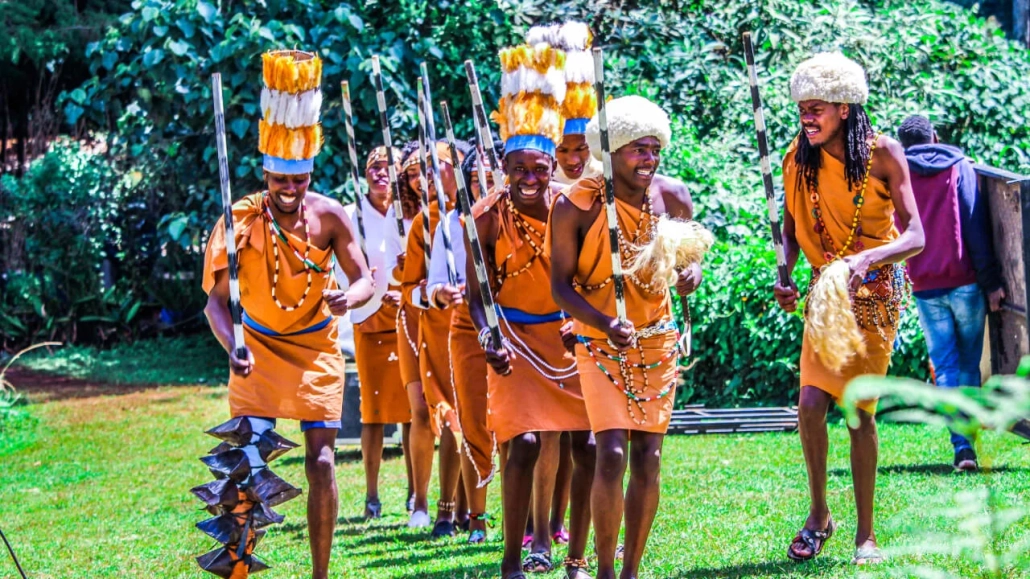
Outdoor Corporate Event Venue in Kenya

Outdoor Corporate Event Venue in Kenya

Kenya offers a diverse range of outdoor venues suitable for corporate meetings, executive retreats, product launches, team-building activities, company celebrations, networking events, and other business gatherings. From hotel gardens and private estates to conference resorts and countryside destinations, organizations can select outdoor spaces that provide a refreshing environment while supporting their event objectives. The right venue can enhance guest experience, encourage interaction, and create a memorable setting for both formal and informal corporate activities.

Selecting the best outdoor corporate event venue requires careful consideration of accessibility, capacity, weather preparedness, reliable power, guest comfort, parking, catering, and technical facilities. Because outdoor environments present additional production challenges, professional sound systems, lighting, staging, LED screens, power distribution, and audiovisual production are essential for ensuring presentations, speeches, entertainment, and branding are delivered clearly and professionally. Backup plans for rain, wind, power interruptions, and changing weather conditions should also form part of the event planning process.

At Peak Audio, we provide professional sound, lighting, staging, LED screens, audiovisual production, live streaming, and technical support for outdoor corporate events across Kenya. A successful outdoor corporate event starts with the right venue and is completed through careful planning, reliable event production, and experienced technical support. Peak Audio can provide customized production solutions to help corporations, NGOs, government agencies, professional associations, and other organizations deliver polished, engaging, and memorable outdoor events.
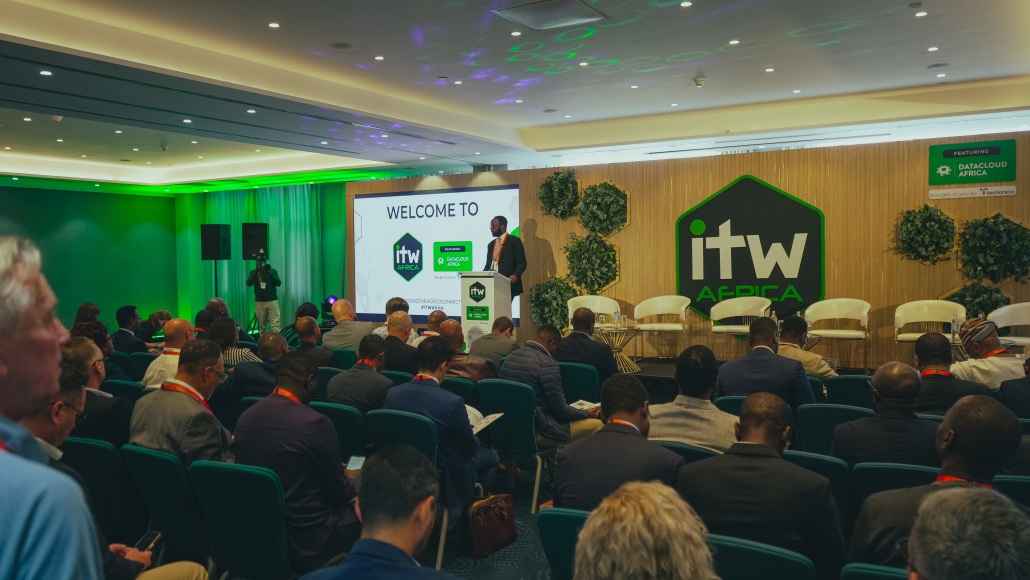
Luxury Conference Venues Kenya – Premium Conference Experiences Powered by Peak Audio

Luxury Conference Venues Kenya

Luxury Conference Venues Kenya

Kenya is one of East Africa’s leading destinations for executive conferences, international summits, board retreats, diplomatic meetings, corporate forums, investor meetings, high-level workshops, gala dinners, and premium business events. Luxury conference venues offer more than professional meeting spaces, combining high-end conference facilities with premium accommodation, fine dining, privacy, security, personalized hospitality, wellness facilities, and exceptional surroundings. These venues are ideal for organizations looking to create sophisticated experiences for executives, international delegates, investors, diplomats, board members, and other high-profile guests.

Nairobi offers some of Kenya’s strongest luxury conference hotels and premium corporate venues, providing convenient access to the country’s main business, diplomatic, and transport hubs. Beyond the capital, destinations such as Naivasha, Diani, Mombasa, Nanyuki, and Kenya’s safari regions provide distinctive alternatives for residential conferences, executive retreats, incentive events, and multi-day corporate gatherings. When comparing luxury conference venues in Kenya, organizers should consider delegate capacity, exclusivity, accommodation standards, location, catering, breakout facilities, audiovisual infrastructure, security, guest experience, and production requirements. The ideal venue should look impressive and provide the infrastructure and flexibility to deliver a seamless, high-level event.

Peak Audio provides professional Audiovisual and Conference Production Services for Luxury Venues across Kenya, helping organizations create premium event experiences supported by reliable technology and expert technical management. From professional sound, staging, creative lighting, and high-resolution LED screens to simultaneous interpretation, live streaming, hybrid event technology, multi-camera video production, and on-site technical support, Peak Audio provides solutions tailored to executive and high-profile events. Whether hosting an international summit, board retreat, diplomatic forum, investor conference, executive workshop, or luxury gala dinner, Peak Audio helps organizations transform premium venues into sophisticated conference environments that deliver exceptional experiences for every guest.

1. What Makes a Conference Venue Luxurious?

Luxury Conference Venues Kenya

Luxury Conference Venues Kenya

A luxury conference venue is defined by more than elegant décor or a prestigious address. The best venues combine premium accommodation, sophisticated meeting facilities, exceptional catering, advanced technology, privacy, security, personalized hospitality, and a memorable environment that supports both business objectives and delegate comfort.

For executive conferences, international summits, board retreats, diplomatic meetings, investor forums, gala dinners, and high-level corporate events, luxury venues are expected to deliver a seamless experience from arrival to departure. Every element — from accommodation and meeting-room design to catering, technology, security, and guest services — should reflect a higher standard of professionalism and comfort.

1.1 Premium Accommodation

Luxury Conference Venues KenyaHigh-quality accommodation is one of the defining features of a luxury conference venue, especially for multi-day events involving senior executives, international speakers, VIP guests, board members, and overseas delegates.

Premium accommodation may include:

  • Executive rooms.
  • Business-class rooms.
  • Luxury suites.
  • Presidential or VIP suites.
  • Club-level rooms.
  • Private villas or cottages.
  • Long-stay executive accommodation.

Important features include:

  • Spacious rooms: Delegates should have sufficient space to work and relax.
  • High-quality bedding: Premium mattresses, linen, and pillows improve comfort during multi-day conferences.
  • Workstations: Executive desks and reliable connectivity allow guests to continue working outside meeting hours.
  • High-speed internet: Essential for business travelers and international delegates.
  • In-room dining: Useful for executives with demanding schedules.
  • Private meeting areas: Some suites may include spaces for confidential discussions.
  • Premium bathrooms: High-end fittings, showers, bathtubs, and amenities improve the guest experience.
  • Sound insulation: Particularly important for delegates who need quiet working and sleeping environments.
  • Executive lounges: Provide private spaces for meetings, refreshments, and networking.
  • Personalized services: VIP check-in, concierge support, and luggage assistance can improve convenience.

For residential conferences and retreats, accommodation quality can significantly influence overall delegate satisfaction.

1.2 High-End Meeting Facilities

Luxury conference venues should provide meeting spaces that are professionally designed, comfortable, adaptable, and visually impressive.

These may include:

  • Grand ballrooms.
  • Executive boardrooms.
  • Conference halls.
  • Private meeting suites.
  • VIP lounges.
  • Breakout rooms.
  • Interview rooms.
  • Media briefing rooms.
  • Networking lounges.
  • Outdoor conference spaces.

High-end meeting facilities typically provide:

  • Elegant interior design.
  • Premium furniture.
  • Flexible seating arrangements.
  • Good acoustics.
  • Comfortable lighting.
  • Air conditioning.
  • Advanced power distribution.
  • Multiple presentation points.
  • High-speed internet.
  • Accessible meeting spaces.
  • Private entrances where required.

Different layouts can support:

  • Theatre-style conferences.
  • Classroom training.
  • Board meetings.
  • U-shaped executive discussions.
  • Cabaret seating.
  • Banquet setups.
  • Panel discussions.
  • Gala dinners.

For large conferences, the ability to combine a main plenary hall with multiple breakout rooms is particularly valuable.

1.3 Exceptional Catering

Luxury Conference Venues Kenya

Luxury Conference Venues Kenya

Catering is a major part of the luxury conference experience. Premium venues should provide more than standard tea breaks and buffet lunches.

Luxury catering may include:

  • Gourmet breakfast.
  • Premium tea and coffee breaks.
  • Executive working lunches.
  • Fine-dining menus.
  • International cuisine.
  • Customized buffets.
  • Cocktail receptions.
  • Canapés.
  • Private dinners.
  • Gala dinners.
  • Wine-pairing dinners where appropriate.
  • VIP dining.
  • Outdoor dining experiences.

Important catering considerations include:

  • Menu customization: Meals should be adaptable to the event theme and guest profile.
  • Dietary requirements: Vegetarian, vegan, halal, gluten-free, allergy-conscious, and other requirements should be accommodated.
  • Presentation: Food presentation should reflect the standards of the venue.
  • Service quality: Professional waitstaff contribute significantly to the delegate experience.
  • Private dining: Executives and VIP guests may require exclusive dining areas.
  • Coffee service: High-quality coffee stations can be important during executive and multi-day meetings.
  • Gala production: Formal dinners may require staging, lighting, sound, entertainment, and branding.

Premium catering can turn meal breaks into important networking, relationship-building, and hospitality moments.

1.4 Privacy and Security 

Privacy and security are particularly important for conferences involving executives, government officials, diplomats, investors, celebrities, board members, or confidential corporate discussions.

A luxury venue should be capable of supporting elevated security requirements.

Important considerations include:

  • Controlled venue access.
  • Private entrances.
  • Secure parking.
  • VIP drop-off zones.
  • Private elevators.
  • Separate executive meeting areas.
  • Discreet security personnel.
  • CCTV coverage.
  • Access-control systems.
  • Credential checks.
  • Delegate registration controls.
  • Secure accommodation floors.
  • Confidential breakout rooms.
  • Restricted technical areas.

For diplomatic or high-level corporate events, organizers may also require:

  • Advance security inspections.
  • Coordination with protection teams.
  • Controlled equipment access.
  • Secure communications.
  • Restricted media zones.
  • Private holding rooms.
  • Emergency-response planning.

Confidentiality is equally important. Board retreats, mergers and acquisitions discussions, investor meetings, and strategic planning sessions require environments where sensitive conversations can take place without unnecessary exposure.

1.5 Advanced Technology


Luxury Conference Venues Kenya

Luxury Conference Venues Kenya

Modern luxury conferences require technology that is reliable, scalable, and professionally managed.

Essential technology may include:

  • High-speed internet.
  • Dedicated event internet.
  • Backup connectivity.
  • Professional sound systems.
  • Wireless microphones.
  • Delegate microphone systems.
  • Projectors.
  • LED screens.
  • Large presentation displays.
  • Video walls.
  • Presentation laptops.
  • Video conferencing.
  • Hybrid meeting platforms.
  • Cameras.
  • Live streaming.
  • Video recording.
  • Interpretation systems.
  • Stage lighting.
  • Event control systems.

For executive conferences, technology should operate discreetly and reliably. Delegates should be able to focus on the meeting rather than technical problems.

Professional audiovisual production may include:

  • Multi-camera production.
  • Speaker close-ups.
  • Live presentation switching.
  • Event graphics.
  • Confidence monitors.
  • Stage timers.
  • Remote speaker integration.
  • Recording.
  • Streaming.
  • On-site technical operators.

Providers such as Peak Audio can supplement luxury venue facilities with professional sound, staging, lighting, LED screens, interpretation, hybrid event technology, live streaming, video production, and technical support.

1.6 Premium Hospitality

Luxury conference venues should provide a high level of personalized hospitality before, during, and after the event.

Premium services may include:

  • Concierge assistance.
  • VIP airport transfers.
  • Chauffeur services.
  • Private check-in.
  • Express check-out.
  • Dedicated conference coordinators.
  • Guest-relations teams.
  • VIP reception desks.
  • Luggage handling.
  • Personalized room allocation.
  • Transportation coordination.
  • Restaurant reservations.
  • Tour and excursion arrangements.
  • Dedicated executive hosts.

For major international conferences, organizers may also require:

  • Airport meet-and-greet services.
  • Delegate transportation schedules.
  • Speaker assistance.
  • VIP holding rooms.
  • Protocol management.
  • Special guest registration.
  • Personalized welcome materials.

The objective is to create a seamless delegate journey from arrival and accommodation through meetings, dining, networking, leisure, and departure.

1.7 Wellness and Leisure Facilities

Luxury conferences, especially multi-day residential events and executive retreats, often combine business sessions with relaxation, networking, and leisure activities.

Premium facilities may include:

  • Spa and wellness centres.
  • Swimming pools.
  • Fitness centres.
  • Golf courses.
  • Tennis courts.
  • Walking trails.
  • Gardens.
  • Private lounges.
  • Restaurants and bars.
  • Outdoor terraces.
  • Lakeside activities.
  • Beach activities.
  • Safari experiences.
  • Team-building spaces.

These facilities can improve:

  • Delegate relaxation.
  • Informal networking.
  • Team bonding.
  • Executive wellness.
  • Incentive experiences.
  • Guest satisfaction.
  • Work-life balance during multi-day meetings.

For board retreats and leadership conferences, recreational activities can also create valuable informal environments for building relationships and discussing ideas outside formal meeting sessions.

1.8 Distinctive Location and Environment

Luxury Conference Venues Kenya

Luxury Conference Venues Kenya

The location of a luxury conference venue can become part of the event experience itself. Distinctive surroundings can help create memorable conferences, retreats, incentive programs, and executive gatherings.

Premium environments may include

  • Nairobi skyline views.
  • Landscaped gardens.
  • Lakefront locations.
  • Mountain views.
  • Beachfront settings.
  • Forest environments.
  • Golf estates.
  • Safari landscapes.
  • Private conservancies.
  • Historic properties.

Different locations provide different advantages.

Nairobi can be ideal for:

  • International conferences.
  • Diplomatic events.
  • Corporate meetings.
  • Investor forums.
  • Executive summits.

Naivasha can support:

  • Residential conferences.
  • Corporate retreats.
  • Team-building programs.
  • Leadership meetings.
  • Lakeside events.

Diani and Mombasa can be attractive for:

  • Incentive events.
  • Destination conferences.
  • Executive retreats.
  • Beachside gala dinners.

Nanyuki and safari destinations can work well for:

  • Leadership retreats.
  • Board strategy sessions.
  • Incentive programs.
  • Exclusive executive gatherings.

A distinctive environment can elevate a conference from a standard business event into a memorable destination experience.

Balancing Luxury and Business Functionality

Luxury Conference Venues Kenya

Luxury Conference Venues Kenya

A luxury conference venue should not focus only on appearance. It must also support the practical requirements of the event.

The strongest venues combine:

  • Premium accommodation.
  • Professional conference infrastructure.
  • Excellent catering.
  • Privacy.
  • Security.
  • Reliable internet.
  • Advanced audiovisual technology.
  • Flexible breakout facilities.
  • Executive hospitality.
  • Leisure and wellness.
  • Convenient transport.
  • Professional technical support.

For high-level events, organizers should assess the entire delegate journey — from airport arrival and accommodation to registration, meetings, dining, networking, technical production, and departure.

A luxury conference venue combines professional meeting infrastructure with premium hospitality, privacy, comfort, advanced technology, exceptional catering, and a distinctive delegate experience.

True luxury is not simply about expensive décor. It comes from the venue’s ability to deliver a seamless experience for executives, VIP guests, speakers, international delegates, diplomats, and corporate teams while supporting the event’s business objectives.

2. Luxury Conference Venues in Nairobi

Luxury Conference Venues Kenya

Nairobi has a strong selection of luxury hotels and conference venues suitable for executive conferences, international meetings, investor forums, board sessions, diplomatic gatherings, corporate launches, gala dinners, networking events, and multi-day business conferences.

The best venue depends on the required delegate capacity, location, accommodation standards, breakout facilities, catering, security, audiovisual infrastructure, guest profile, and overall event format. Organizers should also assess whether the venue’s in-house technical facilities are sufficient or whether additional production support from a specialist such as Peak Audio will be required.

2.1 Villa Rosa Kempinski

Location: Chiromo Road, Nairobi
Phone: +254 703 049 000
Villa Rosa Kempinski Nairobi

Villa Rosa Kempinski is one of Nairobi’s prominent luxury hotels for high-level corporate and private events. Its meetings-and-events offering ranges from intimate executive boardrooms to a large ballroom, making it suitable for events with very different scales. (Kempinski Hotels)

It is particularly suitable for:

  • Executive conferences.
  • Investor meetings.
  • Board sessions.
  • High-level corporate forums.
  • VIP receptions.
  • Gala dinners.
  • Product presentations.
  • Private business events.
  • Strategy meetings.
  • International delegations.

Conference and Meeting Facilities

The hotel’s Fedora Ballroom measures approximately 627 m² and accommodates up to 500 guests theatre-style, around 350 for a banquet, and up to 450 for cocktails. It can be configured for different event formats and includes audiovisual equipment, a portable stage, lectern, high-speed Wi-Fi, and other conference amenities. (Kempinski Hotels)

Smaller executive events can use facilities such as:

  • Opus Meeting Room: Up to 30 guests depending on layout.
  • Olare Mara Boardrooms: Executive boardroom spaces for up to 8 guests.
  • Private meeting and breakout areas.
  • Flexible conference configurations.

Opus includes integrated AV, high-speed internet, teleconferencing, and video-conferencing capabilities, while the Olare Mara boardrooms are designed for smaller high-level discussions and presentations. (Kempinski Hotels)

Why Consider Villa Rosa Kempinski?

Key advantages include:

  • Luxury accommodation.
  • Executive-level hospitality.
  • Large and small event spaces.
  • High-speed internet.
  • Integrated audiovisual systems.
  • Video conferencing.
  • Dedicated event planners.
  • Premium catering.
  • Suitable spaces for confidential meetings.
  • Convenient access to major Nairobi business districts.

For conferences requiring more elaborate production, Peak Audio can supplement the hotel’s facilities with LED screens, professional sound, conference microphones, staging, lighting, live streaming, interpretation, hybrid meeting technology, and multi-camera video production.

2.2 Radisson Blu Hotel, Nairobi Upper Hill

Location: Elgon Road, Upper Hill, Nairobi
Phone: +254 709 810 000
Radisson Blu Hotel Nairobi Upper Hill

Radisson Blu Nairobi Upper Hill is particularly well positioned for organizations operating within Nairobi’s financial, professional services, government, healthcare, NGO, and corporate sectors.

It can work well for:

  • Financial-sector conferences.
  • Executive forums.
  • Corporate meetings.
  • International conferences.
  • Investor presentations.
  • Panel discussions.
  • Networking events.
  • Gala functions.
  • Board meetings.
  • Multi-session conferences.

Meeting Capacity and Facilities

The hotel currently lists 14 meeting rooms and event spaces. Its largest space, the Mount Kilimanjaro Ballroom, is approximately 591 m² and can accommodate up to 600 guests, depending on the configuration. (Radisson Hotels)

Other spaces include:

  • Mount Elgon: Up to approximately 200 guests.
  • Mount Kenya: Up to approximately 210 attendees.
  • Kifaru: Up to approximately 40 guests.
  • Chui: Up to approximately 30 guests.
  • Nyati: Up to approximately 30 guests.
  • Simba Boardroom: Up to approximately 9 participants.
  • Ndovu Boardroom: Up to approximately 9 participants.

The meeting facilities also include:

  • Free high-speed Wi-Fi.
  • Audiovisual equipment.
  • LED/LCD projection.
  • Breakout areas.
  • Ballroom pre-function areas.
  • Complimentary parking.
  • Flexible room configurations. (Radisson Hotels)

Why Consider Radisson Blu Upper Hill?

Its Upper Hill location makes it particularly convenient for events involving executives and delegates working around Nairobi’s major commercial and institutional district.

It offers a strong combination of:

  • Large conference capacity.
  • Smaller executive meeting rooms.
  • Professional business location.
  • Premium hotel accommodation.
  • Catering.
  • Breakout facilities.
  • Modern audiovisual infrastructure.
  • Dedicated event support.

For larger conferences or technically demanding productions, Peak Audio can add professional sound systems, wireless and delegate microphones, LED walls, stage lighting, interpretation systems, streaming, recording, and hybrid production.

2.3 Sankara Nairobi, Autograph Collection

Location: Woodvale Grove, Westlands, Nairobi
Phone: +254 703 028 000
Sankara Nairobi Autograph Collection

Sankara Nairobi is a luxury Westlands hotel suited to boutique conferences, executive meetings, corporate networking, private business sessions, VIP events, and premium social functions.

Its scale makes it especially attractive for organizations that want a sophisticated environment without necessarily requiring a very large convention-style ballroom.

Meeting Facilities

Marriott currently lists:

  • 4 event rooms.
  • Approximately 274 m² of total event space.
  • One breakout room.
  • Event spaces including Woodvale One, Woodvale Two, Woodvale Three, and the Business Centre Boardroom. (Marriott)

The individual rooms include:

  • Woodvale One: Up to about 100 guests theatre-style.
  • Woodvale Two: Up to about 100 guests theatre-style.
  • Woodvale Three: Up to about 35 guests theatre-style.
  • Business Centre Boardroom: Approximately 8 participants.

The hotel also lists audiovisual and event-support equipment such as:

  • LCD projectors.
  • Screens.
  • Microphones.
  • PA systems.
  • Teleconferencing.
  • Video conferencing.
  • Video cameras.
  • Wired and wireless internet.
  • Portable stages.
  • Podiums.
  • Spotlights. (Marriott)

Best Suited For

Sankara can be particularly appropriate for:

  • Senior-management meetings.
  • Boutique conferences.
  • Investor presentations.
  • Corporate networking.
  • Board meetings.
  • Strategy sessions.
  • Private client events.
  • Executive dinners.
  • Small product launches.
  • VIP receptions.

Its Westlands location is also convenient for many multinational businesses, technology companies, NGOs, professional firms, and international organizations based in the area.

2.4 Tribe Hotel

Location: Limuru Road, The Village Market, Gigiri, Nairobi
Phone: +254 20 720 0000 / +254 732 186 000
Tribe Hotel Nairobi

Tribe Hotel offers a distinctive luxury environment in Gigiri and is particularly relevant for organizations seeking privacy, refined hospitality, executive-scale meetings, diplomatic gatherings, and premium networking events.

The hotel’s location is especially convenient for meetings involving organizations, missions, institutions, and businesses operating around Gigiri, Runda, Rosslyn, and northern Nairobi.

Meeting and Event Facilities

Tribe describes its conference facilities as being designed around functionality, technology, privacy, design, and personalized service. Its executive boardrooms are intended for intimate meetings and conferences, supported by a business centre and business-concierge services. (Tribe Hotel)

It is suitable for:

  • Diplomatic meetings.
  • Executive board meetings.
  • Private corporate discussions.
  • High-level stakeholder meetings.
  • Small premium conferences.
  • Networking receptions.
  • Private dinners.
  • Cocktail events.
  • International delegation meetings.

The hotel also promotes event spaces for private dinners, cocktails, parties, and other tailored functions. (Tribe Hotel)

Why Consider Tribe Hotel?

Key strengths include:

  • Gigiri location.
  • Luxury accommodation.
  • Distinctive contemporary design.
  • Executive boardroom facilities.
  • Business support.
  • Premium dining.
  • Personalized guest service.
  • Suitable environment for confidential or high-level meetings.

Its more intimate character can be an advantage where exclusivity and guest experience matter more than very large delegate capacity.

2.5 Mövenpick Hotel & Residences Nairobi

Location: Mkungu Close, Westlands, Nairobi
Phone: +254 709 548 000
Mövenpick Hotel & Residences Nairobi

Mövenpick Hotel & Residences Nairobi is one of the stronger luxury options for organizations requiring a wide range of conference spaces within a single Westlands property.

The hotel has 276 rooms, suites, and residences, more than a dozen meeting rooms, a ballroom, exhibition facilities, restaurants, a spa, gym, and pool, making it particularly suitable for multi-day and residential conferences. (Mövenpick Hotels & Resorts)

Conference Facilities

The hotel currently lists 14 individual indoor meeting venues and breakout rooms, ranging from approximately 13 m² to 1,033 m². (Mövenpick Hotels & Resorts)

Notable spaces include:

Almasi Ballroom

  • Approximately 710 m².
  • Up to about 700 delegates theatre-style.
  • Around 400 guests for banquet seating.
  • Pillarless design.
  • High ceiling.
  • Built-in stage.
  • Natural daylight.
  • Audiovisual equipment.
  • Breakout rooms.
  • LCD projector and screen.
  • Complimentary Wi-Fi. (Mövenpick Hotels & Resorts)

Hall of Africa

  • Approximately 1,033 m².
  • Up to about 1,000 guests depending on layout.
  • Pillarless.
  • Private access.
  • Built-in AV infrastructure.
  • Control room.
  • Flexible configurations.
  • On-site technical support. (Mövenpick Hotels & Resorts)

The property also has smaller rooms such as the Zambezi meeting spaces, which can function as breakout rooms or standalone spaces for workshops and strategy meetings. (Mövenpick Hotels & Resorts)

Best Suited For

Mövenpick works well for:

  • International conferences.
  • Large corporate conferences.
  • Product launches.
  • Exhibitions.
  • Gala dinners.
  • Executive meetings.
  • Multi-day residential events.
  • Hybrid conferences.
  • Networking receptions.
  • Workshops with multiple breakout rooms.

Its combination of accommodation and substantial meeting capacity makes it especially useful where organizers want delegates, conference facilities, catering, and leisure amenities in one location.

2.6 Sarova Panafric Hotel, Nairobi

Location: Along Valley Road, Nairobi
Phone: +254 709 111 000
Sarova Panafric Hotel Nairobi

Sarova Panafric is a long-established Nairobi business and conference hotel situated close to the CBD and Upper Hill, making it suitable for organizations requiring a central corporate location.

It can support:

  • Corporate meetings.
  • Executive forums.
  • Training programs.
  • Workshops.
  • International conferences.
  • Product launches.
  • Private business functions.
  • Networking events.
  • Residential conferences.

Meeting Facilities

Sarova currently lists facilities including:

  • Conference and syndicate rooms.
  • Wi-Fi.
  • Audiovisual equipment.
  • Business-centre services.
  • Secretarial assistance.
  • Stationery and meeting support.
  • Personalized conference packages. (Sarova Hotels & Resorts)

The hotel is also undergoing a significant refurbishment and expansion of its meetings and events centre. Sarova states that the project runs from December 2025 to October 2026, with planned enhancements including high-ceiling ballrooms capable of accommodating up to approximately 430 guests theatre-style, additional flexible conference spaces, and upgraded hospitality facilities. (Sarova Hotels & Resorts)

Because the renovation is ongoing as of September 2026, organizers planning near-term events should confirm which rooms are currently available, current capacities, and any construction-related access arrangements directly with the hotel.

Why Consider Sarova Panafric?

Potential advantages include:

  • Convenient access to Nairobi CBD and Upper Hill.
  • Business-oriented conference facilities.
  • Accommodation.
  • Catering.
  • Breakout spaces.
  • Personalized meeting support.
  • Established corporate hospitality.
  • Flexible meeting packages.

Comparing Luxury Conference Venues in Nairobi

Venue Best Suited For Notable Strength
Villa Rosa Kempinski Executive conferences, investor meetings, gala dinners Luxury hospitality and flexible ballroom/boardroom options
Radisson Blu Upper Hill Corporate conferences, financial-sector forums, summits Large conference capacity and Upper Hill business location
Sankara Nairobi Boutique conferences, executive meetings, networking Premium Westlands setting for smaller high-level events
Tribe Hotel Diplomatic meetings, executive gatherings, private functions Gigiri location, privacy and intimate luxury atmosphere
Mövenpick Nairobi Large conferences, launches, exhibitions, gala dinners Extensive meeting inventory and large-scale event spaces
Sarova Panafric Corporate meetings, workshops, conferences Central business location and established conference services

Nairobi’s luxury conference venues are particularly suitable for organizations seeking premium accommodation, strong business locations, executive hospitality, high-end dining, privacy, security, and professionally managed meeting facilities.

Villa Rosa Kempinski, Radisson Blu Nairobi Upper Hill, Sankara Nairobi, Tribe Hotel, Mövenpick Hotel & Residences Nairobi, and Sarova Panafric each serve slightly different event requirements—from intimate executive board meetings to conferences involving several hundred delegates.

3. Luxury Conference Venues Outside Nairobi

Luxury Conference Venues Kenya

Luxury Conference Venues Kenya


Luxury conference venues outside Nairobi are ideal for organizations that want to combine business meetings with privacy, relaxation, destination experiences, team engagement, and premium hospitality. These venues are especially suitable for executive retreats, residential conferences, leadership summits, strategy sessions, incentive programs, board meetings, destination conferences, and multi-day corporate events.

Compared with city-centre venues, destination properties can provide a more secluded environment, stronger opportunities for team bonding, and access to leisure activities such as spa treatments, wildlife experiences, golf, beach activities, outdoor dining, nature excursions, and wellness programs. Organizers should compare not only the venue itself but also transport, accommodation, delegate capacity, meeting facilities, internet connectivity, audiovisual requirements, catering, security, and leisure options.

3.1 Enashipai Resort & Spa – Naivasha

Location: Moi South Lake Road, Naivasha
Phone: +254 719 051 000
Enashipai Resort & Spa

Enashipai Resort & Spa is one of Naivasha’s strongest options for organizations looking for a destination that combines large-scale conference infrastructure, accommodation, leisure, wellness, and outdoor event possibilities.

Its purpose-built Entumo Conference Centre supports events ranging from intimate meetings to international conventions, corporate forums, gala functions, and executive retreats. The resort states that its Grand Ballroom can accommodate more than 500 people indoors, while its lakeside event tent can host up to about 500 delegates theatre-style. (enashipai.com)

It is particularly suitable for:

  • Executive retreats.
  • Residential conferences.
  • Leadership meetings.
  • Corporate strategy sessions.
  • Board retreats.
  • Multi-day workshops.
  • International conferences.
  • Team leadership programs.
  • Gala dinners.
  • Incentive events.

Conference and Meeting Facilities

Enashipai provides a broad mix of meeting environments, including:

  • Large conference halls.
  • Breakout rooms.
  • Executive meeting spaces.
  • Outdoor conference areas.
  • Lakeside event facilities.
  • VIP lounges.
  • Business-centre support.
  • Video-conferencing assistance.
  • High-speed internet.

The resort also promotes hybrid-meeting capability, including audiovisual technology for virtual participation, live streaming, and real-time collaboration. (enashipai.com)

Why Consider Enashipai?

Its biggest advantage is the ability to combine serious business programming with a resort environment.

Delegates can access:

  • Luxury accommodation.
  • Spa and wellness facilities.
  • Swimming.
  • Gym facilities.
  • Team-building activities.
  • Boat excursions.
  • Crescent Island experiences.
  • Outdoor conferencing.
  • Landscaped grounds.
  • Restaurants and entertainment facilities.

This makes Enashipai particularly suitable for meetings where organizers want delegates to remain on-site for several days and combine formal sessions with wellness, networking, recreation, and team engagement. (enashipai.com)

3.2 Fairmont Mount Kenya Safari Club – Nanyuki

Location: Nanyuki, Laikipia, Kenya
Phone: +254 111 135 666
Fairmont Mount Kenya Safari Club

Fairmont Mount Kenya Safari Club provides a premium setting for organizations seeking a more exclusive destination for executive retreats, leadership conferences, board meetings, incentive programs, strategy sessions, and high-level corporate gatherings.

The resort is set within extensive landscaped grounds and a private wildlife environment, with views toward Mount Kenya. Fairmont describes the property as a 100-acre luxury retreat with accommodation, wellness facilities, outdoor experiences, and purpose-designed options for corporate and incentive retreats. (Fairmont Hotels & Resorts)

Meeting Facilities

Fairmont lists:

  • Four primary meeting venues.
  • Executive boardrooms.
  • Kirinyaga conference rooms.
  • Kirinyaga Ballroom.
  • Outdoor event spaces.
  • High-speed Wi-Fi.
  • Scenic meeting environments.
  • Dedicated concierge support.
  • Free parking.

Its meeting facilities can accommodate up to approximately 240 guests, depending on the event format and room configuration. (Fairmont Hotels & Resorts)

Best Suited For

The property is particularly appropriate for:

  • Board retreats.
  • CEO and senior-management meetings.
  • Leadership conferences.
  • Executive strategy sessions.
  • Incentive programs.
  • Private corporate events.
  • Senior-team retreats.
  • Multi-day residential conferences.

Business Combined with Experience

One of the strongest reasons to consider Fairmont Mount Kenya Safari Club is the ability to incorporate leisure and incentive activities into the event program.

Options can include:

  • Wildlife experiences.
  • Horseback safaris.
  • Conservation activities.
  • Outdoor dining.
  • Golf.
  • Wellness experiences.
  • Nature walks.
  • Cultural experiences.

This can make the resort particularly attractive for organizations planning leadership development, incentive travel, senior-management retreats, or high-value client gatherings. (Fairmont Hotels & Resorts)

3.3 Swahili Beach Resort – Diani

Location: Diani Beach Road, Ukunda, Kwale County
Phone: +254 111 050 140
Swahili Beach Resort

Swahili Beach Resort provides a luxury coastal environment suited to organizations that want to combine a professional conference with the appeal of Diani Beach, resort accommodation, leisure facilities, networking, and incentive experiences.

It can be particularly attractive for:

  • Destination conferences.
  • Executive retreats.
  • Corporate celebrations.
  • Leadership meetings.
  • Incentive travel programs.
  • Residential workshops.
  • Senior-management meetings.
  • Product launches.
  • Networking events.
  • Gala dinners.

Conference Facilities

The resort has dedicated conference facilities suitable for corporate meetings and presentations. Its conference setup includes professional seating layouts, projection systems, presentation screens, and delegate arrangements designed for structured meetings.

Organizers should assess:

  • Delegate capacity.
  • Meeting-room configuration.
  • Projectors and screens.
  • Sound requirements.
  • Breakout facilities.
  • Internet reliability.
  • Catering packages.
  • Accommodation requirements.
  • Evening-event options.
  • Outdoor functions.

Why Consider Swahili Beach Resort?

The coastal setting allows a conference program to incorporate:

  • Beachfront networking.
  • Outdoor dinners.
  • Cocktail receptions.
  • Poolside functions.
  • Team activities.
  • Wellness.
  • Leisure time.
  • Executive relaxation.

This can be particularly valuable for organizations that want a destination conference to feel different from a conventional city hotel meeting.

For technically demanding events, additional production can be brought in for LED screens, professional sound, staging, lighting, live streaming, hybrid participation, video recording, and multi-camera production.

3.4 Chale Island Resort – Diani

Location: Chale Island, south of Diani Beach, Kwale County
Phone: +254 709 538 880
Chale Island Resort

Chale Island Resort offers something different from a conventional hotel conference property. Its island setting can provide a more secluded and immersive environment for organizations planning exclusive executive retreats, leadership meetings, strategic planning sessions, incentive programs, and private corporate gatherings.

The resort’s strongest appeal is not necessarily large convention capacity, but rather privacy, exclusivity, scenery, and the ability to remove delegates from normal office distractions.

It can be suitable for:

  • Board retreats.
  • Leadership strategy sessions.
  • Executive off-sites.
  • CEO retreats.
  • Senior-management workshops.
  • Incentive travel.
  • Private corporate gatherings.
  • Team leadership programs.
  • High-level networking.
  • Confidential meetings.

Why Consider Chale Island?

The island environment can enhance:

  • Privacy.
  • Executive focus.
  • Team bonding.
  • Informal networking.
  • Wellness.
  • Relaxation.
  • Outdoor activities.
  • Destination appeal.

For smaller senior-level groups, this kind of secluded location can be particularly effective because participants remain within the same environment throughout the retreat.

Planning Considerations

Because Chale is an island destination, organizers should plan carefully for:

  • Delegate transfers.
  • Equipment transport.
  • Setup timelines.
  • Internet requirements.
  • Backup connectivity.
  • Technical equipment.
  • Accommodation.
  • Catering.
  • Emergency logistics.
  • Weather considerations.

For a high-level retreat requiring professional presentations or hybrid participation, AV requirements should be planned well in advance rather than treated as a last-minute addition.

3.5 Voyager Beach Resort – Mombasa

Location: Off Mount Kenya Road, Mombasa
Phone: +254 711 019 900
Voyager Beach Resort

Voyager Beach Resort provides a coastal setting for organizations planning residential meetings, corporate retreats, workshops, conferences, team programs, and business events in Mombasa.

Its resort environment allows organizations to combine formal meetings with:

  • Accommodation.
  • Recreation.
  • Beach activities.
  • Informal networking.
  • Team-building.
  • Evening functions.
  • Leisure time.

It can be particularly suitable for:

  • Corporate retreats.
  • Regional conferences.
  • Residential workshops.
  • Management meetings.
  • Strategy sessions.
  • Team-building events.
  • Association meetings.
  • Coastal business events.
  • Incentive programs.

Why Consider Voyager Beach Resort?

A Mombasa resort can be attractive for organizations with delegates travelling from:

  • Nairobi.
  • Coastal Kenya.
  • East African markets.
  • International destinations.

The residential format can simplify coordination because accommodation, meals, meeting sessions, and leisure activities can all be organized within one destination.

Technical Considerations

For conferences involving presentations, panels, remote speakers, or larger audiences, organizers should confirm:

  • PA system capacity.
  • Number of microphones.
  • Projection or LED-display requirements.
  • Internet connectivity.
  • Streaming feasibility.
  • Hybrid-meeting requirements.
  • Recording needs.
  • Backup power.
  • On-site technical support.

Peak Audio can supplement the venue where more advanced conference production is required.

3.6 Taita Hills Safari Resort & Spa

Location: Taita Hills Wildlife Sanctuary, Taita-Taveta County
Phone: +254 709 002 100
Taita Hills Safari Resort & Spa

Taita Hills Safari Resort & Spa provides a distinctive safari setting for organizations looking for a conference or retreat that feels significantly different from a conventional city venue.

Its environment makes it particularly suitable for:

  • Executive retreats.
  • Leadership meetings.
  • Strategy sessions.
  • Incentive programs.
  • Residential conferences.
  • Senior-management workshops.
  • Team retreats.
  • Destination meetings.

Conference Environment

The resort has dedicated meeting facilities that can accommodate structured conference layouts such as U-shaped seating and formal presentation configurations.

The combination of a professional meeting room and safari surroundings can be especially effective for:

  • Strategic planning.
  • Leadership development.
  • Team alignment.
  • Management off-sites.
  • Incentive travel.

Why Consider Taita Hills?

Its greatest advantage is the surrounding natural environment.

A retreat program can potentially combine formal meetings with:

  • Wildlife experiences.
  • Game drives.
  • Outdoor networking.
  • Team activities.
  • Nature-based relaxation.
  • Evening functions.
  • Informal executive discussions.

This can help create a stronger sense of separation from normal workplace routines and encourage delegates to remain focused on the retreat program.

Comparing Luxury Conference Venues Outside Nairobi

Venue Destination Best Suited For Distinctive Advantage
Enashipai Resort & Spa Naivasha Large residential conferences, leadership retreats, conventions Extensive conference infrastructure combined with resort and lake environment
Fairmont Mount Kenya Safari Club Nanyuki Executive retreats, board meetings, incentive programs Luxury safari setting and Mount Kenya environment
Swahili Beach Resort Diani Destination conferences, corporate celebrations, retreats Premium beach environment
Chale Island Resort Diani area Exclusive executive retreats and leadership gatherings Secluded island setting and privacy
Voyager Beach Resort Mombasa Residential conferences and corporate retreats Coastal resort format with accommodation and recreation
Taita Hills Safari Resort & Spa Taita-Taveta Strategy retreats, incentive events, destination meetings Safari environment and wildlife experience

Luxury conference venues outside Nairobi are particularly attractive for organizations planning executive retreats, strategy sessions, residential conferences, incentive events, leadership meetings, and destination programs that combine business with leisure.

Enashipai Resort & Spa, Fairmont Mount Kenya Safari Club, Swahili Beach Resort, Chale Island Resort, Voyager Beach Resort, and Taita Hills Safari Resort & Spa each provide a different delegate experience, ranging from lakeside conferencing and mountain retreats to beach resorts, private island environments, and safari settings.

4. Luxury Conference Venues by Event Type

Luxury Conference Venues Kenya

Luxury Conference Venues Kenya

Different luxury events require different venue characteristics. An executive board meeting may prioritize privacy, security, and discretion, while an international conference may require large-capacity halls, accommodation, interpretation, reliable internet, and airport access. Gala dinners and product launches, on the other hand, depend more heavily on visual impact, staging, lighting, entertainment, branding, and guest experience.

The best luxury conference venue should therefore be selected according to the event format, number of guests, delegate profile, accommodation needs, technology requirements, security level, catering expectations, and desired overall experience.

4.1 Executive and Board Meetings

Executive and board meetings usually require a quieter and more controlled environment than a conventional conference.

Suitable venue spaces include:

  • Private executive boardrooms.
  • VIP lounges.
  • Private meeting suites.
  • Presidential suites with meeting areas.
  • Business lounges.
  • Small executive conference rooms.
  • Private dining rooms.
  • Secure breakout rooms.

Important considerations include:

  • Privacy: Discussions may involve confidential corporate or financial information.
  • Security: Controlled access may be necessary for senior executives and VIPs.
  • Comfort: Premium seating, lighting, air conditioning, and acoustics improve long sessions.
  • Connectivity: Reliable internet is essential for presentations and remote participation.
  • Video conferencing: Some directors or executives may participate remotely.
  • Presentation equipment: Large displays, conference screens, and presentation laptops may be required.
  • Conference microphones: Useful for structured board discussions.
  • Premium catering: Executive breakfasts, working lunches, private dinners, and refreshments can be arranged.
  • Discreet service: Hospitality should support the meeting without unnecessarily disrupting proceedings.

Luxury hotels in Nairobi, Naivasha, Nanyuki, and other premium destinations can be suitable depending on whether the meeting is a short city session or a multi-day board retreat.

4.2 International Conferences

International conferences require venues capable of supporting delegates travelling from different countries while maintaining consistent professional standards.

Important venue requirements include:

  • Large plenary halls.
  • Multiple breakout rooms.
  • Premium accommodation.
  • Registration areas.
  • Exhibition spaces.
  • Networking lounges.
  • VIP rooms.
  • Business centres.
  • Restaurants.
  • Airport accessibility.
  • Secure parking.

Technology may include:

  • Professional PA systems.
  • Wireless microphones.
  • Delegate microphone systems.
  • LED screens.
  • Projection systems.
  • Simultaneous interpretation.
  • Video conferencing.
  • Hybrid meeting technology.
  • Live streaming.
  • Multi-camera production.
  • Dedicated internet.
  • Backup internet.
  • Recording.

International delegates may also require:

  • Airport transfers.
  • Visa-support documentation from organizers.
  • Currency and concierge services.
  • Local transportation.
  • Dietary accommodation.
  • Prayer or quiet rooms.
  • Hospitality desks.
  • Excursion planning.

Luxury conference hotels in Nairobi are often attractive because of their proximity to JKIA, diplomatic missions, corporate offices, government institutions, and international organizations.

4.3 Investor and Leadership Forums

Investor and leadership forums often involve senior executives, investors, board members, policymakers, entrepreneurs, financiers, and other high-level stakeholders.

The venue should create a sophisticated environment that communicates professionalism and credibility.

Suitable events include:

  • Investor forums.
  • CEO roundtables.
  • Leadership summits.
  • Private-equity meetings.
  • Business forums.
  • Capital-raising events.
  • Executive networking.
  • Economic forums.
  • Industry leadership meetings.

Important venue features include:

  • Premium reception areas.
  • Executive lounges.
  • Professional stages.
  • High-quality seating.
  • Large displays.
  • Speaker preparation rooms.
  • Private meeting rooms.
  • Networking spaces.
  • Premium catering.
  • Secure VIP access.

Audiovisual production may include:

  • LED backdrops.
  • Professional lighting.
  • Conference sound.
  • Lapel microphones.
  • Panel microphones.
  • Confidence monitors.
  • Speaker timers.
  • Presentation management.
  • Livestreaming.
  • Video recording.
  • Corporate branding.

For investor-facing events, visual presentation quality can influence the perceived professionalism of the entire forum.

4.4 Diplomatic and Government Meetings

Diplomatic and government meetings frequently require higher levels of security, confidentiality, protocol management, and controlled access.

Suitable venue environments include:

  • Secure luxury hotels.
  • Private conference wings.
  • Executive boardrooms.
  • VIP lounges.
  • Government conference facilities.
  • Diplomatic meeting spaces.
  • Restricted-access banquet halls.

Important considerations include:

  • Security screening.
  • Controlled access.
  • VIP entrances.
  • Secure parking.
  • Private holding rooms.
  • Protocol desks.
  • Media management areas.
  • Security-team coordination.
  • Credential checks.
  • Restricted technical zones.
  • Confidential meeting spaces.

Protocol requirements may involve:

  • Seating hierarchy.
  • National flags.
  • Nameplates.
  • Interpretation.
  • Translation.
  • Speaker order.
  • VIP arrival coordination.
  • Motorcade arrangements.
  • Media positioning.
  • Diplomatic dining.

Audiovisual systems may need:

  • Delegate microphones.
  • Simultaneous interpretation.
  • Secure presentation systems.
  • Recording controls.
  • Professional sound.
  • Large displays.
  • Backup systems.
  • Technical redundancy.

For these events, technology must not only be sophisticated but also reliable, discreet, and professionally managed.

4.5 Corporate Retreats

Corporate retreats are often best suited to destination properties where delegates can step away from normal office routines.

Popular retreat environments include:

  • Naivasha resorts.
  • Nanyuki luxury properties.
  • Safari lodges.
  • Coastal resorts.
  • Golf resorts.
  • Private islands.
  • Wellness destinations.

Corporate retreats may include:

  • Strategy sessions.
  • Leadership workshops.
  • Board meetings.
  • Team alignment.
  • Management planning.
  • Executive coaching.
  • Team-building.
  • Informal networking.
  • Recreational activities.
  • Gala dinners.

Important venue features include:

  • Comfortable accommodation.
  • Private meeting spaces.
  • Breakout rooms.
  • Outdoor areas.
  • Leisure facilities.
  • Spa and wellness.
  • Team-building spaces.
  • Restaurants.
  • Reliable internet.
  • Transport support.

Retreats may also incorporate:

  • Game drives.
  • Golf.
  • Boat trips.
  • Hiking.
  • Wellness programs.
  • Beach activities.
  • Outdoor dining.
  • Cultural experiences.

The ideal retreat venue should balance business productivity with relaxation, team engagement, and destination appeal.

4.6 Luxury Product Launches

Luxury product launches require venues that can support strong branding, visual storytelling, media coverage, guest entertainment, and high-impact presentation.

Suitable spaces include:

  • Luxury hotel ballrooms.
  • Rooftop venues.
  • Premium lounges.
  • Resort event spaces.
  • Banquet halls.
  • Outdoor terraces.
  • Exclusive private venues.

Production requirements may include:

  • Custom stage design.
  • LED screens.
  • Product reveal mechanisms.
  • Professional lighting.
  • Branded backdrops.
  • Sound systems.
  • Video playback.
  • Projection mapping.
  • Special effects.
  • Media walls.
  • Photography.
  • Video recording.
  • Live streaming.
  • Entertainment.

The event may also require:

  • VIP reception.
  • Media registration.
  • Press interview areas.
  • Influencer zones.
  • Product demonstration spaces.
  • Cocktail reception.
  • Premium catering.
  • Entertainment.
  • Sponsor branding.

For a luxury product launch, the venue should complement the brand’s intended image while allowing production teams enough flexibility to create the desired visual experience.

4.7 Gala Dinners and Award Ceremonies

Luxury Conference Venues Kenya

Luxury Conference Venues Kenya

Gala dinners and award ceremonies depend heavily on atmosphere, presentation, entertainment, and service quality.

Luxury venues should provide:

  • Large ballrooms.
  • Banquet spaces.
  • Pre-function areas.
  • Cocktail reception spaces.
  • VIP lounges.
  • Stage areas.
  • Dance floors.
  • Dressing rooms.
  • Back-of-house areas.
  • Premium dining facilities.

Typical production requirements include:

  • Stage platforms.
  • LED screens.
  • Scenic backdrops.
  • Professional sound.
  • Wireless microphones.
  • Awards presentation music.
  • Stage lighting.
  • Moving lights.
  • Decorative lighting.
  • Video playback.
  • Event graphics.
  • Live cameras.
  • Recording.
  • Entertainment systems.

Other important considerations include:

  • Table styling.
  • Premium menus.
  • Seating plans.
  • VIP tables.
  • Red-carpet arrivals.
  • Photography areas.
  • Awards display.
  • Entertainment.
  • Master of ceremonies.
  • Cocktail reception.
  • After-party requirements.

A luxury venue provides the physical environment, while professional production helps create the ceremony, drama, and visual impact expected from a premium gala event.

4.8 Incentive and Recognition Events

Incentive and recognition events are designed to reward employees, partners, distributors, customers, or high-performing teams.

For these events, the destination experience can be just as important as the formal meeting program.

Suitable venues include:

  • Luxury beach resorts.
  • Safari resorts.
  • Mountain retreats.
  • Golf resorts.
  • Lake resorts.
  • Private islands.
  • Premium city hotels.

Programs may combine:

  • Recognition ceremonies.
  • Awards.
  • Executive speeches.
  • Team celebrations.
  • Fine dining.
  • Entertainment.
  • Excursions.
  • Wellness.
  • Team activities.
  • Networking.
  • Leisure time.

Luxury incentive events can include:

  • Safari experiences.
  • Beach activities.
  • Boat trips.
  • Golf.
  • Spa programs.
  • Cultural tours.
  • Private dinners.
  • Outdoor receptions.
  • Live entertainment.

The goal is to create a memorable experience that reinforces achievement, appreciation, loyalty, team culture, and motivation.

Matching the Venue to the Event Objective

Luxury Conference Venues Kenya

Luxury Conference Venues Kenya

Different luxury events require different venue strengths.

Event TYPE PRIMARY y Venue Priorities
Executive and Board Meetings Privacy, security, premium boardrooms, discreet hospitality
International Conferences Capacity, accommodation, breakout rooms, interpretation, connectivity
Investor and Leadership Forums Prestige, executive hospitality, staging, networking
Diplomatic and Government Meetings Security, protocol, controlled access, interpretation
Corporate Retreats Accommodation, privacy, leisure, wellness, team activities
Luxury Product Launches Branding, staging, lighting, media production
Gala Dinners and Awards Ballroom capacity, catering, entertainment, production
Incentive Events Destination appeal, leisure, recognition experiences

Peak Audio Support Across Luxury Event Types

The technical requirements of a luxury event should also be matched to the event type.

Peak Audio can support premium conferences and corporate events with:

  • Professional sound systems.
  • Wireless microphones.
  • Delegate microphone systems.
  • LED screens.
  • Projection systems.
  • Staging.
  • Podiums.
  • Conference lighting.
  • Decorative lighting.
  • Simultaneous interpretation.
  • Video conferencing.
  • Hybrid event production.
  • Live streaming.
  • Multi-camera recording.
  • Presentation management.
  • Event graphics.
  • Video production.
  • On-site technical support.

For executive meetings, the priority may be discreet conferencing technology. For international conferences, interpretation and hybrid participation may be more important. Gala dinners and product launches may require significantly more staging, lighting, LED, video, and entertainment production.

The best luxury conference venue depends on what the event is intended to achieve. Executive meetings prioritize privacy and discretion; international conferences prioritize capacity, accommodation, connectivity, and interpretation; retreats prioritize destination appeal; while gala dinners and launches prioritize presentation, entertainment, and visual production.

5. How to Choose the Best Luxury Conference Venue in Kenya

Luxury Conference Venues Kenya

Luxury Conference Venues Kenya

Choosing a luxury conference venue in Kenya requires more than selecting a prestigious hotel or resort. The venue must support the number and profile of delegates, meeting format, accommodation requirements, security arrangements, catering expectations, audiovisual production, transport logistics, and overall event budget.

A venue that works perfectly for a 20-person executive retreat may not be suitable for a 500-person international conference. Organizers should therefore evaluate the complete event experience—from delegate arrival and registration to accommodation, conference sessions, dining, networking, entertainment, technical production, and departure.

5.1 Determine Delegate Numbers

The expected number of delegates should be one of the first considerations when selecting a luxury conference venue.

Calculate:

  • Number of confirmed delegates.
  • Expected total attendance.
  • Speakers.
  • Panelists.
  • Facilitators.
  • VIP guests.
  • Event organizers.
  • Exhibitors.
  • Sponsors.
  • Media representatives.
  • Technical production crew.
  • Security personnel.
  • Protocol teams.
  • Remote participants.

The number of attendees influences much more than ballroom capacity. It also affects:

  • Registration areas.
  • Catering quantities.
  • Accommodation requirements.
  • Breakout rooms.
  • Parking.
  • Airport transfers.
  • Restrooms.
  • Networking spaces.
  • Stage dimensions.
  • Screen sizes.
  • Sound-system requirements.
  • Number of microphones.
  • Internet bandwidth.

Organizers should also determine the required seating arrangement.

Common layouts include:

  • Theatre.
  • Classroom.
  • Boardroom.
  • U-shape.
  • Cabaret.
  • Banquet.
  • Hollow square.
  • Cocktail reception.

A ballroom advertised for several hundred people may accommodate considerably fewer guests once a large stage, production control area, LED screens, cameras, interpretation booths, exhibition stands, and banquet tables are introduced.

Always compare the venue’s capacity against the actual event layout, not simply its maximum advertised capacity.

5.2 Consider the Guest Profile

The expectations of senior executives can differ significantly from those of participants attending a general training conference. The venue should therefore reflect the profile of the people attending.

Guest categories may include:

  • CEOs and senior executives.
  • Board members.
  • Investors.
  • Government officials.
  • Diplomats.
  • International delegates.
  • Development partners.
  • NGO representatives.
  • Industry leaders.
  • High-value clients.
  • Media representatives.
  • Celebrities or public personalities.

High-level guests may require:

  • VIP entrances.
  • Private lounges.
  • Executive accommodation.
  • Secure parking.
  • Chauffeur access.
  • Airport transfers.
  • Private dining.
  • Dedicated concierge services.
  • Protocol assistance.
  • Private meeting rooms.
  • High-speed connectivity.
  • Executive business facilities.

International guests may additionally value:

  • Convenient airport access.
  • Currency and concierge services.
  • International dining options.
  • Reliable transport.
  • Multilingual assistance where available.
  • Simultaneous interpretation for conferences.
  • Leisure and tourism opportunities.

The venue should ultimately reflect the professional standing, expectations, comfort, privacy, and hospitality requirements of the people attending.

5.3 Review Accommodation Standards

Accommodation becomes especially important for residential conferences, international events, executive retreats, and multi-day meetings.

Do not evaluate accommodation based only on the hotel’s general star rating. Review the actual rooms and services available for delegates.

Consider:

  • Standard guest rooms.
  • Executive rooms.
  • Suites.
  • VIP suites.
  • Presidential suites.
  • Villas or cottages.
  • Twin-sharing options.
  • Accessible rooms.
  • Executive floors.
  • Long-stay accommodation.

Important room features can include:

  • Comfortable beds.
  • Quality linen.
  • Work desks.
  • Reliable Wi-Fi.
  • International power outlets or adapters.
  • In-room dining.
  • Safes.
  • Air conditioning.
  • Quiet surroundings.
  • Premium bathrooms.
  • Business amenities.

Organizers should also ask about:

  • Group accommodation rates.
  • Complimentary rooms.
  • Early check-in.
  • Late check-out.
  • VIP upgrades.
  • Room-block deadlines.
  • Cancellation conditions.
  • Breakfast arrangements.
  • Luggage storage.
  • Group check-in facilities.

Keeping delegates at the same property as the conference can simplify transportation, scheduling, security, networking, and overall event management.

5.4 Compare Conference and Breakout Facilities

A luxury hotel may have excellent accommodation but still lack the meeting-space configuration required for a complex conference.

Evaluate both the main conference room and supporting spaces.

The main venue should be assessed for:

  • Delegate capacity.
  • Ceiling height.
  • Pillars and sightlines.
  • Stage positioning.
  • Screen visibility.
  • Acoustics.
  • Lighting.
  • Air conditioning.
  • Power availability.
  • Internet connectivity.
  • Emergency exits.
  • Accessibility.

Supporting spaces may include:

  • Breakout rooms.
  • Executive boardrooms.
  • VIP lounges.
  • Speaker preparation rooms.
  • Green rooms.
  • Media rooms.
  • Secretariat offices.
  • Registration areas.
  • Exhibition spaces.
  • Networking lounges.
  • Prayer or quiet rooms.
  • Production control rooms.

For conferences running simultaneous sessions, breakout-room availability can be just as important as the main ballroom.

Also examine the movement of delegates between spaces. Poorly positioned breakout rooms can create congestion and make conference schedules difficult to maintain.

5.5 Assess Privacy and Security

Privacy and security become particularly important for executive meetings, diplomatic conferences, government events, investor forums, confidential board sessions, and high-profile gatherings.

Evaluate the venue’s ability to support:

  • Controlled access.
  • Credential checks.
  • Security screening.
  • CCTV.
  • Secure parking.
  • VIP vehicle access.
  • Private entrances.
  • Restricted meeting areas.
  • Secure accommodation floors.
  • Private elevators where available.
  • Confidential meeting rooms.
  • Emergency procedures.

High-level events may require additional facilities for:

  • VIP holding rooms.
  • Security personnel.
  • Close-protection teams.
  • Protocol officers.
  • Motorcade coordination.
  • Media management.
  • Restricted technical areas.
  • Emergency response.

Privacy also applies to information. Organizers should consider how presentations, conference recordings, livestreams, delegate lists, meeting-room access, and technical systems are managed when confidential information is involved.

For particularly sensitive events, conduct a security and technical site inspection before confirming the venue.

5.6 Check Catering and Hospitality Options

Food, beverage, and hospitality can have a major influence on how delegates perceive a luxury conference.

Compare options for:

  • Breakfast.
  • Morning tea.
  • Coffee stations.
  • Snacks.
  • Working lunches.
  • Buffet lunches.
  • Plated meals.
  • Afternoon refreshments.
  • Cocktail receptions.
  • Canapés.
  • Private executive dining.
  • Gala dinners.
  • Outdoor dining.

Check whether the venue can accommodate:

  • Vegetarian diets.
  • Vegan diets.
  • Halal requirements.
  • Food allergies.
  • Gluten-free requirements.
  • International cuisine.
  • Customized VIP menus.

Hospitality should also extend beyond food.

Premium services may include:

  • Dedicated event coordinators.
  • Concierge assistance.
  • VIP reception.
  • Airport transfers.
  • Chauffeur services.
  • Guest-relations teams.
  • Welcome desks.
  • Luggage handling.
  • Excursion coordination.
  • Private check-in.

For international and executive conferences, hospitality should feel like a coordinated delegate journey rather than a collection of separate hotel services.

5.7 Evaluate Audiovisual and Production Access

Luxury conference venues frequently provide basic audiovisual equipment, but major conferences may require considerably more advanced technical production.

Before confirming a venue, determine whether it can accommodate:

  • Professional PA systems.
  • Wireless microphones.
  • Lapel microphones.
  • Headset microphones.
  • Delegate microphone systems.
  • Projectors.
  • Large projection screens.
  • LED video walls.
  • Confidence monitors.
  • Stage platforms.
  • Podiums.
  • Professional lighting.
  • Simultaneous interpretation.
  • Video conferencing.
  • Hybrid meeting systems.
  • Live streaming.
  • Multi-camera recording.
  • Event graphics.
  • Presentation management.

Check Production Access

Technical suppliers may need access hours before delegates arrive—or even the previous day.

Ask about:

  • Loading bays.
  • Equipment entrances.
  • Freight elevators.
  • Vehicle access.
  • Loading and unloading times.
  • Early setup.
  • Overnight setup.
  • Rigging restrictions.
  • Ceiling height.
  • Stage restrictions.
  • Electrical capacity.
  • Three-phase power where required.
  • Generator availability.
  • Cable routes.
  • Production-control positions.
  • Equipment storage.
  • Breakdown deadlines.

Check Internet Requirements

For hybrid and streamed conferences, ordinary guest Wi-Fi may not be sufficient.

Determine:

  • Available dedicated bandwidth.
  • Upload speed.
  • Download speed.
  • Wired internet availability.
  • Dedicated event networks.
  • Network security.
  • Number of connected devices.
  • Backup internet availability.

This is especially important for livestreaming, remote speakers, cloud presentations, video conferencing, media uploads, and simultaneous online sessions.

Peak Audio can work with the selected venue to provide or supplement professional sound, microphones, LED screens, projection, staging, lighting, interpretation systems, live streaming, hybrid technology, multi-camera video production, presentation management, and technical support.

5.8 Compare the Complete Event Budget

Luxury conference budgeting should consider the entire event rather than the ballroom or accommodation rate alone.

Include:

  • Venue hire.
  • Accommodation.
  • Catering.
  • Audiovisual equipment.
  • Staging.
  • LED screens.
  • Lighting.
  • Interpretation.
  • Live streaming.
  • Video production.
  • Internet.
  • Branding.
  • Décor.
  • Entertainment.
  • Photography.
  • Transportation.
  • Airport transfers.
  • Security.
  • Protocol.
  • Team activities.
  • Excursions.
  • Parking.
  • Staffing.
  • Setup and breakdown.
  • Overtime.
  • Taxes and service charges.
  • Contingency.

A venue with a higher conference-room rate may ultimately provide better value if it includes accommodation discounts, catering, internet, parking, breakout rooms, furniture, and essential equipment.

Conversely, an attractive room rate can become expensive when organizers later discover separate charges for essential services.

Compare Like for Like

Cost Area Questions to Ask
Venue What rooms and setup hours are included?
Accommodation Are group or executive rates available?
Catering What meals, refreshments and service charges are included?
AV What equipment is included and what must be outsourced?
Internet Is dedicated conference connectivity charged separately?
Breakouts Are additional meeting rooms included?
Parking Is delegate and VIP parking complimentary?
Security Are additional security arrangements chargeable?
Production Are loading, rigging, power or setup fees applicable?
Overtime What happens if the conference runs late?
Taxes Are quoted rates inclusive or exclusive of applicable taxes?

Request an itemized quotation from each shortlisted venue so that costs can be compared on the same basis

Conduct a Venue Site Inspection Before Booking

Luxury Conference Venues Kenya

Luxury Conference Venues Kenya

For important luxury conferences, photographs and venue brochures should not replace a physical or detailed technical inspection.

During the inspection, examine:

  • Main conference hall.
  • Breakout rooms.
  • VIP rooms.
  • Registration area.
  • Accommodation.
  • Restaurants.
  • Loading access.
  • Parking.
  • Stage position.
  • Screen sightlines.
  • Production-control position.
  • Power.
  • Internet.
  • Lighting.
  • Acoustics.
  • Emergency exits.
  • Accessibility.
  • Security arrangements.

Where significant audiovisual production is involved, having the event planner and technical production team inspect the venue together can prevent costly problems later.

Luxury Venue Selection Checklist

Before signing the venue agreement, confirm:

  • Delegate capacity matches the actual seating configuration.
  • Accommodation meets the guest profile.
  • Sufficient rooms have been reserved.
  • Main conference and breakout facilities are adequate.
  • VIP and executive areas are available where necessary.
  • Catering meets the required standard.
  • Dietary requirements can be accommodated.
  • Security and privacy requirements can be implemented.
  • Airport and local transportation are manageable.
  • Professional AV equipment can be installed.
  • Loading and production access are practical.
  • Internet can support the event.
  • Hybrid and streaming requirements are feasible.
  • Setup and breakdown times are sufficient.
  • All additional charges have been identified.
  • Cancellation and rescheduling terms are understood.
  • A contingency plan exists for critical technical and logistical requirements.

Luxury should not be judged by appearance alone. The best luxury conference venue in Kenya should meet the organization’s capacity, logistics, technology, security, accommodation, hospitality, catering, accessibility, and production requirements while providing the premium experience expected by delegates.

A well-selected venue, combined with appropriate technical planning and professional audiovisual support from Peak Audio, can create a conference environment that delivers both executive-level hospitality and reliable business functionality.

6. Audiovisual Requirements for Luxury Conferences

Luxury Conference Venues Kenya

Luxury Conference Venues Kenya

Luxury conference venues provide premium surroundings, but the quality of the event still depends heavily on professional audiovisual planning and production. Executive conferences, international summits, investor forums, diplomatic meetings, gala dinners, product launches, and hybrid events often require significantly more technology than a venue’s standard AV package provides.

Production should therefore be considered during venue selection—not after the ballroom has been booked. Organizers need to account for sound systems, microphones, LED screens, staging, lighting, interpretation booths, cameras, production-control positions, internet connectivity, branding, cabling, power distribution, and technical personnel.

6.1 Premium Conference Sound Systems

Clear and consistent sound is fundamental to a premium conference experience. Delegates should hear every speaker comfortably without excessive volume, distortion, feedback, or noticeable differences between different parts of the room.

A professional conference sound system may include:

  • High-quality PA speakers.
  • Line-array systems for larger venues.
  • Front-fill speakers.
  • Delay speakers.
  • Subwoofers where required.
  • Stage monitors.
  • Digital mixing consoles.
  • Digital signal processors.
  • Wireless microphone receivers.
  • Audio interfaces.
  • Media playback systems.
  • Press and recording feeds.
  • Professional cabling.
  • Backup equipment.

Design the System Around the Venue

The correct system depends on:

  • Ballroom dimensions.
  • Ceiling height.
  • Delegate numbers.
  • Seating arrangement.
  • Stage position.
  • Venue acoustics.
  • Number of speakers.
  • Panel discussions.
  • Entertainment requirements.
  • Video playback.
  • Hybrid participation.
  • Recording requirements.

Large luxury ballrooms may require multiple speaker zones so that delegates seated at the rear receive the same level of speech intelligibility as those near the stage.

For executive conferences, the goal should be clarity and even coverage rather than unnecessary volume.

6.2 Wireless, Podium and Delegate Microphones

Different parts of a luxury conference may require different microphone systems.

Common options include:

  • Wireless handheld microphones.
  • Lapel microphones.
  • Headset microphones.
  • Podium microphones.
  • Gooseneck microphones.
  • Wired microphones.
  • Panel microphones.
  • Delegate conference systems.
  • Audience Q&A microphones.

Wireless Microphones

Wireless handheld microphones are useful for:

  • Moderators.
  • Audience questions.
  • Presenters.
  • Facilitators.
  • Awards ceremonies.
  • Roaming speakers.

Lapel or headset microphones can be preferable for keynote speakers because they allow presenters to move freely while keeping their hands available for presentations.

Podium Microphones

Podium microphones are commonly required for:

  • Opening addresses.
  • Government speeches.
  • Keynote presentations.
  • Diplomatic events.
  • Award ceremonies.
  • Formal announcements.

A premium setup should ideally include backup microphone arrangements in case the primary system experiences a problem.

Delegate Microphone Systems

Luxury Conference Venues Kenya

Luxury Conference Venues Kenya

Delegate systems can be particularly valuable for:

  • Board meetings.
  • Government conferences.
  • Diplomatic meetings.
  • Ministerial meetings.
  • Committee sessions.
  • International organizations.
  • Roundtable discussions.
  • High-level stakeholder forums.

Depending on the system, delegate units can support structured discussion, chairman control, interpretation, voting, and other conference functions.

6.3 Large LED Screens and Video Walls

Large LED screens have become an important visual component of premium conferences because they can combine presentations, branding, video, live camera feeds, speaker information, event graphics, and remote participants within a single visual environment.

LED displays are particularly useful for:

  • International conferences.
  • Investor forums.
  • Product launches.
  • Gala dinners.
  • Award ceremonies.
  • Leadership summits.
  • Hybrid conferences.
  • Large panel discussions.
  • Media events.

Advantages include:

  • High brightness.
  • Strong visibility.
  • Flexible dimensions.
  • Large viewing areas.
  • Professional visual impact.
  • Branding flexibility.
  • Video playback.
  • Live camera integration.
  • Multiple content layouts.

Determine the Correct Screen Size

Screen selection should consider:

  • Room dimensions.
  • Number of delegates.
  • Viewing distance.
  • Stage width.
  • Ceiling height.
  • Presentation content.
  • Camera positions.
  • Branding requirements.
  • Available production budget.

A screen that looks impressive in a design rendering can consume significant stage and floor space once supporting structures and technical access are included.

For very wide ballrooms, organizers may need a main LED wall plus additional side screens or relay displays to maintain visibility.

6.4 Custom Stage and Set Production

The stage becomes the visual centre of many luxury conferences. Its design should support speakers, presentations, branding, photography, video production, and the overall identity of the event.

Custom production can include:

  • Stage platforms.
  • Stage carpeting.
  • Steps.
  • Ramps.
  • Podiums.
  • Lecterns.
  • LED backdrops.
  • Scenic panels.
  • Branded stage elements.
  • Printed backdrops.
  • Projection surfaces.
  • Speaker furniture.
  • Panel seating.
  • Plants and decorative elements.
  • Confidence monitors.
  • Stage timers.

Stage Design Should Follow the Event Format

A keynote conference may require:

  • Central podium.
  • Large presentation screen.
  • Confidence monitor.
  • Speaker timer.
  • Branded backdrop.

A leadership panel may require:

  • Lounge seating.
  • Coffee tables.
  • Panel microphones.
  • Moderator position.
  • Large LED backdrop.

A product launch may require:

  • Reveal area.
  • Product platform.
  • Dynamic lighting.
  • LED content.
  • Special effects.
  • Media photography positions.

Stage design should also consider camera sightlines, delegate visibility, accessibility, emergency routes, and safe equipment installation.

6.5 Professional Conference and Ambient Lighting

Lighting influences both the atmosphere of the venue and how the conference appears in photographs, recordings, livestreams, and mediacoverage.

A professional conference lighting package may include:

  • Stage wash lighting.
  • Speaker key lighting.
  • Panel lighting.
  • LED fixtures.
  • Moving lights.
  • Uplighting.
  • Architectural lighting.
  • Ambient lighting.
  • Decorative lighting.
  • Intelligent lighting.
  • Pin spots.
  • Gobo projection.
  • Branded lighting effects.

Conference Lighting

For business sessions, lighting should prioritize:

  • Speaker visibility.
  • Natural skin tones.
  • Comfortable audience conditions.
  • Camera exposure.
  • Presentation-screen visibility.

Ambient and Decorative Lighting

For evening receptions, gala dinners, launches, and awards, lighting can transform the same ballroom into a significantly different environment.

It can be used to:

  • Highlight architecture.
  • Reinforce corporate colors.
  • Illuminate table settings.
  • Highlight branding.
  • Create reception atmospheres.
  • Support entertainment.
  • Create dramatic award moments.

Lighting should be coordinated with LED screens, photography, videography, décor, and stage design.

6.6 Simultaneous Interpretation Systems

International conferences may bring together delegates who speak different languages. Simultaneous interpretation allows participants to follow proceedings in their preferred conference language with minimal interruption.

A professional interpretation setup may include:

  • Interpreter booths.
  • Interpreter consoles.
  • Delegate receivers.
  • Headsets.
  • Infrared or radio-frequency distribution.
  • Language channels.
  • Audio distribution systems.
  • Interpreter microphones.
  • Technician control positions.

Interpretation may be required for:

  • International summits.
  • Diplomatic conferences.
  • Government meetings.
  • NGO conferences.
  • Development-sector events.
  • Multinational corporate conferences.
  • Regional African forums.
  • Ministerial meetings.

Plan Interpretation Early

Interpretation affects the physical venue layout because booths and technical control positions require additional space.

Organizers should determine:

  • Languages required.
  • Number of interpreters.
  • Number of booths.
  • Number of receivers.
  • Delegate numbers.
  • Stage audio requirements.
  • Remote interpretation requirements.
  • Recording requirements.

The interpretation team also needs a clear view of the speakers and presentation content.

6.7 Live Streaming and Hybrid Event Technology

Hybrid technology allows physical delegates, remote speakers, international participants, and online audiences to participate in the same event.

A professional hybrid conference setup may include:

  • PTZ cameras.
  • Broadcast cameras.
  • Camera operators.
  • Video switchers.
  • Streaming computers.
  • Capture devices.
  • Professional microphones.
  • Audio interfaces.
  • Remote-speaker return feeds.
  • Confidence monitors.
  • Presentation capture.
  • Event graphics.
  • Dedicated internet.
  • Backup connectivity.
  • Recording systems.
  • Technical operators.

Common conferencing platforms can include:

  • Zoom.
  • Microsoft Teams.
  • Google Meet.
  • Webex.

Reliable Connectivity Is Essential

Large hybrid events should not depend solely on standard guest Wi-Fi.

Organizers should assess:

  • Dedicated upload bandwidth.
  • Download bandwidth.
  • Wired connections.
  • Network stability.
  • Network security.
  • Number of simultaneous users.
  • Backup connectivity.
  • Technical support.

Hybrid conferences also require careful audio management. Remote delegates must hear the physical room clearly, while people inside the ballroom must be able to hear remote speakers without echo or feedback.

Peak Audio can integrate room sound, cameras, presentations, remote speakers, conferencing platforms, LED displays, recording, and streaming into a coordinated production workflow.

6.8 Multi-Camera Video Production and Recording

Premium conferences frequently require professional video coverage for both live production and post-event use.

Multi-camera production may include:

  • Wide stage camera.
  • Speaker close-up camera.
  • Panel camera.
  • Audience camera.
  • PTZ cameras.
  • Camera operators.
  • Vision mixer.
  • Video switcher.
  • Recording systems.
  • Presentation capture.
  • Graphics.
  • Lower thirds.
  • Logo overlays.
  • Audio recording.
  • Backup recording.

Professional video production can support:

  • LED-screen live feeds.
  • Livestreaming.
  • Hybrid conferences.
  • Conference archives.
  • Speaker recordings.
  • Training materials.
  • Social-media content.
  • Corporate communications.
  • Donor reporting.
  • Media distribution.
  • Promotional videos.
  • Event highlight films.

Plan Camera Positions During Venue Selection

Camera positions affect seating and production layouts.

Organizers may need space for:

  • Front-of-house cameras.
  • Side cameras.
  • Rear camera platforms.
  • PTZ positions.
  • Production control.
  • Camera operators.
  • Cable routes.

Poor camera positioning can result in obstructed views, unnecessary movement through delegate areas, and lower-quality recordings.

Production Infrastructure Can Reduce the Usable Venue Capacity

One of the most important considerations when selecting a luxury conference venue is that the published maximum capacity is not necessarily the usable capacity for a fully produced event.

Production infrastructure occupies physical space.

For example:

Production Requirement Space Impact
Main Stage Reduces available delegate floor area
LED Video Wall Requires stage depth and structural clearance
Side Screens May affect seating and sightlines
Interpretation Booths Require dedicated floor or rear-room space
Cameras Need clear positions and sightlines
Camera Platforms Remove potential seating positions
Production Control Requires space for mixers, switchers and technicians
Lighting May require stands, trussing or rigging positions
Registration Requires pre-function or entrance space
Branding Can affect entrances, walls and circulation routes
Exhibition Stands Reduce networking and delegate space
Cable Routes Require safe technical pathways

A venue that appears large enough based on the maximum theatre capacity may therefore become unsuitable once the complete technical design is introduced.

Conduct a Technical Site Survey Before Finalizing Production

For major luxury conferences, a technical site survey should ideally be completed before final production decisions are made.

The production team should inspect:

  • Ballroom dimensions.
  • Ceiling height.
  • Stage position.
  • Delegate sightlines.
  • LED-screen location.
  • Rigging possibilities.
  • Power supply.
  • Loading access.
  • Freight elevators.
  • Equipment entrances.
  • Internet infrastructure.
  • Interpretation-booth locations.
  • Camera positions.
  • Production-control location.
  • Cable routes.
  • Emergency exits.
  • Registration areas.
  • Breakout rooms.
  • Branding positions.
  • Setup and breakdown access.

This allows the technical team to design a system that works with the venue rather than attempting to force equipment into a space that was not planned for it.

Peak Audio Support for Luxury Conferences

Luxury Conference Venues Kenya

Luxury Conference Venues Kenya


Peak Audio can provide integrated audiovisual and technical production for luxury conferences in Nairobi and destination venues across Kenya.

Depending on the event, services can include:

  • Professional conference sound.
  • Wireless microphones.
  • Podium microphones.
  • Delegate conference systems.
  • LED screens and video walls.
  • Projection.
  • Custom staging.
  • Stage sets.
  • Professional conference lighting.
  • Ambient and decorative lighting.
  • Simultaneous interpretation systems.
  • Video conferencing.
  • Hybrid event production.
  • Live streaming.
  • Multi-camera video production.
  • Event recording.
  • Presentation management.
  • Event graphics.
  • Technical site surveys.
  • On-site technical crews.

An integrated production approach also helps ensure that sound, video, lighting, staging, interpretation, streaming, and recording systems work together rather than being planned independently.

Premium venues still require carefully planned audiovisual production. Luxury surroundings cannot compensate for poor sound, inadequate screens, unreliable microphones, weak internet, insufficient lighting, badly positioned cameras, or poorly integrated hybrid technology.

Planning the venue and audiovisual production together—and conducting a technical site survey early—helps create a luxury conference that is not only visually impressive but also technically reliable, comfortable for delegates, production-ready, and professionally executed.

7. How Peak Audio Supports Luxury Conferences in Kenya

Luxury Conference Venues Kenya

Luxury Conference Venues Kenya

Luxury conferences require technical production that matches the quality of the venue and the expectations of executives, VIP guests, international delegates, investors, government officials, and other high-level participants. Even when a premium hotel or resort provides basic audiovisual equipment, larger or more sophisticated events may require specialized sound, LED displays, staging, lighting, interpretation, hybrid technology, livestreaming, video production, and dedicated technical management.

Peak Audio can complement luxury conference venues in Nairobi and destination locations across Kenya by developing audiovisual solutions around the venue, delegate numbers, conference format, branding, stage design, guest profile, online participation requirements, and overall executive experience.

7.1 Professional Premium Sound Systems

Sound quality is one of the most important elements of a professional conference. Senior executives and delegates should be able to hear presentations, panel discussions, videos, remote speakers, and audience questions clearly throughout the venue.

Peak Audio can design sound systems according to:

  • Venue dimensions.
  • Delegate numbers.
  • Seating configuration.
  • Stage position.
  • Ballroom acoustics.
  • Number of speakers.
  • Panel discussions.
  • Entertainment requirements.
  • Hybrid participation.
  • Recording requirements.

A premium sound package may include:

  • Professional PA speakers.
  • Line-array systems for larger spaces.
  • Front-fill speakers.
  • Delay speakers.
  • Subwoofers where appropriate.
  • Stage monitors.
  • Digital mixing consoles.
  • Wireless microphone systems.
  • Digital signal processing.
  • Audio interfaces.
  • Media playback.
  • Professional cabling.
  • Backup equipment.

Sound for Different Luxury Events

Different event formats require different approaches.

Executive conferences may prioritize discreet equipment and speech clarity.

International conferences may require multiple speaker zones, interpretation feeds, recording outputs, and press feeds.

Gala dinners may require conference audio during formal proceedings followed by entertainment sound later in the evening.

Product launches may combine speeches, promotional videos, music, entertainment, and dramatic product-reveal audio.

Peak Audio can therefore scale the system according to the actual event rather than using the same equipment package for every venue.

7.2 LED Screens and Video Walls

Large LED displays can become the visual centrepiece of a luxury conference, providing a professional platform for presentations, branding, videos, speaker information, event graphics, remote participants, and live camera feeds.

Peak Audio can provide LED solutions for:

  • Executive conferences.
  • International summits.
  • Investor forums.
  • Corporate launches.
  • Award ceremonies.
  • Gala dinners.
  • Government meetings.
  • Hybrid conferences.
  • Media events.

LED configurations can include:

  • Large central LED walls.
  • Wide-format conference screens.
  • Side screens.
  • Stage-integrated displays.
  • Branded digital backdrops.
  • Relay screens.
  • Confidence monitors.
  • Speaker preview displays.

Content Display

Screens can show:

  • PowerPoint presentations.
  • Keynote presentations.
  • Corporate videos.
  • Speaker names.
  • Session titles.
  • Event schedules.
  • Sponsor branding.
  • Logos.
  • Animated graphics.
  • Remote speakers.
  • Live camera feeds.
  • Social-media content.
  • Award graphics.

Screen size and configuration should be determined by audience size, viewing distance, ballroom dimensions, stage design, ceiling height, camera positions, and presentation content.

7.3 Custom Stage and Set Production

Peak Audio can help transform a standard hotel ballroom or conference hall into a branded corporate environment through professional staging and set production.

Stage solutions may include:

  • Raised stage platforms.
  • Stage carpeting.
  • Steps.
  • Accessible ramps.
  • Podiums.
  • Lecterns.
  • LED backdrops.
  • Scenic panels.
  • Branded stage structures.
  • Printed backdrops.
  • Speaker furniture.
  • Panel seating.
  • Confidence monitors.
  • Stage timers.
  • Decorative elements.

Stage Design by Event Format

For an executive conference, the stage may use a clean corporate design with a lectern, presentation screen, speaker lighting, and subtle branding.

For an investor forum, it may include a wide LED backdrop, panel furniture, confidence monitors, corporate graphics, and professional camera positions.

For a product launch, production may incorporate:

  • Product display platforms.
  • Reveal mechanisms.
  • Dynamic LED content.
  • Dramatic lighting.
  • Branded structures.
  • Entertainment areas.
  • Media photography positions.

For a gala dinner or awards ceremony, staging may include award presentation areas, entertainment zones, LED backgrounds, decorative scenery, and specialized lighting.

Every design should also consider delegate sightlines, camera angles, accessibility, emergency exits, technical access, and available ballroom space.

7.4 Professional Event and Ambient Lighting

Lighting can dramatically change the appearance and atmosphere of a luxury conference venue.

Peak Audio can provide lighting for both functional conference requirements and decorative event environments.

Professional lighting may include:

  • Stage wash lighting.
  • Speaker key lighting.
  • Panel lighting.
  • LED fixtures.
  • Uplighting.
  • Moving lights.
  • Intelligent lighting.
  • Architectural lighting.
  • Ambient lighting.
  • Decorative lighting.
  • Pin spots.
  • Gobo projection.
  • Branded lighting effects.

Conference Lighting

During presentations, lighting should ensure that:

  • Speakers remain clearly visible.
  • Panelists are properly illuminated.
  • Presentation screens remain readable.
  • Cameras capture natural-looking images.
  • Delegates remain comfortable.

Ambient Lighting

Ambient lighting can be particularly important for:

  • Gala dinners.
  • Awards ceremonies.
  • Cocktail receptions.
  • Product launches.
  • Networking functions.
  • Executive dinners.
  • Corporate celebrations.

Lighting can reinforce brand colors, highlight architectural features, illuminate dining tables, create dramatic stage moments, and transform a daytime conference ballroom into a sophisticated evening-event environment.

7.5 Simultaneous Interpretation Systems

International conferences, diplomatic meetings, government summits, and multinational corporate events may require simultaneous interpretation.

Peak Audio can support interpretation requirements through equipment such as:

  • Interpreter booths.
  • Interpreter consoles.
  • Interpreter microphones.
  • Delegate receivers.
  • Delegate headsets.
  • Language-channel distribution.
  • Infrared or RF systems.
  • Audio routing.
  • Technical control systems.

Interpretation solutions can support events involving:

  • International organizations.
  • Diplomatic missions.
  • Government agencies.
  • Development organizations.
  • Regional institutions.
  • Multinational corporations.
  • International NGOs.
  • Cross-border business forums.

Integrating Interpretation with Conference Production

Interpretation should be integrated with:

  • Main conference sound.
  • Delegate microphone systems.
  • Livestreaming.
  • Video conferencing.
  • Recording.
  • Remote participants.
  • Presentation content.

Interpreter booths also occupy physical space, so their positioning should be considered during the initial ballroom layout and technical site survey.

7.6 Live Streaming and Hybrid Conference Production

Peak Audio can support conferences that combine physical delegates with remote speakers, international participants, and online audiences.

A professional hybrid-production system may include:

  • Broadcast or PTZ cameras.
  • Camera operators.
  • Video switchers.
  • Streaming computers.
  • Capture equipment.
  • Professional microphones.
  • Audio interfaces.
  • Presentation capture.
  • Remote-speaker feeds.
  • Confidence monitors.
  • Event graphics.
  • Recording.
  • Dedicated internet integration.
  • Backup connectivity.
  • Technical operators.

Hybrid production can support commonly used platforms such as:

  • Zoom.
  • Microsoft Teams.
  • Google Meet.
  • Webex.

Creating a Two-Way Conference Experience

A professionally produced hybrid conference should allow:

  • Remote speakers to address physical delegates.
  • Physical speakers to communicate with online audiences.
  • Presentations to be shared clearly.
  • Remote panelists to participate in discussions.
  • Audience questions to reach remote speakers.
  • Online questions to reach the physical stage.
  • Video and audio to remain synchronized.
  • Sessions to be recorded.

This can be especially valuable for international conferences where some executives, speakers, investors, experts, or delegates cannot travel to Kenya.

7.7 Multi-Camera Video Production and Recording

Luxry conferences often require professional video production for live screens, online audiences, corporate communications, media distribution, or post-event content.

Peak Audio can provide multi-camera coverage involving:

  • Wide stage cameras.
  • Speaker close-up cameras.
  • Panel cameras.
  • Audience cameras.
  • PTZ cameras.
  • Camera operators.
  • Video switchers.
  • Production monitors.
  • Presentation capture.
  • Professional audio feeds.
  • Event graphics.
  • Speaker names and lower thirds.
  • Recording systems.
  • Backup recording.

Video Content After the Conference

Professional recordings can later support:

  • Full conference archives.
  • Keynote videos.
  • Panel-session recordings.
  • Executive interviews.
  • Training materials.
  • Corporate communications.
  • Website content.
  • Social-media videos.
  • Promotional material.
  • Donor reporting.
  • Event highlights.

For conferences involving important speakers or high-profile organizations, professional multi-camera production can significantly improve the long-term value of the event content.

7.8 Dedicated On-Site Technical Support

Premium equipment alone does not guarantee a successful luxury conference. Experienced technicians are required to install, test, operate, monitor, and troubleshoot the production throughout the event.

Peak Audio’s technical support can cover different stages of the production process.

Before the Conference

Technical preparation may include:

  • Venue inspection.
  • Technical site survey.
  • Equipment planning.
  • Ballroom measurements.
  • Stage planning.
  • LED-screen planning.
  • Lighting design.
  • Sound-system design.
  • Camera-position planning.
  • Interpretation planning.
  • Power assessment.
  • Internet testing.
  • Equipment delivery.
  • Installation.
  • System testing.
  • Sound checks.
  • Presentation testing.
  • Technical rehearsals.

During the Conference

On-site operators can manage:

  • Sound mixing.
  • Wireless microphones.
  • Delegate microphones.
  • LED-screen content.
  • Presentation switching.
  • Lighting.
  • Camera operation.
  • Video switching.
  • Recording.
  • Livestreaming.
  • Hybrid platforms.
  • Interpretation systems.
  • Remote speakers.
  • Internet monitoring.
  • Technical troubleshooting.

After the Conference

Support can continue with:

  • Equipment breakdown.
  • Venue restoration.
  • Recording management.
  • Video-file organization.
  • Content transfer.
  • Post-production where required.

Having a dedicated technical team on site reduces dependence on last-minute troubleshooting and helps ensure that speakers, organizers, and delegates can focus on the conference itself.

Integrated Technical Production for a Premium Delegate Experience

Luxury Conference Venues Kenya

Luxury Conference Venues Kenya

The strongest luxury conference productions treat sound, video, staging, lighting, interpretation, streaming, and branding as parts of one coordinated system.

Conference Requirement Peak Audio Support
Clear speech throughout the ballroom Professional conference sound
Speakers and audience participation Wireless, podium and delegate microphones
Large-format presentations LED screens and video walls
Premium visual environment Custom stage and set production
Professional atmosphere Conference and ambient lighting
Multilingual participation Simultaneous interpretation
International remote participation Hybrid conference technology
Wider online audience Professional live streaming
Event documentation Multi-camera video recording
Smooth technical operation Dedicated on-site technicians

This integrated approach is particularly important for events involving multiple technical requirements. For example, the same speaker microphone may need to feed the ballroom PA system, interpretation system, livestream, recording system, remote conferencing platform, and media outputs simultaneously.

Peak Audio can complement luxury conference venues with professional audiovisual production designed around the venue, audience, branding, executive experience, conference format, and technical requirements.

8. Frequently Asked Questions About Luxury Conference Venues Kenya

Luxury conference venues in Kenya range from premium city hotels and executive business properties to lakeside resorts, beach destinations, mountain retreats, and safari lodges. The right choice depends on the type of event, delegate profile, accommodation needs, security requirements, conference technology, and overall guest experience.

The following frequently asked questions can help organizations compare venues and understand the technical requirements involved in planning a premium conference in Kenya.

8.1 What are the best luxury conference venues in Kenya?

Some of the leading luxury conference options in Kenya include premium hotels and resorts in Nairobi, Naivasha, Nanyuki, Diani, Mombasa, and safari destinations.

Examples include:

  • Villa Rosa Kempinski, Nairobi.
  • Radisson Blu Hotel Nairobi Upper Hill.
  • Sankara Nairobi.
  • Tribe Hotel.
  • Mövenpick Hotel & Residences Nairobi.
  • Sarova Panafric.
  • Enashipai Resort & Spa, Naivasha.
  • Fairmont Mount Kenya Safari Club, Nanyuki.
  • Swahili Beach Resort, Diani.
  • Chale Island Resort.
  • Voyager Beach Resort, Mombasa.
  • Taita Hills Safari Resort & Spa.

The best venue depends on whether the event prioritizes:

  • Executive privacy.
  • Large delegate capacity.
  • Accommodation.
  • Destination appeal.
  • Airport accessibility.
  • Security.
  • Gala and banquet facilities.
  • Breakout rooms.
  • Hybrid-event capability.
  • Incentive experiences.
  • Premium hospitality.

For example, a large international summit may be better suited to a major Nairobi conference hotel, while a leadership retreat may benefit more from a resort in Naivasha, Nanyuki, Diani, or a safari destination.

8.2 What are the best luxury conference hotels in Nairobi?

Nairobi has some of Kenya’s strongest luxury conference hotels because of its position as the country’s commercial, diplomatic, government, and international-business centre.

Popular premium options include:

  • Villa Rosa Kempinski – suitable for executive conferences, investor meetings, VIP functions, gala dinners, and board meetings.
  • Radisson Blu Hotel Nairobi Upper Hill – suitable for corporate conferences, investor forums, financial-sector events, and international meetings.
  • Sankara Nairobi – well suited to boutique executive conferences, leadership meetings, investor presentations, and high-level networking.
  • Tribe Hotel – attractive for diplomatic meetings, private executive events, board sessions, and premium networking.
  • Mövenpick Hotel & Residences Nairobi – suitable for large conferences, launches, exhibitions, gala events, and multi-session programs.
  • Sarova Panafric – suitable for corporate conferences, workshops, residential events, and business meetings.

When comparing Nairobi properties, organizers should consider:

  • Delegate capacity.
  • Number of breakout rooms.
  • Accommodation.
  • Location.
  • VIP access.
  • Security.
  • Catering.
  • Parking.
  • Internet.
  • Audiovisual infrastructure.
  • Production access.

8.3 Where can I hold an executive retreat in Kenya?

Executive retreats can be held in Nairobi or at destination properties depending on the goals of the event.

Popular destination options include:

  • Naivasha.
  • Nanyuki.
  • Diani.
  • Mombasa.
  • Taita-Taveta.
  • Safari regions.
  • Golf and wellness resorts.

Venues such as Enashipai Resort & Spa, Fairmont Mount Kenya Safari Club, Swahili Beach Resort, Chale Island Resort, and Taita Hills Safari Resort & Spa can work well for retreats that combine business sessions with relaxation and team activities.

An executive retreat venue should ideally provide:

  • Private meeting rooms.
  • Premium accommodation.
  • Confidential discussion areas.
  • Reliable internet.
  • Catering.
  • Leisure facilities.
  • Outdoor activities.
  • Wellness options.
  • Team-building opportunities.
  • Secure transport arrangements.

A secluded environment can also help senior teams focus on strategy, leadership, planning, organizational alignment, and long-term decision-making away from normal workplace distractions.

8.4 Which luxury venues are suitable for international conferences?

International conferences are best held at venues capable of handling both the meeting itself and the broader needs of delegates travelling from outside Kenya.

Important requirements include:

  • Large plenary spaces.
  • Multiple breakout rooms.
  • Quality accommodation.
  • International-standard catering.
  • Airport accessibility.
  • Reliable Wi-Fi.
  • Dedicated conference internet.
  • Registration areas.
  • VIP lounges.
  • Interpretation facilities.
  • Professional audiovisual systems.
  • Hybrid participation.
  • Security.
  • Transport coordination.

Luxury Nairobi hotels are often particularly suitable because delegates can access Jomo Kenyatta International Airport, government offices, corporate headquarters, diplomatic missions, and international organizations relatively easily.

Large destination resorts can also work for residential international conferences where delegates remain at the property for several days.

8.5 Which luxury conference venues are available in Naivasha?

Naivasha is one of Kenya’s most popular destinations for residential conferences, executive retreats, leadership workshops, strategy meetings, team-building events, and incentive programs.

One prominent luxury option is Enashipai Resort & Spa, which combines conference facilities with accommodation, wellness, leisure, and outdoor event environments.

Naivasha is attractive because it provides:

  • Resort-style accommodation.
  • Conference halls.
  • Breakout rooms.
  • Landscaped outdoor spaces.
  • Lakeside experiences.
  • Team-building options.
  • Spa and wellness facilities.
  • Networking environments.
  • Accommodation for multi-day events.

The destination is particularly useful for organizations that want to move delegates away from Nairobi while remaining within a practical road-travel distance of the capital.

8.6 What should I consider when choosing a premium conference venue?

A premium venue should be evaluated based on business functionality as well as appearance.

Important considerations include:

  • Delegate numbers.
  • Guest profile.
  • Meeting format.
  • Accommodation standards.
  • Main conference hall capacity.
  • Breakout rooms.
  • VIP facilities.
  • Catering.
  • Security.
  • Privacy.
  • Parking.
  • Airport accessibility.
  • Transport logistics.
  • Internet.
  • Audiovisual infrastructure.
  • Loading access.
  • Setup time.
  • Branding opportunities.
  • Leisure facilities.
  • Total event cost.

Organizers should also conduct a venue inspection where possible.

A luxury ballroom may appear suitable initially but become considerably smaller after installing:

  • A stage.
  • LED screens.
  • Cameras.
  • Lighting.
  • Interpretation booths.
  • Production control.
  • Branding.
  • Exhibition stands.
  • Registration areas.

The practical usable capacity should therefore be assessed using the complete event layout.

8.7 Which luxury venues are suitable for hybrid conferences?

Many luxury conference hotels can host hybrid events provided they have adequate space, power, internet infrastructure, and technical access.

A suitable hybrid venue should provide or support:

  • Dedicated high-speed internet.
  • Wired network connections.
  • Backup connectivity.
  • Professional sound.
  • Multiple microphones.
  • Cameras.
  • LED screens or projection.
  • Confidence monitors.
  • Remote-speaker displays.
  • Production control positions.
  • Reliable power.
  • Technical crew access.

Hybrid conferences can be used for:

  • International meetings.
  • Executive forums.
  • Investor conferences.
  • AGMs.
  • Government meetings.
  • Training conferences.
  • Leadership forums.
  • Regional summits.

The suitability of a venue should therefore be assessed technically rather than assuming that normal hotel Wi-Fi is sufficient for professional livestreaming or remote participation.

8.8 Does Peak Audio provide professional sound for luxury conferences?

Yes. Peak Audio can provide professional conference sound systems for luxury corporate and executive events in Kenya.

Depending on the conference requirements, sound production can include:

  • Professional PA systems.
  • Line-array systems.
  • Front-fill speakers.
  • Delay speakers.
  • Stage monitors.
  • Digital mixing consoles.
  • Wireless microphones.
  • Lapel microphones.
  • Podium microphones.
  • Delegate microphone systems.
  • Audio playback.
  • Video audio integration.
  • Recording feeds.
  • Hybrid-conference audio.

The system should be designed around the size and acoustics of the venue rather than simply installing the same speaker configuration in every ballroom.

8.9 Can Peak Audio provide LED screens, staging and lighting?

Yes. Peak Audio can support luxury conferences with integrated LED screens, video walls, staging, set production, and professional lighting.

Services can include:

  • Large LED walls.
  • Side screens.
  • Relay screens.
  • Digital stage backdrops.
  • Stage platforms.
  • Podiums.
  • Lecterns.
  • Scenic stage elements.
  • Speaker furniture.
  • Stage wash lighting.
  • Speaker lighting.
  • Ambient lighting.
  • Uplighting.
  • Decorative lighting.
  • Intelligent lighting.

These services can be adapted for:

  • Corporate conferences.
  • Investor forums.
  • Product launches.
  • Gala dinners.
  • Awards ceremonies.
  • Government meetings.
  • Leadership summits.
  • International conferences.

Coordinating LED, staging, and lighting through one technical production plan can also create a more consistent visual environment.

8.10 Can Peak Audio provide simultaneous interpretation systems?

Yes. Peak Audio can support conferences requiring simultaneous interpretation equipment.

Depending on the event, the technical setup can include:

  • Interpreter booths.
  • Interpreter consoles.
  • Interpreter microphones.
  • Delegate receivers.
  • Headsets.
  • Language channels.
  • Audio-distribution systems.
  • Technical control equipment.

Interpretation can be particularly important for:

  • International conferences.
  • Diplomatic meetings.
  • Government summits.
  • Regional African forums.
  • Development-sector events.
  • Multinational corporate conferences.

Interpretation requirements should be identified early because the number of languages, interpreters, delegate receivers, and booths can affect both the technical design and the physical conference layout.

8.11 Can Peak Audio live stream executive and international conferences?

Yes. Peak Audio can support live streaming and hybrid conference production for executive, corporate, international, government, and other professional events.

A streaming setup can include:

  • Multiple cameras.
  • PTZ cameras.
  • Camera operators.
  • Video switching.
  • Professional conference audio.
  • Presentation capture.
  • Event graphics.
  • Speaker titles.
  • Remote-speaker feeds.
  • Streaming computers.
  • Recording.
  • Internet integration.
  • Backup connectivity.

Hybrid production can also support remote participation through platforms such as:

  • Zoom.
  • Microsoft Teams.
  • Google Meet.
  • Webex.

Professional livestreaming differs from simply pointing a camera at the stage. It requires coordinated sound, video, presentation content, internet connectivity, switching, graphics, monitoring, and technical operation.

8.12 How can I get a quotation for luxury conference audiovisual production in Kenya?

To prepare an accurate audiovisual quotation, organizers should provide as much information about the proposed conference as possible.

Useful information includes:

  • Event date.
  • Venue.
  • Event location.
  • Number of delegates.
  • Number of conference days.
  • Main hall dimensions or capacity.
  • Number of breakout rooms.
  • Stage requirements.
  • LED-screen requirements.
  • Number of microphones.
  • Interpretation languages.
  • Livestreaming requirements.
  • Hybrid-conference requirements.
  • Number of cameras.
  • Recording requirements.
  • Lighting requirements.
  • Branding requirements.
  • Gala or entertainment requirements.
  • Setup schedule.

For larger conferences, Peak Audio may also recommend a technical site survey before finalizing the production package.

A site survey can help determine:

  • Stage dimensions.
  • LED-screen size.
  • Sound-system configuration.
  • Camera locations.
  • Lighting positions.
  • Power requirements.
  • Internet availability.
  • Interpretation-booth locations.
  • Production-control position.
  • Equipment access.
  • Setup and breakdown logistics.

Providing these details allows the audiovisual package to be designed around the actual venue, audience, conference format, branding, and technical requirements rather than relying on a generic equipment package.

When selecting a luxury conference venue in Kenya, organizations should look beyond premium décor and hotel branding. The venue should support the event’s capacity, accommodation, security, hospitality, breakout spaces, accessibility, connectivity, and technical production requirements.

Early coordination between the venue, event organizer, client, and technical production team helps ensure that the final conference environment delivers the level of professionalism expected by executives, international delegates, VIPs, investors, government officials, and other high-level stakeholders.

Choosing the Right Luxury Conference Venue in Kenya

Luxury Conference Venues Kenya

Luxury Conference Venues Kenya

Kenya offers an impressive range of luxury conference venues suitable for executive meetings, international conferences, corporate retreats, diplomatic engagements, leadership forums, and premium business events. Organizations can choose from luxury city hotels and executive meeting facilities to lakeside resorts, beach properties, safari lodges, and exclusive destination retreats. This diversity allows planners to create sophisticated conference experiences that combine business objectives with premium hospitality, privacy, comfort, and memorable surroundings.

Selecting the best luxury conference venue requires careful comparison of delegate capacity, accommodation, privacy, security, location, dining, breakout spaces, internet connectivity, audiovisual requirements, leisure facilities, production access, and overall budget. Nairobi is particularly suitable for high-level corporate and international conferences requiring convenient transport connections and extensive business infrastructure, while Naivasha, Nanyuki, Diani, Mombasa, and Kenya’s safari destinations provide premium alternatives for residential conferences and executive retreats. The ideal venue should combine prestige and exceptional hospitality with reliable event infrastructure, advanced technology, strong security, and sufficient production capability to support the conference format.

At Peak Audio, we provide premium conference sound systems, LED screens, staging, lighting, simultaneous interpretation systems, video production, live streaming, hybrid event technology, and professional technical support for luxury conferences throughout Kenya. Whether you are planning an executive retreat, international summit, board conference, investor meeting, diplomatic forum, or high-level corporate event, Peak Audio can provide customized audiovisual and production solutions that complement your chosen luxury venue and deliver a seamless, sophisticated, and professionally produced conference experience.

Affordable Meeting Venues in Nairobi – Host Professional Business Meetings Without Overspending

Affordable Meeting Venues in Nairobi

Affordable Meeting Venues in Nairobi

Nairobi is a major business destination with a wide range of meeting venues suitable for corporate meetings, workshops, seminars, training sessions, board meetings, strategy sessions, networking events, NGO meetings, and small conferences. As organizations look for practical ways to manage event budgets, demand for affordable meeting venues in Nairobi continues to grow. From dedicated meeting rooms and business centres to smaller conference facilities and flexible event spaces, organizations can find professional venues that provide the essential facilities required for productive meetings without the higher costs often associated with large conference hotels and premium event spaces.

Finding an affordable meeting venue requires looking beyond the advertised room-hire price and considering the total cost of hosting the event. Organizers should compare meeting-room rates, capacity, location, accessibility, internet connectivity, catering packages, parking, breakout spaces, audiovisual facilities, and any additional charges for equipment or extended venue use. A seemingly inexpensive venue can become costly when sound systems, projectors, displays, internet, staging, technical personnel, or other essentials are charged separately. Choosing a venue that matches the meeting format and combining it with the right technical solutions can help organizations control costs while still delivering a comfortable, efficient, and professional experience for attendees.

Peak Audio provides professional Audiovisual and Meeting Event Solutions in Nairobi, helping organizations equip affordable venues with the technology required for successful corporate events. From professional sound systems, displays, projection, and staging to live streaming, hybrid meeting technology, video production, and on-site technical support, Peak Audio can tailor the setup to the size and requirements of each meeting. Whether organizing a board meeting, corporate workshop, training session, NGO forum, strategy meeting, or small conference, Peak Audio helps organizations create polished and engaging meeting environments while making the most of their event budgets.

Yes. I’ll generate it directly in the normal ChatGPT response, not inside a writing block/document format.

1. What Makes a Meeting Venue Affordable in Nairobi?

Affordable Meeting Venues in Nairobi

Affordable Meeting Venues in Nairobi

Finding an affordable meeting venue in Nairobi is not simply about choosing the venue with the lowest advertised hire rate. The real cost of a meeting includes the room, catering, audiovisual equipment, internet, parking, setup, technical support, and any additional charges.

A genuinely affordable venue should therefore provide the right combination of competitive pricing, convenient location, suitable capacity, essential facilities, reliable technology, flexible catering, and transparent costs.

1.1 Reasonable Venue Hire Rates

Meeting venue prices in Nairobi vary depending on the location, venue type, room capacity, facilities, and duration of the booking. Comparing different pricing structures can help organizations identify the most economical option.

Key pricing options to compare include:

  • Hourly rates: Suitable for interviews, consultations, board meetings, presentations, and short business meetings.
  • Half-day rates: Ideal for morning or afternoon workshops, seminars, training sessions, and strategy meetings.
  • Full-day rates: Usually more economical for meetings running throughout the business day.
  • Daily delegate packages: Often calculated per participant and may include the room, meals, refreshments, Wi-Fi, and stationery.
  • Weekend rates: Some venues may have different rates for Saturday and Sunday bookings.
  • Corporate rates: Organizations holding meetings regularly may qualify for negotiated or discounted pricing.
  • Minimum booking requirements: Check whether the venue requires a minimum number of hours or delegates.
  • Peak and off-peak rates: Prices may vary depending on demand, season, and day of the week.

Always compare the total meeting cost rather than relying only on the advertised room-hire price.

1.2 Inclusive Meeting Packages

Inclusive meeting packages can provide better value because several essential services are bundled into a single rate.

A comprehensive package may include:

  • Meeting-room hire.
  • Morning tea and coffee.
  • Afternoon refreshments.
  • Lunch.
  • Drinking water.
  • Writing pads and pens.
  • Flipcharts and markers.
  • Wi-Fi connectivity.
  • Projector and screen.
  • Basic sound equipment.
  • Tables and chairs.
  • Standard room setup.
  • Extension cables and power connections.
  • Basic technical assistance.
  • Parking for delegates.

A venue charging slightly more for an inclusive package can ultimately be cheaper than a low-cost venue where catering, equipment, internet, and other services must be paid for separately.

1.3 Appropriate Venue Capacity

Choosing a meeting room that matches the expected number of participants prevents organizations from paying for unnecessary space.

Consider:

  • Number of delegates: Select a room that comfortably accommodates the expected attendance.
  • Seating configuration: Theatre, classroom, boardroom, U-shape, cabaret, and banquet layouts require different amounts of space.
  • Breakout rooms: Workshops may require smaller rooms for group discussions.
  • Registration area: Larger meetings may need dedicated space for participant registration.
  • Networking space: Consider whether delegates require additional areas for refreshments and networking.
  • Audiovisual setup: Allow sufficient space for speakers, screens, cameras, projectors, and technical equipment.
  • Attendance flexibility: Choose a venue that can accommodate a reasonable increase in delegate numbers.
  • Minimum delegate charges: Confirm whether pricing is based on a minimum guaranteed attendance.

A meeting of 20 or 30 people generally does not require an expensive ballroom designed for hundreds of guests.

1.4 Convenient Location

Location can significantly affect the overall meeting budget. A cheaper venue located far from participants may result in higher transport and logistical expenses.

Consider:

  • Accessibility from Nairobi CBD.
  • Proximity to the organization’s offices.
  • Access from major roads and highways.
  • Availability of public transport.
  • Traffic conditions during meeting hours.
  • Availability and cost of parking.
  • Accessibility for taxis and ride-hailing services.
  • Proximity to hotels for visiting delegates.
  • Distance from Jomo Kenyatta International Airport for international participants.
  • Ease of transporting meeting and audiovisual equipment.
  • Accessibility for people with disabilities.
  • Security around the venue.

A centrally located and easily accessible meeting venue can reduce transportation costs, minimize delays, and improve delegate attendance.

1.5 Included Audiovisual Equipment

Audiovisual equipment can substantially increase meeting costs when it is not included in the venue package.

Check whether the venue provides:

  • Projectors.
  • Projection screens.
  • LED or television displays.
  • PA systems.
  • Speakers.
  • Wireless microphones.
  • Wired microphones.
  • Lapel microphones.
  • Conference microphones.
  • Presentation clickers.
  • HDMI connections and adapters.
  • Extension cables.
  • Flipcharts.
  • Video conferencing equipment.
  • Cameras.
  • Basic lighting.
  • Reliable internet for virtual meetings.
  • Technical support.

For larger or more technically demanding meetings, organizers may require professional sound systems, displays, projection, staging, live streaming, video recording, hybrid meeting technology, and dedicated technical support.

Working with an audiovisual provider such as Peak Audio can help organizers build the technical setup around the actual requirements of the meeting instead of paying for unnecessary equipment.

1.6 Affordable Catering Options

Catering is another major expense, particularly for meetings lasting half a day or longer. Organizers should compare catering packages based on both price and what is included.

Common options include:

  • Tea and coffee.
  • Tea with snacks.
  • Morning tea breaks.
  • Afternoon tea breaks.
  • Breakfast packages.
  • Light lunches.
  • Buffet lunches.
  • Plated meals.
  • Packed lunches.
  • Tea-and-lunch combinations.
  • Full-day delegate packages.
  • Customized corporate menus.

When comparing catering packages, check:

  • Price per delegate.
  • Number of tea breaks included.
  • Portion sizes.
  • Menu variety.
  • Drinking water provision.
  • Vegetarian options.
  • Special dietary requirements.
  • Minimum guest numbers.
  • Service staff charges.
  • Whether outside catering is permitted.
  • Outside-catering or corkage fees.
  • Taxes and service charges.

The catering package should match the meeting duration, delegate numbers, event schedule, and available budget.

1.7 Transparent Additional Charges

Hidden costs can turn a seemingly affordable meeting venue into an expensive option. Always request a detailed quotation before confirming the booking.

Ask about:

  • Overtime charges.
  • Early-access fees.
  • Evening charges.
  • Parking fees.
  • Additional Wi-Fi charges.
  • Projector hire.
  • Screen hire.
  • Microphone charges.
  • Sound-system charges.
  • Technical-support fees.
  • Backup-power charges.
  • Additional electricity requirements.
  • Furniture and setup charges.
  • Stage and podium hire.
  • Branding and signage fees.
  • Breakout-room charges.
  • Security charges.
  • Cleaning fees.
  • Outside-catering charges.
  • Service charges.
  • Applicable taxes.
  • Cancellation fees.
  • Rescheduling charges.
  • Equipment deposits.

Requesting an itemized quotation makes it easier to compare different venues based on the final amount payable rather than their advertised starting prices.

An affordable meeting venue in Nairobi should provide more than a low room-hire rate. The best value comes from balancing price, location, capacity, facilities, audiovisual technology, catering, accessibility, and additional costs.

Organizations should calculate the total cost of hosting the meeting before making a booking. A venue with slightly higher initial pricing may provide better overall value when essential services such as Wi-Fi, catering, parking, equipment, and meeting-room setup are already included.

2. Types of Affordable Meeting Venues in Nairobi

Affordable Meeting Venues in Nairobi

Affordable Meeting Venues in Nairobi

Nairobi offers a wide range of affordable meeting venues suitable for corporate meetings, workshops, training sessions, seminars, interviews, board meetings, NGO meetings, presentations, networking sessions, and small conferences. The most suitable venue category depends on the number of participants, meeting format, location, catering requirements, technical setup, and available budget.

Organizations do not necessarily need to book large premium conference hotels. Depending on the event, conference hotels, dedicated training centres, coworking spaces, business centres, restaurants, institutional halls, and smaller hotels can provide professional meeting environments at more manageable costs.

2.1 Budget-Friendly Conference Hotels

Budget-friendly conference hotels are suitable for organizations that want meeting facilities, catering, accommodation, and hospitality services in one location. They can be particularly convenient when participants are travelling from different parts of Kenya or from overseas.

They are commonly suitable for:

  • Corporate meetings and presentations.
  • Workshops and seminars.
  • Staff training sessions.
  • NGO and development-sector meetings.
  • Strategy and planning sessions.
  • Small and medium-sized conferences.
  • Board and management meetings.
  • Meetings involving delegates requiring accommodation.

When comparing conference hotels, consider:

  • Half-day and full-day conference rates.
  • Daily delegate packages.
  • Meeting-room capacity.
  • Tea-break and lunch packages.
  • Wi-Fi availability and reliability.
  • Projectors and presentation screens.
  • Microphones and sound systems.
  • Breakout-room availability.
  • Parking facilities.
  • Accommodation rates for delegates.
  • Accessibility from major Nairobi business districts.
  • Additional equipment and overtime charges.

Hotels can provide good overall value when venue hire, catering, basic audiovisual equipment, Wi-Fi, and hospitality services are bundled into a single conference package.


2.2 Dedicated Conference and Training Centres

Dedicated conference and training centres are designed specifically for meetings, workshops, seminars, and professional development programs. Because their primary purpose is hosting business and organizational activities, they can offer practical facilities without some of the additional costs associated with premium hotels.

They are particularly useful for:

  • Professional training programs.
  • Capacity-building workshops.
  • NGO meetings.
  • Educational seminars.
  • Staff development sessions.
  • Corporate workshops.
  • Strategy meetings.
  • Multi-day training programs.
  • Government and institutional meetings.

Facilities may include:

  • Classroom-style meeting rooms.
  • Conference halls.
  • Breakout rooms.
  • Flipcharts and whiteboards.
  • Projectors and screens.
  • Reliable internet connectivity.
  • Registration areas.
  • Catering facilities.
  • Outdoor or networking areas.
  • Basic sound equipment.
  • Tables and flexible seating arrangements.

Training centres can be especially economical when the meeting requires a functional environment rather than luxury hospitality services.

2.3 Coworking Spaces

Coworking spaces have become an attractive alternative for businesses looking for affordable and professionally equipped meeting rooms in Nairobi. Many allow organizations to book meeting facilities by the hour, half-day, or full day, making them particularly cost-effective for short meetings.

Coworking meeting rooms are suitable for:

  • Small corporate meetings.
  • Startup meetings.
  • Brainstorming sessions.
  • Client presentations.
  • Interviews.
  • Project meetings.
  • Sales presentations.
  • Remote-team meetings.
  • Video conferences.
  • Small workshops.
  • Networking sessions.

Common facilities include:

  • High-speed Wi-Fi.
  • Presentation screens.
  • Smart televisions.
  • Whiteboards.
  • Power outlets.
  • Video-conferencing facilities.
  • Reception services.
  • Comfortable furniture.
  • Tea and coffee facilities.
  • Printing and office services.

Hourly pricing can make coworking spaces particularly economical because organizations pay only for the period during which the meeting room is required

2.4 Business Centre Meeting Rooms

Business centres provide professional meeting rooms that are particularly appropriate for smaller executive and client-facing meetings. They can offer a polished corporate environment without requiring an organization to hire a large conference facility.

They are ideal for:

  • Executive meetings.
  • Board meetings.
  • Client consultations.
  • Interviews.
  • Recruitment sessions.
  • Sales presentations.
  • Contract negotiations.
  • Investor meetings.
  • Management meetings.
  • Private business discussions.

Typical facilities may include:

  • Executive boardroom tables.
  • Comfortable seating.
  • Reliable Wi-Fi.
  • Presentation screens.
  • Video-conferencing systems.
  • Reception services.
  • Printing and administrative support.
  • Tea and coffee.
  • Air conditioning.
  • Secure access.

Organizations should compare hourly, half-day, and full-day rates, particularly when the room is required for only a short period.

2.5 Restaurants with Private Meeting Spaces

Restaurants with private rooms or secluded dining areas can provide an economical alternative for smaller and less formal business meetings. In some cases, the meeting space may be included or discounted when the group meets a specified food-and-beverage spending requirement.

These spaces can work well for:

  • Business lunches.
  • Client meetings.
  • Networking events.
  • Management discussions.
  • Small team meetings.
  • Investor meetings.
  • Informal presentations.
  • Partnership discussions.
  • Breakfast meetings.
  • Private corporate dinners.

Before booking, check:

  • Whether the room is completely private.
  • Minimum food-and-beverage spend.
  • Maximum seating capacity.
  • Availability of Wi-Fi.
  • Noise levels.
  • Availability of electrical outlets.
  • Presentation-screen availability.
  • Parking.
  • Accessibility.
  • Menu prices.
  • Service charges.
  • Time restrictions.

Restaurants are most suitable when food, conversation, relationship building, and networking are more important than extensive conference technology.

2.6 Community and Institutional Halls

Community, educational, religious, and institutional halls can provide economical spaces for organizations hosting larger meetings on limited budgets. They are particularly useful where the priority is obtaining sufficient space rather than premium hospitality.

They may be suitable for:

  • Community meetings.
  • Training programs.
  • Workshops.
  • Educational seminars.
  • NGO activities.
  • Association meetings.
  • Youth programs.
  • Public consultations.
  • Staff meetings.
  • Large organizational gatherings.

Potential advantages include:

  • Larger capacities at relatively affordable rates.
  • Flexible seating arrangements.
  • Space for registration.
  • Outdoor areas at some facilities.
  • Longer booking periods.
  • Freedom to arrange external catering in some locations.
  • Flexibility to bring external audiovisual equipment.

However, organizers should determine whether additional services are required, including:

  • Professional sound systems.
  • Projectors and screens.
  • Stage platforms.
  • Microphones.
  • Event lighting.
  • Backup power.
  • Wi-Fi.
  • Live streaming.
  • Video recording.
  • Tables and additional furniture.
  • Technical personnel.

A low hall-hire price should therefore be compared against the cost of bringing in the equipment and services necessary to make the space meeting-ready.

2.7 Small Hotel Meeting Rooms

Small and mid-range hotels can be an excellent option for organizations that require professional meeting facilities without the expense of hiring large conference halls or premium hotel ballrooms.

These meeting rooms are suitable for:

  • Board meetings.
  • Departmental meetings.
  • Training sessions.
  • Interviews.
  • Workshops.
  • Client presentations.
  • Strategy sessions.
  • NGO meetings.
  • Management retreats.
  • Small conferences.

When comparing smaller hotel meeting rooms, look for:

  • Competitive room-hire rates.
  • Half-day packages.
  • Full-day packages.
  • Affordable delegate rates.
  • Tea and lunch packages.
  • Wi-Fi.
  • Projectors and screens.
  • Basic sound systems.
  • Parking.
  • Accommodation.
  • Breakout spaces.
  • Flexible room arrangements.

The key advantage is that organizations can obtain a professional hotel meeting environment without paying for a ballroom or conference facility considerably larger than required.

For meetings requiring more advanced technical production, Peak Audio can supplement venue facilities with professional sound systems, microphones, projection, LED displays, staging, live streaming, hybrid meeting technology, video production, and on-site technical support.

Nairobi provides affordable meeting spaces across several categories, from budget-friendly conference hotels and dedicated training centres to coworking spaces, business centres, restaurants, institutional halls, and smaller hotels.

The cheapest category will not necessarily provide the best overall value for every meeting. Organizations should choose according to their budget, delegate numbers, meeting format, location, catering needs, audiovisual requirements, accessibility, and duration. Comparing the complete package helps identify a venue that is both affordable and capable of delivering a professional meeting experience.

3. Affordable Meeting Venues by Nairobi Location

Affordable Meeting Venues in Nairobi

Affordable Meeting Venues in Nairobi

Location is one of the most important considerations when searching for an affordable meeting venue in Nairobi. The city has several major business and hospitality districts offering conference hotels, training centres, coworking spaces, restaurants, business centres, institutional halls, and smaller meeting rooms at different price levels.

The most affordable option is not always the venue with the lowest hire rate. Organizers should consider the combined cost of transport, parking, accommodation, catering, equipment, traffic delays, and delegate travel time. Choosing a location close to the majority of participants can substantially reduce the overall cost of a meeting.

3.1 Nairobi CBD

Nairobi CBD is one of the most convenient locations for organizations looking for centrally positioned meeting facilities. Its extensive public transport connections make it particularly suitable for meetings involving participants travelling from different parts of Nairobi and its surrounding areas.

The CBD is suitable for:

  • Corporate meetings.
  • Training sessions.
  • Workshops and seminars.
  • Board meetings.
  • Interviews and recruitment exercises.
  • NGO meetings.
  • Government meetings.
  • Professional association meetings.
  • Business presentations.
  • Small and medium-sized conferences.

Advantages of Nairobi CBD include:

  • Excellent public transport access: Participants can reach the CBD using buses, matatus, taxis, and ride-hailing services.
  • Wide variety of venues: Options range from hotels and conference centres to restaurants and business meeting rooms.
  • Competitive pricing: The concentration of meeting facilities allows organizations to compare multiple options.
  • Central location: Particularly convenient when participants are travelling from different parts of Nairobi.
  • Nearby business services: Printing, banking, stationery, courier, and other business services are readily available.
  • Catering options: Organizers can choose from hotel packages, restaurants, cafés, and external caterers.
  • Accommodation: Numerous hotels are available for delegates requiring overnight stays.

Potential additional costs to consider include:

  • Parking charges.
  • Traffic delays during peak periods.
  • Equipment loading and unloading.
  • Limited parking at some CBD properties.
  • Higher transport costs for delegates travelling during rush hour.

For meetings where most participants depend on public transport, the CBD can provide an excellent balance between affordability, accessibility, and convenience.

3.2 Westlands


Affordable Meeting Venues in Nairobi

Affordable Meeting Venues in Nairobi

Westlands is one of Nairobi’s major commercial and hospitality districts. It is particularly popular with corporations, NGOs, startups, technology companies, professional firms, consultants, and international organizations.

Meeting options in Westlands include:

  • Conference hotels.
  • Business hotels.
  • Coworking spaces.
  • Serviced offices.
  • Executive boardrooms.
  • Restaurants with private rooms.
  • Dedicated conference facilities.
  • Small training rooms.

Westlands is suitable for:

  • Corporate meetings.
  • Executive meetings.
  • Client presentations.
  • Workshops.
  • Training sessions.
  • Networking events.
  • Startup meetings.
  • Investor meetings.
  • Hybrid meetings.
  • Small conferences.

When looking for affordable options, consider:

  • Coworking spaces: Useful for hourly and short-duration bookings.
  • Smaller hotels: Can offer competitive meeting and delegate packages.
  • Business centres: Suitable for executive meetings without requiring a full conference package.
  • Restaurants: Practical for smaller meetings combined with breakfast, lunch, or dinner.
  • Off-peak bookings: Some facilities may provide better rates outside high-demand periods.
  • Inclusive packages: Compare options that include Wi-Fi, screens, refreshments, and basic equipment.

Because Westlands contains both premium and mid-range facilities, comparing several venues is important when affordability is a priority.

3.3 Upper Hill

Upper Hill is one of Nairobi’s leading corporate districts and is particularly convenient for meetings involving financial institutions, corporations, professional associations, government organizations, NGOs, healthcare organizations, and development institutions.

The area is appropriate for:

  • Board meetings.
  • Financial-sector meetings.
  • Corporate presentations.
  • Management meetings.
  • Workshops and seminars.
  • Professional training.
  • NGO meetings.
  • Strategy sessions.
  • Stakeholder meetings.
  • Executive conferences.

Advantages include:

  • Proximity to major corporate offices.
  • Professional business environment.
  • Availability of conference hotels.
  • Access to business centres.
  • Availability of smaller meeting facilities.
  • Accommodation for visiting delegates.
  • Restaurants suitable for business meetings.
  • Relatively easy access from Nairobi CBD.

Organizations with offices or participants based around Upper Hill can reduce transport and logistical expenses by selecting a nearby meeting facility.

When comparing costs, check:

  • Room-hire charges.
  • Delegate packages.
  • Parking costs.
  • Catering rates.
  • Audiovisual equipment.
  • Wi-Fi.
  • Breakout rooms.
  • Overtime charges.
  • Accommodation packages.

A venue located close to participating organizations can sometimes deliver greater savings than a cheaper facility located much farther away.

3.4 Kilimani and Hurlingham

Kilimani and Hurlingham offer a broad selection of smaller hotels, serviced offices, coworking spaces, restaurants, conference facilities, and private meeting rooms.

These neighbourhoods can be particularly attractive for organizations looking for professional spaces without necessarily paying the rates associated with larger conference hotels.

Suitable meetings include:

  • Small corporate meetings.
  • Workshops.
  • Training sessions.
  • Interviews.
  • Team meetings.
  • Strategy sessions.
  • Client presentations.
  • Startup events.
  • NGO meetings.
  • Networking sessions.

Potential affordable options include:

  • Coworking meeting rooms: Particularly economical for hourly bookings.
  • Boutique and smaller hotels: Useful for half-day and full-day meetings.
  • Restaurants with private rooms: Suitable for informal corporate gatherings.
  • Serviced offices: Good for executive meetings and interviews.
  • Small conference rooms: Appropriate for workshops and training sessions.

Other considerations include:

  • Parking availability.
  • Traffic along major roads.
  • Public transport accessibility.
  • Catering arrangements.
  • Wi-Fi reliability.
  • Equipment availability.
  • Proximity to accommodation.

For smaller groups, Kilimani and Hurlingham can provide a useful balance between professional surroundings, accessibility, flexibility, and cost.

3.5 Parklands

Parklands is another practical location for organizations searching for affordable meeting spaces, particularly when participants are coming from Westlands, Nairobi CBD, Ngara, Highridge, Pangani, and surrounding neighbourhoods.

The area can accommodate:

  • Workshops.
  • Seminars.
  • Business meetings.
  • Training sessions.
  • Association meetings.
  • Corporate presentations.
  • Interviews.
  • NGO meetings.
  • Community meetings.
  • Small conferences.

Affordable venue categories may include:

  • Smaller hotels.
  • Institutional facilities.
  • Training rooms.
  • Restaurants with private spaces.
  • Business meeting rooms.
  • Community facilities.
  • Conference halls.

Organizations should compare:

  • Half-day versus full-day rates.
  • Catering packages.
  • Parking.
  • Public transport accessibility.
  • Room capacity.
  • Projector and screen availability.
  • Sound equipment.
  • Wi-Fi.
  • Breakout-room requirements.

Parklands can be especially convenient where delegates are based around the northern and northwestern parts of central Nairobi.

3.6 Mombasa Road

Mombasa Road is an important meeting location because of its connection to Nairobi’s industrial areas, major commercial developments, the Nairobi Expressway, and Jomo Kenyatta International Airport (JKIA).

It can be particularly convenient for organizations hosting participants arriving from outside Nairobi or travelling through JKIA.

Suitable meetings include:

  • Corporate conferences.
  • Industrial-sector meetings.
  • Supplier meetings.
  • Training sessions.
  • Workshops.
  • Business presentations.
  • Regional meetings.
  • Airport-related business meetings.
  • Meetings involving international delegates.
  • Multi-day corporate events.

Advantages can include:

  • JKIA accessibility: Convenient for international and regional delegates.
  • Nairobi Expressway access: Can improve travel between Mombasa Road and other parts of Nairobi.
  • Hotel availability: Various hotels provide accommodation and conference facilities.
  • Larger facilities: Some properties can accommodate bigger workshops and conferences.
  • Parking: Certain venues offer more extensive parking than facilities in densely developed central areas.
  • Accommodation: Useful for delegates attending multi-day meetings.

When comparing venues, consider:

  • Distance from JKIA.
  • Distance from the Expressway.
  • Traffic conditions.
  • Parking charges.
  • Delegate accommodation.
  • Airport transfers.
  • Catering.
  • Conference equipment.
  • Wi-Fi.
  • Transport arrangements for participants.

For organizations around Industrial Area, Enterprise Road, Sameer Business Park, JKIA, and the wider Mombasa Road corridor, choosing a nearby venue can reduce cross-city travel.

3.7 Gigiri and Surrounding Areas

Gigiri and neighbouring areas are particularly important for meetings involving NGOs, diplomatic missions, international institutions, development organizations, consultants, and multinational organizations.

The area is suitable for:

  • NGO conferences.
  • Development-sector meetings.
  • Diplomatic meetings.
  • Stakeholder consultations.
  • International workshops.
  • Training sessions.
  • Executive meetings.
  • Policy discussions.
  • Hybrid conferences.
  • Networking events.
  • Multi-agency meetings.

Meeting facilities can be found in:

  • Hotels.
  • Conference facilities.
  • Business centres.
  • Restaurants.
  • Serviced offices.
  • Smaller meeting venues in surrounding neighbourhoods.

Organizations looking to control costs can expand their search beyond the immediate premium locations and compare facilities in surrounding areas such as Runda, Rosslyn and nearby parts of northern Nairobi.

Important considerations include:

  • Proximity to participating organizations.
  • Security requirements.
  • Parking.
  • Delegate transport.
  • Accommodation.
  • Catering.
  • Internet reliability.
  • Hybrid-meeting capabilities.
  • Audiovisual equipment.
  • Access control requirements.
  • Technical support.

For meetings involving participants already based around Gigiri, selecting a nearby venue can eliminate unnecessary cross-city transport and considerably simplify event logistics.

Technical Requirements Across Nairobi Locations

Regardless of whether the meeting is held in the CBD, Westlands, Upper Hill, Kilimani, Hurlingham, Parklands, Mombasa Road, or Gigiri, organizers should determine whether the venue’s existing technical facilities are sufficient.

Depending on the meeting, additional requirements may include:

  • Professional PA systems.
  • Wireless and lapel microphones.
  • Conference microphone systems.
  • Projectors and projection screens.
  • LED displays.
  • Presentation laptops.
  • Stage platforms.
  • Podiums and lecterns.
  • Professional lighting.
  • Video recording.
  • Photography.
  • Live streaming.
  • Zoom, Microsoft Teams, or other virtual-meeting integration.
  • Hybrid conference technology.
  • Reliable dedicated internet connectivity.
  • Backup power.
  • Technical operators.

For meetings requiring more than the venue’s standard equipment, Peak Audio can provide professional audiovisual production, including sound, displays, projection, staging, live streaming, hybrid meeting technology, video production, and on-site technical support across Nairobi.

The location of an affordable meeting venue can have a major influence on the total cost, accessibility, attendance, and logistical efficiency of an event. Nairobi CBD may work well for delegates relying on public transport, while Westlands and Upper Hill can be convenient for corporate meetings. Kilimani, Hurlingham, and Parklands provide alternatives for smaller professional gatherings, while Mombasa Road can be practical for airport and industrial-area access. Gigiri and surrounding areas are particularly convenient for international, diplomatic, NGO, and development-sector meetings.

4. Affordable Meeting Venues by Event Type

Affordable Meeting Venues in Nairobi

Affordable Meeting Venues in Nairobi

The type of event being organized has a major influence on which meeting venue provides the best value. A small board meeting does not require the same space, seating configuration, catering, audiovisual equipment, or technical support as a workshop, training session, seminar, NGO stakeholder meeting, or small conference.

Organizations searching for affordable meeting venues in Nairobi should therefore start by defining the event format, expected attendance, duration, seating arrangement, catering requirements, presentation needs, internet requirements, and audiovisual setup. Matching the venue closely to these requirements prevents unnecessary spending on space or services that will not be used.

4.1 Board Meetings

Board meetings generally require smaller, private, professional spaces where directors and senior managers can hold confidential discussions and review presentations or business documents.

Suitable venue options include:

  • Hotel boardrooms.
  • Business centre meeting rooms.
  • Coworking boardrooms.
  • Serviced-office meeting rooms.
  • Private conference rooms.
  • Executive meeting suites.

Important requirements include:

  • Privacy: The room should provide a confidential environment for sensitive discussions.
  • Appropriate capacity: Avoid paying for a large conference room when only a small number of directors or executives will attend.
  • Boardroom seating: A central table should allow participants to communicate and review documents comfortably.
  • Presentation screen: Useful for financial reports, strategic presentations, dashboards, and proposals.
  • Reliable Wi-Fi: Essential when accessing cloud-based documents or involving remote participants.
  • Video conferencing: Important when directors or executives are joining remotely.
  • Power outlets: Participants may need to use laptops and other devices throughout longer meetings.
  • Refreshments: Tea, coffee, water, and light meals may be sufficient instead of extensive conference catering.

For smaller board meetings, booking a professional meeting room by the hour or half-day can be considerably more economical than paying for a full-day conference package.

4.2 Corporate Meetings

Corporate meetings can range from small departmental discussions to larger management meetings involving employees, clients, suppliers, partners, or other stakeholders.

Affordable venue options include:

  • Business hotels.
  • Coworking spaces.
  • Conference centres.
  • Business centres.
  • Serviced offices.
  • Smaller hotel meeting rooms.

Corporate meeting venues should provide:

  • Reliable high-speed internet.
  • Comfortable seating.
  • Presentation screens.
  • Projectors where required.
  • Microphones for larger groups.
  • Power outlets and extension cables.
  • Good lighting.
  • Air conditioning or ventilation.
  • Tea and coffee facilities.
  • Lunch options for longer meetings.
  • Adequate parking.
  • Video-conferencing capability.

Organizations should also consider the purpose of the meeting. A ten-person departmental meeting may only require a coworking boardroom, while a company-wide presentation involving 100 employees may require a larger conference facility with professional sound and displays.

Matching the venue to the actual attendance and technical requirements helps keep corporate meeting expenses under control.

4.3 Workshops

Workshops are typically more interactive than standard meetings and require spaces where participants can communicate, move around, form smaller groups, and participate in practical activities.

Suitable affordable venues include:

  • Dedicated training centres.
  • Conference centres.
  • Hotel meeting rooms.
  • Institutional facilities.
  • Coworking event spaces.
  • Community halls.

Important workshop requirements include:

  • Flexible furniture: Tables and chairs should be easy to rearrange.
  • Breakout areas: Participants may need to divide into smaller discussion groups.
  • Flipcharts: Useful for brainstorming and recording group ideas.
  • Whiteboards: Helpful for presentations and interactive exercises.
  • Projectors or displays: Required for presentations, videos, and training materials.
  • Reliable Wi-Fi: Important for online exercises and collaborative platforms.
  • Adequate floor space: Participants should be able to move comfortably.
  • Power outlets: Particularly important for laptop-based workshops.
  • Refreshment areas: Tea breaks can also provide opportunities for networking.
  • Good acoustics: Participants should be able to communicate easily during discussions.

For workshops, the cheapest room is not necessarily the most affordable option if organizers later have to hire additional breakout spaces, furniture, presentation equipment, or internet connectivity.

4.4 Training Sessions

Training sessions require functional environments where participants can see the trainer, take notes, use laptops, participate in demonstrations, and follow presentations comfortably.

Affordable options may include:

  • Dedicated training centres.
  • Educational institutions.
  • Conference hotels.
  • Coworking training rooms.
  • Institutional halls.
  • Smaller conference facilities.

Key requirements include:

  • Classroom-style seating: Particularly useful when participants need tables for laptops or writing.
  • Projection facilities: A large screen should be clearly visible from all parts of the room.
  • Sound system: Necessary when training larger groups.
  • Trainer microphone: Helpful in medium and large training rooms.
  • Reliable Wi-Fi: Essential for online demonstrations, software training, and digital learning.
  • Power availability: Laptop-based training may require multiple sockets and extension cables.
  • Working space: Delegates should have enough room for laptops, notebooks, manuals, and training materials.
  • Flipcharts and whiteboards: Useful for explanations and exercises.
  • Breakout rooms: Helpful where practical group exercises are included.
  • Catering: Full-day training may require morning tea, lunch, and afternoon refreshments.

For multi-day training programs, organizers should ask about discounted multi-day packages rather than paying the standard daily rate throughout the program.

4.5 Seminar

Seminars generally involve speakers or subject-matter experts presenting information to an audience. The appropriate venue depends largely on the number of participants and the level of audience interaction expected.

Common layouts include:

  • Theatre style: Maximizes capacity and is suitable when participants mainly listen to speakers.
  • Classroom style: Appropriate when participants need tables for writing or laptops.
  • U-shape: Suitable for smaller seminars with significant audience participation.
  • Cabaret style: Useful when presentations are combined with group discussions.

Seminar venues should provide:

  • Stage or presentation area.
  • Podium or lectern where necessary.
  • Projector and screen.
  • LED display where appropriate.
  • Professional sound system.
  • Wireless microphones.
  • Lapel or headset microphones for speakers.
  • Audience microphones for question-and-answer sessions.
  • Reliable Wi-Fi.
  • Suitable lighting.
  • Registration area.
  • Refreshment facilities.

Organizers can reduce costs by selecting a room that provides the correct capacity without excessive unused space and by determining which audiovisual facilities are already included.

4.6 NGO and Development Meetings

Nairobi hosts numerous meetings involving NGOs, development organizations, international institutions, community organizations, donors, consultants, and other stakeholders.

These meetings may include:

  • Stakeholder consultations.
  • Project planning meetings.
  • Monitoring and evaluation workshops.
  • Donor meetings.
  • Capacity-building programs.
  • Policy discussions.
  • Community consultations.
  • Research presentations.
  • Development-sector conferences.
  • Multi-agency meetings.

Suitable venues should provide:

  • Flexible meeting-room layouts.
  • Presentation equipment.
  • Reliable internet connectivity.
  • Breakout rooms.
  • Registration space.
  • Flipcharts and workshop materials.
  • Catering.
  • Accessibility for diverse participants.
  • Video-conferencing facilities.
  • Hybrid participation capabilities.
  • Sound reinforcement for larger groups.
  • Recording or live-streaming facilities where necessary.

When participants are joining from different countries or counties, hybrid meeting technology can reduce travel and accommodation expenditure while maintaining wider participation.

4.7 Strategy and Planning Sessions

Strategy and planning sessions often involve extended discussions, brainstorming, presentations, document reviews, and collaborative decision-making. They therefore require comfortable and relatively private environments.

Suitable options include:

  • Hotel meeting rooms.
  • Private boardrooms.
  • Training centres.
  • Coworking meeting spaces.
  • Serviced-office boardrooms.
  • Smaller conference facilities.

Important requirements include:

  • Privacy and minimal interruptions.
  • Comfortable seating for extended sessions.
  • Flexible room arrangements.
  • Whiteboards.
  • Flipcharts.
  • Presentation screens.
  • Reliable Wi-Fi.
  • Power outlets.
  • Breakout spaces.
  • Tea and coffee.
  • Lunch for full-day sessions.
  • Good lighting and ventilation.

Because strategy sessions may last an entire day or several days, organizers should compare full-day delegate packages and multi-day rates rather than relying on hourly pricing.

A slightly quieter venue away from the participants’ normal office environment may also help teams concentrate without workplace interruptions.

4.8 Small Conferences

Small conferences require more infrastructure than ordinary meetings because they may combine presentations, keynote speeches, panel discussions, networking, audience participation, exhibitions, live streaming, and audiovisual production.

Suitable venue categories include:

  • Conference hotels.
  • Dedicated conference centres.
  • Institutional conference facilities.
  • Business hotels.
  • Training centres with larger halls.
  • Multipurpose event spaces.

Important requirements include:

  • Appropriate audience capacity.
  • Theatre, classroom, cabaret, or banquet seating.
  • Registration and reception areas.
  • Stage or presentation platform.
  • Podium or lectern.
  • Professional sound system.
  • Multiple microphones.
  • Projection screens or LED displays.
  • Presentation management.
  • Panel-discussion setup.
  • Audience microphones.
  • Reliable internet.
  • Live-streaming capabilities.
  • Video recording.
  • Event lighting.
  • Breakout rooms.
  • Networking areas.
  • Catering facilities.
  • Backup power.

For a small conference, audiovisual production can significantly influence the delegate experience. Clear sound, visible presentations, reliable microphones, professional displays, and stable streaming become increasingly important as attendance grows.

The most affordable meeting venue is not simply the one offering the lowest hire price. It is the venue that most closely matches the event type, audience size, seating arrangement, duration, catering requirements, level of interaction, and technology needs.

A board meeting may only require a private boardroom with a display and reliable internet, while a workshop needs flexible seating and breakout facilities. Training sessions require adequate working space, seminars need effective presentation and sound systems, and small conferences may require complete audiovisual production.

5. How to Find Cheap Meeting Venues in Nairobi Without Compromising Quality

Affordable Meeting Venues in Nairobi

Affordable Meeting Venues in Nairobi

Finding a cheap meeting venue in Nairobi does not mean choosing the lowest-priced room available. A successful corporate meeting, workshop, training session, seminar, or small conference still requires a venue that is comfortable, accessible, professional, adequately equipped, and reliable.

The best approach is to reduce unnecessary expenses while protecting the elements that directly affect the meeting experience. Organizers should compare the complete event cost, determine exactly what they need, and identify venues offering the strongest combination of price, facilities, catering, technology, location, and service.

5.1 Set a Clear Meeting Budget

Affordable Meeting Venues in Nairobi

Affordable Meeting Venues in Nairobi

Before contacting venues, establish a realistic budget for the entire meeting. This prevents organizers from focusing on venues that are either unnecessarily expensive or unable to provide the required facilities.

The budget should account for:

  • Venue hire: Hourly, half-day, full-day, or multi-day room charges.
  • Catering: Tea breaks, snacks, drinking water, lunch, dinner, or full-day delegate packages.
  • Audiovisual equipment: Projectors, screens, LED displays, microphones, speakers, and presentation equipment.
  • Internet: Determine whether standard Wi-Fi is sufficient or dedicated connectivity is required.
  • Technical support: Include operators where professional sound, streaming, recording, or hybrid technology is required.
  • Parking: Establish whether delegates receive complimentary parking.
  • Transport: Consider transport requirements for delegates, staff, equipment, and suppliers.
  • Branding: Budget for banners, backdrops, directional signage, stage branding, and registration materials where required.
  • Photography and video: Include these services if the meeting needs documentation.
  • Contingency: Reserve part of the budget for unexpected expenses.

Dividing the budget into individual categories makes it easier to identify where savings can be made without reducing the overall quality of the meeting.

5.2 Determine the Exact Number of Delegates

Accurate attendance estimates are essential when searching for affordable meeting venues. Booking a room considerably larger than necessary means paying for unused space, while selecting an undersized room can make participants uncomfortable.

Before requesting quotations, determine:

  • Number of confirmed participants.
  • Number of invited participants.
  • Expected attendance rate.
  • Number of speakers.
  • Number of facilitators.
  • Number of organizers.
  • Number of technical personnel.
  • Number of exhibitors or sponsors where applicable.
  • Number of virtual participants for hybrid meetings.

The delegate count also affects:

  • Room capacity.
  • Seating configuration.
  • Catering quantities.
  • Number of tables and chairs.
  • Microphone requirements.
  • Registration requirements.
  • Parking.
  • Breakout-room capacity.
  • Number and size of presentation screens.

For example, an organization expecting 25 participants should generally avoid paying for a conference hall designed for 150 people unless the event format specifically requires the additional space.

5.3 Compare Several Venue Packages

Avoid confirming the first venue that appears to meet the budget. Request quotations from several venues and compare what each provides for the quoted amount.

Compare:

  • Basic room-hire rate.
  • Cost per delegate.
  • Half-day packages.
  • Full-day packages.
  • Catering.
  • Wi-Fi.
  • Parking.
  • Projector and screen.
  • Sound equipment.
  • Microphones.
  • Flipcharts and stationery.
  • Breakout rooms.
  • Technical assistance.
  • Setup and breakdown time.
  • Taxes and service charges.
  • Overtime rates.
  • Cancellation conditions.

It can also be useful to compare different venue categories, including:

  • Conference hotels.
  • Smaller business hotels.
  • Coworking spaces.
  • Dedicated training centres.
  • Business centres.
  • Institutional facilities.
  • Restaurants with private rooms.

A hotel charging more for its room may provide better overall value if catering, Wi-Fi, parking, projector, screen, stationery, and basic technical equipment are already included.

5.4 Ask About Half-Day and Full-Day Rates

The duration of the meeting can significantly affect venue costs. Organizations should avoid automatically paying a full-day rate when the meeting will only last a few hours.

Ask the venue about:

  • Hourly meeting-room rates.
  • Morning half-day packages.
  • Afternoon half-day packages.
  • Full-day rates.
  • Evening rates.
  • Weekend packages.
  • Multi-day discounts.
  • Extended-hour charges.
  • Early-access charges.
  • Overtime rates.

Hourly rates can work well for interviews, board meetings, client presentations, and brief management meetings.

Half-day packages may be better for workshops, presentations, seminars, and training sessions lasting approximately three to five hours.

Full-day packages can provide better value for longer training programs, strategy meetings, conferences, and workshops, particularly where meals and multiple tea breaks are included.

Always match the booking period to the actual event schedule.

5.5 Consider Off-Peak Dates and Times

Venue demand can vary according to the day, season, and time of the meeting. Where event dates are flexible, organizers can ask whether better rates are available during lower-demand periods.

Possible opportunities include:

  • Certain weekdays with fewer bookings.
  • Morning sessions.
  • Afternoon-only meetings.
  • Evening meetings.
  • Selected weekends.
  • Periods outside major conference seasons.
  • Short-notice openings where venues have unused meeting rooms.

Flexibility can also improve negotiating power. Instead of requesting only one date, provide the venue with two or three possible dates and ask which offers the best package.

However, price should not be considered in isolation. An off-peak time that creates major transport difficulties or significantly reduces attendance may not provide genuine savings.

5.6 Check What Is Included in the Price

This is one of the most important steps when comparing cheap meeting venues in Nairobi. A low room rate can become expensive when essential services are charged separately.

Ask whether the quotation includes:

  • Meeting-room hire.
  • Tables and chairs.
  • Standard room setup.
  • Wi-Fi.
  • Projector.
  • Projection screen.
  • Television or display.
  • PA system.
  • Microphones.
  • Flipcharts.
  • Markers.
  • Notepads.
  • Pens.
  • Drinking water.
  • Tea and coffee.
  • Lunch.
  • Parking.
  • Air conditioning.
  • Electricity.
  • Backup power.
  • Basic technical assistance.
  • Setup and breakdown time.
  • Taxes.
  • Service charges.

Also establish which services are not included.

For technically demanding meetings, determine whether the venue equipment is sufficient. An included projector or speaker system may work for a small workshop but may not meet the requirements of a larger conference, hybrid event, or professionally recorded meeting.

5.7 Negotiate Group and Repeat-Booking Rates

The advertised rate does not always have to be the final rate. Organizations hosting frequent meetings may be able to negotiate better packages

Ask about:

  • Corporate rates.
  • NGO rates where applicable.
  • Repeat-client discounts.
  • Multi-day booking discounts.
  • Group rates.
  • Volume discounts.
  • Accommodation-and-conference packages.
  • Catering discounts.
  • Complimentary meeting-room upgrades.
  • Reduced parking charges.
  • Complimentary equipment.
  • Extended setup time.
  • Reduced overtime charges.

Negotiating can be particularly effective when an organization expects to host monthly, quarterly, annual, or multi-day meetings at the same facility.

Instead of negotiating only on price, ask whether additional services can be included. Complimentary Wi-Fi, parking, projectors, extra tea, breakout rooms, or setup time can reduce the total meeting cost even when the basic venue rate remains unchanged.

5.8 Calculate the Complete Event Cost

Before making the final decision, calculate what the meeting will actually cost from setup to completion.

The calculation should include:

  • Venue hire: Room and breakout-space charges.
  • Catering: Tea breaks, meals, water, and special dietary requirements.
  • Audiovisual equipment: Sound, microphones, projectors, screens, displays, and lighting.
  • Internet: Standard Wi-Fi or dedicated connectivity.
  • Technical production: Technicians, streaming, recording, and hybrid-meeting support.
  • Transport: Delegate and equipment transportation.
  • Parking: Charges for participants, organizers, and suppliers.
  • Accommodation: Where participants are travelling from outside Nairobi.
  • Branding: Banners, backdrops, stage branding, and signage.
  • Furniture: Additional tables, chairs, stages, or podiums.
  • Photography and video: Where documentation is required.
  • Setup: Early access, equipment installation, and room preparation.
  • Overtime: Additional venue and supplier charges if the meeting runs late.
  • Taxes and service charges: Confirm whether these are already included.
  • Contingency: Allow for reasonable unexpected expenses.

A simple comparison might look like this:

Cost Area Venue A Venue B
Room Hire Lower Higher
Catering Extra Included
Wi-Fi Extra Included
Projector & Screen Extra Included
Sound System Extra Included
Parking Paid Included
Setup Extra Included
Overall Value Potentially Higher Total Cost Potentially Better Value

This demonstrates why the venue with the lowest advertised room rate is not automatically the cheapest venue overall.

Do Not Cut Costs on Essential Audiovisual Requirements

Affordable Meeting Venues in Nairobi

Affordable Meeting Venues in Nairobi

Reducing unnecessary expenses is sensible, but meeting quality can suffer when organizers cut essential technical requirements purely to lower costs.

Depending on the event, essential technology may include:

  • Professional sound systems.
  • Wireless microphones.
  • Lapel microphones.
  • Conference microphone systems.
  • Projectors and projection screens.
  • LED displays.
  • Presentation equipment.
  • Stage platforms.
  • Podiums.
  • Event lighting.
  • Video recording.
  • Live streaming.
  • Hybrid meeting systems.
  • Reliable internet connectivity.
  • Backup power.
  • Technical operators.

For example, hiring a cheaper venue with poor built-in sound may not save money if professional sound equipment must later be brought in separately. Similarly, unreliable internet can create serious problems for a hybrid meeting involving remote speakers and participants.

Where a venue provides the right space but lacks specialized technical equipment, Peak Audio can provide professional sound, projection, displays, staging, live streaming, hybrid meeting technology, video production, and technical support according to the meeting’s requirements.

Finding cheap meeting venues in Nairobi without compromising quality requires looking beyond the advertised room-hire price. Start with a clear budget, establish the exact delegate numbers, compare multiple venues, consider half-day and full-day packages, explore flexible dates, and negotiate where appropriate.

6. Audiovisual Requirements for Affordable Meeting Venues

Affordable Meeting Venues in Nairobi

Affordable Meeting Venues in Nairobi

Choosing an affordable meeting venue in Nairobi should not mean compromising on audiovisual quality. Even a relatively small board meeting, corporate presentation, workshop, training session, seminar, NGO meeting, strategy session, or conference may require reliable technology to ensure that participants can clearly hear speakers, view presentations, communicate with remote attendees, and participate effectively.

Some affordable venues provide basic audiovisual equipment as part of their meeting packages, while others provide only the room and furniture. Organizers should therefore assess the available equipment before booking and determine whether additional professional AV support is necessary. The objective is to create the right technical setup for the meeting without paying for equipment that the event does not require.

6.1 Professional Meeting Sound Systems

Clear sound is fundamental to a successful meeting. Participants should be able to hear presentations, panel discussions, questions, videos, and remote speakers comfortably throughout the room.

The appropriate sound system depends on:

  • Room size: Larger meeting rooms generally require greater speaker coverage.
  • Number of delegates: A meeting involving 15 participants has different audio requirements from a conference involving 200 people.
  • Room acoustics: Hard surfaces and large halls may create echoes that require careful speaker placement.
  • Meeting format: Presentations, panel discussions, training sessions, and workshops require different configurations.
  • Number of speakers: Multiple presenters may require several microphone channels.
  • Audio playback: Meetings incorporating videos or multimedia presentations need suitable audio connections.
  • Remote participants: Hybrid meetings require integration between the physical sound system and video-conferencing platform.

A professional meeting sound system may include:

  • PA speakers.
  • Digital or analogue audio mixer.
  • Wireless microphone receivers.
  • Audio processors.
  • Stage monitors where necessary.
  • Laptop audio connections.
  • Cables and signal distribution.
  • Backup microphones.
  • Audio interfaces for virtual meetings.
  • Technical operator.

For smaller meetings, a compact sound system may be sufficient. Larger conferences require professionally distributed sound to maintain consistent speech clarity across the venue.

6.2 Wireless and Delegate Microphones

Affordable Meeting Venues in Nairobi

Affordable Meeting Venues in Nairobi

Microphones become increasingly important as meeting attendance grows. Even in a relatively small room, microphones can improve communication during presentations, panel discussions, question-and-answer sessions, and hybrid meetings.

Common microphone options include:

  • Handheld wireless microphones: Suitable for presenters, moderators, and audience questions.
  • Lapel microphones: Allow presenters to speak while moving around the room.
  • Headset microphones: Useful for trainers and highly interactive presenters.
  • Gooseneck microphones: Appropriate for podiums and lecterns.
  • Delegate microphones: Designed for board meetings, conferences, committee meetings, and structured discussions.
  • Table microphones: Suitable for smaller boardroom meetings.
  • Wired microphones: Can provide a reliable and economical option where mobility is unnecessary.

Delegate microphone systems are particularly useful for:

  • Board meetings.
  • Government meetings.
  • Committee meetings.
  • NGO stakeholder discussions.
  • Panel discussions.
  • Diplomatic meetings.
  • Conferences.
  • Annual general meetings.

Organizers should provide enough microphones for the meeting format without unnecessarily hiring a microphone for every participant where shared units would work effectively.

6.3 Projectors and Presentation Screens

Affordable Meeting Venues in Nairobi

Affordable Meeting Venues in Nairobi

Projectors remain one of the most cost-effective ways of displaying presentations, videos, charts, training materials, reports, and other visual content.

A typical projection setup may include:

  • Digital projector.
  • Projection screen.
  • Laptop.
  • HDMI connections.
  • Presentation clicker.
  • HDMI splitters or switchers.
  • Adapters for different devices.
  • Extension cables.
  • Power distribution.
  • Backup presentation laptop where necessary.

When selecting projection equipment, consider:

  • Screen size: Participants at the back of the room must be able to read presentation content.
  • Projector brightness: Rooms with substantial ambient light require brighter projectors.
  • Viewing distance: Screen size should correspond to room dimensions.
  • Resolution: Detailed charts, spreadsheets, photographs, and videos benefit from higher-resolution projection.
  • Room lighting: Organizers should be able to control lighting around the screen where possible.
  • Number of screens: Wide or long rooms may require additional displays.

For budget-conscious meetings, projection can provide excellent value, particularly for training sessions, workshops, seminars, presentations, and smaller conferences.

6.4 LED Screens and Displays

LED screens and professional displays can provide a brighter and more visually impactful alternative to conventional projection, particularly for larger meetings or rooms where ambient lighting cannot easily be controlled.

They are suitable for:

  • Corporate conferences.
  • Executive presentations.
  • Product presentations.
  • Panel discussions.
  • Award presentations.
  • Seminars.
  • NGO conferences.
  • Hybrid meetings.
  • Media events.
  • High-profile stakeholder meetings.

Advantages can include:

  • High brightness.
  • Strong visibility in illuminated rooms.
  • Flexible screen dimensions.
  • High-impact presentation backgrounds.
  • Clear display of videos and graphics.
  • Professional stage appearance.
  • Ability to display branding and presentation content.
  • Improved visibility for larger audiences.

Smaller meetings may instead use:

  • Large television screens.
  • Commercial displays.
  • Interactive displays.
  • Portable presentation monitors.

Organizers should select displays according to the audience size and viewing requirements. A large LED wall may be unnecessary for a 20-person board meeting but valuable for a conference with several hundred delegates.

6.5 Video Conferencing Equipment

Video conferencing allows participants, speakers, executives, trainers, and stakeholders to join a Nairobi meeting remotely.

A professional video-conferencing setup may require:

  • HD or 4K cameras.
  • PTZ conference cameras.
  • USB conference cameras.
  • Conference microphones.
  • Speakers.
  • Audio interfaces.
  • Large displays.
  • Presentation laptops.
  • Video capture equipment.
  • Reliable broadband internet.
  • Backup internet connection.
  • Technical operator.

Meetings may use platforms such as:

  • Zoom.
  • Microsoft Teams.
  • Google Meet.
  • Webex.
  • Other organization-specific collaboration platforms.

Organizers should test the complete system before participants arrive. A venue advertising Wi-Fi and a television does not necessarily have everything required for a reliable professional video conference.

Particular attention should be given to internet stability, microphone pickup, camera positioning, speaker audio, presentation sharing, and echo prevention.

6.6 Live Streaming

Live streaming allows organizations to extend a meeting beyond the physical venue. It can be particularly useful where attendance is limited by venue capacity, travel costs, geographical distance, or organizational requirements.

Live streaming may be appropriate for:

  • Corporate conferences.
  • NGO events.
  • Seminars.
  • Annual general meetings.
  • Stakeholder forums.
  • Training programs.
  • Public presentations.
  • Product launches.
  • Panel discussions.
  • Institutional events.

A professional streaming setup may include:

  • One or multiple cameras.
  • Camera operators.
  • Video switcher.
  • Streaming computer.
  • Audio feed from the meeting sound system.
  • Presentation capture.
  • Graphics and branding.
  • Internet connectivity.
  • Backup connectivity.
  • Recording equipment.
  • Streaming technician.

The complexity should match the event. A straightforward presentation may require only one camera, while a professional conference involving panels, presentations, and audience interaction may require a multi-camera production.

6.7 Hybrid Meeting Technology

Hybrid meetings combine physical participants at the Nairobi venue with speakers, delegates, or stakeholders participating remotely.

This format can help organizations control costs by reducing:

  • International travel.
  • Domestic flights.
  • Ground transportation.
  • Hotel accommodation.
  • Per-diem expenses.
  • Venue capacity requirements.

However, successful hybrid meetings require more than simply placing a laptop at the front of the room.

A professional setup may include:

  • PTZ cameras.
  • Multiple camera angles.
  • Professional microphones.
  • Conference sound system.
  • Video-conferencing platform.
  • Presentation capture.
  • Large displays.
  • Remote speaker monitoring.
  • Audio interfaces.
  • Video switcher.
  • Streaming computer.
  • Dedicated internet connection.
  • Backup connectivity.
  • Technical operators.

The system should allow:

  • Physical participants to hear remote speakers.
  • Remote participants to hear discussions in the room.
  • Remote attendees to see presenters.
  • Presenters to view remote participants.
  • Presentations to be shared clearly.
  • Questions to move between physical and online audiences.
  • Videos and multimedia to play correctly for both audiences.

For NGOs, multinational businesses, development organizations, government institutions, and companies with geographically distributed teams, hybrid technology can make an otherwise expensive meeting considerably more accessible.

6.8 Video Recording and Technical Support

Video recording allows organizations to create a permanent record of important presentations, training sessions, panel discussions, speeches, stakeholder meetings, and conferences.

Meeting recording may be useful for:

  • Internal organizational archives.
  • Staff unable to attend.
  • Training materials.
  • Social media content.
  • Website content.
  • Donor reporting.
  • Stakeholder documentation.
  • Marketing materials.
  • Future reference.
  • Post-event highlights.

Depending on the required production quality, recording equipment may include:

  • Professional video cameras.
  • PTZ cameras.
  • Tripods.
  • Camera operators.
  • Wireless microphones.
  • Direct audio feeds.
  • Video switchers.
  • Recording devices.
  • Lighting.
  • Presentation capture.
  • Storage and backup systems.

Technical support is equally important. Equipment alone does not guarantee a successful meeting.

Professional technicians can manage:

  • Sound checks.
  • Microphone frequencies.
  • Presentation setup.
  • Screen and projector configuration.
  • Video-conferencing connections.
  • Camera operation.
  • Live streaming.
  • Recording.
  • Internet monitoring.
  • Remote speaker connections.
  • Troubleshooting.
  • Equipment changeovers.
  • Backup systems.

Having technical personnel available reduces the risk of a meeting being interrupted by microphone failures, presentation problems, poor sound, internet disruptions, camera issues, or streaming difficulties.

Matching AV Equipment to the Meeting Size

Affordable Meeting Venues in Nairobi

Affordable Meeting Venues in Nairobi

Keeping audiovisual costs affordable starts with matching the technical package to the scale of the meeting.

Meeting Requirement Typical AV Setup
Small board meeting Large display, conference camera, tale microphone/speaker and reliable Wi-Fi
Small corporate meeting Display or projector, presentation laptop and basic audio
Workshop Projector/screen, wireless microphone, flipcharts and internet
Training session Projector, large screen, trainer microphone, speakers and laptop connections
Seminar PA system, multiple microphones, projection/display and presentation equipment
Panel discussion PA system, individual/shared panel microphones, moderator microphone and audience microphones
Hybrid meeting Cameras, microphones, displays, conferencing platform, sound integration and reliable internet
Small conference Professional PA, multiple microphones, projection/LED display, staging and technical operators
Live-streamed conference Complete AV setup plus cameras, video switching, streaming system, recording and dedicated connectivity

The objective is not to install the largest possible system. It is to provide enough technology to ensure every participant can hear, see, present, communicate, and participate effectively.

An affordable meeting venue can still deliver a highly professional experience when supported by the right audiovisual technology. Organizers should assess the meeting format, room size, delegate numbers, physical and remote participants, presentation requirements, and expected production quality before deciding what equipment is necessary.

7. How Peak Audio Supports Meetings at Affordable Nairobi Venues

Affordable Meeting Venues in Nairobi

Affordable Meeting Venues in Nairobi

Choosing an affordable meeting venue in Nairobi can significantly reduce event costs, but budget-friendly venues may not always provide all the audiovisual equipment and technical expertise required for a professional corporate meeting. This is where Peak Audio can help bridge the gap between an affordable venue and a professionally produced meeting environment.

Rather than paying premium venue rates simply to access advanced technology, organizations can select a venue that works for their budget, location, capacity, and catering requirements, then use Peak Audio for the required technical production. The audiovisual package can be tailored to the meeting format, number of delegates, room configuration, presentation requirements, remote participation needs, and available budget.

7.1 Professional Sound Systems

Clear and consistent sound is essential for successful meetings. Peak Audio can provide professional sound systems suited to everything from small corporate meetings and workshops to seminars and larger conferences.

Sound solutions can be configured according to:

  • Venue size: Equipment can be matched to small boardrooms, medium conference rooms, training halls, and larger event spaces.
  • Delegate numbers: Speaker coverage can be planned according to the size and distribution of the audience.
  • Meeting format: Different configurations can be created for presentations, training, panel discussions, workshops, and conferences.
  • Room acoustics: Speaker positioning and audio levels can be adjusted according to the characteristics of the venue.
  • Number of speakers: Multiple presenters and panelists can be accommodated.
  • Multimedia requirements: Presentation videos, music, remote speakers, and other audio sources can be integrated.
  • Hybrid participation: Physical-room audio can be connected with virtual meeting platforms.

A professional meeting sound setup may include:

  • PA speakers.
  • Subwoofers where necessary.
  • Digital mixing consoles.
  • Audio processors.
  • Wireless microphone receivers.
  • Stage monitors where required.
  • Laptop audio connections.
  • Audio interfaces.
  • Signal distribution equipment.
  • Cabling and power distribution.
  • Backup equipment.

This allows organizations to use relatively affordable meeting venues while still ensuring that presenters, panelists, moderators, and participants can be heard clearly.

7.2 Projectors, Screens and LED Display

Many affordable meeting venues provide basic presentation facilities, but these may not always be sufficient for the room size, audience numbers, lighting conditions, or type of content being presented.

Peak Audio can provide visual presentation solutions such as:

  • Professional projectors.
  • Projection screens.
  • Large-format screens.
  • LED video walls.
  • Commercial displays.
  • Confidence monitors.
  • Presentation laptops.
  • HDMI distribution.
  • Video switchers.
  • Presentation clickers.
  • Adapters and converters.
  • Video signal distribution equipment.

The appropriate solution depends on factors such as:

  • Number of delegates.
  • Distance between the audience and screen.
  • Room dimensions.
  • Ambient lighting.
  • Presentation format.
  • Amount of detail in the presentation.
  • Number of presenters.
  • Stage configuration.
  • Available budget.

For smaller meetings, a projector and screen may provide the most economical solution. For larger or more visually demanding events, an LED display or video wall can provide greater brightness, visibility, and presentation impact.

7.3 Wireless and Conference Microphones

Peak Audio can provide different microphone systems according to how participants need to communicate during the meeting.

Available configurations can include:

  • Wireless handheld microphones: Suitable for presenters, moderators, and audience questions.
  • Lapel microphones: Useful for speakers who need freedom to move during presentations.
  • Headset microphones: Suitable for trainers and highly interactive presenters.
  • Podium microphones: Appropriate for formal speeches and presentations.
  • Wired microphones: A practical option where mobility is unnecessary.
  • Table microphones: Useful for smaller discussions.
  • Delegate conference microphones: Suitable for structured meetings where multiple participants need to contribute.

Conference microphone systems can be particularly useful for:

  • Board meetings.
  • Annual general meetings.
  • Government meetings.
  • NGO stakeholder meetings.
  • Committee meetings.
  • Panel discussions.
  • Diplomatic meetings.
  • Professional association meetings.
  • Conferences.

The number and type of microphones can be matched to the meeting format, avoiding unnecessary equipment costs while maintaining clear communication.

7.4 Video Conferencing Solutions

Organizations increasingly need to connect physical meetings in Nairobi with participants located elsewhere in Kenya or internationally. Peak Audio can help turn an ordinary meeting venue into a professional video-conferencing environment.

A video-conferencing setup may include:

  • Professional conference cameras.
  • PTZ cameras.
  • Large displays.
  • Professional microphones.
  • Conference speakers.
  • Audio interfaces.
  • Video capture equipment.
  • Presentation laptops.
  • Video switchers.
  • Internet connectivity integration.
  • Remote-speaker monitoring.
  • Backup technical equipment.

These systems can support commonly used virtual meeting platforms such as Zoom, Microsoft Teams, Google Meet, and Webex, depending on the organization’s requirements.

Technical setup can ensure that:

  • Remote participants hear the physical meeting clearly.
  • Physical delegates hear remote speakers.
  • Remote participants can see presenters.
  • Presentations are shared correctly.
  • Audience questions can be heard online.
  • Echo and audio feedback are minimized.
  • Cameras capture the appropriate speakers and participants.

This can allow organizations to use an affordable physical venue while still delivering a professional experience to remote participants.

7.5 Live Streaming and Hybrid Meeting Production

Peak Audio can support meetings that need to reach participants beyond the physical venue through professional live streaming and hybrid production.

Live streaming can be suitable for:

  • Corporate conferences.
  • NGO meetings.
  • Annual general meetings.
  • Seminars.
  • Training programs.
  • Stakeholder forums.
  • Panel discussions.
  • Institutional meetings.
  • Public presentations.
  • Professional association events.

A live-streaming production can include:

  • Professional cameras.
  • Camera operators.
  • Video switching.
  • Streaming computers.
  • Presentation capture.
  • Audio integration.
  • Graphics.
  • Speaker identification.
  • Branding.
  • Internet connectivity.
  • Backup connectivity.
  • Recording.

For hybrid meetings, additional technology can integrate physical delegates, remote speakers, online audiences, presentations, cameras, and meeting-room audio into one coordinated production.

This approach can also help control overall meeting costs. Organizations may be able to reduce the number of delegates travelling to Nairobi while allowing additional participants to join remotely.

7.6 Video Recording and Multi-Camera Production

Some meetings require more than live participation. Organizations may need professional recordings for documentation, training, reporting, marketing, internal communication, or future reference.

Peak Audio can support video recording for:

  • Conferences.
  • Seminars.
  • Training sessions.
  • Panel discussions.
  • Executive presentations.
  • NGO meetings.
  • Stakeholder forums.
  • Corporate announcements.
  • Product presentations.
  • Institutional events.

Production requirements may include:

  • Single-camera recording.
  • Multi-camera recording.
  • PTZ cameras.
  • Camera operators.
  • Video switchers.
  • Direct presentation capture.
  • Professional audio recording.
  • Speaker close-ups.
  • Audience shots.
  • Panel coverage.
  • Event branding and graphics.
  • Recording and backup systems.

Multi-camera production is particularly useful for meetings involving several speakers, panelists, presentations, and audience interaction because the final recording can show different perspectives rather than relying on a single static camera.

7.7 Presentation and Content Management

Managing presentations may appear straightforward, but events involving multiple speakers can quickly become complicated when presenters arrive with different laptops, file formats, videos, slide decks, adapters, and last-minute revisions.

Peak Audio can help coordinate presentation content so that speakers can concentrate on delivering their sessions.

Presentation support can include:

  • Presentation laptops.
  • PowerPoint management.
  • Speaker presentation collection.
  • Presentation sequencing.
  • Video playback.
  • Presentation clickers.
  • HDMI switching.
  • Laptop connections.
  • Screen routing.
  • Confidence monitors.
  • Speaker timers.
  • Holding slides.
  • Sponsor slides.
  • Event branding.
  • Remote presentations.
  • Technical troubleshooting.

For conferences with multiple speakers, presentations can be organized in advance according to the event program. This reduces delays caused by repeatedly connecting and disconnecting individual laptops.

Professional content management also helps maintain a consistent and polished visual experience throughout the meeting.

7.8 Dedicated On-Site Technical Support

One of the most important aspects of professional audiovisual production is having qualified technicians available throughout the meeting.

Peak Audio’s technical support can cover:

  • Equipment delivery.
  • Venue inspection.
  • Sound-system installation.
  • Projector and screen setup.
  • LED-screen installation.
  • Microphone setup.
  • Sound checks.
  • Presentation testing.
  • Camera setup.
  • Video-conferencing configuration.
  • Live-stream testing.
  • Internet testing.
  • Lighting setup where required.
  • Presentation management.
  • Audio mixing.
  • Camera operation.
  • Video switching.
  • Recording.
  • Live-stream monitoring.
  • Troubleshooting.
  • Equipment breakdown after the meeting.

Having technicians on-site can reduce interruptions caused by problems such as:

  • Microphone failures.
  • Poor sound levels.
  • Presentation connection problems.
  • Missing laptop adapters.
  • Projector problems.
  • Incorrect display resolutions.
  • Video-conferencing audio issues.
  • Internet disruptions.
  • Camera problems.
  • Streaming interruptions.
  • Presentation playback failures.

Technical support becomes especially important for hybrid meetings, live-streamed conferences, multi-camera productions, panel discussions, and events involving multiple presentations.

Peak Audio can then provide the additional technical elements required for the specific event, including:

Meeting Requirement Peak Audio Support
Clear speech throughout the room Professional PA and audio systems
Presentations Projectors, screens and LED displays
Speakers and audience participation Wireless and conference microphones
Remote participants Video-conferencing technology
Physical + online audiences Hybrid meeting production
Wider online audience Professional live streaming
Event documentation Video and multi-camera recording
Multiple speakers Presentation and content management
Reliable operation Dedicated on-site technicians

This approach allows the audiovisual package to be scaled according to the actual event rather than paying for unnecessary equipment or premium venue facilities.

Peak Audio can help organizations transform affordable meeting venues in Nairobi into professional environments for board meetings, corporate meetings, workshops, training sessions, seminars, strategy sessions, NGO meetings, hybrid events, and small conferences.

By providing professional sound systems, projectors, screens, LED displays, wireless and conference microphones, video conferencing, live streaming, hybrid production, video recording, multi-camera production, presentation management, and dedicated technical support, the technical setup can be matched to the individual event.

8. Frequently Asked Questions About Affordable Meeting Venues Nairobi

Organizations searching for affordable meeting venues in Nairobi often have questions about location, pricing, facilities, catering, audiovisual equipment, internet connectivity, room capacity, and technical support. The answers below provide practical guidance for businesses, NGOs, training organizations, government institutions, professional associations, startups, and other groups planning meetings in Nairobi.

8.1 Where can I find affordable meeting venues in Nairobi?

Affordable meeting venues can be found across several parts of Nairobi, including:

  • Nairobi CBD.
  • Westlands.
  • Upper Hill.
  • Kilimani.
  • Hurlingham.
  • Parklands.
  • Mombasa Road.
  • Gigiri and surrounding areas.

Common affordable venue categories include:

  • Small and mid-range hotels.
  • Conference and training centres.
  • Coworking spaces.
  • Business centres.
  • Restaurants with private meeting rooms.
  • Institutional halls.
  • Community facilities.
  • Serviced offices.

The best option depends on the number of delegates, location, meeting duration, required facilities, catering needs, and audiovisual requirements.

8.2 How much does a meeting venue cost in Nairobi?

Meeting venue costs in Nairobi vary considerably depending on the venue category, location, room capacity, duration, catering package, and equipment included.

Pricing may be structured as:

  • Hourly room hire.
  • Half-day packages.
  • Full-day packages.
  • Per-person delegate packages.
  • Multi-day conference rates.
  • Minimum food-and-beverage spend.
  • Corporate or negotiated rates.

The final price can also be affected by:

  • Catering.
  • Wi-Fi.
  • Parking.
  • Projectors.
  • Screens.
  • Sound equipment.
  • Microphones.
  • Breakout rooms.
  • Technical support.
  • Branding.
  • Overtime.
  • Taxes and service charges.

For this reason, organizations should request an itemized quotation rather than comparing only the advertised meeting-room price.

8.3 What are the cheapest areas to hire meeting rooms in Nairobi?

There is no single Nairobi area that is always the cheapest because rates depend heavily on the specific venue and package.

However, organizations looking for lower-cost options can compare:

  • Nairobi CBD.
  • Parklands.
  • Kilimani.
  • Hurlingham.
  • Smaller facilities around Westlands.
  • Selected areas along Mombasa Road.
  • Institutional and training facilities outside premium hotel locations.

Coworking spaces, training centres, smaller hotels, and institutional venues can sometimes provide lower rates than premium conference hotels.

The most economical location should also consider:

  • Delegate transport costs.
  • Parking.
  • Traffic.
  • Accommodation.
  • Public transport.
  • Proximity to participants’ offices.
  • Catering.
  • Equipment requirements.

A cheaper venue located far from most participants can result in a higher overall event cost.

8.4 Where can I find affordable meeting rooms in Nairobi CBD?

Nairobi CBD offers several categories of affordable meeting rooms, including:

  • Business hotels.
  • Smaller conference hotels.
  • Business centres.
  • Training facilities.
  • Restaurants with private rooms.
  • Institutional meeting rooms.
  • Serviced-office facilities.

The CBD is especially convenient for organizations whose participants use public transport because it is connected to many parts of Nairobi.

When comparing CBD venues, check:

  • Hourly rates.
  • Half-day rates.
  • Full-day packages.
  • Parking availability.
  • Wi-Fi.
  • Catering.
  • Projector and screen availability.
  • Microphones.
  • Sound equipment.
  • Overtime charges.

A centrally located venue with basic equipment already included can provide strong overall value.

8.5 Are there affordable meeting venues in Westlands?

Yes. Westlands has both premium and more budget-conscious meeting options.

Organizations can compare:

  • Coworking meeting rooms.
  • Business centres.
  • Smaller hotels.
  • Serviced offices.
  • Restaurants with private spaces.
  • Conference facilities.
  • Executive boardrooms.

Westlands can be particularly convenient for:

  • Businesses.
  • NGOs.
  • Startups.
  • Technology companies.
  • Consultants.
  • International organizations.
  • Professional associations.

For small meetings, hourly coworking or business-centre rooms can often be more economical than booking a hotel conference package.

8.6 Which Nairobi venues are suitable for small corporate meetings?

Small corporate meetings can be held in:

  • Coworking meeting rooms.
  • Hotel boardrooms.
  • Business centre meeting rooms.
  • Serviced offices.
  • Small conference rooms.
  • Restaurants with private spaces.

These venues are suitable for:

  • Board meetings.
  • Management meetings.
  • Client presentations.
  • Interviews.
  • Sales meetings.
  • Strategy discussions.
  • Project meetings.
  • Small training sessions.

Important facilities include:

  • Reliable Wi-Fi.
  • Comfortable seating.
  • Display screen or projector.
  • Power outlets.
  • Privacy.
  • Good lighting.
  • Video-conferencing capability where necessary.

For a meeting involving a relatively small number of participants, it is usually more economical to book a properly equipped boardroom rather than a large conference hall.

8.7 What should be included in a meeting venue package?

A good meeting venue package may include:

  • Meeting-room hire.
  • Tables and chairs.
  • Standard room setup.
  • Drinking water.
  • Tea and coffee.
  • Snacks.
  • Lunch.
  • Wi-Fi.
  • Projector.
  • Projection screen.
  • Flipcharts.
  • Markers.
  • Notepads.
  • Pens.
  • Basic sound equipment.
  • Parking.
  • Technical assistance.

Organizations should confirm exactly what is included because packages differ between venues.

Also ask whether there are separate charges for:

  • Microphones.
  • LED displays.
  • Breakout rooms.
  • Additional Wi-Fi.
  • Backup power.
  • Early setup.
  • Overtime.
  • Branding.
  • Technical operators.
  • Taxes.
  • Service fees.

An inclusive package may cost slightly more initially but can offer better overall value.

8.8 How can I reduce the cost of hiring a meeting venue?

Several strategies can help reduce meeting venue costs without compromising quality:

  • Confirm delegate numbers before booking.
  • Avoid hiring a room much larger than required.
  • Compare several venues.
  • Request hourly, half-day, and full-day rates.
  • Compare delegate packages.
  • Consider flexible dates and times.
  • Negotiate repeat-booking rates.
  • Ask whether equipment is included.
  • Choose a location convenient for most delegates.
  • Reduce unnecessary catering.
  • Negotiate complimentary parking or equipment.
  • Avoid unnecessary overtime.
  • Use only the audiovisual equipment the meeting actually requires.
  • Calculate the total event cost before making a decision.

Savings should come from eliminating unnecessary expenses rather than reducing essential requirements such as sound quality, internet reliability, participant comfort, or presentation visibility.

8.9 Does Peak Audio provide sound equipment for small meetings?

Yes. Peak Audio can provide sound equipment for small, medium, and larger meetings in Nairobi.

A small meeting setup may include:

  • Compact professional speakers.
  • Audio mixer.
  • Wireless handheld microphone.
  • Lapel microphone.
  • Laptop audio connection.
  • Basic cabling.
  • Technical setup and testing.

For larger meetings, the system can be expanded with:

  • Additional speakers.
  • Multiple wireless microphones.
  • Delegate microphones.
  • Stage monitors.
  • Digital mixing consoles.
  • Audio interfaces.
  • Dedicated technicians.

The system can be matched to the room size, number of participants, meeting format, and available budget.

8.10 Can Peak Audio provide projectors, screens and microphones?

Yes. Peak Audio can provide presentation and audio equipment for meetings and conferences.

Depending on the requirements, equipment can include:

  • Projectors.
  • Projection screens.
  • LED displays.
  • Large presentation monitors.
  • Wireless handheld microphones.
  • Lapel microphones.
  • Headset microphones.
  • Podium microphones.
  • Delegate conference microphones.
  • PA speakers.
  • Audio mixers.
  • Presentation laptops.
  • Clickers.
  • Video switchers.
  • HDMI distribution equipment.

The setup can be customized according to the venue dimensions, audience numbers, presentation format, lighting conditions, and technical requirements.

8.11 Can Peak Audio provide hybrid meeting and live-streaming services?

Yes. Peak Audio can support meetings that combine physical and remote participants or need to reach a wider online audience.

Hybrid and streaming services may include:

  • Professional cameras.
  • PTZ cameras.
  • Camera operators.
  • Video switchers.
  • Streaming computers.
  • Presentation capture.
  • Professional microphones.
  • Audio integration.
  • Large displays.
  • Remote-speaker monitoring.
  • Graphics and branding.
  • Recording.
  • Internet connectivity integration.
  • Technical operators.

These systems can support meetings using platforms such as:

  • Zoom.
  • Microsoft Teams.
  • Google Meet.
  • Webex.

Hybrid technology can be particularly useful for NGOs, multinational companies, international organizations, government institutions, training programs, and businesses with participants in different locations.

8.12 How can I get a quotation for meeting audiovisual services in Nairobi?

To receive an accurate audiovisual quotation, provide Peak Audio with as much information about the meeting as possible.

Useful details include:

  • Meeting date.
  • Venue name.
  • Venue location.
  • Start and finish time.
  • Setup time.
  • Expected number of delegates.
  • Room size.
  • Seating arrangement.
  • Number of presenters.
  • Number of panelists.
  • Number of microphones required.
  • Projector or LED-screen requirements.
  • Presentation requirements.
  • Video-conferencing requirements.
  • Live-streaming requirements.
  • Number of remote participants.
  • Recording requirements.
  • Branding requirements.
  • Internet availability.
  • Whether a stage or podium is required.
  • Any special technical requirements.

For larger or technically complex meetings, a venue inspection or technical site assessment can help determine the most appropriate equipment configuration.

Peak Audio can then prepare a technical solution based on the venue, meeting format, delegate numbers, required equipment, production complexity, and available budget.

Affordable meeting venues in Nairobi are available across different locations and venue categories, including hotels, coworking spaces, business centres, training facilities, restaurants, and institutional halls. The right choice depends on the meeting size, duration, accessibility, catering, facilities, and technology required.

Choosing the Right Affordable Meeting Venue in Nairobi

Affordable Meeting Venues in Nairobi

Affordable Meeting Venues in Nairobi

Nairobi offers a wide range of affordable meeting venues suitable for corporate meetings, workshops, training sessions, seminars, strategy sessions, board meetings, and small conferences. Organizations can choose from conference hotels, training centres, coworking spaces, business centres, restaurants, institutional facilities, and dedicated meeting rooms. This variety makes it possible to find professional meeting spaces at different price points without necessarily relying on premium hotels or large conference venues.

Finding the best value requires comparing more than the advertised venue hire rate. Organizations should consider capacity, location, catering, internet connectivity, parking, audiovisual equipment, accessibility, and potential additional charges before booking. The most suitable venue should match the organization’s delegate numbers, meeting format, duration, technical requirements, expected guest experience, and overall budget. By selecting an appropriately sized venue and investing only in the audiovisual services that matter most, organizations can control meeting costs without compromising professionalism or communication quality.

At Peak Audio, we provide professional sound systems, microphones, presentation displays, LED screens, video conferencing, live streaming, hybrid meeting technology, video production, and experienced technical support for meetings throughout Nairobi. Whether you are organizing a small executive meeting, corporate workshop, training session, stakeholder forum, or hybrid meeting, Peak Audio can provide customized audiovisual solutions that complement your chosen venue, enhance participant engagement, and help you deliver a professional event within your budget.

Hotels for Conferences in Nairobi – Find the Right Conference Hotel & Elevate Your Event with Peak Audio

Hotels for Conferences in Nairobi

Hotels for Conferences in Nairobi

Nairobi is one of East Africa’s leading business and conference destinations, offering a wide selection of hotels suitable for corporate conferences, executive meetings, Annual General Meetings (AGMs), seminars, workshops, training programs, international summits, gala dinners, and hybrid events. Conference hotels are particularly convenient because they bring meeting facilities, guest accommodation, catering, networking spaces, hospitality services, and event support together within one property. This makes them an attractive option for organizations hosting multi-day conferences, international delegates, residential meetings, executive retreats, and events where participants require convenient access to accommodation and meeting facilities.

Organizations can find conference hotels across Nairobi’s major business districts, including Upper Hill, Westlands, Nairobi CBD, Gigiri, Hurlingham, and the Mombasa Road and airport corridor. Choosing the best conference hotel requires comparing more than room rates and venue appearance. Organizers should consider delegate capacity, accommodation options, breakout rooms, location, accessibility, catering, parking, internet connectivity, security, audiovisual requirements, and overall budget. It is also important to assess whether the hotel provides sufficient production access and space for professional sound systems, LED screens, staging, lighting, cameras, interpretation equipment, livestreaming infrastructure, and other technologies required for the specific conference format.

Peak Audio provides professional Conference Production Services for Hotels in Nairobi, helping organizations enhance hotel meeting spaces with advanced audiovisual and event technology. From crystal-clear conference sound, LED screens, staging, and professional lighting to simultaneous interpretation systems, live streaming, hybrid event technology, video production, and on-site technical support, Peak Audio provides the expertise required for seamless conference delivery. Whether hosting a small executive meeting, corporate training program, AGM, gala dinner, international summit, or large multi-day conference, Peak Audio helps organizations maximize their selected hotel venue and create professional, engaging, and memorable experiences for every delegate.

1. What Makes a Good Conference Hotel in Nairobi?

Hotels for Conferences in Nairobi

Hotels for Conferences in Nairobi

Choosing the right conference hotel in Nairobi involves much more than finding a property with a meeting room. A successful conference hotel should function as an integrated environment where delegates can meet, stay, dine, network, work, and participate in professionally produced sessions without unnecessary logistical complications.

This becomes especially important for corporate conferences, international summits, AGMs, seminars, workshops, training programmes, NGO meetings, executive forums, residential conferences, gala dinners, and hybrid events.

Nairobi has conference hotels across major business and diplomatic districts including Upper Hill, Westlands, Nairobi CBD, Gigiri, Hurlingham, and the Mombasa Road/airport corridor. The best choice depends on delegate numbers, programme structure, accommodation requirements, technical production, location, and budget.

Before confirming a hotel, organizers should therefore evaluate the complete conference operation, not simply the published capacity of its largest ballroom.

1.1 Suitable Conference Capacity

Conference capacity is one of the first factors organizers should evaluate.

The meeting room should comfortably accommodate the expected number of delegates while leaving sufficient space for the required seating configuration, stage, audiovisual production, cameras, technical crew, and delegate circulation.

Seating Configuration Affects Capacity

Conference hotels commonly offer configurations such as:

  • Theatre style – suitable for keynote sessions and large conferences.
  • Classroom style – appropriate for training and educational programmes.
  • Cabaret style – useful for interactive conferences.
  • Banquet style – suitable for conference dinners and gala events.
  • Boardroom style – appropriate for executive meetings.
  • U-shape – useful for workshops and discussions.
  • Cocktail configuration – appropriate for networking receptions.

A ballroom advertised for 500 delegates theatre-style may accommodate considerably fewer participants when configured classroom-style or when large production infrastructure is introduced.

Production Footprint

Organizers should account for space occupied by:

Stage + LED screens + cameras + interpretation booths + technical control + registration + branding + exhibition stands + aisles.

This is why the venue’s maximum advertised capacity should not automatically be treated as the conference’s practical capacity.

Future Attendance Growth

Where registrations are still increasing, selecting a room with reasonable additional capacity can also prevent overcrowding and expensive last-minute venue changes.

A good conference hotel should provide enough usable space for delegates, seating, staging, audiovisual equipment, technical production, and comfortable circulation, rather than simply meeting the expected headcount on paper.

1.2 Multiple Meeting and Breakout Rooms

Many modern conferences require several rooms operating simultaneously.

A typical programme might begin with all delegates attending a morning plenary before separating into workshops, panel discussions, technical sessions, bilateral meetings, or industry-specific discussions.

Breakout Rooms Can Support

  • Workshops.
  • Parallel conference tracks.
  • Training sessions.
  • Committee meetings.
  • Executive meetings.
  • VIP discussions.
  • Bilateral meetings.
  • Speaker preparation.
  • Media interviews.
  • Sponsor meetings.

Proximity Matters

Ideally, breakout rooms should be located reasonably close to the main plenary.

Long walking distances between sessions can result in:

  • Delayed programme transitions.
  • Delegate confusion.
  • Reduced networking time.
  • Difficulty coordinating speakers.
  • Increased pressure on event staff.

Audiovisual Requirements in Breakouts

Breakout rooms may also require independent:

  • Sound systems.
  • Microphones.
  • Presentation screens.
  • Laptops.
  • Cameras.
  • Recording.
  • Video conferencing.
  • Hybrid-event connectivity.

Organizers should therefore assess the technical requirements of every room, not just the main ballroom.

Additional Support Rooms

Complex conferences may also benefit from dedicated spaces for:

  • Event secretariat.
  • Production office.
  • Speaker preparation.
  • VIP holding.
  • Media operations.
  • Equipment storage.

Hotels with multiple meeting and breakout rooms provide greater flexibility for multi-track conferences, workshops, VIP meetings, speaker preparation, networking, and parallel sessions.

1.3 Accommodation for Delegates

Hotels for Conferences in Nairobi

Hotels for Conferences in Nairobi

One of the main advantages of hosting a conference at a hotel is the ability to combine meeting facilities and delegate accommodation within the same property.

This can be particularly valuable for:

  • International conferences.
  • Regional meetings.
  • Residential training.
  • Multi-day corporate conferences.
  • Association meetings.
  • NGO and development-sector conferences.
  • Executive retreats.

Benefits of On-Site Accommodation

When delegates stay at the conference hotel, organizers can reduce:

  • Daily transportation.
  • Traffic-related delays.
  • Shuttle requirements.
  • Coordination complexity.

It also makes early-morning sessions and evening networking activities easier to manage.

International Delegates

For overseas participants, organizers should consider:

  • Room availability.
  • Group booking arrangements.
  • Airport transfers.
  • Early check-in.
  • Late checkout.
  • Restaurants.
  • Business facilities.
  • Wi-Fi.
  • Security.
  • Currency and payment services where relevant.

Speakers and VIPs

Keeping keynote speakers and senior executives at the event hotel can also simplify:

  • Speaker rehearsals.
  • VIP movements.
  • Media interviews.
  • Early sessions.
  • Evening functions.

On-site accommodation can make a conference substantially easier to manage, particularly when international delegates, speakers, executives, or participants attending a multi-day programme are involved.

1.4 Reliable Internet Connectivity

Internet connectivity has become essential conference infrastructure.

Delegates may need connectivity for:

  • Email.
  • Conference applications.
  • Cloud-based documents.
  • Digital registration.
  • Audience polling.
  • Q&A platforms.
  • Social media.
  • Remote collaboration.

Production teams may require considerably greater network performance for live streaming and hybrid-event production.

Hybrid Conferences

Hybrid conferences can involve:

  • Remote speakers.
  • Remote delegates.
  • Virtual panelists.
  • Live streaming.
  • Online presentations.
  • Digital Q&A.
  • Polling.
  • Remote interpretation.

These applications depend heavily on reliable connectivity.

Guest Wi-Fi vs Production Internet

A hotel’s complimentary guest Wi-Fi should not automatically be assumed to be sufficient for professional streaming.

Organizers should ask about:

  • Dedicated wired internet.
  • Upload bandwidth.
  • Download bandwidth.
  • Network stability.
  • Dedicated connections.
  • Backup connectivity.
  • Access for technical teams.

Testing Before the Conference

For important hybrid events, the production team should ideally test connectivity from the actual room and technical-control position before event day.

Reliable internet is essential for modern conferences, particularly those involving live streaming, remote speakers, digital event platforms, online audiences, or hybrid participation.

1.5 Catering and Hospitality

Food and beverage service forms a significant part of the delegate experience, particularly during full-day and multi-day conferences.

Tea Breaks

Morning and afternoon tea breaks can provide:

  • Refreshments.
  • Informal networking.
  • Sponsor engagement.
  • Opportunities for delegates to continue discussions.

Lunches

Lunch service should be capable of handling the expected number of delegates within the available programme window.

Organizers should consider:

  • Buffet capacity.
  • Number of service stations.
  • Seating.
  • Queue management.
  • Dietary requirements.

Cocktail Receptions

Cocktails can be used for:

  • Networking.
  • Sponsor engagement.
  • Conference opening receptions.
  • Closing functions.
  • Client entertainment.

Gala Dinners

Multi-day conferences may conclude with a gala dinner incorporating:

  • Formal dining.
  • Entertainment.
  • Awards.
  • Speeches.
  • LED screens.
  • Professional sound.
  • Lighting.
  • Video production.

Delegate Refreshments

Organizers should also determine whether water and refreshments are available inside or immediately outside meeting rooms.

Dietary Requirements

Hotels should be able to accommodate requirements such as:

  • Vegetarian meals.
  • Vegan options.
  • Halal food.
  • Allergies.
  • Other dietary restrictions.

Strong conference catering should support the programme schedule, delegate numbers, dietary requirements, networking objectives, and overall hospitality experience.

1.6 Audiovisual and Production Access

A conference hotel should be evaluated according to what can actually be installed and operated inside its meeting spaces.

Basic in-house audiovisual equipment may be sufficient for a small meeting, but larger corporate and international conferences can require significantly more production infrastructure.

Stage Requirements

The room may need to accommodate:

  • Main stage.
  • Lectern.
  • Panel seating.
  • Stage furniture.
  • Branded backdrop.
  • Confidence monitors.

LED Screens

Professional LED screens can display:

  • Presentations.
  • Videos.
  • Speaker information.
  • Corporate branding.
  • Sponsor content.
  • Remote speakers.
  • Live camera feeds.

Professional Sound

Conference sound may include:

  • Main PA.
  • Digital mixing consoles.
  • Wireless microphones.
  • Lapel microphones.
  • Podium microphones.
  • Delegate microphone systems.
  • Audience Q&A microphones.

Cameras

Multi-camera conferences need appropriate positions for:

  • Speaker cameras.
  • Wide cameras.
  • Panel cameras.
  • Audience cameras.
  • Mobile cameras.

Camera positions should not obstruct delegate movement.

Professional Lighting

Additional lighting may be required for:

  • Speakers.
  • Panels.
  • Video recording.
  • Live streaming.
  • Stage presentation.
  • Gala dinners.

Interpretation Booths

International conferences may require physical space for simultaneous interpretation booths with suitable sightlines to speakers and presentation screens.

Technical Control Areas

Production teams may require dedicated positions for:

  • Sound mixing.
  • Lighting control.
  • Video switching.
  • Presentation management.
  • Live streaming.
  • Interpretation control.

Loading and Setup

Organizers should also confirm:

  • Equipment loading access.
  • Service lifts.
  • Setup times.
  • Power availability.
  • Cable routes.
  • Storage areas.
  • Rigging restrictions.
  • Rehearsal periods.

The best conference hotels allow professional production teams to install and operate sound, LED screens, staging, lighting, cameras, interpretation systems, streaming equipment, and technical-control infrastructure safely and efficiently.

1.7 Parking and Accessibility

Parking and accessibility can have a major impact on delegate arrival and the overall conference experience.

Delegate Parking

Organizers should establish:

  • Available parking capacity.
  • Overflow parking.
  • Parking charges.
  • Validation arrangements.
  • Alternative parking facilities.

VIP Access

High-level conferences may require:

  • Dedicated VIP drop-off.
  • Reserved parking.
  • Controlled entrances.
  • Security coordination.
  • Private movement routes.

Supplier and Production Access

Production teams may require separate access for:

  • Equipment vehicles.
  • LED-screen components.
  • Staging.
  • Sound systems.
  • Lighting equipment.
  • Cameras.
  • Exhibition materials.

Delegate Accessibility

A conference hotel should also consider participants with mobility requirements through features such as:

  • Accessible entrances.
  • Ramps.
  • Lifts.
  • Accessible washrooms.
  • Appropriate seating.
  • Accessible stage entry where necessary.

Adequate parking and accessibility help create smoother delegate arrivals, easier production logistics, inclusive participation, and better overall conference operations.

1.8 Location

Location can influence attendance, travel time, accommodation logistics, supplier access, and transportation costs.

Nairobi’s conference hotels are distributed across several major business areas.

Upper Hill

Upper Hill can be convenient for conferences involving organizations operating within Nairobi’s corporate, financial, development, and institutional sectors.

Westlands

Westlands provides access to a major commercial and hospitality district with numerous hotels, restaurants, offices, shopping facilities, and entertainment options.

Nairobi CBD

CBD hotels can be convenient for organizations and delegates operating around central Nairobi and nearby government and institutional offices.

Gigiri

Gigiri and surrounding areas can be particularly useful for events involving:

  • International organizations.
  • Diplomatic missions.
  • Development agencies.
  • International delegates.

Mombasa Road and Airport Corridor

Hotels along the Mombasa Road corridor can be attractive for events involving delegates arriving through Jomo Kenyatta International Airport, depending on traffic and the precise venue location.

Transportation Planning

Organizers should consider:

  • Delegate origin.
  • Airport transfers.
  • Traffic patterns.
  • Shuttle requirements.
  • Public transport.
  • Supplier access.
  • Nearby accommodation where additional rooms are required.

The best conference-hotel location depends on where delegates are travelling from, whether international participants are attending, proximity to offices and business districts, airport access, and overall transportation requirements.

Conference Hotel Evaluation Checklist

Before confirming a conference hotel in Nairobi, organizers should consider:

Requirement What to Evaluate
Capacity Practical capacity after staging and AV are installed
Breakout rooms Number, size, location and technical capabilities
Accommodation Rooms, group rates and international delegate requirements
Internet Dedicated bandwidth, upload speed and backup connectivity
Catering Tea breaks, lunches, cocktails, dinners and dietary requirements
Stage Dimensions, ceiling height, access and panel requirements
LED screens Available width, power and audience viewing distance
Sound Acoustics, microphone requirements and PA positions
Lighting Rigging, power, blackout and camera requirements
Cameras Sightlines, platforms and control positions
Interpretation Booth locations and technical integration
Parking Delegates, VIPs, suppliers and production vehicles
Accessibility Entrances, lifts, washrooms and stage access
Location Business districts, airport, offices and transport routes
Production access Loading, setup, storage, cable routes and rehearsal time

The best conference hotel in Nairobi should provide the right combination of meeting space, accommodation, technology, catering, accessibility, production flexibility, location, and delegate comfort.

Peak Audio can work with conference hotels throughout Nairobi to complement venue facilities with professional conference sound systems, wireless and delegate microphones, LED screens and video walls, staging and set production, event lighting, simultaneous interpretation systems, multi-camera video production, live streaming, hybrid-event solutions, recording, presentation management, and dedicated on-site technical support.

Evaluating the hotel, conference programme, accommodation requirements, and technical-production plan together helps ensure that the selected property can support the complete delegate experience rather than simply provide a meeting room.

2. Best Hotels for Large Conferences in Nairobi

Hotels for Conferences in Nairobi

Hotels for Conferences in Nairobi

Large conferences place significantly greater demands on a hotel than ordinary meetings. When hundreds of delegates are expected, organizers need to consider not only the capacity of the main ballroom but also breakout rooms, accommodation, catering, registration areas, internet connectivity, parking, production access, stage dimensions, audiovisual infrastructure, and delegate circulation.

For multi-day conferences, the advantage of using a large conference hotel is that several requirements can be consolidated within one property. Delegates may be able to attend conference sessions, stay overnight, eat, network, hold smaller meetings, and participate in evening functions without travelling between multiple locations.

Among Nairobi’s established options for larger corporate and institutional conferences are Safari Park Hotel & Casino, Radisson Blu Hotel Nairobi Upper Hill, and Mövenpick Hotel & Residences Nairobi.

2.1 Safari Park Hotel & Casino

Safari Park Hotel & Casino is particularly well suited to conferences where organizers require a combination of substantial conference facilities, accommodation, catering, breakout spaces, entertainment facilities, and outdoor event areas.

The hotel’s Jambo Conference Centre is one of its major event spaces. Safari Park states that the facility can accommodate more than 1,200 delegates and describes it as a pillarless conference centre suitable for conferences, trade shows, product launches, gala dinners, receptions, and other major functions. (Safari Park Hotel)

Safari Park Hotel & Casino official website

Jambo Conference Centre

The Jambo Conference Centre is particularly useful for large conferences because it combines substantial audience capacity with flexible event functionality.

According to the hotel, the space offers:

  • Capacity for more than 1,200 delegates.
  • Pillarless room design.
  • Partitioning for smaller functions.
  • Space for more than 34 exhibition booths.
  • Dedicated holding room.
  • Integrated syndicate rooms.
  • Wi-Fi.
  • Simultaneous translation capability.
  • Audiovisual and presentation equipment.
  • Mood lighting and sound infrastructure.
  • Backup power.
  • Catering services. (Safari Park Hotel)

The ability to partition the conference centre is particularly useful when an event needs to transition between large plenary sessions and smaller programme components.

Breakout and Syndicate Rooms

Large conferences rarely operate entirely within one ballroom.

Safari Park’s conference facilities include additional spaces that can support:

  • Workshops.
  • Breakout sessions.
  • Training.
  • Committee meetings.
  • Speaker preparation.
  • VIP discussions.
  • Smaller seminars.

For example, the hotel’s Ivory Conference Room is published for up to 100 guests in cocktail configuration and is positioned for training sessions, interviews, boardroom meetings, seminars, and luncheons. (Safari Park Hotel)

This variety can make the property useful for conferences where several activities need to take place simultaneously.

Exhibitions and Trade Shows

The Jambo Conference Centre can also support exhibition-style events. Safari Park states that the venue can accommodate more than 34 exhibition booths measuring 3 m × 3 m. (Safari Park Hotel)

This can make it relevant for:

  • Industry conferences.
  • Sponsor exhibitions.
  • Corporate expos.
  • Trade events.
  • Technology showcases.
  • Product demonstrations.

Gala Dinners and Evening Events

The property is also useful when a conference programme includes social functions such as:

  • Welcome receptions.
  • Cocktail parties.
  • Gala dinners.
  • Awards ceremonies.
  • Entertainment.
  • Networking functions.

Its combination of indoor and outdoor event areas gives organizers additional flexibility when planning multi-day programmes.

Audiovisual Production Considerations

For a large conference at Safari Park, Peak Audio can complement venue facilities with production solutions such as:

  • Professional conference sound.
  • Line-array PA systems.
  • Wireless microphones.
  • Delegate microphone systems.
  • Large LED screens.
  • Staging.
  • Professional lighting.
  • Multi-camera production.
  • Simultaneous interpretation.
  • Live streaming.
  • Hybrid-event technology.
  • Recording.

Safari Park Hotel & Casino is particularly attractive for large residential conferences, exhibitions, corporate retreats, gala dinners, multi-session events, and programmes requiring both indoor and outdoor facilities.

2.2 Radisson Blu Hotel, Nairobi Upper Hill

Located on Elgon Road within Nairobi’s Upper Hill business district, Radisson Blu Hotel, Nairobi Upper Hill is particularly convenient for corporate and institutional events.

Its location can make it suitable for conferences involving organizations operating within Nairobi’s financial, professional-services, development, government, and corporate sectors.

The hotel currently lists 14 meeting rooms and event spaces, with its largest venue accommodating up to 600 guests. (Radisson Hotels)

Radisson Blu Hotel Nairobi Upper Hill official website

Mount Kilimanjaro Ballroom

The hotel’s principal large-event space is the Mount Kilimanjaro Ballroom.

Radisson currently lists the ballroom at approximately 591 square metres, with capacity for up to 600 guests, depending on configuration. The ballroom can also be divided into three separate spaces. (Radisson Hotels)

This flexibility can make it suitable for:

  • Corporate conferences.
  • Industry summits.
  • Financial-sector events.
  • AGMs.
  • Executive forums.
  • Corporate celebrations.
  • Gala functions.

Additional Conference Rooms

A major advantage for multi-session conferences is the availability of additional meeting spaces.

Radisson lists:

  • Mount Kenya – approximately 295 m² and up to 210 attendees.
  • Mount Elgon – approximately 276 m² and up to 200 attendees.
  • Kifaru – approximately 80 m² and up to 40 guests.
  • Chui – approximately 59 m² and up to 30 guests.
  • Nyati – approximately 59 m² and up to 30 guests.
  • Simba Boardroom – up to 9 attendees.
  • Ndovu Boardroom – up to 9 attendees. (Radisson Hotels)

This range allows organizers to structure a conference around:

Main plenary → parallel sessions → workshops → executive meetings → board discussions.

Internet and Audiovisual Facilities

The hotel lists features including:

  • Complimentary high-speed Wi-Fi.
  • Audiovisual equipment.
  • LED/LCD projection.
  • Breakout areas.
  • Ballroom pre-function space.
  • Complimentary parking.
  • Natural daylight. (Radisson Hotels)

For hybrid or streamed conferences, organizers should still test the actual production connection and establish whether dedicated wired bandwidth or backup connectivity will be required.

Accommodation

Radisson Blu Nairobi Upper Hill currently lists 271 rooms and suites, making accommodation another advantage for residential and international conferences. (Radisson Hotels)

Keeping delegates and speakers within the same property can simplify:

  • Airport-transfer coordination.
  • Speaker movements.
  • Early-morning sessions.
  • Evening functions.
  • VIP logistics.
  • Multi-day conference programmes.

Peak Audio Production Support

For larger conferences at Radisson Blu Upper Hill, Peak Audio can provide additional production infrastructure such as:

  • Professional sound.
  • Wireless and delegate microphones.
  • LED video walls.
  • Stage production.
  • Conference lighting.
  • Interpretation systems.
  • Multi-camera video.
  • Live streaming.
  • Hybrid-event production.
  • Recording.
  • Presentation management.

Radisson Blu Nairobi Upper Hill is particularly suitable for organizations looking for a business-district conference hotel combining a substantial ballroom, multiple breakout spaces, accommodation, catering, internet connectivity, and professional meeting infrastructure.

2.3 Mövenpick Nairobi Hotel & Residences

Located on Mkungu Close in Westlands, Mövenpick Nairobi Hotel & Residences provides a substantial collection of meeting and event facilities for corporate conferences.

The hotel’s location within Westlands can be particularly convenient for organizations looking for conference facilities close to one of Nairobi’s major commercial, hospitality, retail, and office districts.

Mövenpick Hotel & Residences Nairobi official website

Multiple Conference and Breakout Spaces

Mövenpick currently states that it provides 14 individual indoor meeting venues and breakout rooms, with spaces ranging from approximately 13 m² to 1,033 m². (Mövenpick Hotels & Resorts)

This makes the hotel particularly useful for conferences requiring several spaces simultaneously.

A programme could potentially use:

  • A large ballroom for the plenary.
  • Separate breakout rooms.
  • Boardrooms for executives.
  • Smaller rooms for workshops.
  • Dedicated spaces for speakers.
  • Pre-function areas for registration and networking.

Almasi Ballroom

The Almasi Ballroom is the hotel’s major conference and event space.

Mövenpick’s current dedicated ballroom page lists the full Almasi Ballroom at approximately 710 m², accommodating up to 700 delegates theatre-style or approximately 400 guests for a banquet. It is pillarless, has a high ceiling and incorporates a built-in stage. (Mövenpick Hotels & Resorts)

The hotel’s broader meeting-room overview currently describes Almasi as seating up to 470 guests comfortably, so organizers should confirm the intended configuration directly with the hotel when establishing final capacity. (Mövenpick Hotels & Resorts)

This is an important example of why organizers should confirm capacity according to the exact seating arrangement and event setup rather than relying on a single headline number.

Almasi 1 and Almasi 2

The ballroom can also support smaller configurations.

Almasi 1 measures approximately 440 m² and is listed for up to 480 delegates theatre-style. It includes a built-in stage, high ceiling and pillarless design. (Mövenpick Hotels & Resorts)

Almasi 2 measures approximately 268 m² and can accommodate up to 200 guests theatre-style, according to the hotel. (Mövenpick Hotels & Resorts)

This flexibility can be useful where a conference requires different room sizes over the course of its programme.

Suitable Conference Types

Mövenpick can be considered for:

  • Corporate conferences.
  • Industry forums.
  • Product launches.
  • Residential conferences.
  • Gala dinners.
  • Awards functions.
  • Training conferences.
  • Networking events.
  • Executive meetings.

Conference Amenities

Published amenities across the hotel’s meeting facilities include:

  • Complimentary Wi-Fi.
  • Audiovisual equipment.
  • Breakout rooms.
  • Built-in microphone systems in selected spaces.
  • Projectors and screens.
  • Dedicated foyer areas.
  • Parking.
  • Disabled access.
  • Coffee-break areas. (Mövenpick Hotels & Resorts)

Production Planning

For conferences requiring substantial external production, organizers should establish the available space for:

  • LED screens.
  • Additional staging.
  • Professional sound.
  • Camera positions.
  • Lighting.
  • Interpretation booths.
  • Technical control.
  • Registration.
  • Branding.

Peak Audio can then develop the production design according to the actual ballroom configuration and conference programme.

Mövenpick Hotel & Residences Nairobi can be particularly useful for corporate conferences, residential business events, product launches, gala dinners, and multi-session programmes requiring a large ballroom supported by multiple breakout rooms.

Large Conference Hotel Comparison

Hotel Major Conference Facility Published Capacity* Particularly Suitable For
Safari Park Hotel & Casino Jambo Conference Centre 1,200+ Large conferences, exhibitions, retreats, gala dinners
Radisson Blu Upper Hill Mount Kilimanjaro Ballroom Up to 600 Corporate conferences, AGMs, executive and financial-sector events
Mövenpick Nairobi Almasi Ballroom Up to 700 theatre-style on current ballroom page Conferences, launches, gala dinners, residential events

*Capacities vary according to seating arrangement and production configuration. (Safari Park Hotel)

What to Check Before Booking a Large Conference Hotel

A large ballroom alone does not necessarily make a hotel suitable for a complex conference. Organizers should also evaluate:

  • Practical plenary capacity after the stage and AV equipment are installed.
  • Breakout rooms for parallel sessions.
  • Pre-function areas for registration and networking.
  • Accommodation for delegates and speakers.
  • Catering capacity for hundreds of attendees.
  • Internet connectivity for delegates and production.
  • Parking and transport access.
  • Loading access for production equipment.
  • Ceiling height and rigging possibilities.
  • Stage dimensions.
  • LED-screen positioning.
  • Camera positions.
  • Interpretation-booth space.
  • Technical-control positions.
  • Setup and rehearsal time.

A hotel that can technically seat 600 delegates may have a lower practical capacity once a substantial stage, LED wall, cameras, interpretation booths, sponsor displays, technical desks, and appropriate circulation aisles are introduced.

Audiovisual Production for Large Hotel Conferences

Large hotel conferences frequently require more audiovisual infrastructure than standard hotel meeting packages provide.

A professional conference production may involve:

Stage + LED video wall + professional PA + wireless/delegate microphones + lighting + cameras + interpretation + streaming + technical control.

For international or high-profile events, additional requirements may include:

  • Multiple LED screens.
  • Confidence monitors.
  • Speaker timers.
  • Simultaneous interpretation booths.
  • Multi-camera video switching.
  • Remote speakers.
  • Live streaming.
  • Hybrid-event platforms.
  • Professional recording.
  • Presentation management.
  • Dedicated technical crew.

Peak Audio can work alongside the selected hotel’s conference and banquet teams to design an audiovisual package according to the room dimensions, delegate numbers, programme, branding, seating configuration, and technical objectives.

Large conference hotels are particularly useful for events requiring substantial plenary space, multiple sessions, accommodation, catering, extensive audiovisual production, and hundreds of delegates.

Safari Park Hotel & Casino stands out when organizers require a particularly large conference environment combined with extensive hospitality and event facilities. Its Jambo Conference Centre is published for more than 1,200 delegates and can also accommodate exhibitions and smaller partitioned functions. (Safari Park Hotel)

Peak Audio can complement these and other conference hotels in Nairobi with professional sound systems, wireless and delegate microphones, LED screens and video walls, staging and set production, conference lighting, simultaneous interpretation systems, multi-camera video production, live streaming, hybrid-event technology, recording, presentation management, and dedicated on-site technical support.

3. Premium Hotels for Executive and International Conferences

Hotels for Conferences in Nairobi

Hotels for Conferences in Nairobi

Premium conference hotels are particularly important for organizations hosting senior executives, international delegations, diplomatic representatives, investors, board members, multinational partners, government officials, and other high-level guests.

For these events, venue selection extends beyond meeting-room capacity. Organizers may need to consider privacy, security, accommodation standards, executive dining, VIP movement, airport transfers, meeting technology, business services, networking environments, and the overall quality of the delegate experience.

Nairobi has several premium hotels capable of supporting executive and international business events. Among the options worth considering are Sankara Nairobi, Nairobi Serena Hotel, Fairmont The Norfolk, and Radisson Blu Hotel & Residence Nairobi Arboretum.

3.1 Sankara Nairobi, Autograph Collection

Located on Woodvale Grove in Westlands, Sankara Nairobi, Autograph Collection provides a premium setting for executive and corporate events within one of Nairobi’s major commercial districts.

Its Westlands location can be particularly convenient for events involving executives and organizations operating around Westlands, Parklands, Riverside, Gigiri, and surrounding business districts.

Sankara Nairobi official website

Suitable Event Types

Sankara can be considered for:

  • Executive meetings.
  • Board meetings.
  • Investor meetings.
  • Leadership forums.
  • Corporate strategy sessions.
  • Premium business events.
  • Client meetings.
  • International delegations.
  • Private corporate dinners.
  • Smaller conferences.

Meeting Facilities

Sankara’s event facilities are more suited to small and medium executive gatherings than very large conventions.

Marriott lists several meeting spaces, including the Woodvale rooms and a business-centre boardroom. Woodvale One and Woodvale Two can each accommodate approximately 100 guests theatre-style, while smaller rooms support more intimate meetings. Sankara Nairobi meetings and events

This makes the property useful where an organization values a premium environment without requiring a ballroom for several hundred delegates.

Executive Meetings

For a senior-management meeting or investor presentation, organizers can configure the meeting environment around:

  • Boardroom seating.
  • Presentation displays.
  • Video conferencing.
  • Professional microphones.
  • Executive catering.
  • Confidential discussions.
  • Corporate branding.

International Delegations

Combining meeting rooms with premium accommodation can simplify arrangements for visiting executives and international delegates.

This can reduce transportation between the hotel and meeting venue while providing easier access to:

  • Accommodation.
  • Restaurants.
  • Business services.
  • Informal networking.
  • Private meetings.

Audiovisual Production

For larger or more technically demanding corporate sessions, Peak Audio can complement the meeting environment with:

  • Professional sound.
  • Wireless microphones.
  • LED displays where appropriate.
  • Presentation systems.
  • Video conferencing.
  • Multi-camera recording.
  • Live streaming.
  • Hybrid-event technology.

Sankara Nairobi is particularly attractive for executive meetings, investor presentations, leadership forums, premium corporate gatherings, international delegations, and smaller conferences where location, hospitality, privacy, and overall guest experience are important.

3.2 Nairobi Serena Hotel

Nairobi Serena Hotel is an established premium hotel near Nairobi’s central business and government districts.

Its positioning can make it relevant for events invoving corporate executives, international organizations, diplomatic delegations, government institutions, professional associations, and regional business leaders.

Nairobi Serena Hotel official website

Suitable Event Types

Nairobi Serena can be considered for:

  • Executive conferences.
  • High-level corporate meetings.
  • Diplomatic events.
  • International delegations.
  • Business forums.
  • Board meetings.
  • Corporate dinners.
  • Networking receptions.
  • Institutional conferences.
  • Private functions.

High-Level Corporate Meetings

Executive meetings frequently have different requirements from conventional conferences.

Instead of maximizing seating capacity, organizers may prioritize:

  • Privacy.
  • Security.
  • Comfortable seating.
  • Professional hospitality.
  • Reliable communication.
  • Controlled access.
  • Executive dining.
  • Business support.

This can make a premium hotel environment particularly appropriate.

International Conferences

For conferences involving overseas delegates, having accommodation and conference facilities within the same property can simplify:

  • Delegate arrivals.
  • Airport transfers.
  • Early-morning sessions.
  • Speaker logistics.
  • VIP movements.
  • Evening networking.
  • Multi-day programmes.

Diplomatic and Institutional Events

High-level diplomatic and institutional meetings may require additional planning for:

  • Security.
  • Accreditation.
  • VIP entrances.
  • Protocol.
  • Media.
  • Interpretation.
  • Private bilateral rooms.
  • Technical communications.

These requirements should be discussed with both the hotel and production team during early planning.

Conference Production

Depending on the event, Peak Audio can provide:

  • Conference sound systems.
  • Wireless and podium microphones.
  • Delegate microphone systems.
  • LED screens.
  • Stage production.
  • Professional lighting.
  • Simultaneous interpretation.
  • Cameras.
  • Recording.
  • Live streaming.
  • Hybrid-event production.

Nairobi Serena Hotel can be particularly appropriate for high-level corporate conferences, diplomatic meetings, international delegations, executive functions, institutional events, and programmes where hospitality and protocol are important considerations.

3.3 Fairmont The Norfolk

Fairmont The Norfolk offers a premium hotel environment close to Nairobi CBD.

The property can be considered for organizations looking for an established hospitality setting for executive meetings, corporate functions, private dinners, networking events, and smaller conferences

Fairmont The Norfolk official website

Suitable Corporate Events

The Norfolk can work particularly well for:

  • Executive meetings.
  • Board meetings.
  • Leadership sessions.
  • Private business dinners.
  • Corporate receptions.
  • Client entertainment.
  • Smaller conferences.
  • Strategy meetings.
  • International delegation meetings.

Executive Hospitality

Some business events are designed as much around relationship building as formal presentations.

A premium hotel can support programmes combining:

Meeting → executive lunch → private discussions → networking → corporate dinner.

This can be valuable for:

  • Investor meetings.
  • Client engagements.
  • Board sessions.
  • Senior-management retreats.
  • International business meetings.

Smaller Conferences

Organizations planning smaller conferences should still evaluate:

  • Seating configuration.
  • Presentation visibility.
  • Breakout requirements.
  • Registration space.
  • Catering.
  • Internet.
  • Sound.
  • Recording.

A smaller premium conference can often benefit from a more intimate environment where participants can interact directly with speakers and other delegates.

Corporate Dinners and Receptions

Premium hotels can also be particularly appropriate when a business event concludes with:

  • Executive dining.
  • Cocktail reception.
  • Client dinner.
  • Recognition ceremony.
  • Networking function.

Lighting, sound, branding, and background entertainment can then be incorporated according to the desired atmosphere.

Audiovisual Support

Peak Audio can complement smaller premium events with appropriately scaled:

  • Professional sound.
  • Wireless microphones.
  • Presentation displays.
  • Event lighting.
  • Video recording.
  • Live streaming.
  • Hybrid meeting technology.

The goal should be to introduce sufficient production without overwhelming the character of an executive meeting environment.

Fairmont The Norfolk can be particularly suitable for executive meetings, private corporate functions, premium business dinners, leadership sessions, networking receptions, and smaller conferences where hospitality and atmosphere are major considerations.

3.4 Radisson Blu Hotel & Residence, Nairobi Arboretum

Located on Arboretum Park Lane, Radisson Blu Hotel & Residence, Nairobi Arboretum provides a premium meeting and accommodation environment close to Nairobi Arboretum and within relatively easy reach of several major business districts.

The property is particularly relevant for organizations looking for a conference hotel that can accommodate executive meetings, corporate forums, workshops, smaller conferences, networking events, and residential business gatherings.

Radisson Blu Hotel & Residence Nairobi Arboretum official website

Meeting and Event Facilities

Radisson currently states that the property provides approximately 500 square metres of meeting and event facilities, including flexible conference spaces and boardrooms. Its largest event room can accommodate up to approximately 200 guests, depending on configuration. Radisson Blu Nairobi Arboretum meetings and events

This positions the hotel well for small to medium-sized premium corporate events rather than very large conventions.

Suitable Events

The facilities can be considered for:

  • Corporate conferences.
  • Executive forums.
  • Leadership meetings.
  • Training programmes.
  • Workshops.
  • Investor meetings.
  • Business networking.
  • Product presentations.
  • Board meetings.

Conference Technology

Radisson lists meeting technology and amenities including features such as:

  • Free Wi-Fi.
  • Audiovisual equipment.
  • Projectors and screens.
  • Videoconferencing capabilities.
  • Meeting-room technology.

For events involving external audiovisual production, organizers should establish the hotel’s policies and available infrastructure for additional equipment.

Hybrid Corporate Events

The venue can potentially support hybrid meetings where the production setup combines:

  • Venue microphones.
  • Professional cameras.
  • Remote speakers.
  • Presentation feeds.
  • Video switching.
  • Streaming platforms.

For business-critical streaming, the actual internet connection should be tested in advance rather than relying only on general guest Wi-Fi availability.

Residential Meetings

The combination of hotel accommodation and meeting facilities can make the property useful for:

  • Multi-day workshops.
  • Management meetings.
  • Leadership retreats.
  • International delegation meetings.
  • Residential training programmes.

Peak Audio Production Support

Depending on the event format, Peak Audio can provide:

  • Professional sound.
  • Wireless and delegate microphones.
  • LED screens.
  • Stage production.
  • Event lighting.
  • Video recording.
  • Multi-camera production.
  • Live streaming.
  • Hybrid-event solutions.
  • Interpretation equipment.

Radisson Blu Hotel & Residence Nairobi Arboretum provides a strong option for executive meetings, corporate forums, workshops, international delegations, hybrid meetings, and medium-sized premium conferences requiring accommodation and professional hospitality.Premium Conference Hotel Comparison

Hotel Particularly Suitable For Event Scale
Sankara Nairobi Executive meetings, investor forums, leadership events, international delegations Small–medium
Nairobi Serena Hotel High-level conferences, diplomatic events, corporate and institutional meetings Small–medium/large depending on room
Fairmont The Norfolk Executive meetings, business dinners, private functions, smaller conferences Small–medium
Radisson Blu Nairobi Arboretum Corporate forums, workshops, residential meetings, hybrid events Up to around 200 in largest room

What Makes a Premium Conference Hotel Different?

Premium corporate conferences frequently place greater emphasis on the complete guest experience rather than simply the number of seats available.

Organizers may need to evaluate:

  • Accommodation quality for executives and international delegates.
  • Privacy for confidential discussions.
  • Security for senior executives and VIP guests.
  • Executive meeting rooms for smaller discussions.
  • Dining for private lunches and corporate dinners.
  • Networking spaces outside formal sessions.
  • Business services for delegates.
  • Internet connectivity for international communications.
  • Airport-transfer arrangements.
  • VIP arrival and departure logistics.
  • Protocol requirements for diplomatic or government participants.
  • Audiovisual production access.
  • Branding opportunities without compromising the premium environment.

The most suitable hotel should therefore match the profile of the delegates and purpose of the meeting, not simply the expected attendance.

Audiovisual Production for Premium Executive Conferences

Premium does not necessarily mean technically complex. In many cases, executive events benefit from discreet, carefully integrated audiovisual production.

A board meeting may require:

Professional display + conference microphones + video conferencing + presentation management.

An international executive forum might require:

Professional sound + LED screen + stage + cameras + interpretation + streaming.

A premium gala or corporate dinner could require:

Stage + LED backdrop + professional sound + ambient lighting + cameras + entertainment production.

The production design should therefore match the character of the event.

For senior executives and international participants, additional attention should also be given to:

  • Microphone reliability.
  • Presentation confidentiality.
  • Interpretation.
  • Remote-speaker connectivity.
  • Backup systems.
  • Technical rehearsals.
  • Speaker support.
  • Professional recording where required.

Peak Audio can work alongside hotel event teams to develop an audiovisual package appropriate to the venue, programme, audience profile, branding, security requirements, and desired level of production.

Premium conference hotels are particularly appropriate where executive hospitality, accommodation standards, privacy, security, dining, networking, and overall delegate experience are major priorities.

Sankara Nairobi offers a premium Westlands environment that can work particularly well for executive meetings, leadership forums, investor presentations, and international delegations.

Peak Audio can complement premium conference hotels throughout Nairobi with professional conference sound, wireless and delegate microphones, LED screens and video walls, staging, professional lighting, simultaneous interpretation systems, multi-camera production, live streaming, hybrid-event technology, recording, presentation management, and dedicated technical support.

For executive and international conferences, coordinating the hotel, protocol requirements, delegate experience, and technical production from the planning stage can help create an event that feels professional both inside the meeting room and across every guest touchpoint.

4. Conference Hotels in Nairobi by Location

Hotels for Conferences in Nairobi

Hotels for Conferences in Nairobi

Location is one of the most important factors when choosing a conference hotel in Nairobi because it directly affects delegate travel time, traffic exposure, airport transfers, supplier access, accommodation convenience, proximity to offices, and overall event logistics.

Different parts of Nairobi serve different types of organizations and conference audiences. Upper Hill is closely associated with financial institutions, professional organizations, NGOs, and major corporate offices. Westlands is a strong private-sector and international business district. Nairobi CBD remains convenient for central-government, association, and city-centre meetings, while the Mombasa Road and airport corridor can be useful for conferences involving frequent domestic or international travel.

Organizers should therefore select a hotel not only according to meeting-room capacity, but also according to where delegates are coming from and how easily speakers, suppliers, VIPs, and production teams can reach the venue.

4.1 Upper Hill Conference Hotels

Upper Hill is one of Nairobi’s most established business districts and is particularly relevant for conferences involving:

  • Banks and financial institutions.
  • Insurance companies.
  • Professional-services firms.
  • NGOs and development organizations.
  • Healthcare organizations.
  • Government-related institutions.
  • Corporate headquarters.
  • Professional associations.

The area is relatively close to Nairobi CBD while also providing a concentration of business hotels and corporate offices.

Radisson Blu Hotel, Nairobi Upper Hill

Radisson Blu Hotel, Nairobi Upper Hill is one of the better-known conference hotels in the district.

The hotel offers multiple meeting spaces, including its Mount Kilimanjaro Ballroom, which can accommodate up to approximately 600 guests, depending on configuration.

It can be suitable for:

  • Corporate conferences.
  • AGMs.
  • Executive forums.
  • Financial-sector events.
  • Industry meetings.
  • Leadership conferences.
  • Gala dinners.
  • Networking events.

The presence of several breakout rooms also makes it useful for conferences involving parallel sessions.

Sarova Panafric

Sarova Panafric is another established option for conferences and business events within the wider Upper Hill and central Nairobi area.

It can be considered for:

  • Corporate meetings.
  • Training programmes.
  • Seminars.
  • Executive events.
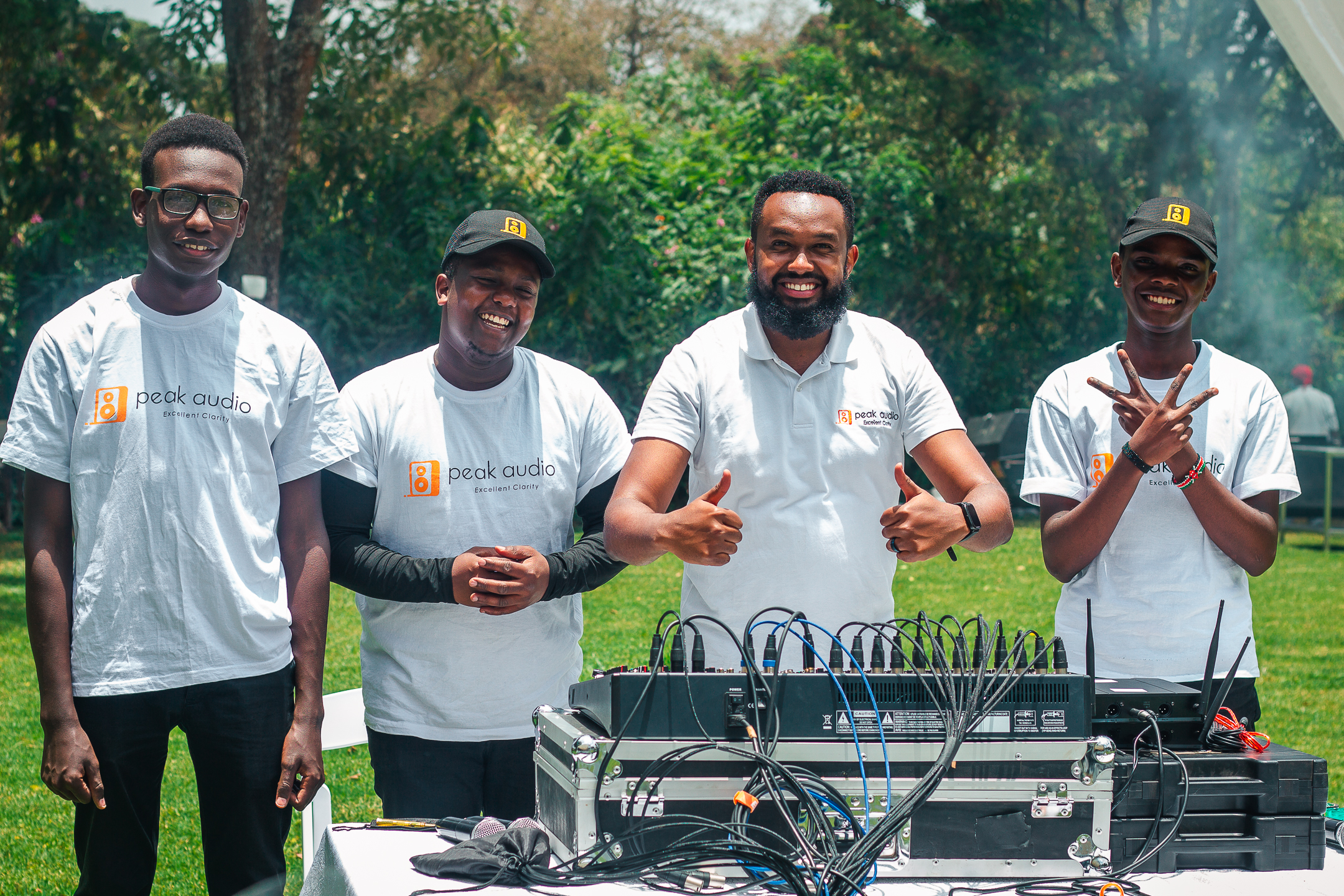
  • Business conferences.
  • Institutional gatherings.

Why Upper Hill Works Well

Upper Hill can be particularly convenient when delegates are travelling from nearby offices and institutions rather than across the entire city.

This can reduce:

  • Travel time.
  • Shuttle requirements.
  • Late arrivals.
  • Transport coordination.

Production Considerations

Peak Audio can support Upper Hill conference hotels with:

  • Professional conference sound.
  • Wireless microphones.
  • Delegate microphone systems.
  • LED screens.
  • Stage production.
  • Event lighting.
  • Multi-camera production.
  • Live streaming.
  • Hybrid-event technology.
  • Interpretation systems.

Upper Hill is particularly suitable for corporate, financial, NGO, professional, and institutional conferences where proximity to major offices and Nairobi CBD is important.

4.2 Westlands Conference Hotels

Westlands is one of Nairobi’s most active commercial and hospitality districts.

It is home to a large concentration of:

  • Corporate headquarters.
  • Professional-services firms.
  • International businesses.
  • Technology companies.
  • Private-sector organizations.
  • Restaurants.
  • Hotels.
  • Shopping centres.
  • Entertainment facilities.

This makes it particularly attractive for conferences involving business travellers, international delegates, private-sector organizations, and corporate clients.

Mövenpick Nairobi Hotel & Residences

Mövenpick Hotel & Residences Nairobi provides substantial meeting and conference facilities within Westlands.

The hotel offers multiple meeting rooms and breakout spaces, including the Almasi Ballroom.

It can be particularly appropriate for:

  • Corporate conferences.
  • Product launches.
  • Residential business events.
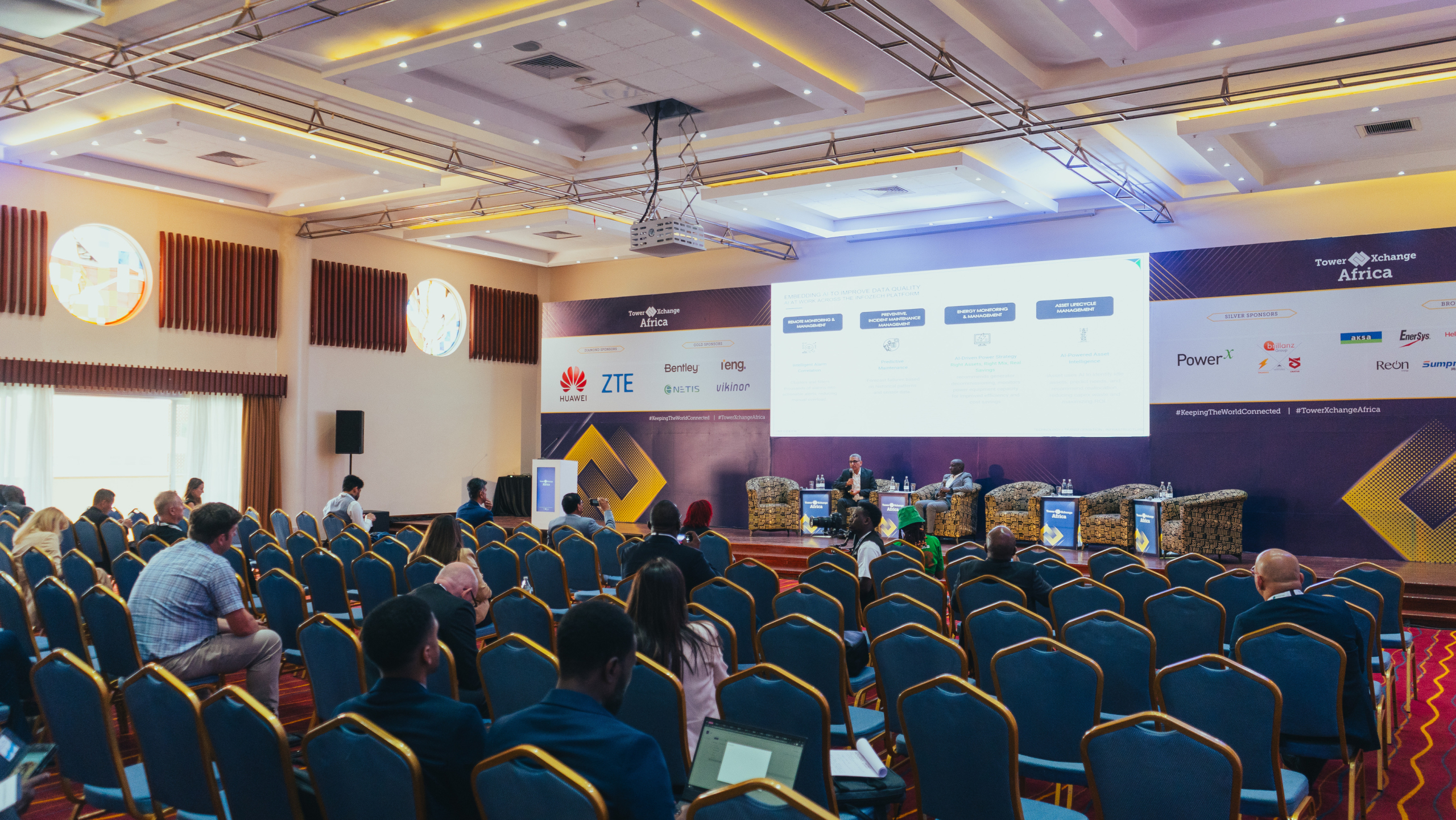
  • Gala dinners.
  • Networking events.
  • Executive meetings.

Sankara Nairobi, Autograph Collection

Sankara Nairobi, Autograph Collection provides a more executive-focused environment.

It can be suitable for:

  • Board meetings.
  • Investor forums.
  • Executive meetings.
  • Leadership sessions.
  • Premium corporate events.
  • International delegations.

Its smaller meeting-room profile makes it especially useful where privacy and premium hospitality are more important than very large audience capacity.

PrideInn Azure Hotel Nairobi

PrideInn Azure Hotel Nairobi is another Westlands option for conferences, seminars, training, and business events.

The hotel provides a range of event spaces that can support:

  • Corporate forums.
  • Workshops.
  • Training programmes.
  • Medium-sized conferences.
  • Product presentations.
  • Networking events.

Why Westlands Works Well

Westlands is particularly convenient for delegates who value access to:

  • Corporate offices.
  • Restaurants.
  • Business services.
  • Shopping facilities.
  • Accommodation.
  • Entertainment.
  • Nairobi’s northern and western commercial areas.

For international delegates, the availability of numerous hotels within the same district also gives organizers alternative accommodation options if one property does not have sufficient rooms.

Westlands is especially attractive for private-sector conferences, international business events, executive meetings, product launches, and corporate gatherings where proximity to major commercial and hospitality facilities is important.

4.3 Nairobi CBD Conference Hotels

Nairobi CBD remains an important location fr conferences involving organizations operating within the city centre.

It can be particularly convenient for:

  • Government institutions.
  • Professional associations.
  • Corporate offices.
  • Financial institutions.
  • Legal firms.
  • Business organizations.
  • Delegates already working within central Nairobi.

Sarova Stanley Hotel

Sarova Stanley is one of the most established conference hotels in central Nairobi.

Its Churchill Ballroom can accommodate up to approximately 300 guests theatre-style, depending on the seating configuration.

This makes it suitable for:

  • Corporate conferences.
  • Seminars.
  • Business forums.
  • Executive meetings.
  • Training programmes.
  • Corporate dinners.
  • Networking events.

CBD Advantages

A CBD conference hotel can reduce travel requirements for delegates coming from:

  • Government offices.
  • Banks.
  • Law firms.
  • Professional associations.
  • City-centre businesses.

The CBD can also provide access to:

  • Public transport.
  • Business services.
  • Restaurants.
  • Financial services.
  • Government institutions.

Traffic and Parking Considerations

Organizers should nevertheless assess:

  • Peak-hour traffic.
  • Parking availability.
  • VIP drop-off.
  • Production vehicle access.
  • Loading restrictions.

For large conferences, these operational considerations can have a significant impact on delegate experience.

Production Planning

Peak Audio can work with CBD conference hotels to provide:

  • Professional sound.
  • LED screens.
  • Wireless microphones.
  • Stage production.
  • Lighting.
  • Cameras.
  • Recording.
  • Live streaming.
  • Interpretation.
  • Hybrid-event support.

Nairobi CBD conference hotels can be particularly useful for central business meetings, professional associations, government-related events, seminars, and corporate conferences involving delegates already based within or near the city centre.

4.4 Mombasa Road and Airport-Corridor Hotels

Hotels along Mombasa Road and Nairobi’s airport corridor can be particularly convenient for conferences involving delegates arriving through Jomo Kenyatta International Airport or travelling from industrial and commercial areas southeast of the city centre.

This corridor is also important for organizatios operating around:

  • Industrial Area.
  • Enterprise Road.
  • Mombasa Road.
  • JKIA.
  • Embakasi.
  • Athi River.
  • Nairobi’s logistics and manufacturing zones.

The Boma Nairobi

The Boma Nairobi offers a combination of conference spaces, accommodation, catering, and hospitality facilities.

Its event facilities can support:

  • Corporate conferences.
  • Workshops.
  • Residential meetings.
  • Training programmes.
  • Gala dinners.
  • Seminars.
  • Executive meetings.

Its largest indoor meeting spaces can accommodate around 200 guests theatre-style, while additional tented event facilities provide greater flexibility for selected functions.

Eka Hotel Nairobi

Eka Hotel Nairobi is another established conference option along this corridor.

The hotel provides several meeting rooms and boardrooms, including larger spaces capable of accommodating approximately 200 delegates, depending on configuration.

It can be considered for:

  • Training sessions.
  • Corporate meetings.
  • Workshops.
  • Seminars.
  • Medium-sized conferences.
  • Residential business events.

Airport Access

One of the main advantages of this corridor is proximity to JKIA compared with many western or northern parts of Nairobi.

This can be useful for:

  • International conferences.
  • Regional business meetings.
  • Airline-related events.
  • Logistics-sector conferences.
  • Short-stay business events.

Delegate Movement

Even along the airport corridor, organizers should still account for:

  • Traffic conditions.
  • Arrival times.
  • Airport transfer schedules.
  • VIP movement.
  • Production-vehicle access.

Peak Audio Support

Peak Audio can complement conference hotels along the Mombasa Road corridor with:

  • Professional sound.
  • Wireless and delegate microphones.
  • LED video walls.
  • Stage production.
  • Lighting.
  • Interpretation.
  • Cameras.
  • Recording.
  • Live streaming.
  • Hybrid-event technology.

Mombasa Road and airport-corridor hotels can be particularly suitable for conferences involving international travellers, regional delegates, industrial-sector organizations, and events where airport access and residential accommodation are major considerations.

Nairobi Conference Hotel Locations at a Glance

Area Particularly Suitable For Example Hotels
Upper Hill Banks, corporations, NGOs, professional and institutional events Radisson Blu Upper Hill, Sarova Panafric
Westlands Private-sector events, international business, executive conferences Mövenpick, Sankara, PrideInn Azure
Nairobi CBD Government, associations, financial and city-centre business events Sarova Stanley
Mombasa Road / Airport Corridor International travellers, residential conferences, logistics and industrial-sector events The Boma, Eka Hotel

How Location Affects Conference Planning

Location influences much more than convenience.

It can affect:

  • Delegate punctuality – traffic can significantly influence arrival times.
  • Accommodation logistics – international delegates may prefer to stay close to the event venue.
  • Airport transfers – particularly important for conferences with overseas participants.
  • Supplier access – staging, sound, LED screens, and other equipment must reach the venue efficiently.
  • VIP movement – senior executives may require controlled arrival and departure arrangements.
  • Programme timing – early starts and late finishes are easier when delegates stay nearby.
  • Budget – transportation and shuttle costs can increase when delegates are spread across several parts of the city.

For a one-day Nairobi conference, proximity to delegate offices may be more important than accommodation.

For a three-day international conference, however, hotel accommodation, airport access, dining, networking areas, and reliable transport may become much more important.

Choosing Between Upper Hill, Westlands, CBD and the Airport Corridor

A simple way to compare the areas is to ask where most delegates are coming from.

Choose Upper Hill When:

Most delegates are from:

  • Banks.
  • NGOs.
  • Professional firms.
  • Government institutions.
  • Nearby corporate offices.

Choose Westlands When:

The event involves:

  • Private-sector companies.
  • International businesses.
  • Corporate executives.
  • Business travellers.
  • Networking-heavy programmes.

Choose Nairobi CBD When:

Participants are mainly from:

  • Government offices.
  • Associations.
  • Banks.
  • Professional organizations.
  • Central Nairobi businesses.

Choose the Airport Corridor When:

The programme involves:

  • International arrivals.
  • Short-stay delegates.
  • Industrial-sector companies.
  • Regional travellers.
  • Residential conferences requiring convenient airport access.

Location should be selected according to where delegates are travelling from, airport access, traffic patterns, accommodation requirements, surrounding business districts, and event schedule.

Upper Hill can be particularly convenient for conferences involving financial institutions, corporations, NGOs, government-related organizations, and professional-services firms.

Peak Audio can provide professional conference production at hotels across these Nairobi districts, including sound systems, wireless and delegate microphones, LED screens and video walls, staging, lighting, simultaneous interpretation, multi-camera video production, live streaming, hybrid-event technology, recording, presentation management, and dedicated on-site technical support.

The strongest venue decision combines location, room capacity, accommodation, catering, delegate movement, parking, technical-production access, and budget into one overall conference plan.

5. Best Conference Hotels by Event Type

Hotels for Conferences in Nairobi

Hotels for Conferences in Nairobi

The best conference hotel in Nairobi depends heavily on the type of event being organized. A hotel that works exceptionally well for a board meeting may not provide enough space for a 500-person conference, while a large ballroom may be unnecessarily expensive and impersonal for a small executive session.

Different conference formats create different requirements for room capacity, seating configuration, breakout rooms, accommodation, catering, privacy, security, audiovisual production, internet connectivity, interpretation, registration, and networking.

For this reason, organizations should begin by defining the event format and programme before comparing hotels.

5.1 Corporate Conference

Corporate conferences can range from relatively small departmental gatherings to large annual events involving hundreds of employees, customers, distributors, partners, or industry stakeholders.

Typical corporate conferences include:

  • Annual company conferences.
  • Sales conferences.
  • Leadership conferences.
  • Dealer meetings.
  • Industry forums.
  • Customer conferences.
  • Partner meetings.
  • Product conferences.
  • Staff conventions.

What Corporate Conferences Need

A suitable hotel should ideally provide:

  • Adequate plenary capacity.
  • Breakout rooms.
  • Registration areas.
  • Professional catering.
  • Reliable internet.
  • Parking.
  • Accommodation where necessary.
  • Stage and AV access.
  • Networking areas.

For multi-session programmes, breakout-room availability becomes particularly important.

Suitable Nairobi Hotels

Depending on attendance, organizations can consider hotels such as:

  • Safari Park Hotel – particularly useful for large corporate conferences and residential programmes.
  • Radisson Blu Nairobi Upper Hill – strong for medium-to-large corporate conferences within a major business district.
  • Mövenpick Nairobi – useful for conferences requiring a substantial ballroom and multiple meeting spaces.
  • The Boma Nairobi – suitable for small and medium-sized corporate conferences and training events.
  • Eka Hotel – useful for medium-sized meetings, seminars, and corporate programmes.

Corporate Branding

Corporate conferences frequently require extensive branding through:

  • LED-screen graphics.
  • Stage backdrops.
  • Registration branding.
  • Sponsor logos.
  • Directional signage.
  • Digital presentations.

Peak Audio can integrate audiovisual production with the corporate identity so that the stage, screens, lighting, and video content present a consistent event environment.

For corporate conferences, prioritize hotels offering a strong combination of plenary space, breakouts, catering, internet, parking, accommodation, branding opportunities, and audiovisual-production flexibility.

5.2 Executive and Board Meetings

Executive and board meetings usually involve smaller audiences but often require higher levels of privacy, comfort, confidentiality, hospitality, and communication technology.

A 15-person board meeting therefore has very different requirements from a 500-person conference.

Important Requirements

Organizers should prioritize:

  • Private boardrooms.
  • Comfortable executive seating.
  • Controlled access.
  • Reliable internet.
  • Professional displays.
  • Video conferencing.
  • High-quality catering.
  • Quiet surroundings.
  • Accommodation for travelling executives.

Suitable Hotels

Premium Nairobi hotels can be particularly appropriate, including:

  • Sankara Nairobi.
  • Nairobi Serena Hotel.
  • Fairmont The Norfolk.
  • Radisson Blu Nairobi Arboretum.
  • Villa Rosa Kempinski.
  • JW Marriott Nairobi.

These types of properties can support meetings where the overall experience and privacy of participants are as important as the physical meeting room.

Meeting Technology

Executive meetings may require:

  • Large professional displays.
  • Conference microphones.
  • Video conferencing.
  • Presentation management.
  • Remote-speaker integration.
  • Recording where authorized.

Technical production should generally remain discreet so that equipment does not dominate the meeting environment.

Mini Conclusion

For executive and board meetings, the strongest hotels are usually those providing privacy, premium hospitality, executive meeting rooms, reliable technology, security, and convenient accommodation rather than simply the largest ballrooms.


5.3 Annual General Meetings

Annual General Meetings have specific operational and technical requirements because they can involve shareholders, directors, executives, auditors, legal advisers, company secretaries, media representatives, and other stakeholders.

AGM Venue Requirements

A suitable conference hotel should provide sufficient space for:

  • Shareholder registration.
  • Accreditation.
  • Main meeting.
  • Board and executive seating.
  • Voting.
  • Q&A.
  • Media where applicable.
  • Technical control.

Suitable Hotels

Depending on attendance, potential options include:

  • Radisson Blu Nairobi Upper Hill.
  • Mövenpick Nairobi.
  • Safari Park Hotel.
  • Sarova Stanley.
  • Other conference hotels with appropriate meeting and registration space.

AGM Sound Requirements

Clear communication is particularly important.

Technical systems may include:

  • Podium microphones.
  • Wireless microphones.
  • Delegate microphones.
  • Audience Q&A microphones.
  • Professional PA.
  • Recording.

Presentations

AGMs frequently involve detailed:

  • Financial statements.
  • Performance reports.
  • Charts.
  • Resolutions.
  • Governance information.

Large LED screens can improve visibility for shareholders seated farther from the stage.

Hybrid AGMs

Where shareholders participate remotely, the production may also require:

  • Cameras.
  • Live streaming.
  • Remote Q&A.
  • Electronic voting integration.
  • Presentation sharing.
  • Recording.

Hotels hosting AGMs should support registration, controlled delegate access, clear presentations, professional sound, shareholder Q&A, voting requirements, recording, and hybrid participation where required.

5.4 NGO and Development Conferences

Nairobi is a major regional centre for NGOs, development agencies, humanitarian organizations, international institutions, and multilateral programmes.

These organizations frequently organize:

  • Stakeholder conferences.
  • Programme reviews.
  • Training.
  • Workshops.
  • Policy forums.
  • Regional meetings.
  • Donor conferences.
  • Development summits.

What NGO Conferences Often Require

A suitable hotel may need:

  • Main plenary room.
  • Multiple breakout rooms.
  • Reliable internet.
  • Accommodation.
  • Interpretation facilities.
  • Hybrid-event capability.
  • Flexible catering.
  • Accessible facilities.
  • Strong security.

Suitable Locations

Depending on the organizations and delegates involved, hotels within:

  • Upper Hill
  • Westlands
  • Gigiri and surrounding areas
  • Central Nairobi

may provide convenient options.

Hotels such as Radisson Blu Upper Hill, Mövenpick Nairobi, Nairobi Serena, Sankara Nairobi, and other established conference properties can be considered depending on programme requirements and budget.

Breakout Sessions

Development conferences frequently use participatory formats involving:

Plenary → thematic breakout → working group → plenary reporting.

This makes the number and proximity of breakout rooms particularly important.

Interpretation

Regional African conferences may involve delegates speaking different languages.

Depending on the audience, organizers may require simultaneous interpretation between languages such as:

  • English.
  • French.
  • Portuguese.
  • Arabic.
  • Swahili.

NGO and development conferences often benefit from hotels providing multiple meeting rooms, international accommodation, accessibility, reliable internet, interpretation capability, flexible catering, and hybrid-event infrastructure.

5.5 International Conferences and Summits

International conferences place some of the highest logistical demands on conference hotels.

Participants may include:

  • Overseas delegates.
  • Government officials.
  • CEOs.
  • International speakers.
  • Diplomatic representatives.
  • Media.
  • Sponsors.
  • Development partners.

Hotel Requirements

Organizers should consider:

  • International-standard accommodation.
  • Large plenary facilities.
  • Breakout rooms.
  • VIP meeting spaces.
  • Security.
  • Airport-transfer coordination.
  • Reliable internet.
  • Interpretation.
  • Media facilities.
  • Professional production access.

Suitable Hotels

Depending on scale and required positioning, options may include:

  • Safari Park Hotel.
  • Radisson Blu Nairobi Upper Hill.
  • Mövenpick Nairobi.
  • Nairobi Serena Hotel.
  • JW Marriott Nairobi.
  • Villa Rosa Kempinski.

For very large international conferences that exceed normal hotel capacity, organizers may instead need a dedicated convention facility, with surrounding hotels used for accommodation.

Simultaneous Interpretation

International summits may require:

  • Interpreter booths.
  • Interpreter consoles.
  • Language receivers.
  • Delegate headsets.
  • Multiple language channels.

Interpretation requirements should be established early because booths occupy valuable conference-floor space.

International Streaming

Organizations may also need to broadcast proceedings to regional or global audiences through:

  • Live streaming.
  • Remote speakers.
  • Virtual panels.
  • Hybrid sessions.
  • Professional recording.

International conferences should prioritize accommodation, security, airport logistics, plenary and breakout capacity, interpretation, internet connectivity, professional production, and VIP hospitality.

5.6 Training Workshops and Seminars

Training workshops generally require a more interactive room environment than traditional conferences.

Participants may need to:

  • Take notes.
  • Use laptops.
  • Work in groups.
  • Participate in exercises.
  • View demonstrations.
  • Ask questions.
  • Move between breakout sessions.

Seating Configuration

Classroom, U-shape, cabaret, or clustered table configurations can work better than theatre seating for interactive training.

Suitable Hotels

Potential options include:

  • Eka Hotel Nairobi.
  • The Boma Nairobi.
  • PrideInn Azure.
  • Radisson Blu Nairobi Arboretum.
  • Other hotels offering smaller and medium-sized meeting rooms.

Technical Requirements

Training sessions may need:

  • Presentation screens.
  • Wireless microphones.
  • Flip charts.
  • Internet.
  • Video conferencing.
  • Recording.
  • Breakout-room AV.

For technology or software training, power availability for participant laptops and devices should also be considered.

Multi-Day Training

Where participants travel from different counties or countries, hotels combining accommodation and training rooms can substantially simplify logistics.

Training hotels should provide flexible seating, comfortable working space, reliable internet, presentation technology, breakout rooms, catering, and accommodation where required.

5.7 Hybrid Conferences

Hybrid conferences connect delegates inside the hotel with participants joining remotely.

This format can be useful for:

  • Regional corporate meetings.
  • International conferences.
  • AGMs.
  • NGO events.
  • Training.
  • Executive forums.
  • Multi-country conferences.

What Makes a Hotel Suitable for Hybrid Events?

The hotel should support:

  • Reliable internet.
  • Dedicated wired connectivity where possible.
  • Appropriate upload bandwidth.
  • Professional cameras.
  • Conference sound.
  • Video switching.
  • Remote speakers.
  • Presentation integration.
  • Technical-control space.

Internet Testing

The presence of hotel Wi-Fi does not automatically make a venue suitable for professional hybrid production.

Peak Audio can assess the actual production requirements, including:

  • Wired connection availability.
  • Upload performance.
  • Network stability.
  • Backup internet.
  • Streaming platform requirements.

Remote Speakers

A professional hybrid workflow should allow remote speakers to:

  • Hear the room.
  • See moderators.
  • View presentations.
  • Communicate with panelists.
  • Answer delegate questions.

Multi-Camera Hybrid Production

For larger hybrid conferences, multiple cameras can capture:

  • Keynote speakers.
  • Panel discussions.
  • Audience Q&A.
  • Wide room views.

These feeds can be combined with presentations and remote speakers before being distributed to the online audience.

The best hybrid-conference hotel is one that can support reliable connectivity, professional audio, cameras, streaming equipment, remote speakers, presentation integration, and sufficient technical-control space.

5.8 Conference Gala Dinners and Networking Events

Many conferences extend beyond daytime sessions.

A multi-day programme may include:

  • Welcome cocktails.
  • Networking receptions.
  • Sponsor dinners.
  • Gala dinners.
  • Awards ceremonies.
  • Entertainment evenings.
  • Closing celebrations.

Hotels can be particularly useful because the conference and evening function can often take place within the same property.

Suitable Hotel Characteristics

For gala dinners, organizers should consider:

  • Ballroom capacity.
  • Banquet configuration.
  • Catering.
  • Stage space.
  • Dance floor.
  • Entertainment requirements.
  • Lighting.
  • Sound.
  • LED screens.
  • Branding.
  • Guest circulation.

Potential Hotels

Depending on attendance and budget, organizers can consider properties such as:

  • Safari Park Hotel.
  • Mövenpick Nairobi.
  • Radisson Blu Upper Hill.
  • Nairobi Serena Hotel.
  • Villa Rosa Kempinski.
  • JW Marriott Nairobi.
  • Sarova Stanley.

Transforming a Conference Ballroom

The same ballroom used for a daytime conference can sometimes be transformed for an evening event.

For example:

Conference plenary → room reset → banquet tables → stage lighting → entertainment → gala dinner.

This requires careful coordination between:

  • Hotel banquet teams.
  • Event organizers.
  • Decor teams.
  • Audiovisual production crews.
  • Entertainment providers.

Gala Dinner Production

Peak Audio can provide:

  • Professional sound.
  • Wireless microphones.
  • LED video walls.
  • Stage production.
  • Entertainment lighting.
  • Ambient lighting.
  • Award graphics.
  • Video playback.
  • Multi-camera production.
  • Recording.

Networking Events

For less formal receptions, technical production may be more subtle and include:

  • Background music.
  • Ambient lighting.
  • Small stage.
  • Branding screens.
  • Short speeches.
  • Entertainment.

Hotels hosting gala dinners and networking events should provide the right combination of banquet capacity, catering, staging, entertainment infrastructure, lighting, sound, branding opportunities, and guest hospitality.

Best Conference Hotel by Event Type – Quick Guide

Event Type Main Venue Priorities Potential Hotel Types
Corporate Conference Plenary, breakouts, AV, catering Large business/conference hotels
Executive Meeting Privacy, hospitality, technology Premium hotels
AGM Registration, sound, presentations, Q&A Corporate conference hotels
NGO Conference Breakouts, internet, accessibility, interpretation International/business hotels
International Summit Accommodation, security, interpretation, production Premium and large conference hotels
Training Workshop Flexible seating, internet, breakouts Small/medium conference hotels
Hybrid Conference Internet, cameras, sound, technical control Technically suitable conference hotels
Gala Dinner Ballroom, catering, stage, lighting, entertainment Large/premium hotels

Matching Hotel Capacity to Conference Format

Event type and delegate numbers should be evaluated together.

10–30 Delegates

Suitable for:

  • Board meetings.
  • Executive sessions.
  • Strategy meetings.

Prioritize privacy, boardroom technology, hospitality, and video conferencing.

30–100 Delegates

Suitable for:

  • Workshops.
  • Seminars.
  • Training.
  • Leadership forums.

Prioritize flexible layouts, presentations, microphones, internet, and catering.

100–300 Delegates

Suitable for:

  • Corporate conferences.
  • NGO forums.
  • AGMs.
  • Product presentations.

Prioritize plenary space, registration, stage, AV, breakouts, and catering.

300–600+ Delegates

Suitable for:

  • Major corporate conferences.
  • International conferences.
  • Large AGMs.
  • Gala dinners.

Prioritize ballroom capacity, large-scale sound, LED screens, staging, cameras, interpretation, registration, catering, and delegate flow.

Audiovisual Requirements Also Change by Event Type

The conference format also determines the appropriate technical package.

An executive board meeting might require:

Professional display + conference microphones + video conferencing.

A corporate conference might require:

Stage + LED screen + professional sound + wireless microphones + lighting.

An international summit might require:

Large stage + LED screens + delegate microphones + interpretation + multi-camera production + streaming.

A gala dinner might require:

Stage + LED backdrop + sound + entertainment lighting + cameras + award graphics.

A hybrid conference might require:

Professional cameras + sound + video switching + presentations + remote speakers + streaming + recording.

For this reason, organizers should ideally involve the audiovisual production team while selecting the hotel rather than waiting until the venue has already been booked.

The ideal hotel depends on the conference format. A 30-person executive meeting has very different venue, hospitality, and technical requirements from a 500-person international conference.

Peak Audio can complement Nairobi conference hotels with event-specific technical solutions including professional conference sound, wireless and delegate microphones, LED screens and video walls, staging and set production, professional lighting, simultaneous interpretation systems, multi-camera video production, live streaming, hybrid-event technology, recording, presentation management, and dedicated on-site technical support.

Rather than asking only, “Which is the best conference hotel in Nairobi?”, organizers should ask:

“Which hotel best matches our event type, delegate numbers, programme, accommodation needs, location, technical requirements, and budget?”

Answering those questions together makes it considerably easier to select a hotel capable of supporting the complete conference experience.

6. Audiovisual Requirements for Hotel Conferences

Hotels for Conferences in Nairobi

Hotels for Conferences in Nairobi

Audiovisual production is one of the most important elements of a successful hotel conference. Even when a hotel provides basic meeting equipment, larger corporate and international conferences frequently require a more comprehensive technical setup to ensure that every delegate can clearly hear speakers, see presentations, participate in discussions, follow interpretation, and engage with remote participants.

The appropriate AV setup depends on several factors, including:

  • Number of delegates.
  • Ballroom dimensions.
  • Seating configuration.
  • Stage size.
  • Number of speakers and panelists.
  • Conference programme.
  • Breakout rooms.
  • Interpretation requirements.
  • Remote participation.
  • Recording requirements.
  • Branding.
  • Entertainment.

For larger conferences, audiovisual planning should therefore begin before the final room layout is approved, because LED screens, stages, cameras, interpretation booths, lighting, technical desks, and cable routes can significantly affect the usable capacity of a hotel ballroom.

6.1 Professional Conference Sound Systems

Clear sound is fundamental to any professional conference.

Delegates should be able to understand presentations comfortably regardless of whether they are sitting in the first row or at the back of a large ballroom.

Conference Sound May Include

Depending on room size and programme, a professional system can include:

  • Main PA speakers.
  • Line-array systems.
  • Front-fill speakers.
  • Delay speakers.
  • Digital mixing consoles.
  • Audio processors.
  • Stage monitors.
  • Media playback.
  • Computer audio interfaces.

Small Hotel Meeting Rooms

For smaller seminars, board meetings, and workshops, a compact professional PA system may be sufficient.

The objective should be speech intelligibility rather than excessive volume.

Large Hotel Ballrooms

Large ballrooms require considerably more careful sound design.

Factors such as:

  • Room width.
  • Room depth.
  • Ceiling height.
  • Wall surfaces.
  • Stage position.
  • Audience layout.
  • Number of delegates.

can affect how sound travels through the space.

For particularly deep rooms, delay speakers may be necessary to provide consistent coverage without making the front PA excessively loud.

Panels and Q&A

Sound systems should also accommodate different programme components, including:

Keynote → panel discussion → audience Q&A → video playback → remote speaker → entertainment.

Each component may require a different audio configuration.

Hotel Restrictions

Before installing additional equipment, organizers should confirm:

  • Speaker-placement restrictions.
  • Rigging policies.
  • Power availability.
  • Cable routes.
  • External supplier rules.
  • Setup and rehearsal periods.

Professional conference sound should be designed according to the room, delegate numbers, seating layout, stage configuration, programme, and acoustic environment, rather than relying solely on the hotel’s standard speaker package.

6.2 Wireless, Podium and Delegate Microphones

Different speakers require different types of microphones.

A keynote presenter walking across a stage should not necessarily use the same microphone arrangement as a CEO delivering a formal address from a lectern or delegates participating in a structured AGM.

Wireless Handheld Microphones

Handheld wireless microphones are particularly useful for:

  • Moderators.
  • Audience Q&A.
  • Facilitators.
  • Interviews.
  • Panel discussions.
  • Awards presentations.

For larger audiences, multiple microphones can be positioned around the room with microphone runners.

Lapel Microphones

Lapel microphones are useful for:

  • Keynote speakers.
  • Trainers.
  • Presenters.
  • Executives.

They allow presenters to move freely while keeping their hands available for demonstrations or presentations.

Headset Microphones

Headset microphones can provide greater consistency for speakers who:

  • Move extensively.
  • Turn their heads frequently.
  • Conduct demonstrations.
  • Present in noisier environments.

Podium Microphones

Formal conferences may require professional podium or lectern microphones for:

  • Opening remarks.
  • CEO addresses.
  • Government speeches.
  • AGM reports.
  • Award presentations.
  • Diplomatic events.

Delegate Microphone Systems

Delegate systems are particularly useful for:

  • AGMs.
  • Board meetings.
  • Government conferences.
  • Roundtables.
  • International conferences.
  • Structured discussions.

These systems can allow delegates to request to speak from their seats rather than relying entirely on roaming handheld microphones.

Frequency Coordination

Large conferences may involve numerous wireless devices operating simultaneously.

These can include:

  • Handheld microphones.
  • Lapel microphones.
  • Headsets.
  • In-ear monitors.
  • Wireless intercom systems.

Professional frequency coordination reduces the risk of interference and dropouts.

The microphone package should match the conference format. A professional hotel conference may require a combination of wireless handheld, lapel, headset, podium, and delegate microphones rather than a single microphone type.

6.3 LED Screens and Video Walls

Visual communication is increasingly important at modern conferences.

LED screens and video walls can display:

  • PowerPoint presentations.
  • Financial reports.
  • Charts.
  • Corporate videos.
  • Speaker names.
  • Conference branding.
  • Sponsor content.
  • Live camera feeds.
  • Remote speakers.
  • Audience polls.
  • Event schedules.

Why LED Screens Are Useful

LED technology can be particularly effective in hotel ballrooms where:

  • Ambient light is difficult to control.
  • The audience is large.
  • Presentations contain detailed information.
  • Cameras are being used.
  • Branding is important.

Screen Size

The correct screen size depends on:

  • Audience size.
  • Room depth.
  • Stage width.
  • Seating configuration.
  • Presentation content.
  • Viewing distance.

A screen suitable for 80 delegates may be inadequate for 500.

Multiple Screens

Wide or deep ballrooms may require:

Main LED wall + side screens + confidence monitors.

Side screens can improve visibility for delegates seated at difficult angles.

Live Camera Feeds

For large conferences, live camera feeds can be displayed on LED screens so delegates at the back can clearly see:

  • Speakers.
  • Panelists.
  • Demonstrations.
  • Audience questions.

Speaker Confidence Monitors

Confidence monitors positioned near the stage can allow presenters to see:

  • Current slide.
  • Next slide.
  • Presentation notes.
  • Timer.
  • Remote participants.

Production Infrastructure

LED systems require planning for:

  • Structural support.
  • Power.
  • Video processors.
  • Playback computers.
  • Technical control.
  • Cable routes.
  • Stage integration.

LED screens should be sized and positioned according to room dimensions, audience size, presentation content, stage design, camera requirements, and viewing distance.

6.4 Professional Staging and Set Design

The stage becomes the visual focal point of most corporate conferences.

A professional stage should support the programme while reinforcing the organization’s brand and providing a comfortable environment for speakers.

Conference Stage Components

Depending on the event, staging can include:

  • Raised platforms.
  • Carpet finishing.
  • Lecterns.
  • Panel furniture.
  • Speaker chairs.
  • Coffee tables.
  • LED backdrops.
  • Branded scenic elements.
  • Stairs.
  • Accessible ramps.
  • Confidence monitors.

Keynote Stage

A keynote stage may require enough open space for a speaker to move comfortably while remaining visible to both delegates and cameras.

Panel Discussions

Panels require additional room for:

  • Chairs.
  • Tables.
  • Moderator position.
  • Microphones.
  • Water.
  • Camera sightlines.

Trying to fit too many panelists onto a small stage can negatively affect both comfort and video appearance.

Branding and Set Design

Conference sets can incorporate:

  • Company logos.
  • Event themes.
  • Sponsor branding.
  • Digital backdrops.
  • Physical scenic panels.
  • Branded lecterns.

Hotel Venue Restrictions

Before designing the stage, production teams should confirm:

  • Ceiling height.
  • Ballroom dimensions.
  • Fire exits.
  • Floor loading.
  • Rigging restrictions.
  • Stage-access requirements.
  • Loading routes.

Professional staging should combine functionality, safety, branding, speaker comfort, camera visibility, and the overall conference design.

6.5 Conference Lighting

Hotel ballroom lighting is often designed primarily for hospitality rather than professional conference production.

Additional lighting may therefore be required.

Speaker Lighting

Keynote speakers should be clearly illuminated for:

  • Delegates.
  • Photography.
  • Video recording.
  • Live streaming.

Panel Lighting

Panel discussions require balanced lighting across every participant.

Uneven lighting can result in some speakers appearing significantly darker than others on camera.

Lectern Lighting

Formal speakers at a podium should have sufficient front lighting without being uncomfortable or blinded by fixtures.

Stage Wash

A professional stage wash creates consistent illumination across the presentation area.

Branded Lighting

Lighting can also reinforce event branding through:

  • Corporate colours.
  • Architectural lighting.
  • Backdrop illumination.
  • Scenic lighting.
  • Stage effects.

Gala and Entertainment Lighting

Where a daytime conference transitions into a gala dinner or networking function, lighting can completely change the atmosphere of the room.

The same ballroom can move from:

Corporate conference → networking reception → gala dinner → entertainment.

Camera-Friendly Lighting

Conferences being recorded or streamed require particular attention to:

  • Speaker faces.
  • Colour consistency.
  • Background exposure.
  • LED-screen brightness.
  • Camera positions.

Professional conference lighting improves speaker visibility, stage presentation, branding, photography, video quality, streaming, and overall atmosphere.

6.6 Simultaneous Interpretation Systems

Simultaneous interpretation can be essential for international and multilingual conferences in Nairobi.

It may be required for events involving:

  • International organizations.
  • Multinational companies.
  • Diplomatic missions.
  • Development agencies.
  • Regional African organizations.
  • Government delegations.
  • International associations.

Interpretation Equipment

A professional interpretation system may include:

  • Interpreter booths.
  • Interpreter consoles.
  • Interpreter headsets.
  • Delegate receivers.
  • Delegate headphones.
  • Infrared or radio transmission.
  • Multiple language channels.
  • Monitoring systems.

Interpretation Booth Positioning

Interpreters generally need appropriate visual access to:

  • Speakers.
  • Presentation screens.
  • Panelists.
  • Conference proceedings.

Booth placement should therefore be considered during floor-plan development.

Multiple Languages

A conference involving several languages may require multiple interpretation booths and channels.

For example:

Floor language → English → French → Portuguese → Arabic.

The more languages required, the greater the space and technical infrastructure needed.

Integration With Conference Audio

Interpretation should integrate correctly with:

  • Delegate microphones.
  • Main PA.
  • Video recording.
  • Live streaming.
  • Hybrid platforms.

Remote Interpretation

Some conferences may also use remote interpreters. This requires careful coordination of:

  • Internet connectivity.
  • Audio routing.
  • Video feeds.
  • Language channels.
  • Platform compatibility.

Simultaneous interpretation should be planned early because booths, interpreters, receivers, language channels, audio routing, and delegate requirements can significantly affect both the floor plan and technical design.

6.7 Live Streaming and Hybrid Conference Technology

Live streaming and hybrid technology allow hotel conferences in Nairobi to reach audiences far beyond the physical ballroom.

Remote participation may include:

  • Overseas speakers.
  • Regional offices.
  • International delegates.
  • Shareholders.
  • Employees.
  • Clients.
  • Partners.

Hybrid Production Components

A professional hybrid conference may require:

  • Dedicated internet.
  • Backup connectivity.
  • Professional cameras.
  • Video switching.
  • Conference audio integration.
  • Streaming encoders.
  • Remote-speaker systems.
  • Presentation feeds.
  • Graphics.
  • Recording.

Remote Speakers

Remote presenters should ideally be integrated into the physical event so that they can:

  • Hear moderators.
  • Hear other speakers.
  • See presentations.
  • See relevant participants.
  • Respond to questions.

Online Audience Interaction

Hybrid events can incorporate:

  • Q&A.
  • Polling.
  • Chat.
  • Surveys.
  • Virtual networking.
  • Digital voting.

Internet Requirements

For professional streaming, organizers should evaluate:

  • Upload speed.
  • Download speed.
  • Stability.
  • Dedicated bandwidth.
  • Wired connections.
  • Backup internet.

A hotel’s guest Wi-Fi should not automatically be treated as the primary production connection.

Redundancy

For important corporate or international events, backup systems should be considered for critical components such as:

  • Internet.
  • Playback computers.
  • Recording.
  • Presentation feeds.
  • Power where appropriate.

Successful hybrid conferences depend on the integration of professional video, sound, presentations, remote speakers, streaming platforms, audience interaction, reliable internet, and technical support.

6.8 Multi-Camera Video Production and Recording

Multi-camera production can significantly improve both the in-room and remote conference experience.

Instead of relying on one static camera, several cameras can capture different elements of the programme.

Typical Camera Positions

A conference may use:

  • Keynote camera.
  • Wide stage camera.
  • Panel camera.
  • Audience Q&A camera.
  • Mobile camera.
  • Demonstration camera.

Image Magnification

For large hotel ballrooms, cameras can feed live images to LED screens so delegates at the back can see speakers clearly.

This is sometimes referred to as image magnification or IMAG.

Live Video Switching

A technical director can switch between:

Speaker camera → presentation → panel camera → audience camera → remote speaker → corporate video.

This creates a more professional viewing experience.

Recording

Conference recording can be used for:

  • Internal archives.
  • Training.
  • Employee communications.
  • Marketing.
  • Social media.
  • Stakeholder reporting.
  • Speaker content.
  • Conference highlights.

Recording Presentations

Professional production can capture both:

  • Camera footage.
  • Presentation content.

This allows viewers to follow the speaker while still seeing detailed slides.

Audio Quality

High-quality video recording also depends on receiving clean audio directly from the conference sound system.

Using only a camera’s built-in microphone generally produces inferior results in large hotel ballrooms.

Camera Planning

Organizers should reserve sufficient space for:

  • Tripods.
  • Camera platforms.
  • Operators.
  • Cable routes.
  • Video-control positions.

Camera positions should provide clear sightlines without obstructing delegates.

Multi-camera production provides professional coverage of keynotes, panels, presentations, audience interaction, demonstrations, and remote speakers, while creating valuable recorded content after the conference.

Hotel Conference AV Requirements at a Glance

AV Requirement Main Purpose
Professional PA Clear speech throughout the conference room
Wireless microphones Keynotes, moderators, Q&A and presentations
Podium microphones Formal speeches and executive addresses
Delegate systems AGMs, panels, structured discussions and international meetings
LED screens Presentations, branding, video and live camera feeds
Staging Keynotes, panels, awards and speaker visibility
Lighting Speaker visibility, cameras, branding and atmosphere
Interpretation Multilingual conferences
Cameras Recording, IMAG and streaming
Streaming technology Remote audiences and speakers
Technical control Sound, video, lighting, presentations and streaming
Backup connectivity Hybrid and streamed conference resilience

Why the Hotel’s Basic AV Package May Not Be Enough

Many conference hotels provide useful standard equipment such as:

  • Projectors.
  • Screens.
  • Basic microphones.
  • Speakers.
  • Flip charts.
  • Internet access.

These may be perfectly adequate for a small seminar or board meeting.

However, a large corporate or international conference may require:

Large LED wall + stage + professional PA + multiple wireless microphones + delegate system + cameras + lighting + interpretation + streaming + recording.

The technical requirements therefore need to be assessed against the actual programme and audience, rather than assuming the standard hotel package will cover everything.

Space Required for Conference Production

One of the most common planning mistakes is calculating hotel capacity using delegates alone.

A conference floor plan may also need space for:

  • Stage.
  • LED screens.
  • Speaker positions.
  • Cameras.
  • Camera platforms.
  • Interpretation booths.
  • Technical-control desks.
  • Registration.
  • Sponsor displays.
  • Cable routes.
  • Equipment storage.
  • Emergency and circulation aisles.

For example, a ballroom advertised for 500 delegates may no longer comfortably accommodate 500 once substantial production infrastructure has been installed.

The AV plan should therefore be developed alongside the seating and ballroom floor plan.

Conference Technical Control

Larger conferences normally require a dedicated technical-control area.

Depending on production complexity, this may include separate positions for:

  • Sound engineer.
  • Video director.
  • Presentation operator.
  • Lighting operator.
  • Streaming engineer.
  • Interpretation technician.
  • Recording operator.

These teams need reliable communication with one another and with stage management.

A well-coordinated production workflow might look like:

Speaker microphone → sound console → room PA + cameras + recording + interpretation + streaming.

At the same time:

Presentation laptop → video control → LED screens + confidence monitors + streaming + recording.

Planning these signal paths before the conference substantially reduces the risk of technical problems during live sessions.

Pre-Conference Technical Site Survey

For larger conferences, Peak Audio can conduct a technical assessment before production planning is finalized.

Important areas to evaluate include:

  • Ballroom dimensions.
  • Stage location.
  • LED-screen position.
  • Speaker positions.
  • Ceiling height.
  • Rigging points.
  • Power availability.
  • Internet connectivity.
  • Camera positions.
  • Interpretation-booth location.
  • Technical-control area.
  • Cable routes.
  • Equipment loading.
  • Service lifts.
  • Setup time.
  • Rehearsal schedule.

The survey allows the technical design to be adapted to the actual hotel rather than trying to force a standard AV package into every venue.

Organizers should evaluate more than the hotel’s basic AV package. Larger conferences may require LED walls, additional microphones, cameras, interpretation booths, streaming equipment, stage lighting, technical-control areas, redundant internet, and dedicated production crews.

Professional sound ensures that every delegate can clearly hear presentations. The correct combination of wireless, lapel, headset, podium, and delegate microphones allows speakers and participants to communicate effectively.

Peak Audio can provide an integrated hotel conference production package covering professional conference sound, wireless and delegate microphones, LED screens and video walls, staging and set production, professional lighting, simultaneous interpretation systems, multi-camera video production, live streaming, hybrid-event technology, recording, presentation management, and dedicated on-site technical support.

For complex hotel conferences, the strongest approach is to plan the venue layout, delegate seating, stage, AV production, internet, interpretation, cameras, and technical-control infrastructure as one integrated system rather than treating audiovisual production as an addition after the ballroom has already been configured.

7. How Peak Audio Supports Conferences at Nairobi Hotels

Hotels for Conferences in Nairobi

Hotels for Conferences in Nairobi

Selecting a suitable hotel is only one part of delivering a successful conference. The next step is ensuring that the venue is equipped with the right sound, screens, staging, lighting, interpretation, video production, streaming, and technical support for the programme.

Hotel conference packages often include basic meeting equipment, but larger or more demanding events may require additional production infrastructure. This is where Peak Audio can complement the hotel’s existing facilities with professional conference technology tailored to the actual event.

Peak Audio supports conferences at hotels across Nairobi, including properties in Upper Hill, Westlands, Nairobi CBD, Gigiri, Hurlingham, the Mombasa Road corridor, and other business districts.

The production setup can be adapted according to:

  • Ballroom dimensions.
  • Meeting-room size.
  • Delegate numbers.
  • Seating configuration.
  • Event format.
  • Number of speakers.
  • Breakout sessions.
  • Branding requirements.
  • Interpretation needs.
  • Streaming requirements.
  • Recording objectives.

7.1 Professional Conference Sound

Clear sound is essential for conferences of every size.

Peak Audio can provide professional audio systems for:

  • Corporate conferences.
  • AGMs.
  • Executive forums.
  • NGO meetings.
  • International summits.
  • Training workshops.
  • Gala dinners.
  • Hybrid conferences.

Conference Sound Systems

Depending on the room and delegate numbers, the setup can include:

  • Professional PA speakers.
  • Line-array systems.
  • Front-fill speakers.
  • Delay speakers.
  • Digital mixing consoles.
  • Stage monitors.
  • Audio processors.
  • Playback systems.

Room-Based Sound Design

Sound should be designed around the specific hotel ballroom or meeting room.

Important considerations include:

  • Room width.
  • Room depth.
  • Ceiling height.
  • Acoustic characteristics.
  • Stage location.
  • Seating layout.
  • Number of delegates.

For larger rooms, additional speaker zones may be needed so delegates at the rear can hear clearly without excessive volume near the stage.

Conference Microphones

Peak Audio can also provide:

  • Wireless handheld microphones.
  • Lapel microphones.
  • Headset microphones.
  • Podium microphones.
  • Delegate microphone systems.
  • Audience Q&A microphones.

Panel Discussions

Panels may require multiple microphones operating simultaneously.

A typical setup might include:

Moderator microphone + 4–6 panel microphones + audience Q&A microphones + podium microphone.

Peak Audio can provide conference sound systems designed around the hotel room, audience size, speaker programme, seating arrangement, and acoustic environment.

7.2 LED Screens and Video Walls


LED screens can transform a standard hotel ballroom into a professional conference environment.

They can display:

  • Presentations.
  • Videos.
  • Speaker names.
  • Conference branding.
  • Sponsor logos.
  • Live camera feeds.
  • Remote speakers.
  • Audience polls.
  • Event schedules.
  • Award graphics.

Main Conference LED Wall

A large LED wall positioned behind or beside the stage can serve as the main visual display.

It can combine:

Presentation content + event branding + speaker information + live video.

Side Screens

For wide or deep hotel ballrooms, additional side screens may be used to improve visibility for delegates sitting farther from the main stage.

Live Camera Feeds

Large conferences can benefit from live camera feeds displayed on LED screens.

This allows delegates at the back of the ballroom to clearly see:

  • Keynote speakers.
  • Panelists.
  • Audience questions.
  • Demonstrations.

Corporate Branding

LED screens can also be used for digital branding throughout the programme.

Content can include:

  • Organization logos.
  • Conference theme.
  • Sponsor slides.
  • Session titles.
  • Speaker profiles.
  • Programme transitions.

Product Launches

For product launches, LED screens can support:

  • Countdown sequences.
  • Product-reveal videos.
  • Animated branding.
  • Demonstrations.
  • Media presentations.

Peak Audio can provide LED screens and video walls sized and configured according to the ballroom dimensions, stage design, delegate numbers, viewing distance, branding requirements, and conference content

7.3 Stage and Set Production

A well-designed stage gives the conference a clear focal point and provides a professional environment for speakers, panelists, executives, and performers.

Stage Components

Peak Audio can support stage production with elements such as:

  • Raised stage platforms.
  • Stage carpeting.
  • Lecterns.
  • Panel furniture.
  • Speaker seating.
  • Coffee tables.
  • LED backdrops.
  • Branded scenic elements.
  • Stairs.
  • Accessible stage entry.
  • Confidence monitors.

Keynote Stage

Keynote speakers may need a relatively open stage that allows movement while maintaining clear visibility to delegates and cameras.

Panel Discussion Stage

Panel sessions require space for:

  • Moderator.
  • Panelists.
  • Chairs.
  • Tables.
  • Microphones.
  • Water.
  • Camera sightlines.

AGM Stage

An AGM may require a more formal stage arrangement with:

  • Board seating.
  • Chairman position.
  • Company secretary.
  • Lectern.
  • Financial presentation screen.
  • Q&A infrastructure.

Awards and Gala Events

For evening functions, stage design may incorporate:

  • Award presentation areas.
  • Entertainment zones.
  • Trophy positions.
  • Branded LED backgrounds.
  • Lighting effects.

Branding

Set production can also reinforce the event’s identity through:

  • Corporate colours.
  • Physical branding.
  • Digital branding.
  • Sponsor integration.
  • Branded lecterns.
  • Scenic panels.

Peak Audio can develop stage and set production according to the conference programme, branding, speaker movements, panel requirements, cameras, and hotel-room dimensions.

7.4 Professional Conference Lighting

Lighting plays both a functional and visual role in conference production.

Hotel ballroom lighting alone may not be sufficient for professional:

  • Keynote presentations.
  • Video production.
  • Live streaming.
  • Photography.
  • Panel discussions.
  • Gala dinners.

Speaker Lighting

Peak Audio can provide dedicated lighting for:

  • Keynote speakers.
  • Lecterns.
  • Moderators.
  • Panelists.

This helps delegates see speakers clearly and improves camera exposure.

Stage Wash

A consistent stage wash ensures that speakers remain properly illuminated as they move across the stage.

Camera Lighting

For conferences being streamed or recorded, lighting should be designed with cameras in mind.

Important considerations include:

  • Facial illumination.
  • Colour balance.
  • LED-wall brightness.
  • Background exposure.
  • Camera position.

Branded Lighting

Lighting can also be used creatively for:

  • Corporate colours.
  • Scenic backdrops.
  • Room architecture.
  • Sponsor branding.
  • Stage accents.

Gala and Networking Lighting

When a daytime conference transitions into an evening function, the room can be transformed through:

  • Ambient lighting.
  • Entertainment lighting.
  • Stage effects.
  • Architectural lighting.

Peak Audio can provide professional lighting that supports speaker visibility, stage presentation, cameras, branding, photography, live streaming, and evening-event atmosphere.

7.5 Simultaneous Interpretation Equipment

International conferences in Nairobi may involve delegates from several countries and language groups.

Peak Audio can provide simultaneous interpretation systems for conferences involving:

  • International organizations.
  • Diplomatic delegations.
  • Multinational corporations.
  • NGOs.
  • Regional African institutions.
  • Government agencies.
  • Professional associations.

Interpretation Equipment

A complete interpretation setup can include:

  • Interpreter booths.
  • Interpreter consoles.
  • Delegate receivers.
  • Delegate headsets.
  • Multiple language channels.
  • Transmission systems.
  • Monitoring equipment.

Language Channels

Depending on the conference, interpretation may involve languages such as:

  • English.
  • French.
  • Portuguese.
  • Arabic.
  • Swahili.

Integration With Conference Sound

The interpretation system can be integrated with:

  • Podium microphones.
  • Delegate microphones.
  • Main PA.
  • Video production.
  • Recording.
  • Live streaming.
  • Hybrid platforms.

Booth Planning

Interpretation booths require suitable positions with visual access to:

  • Speakers.
  • Stage.
  • Presentation screens.

They should therefore be included in the ballroom floor plan from the beginning.

Remote Interpretation

Where appropriate, remote interpreters can also be incorporated into hybrid-event workflows, subject to suitable technical and internet infrastructure.

Peak Audio can provide interpretation systems designed around the number of languages, delegates, rooms, interpreters, conference format, and hybrid requirements.

7.6 Live Streaming and Hybrid Event Production

Hybrid conference technology allows organizations to connect physical delegates in Nairobi with remote participants around Kenya, Africa, or internationally.

Hybrid Conference Components

Peak Audio can provide:

  • Professional cameras.
  • Video switching.
  • Conference audio integration.
  • Presentation feeds.
  • Remote-speaker integration.
  • Streaming encoders.
  • Graphics.
  • Recording.
  • Technical operators.

Remote Speakers

Remote speakers can be integrated into the conference so that they can:

  • Hear moderators.
  • Hear other panelists.
  • View presentations.
  • Speak to the physical audience.
  • Respond to questions.

Live Streaming

Conference sessions can be distributed to:

  • Remote employees.
  • International delegates.
  • Shareholders.
  • Clients.
  • Partners.
  • Members.
  • Online audiences.

Presentation Integration

The streamed programme can combine:

Camera feed + PowerPoint presentation + remote speaker + event graphics + video playback.

Audience Interaction

Hybrid conferences can also incorporate:

  • Online Q&A.
  • Polls.
  • Chat.
  • Surveys.
  • Virtual panels.

Internet Assessment

Before streaming, Peak Audio can assess technical requirements such as:

  • Upload bandwidth.
  • Network stability.
  • Wired connectivity.
  • Dedicated internet.
  • Backup internet.

Peak Audio can provide integrated hybrid production combining professional sound, cameras, presentations, remote speakers, streaming platforms, recording, and audience interaction.

7.7 Multi-Camera Video Production and Recording

Multi-camera production can improve both the in-room delegate experience and the quality of conference recordings.

Camera Positions

Depending on the programme, Peak Audio can deploy cameras for:

  • Keynote speakers.
  • Wide stage coverage.
  • Panel discussions.
  • Audience Q&A.
  • Demonstrations.
  • Awards.
  • Entertainment.

Live Switching

Camera feeds can be switched alongside other visual sources.

A typical production might move between:

Keynote camera → presentation → panel camera → audience camera → remote participant → corporate video.

Image Magnification

For large ballrooms, live camera feeds can be displayed on LED screens so delegates sitting farther from the stage can clearly follow the speakers.

Conference Recording

Professional recordings can be used for:

  • Internal communications.
  • Training.
  • Marketing.
  • Social media.
  • Stakeholder reporting.
  • Conference archives.
  • Speaker distribution.
  • Highlight videos.

Presentation Recording

The recording can incorporate both:

  • Camera footage.
  • Presentation slides.

This creates a more useful final record than simply filming the stage from one static camera.

Professional Audio

Conference video should receive clean sound directly from the main audio system rather than relying on built-in camera microphones.

Peak Audio can provide multi-camera production and professional recording for keynotes, panel discussions, presentations, Q&A sessions, award ceremonies, entertainment, and hybrid conferences.

7.8 Dedicated On-Site Technical Support

Professional equipment alone does not guarantee a successful conference.

Experienced technicians are required tonstall, test, operate, monitor, and troubleshoot the production throughout the event.

Pre-Event Setup

Peak Audio’s technical team can support:

  • Equipment installation.
  • Cable routing.
  • Sound testing.
  • Microphone testing.
  • LED-screen configuration.
  • Camera setup.
  • Lighting focus.
  • Interpretation testing.
  • Streaming tests.
  • Presentation checks.

Technical Rehearsals

Before important conferences, technical rehearsals can be conducted with:

  • MCs.
  • Moderators.
  • Keynote speakers.
  • Panelists.
  • Remote presenters.
  • Entertainment teams.

Presentation Management

For presentation-heavy conferences, a dedicated operator can manage:

  • Speaker slides.
  • Videos.
  • Session titles.
  • Holding graphics.
  • Sponsor content.
  • Playback.

This reduces the risk associated with speakers repeatedly connecting different laptops directly to the main display.

Live Technical Monitoring

During the conference, technicians can monitor:

  • Sound levels.
  • Microphone operation.
  • LED screens.
  • Presentations.
  • Cameras.
  • Lighting.
  • Interpretation.
  • Streaming.

Technical Control Area

Larger hotel conferences may require a dedicated control area with:

  • Sound engineer.
  • Video director.
  • Lighting operator.
  • Presentation operator.
  • Streaming engineer.
  • Interpretation technician.

Troubleshooting

If an issue occurs during a live event, having an experienced team on site allows problems to be identified and resolved as quickly as possible.

Dedicated on-site technical support ensures that the conference production is installed correctly, tested thoroughly, professionally operated, continuously monitored, and supported throughout the event.

Peak Audio Conference Production Services at a Glance

Service Conference Application
Professional sound Keynotes, panels, presentations and Q&A
Wireless microphones Speakers, moderators and audience participation
Delegate microphones AGMs, executive forums and structured discussions
LED screens Presentations, branding, live video and sponsor content
Stage production Keynotes, panels, AGM boards, awards and entertainment
Conference lighting Speaker visibility, cameras and atmosphere
Interpretation systems Multilingual and international conferences
Live streaming Remote audiences and international participants
Hybrid technology Remote speakers, delegates and panels
Multi-camera production IMAG, streaming and recording
Presentation management Slides, videos, graphics and session content
Technical support Setup, operation, monitoring and troubleshooting

Integrated Conference Production

For complex hotel conferences, the individual AV systems should operate as one integrated production environment.

For example:

Speaker microphone → sound console → room PA + interpretation + recording + streaming.

At the same time:

Presentation laptop → video control → LED screens + confidence monitors + livestream + recording.

And:

Professional cameras → video switcher → LED screens + livestream + recording.

When these systems are planned together, the conference becomes easier to operate and the audience receives a much more consistent experience.

Peak Audio Support for Different Conference Sizes

Small Executive Meeting

A smaller production may include:

Professional display + conference microphones + video conferencing + technical support.

Medium Corporate Conference

A medium event might require:

Stage + LED screen + professional sound + wireless microphones + lighting + cameras.

Large International Conference

A more complex production could involve:

Large stage + LED walls + professional PA + delegate microphones + interpretation booths + multi-camera production + livestreaming + recording + technical control.

The production package should therefore scale according to the actual event rather than applying the same equipment list to every conference.

Hotel Coordination and Technical Site Surveys

Peak Audio can coordinate with hotel conference teams before the event to evaluate:

  • Ballroom dimensions.
  • Stage position.
  • Screen placement.
  • Power availability.
  • Speaker positions.
  • Camera sightlines.
  • Lighting positions.
  • Interpretation-booth locations.
  • Technical-control areas.
  • Internet availability.
  • Cable routes.
  • Loading access.
  • Service lifts.
  • Setup times.
  • Rehearsal schedules.

This is particularly important for large conferences because the production footprint can affect the final delegate capacity.

Peak Audio can complement hotel conference facilities with professional audiovisual technology and technical production tailored to the hotel ballroom, meeting room, delegate numbers, conference format, branding requirements, and event objectives.

Professional sound ensures that speakers can be heard clearly throughout the room, while the correct combination of wireless, podium, lapel, headset, and delegate microphones supports keynotes, panels, AGMs, workshops, and audience interaction.

The strongest hotel conference production is therefore not simply a collection of equipment. It is a coordinated technical system combining sound, microphones, LED screens, staging, lighting, interpretation, cameras, streaming, presentations, recording, and experienced technical personnel around the actual programme and venue.

8. Frequently Asked Questions About Hotels for Conferences in Nairobi

Choosing among the many hotels for conferences in Nairobi can be challenging because different properties are suited to different delegate numbers, conference formats, locations, accommodation requirements, and budgets.

The following frequently asked questions address some of the most important considerations for organizations planning corporate conferences, AGMs, executive meetings, NGO conferences, international summits, workshops, training programmes, gala dinners, and hybrid events in Nairobi.

8.1 What are the best hotels for conferences in Nairobi?

There is no single conference hotel that is best for every event. The most appropriate choice depends on the number of delegates, conference format, location, accommodation requirements, breakout rooms, catering, audiovisual production, and budget.

Established Nairobi options include:

  • Safari Park Hotel & Casino – particularly suitable for large conferences, residential events, exhibitions, retreats, and gala dinners.
  • Radisson Blu Hotel, Nairobi Upper Hill – useful for corporate conferences, AGMs, executive forums, and institutional events.
  • Mövenpick Hotel & Residences Nairobi – a Westlands option with a substantial ballroom and multiple meeting spaces.
  • Sankara Nairobi, Autograph Collection – particularly appropriate for executive meetings and premium business events.
  • Nairobi Serena Hotel – suitable for high-level corporate, institutional, diplomatic, and international events.
  • Fairmont The Norfolk – suitable for executive meetings, private corporate functions, and smaller conferences.
  • The Boma Nairobi – useful for corporate conferences, workshops, training, and residential meetings.
  • Eka Hotel Nairobi – suitable for seminars, workshops, training, and medium-sized corporate events.
  • Sarova Stanley – a convenient CBD option for conferences and business meetings.

Organizers should shortlist hotels according to the actual conference programme rather than selecting solely according to reputation.

The best hotel is the one that provides the right combination of usable meeting capacity, breakout rooms, accommodation, catering, location, internet, parking, production access, and delegate experience for the specific conference.

8.2 Which Nairobi hotels are suitable for large conferences?

For larger conferences, organizers should prioritize hotels with substantial plenary facilities and enough supporting infrastructure for hundreds of delegates.

Potential options include Safari Park Hotel & Casino, Radisson Blu Nairobi Upper Hill, and Mövenpick Hotel & Residences Nairobi.

Safari Park’s Jambo Conference Centre is particularly relevant where substantial conference capacity and exhibition or gala functionality are required. Radisson Blu Upper Hill provides a major ballroom together with several additional meeting spaces, while Mövenpick provides a large ballroom supported by multiple meeting and breakout rooms.

Other large premium Nairobi hotels may also be appropriate depending on the required configuration.

Large Conferences Need More Than a Ballroom

Organizers should evaluate:

  • Registration areas.
  • Breakout rooms.
  • Catering capacity.
  • Accommodation.
  • Parking.
  • Internet.
  • Stage space.
  • LED-screen positions.
  • Camera positions.
  • Interpretation booths.
  • Technical-control space.
  • Loading access.

A hotel’s published maximum capacity may decrease substantially once full conference production has been installed.

For large conferences, select a hotel based on practical capacity after staging and AV are installed, not simply the maximum number shown on the hotel’s capacity chart.

8.3 Which hotels in Nairobi have conference rooms and accommodation?

Many established Nairobi business hotels combine conference facilities with guest accommodation.

Examples include:

  • Safari Park Hotel & Casino.
  • Radisson Blu Nairobi Upper Hill.
  • Mövenpick Hotel & Residences Nairobi.
  • Sankara Nairobi.
  • Nairobi Serena Hotel.
  • Fairmont The Norfolk.
  • The Boma Nairobi.
  • Eka Hotel Nairobi.
  • Sarova Stanley.

This combination can be particularly useful for:

  • International conferences.
  • Multi-day corporate events.
  • Residential training.
  • NGO meetings.
  • Regional conferences.
  • Executive retreats.
  • Conferences involving speakers from outside Nairobi.

Why Accommodation Matters

Keeping delegates at the same property as the conference can simplify:

  • Airport transfers.
  • Morning arrivals.
  • Evening functions.
  • Speaker movements.
  • VIP logistics.
  • Catering.
  • Networking.

It can also reduce the risk of delegates arriving late because of Nairobi traffic.

For multi-day and international conferences, hotels combining meeting rooms, accommodation, catering, business facilities, and networking areas can significantly simplify event logistics.

8.4 What are the best conference hotels in Westlands

Westlands is one of Nairobi’s strongest districts for corporate and international business events because of its concentration of offices, hotels, restaurants, shopping facilities, and professional services.

Popular conference options include:

Mövenpick Hotel & Residences Nairobi

A strong option for medium and larger corporate conferences, with a substantial ballroom and multiple meeting and breakout spaces.

Sankara Nairobi, Autograph Collection

Particularly appropriate for:

  • Executive meetings.
  • Leadership sessions.
  • Investor meetings.
  • International delegations.
  • Premium corporate events.

PrideInn Azure Hotel Nairobi

Another option for:

  • Seminars.
  • Training.
  • Workshops.
  • Corporate meetings.
  • Medium-sized conferences.

Westlands can be especially convenient when delegates are coming from offices around Westlands, Parklands, Riverside and surrounding commercial areas.

Mövenpick, Sankara and PrideInn Azure are among the conference hotels organizers can consider in Westlands, with the final choice depending on attendance, event style, accommodation, room configuration, and budget.

8.5 What are the best conference hotels in Upper Hill?

Upper Hill is particularly convenient for conferences involving organizations operating within Nairobi’s corporate, financial, professional, development, healthcare, and institutional sectors.

Radisson Blu Hotel, Nairobi Upper Hill

This is one of the major conference hotels in the district and can accommodate a variety of events, including:

  • Corporate conferences.
  • AGMs.
  • Financial-sector meetings.
  • Executive forums.
  • Gala functions.
  • International meetings.

Its largest ballroom can accommodate several hundred delegates depending on configuration, while additional rooms support smaller sessions and breakouts.

Sarova Panafric

Sarova Panafric is another established hotel option in the wider Upper Hill/central Nairobi area and can support:

  • Corporate meetings.
  • Seminars.
  • Training.
  • Workshops.
  • Business functions.

Upper Hill is particularly suitable when the conference audience consists primarily of corporate, financial, NGO, government-related, healthcare, or professional-sector delegates working around the district and central Nairobi.

8.6 What should I consider when choosing a conference hotel in Nairobi?

The most important considerations include:

  • Expected delegate numbers.
  • Seating configuration.
  • Plenary-room capacity.
  • Breakout rooms.
  • Accommodation.
  • Location.
  • Airport access.
  • Catering.
  • Parking.
  • Accessibility.
  • Security.
  • Internet connectivity.
  • Stage requirements.
  • Audiovisual infrastructure.
  • Production access.
  • Setup and rehearsal time.
  • Budget.

Evaluate Usable Capacity

Do not assume that a ballroom advertised for 500 people will comfortably accommodate a 500-person conference.

The room may also need:

Stage + LED wall + cameras + technical control + interpretation booths + registration + sponsor displays + circulation aisles.

These elements can reduce practical seating capacity.

Evaluate the Programme

A conference involving one keynote session has different requirements from an event involving:

  • Plenary sessions.
  • Five parallel workshops.
  • Exhibition stands.
  • VIP meetings.
  • Interpretation.
  • Live streaming.
  • Gala dinner.

The entire programme should therefore be considered when evaluating the hotel.

Select a conference hotel according to the complete operational requirements of the event, rather than simply comparing room hire prices or headline capacities.

8.7 Which Nairobi hotels are suitable for hybrid conferences?

Many established Nairobi conference hotels can potentially support hybrid events when appropriate professional production infrastructure is installed.

Hotels such as:

  • Radisson Blu Nairobi Upper Hill.
  • Mövenpick Nairobi.
  • Safari Park Hotel.
  • Sankara Nairobi.
  • Nairobi Serena Hotel.
  • Radisson Blu Nairobi Arboretum.
  • Other appropriately equipped conference hotels.

can be considered depending on the scale and technical requirements.

However, the availability of Wi-Fi does not automatically mean a hotel is hybrid-conference ready.

Hybrid Conferences Require

A professional setup may need:

  • Dedicated internet.
  • Wired connectivity.
  • Adequate upload bandwidth.
  • Backup internet.
  • Professional cameras.
  • Conference sound.
  • Video switching.
  • Remote-speaker integration.
  • Presentation feeds.
  • Streaming equipment.
  • Technical operators.

Internet Testing

For business-critical events, Peak Audio can assess the connection from the actual production location before the conference.

A suitable hybrid-conference hotel should provide both the physical conference environment and reliable connectivity required to integrate professional cameras, sound, presentations, remote speakers, and streaming technology.

8.8 Does Peak Audio provide professional sound at conference hotels?

Yes. Peak Audio can provide professional conference sound systems for hotel conferences throughout Nairobi.

Depending on the conference size and format, systems can include:

  • Professional PA speakers.
  • Line-array systems.
  • Front-fill speakers.
  • Delay speakers.
  • Digital mixing consoles.
  • Wireless handheld microphones.
  • Lapel microphones.
  • Headset microphones.
  • Podium microphones.
  • Delegate microphone systems.
  • Audience Q&A microphones.
  • Stage monitors.
  • Playback systems.

Different Conferences Require Different Systems

A 30-person executive forum may need only a compact sound system and conference microphones.

A 600-person international conference may require:

Large PA + digital console + multiple wireless microphones + delegate systems + stage monitoring + audio distribution for cameras, interpretation and streaming.

Peak Audio can scale the sound package according to the hotel ballroom, delegate numbers, seating arrangement, speakers, panel sessions, Q&A format, and conference programme.

8.9 Can Peak Audio provide LED screens, staging and lighting at Nairobi hotels?

Yes. Peak Audio can provide integrated LED-screen, staging, and professional-lighting solutions for conferences at Nairobi hotels.

LED Screens

LED screens can display:

  • Presentations.
  • Conference branding.
  • Speaker information.
  • Corporate videos.
  • Sponsor content.
  • Remote speakers.
  • Live camera feeds.

Staging

Conference staging can include:

  • Raised platforms.
  • Lecterns.
  • Panel furniture.
  • Speaker seating.
  • Branded backdrops.
  • LED integration.
  • Confidence monitors.
  • Stage access.

Professional Lighting

Lighting can support:

  • Keynote speakers.
  • Panel discussions.
  • Lecterns.
  • Video production.
  • Photography.
  • Live streaming.
  • Corporate branding.
  • Gala dinners.

Peak Audio can combine stage + LED screens + sound + lighting into one coordinated production design tailored to the hotel ballroom and conference programme.

8.10 Can Peak Audio provide simultaneous interpretation equipment at hotel conferences?

Yes. Peak Audio can provide simultaneous interpretation equipment for multilingual conferences hosted at Nairobi hotels.

A typical system can include:

  • Interpreter booths.
  • Interpreter consoles.
  • Interpreter headsets.
  • Delegate receivers.
  • Delegate headphones.
  • Multiple language channels.
  • Transmission systems.
  • Technical monitoring.

Suitable Events

Interpretation can be particularly important for:

  • International conferences.
  • Regional African summits.
  • Diplomatic meetings.
  • NGO conferences.
  • Government events.
  • Multinational corporate meetings.
  • International association conferences.

Integration

Interpretation can be integrated with:

Conference microphones → interpretation system → delegate headsets → recording → cameras → livestream.

Planning Information

For an accurate interpretation proposal, organizers should provide:

  • Required languages.
  • Number of delegates.
  • Number of conference rooms.
  • Number of interpreters.
  • Event duration.
  • Whether interpretation is onsite or remote.

Yes. Peak Audio can design interpretation systems according to the languages, delegate numbers, conference format, venue layout, and streaming or recording requirements.

8.11 Can Peak Audio live stream conferences from Nairobi hotels

Yes. Peak Audio can provide professional live streaming and hybrid-event production for conferences hosted at suitable Nairobi hotels

Live Streaming Can Include

  • Professional cameras.
  • Multi-camera switching.
  • Conference audio.
  • Presentation integration.
  • Remote speakers.
  • Event graphics.
  • Video playback.
  • Panel discussions.
  • Audience Q&A.
  • Recording.

Remote Participants

Hybrid production can connect the physical conference with:

  • International speakers.
  • Regional offices.
  • Employees.
  • Shareholders.
  • Customers.
  • Partners.
  • Remote delegates.

Internet Requirements

The hotel’s internet connection should be assessed for:

  • Upload bandwidth.
  • Stability.
  • Dedicated connectivity.
  • Wired access.
  • Backup internet.

For important conferences, redundancy can reduce the risk of losing the livestream if the primary connection becomes unavailable.

Yes. Peak Audio can integrate professional cameras, sound, presentations, remote participants, streaming technology, recording, and technical support for conferences at suitable Nairobi hotels.

8.12 How can I get a quotation for conference audiovisual production at a Nairobi hotel?

To prepare an accurate quotation, organizers should provide as much information as possible about the event.

Basic Conference Information

Provide:

  • Event date.
  • Hotel or proposed venue.
  • Nairobi location.
  • Conference duration.
  • Expected number of delegates.
  • Number of conference rooms.
  • Seating arrangement.
  • Setup date and time.
  • Rehearsal requirements.

Audiovisual Requirements

Indicate whether you require:

  • Professional sound.
  • Wireless microphones.
  • Podium microphones.
  • Delegate microphones.
  • LED screens.
  • Stage.
  • Lighting.
  • Cameras.
  • Recording.
  • Presentation management.

Interpretation Requirements

Where simultaneous interpretation is needed, provide:

  • Languages.
  • Number of delegates requiring headsets.
  • Number of rooms.
  • Number of interpreters.
  • Onsite or remote interpretation requirements.

Streaming Requirements

For hybrid conferences, provide details such as:

  • Remote speakers.
  • Remote audience.
  • Preferred platform.
  • Number of cameras.
  • Presentation sharing.
  • Online Q&A.
  • Recording requirements.
  • Available hotel internet.

Site Assessment

For larger conferences, a technical site survey may be recommended before the final production design is confirmed.

The assessment can evaluate:

  • Ballroom dimensions.
  • Stage position.
  • LED-screen dimensions.
  • Speaker locations.
  • Camera sightlines.
  • Lighting positions.
  • Interpretation-booth locations.
  • Technical-control area.
  • Power.
  • Internet.
  • Cable routes.
  • Loading access.
  • Setup schedule.

The more information provided about the hotel, delegate numbers, programme, rooms, stage, AV requirements, interpretation, streaming, and recording, the easier it is to develop an accurate production quotation.


Conference Hotel FAQ – Quick Reference

Question Key Consideration
Best conference hotel? Depends on event size, format, location and budget
Large conference hotel? Ballroom capacity, breakouts, accommodation and production space
Conference + accommodation? Many major Nairobi business hotels provide both
Westlands hotels? Mövenpick, Sankara and PrideInn Azure are options
Upper Hill hotels? Radisson Blu Upper Hill and Sarova Panafric are options
How to choose? Capacity, location, accommodation, internet, catering, parking and AV
Hybrid conference hotel? Reliable internet plus sufficient production infrastructure
Professional sound? Peak Audio can provide scalable conference sound
LED, stage and lighting? Peak Audio can provide integrated production
Interpretation? Available for multilingual conferences
Live streaming? Available for suitable hotel venues
Quotation? Provide venue, date, delegates, programme and technical requirements

Additional Questions to Ask a Hotel Before Booking

Before signing the venue agreement, conference organizers should also consider asking:

  • What is the usable ballroom capacity for the intended seating configuration?
  • How many breakout rooms are available?
  • When can external production teams access the ballroom?
  • Are there restrictions on external audiovisual suppliers?
  • What loading routes and service lifts are available?
  • What electrical power is available for production?
  • Are there restrictions on LED screens or staging?
  • What is the ceiling height?
  • Are rigging points available?
  • Where can interpretation booths be positioned?
  • Where can cameras and technical-control desks be located?
  • Is dedicated wired internet available?
  • Can a separate production internet connection be provided?
  • What are the setup and rehearsal times?
  • Is overnight equipment storage permitted?
  • What parking arrangements are available for delegates and suppliers?

Answering these questions early can prevent conflicts between the hotel floor plan, delegate seating, and audiovisual-production requirements.

The best hotels for conferences in Nairobi vary according to the event format, delegate numbers, preferred location, accommodation requirements, breakout sessions, catering, internet connectivity, audiovisual requirements, and budget.

Peak Audio can complement conference-hotel facilities throughout Nairobi with professional sound systems, wireless and delegate microphones, LED screens and video walls, staging and set production, conference lighting, simultaneous interpretation systems, multi-camera video production, live streaming, hybrid-event technology, recording, presentation management, and dedicated on-site technical support.

For the strongest results, the hotel and audiovisual production requirements should be evaluated together before the final ballroom layout and delegate capacity are confirmed.

Choosing the Right Conference Hotel in Nairobi

Hotels for Conferences in Nairobi

Hotels for Conferences in Nairobi

Nairobi offers a diverse range of conference hotels suitable for executive meetings, corporate conferences, AGMs, workshops, international summits, hybrid events, gala dinners, and multi-day conferences. From executive boardrooms and flexible meeting suites to large hotel ballrooms and residential conference facilities, organizations can select venues that match their event format, audience, and objectives while benefiting from accommodation, catering, meeting spaces, and hospitality services within the same property.

Choosing the right conference hotel requires careful comparison of delegate capacity, location, accommodation, breakout rooms, catering, parking, internet connectivity, security, accessibility, audiovisual requirements, production access, and overall budget. Business districts such as Upper Hill, Westlands, Nairobi CBD, and the Mombasa Road/airport corridor offer different advantages depending on delegate profiles, transport requirements, accommodation preferences, and proximity to key business or transport hubs. Organizers should also confirm actual usable capacity rather than relying solely on published figures, as staging, LED screens, technical control desks, cameras, exhibition areas, simultaneous interpretation facilities, and seating configurations can significantly affect the space available for delegates.

At Peak Audio, we provide professional conference sound, LED screens, staging, lighting, simultaneous interpretation systems, video production, live streaming, hybrid event technology, and experienced technical support at conference hotels throughout Nairobi. By coordinating audiovisual and production requirements with the selected hotel and event layout, Peak Audio helps corporations, NGOs, government agencies, international organizations, professional associations, and other institutions deliver seamless, engaging, and professionally produced conferences.

Corporate Event Venues in Kenya – Find the Perfect Venue & Elevate Your Business Event with Peak Audio

Corporate Event Venues in Kenya

Corporate Event Venues in Kenya

Kenya is one of East Africa’s leading destinations for corporate conferences, executive meetings, Annual General Meetings (AGMs), product launches, gala dinners, award ceremonies, exhibitions, networking events, team-building retreats, and international business events. Organizations can choose from a diverse range of corporate event venues, including executive hotel boardrooms, dedicated conference centres, large convention facilities, exhibition halls, luxury resorts, gardens, and outdoor event spaces. Nairobi has the country’s largest concentration of corporate venues, offering options for everything from private executive meetings and workshops to major conferences, exhibitions, and international events involving thousands of delegates.

Choosing the right corporate event venue in Kenya requires careful consideration of the event objectives, audience, format, and technical requirements. Important factors include guest capacity, location, accessibility, accommodation, parking, catering, breakout rooms, internet connectivity, security, branding opportunities, audiovisual requirements, and access for production teams. Organizers should also consider whether the venue can comfortably accommodate professional sound systems, stages, LED screens, lighting equipment, cameras, interpretation booths, registration areas, livestreaming infrastructure, and hybrid event technology. Selecting a venue that supports both logistical and production requirements helps create a seamless experience for organizers, speakers, exhibitors, and attendees.

Peak Audio provides professional Corporate Event Production Services across Kenya, helping organizations transform corporate venues into fully equipped environments for successful business events. From professional sound, staging, lighting, and LED screens to video production, live streaming, hybrid event technology, interpretation systems, and comprehensive technical support, Peak Audio provides the production expertise required for polished event delivery. Whether organizing an executive meeting, corporate conference, AGM, product launch, gala dinner, awards ceremony, exhibition, or international business event, Peak Audio helps organizations maximize their chosen venue and deliver engaging, professional, and memorable event experiences.

1. What Makes a Good Corporate Event Venue in Kenya?

Corporate Event Venues in Kenya

Corporate Event Venues in Kenya

Choosing the right corporate event venue is one of the most important decisions when planning a conference, executive meeting, AGM, product launch, gala dinner, award ceremony, exhibition, networking event, corporate retreat, training programme, or hybrid event in Kenya.

A venue may look impressive in photographs but still be unsuitable if it lacks the capacity, accessibility, internet connectivity, breakout spaces, production access, parking, accommodation, or technical infrastructure required for the event.

The best corporate event venues therefore balance the practical needs of organizers with the experience of delegates, speakers, executives, exhibitors, sponsors, and invited guests.

1.1 Convenient Location

Location can significantly affect attendance, punctuality, transportation costs, supplier logistics, and the overall guest experience.

Accessibility for Employees and Local Delegates

For locally attended corporate events, organizers should consider how easily employees and delegates can reach the venue from:

  • Major business districts.
  • Company offices.
  • Residential areas.
  • Public transport routes.
  • Major highways and connecting roads.

In Nairobi, areas such as CBD, Westlands, Upper Hill, Gigiri, Karen, and the Mombasa Road corridor can offer different advantages depending on where attendees are coming from.

International Delegates

For international conferences and regional corporate meetings, organizers should consider:

  • Distance from the airport.
  • Airport-transfer requirements.
  • Nearby accommodation.
  • Traffic patterns.
  • Access to restaurants and business services.
  • Security and transportation arrangements.

Supplier and Production Access

Location should also work for the companies delivering:

  • Audiovisual equipment.
  • Staging.
  • LED screens.
  • Lighting.
  • Exhibition booths.
  • Branding.
  • Catering.
  • Entertainment.

Large production trucks and equipment teams may require convenient loading and unloading access.

A conveniently located venue makes it easier for delegates, executives, international visitors, suppliers, speakers, and technical crews to reach and operate at the event efficiently.

1.2 Appropriate Event Capacity

Venue capacity should correspond with both the expected number of attendees and the intended event format.

A room designed for 500 people may not necessarily accommodate 500 delegates once staging, production, exhibitions, and other event infrastructure are installed.

Seating Configuration Matters

Common configurations include:

  • Theatre style – suitable for conferences and presentations.
  • Classroom style – useful for training and workshops.
  • Banquet style – common for gala dinners and awards.
  • Cabaret style – useful for interactive corporate events.
  • Boardroom style – appropriate for executive meetings.
  • U-shaped seating – useful for workshops and discussions.
  • Cocktail configuration – suitable for networking events and receptions.

Production Reduces Usable Capacity

Space may also be required for:

Stage + LED screens + cameras + technical control + registration + exhibition booths + interpretation booths + networking areas + aisles.

Organizers should therefore work with the usable production capacity rather than relying solely on the venue’s advertised maximum capacity.

The appropriate venue should comfortably accommodate the delegates, preferred seating configuration, stage, audiovisual production, registration, exhibitions, and circulation areas required for the event.

1.3 Flexible Event Spaces

Corporate events increasingly involve more than one large room.

A conference may begin with a plenary session before delegates divide into workshops, while an AGM may require registration areas, executive rooms, media facilities, and technical-control spaces.

Plenary Rooms

The main plenary room should comfortably accommodate:

  • Delegates.
  • Speakers.
  • Stage.
  • Screens.
  • Cameras.
  • Technical production.

Breakout Rooms

Breakout spaces are valuable for:

  • Workshops.
  • Parallel sessions.
  • Executive meetings.
  • Bilateral discussions.
  • Training sessions.
  • Speaker preparation.
  • VIP meetings.

Exhibition Areas

Corporate conferences and industry events may require dedicated areas for:

  • Sponsor booths.
  • Product demonstrations.
  • Exhibitors.
  • Brand activations.
  • Technology displays.

Networking Spaces

Foyers, lounges, gardens, terraces, and pre-function areas can support:

  • Coffee breaks.
  • Informal meetings.
  • Business matchmaking.
  • Cocktail receptions.
  • Sponsor engagement.

Flexible venues allow organizers to create different environments for plenary sessions, workshops, exhibitions, executive meetings, networking, hospitality, and technical production.

1.4 Reliable Internet Connectivity

Corporate Event Venues in Kenya

Corporate Event Venues in Kenya

Reliable internet connectivity has become a critical requirement for modern corporate events.

It is particularly important for:

  • Hybrid meetings.
  • Live streaming.
  • Remote speakers.
  • Virtual delegates.
  • Digital registration.
  • Electronic voting.
  • Audience polling.
  • Conference applications.
  • Social-media engagement.
  • Cloud-based presentations.

Guest Wi-Fi May Not Be Enough

Standard hotel Wi-Fi may work adequately for delegates checking email but may not provide the reliability or upload bandwidth required for professional live streaming.

For technically demanding events, organizers should investigate:

  • Dedicated wired internet.
  • Upload speeds.
  • Network capacity.
  • Dedicated bandwidth.
  • Backup internet connections.
  • Network access for production teams.

Hybrid Events

Hybrid conferences require particularly strong connectivity because the venue must continuously exchange:

video + audio + presentations + remote speakers + audience interaction + streaming data.

Reliable internet is essential for modern corporate events, particularly where streaming, hybrid participation, remote presentations, digital registration, voting, or audience-engagement technology is involved.

1.5 Audiovisual and Production Access

A venue should be assessed not only according to what audiovisual equipment it already owns but also according to whether professional external production can be installed effectively.

Professional Sound

Corporate events may require:

  • PA systems.
  • Wireless microphones.
  • Lapel microphones.
  • Delegate microphones.
  • Digital mixing consoles.
  • Audience Q&A systems.

LED Screens

LED screens can display:

  • Presentations.
  • Videos.
  • Branding.
  • Speaker information.
  • Live camera feeds.
  • Remote speakers.
  • Polling results.
  • Sponsor content.

Lighting

Professional lighting can include:

  • Speaker lighting.
  • Stage washes.
  • Panel lighting.
  • Ambient lighting.
  • Architectural lighting.
  • Camera lighting.
  • Entertainment lighting.

Staging

Venue dimensions should accommodate the required:

  • Stage platform.
  • Lectern.
  • Panel setup.
  • Branded backdrop.
  • LED wall.
  • Stage furniture.
  • Speaker movement.

Cameras

Video production requires suitable positions for:

  • Main speaker cameras.
  • Wide cameras.
  • Audience cameras.
  • Panel cameras.
  • Mobile cameras.

Technical Control Areas

Production teams also need space for:

  • Sound consoles.
  • Video switching.
  • Lighting control.
  • Streaming equipment.
  • Presentation management.
  • Recording systems.

Production Access

Organizers should confirm:

  • Loading access.
  • Setup periods.
  • Equipment lifts.
  • Rigging restrictions.
  • Power availability.
  • Cable routes.
  • Storage areas.
  • Rehearsal time.
  • External supplier policies.

A good corporate venue should allow the audiovisual team to install and operate sound, LED screens, staging, lighting, cameras, streaming equipment, and technical-control systems safely and efficiently.

1.6 Catering and Hospitality

Corporate hospitality contributes significantly to the delegate experience, particularly during full-day and multi-day events.

Catering Requirements Can Include

  • Arrival tea and coffee.
  • Morning tea breaks.
  • Lunch.
  • Afternoon refreshments.
  • Cocktail receptions.
  • Gala dinners.
  • Executive dining.
  • VIP hospitality.

Dietary Requirements

Organizers should establish whether the venue can accommodate:

  • Vegetarian options.
  • Vegan meals.
  • Halal requirements.
  • Allergies.
  • Other dietary restrictions.

Service Timing

Catering should also align closely with the conference schedule.

Poorly coordinated meal service can cause delays that affect speaker sessions, workshops, networking, transport, and technical schedules.

Professional catering and hospitality help maintain delegate comfort, networking opportunities, event timing, and the overall corporate guest experience.

1.7 Parking, Security and Accessibility

Parking, security, and accessibility can significantly influence how smoothly delegates arrive, move through, and leave an event.

Parking

Organizers should determine:

  • Number of available parking spaces.
  • Overflow parking options.
  • VIP parking.
  • Supplier parking.
  • Production vehicle access.
  • Bus and shuttle access.

Security

Depending on the event, security arrangements may include:

  • Controlled entry.
  • Guest accreditation.
  • Bag screening.
  • VIP security.
  • Restricted backstage access.
  • Equipment security.
  • Emergency procedures.

High-level government, diplomatic, corporate, and international events may require additional security coordination.

Accessibility

The venue should also consider delegates with mobility requirements through features such as:

  • Accessible entrances.
  • Lifts.
  • Ramps.
  • Accessible washrooms.
  • Appropriate seating areas.
  • Accessible stage solutions where required.

Good parking, security, and accessibility contribute to smooth delegate movement, safer event operations, inclusive participation, and a more professional guest experience.

1.8 Accommodation

Accommodation becomes particularly important for international conferences, regional meetings, executive retreats, residential training programmes, and multi-day corporate events.

Benefits of On-Site Accommodation

Hosting delegates at the same property as the event can:

  • Reduce transportation requirements.
  • Simplify daily schedules.
  • Reduce the risk of traffic-related delays.
  • Make early sessions easier to manage.
  • Extend networking opportunities.
  • Simplify VIP and speaker logistics.

International Delegates

For international participants, organizers should consider:

  • Airport transfers.
  • Hotel security.
  • Check-in arrangements.
  • Early arrivals and late departures.
  • Wi-Fi.
  • Business facilities.
  • Restaurants.
  • Currency and payment services where relevant.

Corporate Retreats

For retreats and team events, accommodation may need to be combined with:

  • Meeting rooms.
  • Outdoor areas.
  • Restaurants.
  • Team-building facilities.
  • Entertainment spaces.
  • Leisure activities.

Accommodation can substantially simplify logistics for international delegates, executives, speakers, and participants attending residential or multi-day corporate events.

Corporate Event Venue Evaluation Checklist

Before confirming a venue in Kenya, organizers should assess:

Requirement Key Question
Location Can delegates and suppliers reach the venue conveniently?
Capacity Does the usable space accommodate the complete event setup?
Breakout rooms Are there enough spaces for parallel sessions and meetings?
Internet Is the connection suitable for streaming and hybrid production?
Sound Can professional audio be installed effectively?
LED screens Is there enough space and power for the required displays?
Stage Can the required stage and set fit comfortably?
Lighting Are suitable lighting and rigging positions available?
Cameras Are there unobstructed positions for video production?
Catering Can the venue support the programme and dietary requirements?
Parking Is there sufficient delegate, VIP, and supplier parking?
Security Can access and event security requirements be supported?
Accommodation Is suitable accommodation available on-site or nearby?
Production access Can equipment be loaded, installed, tested, and removed efficiently?

The best corporate event venue should balance capacity, accessibility, technology, hospitality, production requirements, guest experience, and budget.

Location determines how easily employees, executives, international delegates, speakers, suppliers, and production teams can reach the event. Capacity should be assessed according to the actual seating and production layout, rather than relying exclusively on the venue’s advertised maximum.

Flexible spaces are particularly valuable for corporate events involving plenary sessions, breakout meetings, exhibitions, networking, VIP meetings, and parallel programmes. Reliable internet is equally important for hybrid participation, live streaming, digital registration, audience engagement, and remote speakers.

Organizers should also examine whether the venue can accommodate professional sound systems, LED screens and video walls, staging, lighting, cameras, interpretation equipment, streaming systems, and technical-control areas.

Catering, parking, security, accessibility, and accommodation complete the delegate experience and can become especially important for international and multi-day events.

2. Corporate Event Venues in Nairobi

Corporate Event Venues in Kenya

Corporate Event Venues in Kenya

Nairobi has the largest and most diverse concentration of corporate event venues in Kenya, making the city a natural destination for conferences, AGMs, exhibitions, product launches, executive meetings, corporate dinners, award ceremonies, networking events, workshops, training programmes, and international business gatherings.

The city’s options range from major convention and exhibition centres capable of accommodating thousands of delegates to premium hotels with ballrooms, meeting rooms, accommodation, restaurants, and executive facilities.

When comparing corporate event venues in Nairobi, organizers should consider not only the advertised capacity but also the event format, location, breakout requirements, accommodation, internet connectivity, catering, parking, production access, audiovisual requirements, and usable space after staging and technical equipment are installed.

2.1 Kenyatta International Convention Centre

Kenyatta International Convention Centre Web Address: City Square, along, Harambee Ave, Nairobi, Kenya Phone: +254203261000

Located along Harambee Avenue in Nairobi’s CBD, KICC is one of Kenya’s most prominent venues for large corporate conferences, international summits, government events, exhibitions, conventions, institutional meetings, and major business gatherings.

Its major advantage is scale. Rather than operating as a single ballroom, KICC provides a collection of halls and meeting spaces that can support different components of a large event.

Tsavo Ballroom

The Tsavo Ballroom is one of KICC’s principal large-event spaces. According to KICC, it covers approximately 2,444 square metres and can accommodate up to 4,000 guests, depending on the configuration. It supports theatre, classroom, cocktail, banquet, boardroom, and U-shaped arrangements. (KICC)

This makes it particularly useful for:

  • Large corporate conferences.
  • Annual corporate gatherings.
  • International conventions.
  • Government conferences.
  • Major product presentations.
  • Large AGMs.
  • Institutional events.
  • Conference closing ceremonies.

Multiple Event Spaces

KICC also provides additional spaces including the Amphitheatre, Aberdares Hall, Lenana Hall, Taifa Room, Impala Room, Lake Turkana Room, Shimba Hills Room, VIP Lounge, and smaller meeting rooms. (KICC)

This multi-space configuration can be valuable for an event requiring:

Main plenary + breakout sessions + VIP meetings + speaker preparation + bilateral meetings + exhibition areas + technical production.

Corporate Event Production at KICC

Large events at KICC may require substantial technical production, including:

  • Line-array sound systems.
  • Wireless microphones.
  • Delegate conference systems.
  • Large LED screens.
  • Professional staging.
  • Conference lighting.
  • Interpretation systems.
  • Multi-camera production.
  • Live streaming.
  • Presentation management.
  • Recording.

Peak Audio can configure production according to the particular KICC hall and event format.

KICC is particularly well suited to organizations planning large corporate conferences, international conventions, institutional events, government meetings, exhibitions, and events requiring multiple meeting spaces and extensive audiovisual production.

KICC official website

2.2 The Sarit Expo Centre

The Sarit Expo Centre Web Address: Pio Gama Pinto, Sarit Centre, Karuna Rd, Nairobi, Kenya Phone: +254207762310

Located at Sarit Centre in Westlands, Sarit Expo Centre is particularly strong for corporate exhibitions, trade shows, industry conferences, product launches, expos, technology events, and large business gatherings.

Its major advantage is its substantial column-free exhibition space, which provides organizers with considerable flexibility when designing booths, stages, displays, networking zones, registration areas, and conference seating.

Arabuko

Arabuko covers approximately 1,797 square metres and has published capacities of:

  • 3,500 theatre-style.
  • 700 banquet-style.
  • Approximately 120 3m × 3m exhibition booths. (Sarit Expo Centre)

Loita

Loita covers approximately 857 square metres and can accommodate:

  • 1,200 theatre-style.
  • 400 banquet-style.
  • Approximately 60 3m × 3m booths. (Sarit Expo Centre)

Cherengani

Cherengani covers approximately 657 square metres and supports:

  • 1,000 theatre-style.
  • 300 banquet-style.
  • Approximately 45 3m × 3m booths. (Sarit Expo Centre)

Combined Exhibition Halls

When the three halls are combined, Sarit Expo Centre publishes approximately 3,311 square metres of event space, with capacities of up to:

  • 5,500 theatre-style.
  • 1,500 banquet-style.
  • Approximately 240 3m × 3m booths. (Sarit Expo Centre)

This makes Sarit particularly attractive for large events combining conference sessions, exhibitions, demonstrations, sponsor activations, and networking.

Smaller Corporate Meetings

Sarit Expo Centre also offers smaller meeting rooms including Makunga, Maranga, Maai, and Mwina, with published theatre capacities ranging from approximately 50 to 140 delegates. These spaces include amenities such as Wi-Fi and audiovisual technology. (Sarit Expo Centre)

Suitable Corporate Events

Sarit Expo Centre can work particularly well for:

  • Trade exhibitions.
  • Technology conferences.
  • Corporate expos.
  • Industry conventions.
  • Product launches.
  • Business-to-business events.
  • Dealer conferences.
  • Sponsor exhibitions.
  • Large corporate conferences.

Audiovisual Production

Peak Audio can complement an exhibition-centre setup with:

  • Large LED video walls.
  • Professional sound.
  • Exhibition PA systems.
  • Conference stages.
  • Lighting.
  • Digital signage.
  • Product-demonstration AV.
  • Multi-camera video production.
  • Live streaming.
  • Technical control.

Sarit Expo Centre is one of Nairobi’s strongest choices when an event requires substantial exhibition space, large delegate capacity, flexible hall layouts, sponsor visibility, product demonstrations, and professional corporate production.

Sarit Expo Centre official website


2.3 The Boma Nairobi

The Boma Nairobi Web Address: Bellevue, Red Cross Road Nairobi KE, Off Mombasa Road, Kenya Phone: +254719050000

Located on Red Cross Road off Mombasa Road, The Boma Nairobi combines hotel accommodation, meeting facilities, corporate hospitality, and conference spaces, making it suitable for both local and residential corporate events.

The hotel has 148 rooms and suites, complimentary Wi-Fi, restaurants and other hospitality facilities alongside its meeting spaces. (The Boma Hotels)

Conference and Meeting Facilities

The Boma states that its conference facilities include 12 event rooms ranging from approximately 40 to 220 square metres. (The Boma Hotels)

Its Ndovu Ballroom covers approximately 220 square metres and is published for up to:

  • 200 delegates theatre-style.
  • 250 guests for a reception. (The Boma Hotels)

Additional rooms include:

  • Amani.
  • Kifaru.
  • Simba.
  • Executive Lounge.
  • Kiboko.
  • Mbuni.
  • Tausi.
  • Duma.
  • Kipepeo.
  • Mambo.
  • Karibu.

The property also advertises tent facilities capable of accommodating up to approximately 450 guests, providing another option for suitable corporate and social-event formats. (The Boma Hotels)

Suitable Corporate Events

The Boma can work well for:

  • Corporate conferences.
  • Workshops.
  • Staff training.
  • NGO conferences.
  • Seminars.
  • Executive meetings.
  • Corporate dinners.
  • Networking functions.
  • Residential conferences.

Accommodation Advantage

Accommodation within the same property can be particularly valuable for:

  • Multi-day conferences.
  • International delegates.
  • Regional corporate meetings.
  • Visiting speakers.
  • Residential workshops.

It reduces daily transportation requirements and can simplify delegate logistics.

The Boma Nairobi is a practical choice for small and medium-sized conferences, residential corporate events, workshops, executive meetings, training programmes, and corporate functions requiring accommodation and hospitality within the same property.

The Boma Nairobi official website

2.4 Sarova Stanley Hotel, Nairobi

Sarova Stanley Hotel, Nairobi Web Address: Junction Of Kenyatta Avenue and, Kimathi St, Nairobi, Kenya Phone: +254709111000

Sarova Stanley provides a centrally located hotel option for organizations planning executive meetings, corporate conferences, seminars, business functions, product launches, corporate dinners, and networking events in Nairobi’s CBD.

Its location can be particularly convenient for organizations whose delegates are based within or regularly travel to Nairobi’s central business district.

Churchill Ballroom

The Churchill Ballroom is one of the hotel’s principal event spaces. Sarova publishes the ballroom at approximately 227 square metres, with configurations including:

  • 300 theatre-style.
  • 450 cocktail.
  • 200 banquet/dinner.
  • 150 classroom.
  • 140 cabaret.
  • 100 U-shape/hollow square.
  • 50 boardroom. (Sarova Hotels & Resorts)

The variety of configurations makes the ballroom adaptable to different corporate-event formats.

Other Meeting Spaces

Sarova Stanley also provides smaller meeting spaces, allowing organizers to combine a main corporate event with smaller meetings or discussions.

This can be useful for:

  • Executive meetings.
  • Training sessions.
  • Workshops.
  • Management meetings.
  • Corporate presentations.
  • Networking functions.
  • Product launches.

Corporate Dinner Potential

Because the Churchill Ballroom supports banquet and cocktail configurations, the property can also be considered where a business conference transitions into a corporate dinner, cocktail reception, awards segment, or networking event.

Sarova Stanley is particularly useful for organizations seeking a central Nairobi hotel venue combining meeting facilities, corporate hospitality, conference spaces, and accommodation.

Sarova Stanley official website

2.5 Sankara Nairobi, Autograph Collection

Sankara Nairobi, Autograph Collection Web Address: 05 Woodvale Grv, Nairobi, Kenya Phone: +254703028000

Corporate Event Venues in Kenya

Corporate Event Venues in Kenya

Located on Woodvale Grove in Westlands, Sankara Nairobi is particularly suited to premium corporate meetings, executive functions, leadership sessions, investor meetings, private business events, and smaller high-level conferences.

Rather than competing primarily on very large delegate capacity, Sankara can be attractive where organizers want a premium hotel environment combined with smaller, professionally configured meeting spaces.

Meeting Spaces

Sankara’s event facilities include spaces suitable for different executive and corporate formats.

Published configurations for its larger Woodvale rooms reach approximately 100 delegates theatre-style, while smaller rooms support more intimate meeting arrangements.

This can make the hotel suitable for:

  • Executive conferences.
  • Board meetings.
  • Leadership workshops.
  • Investor meetings.
  • Senior-management meetings.
  • Premium corporate presentations.
  • Private networking functions.
  • Small conferences.

Executive-Level Production

Even smaller corporate events can benefit from professional production.

Peak Audio can configure appropriately scaled:

  • Wireless microphones.
  • Professional speakers.
  • Presentation displays.
  • LED screens where suitable.
  • Video conferencing.
  • Recording.
  • Hybrid-event technology.
  • Presentation management.

The objective is to provide professional technology without overwhelming a more intimate meeting environment.

Sankara Nairobi is particularly appropriate for premium executive meetings and smaller corporate events where privacy, hospitality, location, accommodation, and professional presentation are more important than very large capacity.

Sankara Nairobi official website

2.6 Eka Hotel Nairobi

Eka Hotel Nairobi Web Address: Hotel, Mombasa Road, Nairobi, Kenya Phone: +254719045000

Eka Hotel is located along Mombasa Road and provides a convenient corporate-event option for organizations looking for meeting rooms, conference facilities, accommodation, and relatively convenient access toward the airport corridor.

The hotel’s current conference facilities include three multifunctional meeting rooms and two boardrooms, with the largest configurations accommodating up to approximately 200 delegates theatre-style. (Eka Hotel)

Tulipa

Tulipa is approximately 190 square metres and accommodates up to 200 delegates, depending on seating configuration. (Eka Hotel)

Tulipa A/B

The room can also be divided into smaller sections. Each is approximately 95 square metres and supports up to approximately 100 guests, depending on configuration. (Eka Hotel)

Smaller Meeting Spaces

Other options include:

  • Lilium/Rosa – approximately 46 m², up to 30 delegates.
  • Salvia/Alpinia – approximately 35 m², up to 15 in boardroom configuration.
  • Hibiscus – approximately 96 m², up to 100 depending on configuration. (Eka Hotel)

The hotel’s meeting facilities include Wi-Fi hotspots, LCD projectors, flat-screen displays, blackout curtains and other meeting technology. (Eka Hotel)

Suitable Corporate Events

Eka Hotel can work particularly well for:

  • Medium-sized corporate conferences.
  • Training sessions.
  • Workshops.
  • Departmental meetings.
  • Board meetings.
  • NGO meetings.
  • Seminars.
  • Business presentations.
  • Residential corporate events.

Production Possibilities

Peak Audio can complement the venue with:

  • Professional conference sound.
  • Wireless microphones.
  • LED screens.
  • Staging.
  • Conference lighting.
  • Presentation management.
  • Video recording.
  • Live streaming.
  • Hybrid-event technology.

Mini Conclusion

Eka Hotel is a useful option for small and medium-sized corporate events requiring flexible meeting spaces, accommodation, business facilities, and a Mombasa Road location.

Eka Hotel Nairobi official website

Quick Comparison of Corporate Event Venues in Nairobi

Venue Particularly Suitable For Published Scale/Key Space
KICC Large conferences, conventions, summits, institutional events Tsavo Ballroom up to 4,000
Sarit Expo Centre Exhibitions, trade shows, product launches, large business events Combined halls up to 5,500 theatre-style
The Boma Nairobi Corporate conferences, workshops, residential events Ndovu up to 200 theatre-style; larger tent options
Sarova Stanley CBD corporate meetings, conferences, dinners Churchill Ballroom up to 300 theatre-style
Sankara Nairobi Executive and premium smaller meetings Larger meeting rooms around 100 theatre-style
Eka Hotel Meetings, workshops, training, medium conferences Tulipa up to 200

Capacities depend on room configuration and should always be reconfirmed with the venue when planning an event.

Nairobi provides one of the widest selections of corporate event venues in Kenya, covering everything from intimate executive meetings to conferences, exhibitions, trade shows, product launches, corporate dinners, AGMs, and international business events.

For major conferences and conventions, KICC provides substantial capacity and multiple event spaces. Sarit Expo Centre is particularly strong where exhibitions, trade booths, sponsor activations, and large open event floors are required. (KICC)

Hotels provide different advantages. The Boma Nairobi combines conference facilities with accommodation, while Sarova Stanley provides a central CBD option. Sankara Nairobi can suit premium executive events in Westlands, while Eka Hotel offers flexible small-to-medium meeting spaces along the Mombasa Road corridor. (The Boma Hotels)

3. Corporate Event Venues Outside Nairobi

Corporate Event Venues in Kenya

Corporate Event Venues in Kenya

While Nairobi has Kenya’s largest concentration of conference and corporate event venues, organizations planning residential conferences, executive retreats, team-building programmes, incentive events, strategic meetings, destination conferences, and multi-day corporate gatherings have excellent alternatives in other parts of the country.

Destinations such as Naivasha, Mombasa, Diani, Nanyuki, Nakuru, and Kisumu offer an important advantage: they allow organizations to move delegates away from their normal working environment and combine business sessions with accommodation, networking, recreation, team building, and corporate hospitality.

For destination events, however, organizers should consider more than the venue itself. Delegate transportation, accommodation capacity, audiovisual production, equipment logistics, internet connectivity, technical support, catering, security, and programme duration all become important parts of the planning process.

3.1 Naivasha Corporate Event Venues

Naivasha is one of Kenya’s most established destinations for corporate retreats, residential conferences, executive meetings, strategy sessions, team-building programmes, leadership forums, and multi-day corporate events.

Its combination of conference resorts, accommodation, outdoor spaces, and proximity to Nairobi makes it particularly attractive for organizations wanting a destination-style event without travelling to the Coast or more distant parts of the country.

Suitable Events in Naivasha

Naivasha works particularly well for:

  • Corporate retreats.
  • Residential conferences.
  • Leadership meetings.
  • Strategic planning sessions.
  • Annual company meetings.
  • Team-building programmes.
  • Management retreats.
  • NGO conferences.
  • Product launches.
  • Gala dinners.
  • Incentive events.

Conference Resorts

A strong example is Entumo conference hall at Enashipai Resort & Spa.

Enashipai describes its Entumo Conference Centre as a purpose-built conference facility with six dedicated meeting rooms. When combined, they form a pillarless ballroom capable of accommodating more than 500 delegates. The ballroom itself is approximately 490 m² and has a published theatre capacity of 500 delegates. (Enashipai Resort & Spa)

The property also offers outdoor spaces, including a lakeside conference tent with capacity for approximately 500 delegates theatre-style. Its conference infrastructure supports audiovisual technology, and the resort specifically promotes hybrid meetings incorporating live streaming and virtual participation. (Enashipai Resort & Spa)

Another option is Lake Naivasha Resort, particularly where organizations want to combine a residential programme with a resort environment.

Why Naivasha Works for Corporate Retreats

Unlike a conventional city conference, a Naivasha event can combine:

Morning conference sessions + afternoon workshops + outdoor team building + networking + evening gala dinner + overnight accommodation.

This makes it particularly suitable for programmes designed around both business objectives and team engagement.

Audiovisual Production

Peak Audio can support Naivasha corporate events with:

  • Professional conference sound.
  • Wireless microphones.
  • LED screens.
  • Staging.
  • Event lighting.
  • Multi-camera production.
  • Live streaming.
  • Hybrid-event technology.
  • Conference recording.
  • Gala-dinner production.

Naivasha is one of Kenya’s strongest destinations for residential corporate conferences, retreats, strategic meetings, leadership programmes, team building, and multi-day events.

3.2 Mombasa Corporate Event Venues

Mombasa provides a very different corporate-event experience, combining conference infrastructure, beachfront resorts, accommodation, entertainment, and destination hospitality.

It can be particularly attractive for organizations bringing together employees, clients, partners, executives, or international delegates for multi-day programmes.

Suitable Corporate Events

Mombasa can work well for:

  • Destination conferences.
  • Annual corporate meetings.
  • Executive retreats.
  • Regional business conferences.
  • International meetings.
  • Incentive programmes.
  • Corporate gala dinners.
  • Award ceremonies.
  • Team-building retreats.
  • Dealer and distributor conferences.

Sarova Whitesands Beach Resort & Spa

Sarova Whitesands Beach Resort & Spa provides extensive conference infrastructure alongside a coastal resort environment.

According to Sarova Whitesands’ official meetings information, the property provides 13 conference rooms including syndicate rooms, high-speed Wi-Fi, teleconferencing and videoconferencing facilities, live-streaming capability, a business centre, and personalized conference coordination. (Sarova Hotels & Resorts)

The property also offers several outdoor areas that can be used for exhibitions, dinners, receptions, and other event formats. (Sarova Hotels & Resorts)

PrideInn Paradise Beach Resort & Spa

PrideInn Paradise Beach Resort & Spa is another major option for larger coastal conferences.

Its convention facilities include multiple meeting rooms, with its published Arabuko Hall capacity reaching approximately 1,500 delegates theatre-style, alongside smaller rooms for workshops, meetings, and breakout sessions. (PrideInn Hotels)

PrideInn Paradise conferencing information

Destination Event Advantage

Mombasa makes it possible to combine the formal conference with:

  • Beachfront networking.
  • Corporate dinners.
  • Team-building activities.
  • Incentive experiences.
  • Excursions.
  • Entertainment.
  • Awards evenings.

Mombasa is particularly attractive for organizations planning destination conferences, residential corporate events, international meetings, executive retreats, gala dinners, and incentive programmes.

3.3 Diani Corporate Event Venues

Diani is particularly well suited to organizations looking for a premium destination environment rather than a conventional urban corporate venue.

Its beachfront resorts can provide a distinctive setting for executive gatherings, incentive programmes, leadership retreats, strategy meetings, corporate celebrations, and multi-day events.

Suitable Corporate Events

Diani can be considered for:

  • Executive retreats.
  • Leadership meetings.
  • Incentive travel programmes.
  • Corporate strategy retreats.
  • Senior-management gatherings.
  • Destination conferences.
  • Team-building programmes.
  • Corporate dinners.
  • Recognition events.
  • Client hospitality programmes.

Resort Options

Examples include Swahili Beach Resort and Diani Reef Beach Resort & Spa.

These types of resort environments can be particularly useful where the objective is to combine structured business sessions with accommodation, hospitality, networking, recreation, and informal interaction between delegates.

Executive Retreat Format

A Diani programme might include:

  • Morning strategy meeting.
  • Executive presentations.
  • Afternoon team activity.
  • Private networking.
  • Beachfront cocktail reception.
  • Corporate dinner.
  • Awards or recognition programme.
  • Overnight accommodation.

Production Considerations

Destination production requires careful planning because equipment and technical teams may need to travel from Nairobi or other locations.

Organizers should establish:

  • Venue production access.
  • Equipment transport.
  • Setup schedule.
  • Power requirements.
  • Internet connectivity.
  • Stage dimensions.
  • Outdoor-event requirements.
  • Weather contingencies.
  • Technical staffing.
  • Equipment security.

Diani is particularly suited to premium corporate retreats, executive gatherings, incentive events, leadership programmes, destination conferences, and events where the overall experience is as important as the meeting itself.

3.4 Nanyuki Corporate Event Venues

Nanyuki provides an attractive environment for organizations looking to take leadership teams and employees away from conventional city conference settings.

Its location near Mount Kenya makes it particularly appropriate for leadership retreats, strategic planning sessions, executive meetings, team building, incentive programmes, and smaller residential conferences.

Fairmont Mount Kenya Safari Club

A prominent option is Fairmont Mount Kenya Safari Club.

According to Fairmont Mount Kenya Safari Club’s official meeting information, the property offers four meeting venues, executive boardrooms, conference rooms, outdoor spaces, high-speed Wi-Fi, and capacity for events of up to approximately 240 guests. (Fairmont)

Its combination of indoor and outdoor spaces makes it particularly interesting for programmes that move between formal business sessions and experiential activities.

Other Nanyuki Options

Depending on event size and budget, organizations can also investigate conference-oriented properties such as Kongoni Nanyuki.

Suitable Corporate Programmes

Nanyuki can work particularly well for:

  • Board retreats.
  • Leadership development.
  • Strategic planning.
  • Senior-management meetings.
  • Team building.
  • Incentive travel.
  • Corporate recognition programmes.
  • Small residential conferences.

Nanyuki is particularly attractive for leadership retreats and strategic corporate programmes where organizations want privacy, accommodation, outdoor experiences, and a setting removed from normal office routines.

3.5 Nakuru Corporate Event Venues

Nakuru provides a convenient regional option for organizations bringing together delegates from Nairobi, the Rift Valley, western Kenya, and surrounding counties.

It can be particularly practical for conferences that do not require the scale or cost structure of a major Nairobi venue but still need professional meeting facilities and accommodation.

Suitable Corporate Events

Nakuru works well for:

  • Regional conferences.
  • Training programmes.
  • Workshops.
  • Corporate retreats.
  • Sales meetings.
  • Stakeholder meetings.
  • NGO forums.
  • Management meetings.
  • Dealer meetings.
  • Seminars.

Sarova Woodlands Hotel & Spa

Sarova Woodlands Hotel and Spa, Nakuru is one option for small and medium-sized corporate events.

According to Sarova Woodlands’ official conference information, the property provides a range of conference and meeting rooms. Its Woodlands Ballroom accommodates up to approximately 100 delegates theatre-style, while smaller meeting rooms and a boardroom support more focused sessions. (Sarova Hotels & Resorts)

The venue also lists Wi-Fi, audiovisual equipment, business-centre services, and syndicate rooms among its meeting facilities. (Sarova Hotels & Resorts)

Other Nakuru Options

Organizations can also investigate venues such as The Legacy Hotel & Conference Centre, Nakuru and Merica Hotel Nakuru depending on event requirements.

Nakuru provides a practical option for regional corporate conferences, workshops, training events, management meetings, and residential programmes, particularly where delegates are travelling from different parts of the Rift Valley and surrounding regions.

3.6 Kisumu Corporate Event Venues

Kisumu is an important corporate-event destination for organizations operating across western Kenya and the wider Lake Victoria region.

It is particularly relevant for companies, NGOs, development organizations, financial institutions, government agencies, professional associations, educational institutions, and regional businesses that want to hold events closer to their western Kenya stakeholders.

Suitable Corporate Events

Kisumu can work particularly well for:

  • Regional business conferences.
  • NGO and development meetings.
  • Corporate training.
  • Stakeholder forums.
  • Product launches.
  • Sales conferences.
  • Executive meetings.
  • Workshops.
  • Association meetings.
  • Government and institutional events.

Hotel and Conference Venues

Properties such as Acacia Premier Hotel and other established Kisumu hotels can provide combinations of meeting rooms, accommodation, catering, and corporate hospitality.

For organizations with substantial operations in western Kenya, holding the event in Kisumu can also reduce the need for large numbers of delegates to travel to Nairobi.

Regional Conference Advantage

A Kisumu event may be particularly effective where participants are travelling from areas such as:

  • Kakamega.
  • Siaya.
  • Homa Bay.
  • Migori.
  • Busia.
  • Bungoma.
  • Vihiga.
  • Other western Kenya locations.

Technical Production

For larger corporate events, organizers should establish whether the selected venue can support:

  • Professional PA systems.
  • Wireless microphones.
  • LED screens.
  • Stage production.
  • Event lighting.
  • Cameras.
  • Hybrid conferencing.
  • Live streaming.
  • Recording.
  • Technical-control areas.

Peak Audio can develop a production package according to the event format and selected venue.

Kisumu is a strategic destination for western Kenya conferences, NGO and development meetings, regional corporate events, stakeholder forums, training programmes, and business gatherings.

Quick Comparison of Corporate Event Destinations Outside Nairobi

Destination Particularly Suitable For Key Advantage
Naivasha Residential conferences, retreats, team building Proximity to Nairobi + resort environment
Mombasa Destination conferences, large meetings, gala events Coastal resorts + conference infrastructure
Diani Premium retreats, incentives, executive events High-end destination experience
Nanyuki Leadership retreats, strategy meetings Privacy + outdoor/retreat environment
Nakuru Regional conferences, workshops, training Central Rift Valley accessibility
Kisumu Western Kenya conferences, NGO forums Strong regional accessibility

Corporate event venues outside Nairobi can be particularly attractive for organizations seeking more than a conventional one-day meeting.

Naivasha is one of the strongest choices for residential conferences, team building, management retreats, and strategic meetings because it combines substantial conference infrastructure with accommodation and outdoor activities. Properties such as Enashipai demonstrate that destination venues outside Nairobi can also support large and technically sophisticated conferences. (Enashipai Resort & Spa)

The decision should ultimately consider delegate origin, travel time, accommodation, venue capacity, breakout spaces, team-building requirements, catering, internet connectivity, production access, audiovisual requirements, and total event budget.

Peak Audio can support corporate events beyond Nairobi with professional conference sound systems, wireless microphones, LED screens and video walls, staging and set production, event lighting, interpretation systems, multi-camera video production, live streaming, hybrid-event technology, recording, presentation management, and on-site technical support.

4. Best Corporate Venues by Event Type

Corporate Event Venues in Kenya

Corporate Event Venues in Kenya

Different corporate events require very different venue characteristics. A large conference may need a substantial plenary hall and multiple breakout rooms, while an executive board meeting may require privacy, premium hospitality, and advanced video-conferencing facilities. A product launch may prioritize staging, LED screens, branding space, and media access, while a gala dinner may require banquet layouts, entertainment infrastructure, and sophisticated lighting.

For this reason, the best corporate event venue in Kenya should be selected according to the actual event format rather than reputation alone.

Key considerations include:

  • Expected attendance.
  • Seating arrangement.
  • Stage and production footprint.
  • Breakout-room requirements.
  • Internet connectivity.
  • Accommodation.
  • Guest profile.
  • Technical production.
  • Parking and transport.
  • Catering.
  • Security.
  • Budget.

4.1 Corporate Conferences and Summits

Corporate conferences and summits often bring together employees, executives, partners, clients, industry stakeholders, regulators, investors, media, and international delegates.

They usually require more than a single meeting room.

Important Venue Features

A suitable corporate conference venue should provide:

  • Large plenary space.
  • Breakout rooms.
  • Registration areas.
  • Networking zones.
  • Reliable internet.
  • Professional audiovisual access.
  • Catering.
  • Accommodation where required.
  • Parking.
  • Production access.

Suitable Venue Types

Depending on event size, organizations can consider:

  • Convention centres
  • Large conference hotels
  • Dedicated conference centres
  • Premium city hotels
  • Destination resorts

For very large conferences in Nairobi, venues such as KICC and Sarit Expo Centre can provide substantial capacity and multi-space flexibility.

For hotel-based conferences, properties such as Radisson Blu Upper Hill, JW Marriott Nairobi, Mövenpick Nairobi, Safari Park Hotel, The Boma Nairobi, and other established conference hotels can combine meeting spaces with catering and accommodation.

Technical Requirements

Corporate conferences may require:

  • Professional conference sound.
  • Wireless microphones.
  • Delegate microphones.
  • LED screens.
  • Staging.
  • Presentation management.
  • Multi-camera production.
  • Recording.
  • Live streaming.
  • Interpretation.
  • Hybrid-event technology.

Corporate conferences and summits are best suited to venues that combine substantial plenary capacity, breakout rooms, connectivity, production access, hospitality, and professional audiovisual infrastructure.

4.2 Annual General Meetings

Annual General Meetings have specialized operational and technical requirements because they often involve formal corporate governance, shareholder registration, financial reporting, resolutions, elections, voting, Q&A, and official records.

Important AGM Venue Requirements

A suitable AGM venue should support:

  • Shareholder registration.
  • Controlled entry.
  • Appropriate seating.
  • Board and director positioning.
  • Clear presentations.
  • Professional sound.
  • Audience microphones.
  • Voting.
  • Recording.
  • Reliable internet.
  • Hybrid participation.

Registration Areas

AGMs may need significant space outside the main hall for:

  • Shareholder verification.
  • Accreditation.
  • Badge collection.
  • Voting-device distribution.
  • Help desks.
  • Information desks.

Technical Production

Professional AGM production can include:

  • Delegate microphones.
  • Wireless Q&A microphones.
  • LED screens.
  • Financial presentation displays.
  • Electronic voting systems.
  • Hybrid participation.
  • Multi-camera video.
  • Recording.
  • Live streaming.

Suitable Venue Types

AGMs can work particularly well in:

  • Large hotel ballrooms.
  • Convention centres.
  • Dedicated conference centres.
  • Medium-sized corporate meeting halls.

The venue should be selected according to shareholder numbers and governance requirements, rather than simply choosing the largest room available.

AGM venues should prioritize registration, formal seating, clear audiovisual communication, voting, recording, internet reliability, and hybrid participation.

4.3 Executive and Board Meetings

Executive and board meetings usually involve fewer attendees but demand a higher level of privacy, comfort, professionalism, confidentiality, hospitality, and communication technology.

Suitable Venue Types

  • Premium hotel boardrooms.
  • Executive meeting suites.
  • Boutique conference venues.
  • Private corporate meeting rooms.
  • Resort boardrooms for retreats.

Important Requirements

Executive meetings may require:

  • Boardroom seating.
  • High-quality displays.
  • Video conferencing.
  • Private catering.
  • Confidentiality.
  • Reliable Wi-Fi.
  • Secure access.
  • Presentation systems.
  • Executive lounges.

Nairobi Options

Premium properties such as:

  • Villa Rosa Kempinski
  • JW Marriott Nairobi
  • Sankara Nairobi
  • Radisson Blu Upper Hill
  • Fairview Hotel

can provide environments suited to board-level and executive meetings.

Retreat-Style Executive Meetings

For leadership teams wanting more separation from normal office activity, Naivasha, Nanyuki, Diani, and other destination locations can also work well for strategic retreats.

Executive and board meetings are best suited to smaller premium spaces that prioritize privacy, professional presentation, executive hospitality, video conferencing, and confidentiality.

4.4 Product Launches

Corporate Event Venues in Kenya

Corporate Event Venues in Kenya

Product launches have different priorities from ordinary corporate meetings because the event must create attention, excitement, visibility, brand impact, media interest, and memorable presentation moments.

Important Venue Features

A product-launch venue should provide:

  • Flexible staging areas.
  • Large visual displays.
  • Branding space.
  • Media positions.
  • Lighting control.
  • Guest reception space.
  • Demonstration areas.
  • Reliable power.
  • Internet access.
  • Loading access.

Suitable Venue Types

Product launches can work particularly well in:

  • Hotel ballrooms.
  • Exhibition centres.
  • Conference halls.
  • Rooftop venues.
  • Large corporate event spaces.
  • Outdoor venues where appropriate.

For launches involving substantial displays, exhibitions, or demonstrations, Sarit Expo Centre can provide considerable flexibility.

Premium hotels can work well for automotive, technology, financial, real-estate, hospitality, fashion, and consumer-brand launches depending on scale.

Audiovisual Requirements

Peak Audio can support product launches with:

  • LED video walls.
  • Stage design.
  • Reveal sequences.
  • Professional sound.
  • Event lighting.
  • Video playback.
  • Presentation management.
  • Live camera feeds.
  • Multi-camera production.
  • Streaming.
  • Branded visuals.

The best product-launch venue should provide sufficient flexibility for staging, branding, demonstrations, media, lighting, LED screens, guest interaction, and dramatic product presentation.

4.5 Gala Dinners

Corporate gala dinners usually combine formal dining, speeches, entertainment, networking, awards, branding, and social interaction.

The venue should therefore support both hospitality and technical production.

Important Venue Features

  • Banquet layout.
  • Stage.
  • Entertainment space.
  • LED screens.
  • Professional sound.
  • Event lighting.
  • Catering.
  • Dance floor where required.
  • Cocktail reception area.
  • Photography and video positions.

Suitable Venue Types

  • Hotel ballrooms.
  • Large banquet halls.
  • Convention-centre ballrooms.
  • Resort venues.
  • Outdoor lawns with appropriate contingency planning.

Production Requirements

A gala dinner may require:

  • Stage lighting.
  • Ambient lighting.
  • Entertainment sound.
  • LED screens.
  • Walk-on music.
  • Award presentation systems.
  • Video playback.
  • Live camera feeds.
  • Photography.
  • Multi-camera recording.

Gala dinners are best suited to venues capable of supporting banquet seating, staging, entertainment, professional lighting, sound, LED screens, catering, and networking.

4.6 Award Ceremonies

Corporate Event Venues in Kenya

Corporate Event Venues in Kenya

Award ceremonies place strong emphasis on stage presentation, lighting, audience visibility, winner movement, entertainment, video content, branding, and photography.

Important Venue Requirements

A suitable awards venue should provide:

  • Clear stage sightlines.
  • Sufficient stage depth.
  • LED screens.
  • Lighting positions.
  • Award holding areas.
  • Backstage space.
  • Winner access routes.
  • Camera positions.
  • Banquet or theatre seating.
  • Production control.

Suitable Venue Types

  • Hotel ballrooms.
  • Convention-centre halls.
  • Large conference spaces.
  • Event halls.
  • Premium resort ballrooms.

Audiovisual Production

Award-show production may include:

  • Walk-on music.
  • Winner graphics.
  • Nominee videos.
  • LED displays.
  • Professional lighting.
  • Multi-camera production.
  • Live streaming.
  • Recording.
  • Voice-of-God announcements.
  • Stage cues.

Award ceremonies require venues that can support professional staging, lighting, LED visuals, cameras, winner movement, entertainment, and clear audience sightlines.

4.7 Corporate Retreats and Team Building

Corporate retreats and team-building programmes are designed to move employees and leadership teams away from routine office environments.

They often combine:

  • Meetings.
  • Workshops.
  • Strategy sessions.
  • Outdoor activities.
  • Team-building exercises.
  • Networking.
  • Meals.
  • Entertainment.
  • Accommodation.

Suitable Destinations

Popular options include:

  • Naivasha
  • Nanyuki
  • Diani
  • Mombasa
  • Nakuru

Naivasha is particularly popular because it combines convenient access from Nairobi with a strong range of resort and conference properties.

Important Venue Requirements

  • Accommodation.
  • Meeting rooms.
  • Outdoor space.
  • Team-building areas.
  • Catering.
  • Recreational facilities.
  • Reliable internet.
  • Evening event spaces.

Production Requirements

Even retreat-style events may require:

  • Conference sound.
  • Wireless microphones.
  • LED screens.
  • Outdoor PA.
  • Lighting.
  • Presentation systems.
  • Recording.
  • Gala-dinner production.

Corporate retreats are best suited to venues that combine meeting facilities, accommodation, outdoor spaces, hospitality, recreation, and team-building environments.

4.8 Exhibitions and Trade Shows

Exhibitions and trade shows require significantly more floor-space flexibility than standard conferences.

Important Venue Requirements

  • Large open exhibition floors.
  • Loading and unloading access.
  • Exhibitor booth space.
  • High electrical capacity.
  • Reliable internet.
  • Sponsor branding areas.
  • Registration zones.
  • Visitor circulation.
  • Product-demonstration spaces.
  • Parking.

Strong Venue Types

Dedicated exhibition and convention venues are generally more suitable than traditional hotel ballrooms for large expos.

In Nairobi, Sarit Expo Centre is one of the strongest options for exhibitions because its halls can be configured for substantial numbers of booths and visitors.

KICC can also support exhibitions alongside conferences and conventions.

Exhibition Production Can Include

  • Exhibition PA.
  • LED screens.
  • Product-demo stages.
  • Digital signage.
  • Sponsor displays.
  • Stage lighting.
  • Internet distribution.
  • Registration technology.
  • Multi-camera video.
  • Streaming.

Exhibitions and trade shows are best suited to venues offering large flexible floors, loading access, booth infrastructure, power, branding space, circulation areas, and substantial delegate capacity.

Quick Guide: Best Venue Type by Corporate Event

Corporate Event Most Important Venue Features
Conference/Summit Large plenary, breakouts, AV, internet, accommodation
AGM Registration, voting, sound, recording, hybrid capability
Executive Meeting Privacy, boardroom, premium hospitality, video conferencing
Product Launch Stage, LED screens, branding, lighting, media access
Gala Dinner Banquet space, catering, entertainment, lighting
Award Ceremony Stage, screens, cameras, winner access, professional lighting
Retreat/Team Building Accommodation, meeting rooms, outdoor areas, recreation
Exhibition/Trade Show Open floor space, booths, loading, power, circulation

There is no single venue that is best for every corporate event. The ideal choice depends on the event format, audience size, technical requirements, guest profile, location, accommodation requirements, and available budget.

Peak Audio can support these different corporate-event formats across Nairobi and other parts of Kenya with professional sound systems, staging and set production, LED screens and video walls, event lighting, interpretation systems, multi-camera video production, live streaming, hybrid-event technology, recording, presentation management, and dedicated technical support.

The strongest results come when the venue selection and technical-production plan are developed together, ensuring the chosen location can support the complete event experience rather than simply fitting the expected number of guests.

5. Corporate Event Venues by Capacity

Corporate Event Venues in Kenya

Corporate Event Venues in Kenya

Choosing a corporate event venue according to capacity involves much more than finding a room with enough chairs. The number of attendees influences virtually every aspect of event planning, including venue layout, stage dimensions, audiovisual production, catering, registration, parking, security, internet capacity, washroom requirements, emergency access, and delegate movement.

A venue advertised for 500 guests may also not be suitable for a 500-person corporate conference once space is allocated for staging, LED screens, cameras, technical control, exhibition booths, interpretation systems, registration desks, catering stations, and circulation aisles.

Organizers should therefore distinguish between a venue’s maximum advertised capacity and its practical working capacity for the specific event format.

5.1 Small Corporate Events – Under 100 Guests

Small corporate events typically involve fewer than 100 participants and often require a more focused and interactive environment.

Rather than selecting a large ballroom and leaving substantial unused space, organizations can often achieve a more professional atmosphere by choosing a boardroom, executive meeting suite, training room, or smaller conference facility.

Suitable Events

Venues in this capacity range can work particularly well for:

  • Board meetings.
  • Executive meetings.
  • Management meetings.
  • Training sessions.
  • Workshops.
  • Strategy meetings.
  • Departmental meetings.
  • Investor presentations.
  • Client meetings.
  • Small seminars.
  • Leadership sessions.

Suitable Venue Types

Organizations can consider:

  • Premium hotel boardrooms.
  • Dedicated training centres.
  • Small hotel meeting rooms.
  • Executive meeting suites.
  • Boutique conference venues.
  • Private resort meeting rooms.

Properties such as Sankara Nairobi, Fairview Hotel, Eka Hotel, Villa Rosa Kempinski, JW Marriott Nairobi, and other business hotels offer smaller rooms that can support executive and corporate meetings.

Seating Configuration

Small events can use layouts such as:

  • Boardroom.
  • U-shape.
  • Classroom.
  • Theatre.
  • Hollow square.
  • Cabaret.

For highly interactive workshops, a venue with flexible furniture and sufficient circulation space may be more valuable than simply maximizing the number of seats.

Audiovisual Requirements

A smaller corporate event may still require professional:

  • Wireless microphones.
  • Presentation screens.
  • Video conferencing.
  • Small PA systems.
  • Recording.
  • Cameras.
  • Hybrid-event technology.
  • Presentation management.

The equipment should be appropriately scaled so that the production feels professional without overwhelming the room.

For events below 100 guests, the priority should be comfort, interaction, privacy, presentation technology, accessibility, and an appropriately sized room rather than maximum venue capacity.

5.2 Medium Corporate Events – 100 to 300 Guests

Corporate events involving approximately 100 to 300 guests require more substantial conference infrastructure while still benefiting from the flexibility offered by hotel meeting facilities and dedicated conference centres.

This range is common for:

  • Seminars.
  • Corporate forums.
  • Product presentations.
  • Networking events.
  • Staff conferences.
  • NGO meetings.
  • Training conferences.
  • Stakeholder forums.
  • Dealer meetings.
  • Business breakfasts.
  • Smaller AGMs.

Potential Venue Options

Depending on the required configuration, organizers can investigate venues such as:

  • Sarova Stanley
  • The Boma Nairobi
  • Eka Hotel
  • PrideInn Azure
  • Larger meeting spaces within major Nairobi hotels.

For example, Sarova Stanley publishes a theatre capacity of approximately 300 guests for its Churchill Ballroom. Sarova Stanley conference facilities

Eka Hotel’s Tulipa meeting room can accommodate up to approximately 200 delegates, depending on configuration. Eka Hotel meetings and events

Audiovisual Requirements

At this scale, organizers should start planning more carefully for:

  • Professional PA coverage.
  • Multiple wireless microphones.
  • LED screens or appropriately sized projection.
  • Stage platforms.
  • Speaker lighting.
  • Panel discussions.
  • Camera positions.
  • Presentation management.
  • Recording.
  • Live streaming where required.

Registration and Guest Flow

For 200–300 delegates, registration can become a significant operational requirement.

Organizers should consider:

  • Number of registration desks.
  • Badge collection.
  • Queue management.
  • Security checks.
  • Conference materials.
  • Entry and exit points.

Catering

Tea breaks and lunch periods also need careful scheduling because several hundred people attempting to access catering stations simultaneously can create congestion.

Medium corporate events require venues that combine adequate capacity, flexible seating, professional audiovisual infrastructure, efficient registration, catering, parking, and good delegate circulation.

5.3 Large Corporate Events – 300 to 1,000 Guests

Once attendance exceeds approximately 300 guests, venue selection becomes increasingly dependent on production logistics and operational infrastructure.

Events within this range can include:

  • Large corporate conferences.
  • AGMs.
  • Awards ceremonies.
  • Corporate celebrations.
  • Employee conferences.
  • Dealer conventions.
  • Industry forums.
  • Gala events.
  • Large product launches.

Potential Venue Types

Suitable options may include:

  • Large hotel ballrooms.
  • Convention centres.
  • Exhibition centres.
  • Large dedicated conference facilities.

Depending on the exact attendance and layout, organizations can consider properties such as Radisson Blu Upper Hill, JW Marriott Nairobi, Safari Park Hotel, KICC, Sarit Expo Centre, and other large event facilities.

Stage Size Becomes Important

A 500-person conference may require a considerably larger stage than a 100-person meeting.

The stage may need space for:

  • Keynote speakers.
  • Panel discussions.
  • Large LED screens.
  • Lecterns.
  • Confidence monitors.
  • Stage furniture.
  • Entertainment.
  • Awards presentations.
  • Branding.

Sound Requirements

Larger rooms can require:

  • Line-array or distributed PA systems.
  • Front-fill speakers.
  • Delay speakers where appropriate.
  • Digital mixing consoles.
  • Multiple wireless microphones.
  • Delegate microphones.
  • Dedicated sound engineers.

Video Production

For several hundred attendees, cameras and image magnification become increasingly useful because delegates at the back of the room may not have a clear view of the speaker.

Large events may therefore require:

multi-camera production → video switching → live camera feed → LED screens.

Additional Logistics

Organizers should also assess:

  • Parking.
  • Security.
  • Registration.
  • Catering capacity.
  • Emergency access.
  • Washrooms.
  • Loading areas.
  • Equipment storage.
  • Production setup periods.
  • Crowd flow.

For events between 300 and 1,000 guests, organizers should prioritize venues with substantial usable floor space, strong production access, large-stage capability, professional audiovisual infrastructure, efficient catering, registration areas, and adequate delegate circulation.

5.4 Major Events – More Than 1,000 Guests

Corporate Event Venues in Kenya

Corporate Event Venues in Kenya

Corporate events exceeding 1,000 attendees move into a different category of event planning.

These events can require significant infrastructure for delegate management, production, security, exhibitions, catering, transportation, registration, and technical operations.

Suitable Events

This category can include:

  • International conferences.
  • Large conventions.
  • Major exhibitions.
  • Trade shows.
  • Large corporate launches.
  • Major employee gatherings.
  • Industry conventions.
  • Large institutional conferences.
  • International business summits.

KICC

Kenyatta International Convention Centre is particularly relevant for major conferences and conventions.

Its Tsavo Ballroom covers approximately 2,444 square metres and is published for up to 4,000 guests, depending on configuration. KICC Tsavo Ballroom

KICC also provides multiple additional halls, meeting rooms, outdoor spaces, and supporting facilities, making it useful for programmes requiring a combination of:

  • Main plenary sessions.
  • Breakouts.
  • VIP meetings.
  • Exhibitions.
  • Media facilities.
  • Bilateral meetings.
  • Networking areas.

Sarit Expo Centre

Sarit Expo Centre is particularly strong for large corporate events involving exhibitions.

Its combined halls provide approximately 3,311 square metres of event space and publish a capacity of up to 5,500 attendees theatre-style, depending on configuration. Sarit Expo Centre halls and meeting rooms

This can make the facility particularly useful for:

  • Trade shows.
  • Technology expos.
  • Large product launches.
  • Industry exhibitions.
  • Business conventions.
  • Sponsor-heavy events.

Large-Scale Audiovisual Production

Major corporate events may require substantially more technical infrastructure, including:

  • Large-format LED walls.
  • Multiple screens.
  • Line-array sound.
  • Large stages.
  • Professional show lighting.
  • Multi-camera production.
  • Camera platforms.
  • Video switching.
  • Presentation management.
  • Interpretation systems.
  • Live streaming.
  • Hybrid-event infrastructure.
  • Recording.
  • Communications systems.

Registration and Accreditation

With more than 1,000 attendees, organizers may need:

  • Multiple registration counters.
  • Digital check-in.
  • Badge printing.
  • Accreditation.
  • Separate VIP access.
  • Exhibitor registration.
  • Media registration.
  • Security screening.
  • Queue-management systems.

Crowd Flow

Organizers should carefully assess:

  • Entrance width.
  • Emergency exits.
  • Foyer capacity.
  • Catering areas.
  • Washroom capacity.
  • Exhibition circulation.
  • Session-change movement.
  • Parking.
  • Shuttle operations.

Production Logistics

Large events may also require dedicated:

  • Loading areas.
  • Production vehicles.
  • Equipment storage.
  • Crew rooms.
  • Technical control positions.
  • Backstage areas.
  • Rigging periods.
  • Rehearsal periods.

Events exceeding 1,000 guests require venues designed for large-scale delegate movement, production infrastructure, registration, security, catering, audiovisual systems, exhibitions, and complex event operations.


Corporate Event Capacity Planning Guide

Event Size Typical Events Key Venue Priorities
Under 100 Board meetings, workshops, executive meetings Privacy, interaction, displays, flexible seating
100–300 Seminars, forums, presentations Stage, AV, registration, catering, networking
300–1,000 Conferences, AGMs, awards Large stage, LED screens, sound, cameras, crowd flow
1,000+ Conventions, exhibitions, major launches Large halls, production infrastructure, security, registration, logistics

Capacity Is Not the Same as Usable Event Space

One of the most important considerations when comparing corporate venues is that advertised capacity and usable event capacity are not necessarily the same thing.

For example, a venue may advertise a theatre capacity of 500 delegates. However, the actual event might also require:

  • A 12-metre-wide stage.
  • Large LED video wall.
  • Side screens.
  • Camera platforms.
  • Technical-control area.
  • Interpretation booths.
  • Registration desks.
  • Sponsor exhibition stands.
  • Catering stations.
  • Wider aisles.

Once these elements are introduced, fewer than 500 seats may fit comfortably.

Seating configuration also makes a significant difference. A room capable of accommodating hundreds of guests theatre-style will generally accommodate fewer people when configured for classroom, cabaret, banquet, boardroom, or exhibition layouts.

For this reason, organizers should ideally create a scaled event floor plan before finalizing the venue.

How Event Capacity Affects Audiovisual Production

As attendance increases, audiovisual requirements generally become more substantial.

Small Event

A small meeting might require:

Display + 2 microphones + compact sound system + presentation laptop.

Medium Event

A 200-person conference could require:

Stage + LED screen + professional PA + multiple microphones + lighting + presentation management.

Large Event

A 700-person conference might require:

Large stage + LED wall + professional sound system + multiple microphones + stage lighting + cameras + live screen feeds + technical control.

Major Event

A 2,000-person convention may require:

Large-format staging + multiple LED screens + line-array sound + show lighting + multi-camera production + interpretation + streaming + recording + extensive technical control infrastructure.

This is why venue capacity and audiovisual planning should be considered together.

Capacity affects far more than the number of chairs that can fit inside a corporate event venue. It also influences audiovisual scale, catering logistics, parking, security, registration requirements, crowd flow, stage dimensions, camera positions, internet requirements, staffing, and production infrastructure.

Peak Audio can support corporate events across these different capacity ranges with appropriately scaled professional sound systems, wireless and delegate microphones, LED screens and video walls, staging and set production, event lighting, interpretation systems, multi-camera video production, live streaming, hybrid-event technology, recording, presentation management, and dedicated technical support.

The best approach is therefore to determine the expected attendance, seating layout, event programme, and technical-production requirements together before selecting the final venue.

6. Audiovisual Requirements for Corporate Event Venues

Corporate Event Venues in Kenya

Corporate Event Venues in Kenya

Audiovisual production is one of the most important considerations when selecting a corporate event venue in Kenya. A venue may have the correct delegate capacity and an attractive location, but still be unsuitable if it cannot comfortably accommodate the required sound systems, microphones, LED screens, stage, lighting, cameras, interpretation equipment, streaming infrastructure, and technical-control positions.

Modern corporate events increasingly depend on technology. Conferences, AGMs, product launches, award ceremonies, executive forums, exhibitions, hybrid meetings, and international summits may all require significant production infrastructure.

For this reason, organizers should assess a venue’s actual technical and production capabilities, not just the published seating capacity.

6.1 Professional Sound Systems

Corporate Event Venues in Kenya

Corporate Event Venues in Kenya

Clear speech is fundamental to almost every corporate event.

A professional sound system should ensure that delegates can clearly hear:

  • Keynote speakers.
  • Panel discussions.
  • Presentations.
  • Audience questions.
  • Videos.
  • Remote speakers.
  • Entertainment segments.

Sound-System Components

Depending on the venue size and event format, production may include:

  • Main PA speakers.
  • Line-array systems.
  • Front-fill speakers.
  • Delay speakers.
  • Digital mixing consoles.
  • Stage monitors.
  • Playback systems.
  • Audio processors.
  • Hybrid-event audio interfaces.

Large Rooms Require More Planning

In a small boardroom, a compact sound system may be adequate.

In a 500- or 1,000-person conference hall, however, organizers may need a distributed audio system designed according to:

  • Room dimensions.
  • Ceiling height.
  • Acoustics.
  • Stage location.
  • Audience layout.
  • Seating density.
  • Wall surfaces.
  • Noise levels.

Venue Assessment

Organizers should establish whether the venue provides:

  • Suitable power.
  • Speaker-placement positions.
  • Safe cable routes.
  • Mixing-console space.
  • Production setup access.
  • Rigging options where required.

Professional conference sound should be designed according to the room, audience size, seating layout, programme, and technical requirements, rather than simply increasing speaker volume.

6.2 Wireless, Podium and Delegate Microphones

Microphones are central to corporate communication.

The correct microphone configuration depends heavily on the type of event.

Wireless Handheld Microphones

These are commonly used for:

  • Audience Q&A.
  • Moderators.
  • Facilitators.
  • Networking sessions.
  • Interactive presentations.

Lapel Microphones

Lapel or lavalier microphones are useful for:

  • Keynote speakers.
  • Presenters.
  • Trainers.
  • Executives.

They allow presenters to move freely while keeping both hands available.

Headset Microphones

Headsets can be useful for:

  • Dynamic presenters.
  • Product demonstrations.
  • Trainers.
  • High-energy keynote speakers.

Podium Microphones

Podium microphones are appropriate for:

  • Formal speeches.
  • AGMs.
  • Government events.
  • Award presentations.
  • Opening ceremonies.

Delegate Conference Systems

Delegate microphones become especially valuable for:

  • AGMs.
  • Board meetings.
  • Government meetings.
  • International conferences.
  • Round-table discussions.
  • Parliamentary-style sessions.

These systems can allow delegates to request to speak while helping the chairperson or technical team manage discussions.

Frequency Coordination

Larger events using many wireless microphones require careful frequency management to minimize interference.

The venue should comfortably support the number, type, placement, and technical operation of microphones required by the programme.

6.3 LED Screens and Video Walls

LED screens have become an important part of modern corporate-event production because they provide strong visibility and considerable flexibility.

They can display:

  • Presentations.
  • Videos.
  • Speaker names.
  • Corporate branding.
  • Sponsor logos.
  • Live camera feeds.
  • Remote speakers.
  • Poll results.
  • Schedules.
  • Social-media content.

Advantages of LED Screens

LED technology can work particularly well in:

  • Large conference halls.
  • Bright rooms.
  • Product launches.
  • Award ceremonies.
  • Exhibitions.
  • Gala dinners.
  • Hybrid events.

Screen Size Matters

The correct screen dimensions depend on:

  • Room width.
  • Audience depth.
  • Seating layout.
  • Stage size.
  • Viewing distance.
  • Content type.

A screen that looks impressive from the front rows may still be too small for delegates seated at the back.

Multiple Screens

Large venues may require:

  • Main centre LED wall.
  • Side screens.
  • Delay screens.
  • Confidence monitors.
  • Exhibitor displays.

Production Space

LED walls also require space for:

  • Supporting structures.
  • Video processors.
  • Distribution equipment.
  • Power.
  • Technical control.
  • Safe access.

LED screens should be selected according to audience size, viewing distance, room dimensions, event content, stage design, and available production space.

6.4 Stage and Set Production

The stage is the visual focal point of many corporate events.

It is where delegates concentrate their attention during:

  • Keynotes.
  • Panel discussions.
  • Awards.
  • Product demonstrations.
  • Speeches.
  • Entertainment.

Stage Components

A professional corporate-event stage may include:

  • Raised platform.
  • Lectern.
  • LED video wall.
  • Branded backdrop.
  • Stage furniture.
  • Panel seating.
  • Confidence monitors.
  • Stairs.
  • Accessible entry.
  • Decorative set elements.

Stage Size

Stage dimensions should be determined by the programme.

For example, a keynote presentation may need relatively little depth, while a six-person panel discussion may require significantly more space.

An awards ceremony may need additional room for:

  • Winners.
  • Presenters.
  • Trophy tables.
  • Photography.
  • Entertainment.
  • Stage movement.

Venue Considerations

Before selecting a venue, organizers should confirm:

  • Ceiling height.
  • Stage dimensions.
  • Rigging restrictions.
  • Floor loading.
  • Equipment access.
  • Backstage space.
  • Storage.
  • Power availability.

Professional staging should be designed around the programme, audience, screen configuration, panel requirements, branding, accessibility, and venue dimensions.

6.5 Professional Event Lighting

Lighting has both a functional and visual role.

It ensures that delegates can clearly see speakers while also creating the desired atmosphere and strengthening the overall event presentation.

Corporate Lighting Requirements

Professional production may include:

  • Speaker lighting.
  • Stage wash.
  • Panel lighting.
  • Lectern lighting.
  • Camera lighting.
  • Ambient lighting.
  • Architectural lighting.
  • Entertainment lighting.
  • Branded lighting effects.

Camera-Friendly Lighting

Events being recorded or streamed require careful lighting because a stage that looks acceptable to the human eye may appear:

  • Too dark.
  • Too bright.
  • Uneven.
  • Poorly balanced.

Professional lighting can improve the quality of:

  • Live-stream feeds.
  • Event photographs.
  • Recorded video.
  • LED-screen camera feeds.

Venue Assessment

Organizers should check:

  • Rigging points.
  • Ceiling height.
  • Power.
  • House-light controls.
  • Blackout capability.
  • Lighting positions.
  • External-supplier policies.

Professional event lighting improves both the in-room delegate experience and the quality of photography, live streaming, and recorded video.

6.6 Multi-Camera Video Production

Large corporate events increasingly use multiple cameras to capture the conference professionally and improve the viewing experience.

Typical Camera Positions

A multi-camera setup may include:

  • Main speaker camera.
  • Wide stage camera.
  • Panel camera.
  • Audience camera.
  • Mobile camera.
  • Product-demonstration camera.

Live Image Magnification

Camera feeds can be displayed on LED screens so that delegates sitting far from the stage can clearly see:

  • Speakers.
  • Presenters.
  • Panel discussions.
  • Demonstrations.
  • Award recipients.

Video Switching

Professional video production can switch between:

  • Camera feeds.
  • Presentations.
  • Videos.
  • Remote speakers.
  • Graphics.
  • Sponsor content.

Recording

Multi-camera recording can also create valuable content for:

  • Internal communication.
  • Training.
  • Marketing.
  • Social media.
  • Conference archives.
  • Post-event highlights.

Venue Considerations

The venue should provide sufficient space for:

  • Camera tripods.
  • Camera platforms.
  • Operator positions.
  • Cable routes.
  • Video-control desks.
  • Power.

Multi-camera production can significantly improve both in-room visibility and post-event video quality, but it requires proper planning for camera positions, control areas, lighting, and cabling.

6.7 Live Streaming and Hybrid Event Technology

Hybrid events combine an in-person audience with remote participants.

They have become particularly valuable for organizations with:

  • Regional offices.
  • International stakeholders.
  • Remote employees.
  • Overseas speakers.
  • Investors.
  • Global partners.

Hybrid Event Requirements

A professional hybrid event may require:

  • Reliable dedicated internet.
  • Backup connectivity.
  • Cameras.
  • Video switching.
  • Professional sound.
  • Streaming encoders.
  • Remote-speaker integration.
  • Presentation sharing.
  • Audience Q&A.
  • Polling.
  • Chat moderation.
  • Recording.

Remote Speakers

Remote speakers need to hear the room and interact naturally with:

  • Moderators.
  • Panelists.
  • Delegates.
  • Other remote participants.

This requires careful integration between the venue’s physical sound system and the digital meeting platform.

Internet Requirements

Organizers should investigate:

  • Upload speed.
  • Download speed.
  • Dedicated bandwidth.
  • Wired connections.
  • Network stability.
  • Backup internet.

Guest Wi-Fi alone should not automatically be assumed to be suitable for professional live streaming.

A hybrid-event venue should provide stable connectivity, production space, camera access, professional audio integration, and reliable technical infrastructure.

6.8 Simultaneous Interpretation Systems

Simultaneous interpretation becomes particularly important for international conferences, multinational corporate meetings, diplomatic events, regional summits, and multilingual institutional gatherings.

Typical Interpretation Equipment

A professional system may include:

  • Interpreter booths.
  • Interpreter consoles.
  • Delegate receivers.
  • Headsets.
  • Language channels.
  • Infrared or radio distribution.
  • Technician monitoring.

Venue Space

Interpretation booths require physical space with appropriate sightlines to the stage.

They should ideally allow interpreters to see:

  • Speakers.
  • Presentations.
  • Panels.
  • Relevant visual content.

Audio Integration

Interpretation systems must be integrated with:

  • Delegate microphones.
  • Main PA.
  • Stage audio.
  • Video production.
  • Recording.
  • Live streaming.
  • Hybrid platforms.

Multiple Languages

Large international events may require multiple interpretation booths operating simultaneously.

This increases requirements for:

  • Space.
  • Power.
  • Cabling.
  • Receivers.
  • Technical control.
  • Distribution planning.

Hybrid Interpretation

Modern conferences may also involve remote interpreters or remote delegates who need access to different language channels.

This makes venue connectivity and technical planning even more important.

International and multilingual corporate events should select venues capable of accommodating interpretation booths, language distribution, technical control, and integration with sound, video, streaming, and conference systems.

Corporate Event AV Venue Assessment Checklist

Before confirming a venue, organizers should evaluate:

AV Requirement What to Check
Sound Speaker positions, acoustics, power, mixer location
Microphones Wireless capacity, delegate systems, frequency coordination
LED screens Viewing distance, stage width, power, support structures
Stage Dimensions, height, access, load capacity, backstage space
Lighting Rigging, ceiling height, power, blackout capability
Cameras Sightlines, operator positions, platforms, cable routes
Streaming Dedicated wired internet, upload speed, backup connection
Interpretation Booth space, visibility, receivers, distribution
Technical control Space for sound, lighting, video and streaming desks
Production access Loading, setup time, lifts, storage, equipment movement

Organizers should assess a venue’s actual production capabilities rather than considering room capacity alone.

Modern corporate events may require substantial space and infrastructure for:

Stages + LED screens + cameras + lighting + control desks + interpretation booths + registration areas + branding + exhibitors + technical crews.

Peak Audio can support corporate events in Nairobi and across Kenya with professional conference sound systems, wireless and delegate microphones, LED screens and video walls, staging and set production, event lighting, multi-camera video production, live streaming, hybrid-event technology, simultaneous interpretation systems, recording, presentation management, and on-site technical support.

Planning the venue and audiovisual production together helps ensure that the chosen space supports not only the number of attendees, but also the complete technical, operational, and experiential requirements of the corporate event.

7. How Peak Audio Supports Corporate Events at Venues Across Kenya


Selecting the right corporate event venue is only one part of delivering a successful event. The next challenge is transforming that venue into a professional environment where every delegate can hear clearly, presentations are visible, speakers are properly lit, branding is prominent, remote participants can engage, and the entire programme runs smoothly from opening to closing.

Peak Audio can support corporate events at hotels, conference centres, convention facilities, exhibition halls, resorts, gardens, and other event venues across Kenya with integrated audiovisual and technical production.

Support can be tailored for:

  • Corporate conferences and summits.
  • Annual General Meetings.
  • Executive meetings.
  • Product launches.
  • Gala dinners.
  • Award ceremonies.
  • Exhibitions.
  • Corporate retreats.
  • Training programmes.
  • Hybrid events.
  • International and multilingual conferences.

The technical package should be developed according to the venue, delegate numbers, seating layout, programme, branding requirements, content, and production objectives rather than applying the same equipment configuration to every event.

7.1 Professional Corporate Event Sound

Clear sound is fundamental to professional corporate communication.

Whether an event involves 30 executives in a meeting room or hundreds of delegates inside a conference hall, participants should be able to clearly understand keynote speakers, moderators, panelists, audience questions, presentations, videos, and remote participants.

Peak Audio Sound Solutions

Depending on the event and venue, corporate sound production can include:

  • Professional PA systems.
  • Line-array systems for larger venues.
  • Digital mixing consoles.
  • Front-fill and delay speakers.
  • Stage monitors.
  • Audio playback systems.
  • Wireless handheld microphones.
  • Lapel microphones.
  • Headset microphones.
  • Podium microphones.
  • Delegate conference microphones.
  • Audience Q&A microphones.

Sound Designed Around the Venue

The appropriate system depends on:

  • Venue dimensions.
  • Delegate numbers.
  • Seating configuration.
  • Stage position.
  • Room acoustics.
  • Ceiling height.
  • Programme format.
  • Entertainment requirements.

A ballroom, exhibition hall, outdoor garden, boardroom, and conference centre all require different approaches to audio design.

Corporate Conferences and AGMs

For conferences and AGMs, Peak Audio can integrate the main sound system with:

  • Delegate microphones.
  • Presentation playback.
  • Interpretation systems.
  • Video recording.
  • Live streaming.
  • Hybrid-event platforms.

This helps ensure consistent audio for both delegates inside the venue and participants watching remotely.

Peak Audio can design corporate-event sound according to the venue configuration, audience size, programme, acoustics, and communication requirements, helping speakers and delegates communicate clearly throughout the event.

7.2 LED Screens and Video Walls

Visual communication has become increasingly important at corporate events.

Presentations often contain detailed financial information, charts, videos, product demonstrations, speaker profiles, sponsor branding, remote participants, and live camera feeds that need to remain visible throughout the venue.

Peak Audio can provide appropriately scaled LED-screen and video-wall solutions according to the room and audience.

Content That Can Be Displayed

LED screens can be used for:

  • PowerPoint presentations.
  • Corporate videos.
  • Speaker names and titles.
  • Event branding.
  • Sponsor logos.
  • Live camera feeds.
  • Remote speakers.
  • Product demonstrations.
  • Poll results.
  • Event schedules.
  • Award nominees and winners.
  • Social-media content.

Large Conference Venues

For larger halls, the production design may incorporate:

Main LED wall + side screens + confidence monitors + live camera feeds.

This can improve visibility for delegates seated far from the stage.

Product Launches

LED walls are particularly effective for product launches because they can form part of the stage design and support:

  • Countdown sequences.
  • Product-reveal videos.
  • Animated branding.
  • Demonstrations.
  • Launch presentations.
  • Media visuals.

Award Ceremonies and Gala Dinners

LED screens can display:

  • Award categories.
  • Nominees.
  • Winner graphics.
  • Sponsor branding.
  • Entertainment visuals.
  • Live camera feeds

Peak Audio can configure LED screens and video walls according to venue dimensions, audience viewing distance, stage design, event content, branding requirements, and production objectives.

7.3 Stage and Set Production

The stage is often the visual centre of a corporate event.

Peak Audio can develop staging and set-production solutions that transform a standard ballroom, conference hall, exhibition space, or outdoor venue into a professional branded environment.

Stage Production Can Include

  • Raised stage platforms.
  • Stage carpeting and finishing.
  • Lecterns.
  • Panel-discussion setups.
  • Speaker furniture.
  • Branded backdrops.
  • LED-wall integration.
  • Confidence monitors.
  • Stage stairs.
  • Accessible stage entry where required.
  • Decorative set elements.

Conference Stages

Conference stages should provide sufficient space for:

  • Keynote presentations.
  • Moderated discussions.
  • Panel sessions.
  • Interviews.
  • Product demonstrations.

Award Ceremony Stages

Award stages may require additional space for:

  • Award recipients.
  • Presenters.
  • Trophy tables.
  • Photography.
  • Entertainment.
  • Winner movement.

Branding Integration

Set production can help integrate corporate identity through:

  • Event themes.
  • Logos.
  • Branded backgrounds.
  • Digital LED graphics.
  • Sponsor visibility.
  • Stage signage.

Peak Audio can develop staging around the event programme, venue dimensions, audience sightlines, branding, screen configuration, speaker movement, and production requirements.

7.4 Professional Event Lighting

Lighting can dramatically change the appearance of a corporate venue.

A hotel ballroom may look relatively ordinary under standard house lighting but become a professional conference, gala dinner, or awards environment once appropriate stage, ambient, architectural, and camera lighting is introduced.

Corporate Lighting Solutions

Peak Audio can configure lighting for:

  • Keynote speakers.
  • Lecterns.
  • Panel discussions.
  • Stage washes.
  • Product displays.
  • Award presentations.
  • Entertainment.
  • Gala dinners.
  • Corporate branding.
  • Video recording.

Camera Lighting

Lighting becomes particularly important when an event is:

  • Recorded.
  • Live streamed.
  • Photographed.
  • Displayed on LED screens.

Professional lighting helps ensure speakers appear clear and consistent across both the physical venue and video feeds.

Gala and Awards Lighting

Corporate evening events can also incorporate more creative lighting for:

  • Table environments.
  • Entrances.
  • Architectural features.
  • Stages.
  • Entertainment.
  • Award presentations.
  • Brand colours where appropriate.

Peak Audio can use professional event lighting to improve speaker visibility, stage presentation, branding, atmosphere, photography, live streaming, and recorded-video quality.

7.5 Conference Interpretation Systems

International and multilingual corporate events may require simultaneous interpretation so delegates can follow proceedings in their preferred language.

This is particularly relevant for:

  • International conferences.
  • Multinational company meetings.
  • Development-sector conferences.
  • Diplomatic meetings.
  • Regional business forums.
  • Government conferences.
  • International association meetings.

Interpretation Equipment

Depending on requirements, Peak Audio can support configurations involving:

  • Interpreter booths.
  • Interpreter consoles.
  • Delegate receivers.
  • Headsets.
  • Multiple language channels.
  • Audio distribution.
  • Technical monitoring.

Integration With Conference Sound

Interpretation should be integrated with the conference’s:

  • Speaker microphones.
  • Delegate microphones.
  • Main sound system.
  • Video production.
  • Recording.
  • Streaming.
  • Hybrid platform.

Interpretation Planning

The technical design should consider:

  • Number of languages.
  • Number of delegates.
  • Number of interpreters.
  • Number of meeting rooms.
  • Venue layout.
  • Booth positions.
  • Hybrid participation.

Peak Audio can support multilingual corporate events with interpretation systems designed around the languages, delegate numbers, room configuration, interpreters, and wider audiovisual production.

7.6 Live Streaming and Hybrid Event Production

Corporate events increasingly involve participants who cannot physically attend the venue.

Hybrid production allows organizations to connect in-person delegates with remote speakers, employees, shareholders, partners, investors, clients, and international participants.

Hybrid Event Production Can Include

  • Professional live streaming.
  • Remote-speaker integration.
  • Video conferencing.
  • Multi-camera feeds.
  • Presentation sharing.
  • Digital Q&A.
  • Audience polling.
  • Hybrid panel discussions.
  • Remote presentations.
  • Recording.

Remote Speakers

Peak Audio can integrate remote presenters so they can:

  • See the venue.
  • Hear moderators.
  • Communicate with panelists.
  • Present slides.
  • Answer delegate questions.
  • Participate in discussions.

Internet Planning

Streaming reliability depends heavily on the venue’s connectivity.

Technical planning should assess:

  • Upload bandwidth.
  • Wired internet.
  • Dedicated connections.
  • Network stability.
  • Backup connectivity.

AGMs

Hybrid production can be particularly valuable for AGMs involving shareholders joining from different locations.

Depending on the meeting requirements, the technical workflow may incorporate:

  • Remote participation.
  • Presentations.
  • Live video.
  • Q&A.
  • Recording.
  • Electronic voting integration.

Peak Audio can connect physical corporate venues with remote audiences through integrated streaming, video, audio, presentations, remote speakers, audience interaction, and recording technology.

7.7 Multi-Camera Video Production and Recording

Professional video production allows organizations to capture more than a simple static recording of the stage.

A multi-camera setup can document the complete corporate event while simultaneously supporting LED screens, live streaming, and remote participants.

Camera Coverage Can Include

  • Keynote speakers.
  • Panel discussions.
  • Wide stage shots.
  • Audience reactions.
  • Q&A sessions.
  • Product demonstrations.
  • Award recipients.
  • Entertainment.

Live Video Switching

Peak Audio can switch between:

Camera feeds + presentations + corporate videos + remote speakers + graphics + sponsor content.

The selected output can then be distributed to:

  • Main LED screens.
  • Side screens.
  • Live-stream platforms.
  • Recording systems.

Post-Event Value

Professional recordings can subsequently support:

  • Internal communications.
  • Training.
  • Marketing.
  • Social media.
  • Stakeholder communication.
  • Conference archives.
  • Highlight videos.

Event Recording

Recording can also be particularly valuable for:

  • AGMs.
  • Training programmes.
  • Executive forums.
  • Panel discussions.
  • International conferences.
  • Product launches.

Peak Audio can provide multi-camera production that supports both the live event experience and long-term content value through professional recording, live switching, screen feeds, and streaming.

7.8 Dedicated On-Site Technical Support

Professional audiovisual equipment is only effective when it is installed, tested, operated, and monitored correctly.

Peak Audio can provide dedicated technical personnel to manage different aspects of corporate-event production from setup through the final session.

Technical Support Can Include

  • Equipment installation.
  • System testing.
  • Sound engineering.
  • Microphone management.
  • Presentation management.
  • LED-screen operation.
  • Lighting operation.
  • Video switching.
  • Camera operation.
  • Live-stream management.
  • Interpretation-system support.
  • Technical troubleshooting.

Pre-Event Testing

Before delegates arrive, the technical team can test:

  • Microphones.
  • Speakers.
  • Presentations.
  • Videos.
  • LED screens.
  • Cameras.
  • Lighting.
  • Internet connections.
  • Streaming platforms.
  • Remote speakers.
  • Interpretation systems.

Speaker and Presentation Management

Corporate events frequently involve multiple presenters using different:

  • Laptops.
  • Slide decks.
  • Videos.
  • Fonts.
  • Presentation formats.

Centralized presentation management helps reduce delays between sessions and provides a more professional transition from one speaker to another.

During the Event

Technical teams monitor systems throughout the programme and respond quickly when changes occur.

This becomes especially important for conferences involving:

  • Multiple sessions.
  • Remote speakers.
  • Live streaming.
  • Interpretation.
  • Entertainment.
  • Award presentations.
  • Video playback.
  • Complex stage cues.

Dedicated on-site technical support helps ensure that audiovisual systems remain tested, coordinated, monitored, and professionally operated throughout the corporate event.

Peak Audio Corporate Event Production Solutions

Service Corporate Event Application
Professional sound Keynotes, panels, Q&A, entertainment
Wireless microphones Speakers, moderators, presenters, audience
Delegate systems AGMs, board meetings, international conferences
LED screens/video walls Presentations, branding, videos, live feeds
Stage production Conferences, launches, awards, gala dinners
Event lighting Speakers, stages, cameras, branding, ambience
Interpretation systems Multilingual and international events
Live streaming Remote audiences and stakeholders
Hybrid technology Remote speakers and interactive participation
Multi-camera production Live screens, streaming and professional recording
Presentation management Speaker slides, videos and content transitions
Technical support Setup, testing, operation and troubleshooting

Integrated Corporate Event Production

One of the major advantages of planning corporate audiovisual production as an integrated system is that the different technical elements can work together.

For example:

Speaker microphone → sound console → venue PA + interpretation + recording + live stream.

Similarly:

Camera + presentation → video switcher → LED screens + live stream + recording.

This integrated approach can reduce technical complexity and help maintain consistency across the event.

It also allows the production team to consider the complete event rather than treating sound, video, lighting, staging, streaming, and interpretation as unrelated services.

Peak Audio can complement corporate venues with professional audiovisual production and technical solutions tailored to the event format, venue configuration, delegate numbers, branding requirements, programme, and production objectives.

Peak Audio can support organizations planning corporate conferences, AGMs, product launches, exhibitions, executive meetings, award ceremonies, gala dinners, retreats, hybrid events, and international conferences at venues in Nairobi and other destinations across Kenya.

8. Frequently Asked Questions About Corporate Event Venues in Kenya

Choosing a corporate event venue in Kenya often raises questions about capacity, location, accommodation, audiovisual production, internet connectivity, hybrid-event capabilities, accessibility, catering, and budget.

The answers below provide a practical starting point for organizations planning conferences, AGMs, executive meetings, exhibitions, product launches, gala dinners, award ceremonies, retreats, and other corporate events in Nairobi and across Kenya.

8.1 What Are the Best Corporate Event Venues in Kenya?

There is no single corporate venue that is best for every event. Kenya offers everything from major convention centres and exhibition halls to premium hotels, dedicated conference facilities, resorts, and smaller executive meeting spaces.

Some established options include:

  • Kenyatta International Convention Centre (KICC) – particularly suitable for large conferences, summits, conventions, institutional events, and exhibitions.
  • Sarit Expo Centre – strong for exhibitions, trade shows, large conferences, product launches, and industry events.
  • Safari Park Hotel – useful for residential conferences, corporate gatherings, retreats, and events combining conference and hospitality facilities.
  • JW Marriott Hotel Nairobi – premium option for conferences, executive events, gala dinners, and international corporate gatherings.
  • Radisson Blu Hotel, Nairobi Upper Hill – corporate conferences, executive meetings, business forums, and multi-room events.
  • Villa Rosa Kempinski – premium executive meetings, corporate functions, gala events, and high-level gatherings.
  • The Boma Nairobi – conferences, training programmes, workshops, residential meetings, and corporate events.
  • Sankara Nairobi – smaller premium executive meetings and corporate functions.
  • Eka Hotel Nairobi – small and medium-sized meetings, training programmes, workshops, and conferences.

Outside Nairobi, organizations can consider destinations such as Naivasha, Mombasa, Diani, Nanyuki, Nakuru, and Kisumu for residential and destination events.

The best venue depends on the event format, delegate numbers, location, accommodation, production requirements, guest profile, and budget.

8.2 What Are the Best Corporate Event Venues in Nairobi?

Nairobi has Kenya’s widest selection of corporate event venues.

For large events, Kenyatta International Convention Centre and Sarit Expo Centre are particularly notable.

KICC’s Tsavo Ballroom has a published capacity of up to 4,000 guests, depending on configuration. KICC Tsavo Ballroom information

Sarit Expo Centre’s combined halls have a published capacity of up to 5,500 delegates theatre-style, making the facility particularly relevant for conferences and exhibitions. Sarit Expo Centre halls and meeting rooms

Nairobi also has numerous conference hotels suitable for different event scales, including:

  • JW Marriott Nairobi.
  • Radisson Blu Upper Hill.
  • Villa Rosa Kempinski.
  • Mövenpick Nairobi.
  • Safari Park Hotel.
  • Sarova Stanley.
  • The Boma Nairobi.
  • PrideInn Azure.
  • Sankara Nairobi.
  • Fairview Hotel.
  • Eka Hotel.

Nairobi provides options for virtually every corporate-event format, from an eight-person board meeting to a multi-thousand-delegate conference or exhibition.

8.3 Which Venues Are Suitable for Large Corporate Conferences in Kenya?

Large corporate conferences require more than a high published seating capacity.

Organizers should look for:

  • Large plenary halls.
  • Breakout rooms.
  • Registration areas.
  • Exhibition space.
  • Catering infrastructure.
  • Parking.
  • Reliable internet.
  • Loading access.
  • Large-stage capability.
  • LED-screen space.
  • Camera positions.
  • Technical-control areas.

In Nairobi, major options include KICC, Sarit Expo Centre, Safari Park Hotel, JW Marriott Nairobi, and Radisson Blu Upper Hill, depending on the required attendance and configuration.

Outside Nairobi, larger conference facilities can also be found within established resorts and convention-oriented hotels, particularly in Naivasha and Mombasa.

For example, Enashipai Resort & Spa in Naivasha provides substantial conference facilities for residential events, while larger coastal properties can accommodate conferences alongside delegate accommodation.

For a large conference, organizers should compare usable capacity after production equipment is installed, rather than relying solely on the maximum number published by the venue.

8.4 Which Venues Are Suitable for Small Executive Meetings

Small executive meetings usually benefit from a very different environment from large conferences.

Important considerations include:

  • Privacy.
  • Comfortable boardroom seating.
  • Professional displays.
  • Video conferencing.
  • Reliable internet.
  • Executive catering.
  • Security.
  • Convenient location.

Premium hotels such as Sankara Nairobi, Villa Rosa Kempinski, JW Marriott Nairobi, Radisson Blu Upper Hill, and Fairview Hotel provide meeting spaces that can be appropriate for executive and board-level gatherings.

Dedicated conference and training centres can also work well where functionality and privacy are more important than luxury hospitality.

For executive meetings, privacy, technology, hospitality, comfort, and location are usually more important than large room capacity.

8.5 Where Can I Hold a Corporate Retreat in Kenya?


Kenya offers numerous destinations for corporate retreats.

Naivasha

Naivasha is particularly popular because it combines:

  • Relative proximity to Nairobi.
  • Conference resorts.
  • Accommodation.
  • Outdoor spaces.
  • Team-building opportunities.
  • Gala and entertainment facilities.

It can work particularly well for management retreats, strategy sessions, residential conferences, leadership meetings, and team building.

Nanyuki

Nanyuki can provide a quieter environment for:

  • Executive retreats.
  • Board strategy sessions.
  • Leadership programmes.
  • Incentive events.

Mombasa and Diani

Mombasa and Diani can be strong choices when organizations want to combine business sessions with a destination experience, beachfront hospitality, incentive activities, networking, and accommodation.

Nakuru

Nakuru can provide a more centrally positioned regional option for retreats involving delegates from Nairobi and the wider Rift Valley.

Naivasha, Nanyuki, Mombasa, Diani, and Nakuru can all support corporate retreats, but the best destination depends on travel time, programme objectives, accommodation, activities, budget, and delegate profile.

8.6 What Should I Consider When Choosing a Corporate Event Venue?

Organizations should consider the complete event rather than evaluating a venue according to appearance or capacity alone.

Important factors include:

  • Capacity – Can the venue comfortably accommodate the expected audience and production?
  • Location – Is it accessible to delegates, executives, suppliers, and speakers?
  • Breakout rooms – Are enough additional spaces available?
  • Accommodation – Is it available on-site or nearby?
  • Internet connectivity – Can it support streaming and hybrid production?
  • Audiovisual access – Can professional sound, LED screens, cameras, and lighting be installed?
  • Stage space – Is sufficient room available for the required production?
  • Catering – Can the venue handle the delegate numbers and dietary requirements?
  • Parking – Is adequate parking available?
  • Accessibility – Can delegates with different mobility requirements participate comfortably?
  • Production access – Can equipment be loaded, installed, tested, and removed efficiently?
  • Budget – What is included in the venue package and what needs to be supplied separately?

A strong venue should balance capacity, location, technology, hospitality, production access, accessibility, delegate experience, and overall cost.

8.7 Which Venues in Kenya Are Suitable for Hybrid Corporate Events?

Many conference venues can potentially support hybrid events, but suitability depends heavily on internet connectivity and production access.

Large Nairobi conference hotels and convention facilities can be considered, including:

  • KICC.
  • JW Marriott Nairobi.
  • Radisson Blu Upper Hill.
  • Villa Rosa Kempinski.
  • Mövenpick Nairobi.
  • Sankara Nairobi.
  • Other hotels with appropriate conference and internet infrastructure.

Destination properties in Naivasha, Mombasa, and other parts of Kenya can also host hybrid programmes where appropriate connectivity is available.

A Hybrid-Ready Venue Should Support

  • Reliable wired internet.
  • Sufficient upload bandwidth.
  • Backup connectivity.
  • Professional cameras.
  • Video switching.
  • Conference sound.
  • Remote speakers.
  • LED screens.
  • Technical-control areas.
  • Streaming equipment.

The internet connection should ideally be technically tested before the event.

A venue should not be described as hybrid-ready simply because it provides Wi-Fi. Professional hybrid production requires reliable connectivity, appropriate bandwidth, backup internet, cameras, sound, video switching, and technical support.

8.8 Does Peak Audio Provide Professional Sound for Corporate Events?

Yes. Peak Audio can provide professional corporate-event sound for conferences, AGMs, product launches, executive forums, award ceremonies, gala dinners, exhibitions, and other business events.

Depending on the event, the system can include:

  • Professional PA systems.
  • Line-array sound systems.
  • Digital mixing consoles.
  • Wireless handheld microphones.
  • Lapel microphones.
  • Headset microphones.
  • Podium microphones.
  • Delegate conference microphones.
  • Audience Q&A microphones.
  • Stage monitors.
  • Playback systems.

The sound configuration should be developed according to the venue dimensions, acoustics, audience size, seating layout, and event programme.

Peak Audio can scale corporate sound production from small executive meetings to large conferences and corporate events involving hundreds or thousands of delegates.

8.9 Can Peak Audio Provide LED Screens, Staging and Lighting at Corporate Venues?

Yes. Peak Audio can provide integrated LED-screen, staging, set-production, and professional lighting solutions for corporate venues.

LED Screens

LED screens can display:

  • Presentations.
  • Videos.
  • Live cameras.
  • Speaker names.
  • Remote participants.
  • Corporate branding.
  • Sponsor content.
  • Award graphics.
  • Product-launch visuals.

Staging

Stage solutions can be configured for:

  • Keynotes.
  • Panels.
  • AGMs.
  • Product launches.
  • Award ceremonies.
  • Gala dinners.

Lighting

Professional lighting can include:

  • Speaker lighting.
  • Stage washes.
  • Panel lighting.
  • Camera lighting.
  • Ambient lighting.
  • Architectural lighting.
  • Entertainment lighting.

Combining LED screens, staging, lighting, branding, sound, and video production can transform a standard venue into a professionally produced corporate-event environment.

8.10 Can Peak Audio Provide Simultaneous Interpretation Equipment?

Yes. Peak Audio can support multilingual conferences and corporate meetings with simultaneous interpretation equipment.

A system may include:

  • Interpreter booths.
  • Interpreter consoles.
  • Delegate receivers.
  • Headsets.
  • Multiple language channels.
  • Audio distribution.
  • Technical monitoring.

Interpretation can also be integrated with:

Conference microphones + venue sound + recording + cameras + live streaming + hybrid-event platforms.

Requirements should ideally be established according to:

  • Number of languages.
  • Number of delegates.
  • Number of interpreters.
  • Venue configuration.
  • Number of meeting rooms.
  • Remote-participation requirements.

Interpretation systems should be planned early because booths, receivers, language channels, technical-control equipment, and interpreters all affect the overall conference setup.

8.11 Can Peak Audio Live Stream Corporate Events From Venues Across Kenya?

Yes. Peak Audio can provide live-streaming and hybrid-event production for corporate events at suitable venues in Nairobi and other parts of Kenya.

Production can include:

  • Multi-camera coverage.
  • Professional event audio.
  • Live video switching.
  • Presentation integration.
  • Remote speakers.
  • Corporate graphics.
  • Hybrid panel discussions.
  • Audience Q&A.
  • Recording.

Venue Connectivity

The selected venue should have sufficient internet connectivity or allow an appropriate connectivity solution to be installed.

Before a critical live event, it is advisable to assess:

  • Upload speed.
  • Connection stability.
  • Wired network availability.
  • Dedicated bandwidth.
  • Backup internet options.

Multi-Camera Streaming

For larger conferences, several cameras can capture:

  • Keynote speakers.
  • Panelists.
  • Audience questions.
  • Wide stage views.
  • Product demonstrations.

These feeds can then be combined with presentations and graphics before being delivered to the online audience.

Professional live streaming requires more than placing a laptop at the back of a conference room. Reliable results depend on cameras, professional audio, video switching, presentation integration, internet connectivity, backup systems, and technical operators.

8.12 How Can I Get a Quotation for Corporate Event Audiovisual Production in Kenya?

To prepare an accurate audiovisual-production quotation, Peak Audio would typically need key information about the event and selected venue.

Event Information

Provide:

  • Event date.
  • Venue and location.
  • Event duration.
  • Expected delegate numbers.
  • Number of meeting rooms.
  • Seating arrangement.
  • Setup and rehearsal schedule.

Audiovisual Requirements

Specify whether the event requires:

  • Professional sound.
  • Wireless microphones.
  • Delegate microphones.
  • LED screens or video walls.
  • Staging.
  • Set production.
  • Event lighting.
  • Interpretation equipment.
  • Cameras.
  • Live streaming.
  • Hybrid-event technology.
  • Recording.
  • Presentation management.

Interpretation Requirements

For multilingual events, provide:

  • Required languages.
  • Number of delegates.
  • Number of meeting rooms.
  • Whether interpretation is simultaneous or consecutive.
  • Whether remote delegates also require language channels.

Streaming Requirements

For hybrid or streamed events, provide information about:

  • Remote speakers.
  • Expected online audience.
  • Streaming platform.
  • Interactive Q&A.
  • Recording requirements.
  • Venue internet connectivity.

Venue Technical Assessment

For larger or technically complex events, a site assessment can help establish:

  • Stage dimensions.
  • LED-screen dimensions.
  • Speaker positions.
  • Camera positions.
  • Lighting positions.
  • Interpretation-booth locations.
  • Technical-control areas.
  • Power availability.
  • Internet connectivity.
  • Loading access.
  • Cable routes.
  • Setup schedules.

This makes it easier to develop an equipment and crew package appropriate to the actual venue.

The more information available about the event programme, venue, delegate numbers, technical requirements, and production objectives, the more accurately Peak Audio can develop the audiovisual-production scope and quotation.

Corporate Event Venue FAQ – Quick Reference

Question Key Consideration
Best venue in Kenya? Depends on event type, capacity, location and budget
Best Nairobi venue? KICC, Sarit Expo Centre and major conference hotels are among the options
Large conference? Prioritize plenary capacity, breakouts and production infrastructure
Executive meeting? Prioritize privacy, hospitality and meeting technology
Corporate retreat? Naivasha, Nanyuki, Mombasa and Diani are strong destinations
Hybrid event? Dedicated internet and professional AV are essential
Professional sound? Peak Audio can provide appropriately scaled conference audio
LED/stage/lighting? Can be integrated into the overall production
Interpretation? Plan languages, booths, receivers and audio integration
Live streaming? Requires cameras, switching, professional audio and reliable connectivity
Quotation? Provide venue, date, audience, programme and technical requirements

The best corporate event venue in Kenya ultimately depends on what the event needs to accomplish.

Regardless of the venue, organizers should assess the technical requirements before confirming the final layout. Sound, microphones, LED screens, staging, lighting, cameras, streaming, interpretation booths, registration areas, branding, exhibitions, and technical-control positions all consume usable venue space.

Peak Audio can complement corporate event venues in Nairobi and across Kenya with professional sound systems, LED screens and video walls, staging and set production, event lighting, simultaneous interpretation systems, multi-camera video production, live streaming, hybrid-event technology, recording, presentation management, and dedicated on-site technical support.

Choosing the Right Corporate Event Venue in Kenya


Kenya offers a diverse range of corporate event venues suitable for everything from executive meetings and workshops to conferences, exhibitions, gala dinners, retreats, and international business events. Organizations can choose from executive hotel boardrooms, dedicated conference centres, exhibition halls, convention facilities, resorts, gardens, and destination venues. This variety allows event organizers to select spaces that complement their objectives while creating professional, comfortable, and engaging experiences for delegates and guests.

Choosing the right corporate event venue requires careful consideration of guest numbers, event format, location, accessibility, accommodation, breakout rooms, parking, catering, internet connectivity, security, audiovisual requirements, production access, and budget. Nairobi provides particularly strong options for large conferences and exhibitions, including Kenyatta International Convention Centre and Sarit Expo Centre, while destinations such as Naivasha, Mombasa, Diani, Nanyuki, Nakuru, and Kisumu provide excellent alternatives for corporate retreats, regional meetings, and residential conferences. Selecting a venue that supports both the logistical and technical requirements of the event helps ensure smooth production and a positive attendee experience.

At Peak Audio, we provide professional corporate event sound, staging, lighting, LED screens, interpretation systems, video production, live streaming, hybrid event technology, and technical support across Kenya. Whether you are a corporation, NGO, government agency, embassy, international organization, professional association, financial institution, educational institution, development organization, or multinational company, Peak Audio can provide customized corporate event audiovisual and production solutions designed around your chosen venue, audience, and event objectives.

Best Conference Venues in Nairobi – Find the Perfect Venue & Elevate Your Event with Peak Audio

Best Conference Venues in Nairobi

Best Conference Venues in Nairobi

Nairobi is one of East Africa’s leading destinations for corporate conferences, international summits, Annual General Meetings (AGMs), seminars, workshops, exhibitions, diplomatic meetings, NGO forums, and hybrid events. As a major business, diplomatic, and development hub, the city offers a diverse selection of conference venues suitable for everything from private executive meetings to major international gatherings. Organizers can choose from premium hotels and dedicated conference centres to large convention and exhibition facilities capable of accommodating thousands of delegates, making Nairobi a versatile destination for both local and international events.

Choosing the best conference venue in Nairobi requires more than comparing rental prices or selecting the most attractive location. Organizers should carefully evaluate delegate capacity, accessibility, accommodation, parking, breakout rooms, internet connectivity, catering, security, branding opportunities, audiovisual facilities, and access for event production teams. The venue should also provide sufficient space and infrastructure for staging, sound systems, LED screens, cameras, lighting, interpretation equipment, registration areas, and livestreaming requirements where necessary. Matching these considerations with the conference format, audience, objectives, and budget helps create a comfortable, professional, and efficient environment for attendees.

Peak Audio provides professional Conference Production Services in Nairobi, helping organizations transform suitable venues into fully equipped environments for impactful meetings and events. From professional sound, staging, lighting, and LED screens to live streaming, interpretation systems, hybrid event technology, video production, and on-site technical support, Peak Audio provides the production infrastructure required for seamless conference delivery. Whether hosting an executive meeting, corporate conference, NGO forum, AGM, exhibition, or international summit, Peak Audio helps organizations create polished conference experiences that enhance communication, audience engagement, and overall event success.

1. What Makes a Good Conference Venue in Nairobi?

Best Conference Venues in Nairobi

Best Conference Venues in Nairobi

Choosing the right conference venue in Nairobi can significantly influence the delegate experience, event logistics, audiovisual production, networking opportunities, accessibility, and overall success of the conference.

Nairobi offers conference facilities ranging from executive hotel meeting rooms and business centres to large ballrooms, exhibition spaces, and purpose-built convention facilities. The best option depends on the number of delegates, conference format, location requirements, technical production, accommodation needs, security considerations, and available budget.

For corporate conferences, international summits, AGMs, NGO forums, workshops, seminars, exhibitions, diplomatic meetings, and hybrid events, organizers should evaluate the venue from both a delegate-experience and technical-production perspective before making a final decision.

1.1 Convenient Location

Location is one of the first considerations when selecting a conference venue because it affects how easily delegates, speakers, exhibitors, suppliers, and production teams can reach the event.

Important Location Considerations Include

  • Proximity to Nairobi CBD
    • Central locations may be convenient for organizations and delegates based within the city.
    • They can also provide access to nearby hotels and business facilities.
  • Access from business districts
    • Consider proximity to areas where delegates or participating organizations are based.
    • This can reduce unnecessary travel.
  • Airport accessibility
    • Conferences involving international delegates should consider travel from Jomo Kenyatta International Airport and Wilson Airport.
    • Transport time should be incorporated into conference logistics.
  • Nearby hotels
    • International and out-of-town delegates may require accommodation close to the conference.
    • This can simplify transportation.
  • Road access
    • Consider how easily vehicles, buses, taxis, and production trucks can access the venue.
    • Large conferences may generate significant arrival and departure traffic.
  • Security
    • Evaluate venue security procedures and surrounding access.
    • Particularly important for high-level corporate, government, diplomatic, and international events.

A conveniently located conference venue reduces travel complications and makes attendance easier for delegates, speakers, VIPs, suppliers, and technical production teams.

1.2 Appropriate Delegate Capacity

Venue capacity should be matched carefully to the expected attendance and conference format.

A room that is too small can create congestion, while an unnecessarily large space can reduce atmosphere and increase production requirements.

Capacity Planning Should Consider

  • Expected attendance
    • Establish a realistic delegate estimate.
    • Allow for speakers, organizers, sponsors, exhibitors, media, and technical teams where necessary.
  • Seating configuration
    • Capacity changes according to the room layout.
    • Theatre, classroom, boardroom, banquet, cabaret, and U-shaped arrangements accommodate different numbers.
  • Stage footprint
    • A large stage reduces available delegate space.
    • LED screens and technical equipment also require room.
  • Production control areas
    • Sound, lighting, video, streaming, and presentation teams may require dedicated technical positions.
    • These should be included in space planning.
  • Exhibition requirements
    • Conferences incorporating sponsors or exhibitors may need substantial additional floor space.
    • Delegate movement between stands should be considered.
  • Networking areas
    • Provide appropriate spaces for delegates to interact during breaks.
    • Helps avoid overcrowding.

The appropriate conference venue should comfortably accommodate delegates, seating, staging, screens, exhibitors, networking areas, and production equipment without making the room feel overcrowded or unnecessarily empty.

1.3 Breakout and Meeting Rooms

Modern conferences frequently involve more than one continuous plenary session. Additional rooms can support parallel activities and make the programme more flexible.

Breakout Spaces Can Be Used For

  • Workshops
    • Allow smaller groups to explore specific subjects in greater detail.
    • Useful for training and capacity-building conferences.
  • Parallel sessions
    • Allow multiple conference tracks to operate simultaneously.
    • Particularly useful for larger programmes.
  • Bilateral meetings
    • Provide private areas for organizations or delegates to meet.
    • Common during international and development-sector conferences.
  • VIP meetings
    • Create dedicated spaces for executives, government officials, diplomats, or other high-level participants.
    • Can support privacy and protocol requirements.
  • Speaker preparation
    • Give presenters somewhere to review presentations and prepare before sessions.
    • Can also serve as a speaker holding area.
  • Media interviews
    • Provide controlled environments for press briefings and interviews.
    • Keeps media activities away from plenary sessions.
  • Production offices
    • Event organizers and technical teams may require dedicated coordination rooms.
    • Particularly useful for multi-day events.

Technical Requirements for Breakout Rooms

Breakout rooms may require their own:

  • Sound systems.
  • Microphones.
  • Screens or projectors.
  • Presentation laptops.
  • Video-conferencing systems.
  • Internet connections.
  • Recording equipment.
  • Technical support.

Breakout and meeting rooms provide the flexibility required for workshops, parallel sessions, bilateral meetings, VIP discussions, media activities, and speaker preparation.

1.4 Reliable Internet Connectivity

Reliable internet connectivity has become one of the most important requirements for modern conferences, particularly where the event includes international speakers, live streaming, virtual participants, online presentations, digital registration, or cloud-based event technology.

Conference Internet May Be Required For

  • Hybrid participation
    • Connect remote speakers and attendees with the physical venue.
    • Requires stable connectivity in both directions.
  • Live streaming
    • Broadcast conference sessions to online audiences.
    • Upload capacity and stability are particularly important.
  • Video conferencing
    • Support remote presentations and international panelists.
    • Connection interruptions can significantly affect the programme.
  • Delegate Wi-Fi
    • Allow attendees to access email, event applications, presentations, and online resources.
    • Large delegate numbers can place considerable demand on a network.
  • Digital registration
    • Support QR-code check-in and cloud-based registration platforms.
    • Reliable connectivity helps prevent entrance delays.
  • Event applications
    • Conference apps may support schedules, polling, Q&A, networking, and notifications.
    • Dependable Wi-Fi improves their usefulness.

Connectivity Assessment

Organizers should consider:

  • Available bandwidth.
  • Upload and download speeds.
  • Number of expected users.
  • Dedicated versus shared connections.
  • Wi-Fi coverage.
  • Network security.
  • Wired connections for production.
  • Backup internet connectivity.

For critical live streams or hybrid conferences, relying solely on general guest Wi-Fi may create unnecessary production risk.

Reliable and appropriately designed internet connectivity supports hybrid participation, live streaming, digital registration, conference applications, remote speakers, and delegate communications.

1.5 Professional Audiovisual Infrastructure

Audiovisual production determines how effectively conference content is communicated to delegates.

Even where a venue provides some built-in equipment, organizers should establish whether it is sufficient for the audience size, room layout, conference programme, recording requirements, and expected production quality.

Conference Audiovisual Requirements Can Include

  • Professional sound systems
    • Ensure speeches, presentations, panels, and videos are clearly heard.
    • Speaker placement should provide appropriate coverage.
  • Wireless microphones
    • Support moderators, panelists, presenters, and audience Q&A.
    • Different microphone types may be required.
  • LED screens
    • Display presentations, videos, branding, remote speakers, and live camera feeds.
    • Particularly effective for larger conference rooms.
  • Projection
    • Can provide presentation display for appropriate room sizes and lighting conditions.
    • Screen visibility should be tested.
  • Stage lighting
    • Ensures presenters and panelists remain clearly visible.
    • Particularly important for photography and video.
  • Video production
    • Multi-camera systems can capture keynote speakers, panels, audience interactions, and presentations.
    • Useful for recording and streaming.
  • Presentation management
    • Centralized presentation control reduces delays between speakers.
    • Allows conference content to be prepared and tested in advance.

Technical Access

The venue should also provide sufficient:

  • Setup time.
  • Loading access.
  • Power.
  • Cable routes.
  • Technical control positions.
  • Rigging options where required.
  • Equipment storage.
  • Rehearsal time.

Professional audiovisual infrastructure ensures speakers, presentations, panels, videos, remote participants, and conference content are delivered clearly and professionally.

1.6 Catering and Hospitality

Catering is an important part of the delegate experience, particularly during full-day and multi-day conferences.

Food and beverage breaks also create valuable opportunities for informal networking.

Conference Catering Can Include

  • Welcome refreshments
    • Tea, coffee, juice, or light refreshments can be offered during registration.
    • Creates a welcoming arrival experience.
  • Morning and afternoon tea breaks
    • Give delegates opportunities to rest and network.
    • Should be coordinated carefully with the programme.
  • Lunch
    • Buffet, plated, packed, or other formats can be considered.
    • Service speed is important when conference breaks are short.
  • Networking cocktails
    • Can follow conference sessions.
    • Provide a more relaxed networking environment.
  • Gala dinners
    • Multi-day conferences may include formal evening events.
    • These can require separate audiovisual and entertainment production.

Hospitality Planning Should Consider

  • Number of delegates.
  • Dietary requirements.
  • Service time.
  • Break duration.
  • Seating requirements.
  • Food-service locations.
  • VIP requirements.
  • Networking objectives.

Well-planned catering supports delegate comfort, programme timing, networking, hospitality, and the overall conference experience.

1.7 Parking and Accessibility

Conference accessibility should consider more than simply whether the venue has a parking area. Organizers need to understand how different groups will arrive, move through the venue, load equipment, and depart.

Parking Considerations Include

  • Delegate parking capacity.
  • VIP parking.
  • Speaker parking.
  • Production-crew parking.
  • Supplier access.
  • Bus and shuttle access.
  • Drop-off and pick-up areas.
  • Security procedures.

Accessibility Considerations Include

  • Accessible entrances.
  • Lifts where required.
  • Accessible washrooms.
  • Appropriate seating positions.
  • Stage accessibility.
  • Clear signage.
  • Easy movement between plenary and breakout rooms.

Production Access

Technical suppliers may require separate access for:

  • LED screens.
  • Sound equipment.
  • Stage structures.
  • Lighting equipment.
  • Cameras.
  • Cabling.
  • Production cases.

Loading restrictions should therefore be confirmed before the event rather than discovered during setup.

Good parking and accessibility planning improves the experience for delegates, VIPs, speakers, suppliers, people with accessibility requirements, and production teams.

1.8 Accommodation

Accommodation becomes particularly important for international conferences, regional meetings, multi-day corporate events, NGO forums, diplomatic meetings, and conferences involving delegates travelling from other parts of Kenya.

Accommodation Considerations Include

  • On-site accommodation
    • Hotel conference venues can allow delegates to stay in the same location as the event.
    • Reduces daily transportation requirements.
  • Nearby accommodation
    • Alternative hotels can provide additional capacity or different price points.
    • Shuttle arrangements may be required.
  • International delegates
    • Consider proximity to airports, transport arrangements, security, and guest services.
    • Clear arrival information can improve the experience.
  • Group bookings
    • Conferences may negotiate room blocks or delegate rates.
    • Early reservations can be particularly useful for large events.
  • Speaker accommodation
    • Keynote speakers and international presenters may require specific arrangements.
    • Travel schedules should be coordinated with rehearsals.

Multi-Day Conference Benefits

Hosting delegates close to the conference can make it easier to organize:

  • Early morning sessions.
  • Evening networking.
  • Gala dinners.
  • Workshops.
  • Executive meetings.
  • Social activities.

Suitable accommodation simplifies logistics for international speakers, regional delegates, executives, and participants attending multi-day conferences.

The best conference venue in Nairobi should balance capacity, accessibility, technology, delegate experience, accommodation, production requirements, and budget.

A convenient location helps delegates, speakers, VIPs, and suppliers reach the conference efficiently, while appropriate capacity ensures sufficient space for seating, staging, LED screens, technical equipment, exhibitions, and networking. Breakout rooms provide flexibility for workshops, parallel tracks, bilateral meetings, and VIP sessions.

Reliable internet connectivity is increasingly important for hybrid conferences, remote speakers, live streaming, digital registration, event applications, and delegate Wi-Fi. Professional audiovisual infrastructure is equally important for ensuring presentations, speeches, panel discussions, videos, and audience interaction are communicated clearly.

2. Best Large Conference Venues in Nairobi

Best Conference Venues in Nairobi

Best Conference Venues in Nairobi

Nairobi has several large conference venues capable of hosting international conferences, government summits, corporate conventions, exhibitions, trade shows, AGMs, NGO forums, product launches, gala events, and multi-day conferences.

When selecting a large conference venue, organizers should look beyond delegate capacity. Important considerations include plenary and breakout spaces, exhibition areas, internet connectivity, accommodation, catering, parking, stage requirements, audiovisual infrastructure, production access, security, and the ability to accommodate professional sound, lighting, LED screens, video production, and live streaming.

Among Nairobi’s established options for large events are the Kenyatta International Convention Centre, Sarit Expo Centre, and Safari Park Hotel & Casino.

2.1 Kenyatta International Convention Centre (KICC)

Kenyatta International Convention Centre is one of Nairobi’s most prominent purpose-built convention venues. Located along Harambee Avenue in the CBD, it is particularly suitable for large conferences, international conventions, government meetings, exhibitions, corporate events, summits, and high-level institutional gatherings.

KICC offers several indoor and outdoor event spaces, allowing organizers to combine large plenary sessions with smaller meetings and supplementary event activities. Its current published facilities include the Tsavo Ballroom, Amphitheatre, Lenana Hall, Aberdares Hall, Taifa Room, bilateral rooms, lounges, courtyard and COMESA grounds. (kicc.co.ke)

Tsavo Ballroom

The Tsavo Ballroom is one of KICC’s principal large-event spaces.

According to KICC, it:

  • Covers approximately 2,444 square metres.
  • Can accommodate up to approximately 4,000 guests, depending on configuration.
  • Can support theatre, classroom, cocktail, banquet, boardroom and other arrangements.
  • Is positioned on the ground floor, which can assist with production and delegate movement. (kicc.co.ke)

This makes it suitable for:

  • Large plenary conferences.
  • Corporate conventions.
  • Government summits.
  • International meetings.
  • Award ceremonies.
  • Exhibitions.
  • Large stakeholder forums.

Multiple Conference Spaces

One of KICC’s major advantages is the ability to use multiple spaces during the same conference.

Organizers can potentially separate:

Main plenary → breakout sessions → bilateral meetings → VIP meetings → exhibitions → networking → media activities.

This flexibility is particularly valuable for multi-track conferences and international meetings.

Outdoor Event Space

KICC also has substantial outdoor facilities. Its Courtyard covers approximately 7,056 square metres and is listed with capacity for up to 6,000 guests, providing additional possibilities for receptions, exhibitions and large complementary activities. (kicc.co.ke)

Audiovisual Production Considerations

For major conferences at KICC, external production can enhance the venue with:

  • Professional line-array sound systems.
  • Wireless conference microphones.
  • Large LED video walls.
  • Stage and set production.
  • Conference lighting.
  • Presentation management.
  • Multi-camera production.
  • Interpretation systems.
  • Live streaming.
  • Hybrid conference technology.
  • Event recording.

Best Suited For

KICC is particularly worth considering for:

  • International summits.
  • Government conferences.
  • Large corporate conventions.
  • NGO and development-sector conferences.
  • Professional association congresses.
  • Exhibitions.
  • Multi-track conferences.
  • High-level institutional events.

KICC official website

KICC is a strong option when an event requires substantial delegate capacity, multiple meeting spaces, exhibition possibilities, large-scale production, and a central Nairobi CBD location. (kicc.co.ke)

2.2 Sarit Expo Centre

Located within Sarit Centre in Westlands, The Sarit Expo Centre is particularly well suited to events combining conference sessions, exhibitions, trade-show booths, product displays, networking, and corporate presentations.

The venue describes itself as a purpose-built exhibition and conference facility with approximately 3,300 square metres of column-free exhibition space. Its Westlands location also places it within one of Nairobi’s major commercial districts. (site.saritexpo.com)

Large Exhibition Halls

The Expo Centre offers several configurable spaces.

Its current published specifications include:

Space Approx. Area Theatre Capacity Banquet Capacity
Arabuko 1,797 m² 3,500 700
Loita 857 m² 1,200 400
Cherengani 657 m² 1,000 300
Combined halls 3,311 m² 5,500 1,500

Capacities depend on the selected layout and production configuration. (site.saritexpo.com)

Exhibition Capabilities

The large column-free configuration makes the venue particularly attractive for conferences incorporating:

  • Trade exhibitions.
  • Sponsor booths.
  • Product demonstrations.
  • Technology displays.
  • Industry showcases.
  • Networking areas.
  • Registration zones.
  • Branded experiences.

The combined halls are listed as accommodating up to 240 standard 3 m × 3 m booths, demonstrating the venue’s suitability for exhibition-heavy conferences. (site.saritexpo.com)

Breakout and Meeting Rooms

Sarit Expo Centre also provides smaller meeting rooms, including Makunga, Maranga, Maai and Mwina.

These can support:

  • Breakout sessions.
  • Workshops.
  • Speaker preparation.
  • Executive meetings.
  • Training sessions.
  • Sponsor meetings.
  • Parallel conference tracks.

The venue lists amenities including high-speed Wi-Fi, audiovisual equipment, climate control and catering services. (site.saritexpo.com)

Audiovisual Production Possibilities

Large conferences can supplement venue infrastructure with:

  • Large-format LED walls.
  • Professional sound reinforcement.
  • Custom conference stages.
  • Branded stage sets.
  • Professional lighting.
  • Multi-camera video production.
  • Live camera feeds.
  • Hybrid-event systems.
  • Live streaming.
  • Digital audience-engagement technology.

Best Suited For

Sarit Expo Centre is particularly suitable for:

  • Trade shows.
  • Exhibitions.
  • Large corporate conferences.
  • Product launches.
  • Industry conventions.
  • Technology conferences.
  • Business expos.
  • Conferences requiring significant sponsor or exhibition space.

Sarit Expo Centre official website

Sarit Expo Centre is particularly strong for conferences requiring large flexible halls, exhibition infrastructure, breakout facilities, modern event technology, and a Westlands location. (site.saritexpo.com)

2.3 Safari Park Hotel & Casino

Safari Park Hotel & Casino combines large conference facilities with hotel accommodation, restaurants, gardens, meeting rooms and event spaces, making it especially useful for residential and multi-day conferences.

The hotel reports more than 20 conference rooms and a combination of indoor and outdoor meeting and banqueting facilities. (Safari Park Hotel & Casino)

Jambo Conference Centre

The Jambo Conference Centre is one of Safari Park Hotel’s principal large-event facilities.

The hotel describes it as:

  • A pillarless conference room.
  • Capable of accommodating approximately 1,200 delegates.
  • Suitable for conferences and trade shows.
  • Able to accommodate more than 34 exhibition booths measuring approximately 3 m × 3 m.
  • Suitable for product launches, receptions and other large events. (Safari Park Hotel & Casino)

This makes it suitable for conferences that combine a large plenary audience with exhibition or sponsor requirements.

Additional Conference Rooms

Safari Park also offers other spaces, including the Pavilion Conference Centre, which has a stated capacity of approximately 400 participants. Its listed facilities include Wi-Fi, screens, projectors, microphones, backup power, catering and breakout space. (Safari Park Hotel & Casino)

The availability of multiple rooms makes it possible to organize:

  • Plenary sessions.
  • Parallel tracks.
  • Workshops.
  • Board meetings.
  • VIP meetings.
  • Speaker preparation.
  • Smaller technical sessions.

Residential Conferences

A major advantage is the combination of conference facilities and accommodation within the same property.

This can be valuable for:

  • Multi-day conferences.
  • Corporate retreats.
  • Regional meetings.
  • International delegates.
  • Residential workshops.
  • Leadership conferences.
  • Training programmes.

Delegates can attend sessions, networking events, dinners and accommodation within the same broader venue environment, reducing daily transportation requirements.

Hospitality and Social Events

The property can also support complementary activities such as:

  • Conference dinners.
  • Cocktail receptions.
  • Networking events.
  • Gala dinners.
  • Team-building activities.
  • Outdoor functions.

This makes it particularly useful where the conference programme extends beyond formal daytime sessions.

Audiovisual Production

Depending on the conference requirements, professional production can include:

  • Conference sound systems.
  • Wireless microphones.
  • LED video walls.
  • Custom staging.
  • Conference lighting.
  • Presentation management.
  • Multi-camera production.
  • Live streaming.
  • Hybrid conference systems.
  • Event recording.
  • Entertainment production.

Best Suited For

Safari Park Hotel is particularly worth considering for:

  • Residential conferences.
  • Multi-day corporate conferences.
  • Regional meetings.
  • International conferences.
  • Corporate retreats.
  • Training conferences.
  • Conferences incorporating gala dinners.
  • Events combining meetings, accommodation and hospitality.

Safari Park Hotel & Casino official website

Safari Park Hotel & Casino is particularly attractive when organizers need large conference facilities, multiple meeting rooms, accommodation, catering, outdoor spaces, and hospitality services within one property. (Safari Park Hotel & Casino)


Comparing the Three Large Conference Venues

Consideration KICC Sarit Expo Centre Safari Park Hotel
Location Nairobi CBD Westlands Thika Road area
Large plenary events Excellent Excellent Excellent
Exhibitions Excellent Excellent Very good
Breakout spaces Multiple Multiple Multiple
Residential conference Requires nearby accommodation Requires nearby accommodation Strong advantage
Trade shows/expos Excellent Strong advantage Very good
Government/international summits Strong advantage Very good Very good
Corporate conferences Excellent Excellent Excellent
Gala/social events Excellent Very good Strong advantage
External AV production potential Extensive Extensive Extensive

The best venue ultimately depends on the conference rather than simply which facility has the largest capacity.

Large conference venues are particularly suitable when an event requires substantial plenary space, exhibitions, multiple sessions, extensive production infrastructure, or large delegate numbers.

KICC is particularly attractive for major international conventions, government summits, institutional conferences and large multi-space events in Nairobi CBD. Its Tsavo Ballroom alone can accommodate up to approximately 4,000 guests, while the wider complex provides additional halls, meeting rooms and outdoor spaces. (kicc.co.ke)

Sarit Expo Centre is especially strong for conferences combined with exhibitions and trade shows. Its configurable column-free halls can accommodate thousands of delegates while providing substantial space for exhibition booths, sponsors and product displays. (site.saritexpo.com)

3. Best Hotel Conference Venues in Nairobi

Best Conference Venues in Nairobi

Best Conference Venues in Nairobi

Hotel conference venues are among the most convenient options for organizations planning corporate conferences, executive meetings, international summits, AGMs, workshops, seminars, NGO forums, diplomatic meetings, training programmes, hybrid events, gala dinners, and multi-day conferences in Nairobi.

Unlike standalone conference facilities, hotels can combine meeting rooms, accommodation, catering, breakout spaces, restaurants, executive lounges, parking, guest services, and event support within one property. This can simplify logistics significantly, particularly when delegates are travelling from outside Nairobi or internationally.

Some of the strongest hotel conference options in Nairobi include the following

3.1 Radisson Blu Hotel, Nairobi Upper Hill

Radisson Blu Hotel, Nairobi Upper Hill Web Address: Elgon Rd, Nairobi, Kenya Phone: +254709810000

Located on Elgon Road in Upper Hill, Radisson Blu is a strong option for corporate conferences, executive forums, international meetings, multi-track conferences, product launches, workshops, and formal business events.

The hotel currently lists 14 meeting rooms and event spaces, with capacities ranging from small executive meetings to events of up to approximately 600 guests. The facilities include high-speed Wi-Fi, audiovisual technology, breakout areas and parking. (Radisson Hotels)

Mount Kilimanjaro Ballroom

The hotel’s principal conference space is the Mount Kilimanjaro Ballroom.

It offers:

  • Approximately 591 m² of event space.
  • Capacity for up to 600 guests, depending on configuration.
  • The ability to divide into three separate rooms.
  • Natural daylight.
  • Audiovisual infrastructure.
  • Pre-function space.

This flexibility allows organizers to use the ballroom for one large plenary session or divide it for smaller conference activities. (Radisson Hotels)

Additional Meeting Spaces

The hotel also provides spaces such as:

  • Mount Kenya – up to approximately 210 attendees.
  • Mount Elgon – up to approximately 200 attendees.
  • Kifaru – up to approximately 40 guests.
  • Chui – up to approximately 30 guests.
  • Nyati – up to approximately 30 guests.
  • Smaller executive boardrooms.

These spaces can support breakout sessions, workshops, bilateral meetings, speaker preparation and executive discussions alongside the main conference. (Radisson Hotels)

Best Suited For

Radisson Blu Upper Hill is particularly suitable for:

  • Corporate conferences.
  • Financial-sector events.
  • Executive forums.
  • NGO and development meetings.
  • Multi-track conferences.
  • Workshops and seminars.
  • Hybrid corporate events.
  • Gala dinners.

Radisson Blu Nairobi Upper Hill official website

Radisson Blu Upper Hill combines large conference facilities, flexible breakout rooms, accommodation, catering, Wi-Fi, audiovisual infrastructure, and an Upper Hill business-district location.

3.2 Villa Rosa Kempinski

Villa Rosa Kempinski Web Address: Chiromo Rd, Nairobi, Kenya Phone: +254703049000

Villa Rosa Kempinski provides a premium environment for executive conferences, leadership meetings, corporate dinners, board meetings, diplomatic functions, product launches, awards ceremonies, and other high-level events.

Its meeting facilities range from intimate executive boardrooms to the large Fedora Ballroom.

Fedora Ballroom

The Fedora Ballroom provides approximately 627 m² of event space and can accommodate up to:

  • 500 guests theatre-style.
  • 450 guests for cocktails.
  • 350 guests banquet-style.
  • 240 guests classroom-style.
  • 120 guests U-shaped.

The space can also be configured into multiple sections, providing additional flexibility for conference programmes. (Kempinski Hotels)

Executive Meeting Facilities

For smaller high-level meetings, Villa Rosa also provides:

  • Opus Meeting Rooms.
  • Olare Mara Boardrooms.

The Opus spaces accommodate up to approximately 30 guests and include high-speed internet, integrated audiovisual systems, teleconferencing and videoconferencing capabilities. (Kempinski Hotels)

The smaller Olare Mara boardrooms accommodate up to eight guests and are designed for executive and confidential meetings. (Kempinski Hotels)

Accommodation

Villa Rosa Kempinski has 200 rooms and suites, making it particularly useful where senior executives, speakers or international delegates require accommodation within the conference property. (Kempinski Hotels)

Best Suited For

  • Executive conferences.
  • Board and leadership meetings.
  • High-level corporate events.
  • Diplomatic meetings.
  • Premium conferences.
  • Corporate dinners.
  • Awards ceremonies.
  • International business meetings.

Villa Rosa Kempinski Nairobi official website

Villa Rosa Kempinski is particularly attractive for organizations looking for a premium conference environment combining executive meeting facilities, a substantial ballroom, accommodation, catering, audiovisual technology, and luxury hospitality.

3.3 Mövenpick Hotel & Residences Nairobi

Located in Westlands, Mövenpick Hotel & Residences Nairobi is another strong option for conferences requiring multiple meeting rooms, breakout facilities, accommodation, hospitality, and larger plenary spaces.

The hotel currently lists 14 individual indoor meeting venues and breakout rooms, ranging from approximately 13 m² to 1,033 m². (Mövenpick Hotels & Resorts)

Almasi Ballroom

The Almasi Ballroom can seat up to approximately 470 guests and features:

  • A built-in stage.
  • Pre-function area.
  • Conference-centre facilities.
  • Wi-Fi.
  • Access to additional meeting rooms.

The hotel’s meeting rooms are distributed in clusters across multiple floors, which can be useful for conferences operating several parallel sessions. (Mövenpick Hotels & Resorts)

Suitable Conference Formats

The property can accommodate:

  • Corporate conferences.
  • Product launches.
  • Workshops.
  • Seminars.
  • Gala dinners.
  • Breakout sessions.
  • Executive meetings.
  • Multi-room conferences.

Its Westlands location can also be convenient for organizations and delegates based within one of Nairobi’s major commercial districts.

Mövenpick Hotel & Residences Nairobi official website

Mövenpick is particularly useful for multi-room conference programmes requiring a large ballroom, breakout spaces, accommodation, catering and a Westlands location. (Mövenpick Hotels & Resorts)

3.4 JW Marriott Hotel Nairobi

JW Marriott Hotel Nairobi Web Address: PRH5+VMC, Chiromo Ln, Nairobi, Kenya Phone: +254719010888

JW Marriott Hotel Nairobi provides a modern premium environment for executive conferences, international summits, corporate meetings, hybrid events, leadership forums, receptions, and high-level business gatherings.

The hotel currently lists 10 event rooms, eight breakout rooms and a largest-space capacity of approximately 800 guests. (Marriott)

Mara Ballroom

The Mara Ballroom is the principal large-event space.

Published specifications include:

  • Approximately 673 m².
  • Up to 650 guests theatre-style.
  • Up to 800 guests for receptions.
  • Up to 450 guests banquet-style.
  • Ability to divide the ballroom into smaller spaces.
  • Approximately seven-metre ceiling height. (Marriott)

Breakout Rooms

Additional rooms include:

  • Mara 1.
  • Mara 2.
  • Mara 3.
  • Mara 4.
  • Talek.
  • Tabora.
  • Tigite.
  • Batian.
  • Nelion.
  • Lenana.
  • Executive boardroom facilities.

This provides flexibility for conferences involving a main plenary session followed by smaller workshops, executive discussions, training sessions or parallel tracks.

Conference Technology

The hotel lists event technology including:

  • LCD projection.
  • Microphones.
  • PA systems.
  • Videoconferencing.
  • Wireless internet.
  • Event lighting.
  • Portable staging.
  • AV technical support. (Marriott)

Best Suited For

JW Marriott Nairobi is particularly suitable for:

  • Executive conferences.
  • International corporate meetings.
  • Leadership summits.
  • High-level forums.
  • Hybrid events.
  • Premium product launches.
  • Corporate receptions.
  • Multi-room conferences.

JW Marriott Hotel Nairobi official website

JW Marriott Nairobi combines large modern event spaces, multiple breakout rooms, built-in event technology, premium accommodation and hospitality, making it a strong option for sophisticated corporate and international events. (Marriott)

3.5 The Boma Nairobi

The Boma Nairobi Web Address: Bellevue, Red Cross Road Nairobi KE, Off Mombasa Road, Kenya Phone: +254719050000

Located off Mombasa Road on Red Cross Road, The Boma Nairobi can be particularly convenient for conferences requiring hotel accommodation and relatively straightforward access to the Mombasa Road and airport corridor.

The hotel currently lists 12 event rooms, ranging from approximately 40 m² to 220 m², with high-speed wireless internet and audiovisual technology. (theboma.co.ke)

Ndovu Ballroom

The Ndovu Ballroom is the hotel’s principal indoor event space.

The hotel lists:

  • Approximately 220 m².
  • Theatre capacity of approximately 200 delegates.
  • Reception capacity of up to approximately 250 guests.

Tent facilities can accommodate larger events of up to approximately 450 guests. (theboma.co.ke)

Suitable Events

The Boma can work well for:

  • Corporate meetings.
  • Training conferences.
  • NGO workshops.
  • Seminars.
  • Residential meetings.
  • Medium-sized conferences.
  • Networking events.
  • Corporate retreats.

Airport-Corridor Advantage

Its position off Mombasa Road can make it particularly useful where conference logistics involve international arrivals, airport transfers or organizations operating along the Mombasa Road corridor.

The Boma Nairobi official website

The Boma Nairobi provides a practical combination of conference rooms, accommodation, hospitality, Wi-Fi and audiovisual facilities, with a location that can be advantageous for airport-related conference logistics. (theboma.co.ke)

3.6 Sarova Stanley Hotel, Nairobi

Sarova Stanley is a central Nairobi hotel option suitable for corporate meetings, executive conferences, workshops, seminars, product launches, business dinners and institutional events.

Its CBD location can be particularly convenient for organizations and delegates operating within central Nairobi.

Churchill Ballroom

The Churchill Ballroom is the hotel’s largest listed meeting venue.

Its published capacities include:

  • 300 guests theatre-style.
  • 450 guests cocktail-style.
  • 200 guests banquet-style.
  • 150 guests classroom-style.
  • Approximately 227 m² of floor space. (Sarova Hotels & Resorts)

Additional Conference Rooms

Sarova Stanley also lists several smaller spaces, including:

  • Baden Powell.
  • Patterson.
  • Huxley.
  • Hemingway.
  • Batian.
  • Lenana.
  • Baker.

These can support breakout sessions, executive meetings, workshops, interviews and smaller parallel conference sessions.

The hotel lists eight conference rooms including syndicate rooms, along with Wi-Fi, audiovisual equipment and business-centre facilities. (Sarova Hotels & Resorts)

Best Suited For

  • Corporate conferences.
  • Executive meetings.
  • Business seminars.
  • Training sessions.
  • Product launches.
  • Institutional meetings.
  • CBD-based conferences.
  • Corporate dinners.

Sarova Stanley Nairobi official website

Sarova Stanley provides a strong central-city option for organizations seeking conference facilities, accommodation, catering, smaller breakout spaces and convenient access within Nairobi CBD. (Sarova Hotels & Resorts)


Comparing Hotel Conference Venues in Nairobi

Venue Largest Published Event Capacity* Particularly Suitable For
Radisson Blu Upper Hill Up to 600 Corporate conferences, summits, multi-track events
Villa Rosa Kempinski Up to 500 Premium and executive conferences
Mövenpick Nairobi Almasi Ballroom seats up to 470 Multi-room and residential conferences
JW Marriott Nairobi Up to 800 reception / 650 theatre Premium international and executive events
The Boma Nairobi Up to 450 in tent facilities Residential and airport-corridor conferences
Sarova Stanley Up to 450 cocktail / 300 theatre CBD corporate meetings and conferences

*Capacities vary significantly according to seating configuration, stage size, production equipment and the particular event space selected. (Radisson Hotels)

Hotel conference venues are particularly convenient for events requiring meeting facilities, accommodation, catering, networking spaces and hospitality services within one property.

Radisson Blu Upper Hill is a strong choice for corporate and multi-track conferences, while Villa Rosa Kempinski provides a premium environment for executive and high-level events. Mövenpick Nairobi is particularly useful for conferences requiring multiple rooms and a Westlands location.

JW Marriott Nairobi provides substantial modern conference infrastructure for premium corporate and international events, while The Boma Nairobi can be particularly convenient for residential meetings and events requiring access to the Mombasa Road and airport corridor. Sarova Stanley remains a useful central Nairobi option for corporate meetings, seminars and conferences.

4. Best Conference Venues for Small and Medium Events in Nairobi

Best Conference Venues in Nairobi

Best Conference Venues in Nairobi

Not every conference requires a convention centre or a ballroom designed for thousands of delegates. For executive meetings, workshops, seminars, training sessions, stakeholder forums, departmental conferences, board meetings, strategy sessions, NGO meetings, and smaller hybrid events, a small or medium-sized venue can provide a more focused and practical environment.

Smaller venues can also make it easier to manage delegate interaction, breakout sessions, catering, audiovisual production, registration, networking, and overall event costs. The right choice depends on delegate numbers, location, room configuration, accommodation requirements, internet connectivity, audiovisual needs, and budget.

4.1 Oak Place Conference & Training Centre

Oak Place Conference & Training Centre Web Address: Kigwa Rd, Nairobi City, Kenya Phone: +254727959026

Located on Kigwa Road, Oak Place Conference & Training Centre is designed around meetings, conferences, training programmes, workshops, retreats, and corporate functions.

Its conference-centre environment can be particularly useful for organizations that want a venue where meetings and training are the central purpose of the facility rather than an additional hotel service.

Suitable Events

Oak Place can be considered for:

  • Corporate training.
  • Workshops.
  • Seminars.
  • Strategy meetings.
  • NGO meetings.
  • Departmental conferences.
  • Leadership retreats.
  • Team meetings.
  • Stakeholder forums.
  • Professional-development programmes.

Why Consider Oak Place?

A dedicated conference and training environment can be particularly useful when organizers want to keep delegates focused on the programme.

When evaluating the venue for a specific conference, organizers should confirm:

  • Required room capacity.
  • Preferred seating arrangement.
  • Breakout-room availability.
  • Internet requirements.
  • Catering packages.
  • Accommodation requirements.
  • Parking.
  • Audiovisual equipment.
  • Outdoor or networking areas.
  • Technical setup and rehearsal periods.

Audiovisual Production

Depending on the programme, additional production can include:

  • Professional conference sound.
  • Wireless microphones.
  • LED screens.
  • Projection.
  • Stage platforms.
  • Presentation management.
  • Video recording.
  • Live streaming.
  • Hybrid-conference technology.

Best Suited For

Oak Place is particularly worth considering for training-oriented events, workshops, retreats, seminars and focused corporate meetings where organizers want a dedicated conference environment.

Oak Place Conference & Training Centre can provide a focused setting for organizations planning training sessions, workshops, meetings, seminars and small-to-medium corporate conferences in Nairobi.

4.2 PrideInn Azure Hotel Nairobi Westlands

PrideInn Azure Hotel Nairobi Westlands Web Address: Lantana Road Westlands, Nairobi Kenya Phone: +254 709 532000

PrideInn Azure is located on Lantana Road in Westlands and offers conference facilities suitable for events ranging from smaller corporate meetings to medium and larger business conferences.

Its location can be convenient for organizations operating within Westlands and surrounding Nairobi business districts.

The hotel describes its conference facilities as suitable for board meetings, seminars, conferences and gala events, with multiple rooms and flexible configurations. (PrideInn Hotels)

Conference Spaces

Published configurations include:

Room Theatre Capacity Classroom Capacity Banquet Capacity
Orchid A 140 80 80
Orchid B 180 110 130
Orchid C 50 — 30
Jasmine A 80 50 60
Jasmine B 200 120 150
Azalea A 70 30 45
Azalea B 70 30 45
Azalea C 120 50 90

Capacities vary according to the selected seating arrangement. (PrideInn Hotels)

Suitable Conference Formats

The flexibility makes PrideInn Azure useful for:

  • Corporate conferences.
  • Workshops.
  • Seminars.
  • Training sessions.
  • Departmental meetings.
  • Product presentations.
  • Executive meetings.
  • Networking events.
  • Residential conferences.

Accommodation and Hospitality

As a hotel venue, PrideInn Azure can combine conference requirements with:

  • Guest accommodation.
  • Catering.
  • Restaurants and hospitality.
  • Wi-Fi.
  • Networking areas.
  • Business travel requirements.

PrideInn Azure is a flexible Westlands option for organizations requiring multiple conference-room sizes, accommodation, catering, technology and hospitality within the same property. (PrideInn Hotels)

4.3 Sankara Nairobi, Autograph Collection

Sankara Nairobi, Autograph Collection Web Address: 05 Woodvale Grv, Nairobi, Kenya Phone: +254703028000

Sankara Nairobi, Autograph Collection provides a premium Westlands environment particularly suited to executive meetings, smaller corporate conferences, leadership sessions, board meetings and high-level business gatherings.

The hotel currently lists four event rooms with approximately 274 square metres of total event space, while its largest indoor individual meeting spaces accommodate up to 100 attendees theatre-style. (Marriott)

Woodvale Meeting Rooms

Published capacities include:

  • Woodvale One
    • Up to 100 theatre-style.
    • 50 classroom-style.
    • 42 conference-style.
    • 30 U-shaped.
  • Woodvale Two
    • Up to 100 theatre-style.
    • 45 classroom-style.
    • 35 conference-style.
    • 30 U-shaped.
  • Woodvale Three
    • Up to 35 theatre-style.
    • Suitable for smaller sessions.
  • Business Centre Boardroom
    • Approximately eight guests.
    • Appropriate for executive meetings.

The hotel states that its meeting rooms provide Wi-Fi and event technology for presentations. (Marriott)

Best Suited For

Sankara can be particularly appropriate for:

  • Executive meetings.
  • Board meetings.
  • Leadership forums.
  • Investor meetings.
  • Corporate workshops.
  • Premium seminars.
  • Small conferences.
  • High-level stakeholder meetings.

Sankara Nairobi official website

Sankara Nairobi is particularly attractive for organizations seeking a premium Westlands environment for executive meetings and smaller conferences where hospitality, technology and professional presentation are priorities. (Marriott)

4.4 Meridian Hotel Conference Centre

Meridian Hotel Conference Centre Address: PR9C+XG4 Meridian Hotel Building, Murang’a Rd, Nairobi, Kenya Phone: +254734313997

Meridian Hotel Conference Centre, located on Murang’a Road, provides a central Nairobi option for organizations planning corporate meetings, workshops, training sessions, seminars and other professional gatherings.

Its CBD positioning can be particularly useful where attendees are coming from different parts of Nairobi and organizers want a centrally located meeting venue.

Suitable Event

The conference centre can be considered for:

  • Corporate meetings.
  • Training sessions.
  • Workshops.
  • Seminars.
  • Stakeholder meetings.
  • Business presentations.
  • Departmental meetings.
  • Professional forums.

What to Confirm Before Booking

Organizers should request current information regarding:

  • Maximum room capacities.
  • Available seating arrangements.
  • Breakout-room options.
  • Projectors and screens.
  • Sound equipment.
  • Internet connectivity.
  • Catering packages.
  • Parking arrangements.
  • Setup periods.
  • External audiovisual-production policies.

This is particularly important when the event requires additional professional production.

Audiovisual Considerations

For more technically demanding conferences, organizers may require:

  • Professional PA systems.
  • Wireless microphones.
  • LED screens.
  • Stage platforms.
  • Presentation switching.
  • Event lighting.
  • Recording.
  • Live streaming.

Meridian Hotel Conference Centre can be considered by organizations seeking a central Nairobi location for meetings, workshops, seminars and other small-to-medium professional events.

4.5 Fairview Hotel Nairobi, Vignette Collection by IHG

Fairview Hotel Nairobi, Vignette Collection by IHG Web Address: Bishop Rd, Nairobi, Kenya Phone: +254722204429

Fairview Hotel Nairobi provides a distinctive conference environment combining meeting facilities, accommodation, landscaped surroundings and hospitality.

The hotel currently lists nine versatile event spaces with natural light and garden views, along with audiovisual support and HD/LED screens. (IHG Hotels & Resorts)

Conference Spaces

Examples include:

  • Kijiji AB
    • Listed capacity of up to approximately 120.
    • Suitable for business and social events.
  • Aquarist
    • Capacity of approximately 70.
    • Features natural daylight, adjustable lighting and blackout curtains.
  • Kikao
    • Capacity of approximately 60.
    • Suitable for business meetings and events.
  • Pango Boardroom
    • Capacity of approximately 30.
    • Appropriate for private and board meetings.
  • Majani
    • Approximately 24 guests.
    • Includes access to its own garden.
  • Tawi
    • Designed for intimate meetings.
    • Includes an interactive screen and private garden tea-break area.

The range allows organizers to match different rooms to plenary sessions, workshops, breakout meetings and executive discussions. (IHG Hotels & Resorts)

Suitable Events

Fairview can work particularly well for:

  • Workshops.
  • Leadership meetings.
  • Executive retreats.
  • NGO forums.
  • Board meetings.
  • Training sessions.
  • Small conferences.
  • Strategy meetings.
  • Corporate networking events.

The hotel also provides catering, meeting registration support and secure parking. (IHG Hotels & Resorts)

Fairview Hotel Nairobi official website

Fairview Hotel is particularly attractive for conferences seeking a more intimate environment with flexible meeting rooms, natural daylight, garden surroundings, accommodation and professional hospitality services. (IHG Hotels & Resorts)

4.6 Eka Hotel Nairobi

Eka Hotel Nairobi Web Address: Hotel, Mombasa Road, Nairobi, Kenya Phone: +254719045000

Located along Mombasa Road, Eka Hotel is a practical option for corporate meetings, workshops, seminars, training sessions, residential meetings and medium-sized conferences.

Its position is particularly useful for organizations that value access to the Mombasa Road and airport corridor.

The hotel currently lists three multifunctional meeting rooms and two boardrooms, with its largest conference space accommodating up to approximately 200 people theatre-style. (ekahotel.com)

Tulipa

Tulipa is the hotel’s largest listed conference room.

It provides:

  • Approximately 190 m².
  • Capacity of up to 200 attendees, depending on configuration.
  • Ability to divide into Tulipa A and Tulipa B.
  • Each divided section can accommodate up to approximately 100 attendees. (ekahotel.com)

Smaller Meeting Rooms

Other options include:

  • Lilium / Rosa
    • Approximately 46 m².
    • Up to 30 guests.
  • Salvia / Alpinia
    • Approximately 35 m².
    • Up to 15 guests in boardroom configuration.
  • Hibiscus
    • Approximately 96 m².
    • Up to 100 attendees depending on configuration. (ekahotel.com)

Conference Technology

The hotel’s published meeting facilities include:

  • LCD projectors.
  • Flat-screen televisions.
  • Wi-Fi hotspots.
  • Blackout curtains.
  • Air conditioning.
  • Business-centre support. (ekahotel.com)

Suitable Events

Eka Hotel can work particularly well for:

  • Medium-sized corporate conferences.
  • Workshops.
  • Training programmes.
  • Board meetings.
  • NGO meetings.
  • Seminars.
  • Airport-connected business meetings.
  • Residential conferences.

Eka Hotel Nairobi official website

Eka Hotel combines flexible meeting spaces, accommodation, conference technology and a strategic Mombasa Road location, making it a practical choice for small and medium corporate events. (ekahotel.com)

Choosing Between Small and Medium Conference Venues

The best venue depends on the nature of the conference rather than simply maximum capacity.

Venue Particularly Suitable For
Oak Place Training, workshops, retreats and focused conferences
PrideInn Azure Corporate conferences and multi-room events in Westlands
Sankara Nairobi Premium executive and leadership meetings
Meridian Conference Centre CBD meetings, seminars and training
Fairview Hotel Workshops, retreats and intimate conferences
Eka Hotel Medium conferences and airport-corridor business events

Capacity should always be confirmed for the exact room and seating configuration because theatre, classroom, boardroom, cabaret, U-shaped and banquet arrangements can produce significantly different capacities.

Smaller and medium-sized conference venues can provide a more focused environment for executive meetings, workshops, seminars, training sessions, stakeholder forums and departmental conferences.

Oak Place is particularly suited to conference and training-focused programmes, while PrideInn Azure provides a flexible Westlands hotel environment with rooms for different event sizes. Sankara Nairobi is well positioned for premium executive meetings, while Meridian Conference Centre provides a central-city option.

Fairview Hotel offers a distinctive combination of meeting spaces, gardens, accommodation and hospitality, while Eka Hotel provides flexible conference rooms and convenient access to the Mombasa Road and airport corridor.

5. Best Nairobi Conference Venues by Event Type

Best Conference Venues in Nairobi

Best Conference Venues in Nairobi

There is no single conference venue in Nairobi that is best for every type of event. A venue that works exceptionally well for a major international summit may be unnecessarily large for an executive meeting, while a premium hotel ballroom may not provide the exhibition floor, loading access, or production infrastructure required for a major trade show.

The best venue should therefore be selected according to the conference format, number of delegates, programme structure, breakout requirements, audiovisual production, internet connectivity, accommodation, accessibility, security, location, and available budget.

5.1 International Conferences and Summits

International conferences and summits often involve large delegate numbers, foreign speakers, government officials, diplomatic representatives, international organizations, media teams, interpreters, exhibitors, and substantial technical production.

Suitable Venue Types

  • Convention centres
    • Purpose-built for major conferences and complex programmes.
    • Can accommodate large plenary sessions, exhibitions, breakout rooms, bilateral meetings, and media operations.
  • Large premium hotels
    • Combine conference facilities with accommodation and hospitality.
    • Particularly useful for international delegates and multi-day events.

Strong Nairobi Options Can Include

  • Kenyatta International Convention Centre (KICC)
    • Particularly strong for large conventions, government summits, institutional conferences, and exhibitions.
    • Its CBD location and multiple halls provide considerable programme flexibility. (iVENTS by GEiCO)
  • JW Marriott Hotel Nairobi
    • Suitable for premium international meetings, executive summits, and multi-room programmes.
    • Offers multiple event rooms and breakout spaces in a modern hotel environment. (iVENTS by GEiCO)
  • Radisson Blu Upper Hill
    • Useful for mid-sized international forums, corporate summits, and multi-track events.
    • Particularly convenient for organizations operating within Upper Hill. (Cara)

Important Requirements

International conferences may require:

  • Simultaneous interpretation.
  • Large LED screens.
  • Delegate registration.
  • VIP and protocol areas.
  • Media facilities.
  • Multi-camera production.
  • Live streaming.
  • Reliable high-capacity internet.
  • Security coordination.
  • International-standard catering.
  • Multiple breakout rooms.

International conferences and summits are best suited to large convention centres and premium conference hotels capable of supporting complex programmes, international delegates, high-level production, security, interpretation, and multiple meeting spaces.

5.2 Corporate Conferences

Corporate conferences can vary from departmental meetings involving fewer than 100 employees to annual corporate conferences bringing together hundreds of staff, clients, partners, and executives.

Important Venue Features

  • Flexible plenary spaces.
  • Breakout rooms.
  • Reliable Wi-Fi.
  • Professional sound.
  • Presentation technology.
  • Accommodation where necessary.
  • Catering.
  • Networking spaces.
  • Parking.
  • Convenient business-district locations.

Suitable Nairobi Options

  • Radisson Blu Upper Hill
    • Strong for financial-sector events, executive forums, and medium-to-large corporate conferences. (Cara)
  • Mövenpick Hotel & Residences Nairobi
    • Suitable for hotel conferences requiring a large ballroom and multiple meeting rooms.
    • Particularly useful for multi-room programmes in Westlands. (iVENTS by GEiCO)
  • JW Marriott Nairobi
    • Suitable for premium corporate meetings, leadership conferences, and regional business events. (iVENTS by GEiCO)
  • PrideInn Azure
    • Can work well for smaller and medium corporate meetings requiring flexible conference spaces. (Cara)

Corporate Production Can Include

  • LED presentation screens.
  • Wireless microphones.
  • Stage platforms.
  • Corporate branding.
  • Panel-discussion setups.
  • Audience Q&A.
  • Live polling.
  • Recording.
  • Hybrid participation.

Corporate conferences generally benefit from hotel venues with flexible meeting rooms, breakout facilities, professional technology, catering, accommodation, and networking spaces.

5.3 AGMs and Shareholder Meetings

AGMs and shareholder meetings have more specialized requirements than ordinary conferences because they may involve formal resolutions, shareholder verification, electronic voting, financial presentations, remote participation, recording, and governance documentation.

Important Venue Requirements

  • Registration space
    • Shareholders or members may need verification before entry.
    • Sufficient arrival space helps reduce congestion.
  • Clear audiovisual presentation
    • Financial statements, resolutions, presentations, and reports must be clearly visible.
    • Large LED screens or appropriate projection may be required.
  • Professional microphones
    • Directors, moderators, shareholders, and auditors need clear communication.
  • Voting technology
    • Electronic voting systems may be required for resolutions and elections.
  • Recording
    • Proceedings may need to be documented appropriately.
  • Hybrid participation
    • Remote shareholders may need secure access to presentations, questions, and voting.
  • Reliable internet
    • Particularly important when registration, voting, streaming, or remote participation depends on digital platforms.

Suitable Venue Types

Hotels and conference centres with strong AV infrastructure, controlled registration areas, reliable connectivity, and sufficient room for technical production are generally preferable.

Recent Nairobi venue guidance identifies facilities such as Safari Park, Radisson Blu, KICC and other major venues as useful for AGMs and larger corporate meetings, depending on capacity. (Cara)

AGM venues should support secure registration, professional audiovisual presentation, voting, recording, shareholder interaction, and hybrid participation, rather than being selected solely on ballroom capacity.

5.4 NGO and Development Conferences

Nairobi hosts a significant number of NGO, humanitarian, development, donor, and international-organization conferences.

These events often involve multi-country delegates, donors, government representatives, implementing partners, interpreters, researchers, community stakeholders, and remote participants.

Important Venue Features

  • Multiple breakout rooms.
  • Reliable Wi-Fi.
  • Flexible seating arrangements.
  • Interpretation capability.
  • Hybrid-event infrastructure.
  • Secure registration.
  • Private bilateral meeting rooms.
  • Catering.
  • Accommodation.
  • Accessibility.

Breakout Rooms Are Particularly Important

Development conferences frequently include:

  • Plenary sessions.
  • Working groups.
  • Donor meetings.
  • Bilateral discussions.
  • Workshops.
  • Partner meetings.
  • Regional breakout sessions.

The venue should therefore provide more than one large conference hall.

Interpretation Requirements

International events may also require:

  • Interpreter booths.
  • Interpreter consoles.
  • Delegate receivers.
  • Wireless headsets.
  • Multiple language channels.
  • Remote interpretation integration.

NGO and development conferences are best served by venues providing flexible breakout facilities, reliable connectivity, interpretation support, private meeting areas, hybrid-event capability, and professional audiovisual infrastructure.

5.5 Exhibitions and Trade Shows

Exhibitions and trade shows require very different venue characteristics from conventional hotel conferences.

The priority shifts toward large open floor areas, exhibitor access, loading facilities, branding possibilities, power distribution, registration capacity, delegate circulation, and technical infrastructure.

Key Requirements

  • Large exhibition floors.
  • Column-free spaces where possible.
  • Loading and unloading access.
  • Exhibition booth infrastructure.
  • High electrical capacity.
  • Internet connectivity.
  • Large registration areas.
  • Branding locations.
  • Sponsor visibility.
  • Parking.
  • Crowd-flow planning.

Strong Nairobi Options

  • Sarit Expo Centre
    • One of Nairobi’s strongest options for trade shows and exhibitions.
    • Its modular exhibition spaces are specifically designed for conferences and exhibitions, and its Westlands location gives it strong commercial accessibility. (site.saritexpo.com)
  • KICC
    • Suitable for major exhibitions, conventions, and conferences where exhibition space needs to accompany plenary sessions. (iVENTS by GEiCO)

Production Requirements Can Include

  • Exhibition lighting.
  • LED displays.
  • Public-address systems.
  • Digital signage.
  • Sponsor screens.
  • Stage presentation areas.
  • Product demonstration stages.
  • Internet distribution.
  • Registration technology.

Exhibitions and trade shows should prioritize open exhibition space, loading access, electrical infrastructure, branding opportunities, visitor circulation, registration facilities, and substantial delegate capacity.

5.6 Executive Meetings

Executive meetings usually require a more private and refined environment than large conferences.

The emphasis is often on privacy, comfort, communication technology, hospitality, security, and convenient access for senior decision-makers.

Suitable Venue Types

  • Premium hotel boardrooms.
  • Executive meeting suites.
  • Boutique conference venues.
  • Private meeting rooms.
  • Leadership-retreat venues.

Useful Nairobi Options

Premium hotels such as JW Marriott Nairobi, Villa Rosa Kempinski, Sankara Nairobi, Fairview Hotel, and other executive-level conference properties provide smaller meeting rooms and boardroom-style environments. Current Nairobi venue guides also identify premium hotels as particularly appropriate for executive and board-level events. (Get2gether)

Executive Meeting Requirements Can Include

  • Boardroom seating.
  • Large professional displays.
  • Video conferencing.
  • Confidentiality.
  • Strong Wi-Fi.
  • Presentation systems.
  • Executive catering.
  • Private breakout areas.
  • Secure access.

Executive meetings are best suited to premium boardrooms and smaller conference spaces that prioritize privacy, comfort, communication technology, hospitality, and professional presentation.

5.7 Hybrid Conferences

Hybrid conferences connect physical audiences with remote delegates and speakers, making technology one of the most important venue-selection criteria.

A beautiful ballroom with unreliable internet can be a poor choice for a hybrid event.

Critical Hybrid Venue Requirements

  • High-speed internet
    • Strong upload bandwidth is essential for professional streaming.
  • Dedicated wired connectivity
    • Production systems should ideally not rely entirely on public guest Wi-Fi.
  • Backup internet
    • Provides redundancy if the primary connection fails.
  • Camera positions
    • Sufficient room should be available for multi-camera production.
  • Production control space
    • Streaming and video teams need an appropriate technical control position.
  • Professional audio
    • Remote speakers need to hear and be heard clearly.
  • LED screens
    • Allow remote speakers and audiences to appear within the physical venue.
  • Interactive technology
    • Online Q&A, polling, chat, and voting can connect both audiences.

Premium Hybrid-Friendly Venues

Recent Nairobi conference guidance identifies JW Marriott Nairobi and Trademark Hotel among hotels well suited to modern hybrid events, although any chosen venue should undergo an internet and production test before confirmation. (iVENTS by GEiCO)

Hybrid conferences should prioritize internet reliability, redundancy, camera access, professional audio, streaming infrastructure, remote-speaker integration, and audience-interaction technology.

5.8 Gala Dinners and Conference Closing Events

Many conferences conclude with a gala dinner, award ceremony, networking reception, cultural evening, corporate dinner, or closing celebration.

The venue needs to transition from a conference environment into a more social and entertainment-focused setup.

Suitable Venue Types

  • Hotel ballrooms.
  • Large banquet halls.
  • Convention-centre ballrooms.
  • Premium event spaces.
  • Outdoor hotel grounds where appropriate.

Important Requirements

  • Banquet seating.
  • Professional staging.
  • LED screens.
  • Event lighting.
  • Entertainment space.
  • Professional sound.
  • Catering infrastructure.
  • Dance floor where appropriate.
  • Photography and video areas.
  • Networking spaces.

Suitable Nairobi Options

  • Villa Rosa Kempinski
    • Strong premium option for gala dinners and formal corporate events. (Cara)
  • Safari Park Hotel
    • Particularly useful when the conference and social programme are held within the same residential property. (iVENTS by GEiCO)
  • KICC
  • Radisson Blu Upper Hill
    • Suitable for corporate dinners connected to conferences and executive forums. (Cara)

Gala dinners and conference closing events work best in ballrooms and large event halls capable of supporting banquet layouts, professional staging, entertainment, creative lighting, LED screens, catering, and audiovisual production.

Quick Venue-Type Guide

Event Type Most Important Venue Features
International conferences Large plenary, breakouts, interpretation, security, production
Corporate conferences Flexible rooms, AV, catering, accommodation
AGMs Registration, voting, professional AV, recording, hybrid technology
NGO conferences Breakouts, interpretation, Wi-Fi, bilateral rooms
Exhibitions Open floor space, loading access, booths, power
Executive meetings Privacy, boardrooms, premium hospitality, video conferencing
Hybrid conferences Dedicated internet, cameras, streaming, remote integration
Gala/closing events Banquet space, staging, lighting, entertainment, sound

There is no single best venue for every conference in Nairobi. The ideal choice depends on the event format, audience size, production requirements, location, accommodation needs, networking programme, technical complexity, and available budget.

Major international summits may require a large convention venue such as KICC, while exhibitions and trade shows can benefit from specialist facilities such as Sarit Expo Centre. Corporate conferences often work well in hotels offering flexible plenary and breakout spaces, while executive meetings generally benefit from smaller premium boardrooms.

AGMs require particular attention to registration, voting, recording, audiovisual presentation, and hybrid participation, while NGO and development conferences often need breakout spaces, interpretation technology, bilateral rooms, and reliable internet connectivity. Hybrid events place even greater emphasis on connectivity, cameras, streaming, and technical redundancy.

6. Audiovisual Requirements When Choosing a Conference Venue

Best Conference Venues in Nairobi

Best Conference Venues in Nairobi

Choosing a conference venue should involve more than checking the published capacity, location, catering, and room appearance. Organizers also need to determine whether the venue can physically and technically support the audiovisual production required for the event.

A room advertised for several hundred delegates may have a lower practical capacity once space is allocated for staging, LED screens, cameras, technical control positions, interpretation equipment, registration desks, exhibition booths, cable routes, speaker areas, and networking zones.

For corporate conferences, AGMs, international summits, NGO forums, hybrid events, exhibitions, seminars, and multi-day conferences in Nairobi, the audiovisual requirements should therefore be assessed before the venue is confirmed.

6.1 Professional Conference Sound Systems

Clear sound is fundamental to conference communication. Delegates must be able to hear keynote speakers, panelists, moderators, videos, remote presenters, and audience questions comfortably throughout the room.

Sound-System Requirements Can Include

  • Main PA systems
    • Distribute speech and programme audio throughout the venue.
    • Speaker quantity and placement should match the room size and layout.
  • Front-fill or delay speakers
    • May be required in wider or deeper conference halls.
    • Help provide more consistent audio coverage.
  • Digital mixing consoles
    • Manage microphones, presentations, video playback, remote speakers, and entertainment.
    • Allows technical teams to balance multiple audio sources.
  • Stage monitors
    • Allow speakers or performers to hear programme audio where required.
    • Particularly useful during entertainment or complex presentations.
  • Video playback audio
    • Corporate films, presentations, and remote content should integrate correctly with the main sound system.
    • Audio should be tested before the conference.
  • Hybrid conference audio
    • Physical and remote participants must be able to hear one another clearly.
    • Requires careful routing to prevent feedback and echo.

What to Check at the Venue

  • Existing speaker coverage.
  • Acoustic quality.
  • Noise restrictions.
  • Available mixer positions.
  • Power supply.
  • Speaker mounting options.
  • External AV supplier policies.
  • Cable routes.
  • Technical setup time.

Professional sound should be evaluated according to the room acoustics, audience size, stage layout, programme format, remote participation, and number of audio sources, not simply whether the venue owns speakers.

6.2 Wireless and Delegate Microphones

Different conference formats require different microphone solutions. A keynote presentation, panel discussion, AGM, workshop, and international summit may each require a different configuration.

Wireless Microphones Can Include

  • Handheld microphones
    • Useful for MCs, presenters, and audience Q&A.
    • Allow mobility throughout the room.
  • Lapel microphones
    • Provide hands-free operation for keynote speakers.
    • Suitable for presentations and interviews.
  • Headset microphones
    • Useful for presenters who move extensively.
    • Provides consistent microphone positioning.

Delegate Microphone Systems

Delegate conference systems are particularly useful for:

  • AGMs.
  • Board meetings.
  • Government forums.
  • International conferences.
  • Roundtable meetings.
  • Association meetings.
  • High-level panel discussions.

They can provide:

  • Individual participant microphones.
  • Chairman or moderator control.
  • Structured speaking queues.
  • Clear audio capture.
  • Integration with interpretation systems.
  • Recording capability.

Quantity Planning

Organizers should consider:

  • Number of speakers.
  • Number of panelists.
  • Audience Q&A requirements.
  • Simultaneous breakout sessions.
  • Backup microphones.
  • Wireless frequency coordination.

The venue should provide enough space and technical infrastructure for the number and type of microphones required by speakers, panelists, delegates, moderators, and remote participants.

6.3 LED Screens and Projection Systems

Visual displays are essential for presentations, videos, charts, branding, remote speakers, polling, Q&A, and live camera feeds.

The right display solution depends on the room size, audience depth, ambient light, stage design, content type, and viewing distance.

LED Screens

LED screens can be particularly useful for:

  • Large conference halls.
  • Bright rooms.
  • Corporate branding.
  • Live camera feeds.
  • Remote speakers.
  • Multiple presentation sources.
  • Dynamic visual content.

Projection Systems

Projection may work well for:

  • Smaller meeting rooms.
  • Training sessions.
  • Workshops.
  • Darkened conference rooms.
  • Cost-sensitive applications.

Important Visual Considerations

  • Screen size
    • Should be large enough for delegates at the back of the room to read presentation content.
  • Screen positioning
    • Avoid blocking speaker movement or stage access.
  • Viewing angles
    • Delegates seated to the sides should still have clear visibility.
  • Room lighting
    • Excessive ambient light can reduce projection visibility.
  • Stage height
    • Screens positioned too low may be obstructed by the audience.
  • Multiple screens
    • Very wide rooms may require side screens in addition to the main display.

The venue should accommodate screens that provide clear visibility to the entire audience while leaving sufficient room for staging, speakers, cameras, and technical equipment.

6.4 Stage and Set Production

The stage creates the main focal point for keynote speakers, panels, presentations, award segments, interviews, and entertainment.

A venue’s published capacity may change substantially once a professional stage is installed.

Stage Requirements Can Include

  • Main stage platforms.
  • Speaker lecterns.
  • Panel furniture.
  • Branded backdrops.
  • LED screen integration.
  • Confidence monitors.
  • Stage stairs.
  • Accessible stage entry.
  • Speaker holding areas.
  • Decorative or structural set elements.

Space Planning

Organizers should calculate space for:

Stage + LED screens + speaker positions + panel seating + stage access + camera lines + technical control + delegate seating.

Venue Questions to Ask

  • What stage dimensions are permitted?
  • Is rigging allowed?
  • What is the ceiling height?
  • Are there floor-load restrictions?
  • When can production teams access the venue?
  • Are external staging suppliers allowed?
  • Where can equipment cases be stored?
  • Is backstage space available?

Professional stage planning ensures the venue can support the presenters, screens, branding, panels, cameras, entertainment, and technical infrastructure without compromising delegate seating or safety.

6.5 Professional Conference Lighting

Conference lighting is not only decorative. It affects speaker visibility, camera quality, presentation clarity, audience comfort, and the overall professional appearance of the event.

Conference Lighting Can Include

  • Speaker lighting
    • Ensures presenters are clearly visible.
    • Particularly important in large halls.
  • Panel lighting
    • Provides balanced illumination across multiple speakers.
    • Supports professional video coverage.
  • Stage washes
    • Create consistent lighting across the main presentation area.
    • Helps maintain a polished stage appearance.
  • Camera lighting
    • Improves live-stream and recording quality.
    • Reduces shadows and uneven skin tones.
  • Ambient lighting
    • Supports the atmosphere of the wider room.
    • Can incorporate brand colours where appropriate.
  • Exhibition lighting
    • May be required for sponsor displays or product showcases.
    • Helps improve booth visibility.

Venue Considerations

Check:

  • Ceiling height.
  • Rigging points.
  • Power supply.
  • Existing house lighting.
  • Lighting-control restrictions.
  • Camera exposure requirements.
  • Blackout capability.

Professional lighting improves speaker visibility, video quality, stage presentation, branding, and delegate experience, particularly for conferences involving recording or live streaming.

6.6 Simultaneous Interpretation Systems

International conferences may require simultaneous interpretation so delegates can follow proceedings in different languages.

Interpretation Systems Can Include

  • Interpreter booths
    • Provide controlled working environments for interpreters.
    • Require clear sightlines to the stage or video monitors.
  • Interpreter consoles
    • Allow interpreters to select source audio and transmit translated channels.
  • Delegate receivers
    • Participants receive interpretation through wireless devices.
  • Headsets
    • Allow delegates to listen discreetly to their chosen language channel.
  • Infrared or radio distribution
    • Used to transmit multiple interpretation channels within the venue.

Venue Space Requirements

Interpretation can require additional space for:

  • Booths.
  • Interpreter positions.
  • Equipment racks.
  • Receiver distribution desks.
  • Technical operators.
  • Cable routes.

Integration With Other Systems

Interpretation may need to connect with:

  • Delegate microphones.
  • Main sound systems.
  • Video conferencing.
  • Live streaming.
  • Recording.
  • Remote interpretation platforms.

International conferences should confirm that the venue can physically and technically accommodate interpreter booths, language-distribution systems, headsets, delegate microphones, and integration with streaming or recording systems.

6.7 Live Streaming and Hybrid Event Technology

Hybrid conferences require significantly more technical infrastructure than a conventional in-person meeting because the venue must connect physical and remote audiences reliably.

Hybrid Technology Can Include

  • Professional live streaming.
  • Remote speaker integration.
  • Video-conferencing platforms.
  • Digital Q&A.
  • Live polling.
  • Remote audience chat.
  • Online registration.
  • Virtual breakout rooms.
  • Electronic voting.
  • Remote interpretation.
  • Streaming graphics.

Internet Requirements

Organizers should assess:

  • Dedicated upload bandwidth.
  • Wired internet connections.
  • Network stability.
  • Wi-Fi capacity.
  • Backup connectivity.
  • Network security.
  • Access to router or IT support where required.

Production Space

Streaming teams may require:

  • Video-switching desks.
  • Audio-control positions.
  • Streaming computers.
  • Encoders.
  • Monitoring screens.
  • Camera positions.
  • Communications systems.

A hybrid-friendly venue should provide reliable internet, suitable production space, camera access, professional audio integration, remote-speaker connectivity, and room for streaming equipment and technical operators.

6.8 Video Recording and Multi-Camera Production

Video production can support live screens, remote audiences, official records, training libraries, social content, post-event communications, and on-demand conference viewing.

Multi-Camera Coverage Can Include

  • Main speaker camera
    • Captures keynote presenters and moderators.
  • Panel camera
    • Covers group discussions.
  • Audience camera
    • Captures Q&A and delegate reactions.
  • Wide camera
    • Shows the full stage and conference environment.
  • Mobile camera
    • Captures networking, demonstrations, or selected activities.

Live Video Switching

Camera feeds can be switched in real time for:

  • LED screens.
  • Live streaming.
  • Recording.
  • Hybrid platforms.

Venue Requirements

Camera production requires:

  • Clear sightlines.
  • Sufficient aisle space.
  • Tripod positions.
  • Cable routes.
  • Production-control space.
  • Power.
  • Lighting.
  • Appropriate camera-to-stage distances.

Recording Considerations

Organizers should also plan:

  • Presentation capture.
  • Speaker audio.
  • Backup recording.
  • Storage.
  • Content permissions.
  • Post-event editing where required.

Video production requirements should be considered before booking because camera positions, technical control areas, cable routes, lighting, and sightlines consume real venue space and can affect the final seating layout.

Practical AV Venue Assessment Checklist

Before confirming a Nairobi conference venue, organizers should verify:

  • Sound: Can the room support appropriate speaker coverage and mixing positions?
  • Microphones: Are enough wireless and delegate systems available or installable?
  • Screens: Is there sufficient width and height for LED screens or projection?
  • Stage: Can the required stage fit without compromising seating?
  • Lighting: Are suitable rigging, power, and lighting positions available?
  • Interpretation: Is there room for booths and receiver distribution?
  • Streaming: Is there reliable dedicated internet and space for production control?
  • Cameras: Are clear camera sightlines and positions available?
  • Power: Can the electrical infrastructure support production equipment?
  • Access: Is there adequate loading, setup, rehearsal, and breakdown time?

Venue capacity alone is not enough when selecting a conference venue. Organizers should assess whether the usable event space can accommodate the complete technical production without compromising delegate comfort, visibility, safety, or programme flow.

A conference advertised for a particular maximum capacity may accommodate fewer delegates once space is allocated for the stage, LED screens, cameras, technical control area, registration, exhibition booths, interpretation systems, cable routes, networking spaces, and the final seating configuration.

Professional sound ensures delegates hear speakers clearly, while wireless and delegate microphones support presentations, panels, Q&A, AGMs, and international meetings. LED screens and projection provide essential visual communication, while stage and lighting production create the professional focal point of the event.

7. How Peak Audio Supports Conferences at Nairobi Venues

Best Conference Venues in Nairobi

Best Conference Venues in Nairobi

Conference venues provide the physical space, but professional audiovisual production determines how effectively delegates hear speakers, see presentations, participate in discussions, interact with remote audiences, follow interpretation channels, and experience the event as a whole.

Peak Audio can complement conference venues in Nairobi with professional sound systems, LED screens, staging, lighting, interpretation systems, live streaming, hybrid-event technology, multi-camera production, recording, presentation management, and technical support tailored to the specific event.

These solutions can support corporate conferences, international summits, AGMs, NGO forums, exhibitions, executive meetings, training sessions, hybrid conferences, and multi-day events.

7.1 Professional Conference Sound

Clear sound is essential for every conference because delegates need to hear speakers, moderators, panelists, videos, audience questions, and remote participants without difficulty.

Peak Audio Conference Sound Can Include

  • Main PA systems
    • Provide clear and balanced sound coverage throughout the venue.
    • Can be scaled according to room size and delegate numbers.
  • Wireless handheld microphones
    • Support MCs, presenters, moderators, and audience Q&A.
    • Allow easy movement around the venue.
  • Lapel microphones
    • Provide hands-free operation for keynote speakers.
    • Suitable for presentations and interviews.
  • Panel microphones
    • Provide individual audio channels for multiple speakers.
    • Makes panel discussions easier to follow.
  • Delegate microphone systems
    • Useful for AGMs, board meetings, roundtables, and formal discussions.
    • Supports controlled participation.
  • Digital mixing consoles
    • Manage microphones, presentations, music, videos, and remote audio.
    • Provides centralized control.
  • Hybrid audio integration
    • Connects remote speakers with the physical room.
    • Allows both audiences to communicate clearly.

Professional conference sound ensures speakers, panelists, delegates, videos, and remote participants are heard clearly throughout the event.

7.2 LED Screens and Video Walls

LED screens and video walls improve visual communication by making presentations, speakers, videos, branding, and interactive content clearly visible.

LED Screens Can Display

  • Speaker presentations.
  • Corporate videos.
  • Conference branding.
  • Live camera feeds.
  • Remote speakers.
  • Polling results.
  • Digital Q&A.
  • Speaker names and titles.
  • Sponsor content.
  • Event schedules.
  • Social media walls.
  • Closing graphics.

Large Conference Benefits

For larger venues, LED screens can:

  • Improve visibility for delegates seated farther from the stage.
  • Support live camera feeds.
  • Display detailed presentations clearly.
  • Create stronger visual branding.
  • Integrate remote speakers into the physical event.

LED screens and video walls create a professional visual platform for presentations, live video, remote participation, branding, audience engagement, and conference information.

7.3 Stage and Set Production

Professional staging creates the main presentation area for keynote speakers, panelists, interviews, award segments, demonstrations, and entertainment.

Stage and Set Solutions Can Include

  • Main conference stages
    • Provide an elevated presentation area.
    • Improves visibility for larger audiences.
  • Panel discussion setups
    • Accommodate moderators and multiple speakers.
    • Supports professional discussion formats.
  • Branded backdrops
    • Reinforce the conference identity.
    • Creates a consistent visual environment.
  • Lecterns
    • Provide formal presentation positions.
    • Suitable for keynote and executive speeches.
  • LED screen integration
    • Incorporates visual displays directly into the stage design.
    • Creates a unified presentation environment.
  • Stage furniture
    • Supports fireside chats, panels, interviews, and executive discussions.
    • Can be customized to the session format.
  • Accessible stage entry
    • Allows appropriate access for presenters and delegates.
    • Should be considered during design.

Professional staging provides a functional, branded, visible, and camera-friendly focal point for conference presentations and discussions.

7.4 Professional Event Lighting

Conference lighting improves both the in-room experience and the quality of photography, video recording, and live streaming.

Lighting Solutions Can Include

  • Speaker lighting
    • Clearly illuminates keynote speakers and presenters.
    • Improves visibility.
  • Panel lighting
    • Provides balanced illumination across multiple speakers.
    • Supports professional camera coverage.
  • Stage wash lighting
    • Creates consistent lighting across the presentation area.
    • Produces a polished stage appearance.
  • Ambient lighting
    • Creates the desired atmosphere throughout the room.
    • Can support corporate branding.
  • Architectural lighting
    • Highlights venue walls, columns, entrances, or other features.
    • Helps transform the venue environment.
  • Camera-friendly lighting
    • Improves live-stream and recorded video quality.
    • Reduces uneven exposure.
  • Entertainment lighting
    • Supports conference dinners, performances, and closing events where required.
    • Adds energy to social segments.

Professional event lighting improves speaker visibility, stage presentation, branding, photography, video production, and overall conference atmosphere.

7.5 Conference Interpretation Systems

International conferences often require simultaneous interpretation so delegates can follow proceedings in different languages.

Peak Audio Interpretation Solutions Can Include

  • Interpreter booths
    • Provide professional working environments for interpreters.
    • Can be positioned according to venue layout.
  • Interpreter consoles
    • Allow interpreters to monitor source audio and transmit translated channels.
    • Supports multiple languages.
  • Delegate receivers
    • Provide individual access to interpretation channels.
    • Suitable for international conferences.
  • Headsets
    • Allow delegates to listen privately to their selected language.
    • Helps maintain quiet within the main conference hall.
  • Language distribution systems
    • Transmit interpretation throughout the venue.
    • Can support multiple channels.
  • Integration with microphones
    • Connect delegate and speaker audio with interpretation systems.
    • Ensures interpreters receive clear source sound.
  • Hybrid interpretation
    • Can connect remote speakers and virtual audiences where required.
    • Extends interpretation beyond the physical venue.

Professional interpretation systems help create more inclusive international conferences by allowing delegates to listen and participate in their preferred language.

7.6 Live Streaming and Hybrid Conference Production

Hybrid conference production connects physical venues with speakers and attendees participating remotely.

Peak Audio Hybrid Solutions Can Include

  • Professional live streaming
    • Broadcasts conference sessions to authorized remote audiences.
    • Expands event reach.
  • Remote speaker integration
    • Allows speakers to participate from different locations.
    • Expands programme flexibility.
  • Hybrid panel discussions
    • Combine physical and virtual panelists.
    • Supports international participation.
  • Online Q&A
    • Allows remote delegates to submit questions.
    • Creates two-way interaction.
  • Live polling
    • Physical and virtual audiences can respond together.
    • Creates a connected conference experience.
  • Virtual breakout rooms
    • Supports smaller remote discussions.
    • Useful for multi-track hybrid conferences.
  • Presentation integration
    • Combines speakers, slides, videos, graphics, and other content within the live production.
    • Creates a professional broadcast.
  • Recording
    • Captures sessions for on-demand or post-event use.
    • Extends conference value.

Live streaming and hybrid technology allow organizations to connect physical and remote speakers, delegates, presenters, and stakeholders within the same conference experience.

7.7 Multi-Camera Video Production and Recording

Multi-camera production captures the conference from different angles and can support live screens, recordings, streams, and post-event content.

Camera Coverage Can Include

  • Keynote speakers
    • Capture presenters from professional angles.
    • Improves live-screen visibility.
  • Panel discussions
    • Use multiple camera positions to cover different speakers.
    • Makes discussions easier to follow.
  • Audience Q&A
    • Capture delegates asking questions.
    • Adds interaction to the production.
  • Wide venue views
    • Show the overall conference environment.
    • Provides context for viewers.
  • Demonstrations
    • Capture close-up detail where needed.
    • Useful for technical or product-focused sessions.

Video Production Can Support

  • Live LED screen feeds.
  • Live streaming.
  • Conference recording.
  • On-demand content.
  • Corporate archives.
  • Speaker highlights.
  • Post-event recap videos.

Video Switching

A professional video switcher can move between:

  • Cameras.
  • Presentations.
  • Videos.
  • Remote speakers.
  • Graphics.

Multi-camera production provides professional visual coverage of speakers, panels, audience interactions, presentations, and demonstrations while supporting live screens, streaming, and recording.

7.8 Dedicated On-Site Technical Support

Conference technology needs experienced technicians to install, test, operate, monitor, and troubleshoot the systems throughout the event.

Peak Audio Technical Support Can Include

  • Equipment installation
    • Sets up sound systems, screens, stages, lighting, cameras, and interpretation equipment.
    • Ensures systems are ready before delegates arrive.
  • Pre-event testing
    • Tests microphones, presentations, videos, streaming, and connectivity.
    • Helps identify problems early.
  • Sound engineering
    • Manages all conference audio.
    • Maintains consistent clarity.
  • Presentation management
    • Coordinates slides, videos, and speaker content.
    • Helps maintain smooth transitions.
  • Lighting operation
    • Manages speaker, panel, ambient, and entertainment lighting.
    • Supports different programme segments.
  • Video production
    • Operates cameras, switching, recording, and live screen feeds.
    • Provides professional visual coverage.
  • Streaming management
    • Monitors remote speakers, live platforms, and broadcast stability.
    • Supports hybrid delivery.
  • Interpretation support
    • Manages language channels and delegate receivers.
    • Helps keep interpretation systems functioning properly.
  • Technical troubleshooting
    • Responds quickly to unexpected technical issues.
    • Helps minimize event disruption.

Dedicated technical support ensures sound, screens, presentations, lighting, cameras, streaming, interpretation, and other production systems remain professionally managed throughout the conference.

Peak Audio can complement a Nairobi conference venue with professional audiovisual production and technical solutions tailored to the event format, audience, venue configuration, programme, and production requirements.

Professional conference sound ensures delegates can hear speakers and discussions clearly, while LED screens and video walls provide strong visual communication for presentations, branding, live video, and remote speakers. Staging and set production create an appropriate focal point, while professional lighting improves visibility, atmosphere, photography, and video quality.

8. Frequently Asked Questions About the Best Conference Venues in Nairobi

Choosing the right conference venue in Nairobi depends on several factors, including delegate numbers, conference format, location, accommodation, breakout-room requirements, audiovisual production, internet connectivity, interpretation, catering, parking, security, and budget.

The following frequently asked questions address some of the most important considerations when comparing Nairobi conference venues and planning professional audiovisual production.

8.1 What are the best conference venues in Nairobi?

There is no single venue that is best for every conference. Nairobi offers everything from large convention centres and exhibition facilities to premium hotel ballrooms, executive boardrooms, dedicated training centres, and smaller meeting venues.

Some established options include:

  • Kenyatta International Convention Centre (KICC) – particularly suitable for large conventions, international summits, government conferences, exhibitions, and major institutional events. KICC offers multiple halls, meeting rooms, and outdoor spaces.
  • Sarit Expo Centre – particularly strong for exhibitions, trade shows, industry conferences, product showcases, and events requiring substantial exhibition space.
  • Safari Park Hotel – useful for large and residential conferences requiring accommodation, meeting rooms, hospitality facilities, and social-event spaces.
  • Radisson Blu Hotel Nairobi Upper Hill – suitable for corporate conferences, executive forums, workshops, and multi-track meetings.
  • Villa Rosa Kempinski – a premium choice for executive conferences, diplomatic meetings, corporate functions, and high-level events.
  • JW Marriott Hotel Nairobi – suitable for premium corporate conferences, international meetings, leadership summits, and multi-room programmes.
  • Mövenpick Hotel & Residences Nairobi – a strong Westlands option for hotel conferences requiring accommodation and multiple meeting spaces.
  • PrideInn Azure, Sankara Nairobi, Fairview Hotel, Eka Hotel, and Oak Place – useful alternatives for small and medium-sized conferences, workshops, training sessions, and executive meetings.

The best option should therefore be determined by the specific requirements of the conference rather than venue reputation alone.

8.2 Which Nairobi conference venue is suitable for 100 delegates?

A conference for approximately 100 delegates has many venue options in Nairobi.

Potential choices include Sankara Nairobi, Fairview Hotel, Eka Hotel, PrideInn Azure, Oak Place, and smaller meeting rooms within larger conference hotels.

For example, Sankara Nairobi’s published event configurations include meeting spaces capable of accommodating approximately 100 attendees theatre-style, while Eka Hotel offers rooms that can also support events around this size depending on configuration.

However, organizers should not book a room simply because its published maximum capacity is 100.

If the conference requires:

  • A large stage.
  • LED screens.
  • Camera positions.
  • Exhibition booths.
  • Classroom tables.
  • Interpretation booths.
  • Technical-control desks.
  • Registration space.

…it may be better to select a room with a published capacity considerably above 100.

For 100 delegates, choose a venue that provides enough usable space after staging, audiovisual equipment, technical positions, and the required seating configuration have been considered.

8.3 Which conference venues in Nairobi can accommodate more than 500 delegates?

Several Nairobi venues can accommodate events exceeding 500 attendees, depending on room configuration.

Examples include:

KICC – its Tsavo Ballroom is published at approximately 4,000 guests in its largest configuration, while the complex offers additional halls and event spaces.

Sarit Expo Centre – its halls can accommodate large conference and exhibition audiences, with combined configurations extending into several thousand attendees.

Safari Park Hotel – the Jambo Conference Centre is designed for large conferences and can accommodate approximately 1,200 delegates.

JW Marriott Nairobi – its Mara Ballroom can accommodate approximately 650 attendees theatre-style and up to around 800 for reception configurations.

Radisson Blu Upper Hill – its largest conference configurations can accommodate approximately 600 attendees.

Actual usable capacity should always be confirmed after accounting for the stage, production equipment, screens, camera positions, aisles, technical control, registration, and desired seating configuration.

8.4 What is the best venue for an international conference in Nairobi?

For a major international conference, KICC is one of Nairobi’s strongest options, particularly when the event requires substantial plenary capacity, multiple meeting rooms, exhibition areas, government or institutional participation, and extensive technical production.

However, premium hotels can be more appropriate for smaller international conferences.

Options such as:

  • JW Marriott Nairobi.
  • Radisson Blu Upper Hill.
  • Villa Rosa Kempinski.
  • Mövenpick Nairobi.
  • Safari Park Hotel.

can combine conference facilities, accommodation, catering, hospitality, breakout rooms, and executive meeting spaces within one property.

International conference organizers should particularly consider:

  • Airport accessibility.
  • Delegate accommodation.
  • Interpretation facilities.
  • Reliable internet.
  • Hybrid-event requirements.
  • Security.
  • VIP and protocol requirements.
  • Breakout rooms.
  • Media facilities.
  • International catering requirements.
  • Professional audiovisual production.

KICC can be particularly appropriate for major international conventions and summits, while premium conference hotels may be preferable for international events where accommodation, hospitality, and executive-level meeting facilities are priorities.

8.5 Which Nairobi hotels have conference facilities and accommodation?

Nairobi has numerous hotels combining accommodation with professional conference facilities.

Options include:

  • Radisson Blu Upper Hill
  • Villa Rosa Kempinski
  • JW Marriott Nairobi
  • Mövenpick Hotel & Residences Nairobi
  • Safari Park Hotel
  • Sarova Stanley
  • The Boma Nairobi
  • PrideInn Azure
  • Sankara Nairobi
  • Fairview Hotel
  • Eka Hotel

Hotel conference venues are particularly useful for multi-day conferences, residential training programmes, regional meetings, corporate retreats, and international events because delegates can attend sessions, dine, network, and stay within the same property.

This can reduce transportation requirements and simplify conference logistics.

8.6 What should I consider when choosing a conference venue?

Venue capacity is only one factor.

Organizers should evaluate:

  • Delegate capacity – including the actual seating configuration required.
  • Location – accessibility for delegates, speakers, suppliers, and production teams.
  • Breakout rooms – particularly important for workshops and multi-track programmes.
  • Accommodation – essential for residential and international conferences.
  • Internet connectivity – especially important for hybrid events and digital platforms.
  • Audiovisual infrastructure – sound, microphones, screens, lighting, cameras, and presentation systems.
  • Stage space – including room for panels, lecterns, speakers, and displays.
  • Catering – tea breaks, lunches, dinners, cocktails, and special dietary requirements.
  • Parking and accessibility – for delegates and suppliers.
  • Production access – loading areas and sufficient setup and rehearsal time.
  • Interpretation requirements – including space for booths and technical systems.
  • Budget – including both venue and production costs.

The advertised maximum capacity should not be treated as the automatic working capacity. Large stages, LED screens, cameras, technical-control areas, exhibitions, and interpretation booths can significantly reduce usable delegate space.

8.7 Which Nairobi venues are suitable for hybrid conferences?

Many Nairobi conference venues can potentially support hybrid events, provided suitable internet connectivity and professional production infrastructure are available.

Premium hotels such as JW Marriott Nairobi, Radisson Blu Upper Hill, Villa Rosa Kempinski, Mövenpick Nairobi, Sankara Nairobi, and major conference facilities such as KICC can be considered depending on the size and technical requirements of the event.

However, organizers should conduct a technical assessment before confirming a venue.

Important requirements include:

  • Dedicated high-speed internet.
  • Strong upload bandwidth.
  • Backup internet connectivity.
  • Professional cameras.
  • Video switching.
  • Professional conference audio.
  • Remote-speaker integration.
  • LED screens.
  • Streaming encoders.
  • Online audience engagement.
  • Technical-control space.

A venue having Wi-Fi does not automatically make it suitable for professional hybrid production.

The best hybrid venue is one that can support reliable dedicated connectivity, backup internet, cameras, professional audio, streaming equipment, remote speakers, and technical production positions.

8.8 Does Peak Audio provide professional sound for conferences?

Yes. Peak Audio can provide professional conference sound solutions for small meetings, corporate conferences, AGMs, international summits, NGO forums, exhibitions, gala events, and large conferences.

Depending on the event, conference sound production can include:

  • PA systems.
  • Digital mixing consoles.
  • Wireless handheld microphones.
  • Lapel microphones.
  • Headset microphones.
  • Podium microphones.
  • Panel microphones.
  • Delegate conference systems.
  • Audience Q&A microphones.
  • Stage monitors.
  • Playback audio.
  • Hybrid-event audio integration.

The system can be configured according to the venue size, room acoustics, delegate numbers, programme, and seating arrangement.

8.9 Can Peak Audio provide LED screens, staging and lighting at Nairobi conference venues?

Yes. Peak Audio can provide integrated LED screens, video walls, staging, set production, and professional conference lighting for events at suitable Nairobi venues.

LED screens can display:

  • Presentations.
  • Videos.
  • Live camera feeds.
  • Remote speakers.
  • Conference branding.
  • Sponsor content.
  • Speaker information.
  • Polling results.
  • Event schedules.

Stage production can incorporate lecterns, panel setups, branded backdrops, LED displays, speaker areas, stage furniture, and presentation positions.

Professional lighting can also be provided for:

  • Keynote speakers.
  • Panel discussions.
  • Stage washes.
  • Video recording.
  • Live streaming.
  • Ambient effects.
  • Conference dinners and entertainment.

A venue assessment can help determine appropriate screen dimensions, stage size, lighting positions, power requirements, and production layout.

8.10 Can Peak Audio provide simultaneous interpretation equipment?

Yes. Peak Audio can support multilingual conferences with simultaneous interpretation systems.

Depending on the conference, this can include:

  • Interpreter booths.
  • Interpreter consoles.
  • Delegate receivers.
  • Headsets.
  • Multiple language channels.
  • Audio distribution.
  • Integration with delegate microphones.
  • Integration with conference sound.
  • Hybrid and streaming integration.

Interpretation systems can be particularly valuable for international summits, diplomatic meetings, NGO conferences, development-sector forums, government meetings, and multinational corporate events.

The required equipment should be planned according to the number of languages, delegates, interpreters, meeting rooms, and conference format.

8.11 Can Peak Audio live stream conferences from Nairobi venues?

Yes. Peak Audio can provide professional conference live streaming and hybrid-event production from suitable venues in Nairobi.

Services can include:

  • Multi-camera production.
  • Professional audio capture.
  • Video switching.
  • Presentation integration.
  • Remote-speaker integration.
  • Streaming graphics.
  • Live presentation feeds.
  • Online Q&A.
  • Hybrid panel discussions.
  • Recording.
  • Technical monitoring.

Conferences can also be recorded for post-event viewing, internal archives, training, communications, or edited conference content.

Before the event, the venue’s internet connection should be tested to determine whether it provides sufficient stability and upload capacity. Backup connectivity should also be considered for important live broadcasts.

8.12 How can I get a quotation for conference audiovisual production in Nairobi?

To prepare an accurate conference audiovisual-production quotation, Peak Audio will typically need information about the event such as:

  • Conference date and duration.
  • Venue or preferred venue.
  • Expected number of delegates.
  • Number of conference rooms.
  • Stage requirements.
  • Sound and microphone requirements.
  • LED screen or projection requirements.
  • Lighting requirements.
  • Interpretation requirements and number of languages.
  • Live-streaming or hybrid requirements.
  • Video recording requirements.
  • Entertainment requirements, if applicable.
  • Setup and rehearsal schedule.

For more complex events, a venue inspection or technical site survey can help establish stage dimensions, LED-screen positioning, camera locations, internet connectivity, power availability, interpretation-booth positions, technical-control areas, loading access, and cable routes.

This allows the production solution and quotation to be tailored to the actual conference rather than using a generic equipment package.

The best conference venue in Nairobi ultimately depends on what the event needs to accomplish.

Large conferences, exhibitions, and international summits may require facilities such as KICC, Sarit Expo Centre, Safari Park Hotel, or other large conference properties, while premium hotels including JW Marriott Nairobi, Radisson Blu Upper Hill, Villa Rosa Kempinski, and Mövenpick Nairobi can be particularly useful when conferences require accommodation, hospitality, breakout rooms, and executive facilities.

Choosing the Best Conference Venue in Nairobi

Best Conference Venues in Nairobi

Best Conference Venues in Nairobi

Nairobi offers a diverse selection of conference venues suitable for everything from private executive meetings and corporate workshops to international summits, exhibitions, and large-scale conventions. Organizers can choose from executive meeting rooms, modern hotel conference facilities, ballrooms, dedicated exhibition spaces, and major convention centres. This variety makes it possible to select a venue that closely matches the size, format, audience, and objectives of a particular conference while creating a professional and comfortable environment for delegates.

Choosing the right conference venue requires more than comparing capacity and price. Organizers should consider delegate numbers, location, accessibility, accommodation, breakout spaces, internet connectivity, catering, security, audiovisual requirements, production access, and the overall event budget. Major venues such as the Kenyatta International Convention Centre, Sarit Expo Centre, Safari Park Hotel, Radisson Blu Hotel Nairobi Upper Hill, and other leading Nairobi hotels cater to different conference sizes and formats. Evaluating these factors carefully helps ensure the selected venue can support both the attendee experience and the technical requirements of the event.

At Peak Audio, we provide professional conference sound, staging, lighting, LED screens, interpretation systems, video production, live streaming, hybrid event technology, and technical support for conferences in Nairobi and across Kenya. Whether you are a corporation, NGO, government agency, embassy, international organization, professional association, financial institution, educational institution, development organization, or multinational company, Peak Audio can provide customized conference audiovisual and event production solutions designed to complement your chosen Nairobi venue and deliver a seamless, professional, and memorable conference experience.

Award Ceremony Organizers Kenya – Celebrate Excellence with Professional Event Production by Peak Audio

Award Ceremony Organizers Kenya

Award Ceremony Organizers Kenya

Award ceremonies are prestigious events designed to recognize achievement, excellence, leadership, innovation, outstanding performance, service, and important organizational milestones. Whether celebrating employees, industry professionals, students, businesses, creative talent, community leaders, or corporate partners, a professionally organized awards event creates a memorable platform for acknowledging success. From the arrival experience and opening presentation to individual award announcements, entertainment, speeches, and closing celebrations, every element should work together to create an atmosphere that makes recipients feel valued while reflecting the prestige and identity of the hosting organization.

Demand for professional award ceremony organizers in Kenya continues to grow among corporations, NGOs, government agencies, professional associations, educational institutions, financial institutions, media organizations, development organizations, and multinational companies. Successful awards events require detailed coordination across event concept development, venue selection, guest and VIP management, branding, award presentations, staging, audiovisual production, entertainment, photography, videography, media areas, livestreaming, and technical support. Professional show calling and carefully coordinated lighting, sound, LED screens, presentation content, stage transitions, broadcast systems, and backup equipment are particularly important for keeping the program flowing smoothly and ensuring every award moment is presented professionally to both physical and remote audiences.

Peak Audio provides professional Award Ceremony Planning and Production Services in Kenya, combining high-quality sound, creative lighting, staging, LED screens, media production, livestreaming, entertainment coordination, and comprehensive technical event support. Whether producing a corporate awards night, industry recognition ceremony, academic awards event, NGO recognition program, or prestigious national celebration, Peak Audio provides the event technology and production expertise required for seamless execution. By combining professional audiovisual production with experienced technical management and creative event solutions, Peak Audio helps organizations deliver impressive award ceremonies that celebrate achievement, strengthen brand reputation, engage audiences, and create memorable moments for winners and guests alike.

1. What Do Award Ceremony Organizers Do?

Award Ceremony Organizers Kenya

Award Ceremony Organizers Kenya

Professional award ceremony organizers are responsible for bringing together the creative, logistical, technical, production, and guest-management elements required to deliver a polished awards event. Their work can begin with the initial concept and continue through venue preparation, rehearsals, nominee management, audiovisual production, entertainment, show calling, award presentations, and final event breakdown.

In Kenya, award ceremonies may be organized by corporations, NGOs, government agencies, professional associations, educational institutions, financial institutions, media organizations, development organizations, industry bodies, and multinational companies to recognize achievement, excellence, leadership, innovation, performance, service, and important organizational milestones.

A professionally produced awards ceremony requires much more than presenting trophies. Every presenter entrance, nominee graphic, winner announcement, microphone, video, lighting cue, music sting, camera shot, and stage movement should be coordinated according to a carefully developed programme.

1.1 Award Ceremony Concept Development

Concept development establishes the creative identity, format, atmosphere, and overall guest experience of the awards ceremony.

The concept should reflect the organization presenting the awards while making the recognition experience memorable for nominees, winners, guests, sponsors, and other stakeholders.

Award Ceremony Concept Development Can Include

  • Defining the purpose of the awards
    • Establish what achievements, contributions, or milestones the organization wants to recognize.
    • Helps determine the appropriate tone and level of formality.
  • Understanding the audience
    • Identify whether attendees include employees, executives, industry professionals, government representatives, partners, donors, media, or international guests.
    • Influences the programme and production style.
  • Developing the event theme
    • Create a theme that reflects the awards programme and organizational identity.
    • The theme can influence staging, graphics, décor, lighting, and entertainment.
  • Developing the ceremony format
    • Determine how award categories, speeches, videos, entertainment, and other programme elements will be structured.
    • Helps establish the pace of the event.
  • Creating the visual identity
    • Coordinate colours, screen graphics, stage design, lighting, signage, and branding.
    • Creates visual consistency throughout the ceremony.
  • Planning the guest experience
    • Consider the journey from invitation and arrival through registration, seating, awards, entertainment, networking, and departure.
    • Helps create a coordinated experience.
  • Designing recognition moments
    • Determine how nominees and winners will be introduced and celebrated.
    • Music, lighting, graphics, video, and stage movement can make these moments more impactful.

Strong concept development gives an award ceremony a clear creative direction, visual identity, programme structure, and guest experience while ensuring recognition remains at the centre of the event.

1.2 Event Planning and Project Management

Award ceremonies involve numerous activities that must be completed in the correct sequence. Professional project management helps keep suppliers, production teams, organizers, presenters, entertainers, and other stakeholders working toward the same event plan.

Event Planning Can Include

  • Developing the event budget
    • Allocate resources to the venue, production, entertainment, staging, screens, lighting, branding, and other requirements.
    • Helps control overall expenditure.
  • Creating a production schedule
    • Establish deadlines for planning, supplier confirmation, content delivery, setup, rehearsals, and the live event.
    • Keeps preparations organized.
  • Supplier coordination
    • Coordinate staging, audiovisual production, décor, entertainment, catering, photography, video, and other suppliers.
    • Reduces conflicts between different teams.
  • Technical planning
    • Establish sound, screen, lighting, power, video, presentation, and connectivity requirements.
    • Allows equipment to be selected according to the venue and programme.
  • Content deadlines
    • Establish deadlines for nominee lists, winner information, videos, presentations, sponsor graphics, and other content.
    • Gives the production team sufficient preparation time.
  • Rehearsal planning
    • Schedule technical and programme rehearsals before guests arrive.
    • Allows important cues and transitions to be tested.
  • Contingency planning
    • Identify possible technical and operational risks.
    • Backup equipment, power, presentation files, and connectivity can be considered where necessary.

Detailed project management ensures the budget, suppliers, production schedule, technical requirements, content, rehearsals, and event-day activities remain properly coordinated.

1.3 Venue Selection and Setup

The venue influences almost every aspect of an award ceremony, including guest capacity, stage design, screen visibility, sound coverage, lighting possibilities, registration, catering, and entertainment.

Important Venue Selection Factors Include

  • Guest capacity
    • The venue should comfortably accommodate expected attendees.
    • Allow sufficient space for seating, production equipment, stages, and circulation.
  • Stage requirements
    • Determine whether the venue can accommodate the required stage size and configuration.
    • Consider award presentations, entertainment, group photographs, and speeches.
  • Audience sightlines
    • Guests should have appropriate views of the stage and LED screens.
    • Particularly important for large ceremonies.
  • Accessibility
    • Consider convenient access for guests, presenters, award recipients, and production teams.
    • Accessibility requirements should be addressed during planning.
  • Power infrastructure
    • Assess electrical requirements for sound, screens, lighting, cameras, and other production equipment.
    • Backup power may be considered depending on the event.
  • Technical access
    • Production crews require sufficient loading, installation, testing, and breakdown time.
    • Venue restrictions should be identified early.
  • Registration areas
    • Provide sufficient space for check-in and guest reception.
    • Helps prevent congestion at entrances.
  • Media areas
    • High-profile ceremonies may require designated photography, videography, interview, or media positions.
    • These should not interfere with audience views.

Venue Setup Can Include

  • Stage platforms.
  • LED video walls.
  • Branded backdrops.
  • Lecterns.
  • Award display areas.
  • Professional sound systems.
  • Lighting equipment.
  • Camera positions.
  • Technical control areas.
  • Registration desks.
  • VIP seating.
  • Photography areas.

Selecting the right venue provides the space, accessibility, infrastructure, sightlines, and technical flexibility required for a professionally produced awards ceremony.

1.4 Awards Program Coordination

Awards programme coordination is one of the most detailed parts of producing an awards ceremony. Every category may involve presenters, nominees, graphics, videos, music, lighting, trophies, speeches, photography, and stage movements.

These elements must occur in the correct sequence.

Awards Programme Coordination Can Include

  • Award category management
    • Organize categories according to the approved programme.
    • Helps maintain the intended ceremony structure.
  • Nominee management
    • Confirm names, titles, organizations, photographs, and other relevant information.
    • Reduces errors during presentations.
  • Presenter coordination
    • Confirm which individuals will present each category.
    • Ensure presenters understand stage procedures.
  • Winner information management
    • Ensure winner details are handled appropriately before announcement.
    • Helps prevent incorrect graphics or announcements.
  • Trophy coordination
    • Organize trophies according to the presentation sequence.
    • Allows stage teams to access the correct award quickly.
  • Nominee graphics
    • Display nominee names, photographs, videos, or other approved content on LED screens.
    • Makes categories easier for guests to follow.
  • Winner reveal graphics
    • Coordinate screen graphics with the MC or presenter announcement.
    • Creates a stronger reveal moment.
  • Music cues
    • Use appropriate music for presenter entrances, winner announcements, and stage exits.
    • Adds energy to recognition moments.
  • Lighting cues
    • Highlight presenters and winners at appropriate moments.
    • Strengthens stage presentation.
  • Acceptance speeches
    • Establish appropriate time allocations for winner remarks.
    • Helps maintain programme timing.
  • Photography and video
    • Coordinate camera positions for trophy presentations and winner reactions.
    • Captures important recognition moments.

Detailed awards programme coordination ensures categories, presenters, nominees, winners, trophies, graphics, music, lighting, speeches, and cameras work together in the correct sequence.

1.5 Event-Day Management

Event-day management turns months or weeks of planning into a live awards production. Organizers and technical teams must coordinate activities in real time while responding quickly to programme changes or unexpected issues.

Event-Day Management Can Include

  • Registration and guest arrivals
    • Coordinate check-in, guest reception, and seating.
    • Creates an organized arrival experience.
  • VIP management
    • Coordinate appropriate arrival, seating, and stage procedures for important guests.
    • Particularly relevant for corporate, government, and diplomatic events.
  • Technical rehearsals
    • Test microphones, presentations, videos, screens, music, lighting, and cameras.
    • Identifies potential problems before the ceremony begins.
  • Presenter management
    • Ensure presenters are ready before their categories.
    • Helps prevent programme delays.
  • Winner and trophy coordination
    • Ensure awards are prepared according to the running order.
    • Supports smooth stage presentations.
  • Entertainment coordination
    • Manage performer readiness, technical requirements, sound checks, and stage entrances.
    • Keeps entertainment synchronized with the programme.
  • Stage management
    • Coordinate who enters and exits the stage and when.
    • Helps maintain professional transitions.
  • Show calling
    • Coordinate sound, lighting, video, screens, cameras, presenters, and stage teams using the event run sheet.
    • Ensures technical cues happen at the correct moment.
  • Programme timing
    • Monitor speeches, award presentations, videos, and entertainment.
    • Helps keep the ceremony within the planned duration.
  • Technical troubleshooting
    • Respond quickly to sound, video, lighting, presentation, or connectivity problems.
    • Minimizes disruption to the live programme.

Professional event-day management keeps registration, guests, presenters, awards, entertainment, stage movements, audiovisual teams, and programme timing synchronized throughout the ceremony.

Professional award ceremony organizers coordinate numerous creative, logistical, operational, and technical elements to ensure an awards programme runs smoothly from initial planning through the final presentation.

The process begins with developing an event concept that reflects the purpose of the awards, audience, organizational identity, and desired guest experience. Detailed project management then brings together budgets, suppliers, production schedules, technical requirements, content deadlines, and rehearsals.

2. Types of Award Ceremonies in Kenya

Award Ceremony Organizers Kenya

Award Ceremony Organizers Kenya

Award ceremonies in Kenya can be designed for a wide range of corporate, professional, institutional, government, educational, development, entertainment, and media purposes. Although the central objective is recognition, the format, audience, production style, entertainment, staging, and technical requirements can vary significantly between different types of awards.

Organizations may use award ceremonies to recognize employee performance, leadership, innovation, business excellence, industry achievements, academic success, community impact, creative talent, professional service, and organizational milestones.

Professional production can bring together staging, sound systems, LED screens, lighting, award graphics, music cues, entertainment, photography, video production, live streaming, and show calling to create memorable recognition experiences.

2.1 Corporate Awards Ceremonies

Corporate awards ceremonies allow companies to recognize achievements by employees, departments, partners, distributors, clients, or other stakeholders.

Corporate Awards Can Recognize

  • Outstanding performance
    • Recognize employees or teams that exceed organizational expectations.
    • Helps celebrate measurable achievements.
  • Leadership
    • Acknowledge managers, executives, and team leaders who demonstrate strong leadership.
    • Reinforces desired leadership qualities.
  • Innovation
    • Recognize employees or teams responsible for new ideas, products, processes, or solutions.
    • Encourages creativity within the organization.
  • Sales performance
    • Reward high-performing sales teams and individuals.
    • Creates recognition around commercial achievements.
  • Customer service
    • Celebrate employees who provide exceptional customer experiences.
    • Reinforces service standards.
  • Corporate partnerships
    • Recognize suppliers, distributors, partners, or other stakeholders.
    • Strengthens professional relationships.

Production Can Include

  • Branded stages.
  • LED screens.
  • Award graphics.
  • Professional sound.
  • Stage lighting.
  • Winner music cues.
  • Corporate videos.
  • Photography and video.
  • Entertainment.

Corporate awards ceremonies provide organizations with a professional platform for celebrating performance, leadership, innovation, partnerships, and organizational achievement.

2.2 Employee Recognition Awards

Employee recognition awards focus specifically on celebrating the contributions, performance, service, and achievements of an organization’s workforce.

Employee Award Categories Can Include

  • Employee of the Year
    • Recognizes exceptional overall performance.
    • Can become one of the main awards of the evening.
  • Long-Service Awards
    • Celebrate employees who have served the organization for significant periods.
    • Recognizes loyalty and commitment.
  • Team of the Year
    • Rewards departments or project teams for outstanding collective performance.
    • Encourages collaboration.
  • Leadership Awards
    • Recognize employees who demonstrate strong leadership qualities.
    • Can support leadership development.
  • Innovation Awards
    • Celebrate creative ideas and improvements.
    • Encourages employees to contribute new solutions.
  • Customer Service Awards
    • Recognize outstanding client or customer support.
    • Reinforces service excellence.
  • Special Achievement Awards
    • Recognize exceptional accomplishments outside standard categories.
    • Allows organizations to celebrate unique contributions.

Employee recognition awards can strengthen appreciation, motivation, teamwork, engagement, and organizational culture by publicly acknowledging employee contributions.

2.3 Industry Awards

Industry awards recognize outstanding achievements within a particular profession, sector, or business community.

They may be organized by professional associations, industry bodies, publishers, conference organizers, media organizations, trade associations, and other sector stakeholders.

Industry Awards Can Recognize

  • Industry leadership
    • Celebrate individuals or organizations influencing the development of a sector.
    • Highlights leadership and contribution.
  • Innovation
    • Recognize new products, technologies, services, or business models.
    • Encourages continued industry development.
  • Professional excellence
    • Celebrate individuals demonstrating high professional standards.
    • Strengthens recognition within the profession.
  • Projects
    • Recognize outstanding projects or initiatives.
    • Can highlight measurable industry impact.
  • Organizations
    • Celebrate companies or institutions demonstrating excellence.
    • Creates valuable sector recognition.
  • Emerging professionals
    • Recognize young or upcoming talent.
    • Encourages future industry leadership.

Production Considerations

Industry awards may require:

  • Large LED screens.
  • Nominee videos.
  • Sponsor branding.
  • Professional stage design.
  • Media areas.
  • Live entertainment.
  • Multi-camera production.
  • Live streaming.

Industry awards provide a platform for recognizing excellence, innovation, leadership, professional achievement, and emerging talent within specific sectors.

2.4 Business Excellence Awards

Business excellence awards celebrate companies, entrepreneurs, executives, startups, and business leaders that demonstrate outstanding performance or impact.

Business Excellence Categories Can Include

  • Company of the Year
    • Recognizes outstanding organizational performance.
    • Can consider growth, leadership, innovation, and market impact.
  • Entrepreneur of the Year
    • Celebrates successful entrepreneurship and business leadership.
    • Highlights individual achievement.
  • SME Excellence
    • Recognizes successful small and medium-sized businesses.
    • Provides visibility to growing enterprises.
  • Innovation Awards
    • Celebrate companies introducing new products, services, or technologies.
    • Encourages innovation.
  • Customer Experience Awards
    • Recognize organizations providing exceptional customer service.
    • Highlights customer-focused business practices.
  • Growth Awards
    • Celebrate businesses demonstrating significant expansion or development.
    • Recognizes commercial progress.
  • Leadership Awards
    • Recognize executives or founders who demonstrate outstanding leadership.
    • Highlights individual contribution to business success.

Business excellence awards celebrate entrepreneurship, growth, leadership, innovation, customer experience, and organizational performance while providing recognition to successful businesses and professionals.

2.5 NGO and Development Sector Awards

NGOs, foundations, development agencies, humanitarian organizations, and other institutions can use awards ceremonies to recognize contributions to social, economic, environmental, humanitarian, and community development.

Awards Can Recognize

  • Community impact
    • Celebrate individuals or organizations creating measurable positive change.
    • Highlights successful development initiatives.
  • Programme excellence
    • Recognize projects that achieve significant outcomes.
    • Provides opportunities to showcase successful approaches.
  • Development partnerships
    • Acknowledge organizations or stakeholders supporting important programmes.
    • Strengthens collaboration.
  • Innovation in development
    • Recognize creative approaches to social and development challenges.
    • Encourages new solutions.
  • Volunteer contributions
    • Celebrate individuals contributing their time and skills.
    • Creates meaningful recognition.
  • Humanitarian service
    • Recognize outstanding contributions to humanitarian initiatives.
    • Highlights service and impact.
  • Sustainability initiatives
    • Celebrate environmental or long-term development programmes.
    • Supports awareness of sustainability efforts.

NGO and development sector awards provide opportunities to recognize community impact, programme excellence, innovation, partnerships, volunteerism, humanitarian service, and sustainable development achievements.

2.6 Government and Institutional Awards

Award Ceremony Organizers Kenya

Award Ceremony Organizers Kenya

Government agencies, public institutions, regulatory bodies, county organizations, and other institutions may organize awards to recognize service, performance, innovation, partnerships, or institutional achievements.

Institutional Awards Can Recognize

  • Public service excellence
    • Recognize individuals or teams providing outstanding service.
    • Encourages high professional standards.
  • Institutional performance
    • Celebrate departments or organizations achieving important objectives.
    • Highlights measurable progress.
  • Innovation
    • Recognize new approaches to service delivery or administration.
    • Encourages continuous improvement.
  • Leadership
    • Celebrate individuals demonstrating outstanding institutional leadership.
    • Reinforces leadership standards.
  • Partnerships
    • Recognize organizations contributing to successful programmes.
    • Supports continued collaboration.
  • Special service
    • Acknowledge exceptional contributions or long-term service.
    • Provides formal recognition.

Production Requirements Can Include

  • Formal staging.
  • Protocol-sensitive seating.
  • Professional microphones.
  • LED screens.
  • Official branding.
  • Photography and video.
  • Media areas.
  • Multi-camera production.
  • Live streaming where required.

Government and institutional awards require professional production, careful programme coordination, appropriate branding, clear communication, and attention to protocol.

2.7 Academic and Educational Awards

Schools, universities, colleges, training institutions, professional bodies, and education organizations can organize award ceremonies to celebrate academic and institutional achievements.

Academic Awards Can Recognize

  • Academic excellence
    • Celebrate students achieving outstanding academic results.
    • Encourages continued achievement.
  • Research excellence
    • Recognize important research contributions.
    • Particularly relevant for universities and research institutions.
  • Leadership
    • Celebrate student or staff leadership.
    • Recognizes contributions beyond academic performance.
  • Innovation
    • Recognize creative projects, inventions, or academic initiatives.
    • Encourages problem-solving and creativity.
  • Sports achievement
    • Celebrate outstanding athletic performance.
    • Broadens recognition beyond classroom achievement.
  • Teaching excellence
    • Recognize educators demonstrating exceptional performance.
    • Celebrates the contribution of teaching professionals.
  • Alumni achievement
    • Recognize graduates who have made significant professional or community contributions.
    • Strengthens institutional relationships.

Academic and educational awards celebrate learning, research, innovation, leadership, teaching, sports, and institutional achievement while creating memorable recognition experiences for students, educators, and stakeholders.

2.8 Entertainment, Film and Media Awards

Award Ceremony Organizers Kenya

Award Ceremony Organizers Kenya

Entertainment, film, television, music, journalism, advertising, digital media, and creative-industry awards often require some of the most visually dynamic event-production environments.

These ceremonies can combine red-carpet arrivals, live performances, award presentations, multimedia content, broadcast production, interviews, photography, and extensive branding.

Entertainment and Media Awards Can Recognize

  • Film and television
    • Recognize actors, directors, producers, writers, technical teams, and productions.
    • Can include numerous specialist categories.
  • Music
    • Celebrate artists, producers, composers, performers, and recordings.
    • Live performances may form a major part of the programme.
  • Journalism
    • Recognize excellence in reporting, photography, broadcasting, and digital journalism.
    • Highlights professional media achievement.
  • Advertising and creative work
    • Celebrate campaigns, agencies, designers, and creative professionals.
    • Often requires strong visual presentation.
  • Digital content
    • Recognize creators and digital-media professionals.
    • Can incorporate online audience engagement.

Production Can Include

  • Red-carpet areas.
  • Large LED video walls.
  • Dynamic stage lighting.
  • Professional sound systems.
  • Live performances.
  • Nominee videos.
  • Winner graphics.
  • Multi-camera production.
  • Media interview areas.
  • Photography positions.
  • Live streaming.
  • Event recording.
  • Show calling.

Entertainment, film, and media awards can require sophisticated stage production, audiovisual technology, multimedia content, entertainment coordination, media management, and video production to create an engaging awards experience.

Award ceremonies can be customized for different industries, audiences, recognition programmes, organizational objectives, and levels of formality.

Corporate and employee awards can recognize performance, leadership, innovation, teamwork, and service, while industry and business excellence awards celebrate professional achievement, entrepreneurship, organizational performance, and sector leadership.

NGO and development sector awards can highlight community impact, humanitarian service, partnerships, and programme achievements, while government and institutional ceremonies may focus on public service, leadership, innovation, and institutional performance. Academic awards recognize educational achievement, research, teaching, and student excellence, while entertainment, film, and media awards often combine recognition with sophisticated live production and multimedia experiences.

3. How to Plan a Successful Award Ceremony in Kenya

Award Ceremony Organizers Kenya

Award Ceremony Organizers Kenya

Planning a successful award ceremony in Kenya requires careful coordination of the recognition programme, venue, budget, nominees, winners, presenters, entertainment, audiovisual production, guest experience, and technical operations.

Whether the event is a corporate awards ceremony, employee recognition programme, industry awards gala, business excellence awards, NGO recognition event, government ceremony, academic awards programme, or entertainment awards show, the planning process should begin well before the event date.

Award ceremonies are particularly dependent on timing. Every presenter entrance, nominee graphic, video playback, winner announcement, music cue, lighting change, trophy presentation, acceptance speech, and camera shot should be incorporated into a detailed run of show and tested before the live event.

3.1 Define the Purpose and Objectives

The first step is establishing why the awards ceremony is being organized and what the organization wants to achieve.

Clear objectives guide decisions about award categories, audience, venue, production style, entertainment, programme length, and budget.

Common Award Ceremony Objectives Include

  • Recognizing excellence
    • Celebrate individuals, teams, organizations, or projects demonstrating outstanding achievement.
    • Reinforces the importance of high performance.
  • Employee recognition
    • Reward employees for performance, leadership, innovation, service, or teamwork.
    • Can strengthen appreciation and motivation.
  • Industry recognition
    • Celebrate professional or organizational achievements within a particular sector.
    • Creates visibility for outstanding contributors.
  • Promoting innovation
    • Recognize new ideas, technologies, products, or solutions.
    • Encourages continued creativity.
  • Celebrating milestones
    • Incorporate recognition into anniversaries or major organizational achievements.
    • Connects individual achievements with the wider organizational story.
  • Stakeholder engagement
    • Bring employees, clients, partners, sponsors, government representatives, or other stakeholders together.
    • Creates opportunities for relationship building.
  • Strengthening brand positioning
    • Use professional event production to reinforce organizational identity.
    • Particularly relevant for public-facing awards programmes.

Clearly defined objectives provide the foundation for the award categories, audience, programme, venue, production design, entertainment, and guest experience.

3.2 Establish the Event Budget

A detailed budget helps organizers prioritize expenditure while ensuring sufficient resources are available for the elements that directly affect the recognition and guest experience.

Important Budget Areas Include

  • Venue hire
    • Consider the size, location, facilities, and included services.
    • Confirm setup and breakdown requirements.
  • Stage and set production
    • Budget for stage platforms, backdrops, lecterns, award areas, and related structures.
    • Requirements depend on the ceremony format.
  • Sound systems
    • Include professional PA systems, microphones, mixing equipment, and performer requirements.
    • Larger venues may require more extensive sound coverage.
  • LED screens
    • Consider the required screen size, configuration, and content.
    • Screens can become a major visual element.
  • Event lighting
    • Budget for stage, ambient, architectural, and entertainment lighting.
    • Lighting requirements vary significantly between events.
  • Entertainment
    • Include MCs, DJs, bands, cultural performers, artists, or other entertainment.
    • Technical requirements should also be considered.
  • Photography and videography
    • Allocate resources for documenting winners, presentations, and guest experiences.
    • Multi-camera production may require additional equipment and personnel.
  • Live streaming
    • Consider cameras, switching, graphics, audio, connectivity, and technical personnel where required.
    • Requirements depend on the intended audience.
  • Awards and trophies
    • Budget for trophy design, production, engraving, packaging, and delivery.
    • Allow sufficient production time.
  • Contingency
    • Reserve part of the budget for unexpected requirements.
    • Provides flexibility during production.

A well-structured budget helps balance venue, recognition materials, audiovisual production, entertainment, guest experience, and technical requirements while maintaining financial control.

3.3 Determine Award Categories and Criteria

Award categories and judging criteria form the foundation of the recognition programme. They should be relevant to the event objectives and sufficiently clear for nominees, judges, organizers, and audiences to understand.

Award Category Planning Can Include

  • Defining categories
    • Establish exactly what achievements each award recognizes.
    • Avoid unnecessary duplication between categories.
  • Developing eligibility requirements
    • Determine who or what qualifies for consideration.
    • Creates consistency across nominations.
  • Establishing judging criteria
    • Develop measurable or clearly defined standards.
    • Helps create a structured evaluation process.
  • Creating nomination procedures
    • Determine how candidates will be nominated.
    • This may involve internal nominations, external submissions, applications, or other appropriate methods.
  • Establishing judging procedures
    • Define how entries will be evaluated and winners determined.
    • Responsibilities and deadlines should be clearly established.
  • Confirming finalist information
    • Verify names, titles, organizations, photographs, and other information before production.
    • Helps prevent errors on stage and screens.
  • Maintaining confidentiality
    • Where winners are confidential before the ceremony, information should be handled carefully.
    • Access should be limited to appropriate personnel.

Clear categories, eligibility requirements, judging criteria, and nomination procedures create a structured and credible foundation for the awards programme.

3.4 Select the Right Venue

The venue should support both the expected audience and the technical complexity of the awards programme.

Important Venue Considerations Include

  • Guest capacity
    • Ensure sufficient space for the expected audience.
    • Consider seating, stages, screens, technical positions, and guest movement.
  • Stage size
    • Allow sufficient space for presenters, winners, entertainment, trophies, and group photographs.
    • Larger awards programmes may require substantial stage areas.
  • Sightlines
    • Guests should have appropriate views of the stage and screens.
    • Additional screens may be required in larger venues.
  • Sound characteristics
    • Assess the room’s acoustics and determine suitable speaker positioning.
    • Helps improve speech intelligibility.
  • Lighting possibilities
    • Determine whether appropriate stage and entertainment lighting can be installed.
    • Consider rigging restrictions.
  • Power infrastructure
    • Confirm sufficient power for audiovisual and production equipment.
    • Backup arrangements may be considered where necessary.
  • Backstage facilities
    • Provide suitable spaces for presenters, performers, trophies, and production teams.
    • Helps organize stage movements.
  • Registration areas
    • Ensure sufficient space for guest check-in and reception.
    • Reduces entrance congestion.
  • Accessibility
    • Consider accessibility for guests, presenters, and award recipients.
    • Stage access should also be considered.

The right venue should provide the capacity, technical infrastructure, backstage facilities, accessibility, sightlines, and production flexibility required by the awards programme.

3.5 Develop the Awards Program and Run of Show

The run of show is one of the most important documents in professional awards production. It defines what happens, when it happens, who is involved, and which technical cues accompany each programme element.

The Awards Programme Can Include

  • Guest arrival and registration.
  • Welcome reception.
  • Opening video.
  • MC introduction.
  • Opening entertainment.
  • Welcome remarks.
  • Keynote speeches.
  • Award categories.
  • Nominee videos.
  • Winner announcements.
  • Acceptance speeches.
  • Entertainment breaks.
  • Sponsor recognition.
  • Dinner service where applicable.
  • Special recognition awards.
  • Closing remarks.
  • Final entertainment.

The Technical Run of Show Can Identify

Programme Element Typical Production Cues
Presenter entrance Music, lighting, camera and screen cue
Award introduction MC microphone and category graphic
Nominee announcement Nominee graphics or video playback
Winner reveal Winner graphic, music and lighting
Winner walk-up Camera tracking and stage lighting
Trophy presentation Photography and video cue
Acceptance speech Winner microphone and camera close-up
Stage exit Music cue and screen transition

A detailed run of show provides the production team with a shared roadmap for every presentation, stage movement, video, graphic, music cue, lighting change, and award transition.

3.6 Coordinate Nominees, Winners and Presenters

Nominees, winners, and presenters are central to the ceremony and should understand how they will participate in the programme.

Nominee Coordination Can Include

  • Confirming names and titles.
  • Confirming organizations.
  • Collecting photographs where required.
  • Preparing nominee graphics.
  • Communicating event information.
  • Confirming attendance.

Presenter Coordination Can Include

  • Assigning award categories.
  • Providing scripts.
  • Confirming pronunciations.
  • Explaining stage entrances and exits.
  • Establishing microphone positions.
  • Conducting rehearsals where appropriate.

Winner Coordination Can Include

  • Preparing trophies in the correct sequence.
  • Establishing winner stage routes.
  • Preparing acceptance-speech microphones.
  • Coordinating photography.
  • Managing winner interviews where required.
  • Organizing post-award photographs.

Accurate information is especially important because mistakes involving names, organizations, award categories, or winner graphics can undermine important recognition moments.

Careful coordination ensures nominees, presenters, and winners understand their roles while allowing the production team to prepare accurate graphics, trophies, scripts, microphones, and stage movements.

3.7 Plan Entertainment and Guest Experience

An awards ceremony should celebrate achievements while remaining enjoyable and engaging for the wider audience.

Entertainment Options Can Include

  • Live bands
    • Suitable for receptions, dinner, and celebration segments.
    • Can provide both background and headline entertainment.
  • DJs
    • Support arrivals, award music cues, transitions, and post-ceremony entertainment.
    • Provide flexible musical programming.
  • Cultural performances
    • Introduce Kenyan cultural elements where appropriate.
    • Particularly suitable for international audiences.
  • Acoustic performances
    • Provide subtle entertainment during receptions or dining.
    • Supports conversation.
  • Comedy or spoken word
    • Can provide programme variety when appropriate for the audience.
    • Content should align with the event.

Guest Experience Can Include

  • Invitations and RSVP management.
  • Efficient registration.
  • Red-carpet arrivals.
  • Branded photography areas.
  • Welcome entertainment.
  • Strategic seating.
  • Networking opportunities.
  • Catering and refreshments.
  • Clear signage.
  • Appropriate VIP handling.

Entertainment and guest-experience planning help balance the formal recognition programme with hospitality, networking, celebration, and memorable audience experiences.

3.8 Conduct Technical Rehearsals

Technical rehearsals are particularly important for awards ceremonies because multiple systems and people must respond to tightly timed cues

A rehearsal allows the production team to test the entire ceremony before the audience arrives.

Technical Rehearsals Should Test

  • Sound systems
    • Test microphones, playback audio, music, and performer requirements.
    • Confirm appropriate sound levels.
  • LED screens
    • Test nominee graphics, winner graphics, presentations, videos, and branding.
    • Confirm content appears correctly.
  • Lighting
    • Test presenter, winner, entertainment, and transition lighting cues.
    • Ensure stage positions are properly illuminated.
  • Video playback
    • Verify nominee videos, opening videos, corporate content, and other playback.
    • Confirm audio synchronization.
  • Camera positions
    • Test wide shots, presenter positions, winner walk-ups, and trophy presentations.
    • Helps camera operators anticipate movement.
  • Stage movements
    • Rehearse presenter entrances, winner routes, trophy handovers, and exits.
    • Prevents congestion.
  • Award sequences
    • Test selected categories from introduction through winner exit.
    • Helps identify timing problems.
  • Communication systems
    • Confirm stage managers, show callers, sound technicians, lighting operators, and video teams can communicate effectively.
    • Essential for coordinated live production.

Full Run-Through

For complex ceremonies, a complete technical run-through can simulate:

Category introduction → nominee graphics → presenter entrance → nominee announcement → winner reveal → music cue → winner walk-up → trophy presentation → photography → acceptance speech → stage exit → next category.

Testing this sequence before guests arrive allows production teams to identify and correct problems without affecting the live ceremony.

Technical rehearsals reduce production risk by ensuring sound, lighting, screens, cameras, videos, presenters, stage movements, music cues, and award transitions are tested before the live programme.

A successful awards ceremony requires careful coordination between the recognition programme, guest experience, production schedule, technical systems, presenters, entertainment, and venue operations.

Planning should begin with clear objectives and a realistic budget before developing award categories, judging criteria, and the ceremony format. The selected venue must then accommodate the required audience capacity, stage, LED screens, sound systems, lighting, cameras, backstage areas, and guest facilities.

One of the most important planning tools is a detailed run of show, which maps every award category, presenter entrance, nominee graphic, winner announcement, video, music cue, lighting change, trophy presentation, acceptance speech, and stage transition.

Technical rehearsals are equally important because they allow the production team to test these sequences before guests arrive.

4. Audiovisual Production for Award Ceremonies

Award Ceremony Organizers Kenya

Award Ceremony Organizers Kenya

Professional audiovisual production is central to delivering a polished award ceremony. Awards events depend on the precise coordination of sound, microphones, LED screens, stage lighting, set design, graphics, video playback, cameras, live streaming, recording, and technical cues.

From the moment the MC introduces an award category to the moment the winner reaches the stage, multiple production elements may need to operate simultaneously. The nominee names may appear on an LED screen, a video may play, lighting may change, the winner’s name may be revealed, music may start, cameras may capture the winner’s reaction, and photographers may prepare for the trophy presentation.

For corporate awards, employee recognition ceremonies, industry awards, government events, academic awards, NGO recognition programmes, business excellence awards, and entertainment ceremonies in Kenya, professional audiovisual production helps ensure these elements work together as one coordinated live production.

4.1 Professional Sound Systems

Clear sound is essential because award ceremonies rely heavily on speeches, announcements, videos, music, entertainment, and winner presentations.

A professional sound system should provide consistent coverage throughout the venue so guests can clearly follow the programme.

Sound Systems Can Support

  • MC announcements
    • Ensure the host can clearly introduce categories, presenters, nominees, and winners.
    • Supports smooth programme transitions.
  • Executive speeches
    • Provide clear amplification for opening remarks, keynote addresses, and closing speeches.
    • Helps maintain audience attention.
  • Award announcements
    • Ensure nominee and winner names are clearly heard.
    • Particularly important during recognition moments.
  • Video playback
    • Provide synchronized audio for nominee videos, corporate films, and other multimedia.
    • Improves presentation quality.
  • Music cues
    • Support presenter entrances, winner walk-ups, transitions, and award stings.
    • Adds energy and emotion.
  • Live entertainment
    • Provide appropriate sound reinforcement for bands, DJs, vocalists, cultural performers, and other acts.
    • Can be configured according to performer requirements.

Professional Audio Equipment Can Include

  • PA speakers.
  • Subwoofers.
  • Digital mixing consoles.
  • Stage monitors.
  • Audio processors.
  • Playback systems.
  • Microphones.
  • Performer inputs.
  • Communication systems.

Professional sound ensures speeches, award announcements, music, videos, presentations, and entertainment remain clear and appropriately balanced throughout the ceremony.

4.2 Wireless, Podium and Presenter Microphones

Different sections of an awards programme may require different microphone configurations.

Wireless Handheld Microphones

Wireless handheld microphones can be used for:

  • MCs.
  • Award presenters.
  • Acceptance speeches.
  • Interviews.
  • Audience interaction.
  • Entertainment.

Their flexibility allows speakers to move around the stage without being restricted by cables.

Podium Microphones

Podium or lectern microphones are suitable for:

  • Executive speeches.
  • Keynote presentations.
  • Official remarks.
  • Formal introductions.
  • Government and institutional ceremonies.

They create a defined presentation position and can contribute to a formal stage appearance.

Presenter Microphones

Dedicated presenter microphones can be positioned where awards are announced.

This can help:

  • Keep presenters in the correct stage position.
  • Improve camera framing.
  • Maintain consistent sound.
  • Simplify transitions between presenters.

Backup Microphones

Professional productions should also consider backup microphones so technical teams can respond quickly if a primary microphone develops a problem.

Using appropriate wireless, podium, presenter, and backup microphones ensures MCs, speakers, presenters, and winners can communicate clearly throughout different sections of the awards programme.

4.3 LED Screens and Video Walls

LED screens have become an important visual component of modern award ceremonies because they can support both event branding and real-time award presentation.

LED Screens Can Display

  • Event branding
    • Display the awards logo, theme, organizational identity, and animated backgrounds.
    • Creates a consistent visual environment.
  • Award categories
    • Introduce each category before nominees are presented.
    • Makes the programme easier to follow.
  • Nominee information
    • Display nominee names, photographs, organizations, or videos.
    • Gives each nominee visible recognition.
  • Winner reveals
    • Display the winner’s name, photograph, organization, or animated reveal graphic.
    • Creates a more impactful announcement.
  • Corporate videos
    • Present organizational achievements, milestones, campaigns, and stories.
    • Supports event storytelling.
  • Live camera feeds
    • Display presenters, winners, speakers, and entertainment in real time.
    • Improves visibility for larger audiences.
  • Sponsor branding
    • Display approved sponsor logos and promotional graphics.
    • Provides visibility for event partners.
  • Entertainment visuals
    • Add graphics, animations, and video backgrounds during performances.
    • Strengthens the entertainment experience.

LED screens and video walls create a flexible visual platform for award categories, nominee content, winner reveals, branding, presentations, sponsor visibility, live video, and entertainment.

4.4 Professional Stage Lighting

Lighting determines how the stage appears both to guests inside the venue and to cameras capturing the event.

Professional stage lighting should provide sufficient visibility while also supporting the atmosphere and drama of the ceremony.

Stage Lighting Can Include

  • Presenter lighting
    • Clearly illuminates individuals announcing awards.
    • Supports both audience visibility and camera production.
  • Winner lighting
    • Highlights winners as they approach and stand on stage.
    • Strengthens recognition moments.
  • Lectern lighting
    • Provides consistent illumination for speeches.
    • Supports professional video capture.
  • Award reveal lighting
    • Lighting changes can accompany winner announcements.
    • Adds energy and anticipation.
  • Entertainment lighting
    • Creates dynamic effects during live performances.
    • Differentiates entertainment from formal presentations.
  • Ambient lighting
    • Extends the visual atmosphere beyond the stage.
    • Helps transform ballrooms and event venues.
  • Architectural lighting
    • Highlights venue walls, columns, entrances, or other features.
    • Can reinforce the overall event theme.

Professional stage lighting ensures presenters, winners, speakers, entertainment, and stage features remain clearly visible while creating the appropriate atmosphere for each programme segment.

4.5 Stage and Set Design

The stage is the visual centre of an awards ceremony. It should provide sufficient functionality for presenters and winners while reinforcing the identity and prestige of the event.

Stage and Set Design Can Include

  • Main stage platforms
    • Provide appropriate space for award presentations, speeches, and entertainment.
    • Can be customized according to venue dimensions.
  • LED screen integration
    • Incorporate video walls into the overall stage architecture.
    • Creates a unified digital backdrop.
  • Branded stage elements
    • Incorporate event logos, themes, colours, and sponsor identities.
    • Reinforces event branding.
  • Lecterns
    • Provide formal positions for speeches and presentations.
    • Can incorporate organizational branding.
  • Award presentation areas
    • Create clearly defined positions for presenters and winners.
    • Helps photography and video teams frame important moments.
  • Trophy display areas
    • Provide organized positions for awards before presentation.
    • Can become part of the visual stage design.
  • Stage access
    • Steps or other appropriate access should be positioned to support safe winner entrances and exits.
    • Accessibility requirements should be considered.

Professional stage and set design creates a functional, branded, visually impressive, and camera-friendly environment for award presentations, speeches, photography, entertainment, and video production.

4.6 Award Graphics and Video Playback

Digital content plays an increasingly important role in modern award ceremonies. Professionally prepared graphics and videos can transform individual award categories into engaging presentation sequences.

Award Graphics Can Include

  • Opening animations.
  • Award-category graphics.
  • Nominee names.
  • Nominee photographs.
  • Nominee organization logos.
  • Winner reveal animations.
  • Sponsor graphics.
  • Speaker titles.
  • Event branding.
  • Transition graphics.
  • Closing visuals.

Video Content Can Include

  • Opening videos
    • Introduce the event theme and establish the tone of the ceremony.
  • Nominee videos
    • Present finalists and their achievements.
    • Helps audiences understand why nominees were selected.
  • Organizational videos
    • Showcase milestones, impact, projects, or achievements.
    • Supports organizational storytelling.
  • Tribute videos
    • Recognize special achievements, careers, or contributions.
    • Can create powerful recognition moments.
  • Sponsor videos
    • Provide agreed visibility to partners.
    • Can be incorporated at appropriate programme intervals.

Playback Management

All graphics and videos should be organized according to the run of show so operators can access the correct content immediately.

File names, resolutions, formats, audio levels, and playback order should be tested during rehearsals.

Professional graphics and reliable video playback help turn categories, nominees, winners, organizational stories, and sponsor messages into polished visual presentations.

4.7 Multi-Camera Video Production

Multi-camera production allows an award ceremony to be captured from different perspectives and can provide live video feeds to LED screens, recordings, and remote audiences.

Camera Positions Can Capture

  • Stage wide shots
    • Show the overall stage and production environment.
    • Useful during opening sequences and entertainment.
  • Presenter close-ups
    • Capture individuals announcing awards.
    • Provides clear live-screen and recorded footage.
  • Nominee reactions
    • Capture audience reactions during winner announcements.
    • Adds emotion to the production.
  • Winner walk-ups
    • Follow winners as they approach the stage.
    • Helps document the full recognition moment.
  • Trophy presentations
    • Capture award handovers and photographs.
    • Provides important organizational content.
  • Acceptance speeches
    • Provide close-up coverage of winner remarks.
    • Useful for screens, recordings, and streaming.
  • Audience reactions
    • Capture applause and emotional responses.
    • Adds atmosphere to the final video production.
  • Entertainment
    • Capture live performances from multiple angles.
    • Creates more dynamic visual coverage.

Video Switching

A video director or switcher operator can select the most appropriate camera feed in real time for:

  • LED screens.
  • Live streaming.
  • Recording.
  • Broadcast feeds.

Multi-camera video production captures presenters, nominees, winners, speeches, entertainment, and audience reactions from multiple perspectives, creating more engaging live and recorded content.

4.8 Live Streaming and Recording

Live streaming allows organizations to extend an award ceremony beyond the physical venue by enabling approved remote audiences to follow proceedings online.

Live Streaming Can Be Useful For

  • Remote employees.
  • International stakeholders.
  • Association members.
  • Partners and sponsors.
  • International offices.
  • Conference delegates.
  • Audiences unable to attend physically.

A Professional Streaming Production Can Include

  • Multiple cameras.
  • Professional audio feeds.
  • Video switching.
  • Award graphics.
  • Speaker titles.
  • Presentation integration.
  • Video playback.
  • Event branding.
  • Streaming platform integration.
  • Connectivity planning.
  • Technical monitoring.

Event Recording

Even where live streaming is not required, professional recording can capture:

  • Opening sequences.
  • Executive speeches.
  • Award categories.
  • Winner announcements.
  • Acceptance speeches.
  • Entertainment.
  • Interviews.
  • Closing remarks.

Recorded material can later support internal communications, organizational archives, approved social media content, promotional videos, winner profiles, and future event marketing.

Connectivity and Backup Planning

For streamed events, organizers should consider:

  • Primary internet connectivity.
  • Available upload capacity.
  • Backup connectivity.
  • Backup recording.
  • Power reliability.
  • Redundant production systems where appropriate.

Professional live streaming and recording can extend the reach of an awards ceremony while preserving speeches, winner announcements, presentations, performances, and important recognition moments for future use.

Professional audiovisual production helps ensure winner names, presentations, speeches, videos, entertainment, and award announcements are delivered clearly while creating a polished visual experience.

Professional sound systems and appropriate microphones ensure every announcement and speech can be heard clearly. LED screens and video walls provide a powerful platform for category graphics, nominee presentations, winner reveals, branding, sponsor content, corporate videos, and live camera feeds.

Stage and set design establish the ceremony’s visual focal point, while professional lighting highlights speakers, presenters, winners, trophies, and entertainment and helps create the appropriate atmosphere for different programme segments.

5. Award Ceremony Stage and Presentation Management

Award Ceremony Organizers Kenya

Award Ceremony Organizers Kenya

Stage and presentation management are central to a professionally produced award ceremony because the stage becomes the primary focal point for presenters, nominees, winners, trophies, entertainment, photography, video production, branding, and audience attention.

Unlike a standard corporate presentation, an awards ceremony involves a continuous sequence of tightly coordinated moments. Category graphics, nominee displays, presenter entrances, winner announcements, walk-up music, lighting cues, trophy handovers, photographs, acceptance speeches, and stage exits may all need to happen within a short period.

Professional awards productions therefore rely on detailed stage planning and show calling. Kenyan awards-production briefs have similarly included stage design, LED screens, graphics, production scripting, filming, show calling, livestreaming, and technical support as interconnected production requirements. (Kenya Film Commission)

5.1 Custom Stage Design

The stage should be designed around the venue, audience size, award format, branding requirements, number of presenters, entertainment programme, photography requirements, and audiovisual equipment.

Custom Stage Design Can Consider

  • Stage dimensions
    • Provide sufficient space for presenters, winners, MCs, trophies, and entertainment.
    • Avoid overcrowding during group award presentations.
  • Stage height
    • Improve visibility for guests seated farther from the stage.
    • Should remain appropriate for the size of the venue.
  • Winner access
    • Provide clearly planned stairs, ramps, or other appropriate access.
    • Helps winners enter and leave efficiently.
  • Presenter positions
    • Establish dedicated locations for award announcements.
    • Helps maintain consistent camera framing.
  • Trophy presentation positions
    • Create designated areas for award handovers and photographs.
    • Keeps recognition moments visually consistent.
  • LED screen integration
    • Incorporate screens into the overall stage design.
    • Creates a unified visual environment.
  • Entertainment space
    • Allow appropriate areas for bands, dancers, musicians, or other performers where required.
    • Technical requirements should be considered during design.
  • Camera sightlines
    • Ensure stage structures do not interfere with photography or video coverage.
    • Important for recorded and live-streamed ceremonies.

Custom stage design creates a functional, visually impressive, accessible, and camera-friendly environment for presenters, winners, entertainment, and the audience.

5.2 Branded Stage Backdrops

The stage backdrop is one of the most visible branding elements at an award ceremony and frequently appears in photographs, videos, live streams, and media coverage.

Stage Backdrops Can Incorporate

  • Awards branding
    • Display the official award name, logo, and visual identity.
    • Establishes immediate event recognition.
  • Corporate identity
    • Incorporate organizational colours, logos, and design elements.
    • Connects the ceremony with the host organization.
  • Event themes
    • Translate the creative concept into physical or digital stage elements.
    • Strengthens visual consistency.
  • Sponsor recognition
    • Provide agreed visibility to event partners and sponsors.
    • Can be incorporated without overwhelming the main awards identity.
  • Dimensional set elements
    • Add depth beyond a conventional flat backdrop.
    • Can create a more premium stage appearance.
  • Digital backdrops
    • LED screens can provide changing backgrounds throughout the ceremony.
    • Allows the stage appearance to change between categories.

A professionally designed stage backdrop strengthens event identity, organizational branding, sponsor visibility, photography, and the overall visual impact of the awards ceremony.

5.3 LED Screen Award Graphics

LED screens allow the visual identity of the stage to change instantly according to the programme. Professional awards productions commonly integrate LED walls with category reveals, nominee content, branding, and live video. (avtproductions.com)

Award Graphics Can Include

  • Opening animations.
  • Award ceremony logos.
  • Category titles.
  • Presenter names.
  • Nominee graphics.
  • Winner reveals.
  • Speaker titles.
  • Sponsor branding.
  • Corporate videos.
  • Transition animations.
  • Entertainment visuals.
  • Closing graphics.

Graphics Should Be Prepared in Advance

Before the ceremony, the production team should verify:

  • Correct spelling of names.
  • Correct job titles.
  • Correct organizations.
  • Correct award categories.
  • Nominee photographs.
  • Winner information.
  • Sponsor logos.
  • Screen dimensions and resolutions.
  • Playback order.

LED screen graphics transform the stage into a dynamic visual presentation platform while helping audiences follow each category, nominee, presenter, and winner.

5.4 Nominee and Winner Displays

Nominee and winner displays are among the most important pieces of content presented during an awards ceremony.

They should be accurate, easy to read, visually consistent, and synchronized with the presenter or MC.

Nominee Displays Can Include

  • Nominee name.
  • Photograph.
  • Job title.
  • Organization.
  • Project or achievement.
  • Award category.
  • Short nominee video.

Displaying nominees gives finalists visible recognition even before the winner is announced.

Winner Displays Can Include

  • Winner name.
  • Winner photograph.
  • Organization.
  • Award category.
  • Animated reveal.
  • Branded congratulatory message.

Winner Reveal Sequence

A typical sequence might be:

Category graphic → nominee display/video → presenter announcement → winner graphic → music sting → winner walk-up → trophy presentation → photograph → acceptance speech.

This sequence should be included in the run of show and rehearsed so the screen operator, sound engineer, lighting technician, stage manager, and camera team know exactly when each action occurs. (everafterpro.co.il)

Professionally managed nominee and winner displays ensure every finalist and recipient receives clear, accurate, and visually engaging recognition.

5.5 Walk-Up Music and Sound Effects

Walk-up music adds energy to winner announcements and helps turn the journey from the audience to the stage into part of the recognition experience.

Music Can Be Used For

  • Presenter entrances
    • Introduce presenters as they approach the stage.
    • Creates smoother transitions.
  • Winner announcements
    • A short music sting can reinforce the reveal.
    • Adds excitement to the moment.
  • Winner walk-ups
    • Music plays while recipients approach the stage.
    • Prevents silence during longer walks.
  • Stage exits
    • Music can accompany winners leaving the stage.
    • Helps transition to the next category.
  • Programme transitions
    • Short musical sequences can bridge awards, videos, speeches, and entertainment.
    • Maintains momentum.

Sound Effects Can Support

  • Award reveals.
  • Countdown sequences.
  • Opening videos.
  • Category transitions.
  • Special recognition moments.

Walk-up music and playback cues should be included in the master run of show rather than selected spontaneously during the live ceremony. (beatzhire.co.uk)

Carefully timed walk-up music and sound effects add energy, emotion, pace, and production value to presenter entrances, winner announcements, and award transitions.

5.6 Trophy Presentation Coordination

Trophy presentation may appear simple to the audience, but it requires careful backstage organization when a ceremony includes multiple categories.

Trophy Management Can Include

  • Organizing trophies in presentation order
    • Arrange awards according to the run of show.
    • Reduces the possibility of presenting the wrong trophy.
  • Checking trophy information
    • Verify names, categories, and inscriptions before the ceremony.
    • Errors should be identified before guests arrive.
  • Assigning trophy handlers
    • Designate team members responsible for preparing each award.
    • Creates accountability backstage.
  • Coordinating handovers
    • Ensure the correct trophy reaches the presenter at the correct moment.
    • Supports smooth stage presentation.
  • Establishing presentation positions
    • Mark where the presenter and winner should stand.
    • Creates consistent photography and video framing.
  • Managing group photographs
    • Allow sufficient time for official photographs where required.
    • Particularly important for major awards.

Professional awards production guidance emphasizes that trophy handovers and photography positions should be choreographed within the running order rather than improvised during the ceremony. (Panigrahana Weddings)

Professional trophy coordination ensures the correct award reaches the correct recipient at the right moment while creating an organized presentation and photography opportunity.

5.7 Presenter and Winner Stage Movement

Presenter and winner movement should be planned carefully, particularly for large ceremonies where recipients may be seated some distance from the stage.

Stage Movement Planning Can Include

  • Presenter entrances
    • Establish where presenters enter and where they stand.
    • Allows lighting and cameras to anticipate their movements.
  • Winner routes
    • Identify the most efficient route from audience seating to the stage.
    • Helps reduce delays between announcement and presentation.
  • Stage access
    • Clearly identify stairs, ramps, and entrances.
    • Supports safe movement.
  • Presentation marks
    • Establish where winners and presenters stand during the trophy handover.
    • Improves photographs and camera framing.
  • Acceptance-speech positions
    • Direct winners toward the appropriate microphone.
    • Prevents confusion after the trophy presentation.
  • Photography holds
    • Allow presenters and winners to remain in position briefly for official photographs.
    • Helps photographers capture usable images.
  • Stage exits
    • Establish where winners leave after their speeches.
    • Prevents incoming and outgoing participants from colliding.

For larger events, the winner’s route from the audience to the stage can itself become part of the production, supported by lighting, music, and camera coverage. (Panigrahana Weddings)

Planned presenter and winner movement creates faster transitions, safer stage access, better photography, stronger camera coverage, and a more polished awards presentation.

5.8 Show Calling and Cue Management

Show calling is the process of coordinating the different production departments according to the master run of show.

Awards ceremonies contain many time-sensitive cues, making professional show calling particularly valuable. Production guidance consistently emphasizes coordinated cueing across audio, lighting, screens, playback, presenters, and stage teams. (avtproductions.com)

The Show Caller Can Coordinate

  • Stage management.
  • MC cues.
  • Presenter entrances.
  • Microphones.
  • Award graphics.
  • Nominee videos.
  • Winner reveals.
  • Walk-up music.
  • Lighting changes.
  • Camera cues.
  • Trophy presentations.
  • Acceptance speeches.
  • Entertainment.
  • Stage exits.
  • Programme transitions.

Example of an Award Category Cue Sequence

Sequence Show Action Production Cue
1 Category introduction Category graphic appears
2 Presenter introduced Presenter microphone ready
3 Presenter enters Walk-on music + lighting
4 Nominees introduced Nominee graphics/video
5 Winner announced Winner graphic + music sting
6 Winner approaches Walk-up music + camera coverage
7 Trophy presented Stage lighting + photography
8 Acceptance speech Winner microphone live
9 Winner exits Exit music
10 Next category Screen and lighting transition

Communication Between Technical Teams

The show caller may communicate with:

  • Sound engineers.
  • Lighting operators.
  • Video technicians.
  • Presentation operators.
  • Camera teams.
  • Stage managers.
  • Entertainment teams.
  • MCs and presenters.
  • Livestream production teams.

The objective is to ensure everyone responds to one coordinated sequence rather than individual teams making independent decisions during the live programme.

Technical Rehearsal

Before the ceremony, representative award sequences should be rehearsed from beginning to end:

Presenter standby → presenter entrance → nominee content → winner reveal → music → winner walk-up → trophy handover → photography → acceptance speech → exit → stage reset.

This allows technical teams to identify timing or communication problems before the audience arrives.

Professional show calling brings sound, lighting, video, screens, presenters, winners, trophies, cameras, entertainment, and stage management together under one coordinated cue structure.

Stage design and presentation management are central to an awards ceremony because the stage becomes the focal point for winners, presenters, photography, video production, branding, entertainment, and audience attention.

Custom stage design provides the physical environment for the ceremony, while branded backdrops and LED screens create a strong visual identity. Digital graphics allow each award category, nominee, presenter, and winner to receive a professionally designed on-screen presentation.

Walk-up music and sound effects bring energy to recognition moments, while carefully coordinated trophy presentations ensure the correct awards reach recipients smoothly. Planned presenter and winner movement improves stage safety, programme timing, photography, camera framing, and audience experience.

6. Entertainment and Guest Experience for Award Ceremonies

Award Ceremony Organizers Kenya

Award Ceremony Organizers Kenya

Entertainment and guest experience are important components of a successful award ceremony because they help transform a formal recognition programme into an engaging, celebratory, and memorable event. While the awards themselves remain the main focus, carefully selected entertainment can maintain audience energy, support transitions, encourage networking, and create memorable moments around the recognition programme.

For corporate awards, employee recognition events, industry awards, business excellence ceremonies, NGO and development-sector awards, academic ceremonies, government events, and entertainment awards in Kenya, the entertainment programme should reflect the audience, organizational identity, event theme, venue, level of formality, and available budget.

The guest journey can extend from red-carpet arrival and photography through registration, networking, award presentations, live performances, dinner, winner celebrations, and after-party entertainment.

6.1 Professional MCs and Hosts

The MC or host connects the different sections of the award ceremony and helps maintain the pace, tone, energy, and structure of the programme.

A professional host should understand both the formal requirements of the awards and the characteristics of the audience.

MC Responsibilities Can Include

  • Opening the ceremony
    • Welcome guests and introduce the purpose of the awards.
    • Establishes the tone for the programme.
  • Introducing presenters
    • Bring award presenters onto the stage according to the running order.
    • Supports smooth transitions.
  • Introducing categories
    • Provide context before nominees or winners are presented.
    • Helps audiences understand each award.
  • Announcing winners
    • Deliver winner announcements clearly and accurately.
    • Works together with graphics, lighting, and music cues.
  • Managing transitions
    • Bridge speeches, awards, videos, entertainment, and other programme elements.
    • Helps prevent awkward gaps.
  • Audience engagement
    • Maintain appropriate interaction with guests.
    • Helps sustain energy during longer ceremonies.
  • Managing timing
    • Keep introductions and transitions concise.
    • Helps the production remain close to schedule.

Choosing an MC

Consider:

  • Corporate-event experience.
  • Audience profile.
  • Communication style.
  • Understanding of the industry.
  • Ability to pronounce names correctly.
  • Ability to follow production cues.
  • Appropriate humour and professionalism.

A professional MC provides the voice, continuity, energy, and structure that connects award presentations, speeches, entertainment, videos, and other programme elements.

6.2 Live Bands

Live bands can bring energy and sophistication to an award ceremony and can be incorporated at different stages of the guest experience.

Live Bands Can Perform During

  • Guest arrival
    • Creates atmosphere as attendees enter the venue.
    • Establishes a welcoming mood.
  • Reception and networking
    • Provides background entertainment while guests interact.
    • Music levels can remain appropriate for conversation.
  • Opening sequence
    • A live performance can create an energetic start.
    • Helps capture audience attention.
  • Programme breaks
    • Short performances provide variety between groups of awards.
    • Can help maintain audience interest.
  • Dinner
    • Appropriate live music can complement the dining experience.
    • Particularly suitable for awards gala dinners.
  • Closing celebration
    • A more energetic performance can follow the formal programme.
    • Helps transition into celebration or networking.

Technical Requirements Can Include

  • Professional PA systems.
  • Digital mixing consoles.
  • Stage monitors.
  • Vocal microphones.
  • Instrument microphones.
  • Backline equipment.
  • Stage lighting.
  • Appropriate electrical infrastructure.
  • Pre-event sound checks.

Live bands can add energy, sophistication, musical variety, and celebration when performances are positioned appropriately within the awards programme.

6.3 DJs

Professional DJs provide flexible music programming throughout an awards event and can adapt the atmosphere as the ceremony moves through different stages.

DJs Can Support

  • Guest arrival.
  • Red-carpet music.
  • Networking.
  • Dinner background music.
  • Presenter entrances.
  • Award transitions.
  • Winner walk-up music.
  • Entertainment breaks.
  • Closing celebrations.
  • After-parties.

Awards-Specific DJ Support

The DJ or playback operator can work closely with the show caller to provide:

  • Presenter walk-on music
    • Creates energy when presenters approach the stage.
  • Winner stings
    • Short musical cues can accompany winner reveals.
  • Winner walk-up tracks
    • Fill the transition while winners approach the stage.
  • Transition music
    • Bridges categories and programme sections.
  • Closing music
    • Helps transition from formal awards into celebration.

For highly structured ceremonies, important music cues should be incorporated into the official run of show rather than selected spontaneously.

Professional DJ services can support the complete awards experience, from guest arrival and award cues to networking, celebration, and after-party entertainment.

6.4 Cultural Performances

Cultural performances can introduce a distinctive Kenyan or African identity to an awards ceremony and can be particularly suitable for events involving international audiences.

Cultural Entertainment Can Include

  • Traditional dance.
  • Traditional music.
  • Drumming.
  • Cultural storytelling.
  • Contemporary African performances.
  • Fusion music.
  • Costume-based performances.
  • Ceremonial opening performances.

Cultural Performances Can Work Well For

  • International conferences.
  • Diplomatic events.
  • Government ceremonies.
  • NGO and development-sector awards.
  • Tourism awards.
  • Multinational corporate events.
  • Cultural and creative-industry awards.

Production Considerations

Organizers should consider:

  • Required performance space.
  • Stage dimensions.
  • Microphone requirements.
  • Music playback.
  • Stage lighting.
  • Costume-change areas.
  • Performance duration.
  • Stage entrance and exit routes.

Cultural performances can add local identity, creativity, energy, and cultural expression while providing memorable entertainment for Kenyan and international guests.

6.5 Dance and Creative Performances

Dance and creative performances can provide visually engaging entertainment and are particularly effective during opening sequences, programme transitions, and closing celebrations.

Creative Entertainment Can Include

  • Contemporary dance.
  • Choreographed group performances.
  • Themed performances.
  • Spoken-word performances.
  • Musical theatre segments.
  • Acrobatic performances where suitable.
  • Creative multimedia performances.
  • Performances synchronized with LED-screen content.

Opening Performances

A carefully produced opening performance can combine:

Music + choreography + LED graphics + stage lighting + video + sound effects

to create a strong introduction before the MC begins the formal programme.

Transition Performances

Short creative performances can be positioned between groups of award categories to:

  • Give audiences a break from repeated presentations.
  • Maintain energy.
  • Allow backstage teams to prepare.
  • Introduce the next programme section.
  • Provide entertainment variety.

Dance and creative performances bring movement, visual interest, energy, and production value to awards ceremonies while helping maintain audience attention between formal recognition segments.

6.6 Red-Carpet Experiences

The guest experience begins before attendees enter the main awards venue. A professionally planned red-carpet area can turn guest arrival into an important part of the event.

Red-Carpet Elements Can Include

  • Branded entrance
    • Introduces the visual identity of the awards immediately.
    • Creates a professional first impression.
  • Step-and-repeat backdrop
    • Provides a branded photography location.
    • Can incorporate event and sponsor logos.
  • Professional photography
    • Capture nominees, executives, VIPs, presenters, and guests.
    • Provides useful event content.
  • Video interviews
    • Capture short interviews with nominees, winners, or invited guests where appropriate.
    • Can support media and social content.
  • Event lighting
    • Ensures the photography area is properly illuminated.
    • Helps maintain consistent image quality.
  • Guest arrival music
    • Creates atmosphere around the entrance.
    • Supports the sense of occasion.
  • Media areas
    • Larger awards may establish designated interview or press positions.
    • Helps manage photographers and media teams.

Red-Carpet Flow

The arrival journey might follow:

Guest arrival → registration → red carpet → photography/interview → reception → networking → ballroom seating.

Designing this flow reduces congestion and creates a more organized experience.

A professionally managed red-carpet experience creates a strong first impression while supporting branding, photography, media coverage, guest recognition, and event excitement.

6.7 Photography and Videography

Photography and videography preserve important recognition moments while creating valuable content for organizations, winners, sponsors, media teams, and future communications.

Photography Coverage Can Include

  • Red-carpet arrivals.
  • VIP guests.
  • Nominees.
  • Speakers.
  • Presenters.
  • Winner announcements.
  • Trophy handovers.
  • Acceptance speeches.
  • Entertainment.
  • Audience reactions.
  • Group photographs.
  • Networking.

Video Coverage Can Include

  • Multi-camera production
    • Capture the ceremony from several angles.
    • Provides more dynamic coverage.
  • Winner reactions
    • Capture the moment recipients are announced.
    • Adds emotion to event videos.
  • Acceptance speeches
    • Record winner remarks clearly.
    • Creates valuable organizational content.
  • Backstage interviews
    • Capture reactions immediately after recognition.
    • Can support approved post-event content.
  • Entertainment
    • Record live performances.
    • Documents the wider event experience.
  • Highlight videos
    • Combine selected moments into a post-event summary.
    • Can extend the visibility of the ceremony.

Photography Coordination

Photographers should have designated positions that provide clear views without obstructing guests or video cameras.

Important trophy handovers can also include a brief photography hold, allowing the presenter and winner to face the cameras before leaving the presentation area.

Professional photography and videography preserve winner announcements, trophy presentations, speeches, entertainment, guest interactions, and emotional moments while creating valuable post-event content.

6.8 Networking and After-Party Entertainment

Award ceremonies can also create valuable opportunities for guests to build professional relationships and celebrate together after the formal recognition programme.

Networking Opportunities Can Include

  • Pre-event receptions
    • Allow guests to interact before formal seating.
    • Creates opportunities for introductions.
  • Cocktail networking
    • Provides a relaxed environment for conversations.
    • Works well around red-carpet arrivals.
  • Strategic seating
    • Place relevant guests together during dinner.
    • Can support professional relationship building.
  • Programme intervals
    • Provide short opportunities for guests to interact.
    • Useful during longer ceremonies.
  • Post-awards networking
    • Allow nominees, winners, executives, partners, and guests to connect after formal presentations.
    • Extends the value of the event.

After-Party Entertainment Can Include

  • DJs.
  • Live bands.
  • Dance music.
  • Interactive entertainment.
  • Photo experiences.
  • Digital displays.
  • Lounge entertainment.
  • Selected live performances.

Transitioning Into the After-Party

The transition can be supported through:

  • Lighting changes.
  • Music changes.
  • LED-screen content.
  • Stage reconfiguration.
  • DJ introductions.
  • Entertainment cues.

This allows the event atmosphere to shift naturally from formal recognition to celebration.

Networking and after-party entertainment extend the guest experience beyond the formal awards programme, creating opportunities for professional connections, celebration, interaction, and memorable shared experiences.

Entertainment and carefully planned guest experiences help balance formal award presentations with celebration, networking, interaction, and memorable moments.

Professional MCs and hosts provide structure and continuity, while live bands, DJs, cultural performers, dancers, and creative acts can maintain audience energy and introduce variety between award categories.

The experience can begin before the ceremony through a professionally organized red-carpet arrival featuring event branding, photography, video interviews, lighting, and guest reception. During the awards, professional photography and videography capture nominees, winners, trophy presentations, acceptance speeches, entertainment, and audience reactions.

After the formal recognition programme, networking and after-party entertainment can provide opportunities for guests to connect, celebrate achievements, strengthen professional relationships, and enjoy the occasion.

7. Why Choose Peak Audio for Award Ceremonies in Kenya?

Award Ceremony Organizers Kenya

Award Ceremony Organizers Kenya

Producing a successful award ceremony requires more than supplying audiovisual equipment. The event must bring together sound, staging, lighting, LED screens, award graphics, video production, entertainment, presenters, winner announcements, photography, live streaming, and technical cues within one carefully coordinated programme.

Peak Audio provides professional award ceremony event production solutions for organizations planning corporate awards, employee recognition ceremonies, industry awards, business excellence awards, NGO and development-sector awards, government and institutional ceremonies, academic awards, media awards, and other recognition events in Nairobi and across Kenya.

By combining professional event technology with experienced technical coordination, Peak Audio can support the complete production journey from technical planning and venue setup through rehearsals, live show management, award presentations, entertainment, recording, and event breakdown.

7.1 Professional Award Ceremony Event Production

Professional event production ensures the different creative and technical elements of an awards ceremony operate as a coordinated system rather than as separate services.

Award Ceremony Production Can Include

  • Pre-event technical planning
    • Assess the programme, audience, venue, award categories, and production requirements.
    • Helps determine an appropriate technical setup.
  • Venue assessment
    • Evaluate stage positioning, audience sightlines, sound coverage, lighting, power, screen positioning, camera locations, and technical access.
    • Helps identify production requirements early.
  • Production scheduling
    • Establish setup, testing, rehearsal, event, and breakdown timelines.
    • Keeps technical activities organized.
  • Run-of-show development
    • Map award categories, speeches, videos, entertainment, and technical cues.
    • Provides a shared production roadmap.
  • Technical rehearsals
    • Test microphones, graphics, videos, music, lighting, cameras, and stage movements.
    • Reduces avoidable problems during the live ceremony.
  • Live production management
    • Coordinate technical departments throughout the programme.
    • Supports smooth transitions between award categories.

Professional award ceremony production brings planning, equipment, technical teams, content, rehearsals, and live show management together into one coordinated event.

7.2 High-Quality Sound Systems

Sound is one of the most important technical elements of an awards ceremony because guests need to hear every speaker, presenter, nominee announcement, winner reveal, acceptance speech, video, and entertainment performance clearly.

Professional Sound Can Support

  • MC announcements.
  • Executive speeches.
  • Keynote addresses.
  • Presenter introductions.
  • Nominee announcements.
  • Winner announcements.
  • Acceptance speeches.
  • Corporate videos.
  • Award music stings.
  • Winner walk-up music.
  • Live bands.
  • DJs.
  • Cultural performances.

Audio Equipment Can Include

  • Professional PA systems.
  • Digital mixing consoles.
  • Wireless microphones.
  • Podium microphones.
  • Presenter microphones.
  • Stage monitors.
  • Playback equipment.
  • Performer audio systems.
  • Backup microphones where required.

Sound-system configuration can be adapted according to the venue size, audience numbers, room layout, programme, and entertainment requirements.

High-quality sound helps ensure every important recognition moment is clear, intelligible, appropriately balanced, and professionally presented throughout the venue.

7.3 Professional Staging and Set Solutions

The stage becomes the primary visual focal point of an award ceremony and should accommodate presenters, winners, trophies, speeches, entertainment, photography, and video production.

Stage and Set Solutions Can Include

  • Main stage platforms
    • Provide sufficient space for award presentations and entertainment.
    • Can be configured according to the venue.
  • Branded backdrops
    • Incorporate the awards identity, organizational branding, themes, and sponsor visibility.
    • Creates a professional visual environment.
  • LED screen integration
    • Incorporate digital displays into the stage architecture.
    • Supports dynamic content.
  • Lecterns
    • Provide professional presentation positions for speeches.
    • Can incorporate event branding.
  • Award presentation areas
    • Establish appropriate positions for trophy handovers.
    • Helps create consistent photography and camera framing.
  • Winner access
    • Plan appropriate entrances, exits, steps, and other stage-access requirements.
    • Supports efficient stage movement.
  • Entertainment areas
    • Provide sufficient performance space where required.
    • Helps integrate entertainment into the wider stage design.

Professional staging creates a functional, branded, visually impressive, and camera-friendly environment for award presentations, speeches, entertainment, photography, and video.

7.4 Creative Event and Stage Lighting

Creative lighting helps establish the visual atmosphere of an award ceremony while ensuring presenters and winners remain clearly visible to both the audience and cameras.

Lighting Solutions Can Include

  • Presenter lighting
    • Clearly illuminate individuals announcing awards.
    • Supports audience and camera visibility.
  • Winner lighting
    • Highlight recipients during walk-ups and trophy presentations.
    • Strengthens recognition moments.
  • Stage washes
    • Provide consistent illumination across the stage.
    • Creates a professional visual foundation.
  • Ambient lighting
    • Transform dining, networking, and audience areas.
    • Extends the event atmosphere beyond the stage.
  • Architectural lighting
    • Highlight venue features such as walls, columns, entrances, and façades.
    • Can reinforce the event theme.
  • Entertainment lighting
    • Introduce dynamic effects for bands, DJs, dancers, and performances.
    • Differentiates entertainment from formal presentations.
  • Award reveal cues
    • Lighting changes can accompany winner announcements.
    • Adds drama and anticipation.

Creative event lighting combines visibility, atmosphere, branding, entertainment, and visual storytelling to strengthen the overall awards experience.

7.5 LED Screens and Video Walls

LED screens and video walls provide a flexible digital canvas for presenting award information and creating a visually dynamic stage.

LED Screens Can Display

  • Event branding.
  • Award category titles.
  • Nominee names and photographs.
  • Nominee videos.
  • Winner reveals.
  • Presenter information.
  • Corporate videos.
  • Sponsor content.
  • Live camera feeds.
  • Entertainment visuals.
  • Speaker titles.
  • Transition animations.
  • Closing graphics.

LED Screens for Larger Audiences

For larger ceremonies, strategically positioned screens can also help guests seated farther from the stage follow:

  • Presenters.
  • Winner announcements.
  • Trophy presentations.
  • Acceptance speeches.
  • Entertainment.
  • Videos.

Content Management

Peak Audio’s production workflow can coordinate screen content with the run of show so graphics appear at the correct points in the programme.

For example:

Category introduction → nominees → presenter → winner reveal → winner photograph/name → acceptance speech → transition graphic.

LED screens and video walls enhance award presentation, branding, audience visibility, nominee recognition, winner reveals, sponsor exposure, and multimedia storytelling.

7.6 Multi-Camera Video Production and Live Streaming

Professional video production can capture the ceremony from multiple perspectives while providing content for LED screens, live streams, recordings, and post-event communications.

Multi-Camera Coverage Can Capture

  • Stage wide shots.
  • Presenter close-ups.
  • Nominee reactions.
  • Winner reactions.
  • Winner walk-ups.
  • Trophy presentations.
  • Acceptance speeches.
  • Executive speeches.
  • Entertainment.
  • Audience reactions.

Live Camera Feeds

Camera feeds can be displayed on LED screens so guests throughout larger venues have a clear view of the action.

Live Streaming

Where required, the ceremony can be streamed to authorized remote audiences such as:

  • Remote employees.
  • International offices.
  • Association members.
  • Partners.
  • Sponsors.
  • Stakeholders.
  • Conference participants.

Streaming Production Can Include

  • Multiple cameras.
  • Professional audio.
  • Video switching.
  • Award graphics.
  • Speaker titles.
  • Presentation integration.
  • Branding.
  • Recording.
  • Connectivity planning.
  • Technical monitoring.

Multi-camera production and live streaming can extend an awards ceremony beyond the physical venue while professionally capturing winner reactions, trophy presentations, speeches, entertainment, and audience experiences.

7.7 Entertainment and Program Coordination

Entertainment should complement the recognition programme and help maintain audience engagement without overshadowing the awards themselves.

Entertainment Can Include

  • Professional MCs.
  • Live bands.
  • DJs.
  • Cultural performers.
  • Dance groups.
  • Acoustic performers.
  • Spoken-word artists.
  • Creative performances.
  • Interactive entertainment.

Programme Coordination

Entertainment should be synchronized with:

  • Award categories.
  • Speeches.
  • Dinner service where applicable.
  • Presenter entrances.
  • Winner announcements.
  • Videos.
  • Networking.
  • Sponsor segments.
  • Programme breaks.

Technical Coordination

Performers may also require:

  • Sound checks.
  • Microphones.
  • Stage monitors.
  • Backline equipment.
  • Playback systems.
  • Lighting cues.
  • LED-screen content.
  • Stage entrances and exits.

A detailed production schedule helps ensure performers are ready when required without causing delays to the awards programme.

Professional entertainment and programme coordination keeps awards, speeches, videos, performances, networking, and technical transitions working together within one structured programme.

7.8 Dedicated On-Site Technical Support

Professional equipment requires experienced technicians to install, test, operate, monitor, and troubleshoot it throughout the event.

Dedicated technical support is particularly important during award ceremonies because many production elements depend on precise timing.

On-Site Technical Teams Can Manage

  • Sound systems
    • Operate microphones, music, videos, and performer audio.
    • Maintain appropriate sound levels.
  • LED screens
    • Manage award graphics, videos, branding, and live feeds.
    • Ensure correct content appears at the correct moment.
  • Lighting
    • Operate presenter, winner, entertainment, and transition cues.
    • Supports the visual programme.
  • Video production
    • Manage cameras, switching, recording, and live streaming.
    • Provides professional event coverage.
  • Stage management
    • Coordinate presenters, winners, trophies, and performers.
    • Supports efficient movement.
  • Show calling
    • Coordinate technical cues according to the run of show.
    • Keeps different production departments synchronized.
  • Troubleshooting
    • Respond quickly to unexpected technical issues.
    • Helps minimize disruption.

Backup Planning

Depending on the scale of the ceremony, technical planning can also consider:

  • Backup microphones.
  • Backup presentation files.
  • Backup playback equipment.
  • Backup connectivity for streaming.
  • Backup power arrangements.
  • Local recordings of streamed events.

Dedicated on-site technical support keeps sound, lighting, screens, cameras, streaming, presentations, stage movements, and entertainment professionally managed throughout the ceremony.

Peak Audio combines professional sound, lighting, staging, media production, live streaming, and technical event expertise to support polished award ceremonies in Kenya.

Professional event production provides the structure required to coordinate the ceremony from initial technical planning and venue preparation through setup, rehearsals, award presentations, entertainment, recording, live streaming, and breakdown.

High-quality sound ensures MCs, presenters, winners, speakers, videos, and entertainers can be heard clearly. Professional staging and set solutions create the visual centre of the ceremony, while creative lighting helps highlight presenters, nominees, winners, trophies, and entertainment.

8. Frequently Asked Questions About Award Ceremony Organizers Kenya

Award ceremonies involve many interconnected elements, including event planning, venue selection, guest management, award presentations, staging, professional sound, LED screens, lighting, entertainment, video production, photography, live streaming, and technical coordination.

The following frequently asked questions provide practical information for corporations, NGOs, government agencies, educational institutions, professional associations, financial institutions, development organizations, media organizations, and other organizations planning professional award ceremonies in Kenya.

8.1 What Does an Award Ceremony Organizer Do?

An award ceremony organizer coordinates the planning, logistics, production, programme, suppliers, technical systems, and event-day operations required to deliver an awards event.

Depending on the scope of the ceremony, responsibilities can include:

  • Developing the event concept and theme.
  • Creating the production schedule.
  • Venue selection and coordination.
  • Budget planning.
  • Award-category coordination.
  • Nominee and winner management.
  • Presenter coordination.
  • Guest registration and seating.
  • Stage and set production.
  • Professional sound systems.
  • LED screens and video walls.
  • Event lighting.
  • Entertainment coordination.
  • Award graphics and video playback.
  • Photography and videography.
  • Live streaming.
  • Technical rehearsals.
  • Show calling and stage management.
  • Event-day technical support.

The organizer essentially brings the different components together so that the recognition programme and guest experience operate as one coordinated event.

Professional award ceremony organizers manage the creative, logistical, technical, and operational requirements necessary to transform an awards programme into a professionally executed live event.

8.2 How Do I Organize a Successful Award Ceremony in Kenya?

Start by establishing the purpose, audience, award categories, budget, venue requirements, and desired guest experience.

A typical planning process involves:

  1. Define the objectives.
  2. Establish the budget.
  3. Determine award categories and criteria.
  4. Develop the nomination and judging process.
  5. Select the venue.
  6. Develop the event concept.
  7. Plan staging and audiovisual production.
  8. Confirm nominees, presenters, and entertainment.
  9. Prepare award graphics and videos.
  10. Develop the detailed run of show.
  11. Conduct technical rehearsals.
  12. Coordinate the live event.

Particular attention should be given to the run of show and rehearsal, because award ceremonies involve many closely timed technical and stage cues.

Successful awards ceremonies combine clear objectives, detailed planning, professional production, accurate award information, effective guest management, and thorough technical rehearsals.

8.3 How Much Does It Cost to Organize an Award Ceremony in Kenya?

There is no single standard cost because award ceremony budgets vary considerably depending on the venue, audience size, production requirements, equipment, entertainment, duration, location, and level of customization.

Factors Affecting Award Ceremony Costs Include

  • Number of guests.
  • Venue and location.
  • Event duration.
  • Stage size and design.
  • Set-production requirements.
  • Sound-system requirements.
  • Number and size of LED screens.
  • Lighting design.
  • Number of award categories.
  • Graphics and multimedia content.
  • Entertainment.
  • Photography and videography.
  • Number of cameras.
  • Live-streaming requirements.
  • Internet connectivity.
  • Power requirements.
  • Technical personnel.
  • Setup and rehearsal requirements.
  • Transport and logistics.

A small internal employee-recognition event will naturally have different production requirements from a major industry awards gala involving a large stage, multiple LED screens, entertainment, multi-camera video production, and live streaming.

The most reliable approach is to develop a customized quotation based on the venue, guest numbers, programme, equipment, production complexity, and specific technical requirements.

8.4 What Should Be Included in an Awards Ceremony Program?

The programme should provide enough variety to maintain audience engagement while keeping recognition at the centre of the event.

A typical programme can include:

  • Guest arrival and registration.
  • Red-carpet reception.
  • Networking.
  • Opening entertainment.
  • Opening video.
  • MC welcome.
  • Executive remarks.
  • Keynote speeches.
  • Introduction of award categories.
  • Nominee presentations.
  • Winner announcements.
  • Trophy presentations.
  • Acceptance speeches.
  • Entertainment breaks.
  • Sponsor recognition.
  • Dinner service where applicable.
  • Special recognition awards.
  • Closing remarks.
  • Winner photography.
  • Networking or after-party entertainment.

The final structure should reflect the type of awards, audience, number of categories, venue, available time, and event objectives.

A strong awards programme balances recognition, speeches, entertainment, hospitality, networking, and transitions without allowing secondary activities to overshadow the awards themselves.

8.5 How Do I Choose a Venue for an Award Ceremony?

Choose a venue that accommodates both your guests and the technical production requirements of the ceremony.

Important Factors Include

  • Expected guest numbers.
  • Seating configuration.
  • Stage dimensions.
  • Ceiling height.
  • Audience sightlines.
  • LED-screen positioning.
  • Sound-system requirements.
  • Lighting and rigging possibilities.
  • Electrical infrastructure.
  • Internet connectivity.
  • Backstage facilities.
  • Registration space.
  • VIP areas.
  • Catering requirements.
  • Parking.
  • Accessibility.
  • Loading and production access.
  • Setup and rehearsal time.

The venue should ideally be assessed from both an event-management and technical-production perspective before final production decisions are made.

The right award ceremony venue should provide sufficient capacity, accessibility, technical infrastructure, backstage space, production access, and flexibility for the planned programme.

8.6 What Audiovisual Equipment Is Required for an Awards Ceremony?

The exact audiovisual equipment depends on the venue, audience size, programme, entertainment, and production level.

Common requirements include:

  • Professional PA speakers.
  • Subwoofers where required.
  • Digital mixing consoles.
  • Wireless microphones.
  • Podium microphones.
  • Presenter microphones.
  • Stage monitors.
  • LED screens or video walls.
  • Presentation systems.
  • Video-playback systems.
  • Professional stage lighting.
  • Ambient lighting.
  • Video cameras.
  • Video switchers.
  • Recording equipment.
  • Live-streaming equipment.
  • Communication systems.
  • Backup equipment.
  • Power-distribution systems.

Large awards ceremonies may also require multiple cameras, confidence monitors, dedicated playback systems, graphics systems, streaming encoders, additional screens, and redundant technical systems.

Audiovisual requirements should be designed around the venue, audience, programme, award presentation format, entertainment, recording, and streaming requirements rather than using the same equipment package for every ceremony.

8.7 Does Peak Audio Provide Professional Sound for Award Ceremonies?

Yes. Peak Audio provides professional sound solutions for award ceremonies in Kenya, with systems configured according to the venue, audience size, programme, and entertainment requirements.

Sound production can support:

  • MCs and hosts.
  • Executive speeches.
  • Award presenters.
  • Winner announcements.
  • Acceptance speeches.
  • Corporate videos.
  • Music playback.
  • Winner walk-up music.
  • DJs.
  • Live bands.
  • Cultural performances.
  • Other entertainment.

Professional audio technicians can manage microphones, playback, mixing, and sound levels throughout the event.

Peak Audio can provide professional audio systems and technical support to ensure speeches, announcements, videos, music, and entertainment are delivered clearly throughout the ceremony.

8.8 Can Peak Audio Provide LED Screens, Staging and Lighting?

Yes. Peak Audio can provide integrated LED-screen, staging, and professional event-lighting solutions for award ceremonies.

Solutions Can Include

  • Main event stages.
  • Stage platforms.
  • Branded stage elements.
  • Lecterns.
  • LED video walls.
  • Side screens.
  • Award-category graphics.
  • Nominee displays.
  • Winner-reveal graphics.
  • Live camera feeds.
  • Stage lighting.
  • Presenter lighting.
  • Winner lighting.
  • Ambient venue lighting.
  • Entertainment lighting.

Integrating these elements allows the stage to maintain a consistent visual identity throughout the ceremony.

Combining staging, LED screens, graphics, and professional lighting creates a cohesive visual environment for award presentations, speeches, entertainment, photography, and video production.

8.9 Can an Award Ceremony Be Live Streamed for Remote Audiences?

Yes. Award ceremonies can be live streamed to remote audiences where appropriate connectivity and production infrastructure are available.

Live streaming can help connect:

  • Remote employees.
  • International offices.
  • Association members.
  • Partners.
  • Sponsors.
  • Stakeholders.
  • International guests.
  • Other invited audiences.

Professional Streaming Can Incorporate

  • Multiple cameras.
  • Professional programme audio.
  • Live video switching.
  • Speaker titles.
  • Award-category graphics.
  • Nominee information.
  • Winner graphics.
  • Presentation content.
  • Pre-recorded videos.
  • Event branding.
  • Streaming-platform integration.
  • Event recording.

Reliable connectivity and backup planning are particularly important for professional livestream productions.

Live streaming can extend an awards ceremony beyond the physical venue while allowing remote audiences to experience speeches, award presentations, winner announcements, and entertainment in real time.

8.10 Can Peak Audio Provide Video Production and Event Recording?

Yes. Peak Audio can support professional video production and recording for award ceremonies, including multi-camera event coverage where required.

Video Coverage Can Capture

  • Guest arrivals.
  • Opening sequences.
  • Executive speeches.
  • Presenters.
  • Nominee announcements.
  • Winner reactions.
  • Winner walk-ups.
  • Trophy presentations.
  • Acceptance speeches.
  • Entertainment.
  • Audience reactions.
  • Closing sequences.

Multi-camera production can provide different perspectives, while live switching allows selected camera feeds to appear on LED screens or livestream broadcasts.

Recorded material can also support approved:

  • Corporate communications.
  • Winner profiles.
  • Social-media content.
  • Event highlights.
  • Organizational archives.
  • Future event promotion.

Professional video production preserves the ceremony’s most important recognition, entertainment, audience, and organizational moments while creating valuable content beyond the live event.

8.11 Does Peak Audio Provide Award Ceremony Production Outside Nairobi?

Yes. Peak Audio can support award ceremony production in Nairobi and other locations across Kenya, subject to the specific project requirements and logistics.

For events outside Nairobi, planning may consider:

  • Equipment transportation.
  • Crew transportation.
  • Accommodation where necessary.
  • Venue access.
  • Setup schedules.
  • Local power infrastructure.
  • Internet availability.
  • Rehearsal requirements.
  • Breakdown and return logistics.

Early planning is particularly important for technically complex events outside Nairobi because equipment, personnel, backup systems, and transport need to be coordinated carefully.

Peak Audio can support organizations requiring professional award ceremony production beyond Nairobi, with technical and logistical requirements planned according to the location, venue, programme, and production scale.

8.12 How Can I Get a Quotation for Award Ceremony Production in Kenya?

To receive an accurate quotation, provide as much information as possible about the planned ceremony.

Useful Information Includes

  • Event date.
  • Event location.
  • Venue, if confirmed.
  • Expected number of guests.
  • Number of award categories.
  • Approximate event duration.
  • Stage requirements.
  • Sound requirements.
  • LED-screen requirements.
  • Lighting requirements.
  • Entertainment requirements.
  • Video-production requirements.
  • Live-streaming requirements.
  • Photography or recording requirements.
  • Setup and rehearsal schedule.
  • Any special branding or technical requirements.

Peak Audio can then develop an appropriate production solution based on the event objectives, venue, audience, programme, technical requirements, and available budget.

For larger ceremonies, a venue assessment or detailed technical consultation may also help determine the appropriate equipment and production configuration.

Providing detailed event information allows Peak Audio to prepare a more accurate and customized quotation covering the equipment, production personnel, logistics, setup, rehearsals, and technical services required for the ceremony.

Professional award ceremony organizers bring together the planning, venue, guest management, recognition programme, staging, audiovisual production, entertainment, photography, video production, live streaming, and technical operations required to deliver a successful awards event.

The production requirements vary considerably between a small employee-recognition event and a major corporate, industry, government, academic, NGO, or entertainment awards ceremony. For this reason, the stage, sound system, LED screens, lighting, cameras, entertainment, staffing, and overall production package should be customized around the individual event.

A detailed run of show and technical rehearsal are especially important because every presenter entrance, nominee display, winner announcement, music cue, lighting change, trophy handover, acceptance speech, video playback, and camera shot must happen at the appropriate moment.

The Importance of Professional Award Ceremony Planning in Kenya

Award Ceremony Organizers Kenya

Award Ceremony Organizers Kenya

Professional award ceremony planning brings together every element required to create a prestigious, organized, and memorable recognition event. From event concept development, venue selection, guest management, and awards coordination to staging, audiovisual production, entertainment, branding, photography, videography, and logistics, each component must work seamlessly together. Experienced event professionals help ensure the ceremony flows smoothly while creating an atmosphere that appropriately celebrates excellence, achievement, leadership, innovation, and outstanding performance.

A successful award ceremony should reflect the organization’s objectives, the achievements being recognized, the audience, brand identity, occasion, and available budget. Professional sound systems, stage production, LED screens, customized award graphics, creative lighting, entertainment, video production, live streaming, rehearsals, and experienced technical support all contribute to a polished experience. Careful coordination ensures award presentations, speeches, performances, videos, and transitions are delivered professionally while maintaining audience engagement throughout the ceremony.

At Peak Audio, we provide professional award ceremony event production, sound systems, staging, lighting, LED screens, entertainment coordination, live streaming, video production, and technical event solutions across Kenya. Whether you are a corporation, NGO, government agency, professional association, financial institution, educational institution, development organization, media organization, or multinational company, Peak Audio can provide customized award ceremony planning and production services designed to celebrate achievements professionally and create memorable experiences for winners, guests, and stakeholders.

Gala Dinner Event Planners Nairobi – Create Exceptional Corporate Gala Experiences with Peak Audio

Gala Dinner Event Planners Nairobi

Gala Dinner Event Planners Nairobi

Gala dinners are premium formal events that bring together fine dining, entertainment, networking, recognition, fundraising, brand experiences, and corporate hospitality in an elegant setting. Whether organized as an awards ceremony, fundraising dinner, corporate anniversary, donor appreciation event, executive networking function, or end-of-year celebration, a successful gala requires careful planning to create an experience that feels polished and memorable. Every element—from guest arrival and stage presentation to lighting, entertainment, speeches, and dinner service—should work together seamlessly to reflect the organization’s brand, purpose, and desired atmosphere.

Demand for professional gala dinner event planners in Nairobi continues to grow among corporations, NGOs, government agencies, embassies, international organizations, professional associations, financial institutions, development organizations, and multinational companies. Successful gala dinner planning involves developing a strong event concept, selecting an appropriate venue, coordinating décor and catering, managing guests, designing the stage, arranging entertainment, and ensuring reliable audiovisual production. Professional sound, creative lighting, LED screens, presentation systems, and technical coordination are particularly important for speeches, award presentations, performances, videos, and branded content, helping create a sophisticated atmosphere while keeping guests engaged throughout the evening.

Peak Audio provides professional Gala Dinner Event Planning and Production Services in Nairobi, combining audiovisual production, sound, lighting, staging, LED screens, entertainment coordination, and comprehensive technical event support. Whether producing an intimate executive dinner, prestigious awards ceremony, fundraising gala, corporate anniversary, or large international organization function, Peak Audio provides the production expertise and event technology needed to deliver a seamless experience. By combining creative event concepts with professional production and dependable technical management, Peak Audio helps organizations host distinctive gala dinners that impress guests, strengthen relationships, celebrate achievements, and leave lasting impressions.

1. What Do Gala Dinner Event Planners Do?

Gala Dinner Event Planners Nairobi

Gala Dinner Event Planners Nairobi

Professional gala dinner event planners are responsible for planning, coordinating, producing, and managing the different elements required to create a polished formal event. Their role can extend from the initial concept and venue selection to audiovisual production, entertainment, supplier coordination, guest experience, rehearsals, and on-site event management.

In Nairobi and across Kenya, gala dinners may be organized for corporations, NGOs, government agencies, embassies, professional associations, financial institutions, development organizations, charities, and other institutions. Events can include corporate celebrations, awards ceremonies, fundraising dinners, recognition events, annual dinners, and VIP hospitality functions.

A professional planner ensures the venue, programme, décor, catering, entertainment, sound, lighting, staging, LED screens, presentations, and technical teams work together as one coordinated production.

1.1 Gala Dinner Concept Development

Concept development establishes the overall theme, style, atmosphere, visual direction, and guest experience of the gala dinner.

Concept Development Can Include

  • Understanding the event objectives
    • Determine why the gala dinner is being organized.
    • Objectives may include celebration, recognition, fundraising, networking, brand engagement, or stakeholder appreciation.
  • Understanding the audience
    • Consider whether guests include employees, executives, clients, donors, government officials, international delegates, partners, or other stakeholders.
    • Helps determine the appropriate level of formality.
  • Developing an event theme
    • Create a theme that reflects the occasion and organization.
    • The theme can influence décor, lighting, entertainment, stage design, and visual content.
  • Creating the visual direction
    • Determine how colours, stage elements, screens, lighting, furniture, and décor should work together.
    • Creates a consistent visual identity.
  • Developing the guest journey
    • Consider the experience from arrival and registration through dinner, entertainment, awards, networking, and departure.
    • Helps create smooth transitions throughout the evening.
  • Integrating organizational branding
    • Incorporate logos, corporate colours, branded graphics, videos, and other visual elements where appropriate.
    • Strengthens brand visibility without overwhelming the guest experience.
  • Developing entertainment concepts
    • Determine the type and timing of entertainment required.
    • Entertainment should complement the audience and occasion.

Strong concept development provides a clear creative direction for the gala dinner and ensures branding, décor, entertainment, production, and guest experience work together around the event’s objectives.

1.2 Venue Selection and Management

The venue significantly influences the atmosphere, capacity, production possibilities, catering arrangements, and overall guest experience.

Suitable Gala Dinner Venues Can Include

  • Hotel ballrooms
    • Provide formal environments suitable for corporate and institutional dinners.
    • Often offer established catering and hospitality infrastructure.
  • Conference venues
    • Suitable for gala dinners connected to conferences, conventions, and summits.
    • Can simplify delegate movement between activities.
  • Luxury event venues
    • Provide premium surroundings for high-profile occasions.
    • Suitable for VIP and executive events.
  • Gardens and outdoor spaces
    • Provide greater flexibility for creative event concepts.
    • Require additional consideration for weather, lighting, power, staging, and sound.
  • Corporate venues
    • Selected company spaces can be transformed for formal events.
    • Useful for brand-focused celebrations.

Important Venue Considerations

  • Guest capacity
    • The venue should comfortably accommodate seated guests, stages, entertainment, and circulation areas.
  • Stage positioning
    • Guests should have clear sightlines to speakers, performers, and screens.
  • Audiovisual infrastructure
    • Assess sound, lighting, power, rigging, internet, and screen requirements.
  • Catering facilities
    • Ensure the venue can support the required dinner service.
  • Parking and accessibility
    • Consider convenient guest arrival and departure.
  • Supplier access
    • Production teams require appropriate loading, setup, and breakdown access.

Careful venue selection ensures the gala dinner has sufficient capacity, accessibility, technical infrastructure, catering facilities, and production flexibility to deliver the intended experience.

1.3 Event Program Development

A gala dinner programme determines how the evening progresses and how speeches, dining, entertainment, awards, presentations, and networking fit together.

A Gala Dinner Programme Can Include

  • Guest arrival and reception
    • Provides time for registration, refreshments, photographs, and networking.
    • Establishes the atmosphere for the evening.
  • Opening segment
    • May include an MC welcome, organizational introduction, or opening entertainment.
    • Formally begins the programme.
  • Speeches and presentations
    • Senior executives, guests, sponsors, or other stakeholders may address attendees.
    • Presentation timing should be carefully controlled.
  • Dinner service
    • Food service should be coordinated with speeches and entertainment.
    • Prevents unnecessary programme interruptions.
  • Awards and recognition
    • Recipients can be introduced through videos, graphics, music, lighting, and stage presentations.
    • Creates memorable recognition moments.
  • Entertainment
    • Live bands, DJs, cultural performances, acoustic performers, or other suitable entertainment can be incorporated.
    • Helps maintain guest energy.
  • Networking periods
    • Provide opportunities for guests to interact.
    • Particularly important for corporate and stakeholder events.
  • Closing segment
    • Final remarks, acknowledgements, entertainment, or networking can conclude the formal programme.
    • Provides a clear ending to official proceedings.

A carefully structured programme creates the right balance between formal presentations, dining, entertainment, recognition, and networking while maintaining a smooth pace throughout the evening.

1.4 Supplier and Vendor Coordination

Large gala dinners can involve numerous specialist suppliers. Coordinating these teams is essential because delays or misunderstandings in one area can affect the entire event.

Suppliers May Include

  • Venue teams
    • Coordinate venue access, facilities, furniture, and operational requirements.
  • Catering teams
    • Manage food preparation, dinner service, beverages, and hospitality.
  • Audiovisual suppliers
    • Provide sound systems, microphones, screens, video, and presentation equipment.
  • Stage production teams
    • Install stages, backdrops, lecterns, and other structural elements.
  • Lighting specialists
    • Provide stage, ambient, decorative, and entertainment lighting.
  • Décor providers
    • Coordinate table styling, centrepieces, entrance décor, and thematic elements.
  • Entertainment providers
    • Coordinate bands, DJs, MCs, cultural performers, artists, and other entertainment.
  • Photography and video teams
    • Capture arrivals, speeches, awards, entertainment, and guest experiences.

Effective Vendor Coordination Includes

  • Establishing clear responsibilities.
  • Creating setup and delivery schedules.
  • Coordinating venue access.
  • Managing technical requirements.
  • Conducting production meetings.
  • Confirming programme cues.
  • Coordinating rehearsals.
  • Managing breakdown schedules.

Effective supplier coordination ensures the venue, catering, décor, audiovisual production, entertainment, photography, staging, and other services operate according to one coordinated event plan.

1.5 On-Site Event Management

On-site event management brings all the planning together on the event day. The event team coordinates suppliers, technical production, programme timing, speakers, entertainment, and guest-facing activities from setup until completion.

On-Site Management Can Include

  • Venue setup supervision
    • Monitor staging, seating, décor, screens, lighting, sound, and other installations.
    • Ensures the planned layout is correctly implemented.
  • Technical rehearsals
    • Test microphones, presentations, videos, lighting cues, music, and screen content.
    • Helps identify technical issues before guests arrive.
  • Speaker coordination
    • Ensure speakers understand their timing, stage entry, microphone arrangements, and presentation requirements.
    • Supports smooth transitions.
  • Entertainment coordination
    • Manage performer arrival, sound checks, technical requirements, and performance timing.
    • Keeps entertainment aligned with the programme.
  • Guest arrival coordination
    • Support registration, reception, seating, and VIP handling where required.
    • Creates an organized arrival experience.
  • Programme management
    • Coordinate speeches, dinner service, entertainment, awards, videos, and networking periods.
    • Keeps different event components synchronized.
  • Technical cue management
    • Coordinate music, lighting, microphones, videos, presentations, and screen content at the correct moments.
    • Particularly important during award ceremonies.
  • Issue resolution
    • Respond quickly to programme, supplier, or technical problems.
    • Helps minimize disruption to guests.
  • Event breakdown
    • Coordinate equipment removal and supplier departure after the event.
    • Completes the production process professionally.

On-site management ensures the plans developed before the gala dinner are translated into a coordinated, professional, and smoothly executed guest experience.

Professional gala dinner planners bring together numerous suppliers, technologies, activities, and schedules to create one coordinated guest experience. Their responsibilities begin long before guests arrive and continue through setup, rehearsals, the live programme, and event breakdown.

The process starts with concept development, where the event objectives, audience, theme, branding, and desired atmosphere are established. The appropriate venue is then selected according to capacity, location, catering, accessibility, and technical requirements.

A carefully developed programme coordinates guest arrivals, speeches, dinner service, entertainment, awards, presentations, and networking. At the same time, suppliers responsible for catering, décor, staging, audiovisual equipment, lighting, entertainment, photography, and other services must operate according to a unified production schedule.

2. Types of Gala Dinner Events in Nairobi

Gala Dinner Event Planners Nairobi

Gala Dinner Event Planners Nairobi

Gala dinners in Nairobi can be designed for a wide range of corporate, institutional, diplomatic, charitable, professional, and promotional purposes. Although they typically combine formal dining with entertainment and presentations, the programme, production style, guest experience, and technical requirements can vary considerably depending on the purpose of the event.

Organizations can customize their gala dinners through themed décor, professional staging, sound systems, creative lighting, LED screens, entertainment, awards presentations, branded content, photography, video production, and networking activities.

2.1 Corporate Gala Dinners

Corporate gala dinners are formal events organized by companies to celebrate achievements, strengthen relationships, recognize employees, engage clients, or mark important organizational milestones.

Corporate Gala Dinners Can Be Organized For

  • Company milestones
    • Celebrate anniversaries, growth achievements, expansions, and other important developments.
    • Provides an opportunity to recognize organizational progress.
  • Employee recognition
    • Recognize outstanding employees, departments, or teams.
    • Can strengthen employee appreciation and morale.
  • Client appreciation
    • Thank important clients for their continued support.
    • Helps strengthen business relationships.
  • Partner recognition
    • Recognize suppliers, distributors, strategic partners, and other stakeholders.
    • Supports long-term collaboration.
  • Corporate celebrations
    • Bring employees and stakeholders together in a more social environment.
    • Creates memorable shared experiences.
  • Executive networking
    • Create opportunities for senior professionals and invited stakeholders to interact.
    • Adds business value to the evening.

Production Requirements Can Include

  • Professional sound systems.
  • Stage and backdrop production.
  • LED screens.
  • Corporate branding.
  • Event lighting.
  • Entertainment.
  • Photography and video.
  • Technical support.

Corporate gala dinners combine recognition, celebration, entertainment, networking, and professional hospitality in a formal environment that can reflect an organization’s identity and achievements.

2.2 Awards Gala Dinners

Awards gala dinners combine formal dining with an awards ceremony designed to recognize individuals, organizations, projects, teams, or achievements.

Awards Gala Elements Can Include

  • Red-carpet arrivals
    • Create a premium guest arrival experience.
    • Provides opportunities for photography and media coverage.
  • Opening presentations
    • Introduce the awards programme and purpose.
    • Establishes the tone for the evening.
  • Award category announcements
    • Present each category clearly using the MC, screens, graphics, and audio.
    • Helps guests follow the ceremony.
  • Nominee presentations
    • LED screens can display nominee names, photographs, or videos.
    • Adds visual impact.
  • Winner announcements
    • Music, lighting, graphics, and video can be synchronized with winner reveals.
    • Creates stronger recognition moments.
  • Acceptance speeches
    • Winners can address the audience from the stage.
    • Professional microphones ensure clear communication.
  • Entertainment segments
    • Performances can be positioned between award categories.
    • Helps maintain audience energy.

Awards gala dinners require careful coordination of presentations, sound, lighting, screens, music, entertainment, and stage cues to create memorable recognition moments.

2.3 Charity and Fundraising Galas

Charity and fundraising galas bring together donors, supporters, corporate partners, beneficiaries, and other stakeholders to raise awareness and financial support for a cause.

Fundraising Gala Activities Can Include

  • Cause presentations
    • Explain the organization’s mission and the purpose of the fundraising initiative.
    • Helps guests understand the intended impact.
  • Beneficiary stories
    • Videos, photographs, or presentations can communicate appropriate impact stories.
    • Creates greater understanding of the cause.
  • Fundraising appeals
    • Hosts can encourage guests to contribute during designated programme segments.
    • Provides a clear call to action.
  • Auctions
    • Live or silent auctions can form part of the fundraising programme.
    • Creates additional opportunities for participation.
  • Donor recognition
    • Recognize important supporters and partners.
    • Strengthens stakeholder relationships.
  • Entertainment
    • Music, performances, or other suitable entertainment can complement the programme.
    • Creates an enjoyable guest experience.
  • Networking
    • Provides opportunities for donors, organizations, and partners to connect.
    • Can support future collaboration.

Charity and fundraising galas combine storytelling, donor engagement, fundraising activities, entertainment, recognition, and networking to support charitable or social objectives.

2.4 Conference Gala Dinners

Conference gala dinners are usually organized as part of a larger conference, summit, convention, exhibition, or professional forum.

Conference Gala Dinners Can Provide

  • Delegate networking
    • Gives attendees additional time to develop professional relationships.
    • Extends networking beyond formal conference sessions.
  • Speaker interaction
    • Creates opportunities for delegates and invited speakers to interact informally.
    • Adds value to the conference experience.
  • Sponsor recognition
    • Event partners can receive appropriate recognition during the dinner.
    • Supports sponsorship programmes.
  • Awards and recognition
    • Industry awards or delegate recognition can be incorporated.
    • Adds another dimension to the conference.
  • Cultural entertainment
    • Particularly suitable for conferences with international participants.
    • Can introduce guests to Kenyan cultural experiences.
  • Formal hospitality
    • Provides delegates with a premium social experience after conference sessions.
    • Strengthens the overall event programme.
  • Conference branding
    • Screens, stages, lighting, and décor can maintain the conference identity.
    • Creates continuity between daytime and evening events.

Conference gala dinners combine hospitality, networking, entertainment, cultural experiences, recognition, and branding to complement the wider conference programme.

2.5 NGO and Development Organization Galas

NGOs and development organizations can organize gala dinners to engage donors, development partners, government representatives, implementing partners, beneficiaries, and other stakeholders.

NGO Gala Dinners Can Support

  • Donor engagement
    • Bring organizations and supporters together.
    • Helps strengthen professional relationships.
  • Programme recognition
    • Highlight important projects, milestones, and achievements.
    • Communicates organizational impact.
  • Partner appreciation
    • Recognize implementing and development partners.
    • Supports continued collaboration.
  • Fundraising
    • Selected events can incorporate fundraising appeals and activities.
    • Supports future programmes.
  • Impact presentations
    • Videos, photographs, speeches, and presentations can communicate project outcomes.
    • Helps guests understand programme achievements.
  • Stakeholder networking
    • Creates opportunities for different organizations to interact.
    • Encourages partnership development.
  • Recognition ceremonies
    • Awards can acknowledge individuals, communities, partners, or teams.
    • Creates meaningful appreciation moments.

NGO and development organization galas provide a formal environment for stakeholder engagement, donor relations, impact communication, recognition, fundraising, and partnership development.

2.6 Diplomatic and International Organization Dinners

Gala Dinner Event Planners Nairobi

Gala Dinner Event Planners Nairobi

Nairobi hosts numerous diplomatic missions, international institutions, and regional organizations, creating demand for formal dinners with carefully managed hospitality and production.

These Events Can Include

  • Diplomatic receptions
    • Bring together diplomats, officials, business leaders, and invited stakeholders.
    • Require an appropriately formal environment.
  • International delegation dinners
    • Provide hospitality for visiting delegations.
    • Can incorporate local cultural elements.
  • Official celebrations
    • Mark institutional milestones, national occasions, or other formal events.
    • Require careful programme coordination.
  • Development partner dinners
    • Bring together international organizations, government representatives, NGOs, and other stakeholders.
    • Supports professional engagement.
  • Cultural programmes
    • Music, dance, and other appropriate performances can form part of the programme.
    • Creates opportunities for cultural exchange.
  • Formal speeches
    • Professional microphones, staging, interpretation where required, and presentation systems support official communication.
    • Ensures guests can follow proceedings clearly.
  • Protocol-sensitive production
    • Seating, stage arrangements, timing, and programme execution may need to follow established event protocols.
    • Requires careful coordination.

Diplomatic and international organization dinners require professional hospitality, careful programme management, appropriate production, cultural awareness, and attention to protocol.

2.7 Annual Company Dinners

Annual company dinners bring employees, management, partners, and sometimes clients together to celebrate the organization’s achievements over a particular period.

Annual Dinner Activities Can Include

  • Year-in-review presentations
    • Highlight organizational milestones and achievements.
    • Provides employees with a shared view of progress.
  • Employee recognition
    • Awards can recognize outstanding performance and contribution.
    • Supports employee appreciation.
  • Leadership speeches
    • Executives can communicate achievements, appreciation, and future priorities.
    • Strengthens organizational communication.
  • Dinner service
    • Formal or semi-formal dining creates a social environment.
    • Gives employees opportunities to interact outside normal work settings.
  • Entertainment
    • DJs, bands, cultural performers, comedians, or other appropriate entertainment can be incorporated.
    • Adds energy to the celebration.
  • Team activities
    • Selected games, competitions, or interactive activities can encourage participation.
    • Creates additional engagement.
  • Photography and video
    • Captures important moments from the celebration.
    • Provides content for appropriate internal communication.

Annual company dinners provide organizations with an opportunity to celebrate achievements, recognize employees, communicate with teams, strengthen relationships, and create memorable shared experiences.

2.8 Product and Brand Celebration Dinners

Gala Dinner Event Planners Nairobi

Gala Dinner Event Planners Nairobi

Product and brand celebration dinners combine formal hospitality with brand storytelling, product presentation, customer engagement, entertainment, and experiential marketing.

Brand Celebration Dinners Can Include

  • Product reveals
    • Introduce a new product through staged presentations, screens, lighting, music, or video.
    • Creates a memorable reveal moment.
  • Brand storytelling
    • Present the history, achievements, values, or future direction of the brand.
    • Strengthens audience understanding.
  • Product demonstrations
    • Show important features or applications.
    • Gives guests greater exposure to the product.
  • Customer appreciation
    • Recognize important customers and supporters.
    • Strengthens brand relationships.
  • Partner recognition
    • Acknowledge distributors, suppliers, agencies, and other partners.
    • Supports continued collaboration.
  • Branded entertainment
    • Entertainment can be selected to complement the campaign or brand personality.
    • Creates a cohesive experience.
  • Experiential areas
    • Interactive displays, product stations, photo areas, and digital experiences can encourage guest participation.
    • Extends engagement beyond the dinner table.
  • LED screens and visual content
    • Display branded graphics, product videos, presentations, and animations.
    • Strengthens visual communication.

Product and brand celebration dinners combine premium hospitality, audiovisual production, experiential marketing, entertainment, and brand storytelling to create memorable experiences around important business milestones.

Gala dinners can be customized for corporate recognition, fundraising, networking, conference hospitality, brand celebrations, stakeholder engagement, employee appreciation, and other formal occasions.

Corporate gala dinners can celebrate organizational achievements and strengthen relationships, while awards galas create memorable recognition experiences. Charity dinners combine fundraising with donor engagement, while conference gala dinners provide networking and hospitality for delegates.

NGOs and development organizations can use gala dinners for partner engagement, impact communication, fundraising, and recognition, while diplomatic and international organization dinners may require additional attention to protocol and cultural considerations. Annual company dinners celebrate employees and achievements, while product and brand dinners can incorporate creative launches and experiential marketing.

3. How to Plan a Successful Gala Dinner in Nairobi

Gala Dinner Event Planners Nairobi

Gala Dinner Event Planners Nairobi

Planning a successful gala dinner in Nairobi requires careful coordination of the event objectives, budget, venue, theme, guest experience, catering, entertainment, audiovisual production, and programme schedule. Each element should complement the others to create a polished and memorable formal event.

Whether the occasion is a corporate gala, awards dinner, fundraising event, annual company dinner, conference gala, NGO event, diplomatic dinner, or brand celebration, early planning allows organizers to coordinate suppliers, anticipate technical requirements, and deliver a smooth experience from guest arrival to departure.

3.1 Define the Purpose and Objectives

The first step is understanding exactly why the gala dinner is being organized and what the organization wants to achieve. These objectives influence the audience, venue, programme, entertainment, production, and overall guest experience.

Common Gala Dinner Objectives Include

  • Corporate celebration
    • Celebrate company milestones, anniversaries, achievements, or business growth.
    • Creates an opportunity to recognize organizational progress.
  • Employee recognition
    • Reward outstanding employees, departments, or teams.
    • Can improve appreciation and employee engagement.
  • Awards and recognition
    • Celebrate individuals, organizations, projects, or industry achievements.
    • Requires carefully coordinated presentation moments.
  • Fundraising
    • Raise financial support for charitable, development, or community initiatives.
    • Can incorporate auctions, appeals, and donor engagement.
  • Stakeholder engagement
    • Bring clients, partners, investors, donors, government representatives, or other stakeholders together.
    • Supports relationship building.
  • Networking
    • Create opportunities for guests to develop professional connections.
    • Can be incorporated before dinner and between programme segments.
  • Brand celebration
    • Mark product launches, brand milestones, or important announcements.
    • Can incorporate experiential and branded elements.

Clear objectives provide the foundation for decisions about the venue, audience, programme, catering, entertainment, branding, and technical production.

3.2 Establish the Gala Dinner Budget

A realistic budget helps organizers determine what can be achieved while ensuring sufficient resources are allocated to the most important aspects of the guest experience.

Important Gala Dinner Budget Areas Include

  • Venue hire
    • Consider ballroom or event-space charges and associated venue costs.
    • Confirm what furniture, equipment, and services are included.
  • Catering
    • Budget for meals, refreshments, beverages, service staff, and related hospitality requirements.
    • Guest numbers significantly affect catering costs.
  • Audiovisual production
    • Include sound systems, microphones, LED screens, video equipment, and presentation systems.
    • Requirements depend on the venue and programme.
  • Staging
    • Budget for stages, backdrops, lecterns, stage furniture, and related production.
    • Particularly important for awards and presentations.
  • Event lighting
    • Consider stage, ambient, decorative, and entertainment lighting.
    • Lighting can significantly influence the atmosphere.
  • Décor
    • Include table styling, centrepieces, entrances, thematic installations, and other visual elements.
    • Requirements depend on the chosen concept.
  • Entertainment
    • Budget for MCs, DJs, bands, cultural performers, artists, or other entertainment.
    • Include technical requirements where applicable.
  • Photography and video
    • Consider professional coverage and event recording.
    • Important for corporate communication and event documentation.
  • Contingency
    • Reserve part of the budget for unexpected requirements.
    • Provides greater flexibility during production.

A detailed budget allows organizers to balance hospitality, production quality, entertainment, décor, technology, and guest experience while maintaining financial control.

3.3 Select the Right Nairobi Venue

Nairobi offers numerous hotels, ballrooms, conference venues, gardens, and premium event spaces suitable for gala dinners. The right venue should support both the expected guest experience and the technical requirements of the programme.

Important Venue Considerations Include

  • Guest capacity
    • Ensure sufficient room for tables, stages, screens, entertainment, and guest movement.
    • Avoid overcrowding.
  • Location
    • Consider accessibility for the intended audience.
    • Transport and travel times can affect attendance.
  • Parking
    • Ensure suitable parking or drop-off arrangements.
    • Particularly important for larger corporate events.
  • Venue layout
    • Consider the position of dining tables, stage, dance floor, networking areas, and technical control positions.
    • Good layouts improve event flow.
  • Stage visibility
    • Guests should have appropriate sightlines to speakers, performers, and screens.
    • Particularly important for awards ceremonies.
  • Power infrastructure
    • Ensure sufficient electrical capacity for sound, screens, lighting, catering, and other systems.
    • Backup power should be considered where necessary.
  • Loading and supplier access
    • Production teams need sufficient time and access for equipment setup.
    • Confirm venue restrictions in advance.
  • Acoustics
    • Assess how sound behaves within the space.
    • Helps determine the appropriate audio system.

The right Nairobi venue should combine capacity, accessibility, atmosphere, suitable infrastructure, and production flexibility for the planned gala dinner.

3.4 Develop a Theme and Event Concept

A strong theme creates visual consistency and helps transform an ordinary dinner into a distinctive event experience.

Theme Development Can Include

  • Event identity
    • Develop a concept reflecting the organization and occasion.
    • Provides creative direction for production.
  • Colour palette
    • Select colours that complement the brand or event theme.
    • Can influence décor, lighting, screens, and printed materials.
  • Stage design
    • Develop a stage that reflects the event’s visual identity.
    • Creates a strong focal point.
  • Lighting design
    • Use appropriate lighting to establish atmosphere.
    • Can highlight architectural features and décor.
  • LED screen content
    • Develop branded graphics, animations, videos, and presentation backgrounds.
    • Strengthens visual consistency.
  • Table styling
    • Coordinate linen, centrepieces, table settings, and related elements.
    • Contributes significantly to the dining environment.
  • Entrance experience
    • Consider branded entrances, red carpets, photography areas, or welcome displays.
    • Establishes the experience from arrival.

A well-developed theme brings together branding, décor, staging, lighting, visual content, and entertainment to create a consistent gala dinner identity.

3.5 Create the Guest Experience

The guest experience begins before attendees enter the ballroom and continues until they leave. Each stage should feel organized, comfortable, and appropriate for the occasion.

Guest Experience Elements Can Include

  • Invitations
    • Communicate the date, venue, dress code, programme, and registration requirements.
    • Sets expectations before the event.
  • Arrival and reception
    • Provide organized guest reception and direction.
    • Creates a positive first impression.
  • Registration and check-in
    • Use appropriate guest lists, digital registration, or QR check-in.
    • Helps reduce delays.
  • Welcome refreshments
    • Provide an opportunity for guests to relax and begin networking.
    • Can precede formal dinner seating.
  • Photography areas
    • Branded photo walls or experience areas can create memorable arrival moments.
    • Provides useful event content.
  • Seating arrangements
    • Carefully plan tables according to the event’s audience and objectives.
    • Can support networking and protocol requirements.
  • Networking opportunities
    • Allow sufficient time for guests to interact.
    • Particularly important for corporate and stakeholder events.
  • Guest departure
    • Coordinate closing announcements, transport information, or appropriate farewell activities.
    • Provides a professional conclusion.

Thoughtful guest experience planning ensures attendees feel welcomed, informed, comfortable, engaged, and appropriately hosted throughout the gala dinner.

3.6 Plan Catering and Dinner Service

Catering is a central part of a gala dinner and must be carefully coordinated with the programme so food service does not interfere with speeches, awards, entertainment, or presentations.

Catering Planning Should Consider

  • Menu selection
    • Choose dishes appropriate for the audience, occasion, and event style.
    • Consider the desired level of formality.
  • Dietary requirements
    • Collect information about appropriate dietary needs in advance.
    • Helps accommodate different guests.
  • Service format
    • Decide between plated service, buffet service, or another suitable approach.
    • Consider programme timing and guest numbers.
  • Meal timing
    • Coordinate courses with speeches, awards, and entertainment.
    • Helps prevent unnecessary interruptions.
  • Beverage service
    • Plan suitable refreshments according to the occasion and audience.
    • Coordinate service throughout the programme.
  • Table service
    • Ensure appropriate staffing for the expected number of guests.
    • Helps maintain efficient service.
  • Catering coordination
    • Keep the catering team informed about programme changes.
    • Ensures dinner service remains synchronized with production.

Successful catering requires careful coordination between the menu, service style, guest requirements, programme schedule, entertainment, and production team.

3.7 Coordinate Entertainment and Presentations

Entertainment and presentations are often among the most memorable elements of a gala dinner, but they need to be integrated carefully into the programme.

Entertainment Options Can Include

  • Live bands
    • Provide entertainment during selected portions of the evening.
    • Suitable for corporate celebrations and annual dinners.
  • Professional DJs
    • Provide background music and later entertainment.
    • Can adapt music to different programme stages.
  • Cultural performances
    • Add a distinctive Kenyan or regional element.
    • Particularly suitable for international audiences.
  • Acoustic performers
    • Provide subtle entertainment during dinner or networking.
    • Works well where conversation remains important.
  • Corporate hosts and MCs
    • Guide guests through the programme.
    • Help coordinate transitions.

Presentation Requirements Can Include

  • Professional microphones
    • Ensure speakers can be heard clearly.
  • LED screens
    • Display presentations, videos, graphics, and award content.
  • Presentation management
    • Ensure slides and videos appear at the correct moments.
  • Lighting cues
    • Highlight speakers, winners, and performers appropriately.
  • Music cues
    • Support entrances, award announcements, and transitions.
  • Technical rehearsals
    • Test presentations and performances before guests arrive.
    • Helps reduce technical problems.

Coordinating entertainment with presentations, sound, screens, lighting, and dinner service helps create a balanced programme that maintains guest interest throughout the evening.

3.8 Develop a Detailed Event Timeline

A detailed timeline or event run sheet ensures suppliers, speakers, performers, caterers, technicians, and organizers understand what should happen and when.

A Gala Dinner Timeline Can Cover

  • Venue access
    • Establish when suppliers can begin installation.
  • Technical setup
    • Schedule sound, stage, LED screen, lighting, and video installation.
  • Décor installation
    • Coordinate tables, centrepieces, entrance features, and other decorative elements.
  • Sound checks
    • Test speakers, microphones, music, and entertainment equipment.
  • Presentation testing
    • Confirm slides, videos, graphics, and screen content.
  • Entertainment rehearsals
    • Allow performers to test their technical requirements.
  • Guest arrival
    • Define registration and reception opening times.
  • Dinner service
    • Coordinate each course with programme activities.
  • Speeches and awards
    • Establish exact programme positions and approximate durations.
  • Entertainment segments
    • Schedule performances around dinner and formal presentations.
  • Event closing
    • Coordinate final remarks, entertainment, and guest departure.
  • Breakdown
    • Establish when suppliers can remove equipment and other installations.

A detailed event timeline keeps suppliers, catering teams, speakers, entertainers, technicians, and organizers synchronized from setup through the final guest departure.

Successful gala dinner planning starts with clear objectives and brings together the venue, programme, catering, entertainment, technology, and guest experience into one coordinated event.

The planning process should begin by defining what the organization wants to achieve and establishing an appropriate budget. The venue should then be selected based on capacity, accessibility, atmosphere, technical infrastructure, and production requirements.

A strong theme can connect décor, branding, staging, lighting, and visual content, while careful guest-experience planning ensures attendees are properly welcomed and engaged. Catering should be synchronized with speeches and entertainment, while audiovisual production supports presentations, awards, music, and other programme elements.

4. Gala Dinner Audiovisual Production

Gala Dinner Event Planners Nairobi

Gala Dinner Event Planners Nairobi

Professional audiovisual production is one of the most important elements of a successful gala dinner. It determines how clearly guests hear speeches, presentations, award announcements, music, videos, and entertainment, while also influencing the atmosphere and visual impact of the venue.

For corporate gala dinners, awards ceremonies, fundraising galas, annual company dinners, conference dinners, NGO events, and diplomatic functions in Nairobi, audiovisual production can combine professional sound systems, microphones, LED screens, stage lighting, ambient lighting, stage design, presentation management, and multi-camera video production into one coordinated technical setup.

4.1 Professional Sound Systems

A professionally designed sound system ensures guests can clearly hear speeches, award announcements, presentations, music, and entertainment throughout the venue.

Gala Dinner Sound Systems Can Support

  • Opening speeches
    • Provides clear amplification for welcoming remarks.
    • Ensures guests can follow the programme from the beginning.
  • Executive presentations
    • Delivers clear speech throughout the venue.
    • Particularly important in large ballrooms.
  • Awards announcements
    • Ensures nominee and winner information can be heard clearly.
    • Can be coordinated with music and visual content.
  • Background music
    • Creates atmosphere during arrivals, dinner, and networking.
    • Volume can be carefully controlled to allow comfortable conversation.
  • Live entertainment
    • Supports bands, DJs, cultural performers, and other entertainers.
    • Equipment can be configured according to performer requirements.
  • Video playback
    • Delivers synchronized audio for corporate videos, award clips, and presentations.
    • Strengthens multimedia presentations.
  • Dance and entertainment sessions
    • Provides appropriate audio coverage when the formal dinner transitions into entertainment.
    • Can be adapted to different stages of the evening.

Professional sound systems ensure speeches, announcements, videos, music, and entertainment are delivered clearly and consistently throughout the gala dinner.

4.2 Wireless and Podium Microphones

Different programme elements require different microphone solutions. Selecting appropriate microphones improves speech clarity while allowing presenters, hosts, and performers to communicate comfortably.

Wireless Microphones

  • MCs and hosts
    • Allow hosts to move around the stage or venue.
    • Provides flexibility during programme transitions.
  • Award presenters
    • Makes it easy for different presenters to use the same stage.
    • Supports faster transitions.
  • Audience interaction
    • Handheld microphones can support questions or guest participation.
    • Useful for interactive programme elements.
  • Performers
    • Wireless systems provide greater freedom of movement.
    • Suitable for selected entertainment requirements.

Podium Microphones

  • Formal speeches
    • Provide a professional microphone position at the lectern.
    • Suitable for executives and official guests.
  • Keynote addresses
    • Allows speakers to present from a fixed position.
    • Works well for formal corporate programmes.
  • Official announcements
    • Creates an appropriate presentation environment.
    • Particularly suitable for diplomatic and institutional dinners.

Additional Microphone Options

  • Lavalier microphones.
  • Headset microphones.
  • Instrument microphones.
  • Panel discussion microphones.
  • Backup microphones.

A combination of wireless and podium microphones provides the flexibility required for formal speeches, MC presentations, awards, audience participation, and entertainment.

4.3 LED Screens and Video Walls

LED screens and video walls create a strong visual focal point and can transform the appearance of a gala dinner stage.

LED Screens Can Display

  • Corporate branding
    • Display company logos, colours, themes, and branded graphics.
    • Creates a consistent event identity.
  • Award categories
    • Present nominees and category information.
    • Makes award ceremonies easier to follow.
  • Winner announcements
    • Display winner names, photographs, videos, or animations.
    • Creates visually impactful recognition moments.
  • Speaker presentations
    • Show slides, charts, photographs, and other content.
    • Supports formal presentations.
  • Corporate videos
    • Play organizational, impact, anniversary, or promotional videos.
    • Strengthens storytelling.
  • Live camera feeds
    • Display speakers and performers in real time.
    • Improves visibility for guests seated farther from the stage.
  • Entertainment visuals
    • Display animations, graphics, and other visual content.
    • Enhances performance segments.
  • Sponsor content
    • Provide appropriate visibility to event sponsors and partners.
    • Supports sponsorship objectives.

LED screens and video walls strengthen branding, storytelling, presentations, award ceremonies, entertainment, and live visual communication throughout the gala dinner.

4.4 Professional Stage Lighting

Stage lighting ensures speakers, award recipients, performers, and important stage elements are properly illuminated while creating visual impact.

Stage Lighting Can Include

  • Speaker lighting
    • Clearly illuminates speakers at lecterns or presentation positions.
    • Improves visibility.
  • Award presentation lighting
    • Highlights presenters and recipients.
    • Creates stronger recognition moments.
  • Performance lighting
    • Supports bands, dancers, musicians, and other entertainers.
    • Adds energy to performances.
  • Moving lights
    • Can create dynamic effects during entertainment and transitions.
    • Suitable for selected gala concepts.
  • Stage washes
    • Provide consistent illumination across larger stage areas.
    • Useful for panels, groups, and performances.
  • Spotlights
    • Direct attention to particular speakers or stage moments.
    • Useful during awards and special presentations.
  • Camera lighting
    • Helps ensure speakers and performers appear clearly in photographs, recordings, and live video.
    • Supports professional video production.

Professional stage lighting directs guest attention while improving speaker visibility, award presentations, entertainment, photography, and video production.

4.5 Ambient and Architectural Lighting

While stage lighting focuses on the programme, ambient and architectural lighting influence the atmosphere across the wider venue.

Ambient Lighting Can Be Used For

  • Dining areas
    • Creates comfortable illumination around guest tables.
    • Supports the desired level of formality.
  • Networking areas
    • Provides a welcoming environment for conversations.
    • Helps differentiate networking spaces from formal stage areas.
  • Reception spaces
    • Establishes the event atmosphere from arrival.
    • Can complement décor and branding.
  • Entertainment areas
    • Lighting can change as the programme transitions from formal dining to entertainment.
    • Creates a more dynamic guest experience.

Architectural Lighting Can Highlight

  • Walls and columns.
  • Entrances and corridors.
  • Ballroom features.
  • Building façades.
  • Decorative installations.
  • Branded areas.
  • Photo experience areas.

Brand Colour Integration

Lighting can also incorporate selected corporate or event colours across appropriate areas of the venue, helping create a consistent visual identity.

Ambient and architectural lighting transform the wider venue by creating atmosphere, highlighting décor and architectural features, and reinforcing the event’s visual identity.

4.6 Stage and Set Design

Gala Dinner Event Planners Nairobi

Gala Dinner Event Planners Nairobi

The stage is often the primary visual focal point of a gala dinner. A professionally designed stage should complement the event theme while providing the functionality required for speeches, awards, entertainment, and presentations.

Stage and Set Elements Can Include

  • Main stage platforms
    • Provide appropriate space for presentations and entertainment.
    • Can be sized according to venue requirements.
  • LED screen integration
    • Incorporates video walls into the stage design.
    • Creates a modern visual focal point.
  • Branded backdrops
    • Display event themes, logos, and corporate identity.
    • Strengthens branding.
  • Lecterns
    • Provide formal presentation positions.
    • Suitable for executive and official speeches.
  • Stage furniture
    • Supports interviews, panels, fireside chats, and other programme formats.
    • Can complement the overall design.
  • Award presentation areas
    • Provide sufficient space for recipients, presenters, photography, and trophy presentations.
    • Helps create organized award moments.
  • Decorative set elements
    • Add depth and character to the stage.
    • Can complement the theme and décor.

Professional stage and set design creates a functional and visually impressive focal point for speeches, awards, presentations, entertainment, and event branding.

4.7 Presentation and Video Playback

Gala dinners often involve multiple presentations, videos, graphics, award slides, music cues, and other digital content that must appear at specific moments.

Presentation Content Can Include

  • Corporate presentations.
  • Award nominee graphics.
  • Winner announcement slides.
  • Corporate anniversary videos.
  • Fundraising videos.
  • NGO impact stories.
  • Sponsor content.
  • Event branding.
  • Speaker slides.
  • Entertainment videos.

Professional Presentation Management Includes

  • Pre-event content testing
    • Verify presentations and videos before the programme begins.
    • Helps identify compatibility issues.
  • Content organization
    • Arrange files according to the programme sequence.
    • Makes playback more efficient.
  • Video playback
    • Play videos at the correct moments.
    • Synchronize audio and visuals.
  • Award graphics
    • Display nominees and winners according to the event run sheet.
    • Supports polished award presentations.
  • Speaker presentation support
    • Manage slides while presenters are on stage.
    • Reduces technical interruptions.
  • Backup content
    • Maintain backup copies of important presentations where practical.
    • Helps reduce production risk.

Professional presentation management ensures slides, videos, award graphics, branded content, and other digital materials appear accurately and at the correct moments.

4.8 Multi-Camera Video Production

Multi-camera video production captures the gala dinner from several perspectives and can support live screens, recording, streaming, and post-event content.

Camera Coverage Can Include

  • Main stage camera
    • Captures speakers, award presentations, and performances.
    • Provides primary programme coverage.
  • Close-up camera
    • Captures detailed shots of speakers and award recipients.
    • Adds visual variety.
  • Audience camera
    • Captures reactions and guest participation.
    • Helps communicate the atmosphere of the event.
  • Wide venue camera
    • Shows the ballroom, décor, stage, and audience.
    • Establishes the scale of the event.
  • Mobile camera
    • Captures arrivals, networking, and selected guest interactions.
    • Provides more dynamic footage.

Video Production Can Support

  • IMAG/live screen feeds
    • Displays live camera footage on LED screens.
    • Helps guests see stage activity clearly.
  • Event recording
    • Creates an audiovisual record of important programme elements.
    • Useful for appropriate organizational archives.
  • Live streaming
    • Allows selected remote audiences to follow the programme.
    • Extends event reach.
  • Post-event content
    • Recorded material can support approved highlight videos and communications.
    • Extends the life of the event.

Multi-camera production provides professional visual coverage of speeches, awards, performances, guest reactions, and important moments while supporting live screens, recording, and streaming.

Professional audiovisual production transforms a standard dinner setup into a polished event environment while ensuring speeches, videos, awards, presentations, and entertainment are clearly presented.

A well-designed sound system ensures consistent audio throughout the venue, while wireless and podium microphones provide appropriate solutions for MCs, executives, presenters, award recipients, and performers. LED screens and video walls strengthen branding and provide a powerful platform for presentations, videos, live feeds, and award graphics.

5. Gala Dinner Entertainment Ideas

Gala Dinner Event Planners Nairobi

Gala Dinner Event Planners Nairobi

Entertainment is an important part of creating a memorable gala dinner experience. The right entertainment can create atmosphere, maintain guest interest, support networking, provide smooth transitions between programme segments, and reinforce the theme of the occasion.

For corporate gala dinners, awards ceremonies, fundraising galas, annual company dinners, conference dinners, NGO events, diplomatic functions, and brand celebrations in Nairobi, entertainment should be selected according to the audience profile, event objectives, venue, programme, brand identity, and desired level of formality.

A successful entertainment programme can combine live music, DJs, cultural performances, acoustic acts, professional MCs, comedy, spoken word, interactive experiences, and recognition segments while ensuring dining, speeches, networking, and formal presentations remain central to the event.

5.1 Live Bands

Live bands can provide sophisticated background music during dinner or become a major entertainment feature later in the evening.

Live Bands Can Be Used For

  • Guest arrival
    • Create an inviting atmosphere as guests enter the venue.
    • Establishes the mood before the formal programme.
  • Dinner entertainment
    • Provide controlled background music while guests dine.
    • Adds atmosphere without dominating conversations.
  • Programme transitions
    • Short musical segments can fill transitions between speeches, awards, and presentations.
    • Helps maintain programme flow.
  • Corporate celebrations
    • More energetic performances can follow formal proceedings.
    • Encourages guests to relax and celebrate.
  • Closing entertainment
    • A live band can provide the final entertainment segment.
    • Creates a memorable conclusion to the evening.

Production Requirements

Live bands may require:

  • Professional PA systems.
  • Vocal and instrument microphones.
  • Stage monitors.
  • Digital mixing consoles.
  • Backline equipment.
  • Stage lighting.
  • Appropriate stage space.
  • Sound checks before guest arrival.

Live bands can bring energy, sophistication, and a sense of occasion to gala dinners when the music style and performance level are appropriate for the audience and programme.

5.2 DJs

Professional DJs provide flexible entertainment because the music can be adapted to different stages of the gala dinner.

DJs Can Support

  • Guest arrival music
    • Creates atmosphere during reception and registration.
    • Helps establish the event mood.
  • Dinner background music
    • Provides subtle music while guests dine.
    • Can be maintained at conversation-friendly levels.
  • Award music cues
    • Short music segments can accompany award announcements and winner entrances.
    • Adds energy to recognition moments.
  • Programme transitions
    • Music can bridge gaps between speakers, videos, entertainment, and other activities.
    • Helps avoid awkward silence.
  • Networking sessions
    • Appropriate background music creates a more relaxed environment.
    • Supports social interaction.
  • After-dinner entertainment
    • Music can become more energetic after the formal programme.
    • Suitable for annual company dinners and celebrations.

A professional DJ provides flexible music throughout the gala dinner and can adapt the atmosphere as the programme moves from arrival and dining to awards, networking, and celebration.

5.3 Cultural Performances

Cultural performances can introduce a distinctive Kenyan or African identity into a gala dinner and are particularly effective for international conferences, diplomatic dinners, tourism events, and multinational corporate functions

Cultural Entertainment Can Include

  • Traditional dance performances
    • Introduce guests to selected Kenyan cultural traditions.
    • Can create visually impressive entertainment segments.
  • Traditional musicians
    • Provide culturally inspired musical performances.
    • Suitable for receptions and formal entertainment.
  • Contemporary African performances
    • Combine traditional influences with modern presentation.
    • Can appeal to diverse audiences.
  • Drumming performances
    • Create energetic opening or transition segments.
    • Can be particularly effective for dramatic entrances.
  • Cultural storytelling
    • Appropriate storytelling can add depth and context to the programme.
    • Works well for selected international audiences.
  • Fusion performances
    • Combine different musical and cultural influences.
    • Creates a modern interpretation of local entertainment.

Cultural performances can add local identity, energy, creativity, and cultural appreciation to gala dinners, particularly where the event brings together Kenyan and international audiences.

5.4 Acoustic Performances

Acoustic entertainment works particularly well where organizers want live music without overwhelming conversations or the formal dining experience.

Acoustic Performances Can Include

  • Solo vocalists
    • Provide intimate musical entertainment.
    • Suitable for receptions and dinner periods.
  • Acoustic guitarists
    • Create relaxed background music.
    • Works well during networking.
  • Pianists
    • Add an elegant atmosphere to formal dinners.
    • Particularly appropriate for premium events.
  • Small acoustic groups
    • Provide richer live sound while remaining relatively subtle.
    • Suitable for larger dining spaces.
  • Instrumental performers
    • Saxophone, violin, piano, or similar instruments can complement premium event environments.
    • Can be used during guest arrival or dinner.

Advantages of Acoustic Entertainment

  • Supports conversation.
  • Creates an elegant atmosphere.
  • Requires less stage space than larger bands.
  • Can complement dinner service.
  • Works well during receptions.
  • Provides smooth programme transitions.

Acoustic performances provide subtle, elegant, and conversation-friendly entertainment, making them particularly suitable for formal dinners, receptions, and networking periods.

5.5 Professional MCs and Hosts

The MC plays an important role in maintaining the structure, energy, and timing of a gala dinner.

Professional MC Responsibilities Can Include

  • Welcoming guests
    • Formally introduces the event and sets expectations.
    • Establishes the tone of the evening.
  • Introducing speakers
    • Provides smooth transitions between programme participants.
    • Keeps the programme organized.
  • Managing awards
    • Announces categories, nominees, presenters, and winners.
    • Helps maintain consistency throughout recognition segments.
  • Introducing entertainment
    • Provides context before performances.
    • Connects entertainment to the wider programme.
  • Making announcements
    • Communicates important programme or logistical information.
    • Keeps guests informed.
  • Maintaining audience engagement
    • Uses appropriate interaction to maintain guest attention.
    • Helps prevent the programme from becoming monotonous.
  • Managing transitions
    • Keeps the event moving between dinner, speeches, awards, entertainment, and networking.
    • Reduces unnecessary delays.

A professional MC connects the different elements of the gala dinner and helps maintain programme flow, audience engagement, timing, and overall event energy.

5.6 Comedy and Spoken-Word Performances

Comedy and spoken-word performances can provide engaging entertainment between formal programme segments when selected carefully for the audience.

Comedy Entertainment

  • Corporate comedians
    • Can provide appropriate humour tailored to professional audiences.
    • Creates a lighter atmosphere.
  • Short comedy segments
    • Can be positioned between awards or presentations.
    • Provides programme variety.
  • Customized performances
    • Content may incorporate appropriate themes related to the organization or event.
    • Makes the entertainment more relevant.

Spoken-Word Entertainment

  • Poetry performances
    • Can address inspirational, cultural, organizational, or social themes.
    • Adds a creative dimension.
  • Storytelling
    • Can communicate meaningful messages through performance.
    • Works particularly well for purpose-driven events.
  • Brand-themed spoken word
    • Can be developed around an organization’s story or campaign.
    • Creates distinctive branded entertainment.

Content Considerations

Entertainment should be:

  • Appropriate for the audience.
  • Sensitive to cultural differences.
  • Consistent with organizational values.
  • Suitable for the level of formality.
  • Reviewed where necessary before the event.

Comedy and spoken-word performances can add humour, creativity, storytelling, and variety when carefully matched to the audience, organization, and occasion.

5.7 Interactive Entertainment

Interactive entertainment moves guests from passive observation to active participation and can make the gala dinner more memorable.

Interactive Entertainment Ideas Include

  • Live trivia
    • Guests answer questions individually or in teams.
    • Can incorporate company or industry themes.
  • Audience competitions
    • Short challenges can encourage participation.
    • Suitable for less formal portions of the evening.
  • Photo experiences
    • Branded photo booths or creative photography areas encourage guest interaction.
    • Can provide memorable event content.
  • Digital games
    • Interactive screens or mobile devices can support selected competitions.
    • Introduces technology into the entertainment programme.
  • Live polling
    • Guests can participate in polls during presentations or entertainment.
    • Results can appear on LED screens.
  • Table challenges
    • Guests participate as teams according to their dinner tables.
    • Encourages interaction between attendees.
  • Social media walls
    • Selected event-related posts can appear on digital displays.
    • Connects physical and online engagement.
  • Audience-led entertainment
    • Selected performances can incorporate appropriate guest participation.
    • Creates memorable shared experiences.

Interactive entertainment encourages guests to participate, communicate, compete, collaborate, and engage with the event rather than simply observing the programme.

5.8 Awards and Recognition Segments

Awards and recognition can become a central entertainment and emotional highlight of a gala dinner when supported by professional production.

Recognition Categories Can Include

  • Employee awards
    • Recognize individual or team achievements.
    • Supports employee appreciation.
  • Leadership recognition
    • Acknowledge important contributions from managers or executives.
    • Can mark significant organizational milestones.
  • Partner awards
    • Recognize suppliers, distributors, sponsors, or strategic partners.
    • Strengthens professional relationships.
  • Industry awards
    • Celebrate excellence within a professional sector.
    • Suitable for association and conference galas.
  • Long-service recognition
    • Celebrate employees who have served the organization for significant periods.
    • Creates meaningful appreciation moments.
  • Special achievement awards
    • Recognize exceptional contributions or accomplishments.
    • Can provide memorable highlights.

Production Elements for Awards

  • Award graphics on LED screens.
  • Nominee videos.
  • Winner announcement animations.
  • Music stings.
  • Professional microphones.
  • Stage lighting cues.
  • Trophy presentation areas.
  • Photography and video coverage.
  • Live camera feeds.

Professionally produced awards and recognition segments can transform achievements into memorable celebration moments while strengthening employee, partner, stakeholder, or industry recognition.

Entertainment should complement the audience, event theme, brand image, objectives, and overall atmosphere rather than distract from the purpose of the gala dinner.

Live bands and DJs can create atmosphere from guest arrival through dinner and post-event celebrations, while cultural and acoustic performances provide distinctive entertainment for different audiences and levels of formality. Professional MCs maintain programme flow, while comedy and spoken word can introduce humour, storytelling, and creativity.

6. Guest Experience and Gala Dinner Management

Gala Dinner Event Planners Nairobi

Gala Dinner Event Planners Nairobi

Guest experience is one of the most important aspects of professional gala dinner planning. From the first invitation to the final entertainment session, every interaction should feel organized, welcoming, comfortable, and appropriate for the occasion.

For corporate gala dinners, awards ceremonies, fundraising events, conference dinners, NGO galas, diplomatic functions, annual company dinners, and brand celebrations in Nairobi, guest management can involve invitations, RSVP tracking, registration, seating arrangements, VIP handling, branding, photography, networking, and detailed floor management.

The objective is to create a smooth guest journey while ensuring the formal programme, dinner service, presentations, awards, entertainment, and networking remain properly coordinated.

6.1 Invitations and RSVP Management

The guest experience begins before attendees arrive at the venue. Invitations provide important information while establishing expectations about the style and formality of the event.

Invitations Can Communicate

  • Event date and time
    • Clearly communicate when guests should arrive.
    • Helps reduce late arrivals.
  • Venue information
    • Provide the venue name, location, and relevant arrival instructions.
    • Makes planning easier for guests.
  • Dress code
    • Indicate whether the event is black tie, formal, business formal, themed, or another format.
    • Helps guests prepare appropriately.
  • Event theme
    • Introduce the concept where relevant.
    • Builds anticipation.
  • RSVP instructions
    • Explain how and when guests should confirm attendance.
    • Supports accurate planning.
  • Guest requirements
    • Collect appropriate information such as dietary requirements or accessibility needs.
    • Helps organizers prepare effectively.

RSVP Management Can Include

  • Maintaining confirmed guest lists.
  • Tracking declines and pending responses.
  • Managing invited plus-ones where applicable.
  • Collecting dietary information.
  • Sending reminders.
  • Updating expected attendance numbers.
  • Communicating final numbers to relevant suppliers.

Professional invitation and RSVP management provides organizers with accurate attendance information while giving guests the details they need to prepare for and attend the gala dinner confidently.

6.2 Guest Registration and Check-In

An efficient check-in process creates a positive first impression and prevents unnecessary queues or confusion at the entrance.

Registration Options Can Include

  • Printed guest lists
    • Suitable for smaller or straightforward events.
    • Provides a simple attendance verification process.
  • Digital registration systems
    • Allow guest information to be managed electronically.
    • Can improve registration efficiency.
  • QR code check-in
    • Guests can present unique codes for verification.
    • Helps accelerate entry at larger events.
  • Registration desks
    • Provide dedicated areas for welcoming and verifying attendees.
    • Can also provide event information.
  • Badge or credential collection
    • Useful for conference gala dinners and larger institutional events.
    • Helps identify different participant groups.
  • Welcome teams
    • Assist guests with registration, directions, and seating information.
    • Creates a more personal arrival experience.

Registration Planning Should Consider

  • Number of expected guests.
  • Peak arrival periods.
  • Number of registration stations.
  • VIP arrival procedures.
  • Queue management.
  • Accessibility.
  • Seating information.
  • On-site guest changes.

Efficient registration and check-in create an organized, welcoming, and professional first impression while allowing organizers to monitor attendance accurately.

6.3 Seating Plans and Table Management

Seating arrangements influence guest comfort, networking opportunities, stage visibility, protocol, and overall event flow.

Seating Planning Can Consider

  • Guest relationships
    • Place guests strategically according to professional or organizational relationships.
    • Can encourage valuable conversations.
  • VIP positioning
    • Reserve appropriate tables for executives, dignitaries, sponsors, speakers, or special guests.
    • Supports protocol requirements.
  • Stage visibility
    • Ensure important guest groups have appropriate views of presentations and entertainment.
    • Particularly important during awards ceremonies.
  • Networking objectives
    • Tables can intentionally combine guests who may benefit from meeting one another.
    • Adds strategic value to seating arrangements.
  • Accessibility
    • Ensure guests with accessibility requirements can reach their tables comfortably.
    • Supports an inclusive experience.

Table Management Tools Can Include

  • Numbered tables.
  • Named tables.
  • Digital seating plans.
  • Printed seating charts.
  • Table cards.
  • Place cards.
  • Directional signage.
  • Guest ushers.

A carefully developed seating plan balances guest comfort, networking opportunities, protocol requirements, accessibility, and stage visibility.

6.4 VIP and Protocol Management

Some gala dinners include senior executives, government representatives, diplomats, donors, international delegates, celebrities, keynote speakers, or other high-profile guests who may require additional coordination.

VIP Management Can Include

  • Dedicated arrival procedures
    • Coordinate appropriate reception arrangements.
    • Reduces unnecessary waiting.
  • VIP reception areas
    • Provide designated spaces where required.
    • Can support private introductions or pre-event hospitality.
  • Reserved seating
    • Position VIP guests appropriately according to the programme and protocol.
    • Helps maintain formal arrangements.
  • Escort and ushering
    • Assist important guests between reception, seating, stage, and departure areas.
    • Helps maintain smooth movement.
  • Speaker coordination
    • Ensure VIP speakers understand presentation timing and stage procedures.
    • Supports programme efficiency.
  • Protocol-sensitive introductions
    • Confirm appropriate titles, names, and order of acknowledgement.
    • Important for formal and diplomatic functions.
  • Security coordination
    • Work with appropriate venue or organizational security teams where required.
    • Supports controlled guest movement.

Professional VIP and protocol management ensures senior guests, speakers, dignitaries, and other important attendees receive appropriate reception, seating, communication, and programme coordination.

6.5 Branding and Signage

Branding and signage help guests navigate the venue while creating a consistent visual identity throughout the gala dinner.

Event Branding Can Include

  • Welcome signage
    • Introduces guests to the event immediately upon arrival.
    • Creates a professional first impression.
  • Registration branding
    • Identifies check-in areas clearly.
    • Helps guide attendees.
  • Stage branding
    • Incorporates logos, themes, graphics, and event identity.
    • Creates a strong visual focal point.
  • LED screen graphics
    • Display branded animations, backgrounds, sponsor content, and event information.
    • Provides flexible digital branding.
  • Photo walls
    • Create branded spaces for guest photography.
    • Can provide useful event content.
  • Table branding
    • Table numbers, menus, place cards, or centrepieces can reflect the event identity.
    • Extends branding into the dining experience.

Directional Signage Can Identify

  • Registration areas.
  • Ballroom entrances.
  • Dining spaces.
  • VIP areas.
  • Restrooms.
  • Networking areas.
  • Photo areas.
  • Breakout spaces.

Consistent branding and clear signage strengthen the event identity while helping guests navigate the venue comfortably and understand where different activities are taking place.

6.6 Photography and Videography Coordination

Professional photography and video production can capture important moments while creating useful content for organizational communications, reports, marketing, and future events.

Important Moments to Capture Can Include

  • Guest arrivals
    • Capture the reception and opening atmosphere.
    • Documents the beginning of the guest experience.
  • VIP arrivals
    • Record important guests where appropriate.
    • Useful for organizational documentation.
  • Networking
    • Capture natural professional interactions.
    • Shows stakeholder engagement.
  • Speeches
    • Document important presentations and announcements.
    • Provides useful organizational records.
  • Awards
    • Capture winner announcements, trophy presentations, and recipient reactions.
    • Preserves important recognition moments.
  • Entertainment
    • Record performances and audience reactions.
    • Demonstrates the atmosphere of the event.
  • Group photographs
    • Capture teams, executives, partners, and award recipients.
    • Provides valuable post-event content.

Effective Coordination Includes

  • Creating a shot list.
  • Identifying VIPs and key speakers.
  • Coordinating stage positions.
  • Providing sufficient lighting.
  • Planning camera locations.
  • Avoiding obstruction of guest views.
  • Coordinating photography with the event timeline.

Professional photography and videography coordination ensures important guests, presentations, awards, entertainment, networking moments, and event details are captured without disrupting the guest experience.

6.7 Guest Networking Opportunities

Many gala dinners also serve as valuable networking opportunities, particularly when they bring together corporate leaders, partners, donors, professionals, clients, investors, or industry stakeholders.

Networking Opportunities Can Include

  • Pre-dinner receptions
    • Allow guests to interact before formal seating.
    • Creates natural opportunities for introductions.
  • Cocktail networking
    • Provides a relaxed environment for professional conversations.
    • Can complement guest arrival.
  • Strategic table seating
    • Place guests with relevant professional interests together.
    • Encourages meaningful conversation during dinner.
  • Intermissions
    • Provide networking periods between programme segments.
    • Gives guests opportunities to reconnect.
  • Post-dinner networking
    • Allow guests to continue conversations after formal proceedings.
    • Extends the value of the event.
  • VIP networking areas
    • Create appropriate spaces for selected stakeholder interactions.
    • Suitable for executive and diplomatic events.
  • Digital contact exchange
    • QR codes or other digital tools can simplify professional information sharing.
    • Supports post-event communication.

Purposeful networking opportunities can transform a gala dinner into a platform for relationship building, stakeholder engagement, partnership development, and professional connection.

6.8 Event Timing and Floor Management

Floor management ensures activities happening throughout the venue remain synchronized with the main event programme.

Floor Management Can Coordinate

  • Guest arrival
    • Monitor registration and seating progress.
    • Helps determine when the formal programme should begin.
  • Speaker readiness
    • Ensure presenters are prepared before being introduced.
    • Prevents unnecessary programme delays.
  • Dinner service
    • Coordinate catering with speeches, awards, and entertainment.
    • Prevents conflicting activities.
  • Award recipients
    • Ensure winners or presenters are ready when required.
    • Supports smooth recognition segments.
  • Entertainment
    • Confirm performers are prepared before their scheduled appearance.
    • Maintains programme flow.
  • Technical cues
    • Coordinate with sound, lighting, video, and presentation teams.
    • Ensures technical elements occur at the correct moments.
  • Guest movement
    • Manage transitions between reception, dining, networking, and entertainment areas.
    • Helps avoid congestion.
  • Programme adjustments
    • Respond to delays and unexpected changes.
    • Keeps the event moving without creating unnecessary disruption.

Event Run Sheet

A detailed run sheet can coordinate:

  • Guest arrival.
  • VIP arrival.
  • Opening remarks.
  • Dinner courses.
  • Speeches.
  • Presentations.
  • Award categories.
  • Entertainment.
  • Networking.
  • Closing remarks.
  • Guest departure.

Effective floor management keeps guests, speakers, caterers, entertainers, technicians, and organizers synchronized, helping the gala dinner remain on schedule.

Careful guest management helps create an organized, comfortable, and premium experience from arrival through the final entertainment session.

The guest journey begins with professional invitations and RSVP management, followed by an efficient registration and check-in process. Strategic seating plans and table management can improve guest comfort while supporting networking and protocol requirements.

7. Why Choose Peak Audio for Gala Dinner Events in Nairobi?

Gala Dinner Event Planners Nairobi

Gala Dinner Event Planners Nairobi

A successful gala dinner depends on the seamless integration of event production, audiovisual technology, staging, lighting, visual content, entertainment, presentations, and technical support. Every technical element should complement the event concept and contribute to a polished guest experience.

Peak Audio provides professional gala dinner production solutions for corporate gala dinners, awards ceremonies, annual company dinners, fundraising galas, conference dinners, NGO events, diplomatic functions, executive dinners, and brand celebrations in Nairobi and across Kenya.

From initial technical planning and venue preparation to rehearsals, live production, entertainment coordination, and event breakdown, Peak Audio can provide the production infrastructure and technical expertise required to deliver professionally executed gala dinner events.

7.1 Professional Gala Dinner Event Production

Professional production brings together the different technical elements of a gala dinner under one coordinated plan.

Gala Dinner Production Can Include

  • Pre-event consultation
    • Establish the event objectives, programme, venue, audience, and production requirements.
    • Helps determine an appropriate technical setup.
  • Venue assessment
    • Evaluate stage positioning, sound coverage, screen visibility, lighting possibilities, power, and technical access.
    • Helps identify potential production challenges.
  • Production design
    • Determine how staging, screens, lighting, sound, and visual elements will work together.
    • Creates a coordinated event environment.
  • Equipment installation
    • Set up audiovisual systems before the event.
    • Allows sufficient time for testing.
  • Technical rehearsals
    • Test speeches, videos, presentations, entertainment, lighting cues, and award sequences.
    • Reduces avoidable disruptions.
  • Live production management
    • Coordinate technical elements according to the event run sheet.
    • Helps maintain smooth programme transitions.
  • Event breakdown
    • Coordinate equipment dismantling after the programme.
    • Completes the technical production process.

Professional gala dinner production ensures sound, staging, lighting, screens, presentations, entertainment, and technical teams operate as one coordinated production.

7.2 High-Quality Sound Systems

Clear, balanced sound is essential for speeches, presentations, award announcements, videos, background music, and entertainment.

Professional Sound Can Support

  • Executive speeches
    • Provides clear amplification for formal addresses.
    • Ensures guests throughout the venue can follow presentations.
  • MC announcements
    • Allows hosts to communicate programme information clearly.
    • Supports smooth transitions.
  • Award ceremonies
    • Provides clear nominee and winner announcements.
    • Can be synchronized with music and visual cues.
  • Video playback
    • Delivers synchronized audio for corporate videos and presentations.
    • Strengthens multimedia content.
  • Background music
    • Creates atmosphere while maintaining suitable levels for dining and conversation.
    • Supports the guest experience.
  • Live entertainment
    • Provides appropriate audio systems for DJs, bands, musicians, and performers.
    • Can be configured around performer requirements.

Audio Equipment Can Include

  • Professional PA systems.
  • Digital mixing consoles.
  • Wireless microphones.
  • Podium microphones.
  • Stage monitors.
  • Audio playback systems.
  • Performer audio equipment.

High-quality sound ensures speeches, announcements, music, presentations, videos, and entertainment remain clear and professionally balanced throughout the gala dinner.

7.3 Professional Stage and Set Solutions

The stage is usually the main visual focal point of a gala dinner and should support both the event’s functional requirements and its visual identity.

Stage and Set Solutions Can Include

  • Main stage platforms
    • Provide appropriate areas for speeches, awards, and entertainment.
    • Can be designed according to venue size.
  • Branded backdrops
    • Incorporate event themes, organizational identity, or sponsor branding.
    • Creates a professional stage environment.
  • LED screen integration
    • Combines stage architecture with digital visual displays.
    • Provides flexibility for presentations and branding.
  • Lecterns
    • Provide formal presentation positions.
    • Suitable for executive and official speeches.
  • Award presentation areas
    • Create sufficient space for presenters, recipients, trophies, and photography.
    • Supports polished recognition moments.
  • Stage furniture
    • Can support interviews, panels, fireside chats, or other programme formats.
    • Adds flexibility.
  • Decorative set elements
    • Complement the event theme and overall décor.
    • Strengthens visual impact.

Professional stage and set solutions provide a functional, branded, and visually impressive focal point for presentations, awards, speeches, entertainment, and photography.

7.4 Creative Event and Ambient Lighting

Lighting can dramatically change the atmosphere of a ballroom, garden, conference venue, or other gala dinner space.

Lighting Solutions Can Include

  • Stage lighting
    • Illuminates speakers, award recipients, and performers.
    • Improves visibility and presentation quality.
  • Ambient lighting
    • Creates the desired atmosphere across dining and networking areas.
    • Can make large venues feel more inviting.
  • Architectural lighting
    • Highlights walls, columns, entrances, façades, and venue features.
    • Adds depth to the environment.
  • Brand-colour lighting
    • Incorporates selected corporate or event colours.
    • Strengthens visual identity.
  • Moving lights
    • Add dynamic effects during entertainment and celebrations.
    • Can increase energy after formal proceedings.
  • Spotlights
    • Draw attention to important stage moments.
    • Particularly effective for awards.
  • Camera-friendly lighting
    • Supports professional photography, video production, and live streaming.
    • Helps maintain consistent visual quality.

Creative lighting helps establish the gala dinner’s mood, visual identity, stage focus, entertainment atmosphere, and overall sense of occasion.

7.5 LED Screens and Video Walls

LED screens and video walls provide a powerful visual platform for branding, presentations, awards, live video, and entertainment content.

LED Screens Can Display

  • Event branding
    • Display logos, themes, graphics, and animated backgrounds.
    • Creates a consistent visual identity.
  • Speaker presentations
    • Present slides, photographs, charts, and other information.
    • Improves visual communication.
  • Award categories
    • Display nominee information and category graphics.
    • Makes recognition programmes easier to follow.
  • Winner announcements
    • Use graphics and animations to create impactful reveal moments.
    • Enhances award presentations.
  • Corporate videos
    • Present company stories, milestones, campaigns, or impact content.
    • Supports storytelling.
  • Live camera feeds
    • Display speakers and performers in real time.
    • Improves visibility for larger audiences.
  • Entertainment visuals
    • Add motion graphics and visual effects to performances.
    • Strengthens entertainment production.
  • Sponsor content
    • Provide appropriate visibility to event sponsors and partners.
    • Supports sponsorship objectives.

LED screens and video walls enhance branding, presentations, award ceremonies, storytelling, live video, sponsor visibility, and entertainment production.

7.6 Entertainment and Program Coordination

Entertainment should fit naturally into the programme rather than compete with speeches, dinner service, awards, or networking.

Entertainment Coordination Can Include

  • Live bands
    • Coordinate performance times, sound checks, stage requirements, and technical needs.
    • Helps integrate music into the programme.
  • DJs
    • Manage background music, award cues, transitions, and after-dinner entertainment.
    • Provides flexible musical support.
  • Cultural performers
    • Coordinate entrances, stage requirements, music, and lighting.
    • Suitable for local and international audiences.
  • MCs and hosts
    • Coordinate scripts, programme timings, announcements, and stage cues.
    • Keeps the evening moving.
  • Award presentations
    • Synchronize presenters, graphics, music, lighting, and winner announcements.
    • Creates polished recognition moments.
  • Dinner service
    • Coordinate entertainment and formal content with catering.
    • Prevents competing activities.
  • Technical cues
    • Ensure sound, lighting, screens, and videos respond at the appropriate moments.
    • Maintains professional programme flow.

Effective entertainment and programme coordination ensures music, performances, speeches, awards, dinner service, presentations, and technical cues work together smoothly.

7.7 Live Streaming and Video Production

Professional video production can document important gala dinner moments while live streaming can extend selected programme content to remote audiences.

Video Production Can Include

  • Multi-camera coverage
    • Capture the stage, speakers, award recipients, performers, and audience reactions.
    • Provides varied professional footage.
  • Live camera feeds
    • Display stage activities on LED screens.
    • Improves visibility throughout larger venues.
  • Event recording
    • Capture important speeches, presentations, awards, and performances.
    • Creates an audiovisual record.
  • Live streaming
    • Broadcast selected proceedings to authorized remote audiences where required.
    • Expands event accessibility.
  • Presentation integration
    • Incorporate slides, graphics, videos, and branding into live production.
    • Creates a polished broadcast.
  • Remote speaker integration
    • Allow selected speakers to participate from other locations.
    • Useful for international events.
  • Post-event content
    • Recorded material can support approved highlight videos and organizational communications.
    • Extends the value of the production.

Live streaming and professional video production extend the reach and value of gala dinners while capturing speeches, awards, performances, guest reactions, and other important moments.

7.8 Dedicated On-Site Technical Support

Even the best equipment requires experienced technical teams to install, test, operate, monitor, and troubleshoot it throughout the event.

On-Site Technical Support Can Include

  • Equipment installation
    • Set up sound, screens, lighting, staging, cameras, and presentation systems.
    • Ensures equipment is ready before rehearsals.
  • Sound checks
    • Test microphones, music, videos, and performer audio.
    • Helps maintain consistent sound quality.
  • Presentation testing
    • Check slides, videos, graphics, and playback systems.
    • Reduces technical interruptions.
  • Lighting operation
    • Manage lighting changes throughout the programme.
    • Supports different moods and activities.
  • Video management
    • Operate cameras, switching systems, screens, recording, and streaming.
    • Supports professional visual production.
  • Stage coordination
    • Work with speakers, presenters, MCs, award recipients, and entertainers.
    • Helps maintain smooth transitions.
  • Technical troubleshooting
    • Respond quickly if equipment or connectivity issues occur.
    • Helps minimize programme disruption.
  • Production management
    • Coordinate technical cues according to the event run sheet.
    • Keeps all production teams synchronized.

Dedicated on-site technical support ensures sound, lighting, screens, presentations, video, entertainment, and other production systems remain professionally managed from setup to event completion.

Peak Audio combines event production, professional audiovisual technology, staging, lighting, entertainment coordination, video production, and technical expertise to support professionally executed gala dinners in Nairobi.

Professional sound systems ensure guests can clearly follow speeches, presentations, award announcements, videos, and entertainment. Stage and set solutions create a strong visual focal point, while creative stage, ambient, and architectural lighting transform the atmosphere of the venue.

LED screens and video walls provide flexible platforms for branding, presentations, corporate videos, award graphics, sponsor content, live camera feeds, and entertainment visuals. Careful entertainment and programme coordination ensures performers, speakers, catering teams, presenters, and technical crews work according to the same event timeline.

8. Frequently Asked Questions About Gala Dinner Event Planners Nairobi

Planning a gala dinner involves coordinating multiple elements, including the venue, catering, programme, entertainment, guest management, staging, sound, lighting, LED screens, presentations, photography, video production, and technical support.

The following frequently asked questions provide useful guidance for organizations looking for professional gala dinner event planners in Nairobi and explain how Peak Audio can support corporate, institutional, NGO, conference, awards, fundraising, and other formal gala events.

8.1 What Does a Gala Dinner Event Planner Do?

A gala dinner event planner coordinates the different activities, suppliers, technical requirements, and schedules required to deliver a successful formal dinner.

Gala Dinner Planning Can Include

  • Concept development
    • Developing the overall theme, style, and direction of the event.
  • Venue coordination
    • Helping identify and manage a venue suitable for the audience and programme.
  • Programme planning
    • Structuring speeches, dinner service, awards, entertainment, presentations, and networking.
  • Audiovisual production
    • Coordinating sound systems, microphones, LED screens, lighting, staging, and video.
  • Entertainment coordination
    • Managing DJs, bands, MCs, performers, and their technical requirements.
  • Guest experience
    • Supporting registration, seating arrangements, VIP management, and event flow.
  • Supplier coordination
    • Ensuring different suppliers operate according to the production schedule.
  • On-site management
    • Supervising setup, rehearsals, the live programme, and event breakdown.

A professional gala dinner planner brings the creative, logistical, hospitality, entertainment, and technical components together into one coordinated event experience.

8.2 How Do I Organize a Corporate Gala Dinner in Nairobi?

Start by defining the purpose, audience, expected guest numbers, preferred date, and available budget.

The main planning stages typically include:

  1. Define the event objectives.
  2. Establish the budget.
  3. Develop the guest list.
  4. Select an appropriate Nairobi venue.
  5. Create the theme and event concept.
  6. Plan catering and hospitality.
  7. Develop the programme.
  8. Arrange entertainment.
  9. Plan sound, staging, lighting, and LED screens.
  10. Coordinate registration and seating.
  11. Arrange photography and video.
  12. Develop a detailed event run sheet.
  13. Conduct technical tests and rehearsals.
  14. Manage the event on-site.

Early planning is particularly important for larger gala dinners because venues, entertainers, production equipment, catering teams, and other suppliers may need to be secured well in advance.

Successful corporate gala dinner planning requires a structured process that coordinates the venue, guests, programme, catering, entertainment, production, and logistics around clear objectives.

8.3 How Much Does It Cost to Organize a Gala Dinner in Nairobi?

There is no single fixed price for organizing a gala dinner because costs depend on the scale and requirements of the event.

Important Cost Factors Include

  • Number of guests.
  • Venue choice.
  • Event duration.
  • Catering requirements.
  • Menu and service format.
  • Stage size and design.
  • Sound-system requirements.
  • Number and size of LED screens.
  • Lighting design.
  • Décor requirements.
  • Entertainment choices.
  • Photography and videography.
  • Live streaming requirements.
  • Registration technology.
  • Staffing requirements.
  • Event duration and setup time.
  • Transportation and logistics.

For example, a smaller executive dinner requiring basic sound and presentation equipment will have significantly different production requirements from a large awards gala featuring an elaborate stage, LED video walls, multi-camera production, live entertainment, creative lighting, and hundreds of guests.

The best way to establish an accurate gala dinner budget is to develop the event requirements first and request a customized quotation based on the venue, audience size, programme, and production scope.

8.4 What Should Be Included in a Gala Dinner Program?

A gala dinner programme should balance formal activities with dining, entertainment, recognition, and opportunities for guests to interact.

A Typical Programme Can Include

  • Guest arrival and registration.
  • Welcome reception.
  • Networking.
  • Guest seating.
  • MC introduction.
  • Opening remarks.
  • Executive or keynote speeches.
  • Dinner service.
  • Corporate or organizational videos.
  • Entertainment performances.
  • Awards and recognition.
  • Sponsor acknowledgements.
  • Fundraising activities where applicable.
  • Guest interaction.
  • Closing remarks.
  • Post-dinner entertainment.
  • Final networking session.

The exact sequence should be customized according to the event’s objectives.

A successful programme maintains a comfortable pace and ensures dinner, speeches, presentations, awards, entertainment, and networking complement rather than compete with one another.

8.5 Wha Are the Best Entertainment Ideas for a Corporate Gala Dinner?

The best entertainment depends on the audience, event theme, organizational culture, venue, budget, and level of formality.

Popular options include:

  • Live bands.
  • Professional DJs.
  • Acoustic musicians.
  • Cultural performers.
  • Comedians.
  • Spoken-word artists.
  • Professional MCs.
  • Interactive games.
  • Live audience competitions.
  • Digital entertainment.
  • Photo experiences.
  • Award and recognition segments.

Entertainment can also change throughout the evening. Acoustic music may work well during reception and dinner, for example, while a DJ or live band may be more appropriate after the formal programme.

Entertainment should enhance the atmosphere and guest experience while remaining appropriate for the audience, brand, and purpose of the gala.

8.6 How Do I Choose a Venue for a Gala Dinner in Nairobi?

The right venue should accommodate the expected audience while providing sufficient infrastructure for dining, entertainment, staging, and audiovisual production.

Consider

  • Capacity
    • Ensure sufficient space for tables, stages, screens, and guest movement.
  • Location
    • Select an accessible location for the expected audience.
  • Parking
    • Consider parking and drop-off requirements.
  • Catering
    • Evaluate available food and hospitality options.
  • Stage visibility
    • Ensure guests have suitable views of presentations and entertainment.
  • Technical infrastructure
    • Assess power, rigging, internet, sound, and lighting requirements.
  • Production access
    • Ensure suppliers can load and install equipment efficiently.
  • Ambience
    • Select a space appropriate for the desired event style.
  • Accessibility
    • Consider the needs of all guests.

Choose a Nairobi gala dinner venue based on both guest experience and technical suitability, rather than appearance or capacity alone.

8.7 Does Peak Audio Provide Sound and Lighting for Gala Dinners?

Yes. Peak Audio provides professional audiovisual production solutions that can include sound systems and event lighting for gala dinners in Nairobi and other locations in Kenya.

Sound Solutions Can Support

  • Speeches.
  • MC announcements.
  • Awards.
  • Presentations.
  • Background music.
  • DJs.
  • Live bands.
  • Videos.
  • Entertainment.

Lighting Solutions Can Include

  • Stage lighting.
  • Speaker lighting.
  • Ambient lighting.
  • Architectural lighting.
  • Entertainment lighting.
  • Moving lights.
  • Spotlights.
  • Selected brand-colour lighting.

The technical configuration can be customized according to the venue size, programme, guest numbers, entertainment requirements, and event concept.

Professional sound and lighting help create a gala dinner environment where guests can hear every important moment clearly while experiencing a visually polished event atmosphere.

8.8 Can Peak Audio Provide LED Screens and Staging?

Yes. Peak Audio can provide LED screens, video walls, staging, and related audiovisual production for gala dinners.

LED Screens Can Be Used For

  • Corporate branding.
  • Speaker presentations.
  • Award categories.
  • Winner announcements.
  • Sponsor recognition.
  • Corporate videos.
  • Live camera feeds.
  • Entertainment visuals.
  • Event schedules.

Staging Can Support

  • Executive speeches.
  • Awards ceremonies.
  • Live entertainment.
  • MC presentations.
  • Panels and interviews.
  • Product presentations.
  • Photography and video.

Stage size, screen configuration, and technical design can be planned according to the venue and event requirements.

Combining professional staging with LED screens creates a strong visual platform for branding, presentations, entertainment, awards, video, and live event communication.

8.9 Can a Gala Dinner Be Live Streamed for Remote Guests?

Yes. Selected gala dinner proceedings can be live streamed to remote audiences when required.

Live Streaming Can Be Useful For

  • International stakeholders.
  • Remote employees.
  • Donors and partners.
  • Conference delegates.
  • Organization members.
  • Executives unable to attend physically.
  • Other authorized audiences.

A Professional Streaming Setup Can Include

  • Multiple cameras.
  • Professional audio feeds.
  • Video switching.
  • Branded graphics.
  • Presentation integration.
  • Speaker titles.
  • LED screen integration.
  • Recording.
  • Internet connectivity planning.
  • Technical monitoring.

Organizations should also determine which parts of the event are appropriate for broadcasting, particularly where confidential or private discussions are involved.

Live streaming can extend the reach of a gala dinner by connecting remote stakeholders and guests to selected speeches, awards, presentations, and entertainment in real time.

8.10 Can Peak Audio Support Awards Ceremonies During Gala Dinners?

Yes. Awards ceremonies can be integrated into the wider gala dinner production.

Awards Production Can Include

  • Professional staging.
  • LED screen graphics.
  • Nominee presentations.
  • Winner announcement graphics.
  • Professional microphones.
  • Music cues.
  • Lighting cues.
  • Trophy presentation areas.
  • Live camera feeds.
  • Photography and video support.
  • Presentation management.
  • Technical rehearsals.

A detailed run sheet can synchronize the MC, presenters, award recipients, screen graphics, music, lighting, cameras, and technical crew for each category.

Coordinated audiovisual production can turn award presentations into professional, visually engaging, and memorable recognition moments.

8.11 Does Peak Audio Provide Gala Dinner Event Services Outside Nairobi?

Yes. Peak Audio can support gala dinner and corporate event production in Nairobi and other locations across Kenya, subject to the event requirements, location, equipment requirements, and logistics.

For events outside Nairobi, planning may consider:

  • Equipment transportation.
  • Crew travel.
  • Accommodation where necessary.
  • Venue access.
  • Setup schedules.
  • Local power infrastructure.
  • Internet connectivity.
  • Equipment security.
  • Breakdown and return logistics.

Advance planning is especially useful for events requiring substantial staging, LED screens, lighting, sound systems, video production, or live streaming equipment.

Peak Audio can support organizations requiring professional gala dinner production beyond Nairobi, with the technical and logistical requirements planned according to the specific location.

8.12 How Can I Get a Quotation for Gala Dinner Event Planning in Nairobi?

To receive an accurate quotation, provide as much information about the planned event as possible.

Useful Information Includes

  • Event date.
  • Nairobi venue or preferred location.
  • Expected number of guests.
  • Gala dinner type.
  • Event start and finishing time.
  • Stage requirements.
  • Sound-system requirements.
  • LED screen requirements.
  • Lighting requirements.
  • Entertainment requirements.
  • Awards or presentation requirements.
  • Live streaming requirements.
  • Photography and video requirements.
  • Branding requirements.
  • Any special technical requirements.

Peak Audio can then assess the scope and develop a quotation based on the required equipment, technical personnel, production time, logistics, and event services.

Providing a detailed event brief makes it easier to develop an accurate and customized quotation that reflects the size, venue, programme, technical requirements, and production expectations of the gala dinner.

Professional gala dinner planning requires careful coordination of venue selection, guest management, catering, programme development, entertainment, audiovisual technology, staging, lighting, LED screens, video production, and on-site technical management.

The requirements vary significantly between a small executive dinner and a large corporate awards gala. For this reason, the event concept, expected attendance, programme, venue, and technical requirements should be established before developing the final production budget.

The Importance of Professional Gala Dinner Planning in Nairobi

 Gala Dinner Event Planners Nairobi

Gala Dinner Event Planners Nairobi

Professional gala dinner planning brings together multiple elements to create an elegant, well-coordinated, and memorable event experience. From venue selection, guest management, and catering coordination to entertainment, staging, audiovisual production, lighting, branding, and event logistics, every detail must work seamlessly together. Experienced event planners ensure these components are carefully coordinated, allowing organizations to focus on their guests, objectives, and the significance of the occasion while delivering a polished experience from arrival to the final program.

A successful gala dinner should reflect the organization’s objectives, audience, brand identity, occasion, and available budget. Professional sound systems, stage production, LED screens, ambient lighting, entertainment, video production, and experienced technical support can transform a venue and create the right atmosphere for awards ceremonies, fundraising dinners, corporate celebrations, networking events, and formal engagements. Thoughtful production also ensures speeches, presentations, performances, and brand messaging are delivered clearly andb professionally throughout the evening.

At Peak Audio, we provide professional gala dinner event planning and production, sound systems, staging, lighting, LED screens, entertainment coordination, live streaming, and technical event solutions in Nairobi and across Kenya. Whether you are a corporation, NGO, government agency, embassy, international organization, professional association, financial institution, development organization, or multinational company, Peak Audio can provide customized gala dinner planning and production services designed to create sophisticated, engaging, and memorable experiences for your guests.

Networking Event Planning Kenya – Build Meaningful Business Connections with Peak Audio

Networking Event Planning Kenya

Networking Event Planning Kenya

Networking events are professionally organized gatherings designed to bring people together to exchange ideas, establish relationships, discover business opportunities, and develop valuable professional connections. From corporate networking sessions and industry mixers to business forums, investor meetings, association gatherings, and professional meetups, these events provide structured environments where attendees can interact beyond traditional presentations. Well-planned networking events help organizations strengthen stakeholder relationships, encourage collaboration, generate new opportunities, and create meaningful connections that can continue long after the event ends.

The demand for professional networking event planning in Kenya continues to grow among corporations, NGOs, government agencies, professional associations, business communities, startups, financial institutions, educational organizations, and multinational companies. Successful networking events require strategic planning, suitable venues, carefully structured networking activities, effective attendee management, and an environment that encourages natural interaction. Event technology, professional audiovisual production, entertainment, creative staging, lighting, and LED displays can further enhance the atmosphere, while activities such as facilitated introductions, breakout networking sessions, interactive discussions, and digital networking tools help attendees connect with the right people and maximize the value of their participation.

Peak Audio provides professional Networking Event Planning and Production Services in Kenya, combining audiovisual production, staging, lighting, LED screens, event technology, live streaming, sound systems, and comprehensive technical support. Whether organizing a corporate networking reception, business forum, investor gathering, industry meetup, or large professional networking conference, Peak Audio provides the technology and production expertise needed to create a polished and engaging environment. By combining professional event production with reliable technology and thoughtful networking experiences, Peak Audio helps organizations deliver successful events that encourage meaningful conversations, strengthen professional relationships, and create valuable business connections.

1. What Is Networking Event Planning?

Networking Event Planning Kenya

Networking Event Planning Kenya

Networking event planning is the process of designing, organizing, coordinating, and delivering professional events specifically intended to help people meet, communicate, exchange ideas, discover opportunities, and develop valuable professional relationships.

Unlike conventional events where networking may happen informally during breaks, professionally planned networking events deliberately create opportunities for interaction through structured introductions, business matchmaking, networking activities, discussion groups, digital networking tools, appropriate venue layouts, and professional audiovisual production.

In Kenya, networking events can be organized for corporations, professional associations, startups, investors, NGOs, government organizations, business communities, educational institutions, financial institutions, and industry groups.

1.1 Understanding Professional Networking Events

Professional networking events are gatherings specifically designed to facilitate introductions, conversations, relationship building, knowledge exchange, and potential business opportunities.

What Makes a Professional Networking Event Different?

  • Networking is a primary objective
    • Interaction is deliberately incorporated into the event programme.
    • Attendees are given sufficient opportunities to meet and communicate.
  • Participants share professional interests
    • Guests may come from similar industries, professions, organizations, or business communities.
    • This increases the likelihood of relevant connections.
  • Introductions are facilitated
    • Hosts, moderators, networking platforms, or structured activities can help participants meet.
    • Reduces dependence on spontaneous introductions.
  • Activities encourage conversation
    • Speed networking, roundtables, business matchmaking, and discussion groups give attendees reasons to interact.
    • Helps conversations begin naturally.
  • The environment supports interaction
    • Seating arrangements, networking lounges, sound levels, lighting, and venue layouts are planned to encourage communication.
    • Makes conversations more comfortable.
  • Technology can support networking
    • Event apps, attendee directories, QR codes, and digital matchmaking systems can help delegates discover relevant contacts.
    • Extends networking beyond face-to-face introductions.

Professional networking events create structured environments where attendees can meet relevant people, exchange ideas, discuss opportunities, and develop relationships rather than relying entirely on chance encounters.

1.2 Objectives of Networking Events

Networking events can serve different objectives depending on the organization, industry, and audience. Establishing these objectives early helps determine the programme, guest profile, activities, venue, and technology required.

Build Professional Relationships

  • Connect professionals
    • Bring together individuals with shared or complementary interests.
    • Creates opportunities for long-term professional relationships.
  • Strengthen existing relationships
    • Allow colleagues, clients, partners, and industry contacts to reconnect.
    • Helps maintain professional networks.
  • Create peer connections
    • Introduce professionals facing similar industry challenges.
    • Encourages continued knowledge exchange.

Generate Business Opportunities

  • Connect potential clients and suppliers
    • Networking events can introduce businesses to relevant service providers and customers.
    • Creates potential commercial conversations.
  • Support partnerships
    • Organizations with complementary capabilities can discover collaboration opportunities.
    • Can lead to future projects.
  • Connect investors and businesses
    • Investor-focused networking events can introduce entrepreneurs to potential funding partners.
    • Creates opportunities for further discussions.
  • Encourage referrals
    • Strong professional connections can generate future recommendations.
    • Extends event value beyond the event itself.

Exchange Knowledge

  • Share industry experiences
    • Professionals can discuss challenges, lessons, and solutions.
    • Supports peer-to-peer learning.
  • Discuss emerging trends
    • Networking conversations can explore changing technologies, markets, and industry practices.
    • Helps attendees remain informed.
  • Exchange practical ideas
    • Participants can share approaches that have worked within their organizations.
    • Provides practical professional insights.

Strengthen Industry Connections

  • Bring industry stakeholders together
    • Connect companies, associations, professionals, regulators, investors, and other relevant stakeholders.
    • Strengthens industry communication.
  • Create professional communities
    • Regular networking events can help build communities around shared sectors or interests.
    • Encourages continued interaction.
  • Support cross-sector collaboration
    • Bringing different industries together can create unexpected opportunities.
    • Encourages new partnerships and ideas.

Networking events can support relationship building, business development, knowledge exchange, partnerships, referrals, and stronger industry connections when their objectives are clearly defined.

1.3 Types of Networking Events

Networking events can take different formats depending on the target audience, professional objectives, number of attendees, and desired level of interaction.

Corporate Networking Events

  • Designed for companies, clients, partners, and stakeholders.
  • Can support relationship building, partnership development, and business communication.
  • May accompany conferences, product launches, corporate dinners, or industry gatherings.

Business Mixers

  • Create relaxed environments for professional interaction.
  • Usually combine informal conversations with light entertainment, refreshments, or short presentations.
  • Suitable for entrepreneurs, professionals, and business communities.

Industry Networking Forums

  • Bring together professionals from a particular sector.
  • Can include panel discussions, presentations, roundtables, and structured networking.
  • Useful for exchanging industry knowledge and identifying opportunities.

Investor Networking Events

  • Connect entrepreneurs, companies, startups, and investors.
  • May include pitches, presentations, business matchmaking, and scheduled meetings.
  • Designed to create opportunities for further investment discussions.

Professional Association Events

  • Bring association members and industry professionals together.
  • Can combine professional development with networking.
  • Useful for strengthening membership relationships and industry communities.

Startup Networking Events

  • Connect founders, entrepreneurs, investors, mentors, technology providers, and potential partners.
  • Can include startup pitches, demonstrations, panel discussions, and matchmaking.
  • Helps emerging businesses expand professional networks.

Other Networking Formats

  • Speed networking events
    • Create multiple short professional introductions.
  • Executive networking dinners
    • Provide smaller environments for senior-level conversations.
  • Networking breakfasts
    • Combine professional interaction with short morning programmes.
  • Conference networking sessions
    • Provide dedicated networking periods within larger conferences.
  • Hybrid networking events
    • Connect physical and remote participants through digital platforms.

Networking events can range from corporate mixers and industry forums to investor meetings, association gatherings, startup events, networking breakfasts, executive dinners, and hybrid networking experiences.

1.4 Key Elements of Successful Networking Events

Successful networking requires more than inviting professionals to the same venue. Every aspect of the event should make it easier for participants to identify relevant people, start conversations, exchange information, and continue relationships afterwards.

Clear Objectives

  • Define what the event should achieve
    • Determine whether the objective is relationship building, lead generation, investment, partnerships, knowledge exchange, or another outcome.
    • Provides direction for the entire event.
  • Establish measurable goals
    • Goals can include attendance, scheduled meetings, introductions, engagement, or participant satisfaction.
    • Makes post-event evaluation easier.

Suitable Audience

  • Invite relevant participants
    • Attendees should have professional interests that create useful networking possibilities.
    • Improves the quality of connections.
  • Balance participant profiles
    • Where appropriate, include complementary groups such as buyers and suppliers or investors and entrepreneurs.
    • Supports purposeful interaction.
  • Understand attendee expectations
    • Knowing what participants want helps organizers develop relevant activities.
    • Creates greater networking value.

Structured Activities

  • Speed networking
    • Helps participants make multiple introductions efficiently.
  • Business matchmaking
    • Connects attendees according to complementary professional objectives.
  • Hosted networking tables
    • Groups delegates around specific industries or topics.
  • Roundtable discussions
    • Encourage smaller-group conversations.
  • Networking games
    • Appropriate activities can help break down initial communication barriers.
  • Dedicated networking breaks
    • Provide sufficient time for attendees to continue conversations.

Professional Production

  • Professional sound systems
    • Ensure announcements, introductions, presentations, and entertainment are clearly heard.
  • Wireless microphones
    • Support hosts, speakers, and interactive activities.
  • LED screens
    • Display programmes, speaker information, networking instructions, branding, and visual content.
  • Event lighting
    • Creates an appropriate atmosphere while maintaining comfortable visibility.
  • Stage setup
    • Provides a focal point for presentations, introductions, and announcements.
  • Digital technology
    • Registration systems, event apps, QR codes, and networking platforms can simplify attendee interaction.

Effective Follow-Up

  • Share appropriate event resources
    • Provide participants with approved presentations, information, or resources after the event.
    • Extends event value.
  • Facilitate continued connections
    • Where appropriate and consented to, digital platforms can help attendees continue conversations.
    • Supports longer-term relationship building.
  • Collect attendee feedback
    • Surveys can identify what participants found useful.
    • Helps improve future networking events.
  • Evaluate event performance
    • Review attendance, engagement, meetings, participant feedback, and other relevant indicators.
    • Helps determine whether networking objectives were achieved.

Successful networking events combine clear objectives, the right audience, structured interaction, appropriate venue design, professional audiovisual production, networking technology, and effective follow-up to create meaningful opportunities for professional connection.

Successful networking events require more than bringing people together; they require deliberate planning that encourages meaningful interaction and relationship building. The event should be designed around clear objectives and provide attendees with structured opportunities to meet professionals who are relevant to their interests.

Corporate networking events, business mixers, industry forums, investor gatherings, professional association meetings, and startup networking events can use strategies such as speed networking, business matchmaking, hosted tables, roundtable discussions, networking lounges, and digital networking platforms to make interaction easier and more purposeful.

Professional production also contributes to the experience. Clear sound, suitable staging, LED screens, event lighting, digital registration, presentation technology, and reliable technical support help create an organized environment where participants can communicate comfortably.

Peak Audio can support professional networking events in Kenya with event production, sound systems, staging, lighting, LED screens, audiovisual technology, live streaming, hybrid event solutions, digital presentation systems, and dedicated technical support.

By combining purposeful networking activities with professional event production, organizations can create events where attendees meet relevant people, exchange knowledge, identify opportunities, establish partnerships, and build professional relationships that continue beyond the event itself.

2. Types of Networking Events in Kenya

Networking Event Planning Kenya

Networking Event Planning Kenya

Networking events in Kenya can take many different formats depending on the target audience, industry, objectives, number of participants, venue, budget, and desired level of formality. Some events are designed specifically for business development and investment, while others focus on knowledge exchange, industry collaboration, stakeholder engagement, or strengthening professional relationships.

Organizations can choose from corporate networking events, business forums, industry conferences, investor and startup events, professional association gatherings, NGO forums, executive dinners, and networking cocktail events. Each format requires a different approach to programme design, venue setup, networking activities, audiovisual production, and attendee engagement.

2.1 Corporate Networking Events

Corporate networking events bring together employees, executives, clients, business partners, suppliers, investors, and other stakeholders to develop and strengthen professional relationships.

Corporate Networking Events Can Be Used For

  • Client relationship building
    • Create opportunities for organizations to interact with existing and prospective clients.
    • Helps strengthen professional relationships.
  • Business development
    • Introduce companies to potential customers, suppliers, and partners.
    • Can generate new commercial opportunities.
  • Partner engagement
    • Bring strategic partners together in a professional environment.
    • Supports continued collaboration.
  • Employee networking
    • Connect teams from different departments, branches, or regions.
    • Encourages internal collaboration.
  • Stakeholder engagement
    • Provide opportunities for organizations to communicate directly with important stakeholders.
    • Supports stronger institutional relationships.
  • Corporate introductions
    • Introduce new executives, services, projects, or partnerships.
    • Creates opportunities for conversation around organizational developments.

Suitable Formats

  • Corporate breakfasts.
  • Networking lunches.
  • Business mixers.
  • Cocktail receptions.
  • Corporate dinners.
  • Conference networking sessions.

Corporate networking events help organizations strengthen relationships with clients, employees, partners, suppliers, executives, and other important stakeholders.

2.2 Business Networking Forums

Business networking forums bring together professionals and organizations to discuss commercial opportunities, exchange ideas, and establish useful business connections.

Business Networking Forums Can Include

  • Business presentations
    • Companies can introduce products, services, projects, or opportunities.
    • Creates starting points for further conversations.
  • Panel discussions
    • Industry leaders discuss relevant business topics.
    • Provides useful knowledge before networking sessions.
  • Business matchmaking
    • Connects organizations according to complementary interests.
    • Makes networking more targeted.
  • Roundtable discussions
    • Smaller groups discuss specific business challenges.
    • Encourages peer interaction.
  • Speed networking
    • Allows attendees to meet several professionals within a structured period.
    • Creates efficient introductions.
  • Exhibition areas
    • Businesses can showcase products and services.
    • Creates additional opportunities for commercial interaction.
  • Dedicated networking breaks
    • Give attendees time to continue discussions.
    • Prevents networking from being rushed.

Business networking forums combine professional knowledge exchange with structured relationship building, helping attendees discover clients, suppliers, partners, and other commercial opportunities.

2.3 Industry Conferences and Networking Sessions

Industry conferences bring together professionals from particular sectors and can integrate networking directly into the main conference programme.

Networking Opportunities Can Include

  • Industry-specific discussions
    • Connect professionals facing similar challenges.
    • Encourages relevant conversations.
  • Conference networking breaks
    • Provide dedicated time between formal sessions.
    • Allows delegates to discuss presentation topics.
  • Exhibition networking
    • Connect attendees with exhibitors, suppliers, and technology providers.
    • Supports product and service discovery.
  • Hosted networking tables
    • Organize attendees around particular industry topics.
    • Creates focused discussions.
  • Speaker networking
    • Appropriate sessions can allow delegates to interact with experts and speakers.
    • Extends learning beyond presentations.
  • Conference mobile apps
    • Help attendees discover participants with similar interests.
    • Makes networking more targeted.
  • Post-conference receptions
    • Provide less formal environments for continued conversations.
    • Extends networking after conference sessions.

Industries Can Include

  • Technology and ICT.
  • Financial services.
  • Healthcare.
  • Education.
  • Manufacturing.
  • Energy.
  • Hospitality and tourism.
  • Construction and real estate.

Industry conferences combine professional learning with networking, allowing delegates to exchange knowledge, meet sector professionals, discover solutions, and build industry relationships.

2.4 Investor and Startup Networking Events

Networking Event Planning Kenya

Networking Event Planning Kenya

Investor and startup networking events connect entrepreneurs, founders, investors, mentors, accelerators, technology providers, and other members of the business ecosystem.

Common Event Elements Include

  • Startup pitches
    • Entrepreneurs present their businesses or concepts.
    • Introduces opportunities to potential investors and partners.
  • Investor introductions
    • Create opportunities for founders to meet relevant investment professionals.
    • Supports further discussions.
  • Business matchmaking
    • Matches startups with investors or organizations based on relevant interests.
    • Makes networking more purposeful.
  • Product demonstrations
    • Startups showcase technologies, products, or services.
    • Gives participants practical exposure to their solutions.
  • Founder discussions
    • Entrepreneurs share experiences and lessons.
    • Encourages peer-to-peer learning.
  • Mentorship networking
    • Connects emerging businesses with experienced professionals.
    • Provides opportunities for guidance.
  • One-to-one meetings
    • Scheduled conversations allow deeper discussions.
    • Can help participants explore potential collaboration.

Investor and startup networking events create structured environments where entrepreneurs, investors, mentors, and potential partners can identify opportunities and begin valuable professional relationships.

2.5 Professional Association Events

Professional associations can use networking events to strengthen relationships among members while supporting professional development and industry collaboration.

Association Networking Events Can Include

  • Member networking sessions
    • Help members meet professionals within their field.
    • Strengthens the professional community.
  • Annual conferences
    • Combine educational sessions with networking activities.
    • Creates opportunities for knowledge exchange.
  • Professional development forums
    • Bring members together around emerging industry topics.
    • Supports continuous learning.
  • Executive networking
    • Connect senior professionals and industry leaders.
    • Encourages high-level professional relationships.
  • New-member introductions
    • Help recently joined members connect with established professionals.
    • Improves integration into the association.
  • Roundtable discussions
    • Allow members to discuss professional challenges.
    • Encourages peer learning.
  • Networking dinners and receptions
    • Provide less formal environments for interaction.
    • Helps strengthen membership relationships.

Professional association networking events strengthen membership communities by supporting peer interaction, professional development, industry collaboration, and long-term relationship building.

2.6 NGO and Development Sector Networking Forums

NGOs and development organizations frequently bring together donors, implementing partners, government representatives, community organizations, development professionals, researchers, and other stakeholders.

Networking Forums Can Support

  • Stakeholder engagement
    • Connect organizations working toward related development objectives.
    • Improves communication and coordination.
  • Donor engagement
    • Create professional opportunities for organizations and development partners to interact.
    • Supports relationship building.
  • Knowledge exchange
    • Participants share experiences, research, lessons, and best practices.
    • Helps strengthen programme development.
  • Partnership development
    • Organizations can identify potential implementation or technical partners.
    • Supports collaboration.
  • Cross-sector discussions
    • Bring together government, private sector, NGOs, and other institutions.
    • Encourages broader approaches to development challenges.
  • Project showcases
    • Organizations can present programmes, research, or outcomes.
    • Creates opportunities for further discussion.
  • Regional networking
    • Connect participants working in different parts of Kenya, East Africa, or internationally.
    • Expands professional networks.

NGO and development sector networking forums encourage stakeholder coordination, donor engagement, partnership development, knowledge sharing, and cross-sector collaboration.

2.7 Executive Networking Dinners

Executive networking dinners provide smaller, more formal environments for senior executives, business leaders, investors, decision-makers, and invited stakeholders to develop professional relationships.

Key Characteristics

  • Curated guest lists
    • Participants can be selected according to professional relevance.
    • Creates more targeted conversations.
  • Formal dining environment
    • Provides an appropriate setting for senior-level interaction.
    • Supports longer conversations.
  • Hosted tables
    • Seating arrangements can intentionally connect complementary professionals.
    • Makes introductions more purposeful.
  • Short keynote presentations
    • A featured speaker can introduce an important business or industry topic.
    • Provides a common conversation point.
  • Executive roundtables
    • Smaller discussions can focus on strategic issues.
    • Encourages high-level knowledge exchange.
  • Professional entertainment
    • Appropriate background music or light entertainment can enhance the atmosphere.
    • Should complement rather than interrupt conversation.
  • High-quality audiovisual production
    • Clear sound, microphones, lighting, screens, and presentation technology support formal programme elements.
    • Maintains a professional event standard.

Executive networking dinners create focused environments where senior professionals can exchange ideas, discuss opportunities, establish strategic connections, and strengthen business relationships.

2.8 Networking Cocktail Events

Networking cocktail events create a more relaxed professional environment where guests can move freely, meet different people, and participate in informal business conversations.

Important Elements Can Include

  • Open networking spaces
    • Allow guests to move between different groups.
    • Encourages multiple conversations.
  • Cocktail tables
    • Provide convenient gathering points for small groups.
    • Supports informal interaction.
  • Background entertainment
    • Appropriate live music or DJs can create atmosphere.
    • Sound levels should still allow comfortable conversation.
  • Professional lighting
    • Creates an attractive and welcoming environment.
    • Can reinforce event branding.
  • Short formal programme
    • Brief speeches, introductions, or announcements can provide structure.
    • Leaves sufficient time for networking.
  • Networking hosts
    • Facilitators can introduce guests who may have complementary interests.
    • Helps attendees make relevant connections.
  • LED screens and digital displays
    • Can show branding, guest information, event messages, or approved partner content.
    • Enhances the visual environment.
  • Photo and media areas
    • Branded areas can provide professional event photography opportunities.
    • Creates memorable attendee experiences.

Networking cocktail events combine a relaxed social atmosphere with professional relationship building, making them suitable for corporate receptions, conference networking, launches, business communities, and stakeholder gatherings.

Networking events in Kenya can be customized for different industries, audiences, objectives, group sizes, venues, budgets, and levels of formality. Choosing the right format helps ensure the event environment supports the type of professional interaction organizers want to achieve.

Corporate networking events strengthen relationships with clients and partners, while business forums support commercial connections. Industry conferences combine knowledge exchange with professional networking, and investor and startup events connect entrepreneurs with investors and mentors. Professional associations can strengthen membership communities, while NGO forums facilitate stakeholder and development-sector collaboration.

For more targeted interaction, executive networking dinners provide smaller environments for senior professionals, while networking cocktail events offer more relaxed settings for introductions and conversations.

Peak Audio can support professional networking events across Kenya with sound systems, staging, LED screens, professional lighting, audiovisual production, presentation technology, live streaming, hybrid event solutions, entertainment production, and dedicated technical support.

With the right event format, structured networking activities, professional production, and carefully planned environment, organizations can create networking experiences where attendees meet relevant professionals, exchange ideas, discover opportunities, develop partnerships, and build relationships that continue long after the event ends.

3. How to Plan a Successful Networking Event

Networking Event Planning Kenya

Networking Event Planning Kenya

Planning a successful networking event requires careful coordination of the objectives, audience, budget, venue, programme, registration, audiovisual production, event technology, and post-event follow-up. The goal should be to create an environment where attendees can easily meet relevant people, start conversations, exchange information, and develop meaningful professional relationships.

Whether organizing a corporate networking event, business mixer, industry forum, executive dinner, startup event, professional association gathering, or stakeholder forum, every element should support interaction rather than simply bringing attendees into the same room.

3.1 Define Clear Event Objectives

Clear objectives provide the foundation for every decision made during networking event planning.

Possible Networking Event Objectives

  • Build professional relationships
    • Create opportunities for attendees to establish new connections.
    • Strengthen existing business relationships.
  • Generate business opportunities
    • Connect potential clients, suppliers, partners, and service providers.
    • Encourage conversations that may develop into commercial opportunities.
  • Support investor engagement
    • Bring entrepreneurs and businesses together with relevant investors.
    • Create opportunities for further investment discussions.
  • Facilitate knowledge exchange
    • Allow professionals to share experiences, ideas, and industry insights.
    • Encourages peer-to-peer learning.
  • Strengthen industry connections
    • Bring together stakeholders within a particular sector.
    • Supports collaboration and professional community building.
  • Generate leads
    • Create appropriate opportunities for organizations to meet prospective customers.
    • Supports future business development.
  • Strengthen stakeholder relationships
    • Connect organizations with partners, donors, government representatives, members, or other stakeholders.
    • Improves communication and collaboration.

Clearly defined objectives help determine the appropriate audience, venue, activities, programme, technology, and networking format for the event.

3.2 Identify the Target Audience

The quality of a networking event depends significantly on having the right mix of attendees. A large audience is not necessarily valuable if participants have little professional relevance to one another.

Define the Attendee Profile

  • Industry
    • Determine which sectors should be represented.
    • Helps create relevant professional connections.
  • Professional roles
    • Identify whether the event targets executives, entrepreneurs, investors, managers, specialists, or other professionals.
    • Influences programme design.
  • Organizations
    • Determine which companies, institutions, associations, or agencies should participate.
    • Helps create an appropriate guest list.
  • Seniority levels
    • Consider whether the event requires executives, decision-makers, technical professionals, or mixed levels.
    • Supports relevant matchmaking.
  • Professional interests
    • Understand what participants hope to gain from attending.
    • Helps develop suitable networking activities.
  • Geographical representation
    • Decide whether the audience will be local, national, regional, or international.
    • Influences logistics and event format.

Balance the Guest List

  • Buyers and suppliers
    • Creates potential commercial connections.
  • Investors and entrepreneurs
    • Supports investment networking.
  • Industry experts and professionals
    • Encourages knowledge exchange.
  • Organizations and potential partners
    • Creates collaboration opportunities.

A carefully selected audience increases the likelihood that attendees will meet people who are relevant to their professional interests, business needs, and networking objectives.

3.3 Develop an Appropriate Budget

A realistic budget helps organizers balance the desired networking experience with available financial resources.

Important Budget Areas

  • Venue costs
    • Include venue hire, furniture, meeting spaces, and associated charges.
    • Often represents a significant portion of the budget.
  • Audiovisual production
    • Budget for sound systems, microphones, screens, staging, and lighting.
    • Ensures professional communication.
  • Event technology
    • May include registration systems, QR check-in, networking platforms, or event applications.
    • Supports administration and interaction.
  • Catering
    • Include coffee breaks, meals, refreshments, or cocktail service as required.
    • Can form an important part of the networking experience.
  • Entertainment
    • Budget for appropriate DJs, musicians, hosts, or performers where required.
    • Helps create the desired atmosphere.
  • Branding and décor
    • Include backdrops, signage, displays, and other visual requirements.
    • Strengthens event identity.
  • Technical personnel
    • Budget for sound engineers, video teams, lighting technicians, and other specialists.
    • Ensures equipment is professionally managed.
  • Contingency allocation
    • Reserve funds for unexpected requirements.
    • Provides greater flexibility during production.

A detailed budget helps organizers allocate resources to the areas that contribute most directly to professional event delivery and meaningful attendee interaction.

3.4 Choose the Right Venue

The venue should support conversation, movement, presentations, networking activities, catering, and technical production without making interaction difficult.

Important Venue Considerations

  • Location
    • Choose a venue that is convenient for the target audience.
    • Consider transport and accessibility.
  • Capacity
    • Ensure the venue comfortably accommodates the expected number of guests.
    • Avoid excessive crowding or unnecessary empty space.
  • Layout
    • Provide sufficient space for networking tables, lounges, stages, exhibitions, or breakout areas.
    • Supports different activities.
  • Acoustics
    • Consider how easily attendees will be able to hear conversations and presentations.
    • Poor acoustics can negatively affect networking.
  • Internet connectivity
    • Reliable internet may be required for registration, digital networking, live streaming, and hybrid participation.
    • Backup connectivity may also be considered.
  • Power infrastructure
    • Ensure sufficient power is available for audiovisual and event technology.
    • Supports reliable technical production.
  • Accessibility
    • Consider the needs of different participants.
    • Creates a more inclusive event environment.
  • Parking and transport
    • Assess parking availability and transport access.
    • Improves attendee convenience.

The right venue should provide a comfortable, accessible, technically suitable, and flexible environment where professional conversations can take place naturally.

3.5 Create an Effective Event Program

An effective networking programme balances formal content with sufficient time for attendee interaction.

Programme Elements Can Include

  • Opening remarks
    • Introduce the event objectives and explain networking opportunities.
    • Helps attendees understand how to participate.
  • Keynote presentations
    • Provide valuable professional or industry insights.
    • Creates common discussion topics.
  • Panel discussions
    • Introduce different professional perspectives.
    • Can lead naturally into networking conversations.
  • Speed networking
    • Creates multiple structured introductions.
    • Helps attendees expand their contact networks.
  • Hosted networking tables
    • Group participants according to topics or industries.
    • Encourages focused conversations.
  • Business matchmaking
    • Schedule targeted meetings between relevant participants.
    • Makes networking more purposeful.
  • Coffee and lunch networking
    • Provide sufficient time for informal interaction.
    • Allows conversations to develop naturally.
  • Closing networking session
    • Gives attendees a final opportunity to reconnect and exchange contacts.
    • Helps consolidate relationships formed during the event.

A well-designed programme balances presentations, structured networking, informal conversations, breaks, and interactive activities without overcrowding the schedule.

3.6 Plan Registration and Guest Management

Professional registration creates a positive first impression while providing organizers with information that can support networking and event management.

Registration and Guest Management Can Include

  • Online pre-registration
    • Collect attendee information before the event.
    • Reduces delays during arrival.
  • Digital invitations
    • Provide event details and registration instructions.
    • Simplifies guest communication.
  • QR code check-in
    • Speeds up attendee verification.
    • Reduces queues.
  • Name badges
    • Display names, organizations, and potentially professional roles.
    • Makes introductions easier.
  • Attendee categories
    • Differentiate speakers, delegates, sponsors, exhibitors, or other groups where appropriate.
    • Supports event management.
  • Guest lists
    • Maintain accurate registration records.
    • Helps monitor attendance.
  • Information desks
    • Provide assistance with registration, schedules, and venue navigation.
    • Improves attendee experience.
  • Attendance reporting
    • Digital systems can provide information about registered and checked-in participants.
    • Supports post-event analysis.

Efficient registration and guest management help attendees enter the event smoothly while providing useful information that can support networking and event coordination.

3.7 Arrange Audiovisual and Event Technology

Professional audiovisual systems and event technology ensure announcements, presentations, networking instructions, entertainment, and digital interaction can be delivered effectively.

Audiovisual Requirements Can Include

  • Professional sound systems
    • Ensure presentations and announcements are clearly heard.
    • Can be designed around venue size and layout.
  • Wireless microphones
    • Support speakers, moderators, hosts, and audience participation.
    • Allows greater movement.
  • LED screens
    • Display presentations, branding, schedules, speaker information, and networking instructions.
    • Strengthens visual communication.
  • Professional lighting
    • Creates an appropriate atmosphere and improves stage visibility.
    • Can complement event branding.
  • Stage setup
    • Provides a professional focal point for formal programme elements.
    • Supports presentations and panel discussions.

Event Technology Can Include

  • Digital registration systems
    • Simplify attendee management.
  • QR code technology
    • Supports check-in, information sharing, and engagement.
  • Networking platforms
    • Help attendees identify relevant professional contacts.
  • Live polling and Q&A
    • Add interaction to formal sessions.
  • Live streaming
    • Extends participation to remote audiences.
  • Hybrid event technology
    • Connects physical and virtual attendees.

Professional audiovisual production and event technology provide the technical foundation for clear communication, efficient registration, interactive sessions, networking, and polished event delivery.

3.8 Develop a Post-Event Follow-Up Strategy

The value of networking often develops after the event, when attendees continue conversations and explore opportunities identified during their interactions.

Effective Follow-Up Strategies Include

  • Thank-you communication
    • Send appropriate messages to attendees after the event.
    • Maintains professional engagement.
  • Post-event surveys
    • Ask participants about networking quality, programme content, and overall experience.
    • Provides information for future improvement.
  • Share approved event resources
    • Provide presentations, reports, photographs, or other relevant materials.
    • Extends event value.
  • Facilitate continued networking
    • Where appropriate and consented to, keep digital networking channels available.
    • Allows conversations to continue.
  • Follow up on business matches
    • Encourage participants involved in scheduled matchmaking to continue discussions.
    • Helps convert introductions into meaningful relationships.
  • Share event highlights
    • Provide selected photographs, videos, or session summaries.
    • Maintains post-event interest.
  • Analyze engagement data
    • Review registration, attendance, networking activity, surveys, and other available information.
    • Helps evaluate event performance.
  • Plan future engagement
    • Use feedback and attendee interests to develop future networking events.
    • Supports long-term professional communities.

Post-event follow-up helps transform introductions made during the event into ongoing professional conversations, partnerships, collaborations, and potential business opportunities.

Clear objectives, the right audience, a suitable venue, structured programming, and professional production provide the foundation for an effective networking event. Each element should be planned around one central goal: making it easier for attendees to meet relevant people and have meaningful professional conversations.

Organizers should begin by defining the desired outcomes and identifying the appropriate attendee profile. A realistic budget and carefully selected venue then provide the framework for developing the event programme. Speed networking, business matchmaking, hosted tables, presentations, panel discussions, networking breaks, and social sessions can be combined to encourage interaction.

Efficient registration, professional sound systems, wireless microphones, LED screens, staging, lighting, digital networking tools, and event technology further improve the attendee experience. Post-event follow-up then helps extend relationships beyond the event itself.

Peak Audio can support professional networking events in Kenya through event production, audiovisual systems, staging, lighting, LED screens, presentation technology, live streaming, hybrid event solutions, and dedicated technical support, helping organizations create polished environments for professional interaction.

A well-planned networking event ultimately creates opportunities for attendees to meet, communicate, exchange ideas, discover opportunities, establish partnerships, and build professional relationships that continue long after the event has ended.

4. Creative Networking Activities and Ideas

Image

Creative networking activities help transform professional events from simple gatherings into structured environments where attendees can meet, communicate, exchange ideas, discover opportunities, and establish useful professional relationships.

Instead of expecting participants to introduce themselves spontaneously, organizers can incorporate speed networking, business matchmaking, themed tables, industry discussion groups, icebreakers, networking games, hosted coffee or cocktail sessions, and digital networking tools. These approaches are particularly useful for corporate events, conferences, business forums, association meetings, investor events, and professional gatherings in Kenya.

4.1 Speed Networking

Speed networking uses a series of short, structured conversations to help attendees meet multiple professionals within a limited period.

How Speed Networking Works

  • Timed introductions
    • Participants are given a specific amount of time to introduce themselves.
    • Keeps conversations focused and efficient.
  • Participant rotation
    • Attendees move to another person or table after each round.
    • Increases the number of people each participant can meet.
  • Professional introductions
    • Delegates briefly explain their roles, organizations, services, or professional interests.
    • Helps identify potentially relevant connections quickly.
  • Conversation prompts
    • Organizers can provide questions to help start discussions.
    • Reduces awkward introductions.
  • Contact exchange
    • Participants can exchange business cards, QR codes, or digital contact information.
    • Supports continued communication.
  • Follow-up opportunities
    • Additional networking time can be provided after the structured session.
    • Allows promising conversations to continue.

Speed networking provides an efficient way for attendees to make multiple introductions, identify relevant contacts, and begin professional conversations within a short period.

4.2 Business Matchmaking Sessions

Business matchmaking goes beyond random introductions by connecting attendees according to their professional objectives, business needs, interests, industries, or potential areas of collaboration.

Matchmaking Can Connect

  • Buyers and suppliers
    • Connect organizations looking for products or services with relevant providers.
    • Creates targeted commercial conversations.
  • Investors and entrepreneurs
    • Match businesses seeking investment with potentially relevant investors.
    • Supports further investment discussions.
  • Companies and strategic partners
    • Introduce organizations with complementary capabilities.
    • Creates collaboration opportunities.
  • Clients and service providers
    • Match organizations with professionals offering relevant solutions.
    • Makes networking more purposeful.
  • Startups and mentors
    • Connect entrepreneurs with experienced professionals.
    • Supports knowledge sharing and business development.

How to Organize Matchmaking

  • Collect participant profiles before the event.
  • Identify professional interests and objectives.
  • Create relevant matches.
  • Schedule individual meetings.
  • Provide designated meeting areas.
  • Allow participants to request additional meetings.

Business matchmaking creates more targeted networking by connecting participants based on shared interests, complementary needs, and potential professional opportunities.

4.3 Themed Networking Tables

Themed networking tables organize attendees around specific topics, industries, challenges, or professional interests, giving participants an immediate reason to begin conversations.

Networking Tables Can Be Organized Around

  • Industry sectors
    • Technology, finance, healthcare, education, construction, energy, hospitality, and other industries.
    • Connects professionals working in similar areas.
  • Business functions
    • Marketing, procurement, finance, HR, operations, technology, or leadership.
    • Supports role-specific conversations.
  • Industry challenges
    • Each table discusses a particular problem or emerging issue.
    • Encourages knowledge exchange.
  • Business opportunities
    • Tables can focus on investment, partnerships, exports, procurement, or innovation.
    • Creates commercially relevant discussions.
  • Emerging trends
    • Topics can include artificial intelligence, sustainability, digital transformation, or changing consumer behaviour.
    • Encourages forward-looking conversations.
  • Regional interests
    • Participants can connect according to particular markets or geographical regions.
    • Supports regional networking.

Themed networking tables make professional interaction more focused by bringing together attendees with shared industries, responsibilities, interests, challenges, or opportunities.

4.4 Industry-Specific Discussion Groups

Industry-specific groups provide smaller environments where professionals can discuss sector-related challenges, opportunities, technologies, regulations, and emerging trends.

Discussion Group Activities Can Include

  • Industry trend discussions
    • Explore developments affecting a particular sector.
    • Encourages knowledge exchange.
  • Problem-solving sessions
    • Participants discuss common industry challenges.
    • Generates practical ideas.
  • Peer experience sharing
    • Attendees explain how their organizations approach specific issues.
    • Creates valuable peer learning.
  • Expert-led discussions
    • Industry specialists can introduce topics before opening discussions.
    • Provides professional context.
  • Case study discussions
    • Groups analyze practical examples.
    • Encourages deeper conversation.
  • Collaborative recommendations
    • Participants develop possible solutions or recommendations.
    • Creates tangible session outcomes.
  • Report-back sessions
    • Group representatives share key findings with other attendees.
    • Extends knowledge across the event.

Industry-specific discussion groups combine networking with knowledge sharing, peer learning, problem-solving, and professional collaboration.

4.5 Interactive Icebreakers

Icebreakers can help reduce the initial hesitation attendees may experience when entering a room full of unfamiliar professionals.

Professional Icebreaker Ideas

  • Two-minute introductions
    • Pair participants for brief introductory conversations.
    • Provides an easy starting point.
  • Common-interest discovery
    • Ask participants to identify professionals with similar interests.
    • Encourages movement and conversation.
  • Industry questions
    • Give attendees discussion prompts related to their sector.
    • Keeps activities professionally relevant.
  • Networking bingo
    • Participants identify people matching particular professional descriptions.
    • Encourages multiple introductions.
  • Table introductions
    • Each person briefly introduces themselves to their table.
    • Works well for seated events.
  • Professional conversation cards
    • Cards contain questions about careers, industries, challenges, or opportunities.
    • Makes it easier to start meaningful conversations.
  • Small-group challenges
    • Teams complete short collaborative tasks.
    • Creates interaction quickly.

Well-designed icebreakers reduce barriers to conversation and help attendees become comfortable, conversational, and actively involved early in the event.

4.6 Networking Games and Challenges

Networking games introduce elements of gamification, competition, discovery, and achievement into professional interaction.

Networking Game Ideas

  • Networking bingo
    • Participants find attendees matching specific professional criteria.
    • Encourages multiple conversations.
  • Connection challenges
    • Ask attendees to meet professionals from several industries or organizations.
    • Expands networking beyond familiar groups.
  • QR code challenges
    • Participants scan codes located around networking areas.
    • Can connect physical activities with digital engagement.
  • Industry trivia
    • Teams answer questions about relevant business topics.
    • Combines learning with interaction.
  • Team problem-solving
    • Small groups complete short professional challenges.
    • Encourages collaboration.
  • Networking leaderboards
    • Appropriate digital systems can track participation in selected activities.
    • Adds friendly competition.
  • Group competitions
    • Tables or teams compete in quizzes or creative challenges.
    • Helps participants interact naturally.

Networking games make professional interaction more energetic and approachable while encouraging attendees to meet new people, collaborate, communicate, and participate.

4.7 Hosted Coffee and Cocktail Networking

Coffee breaks and cocktail sessions provide natural networking opportunities, but hosting and structuring them can make interactions significantly more productive.

Hosted Coffee Networking

  • Themed coffee tables
    • Organize tables around particular industries or topics.
    • Helps delegates find relevant conversations.
  • Facilitated introductions
    • Hosts introduce participants who may share professional interests.
    • Makes networking easier.
  • Conversation prompts
    • Table questions can encourage discussion.
    • Prevents participants from remaining within familiar groups.
  • Extended networking breaks
    • Provide enough time for meaningful conversations.
    • Avoids rushed introductions.

Hosted Cocktail Networking

  • Open networking areas
    • Allow attendees to move comfortably between groups.
    • Encourages multiple interactions.
  • Professional hosts
    • Help introduce participants where appropriate.
    • Supports targeted connections.
  • Appropriate background entertainment
    • Music can create atmosphere without interfering with conversations.
    • Makes the environment more relaxed.
  • Short formal segments
    • Brief welcomes or introductions can provide structure.
    • Leaves most of the programme available for networking.
  • Professional lighting and décor
    • Creates an inviting environment.
    • Enhances the overall event experience.

Hosted coffee and cocktail sessions combine relaxed environments with deliberate networking opportunities, helping professional conversations develop more naturally.

4.8 Digital Networking and Contact Exchange

Digital technology can make it easier for attendees to discover relevant people, exchange professional information, schedule meetings, and continue conversations after the event.

Digital Networking Tools Can Include

  • Attendee directories
    • Allow participants to identify relevant professionals.
    • Makes networking more targeted.
  • Digital profiles
    • Provide information about participants’ organizations, roles, and interests.
    • Helps attendees identify useful connections.
  • QR contact exchange
    • Allows participants to share approved professional contact information quickly.
    • Reduces reliance on physical business cards.
  • Digital business cards
    • Provide convenient access to professional information.
    • Makes follow-up easier.
  • Meeting scheduling
    • Allows attendees to arrange networking appointments.
    • Creates more structured interaction.
  • Direct messaging
    • Participants can initiate conversations through appropriate event platforms.
    • Helps establish connections before meeting physically.
  • Business matchmaking technology
    • Can recommend potential contacts based on selected interests.
    • Improves networking efficiency.
  • Hybrid networking
    • Connects physical attendees with remote participants.
    • Expands networking beyond the venue.

Supporting Effective Contact Exchange

  • Make digital tools easy to access
    • Provide QR codes or clear instructions.
    • Reduces technical barriers.
  • Respect participant privacy
    • Contact details should be shared appropriately and with relevant consent.
    • Supports professional and responsible networking.
  • Keep networking access available after the event where appropriate
    • Allows participants to continue conversations.
    • Extends event value.

Digital networking and contact exchange tools simplify introductions, meeting scheduling, professional information sharing, and post-event follow-up for both physical and remote attendees.

Structured networking activities make it easier for attendees to start conversations and establish relevant professional connections instead of relying entirely on informal introductions.

Speed networking creates multiple quick introductions, while business matchmaking connects attendees according to complementary professional objectives. Themed tables and industry-specific discussion groups encourage focused conversations, while interactive icebreakers reduce initial communication barriers.

Networking games and challenges can add energy and encourage attendees to interact beyond their existing circles. Hosted coffee and cocktail sessions provide more relaxed environments for relationship building, while digital networking platforms, QR contact exchange, attendee directories, and meeting scheduling tools make connections easier to manage.

Peak Audio can support networking events in Kenya with professional sound systems, wireless microphones, LED screens, staging, event lighting, audiovisual production, presentation technology, live streaming, hybrid event solutions, and dedicated technical support.

By combining creative networking activities with professional event production, organizers can create environments where attendees introduce themselves confidently, exchange knowledge, discover business opportunities, develop partnerships, and build professional relationships that continue beyond the event.

5. Event Technology for Networking Events


Event technology plays an important role in modern networking events by making it easier for attendees to register, identify relevant contacts, exchange information, participate in discussions, interact with event content, and continue professional conversations after the event.

For corporate networking events, business forums, industry gatherings, investor events, association meetings, and hybrid networking events, technologies such as digital registration, QR codes, mobile applications, digital business cards, LED screens, live polling, social media integration, and hybrid networking platforms can create a more organized and interactive experience.

5.1 Digital Registration and Check-In

Networking Event Planning Kenya

Networking Event Planning Kenya

Digital registration systems simplify attendee management before and during a networking event while providing organizers with useful participant information.

Digital Registration Can Include

  • Online pre-registration
    • Participants register before the event using an online form or event platform.
    • Reduces manual registration processes.
  • Automated confirmations
    • Attendees can receive confirmation messages and important event information.
    • Improves pre-event communication.
  • QR code tickets
    • Unique QR codes can be issued to registered participants.
    • Makes arrival verification faster.
  • Digital check-in
    • Guests can be checked in electronically when they arrive.
    • Helps reduce queues at registration desks.
  • Badge printing
    • Name badges can display attendee names, organizations, roles, or networking categories.
    • Makes professional introductions easier.
  • Attendance tracking
    • Organizers can monitor registered and checked-in participants.
    • Provides useful event data.
  • Guest segmentation
    • Attendees can be categorized by industry, organization, professional role, or other appropriate criteria.
    • Can support structured networking activities.

Digital registration and check-in create a smoother arrival experience while giving organizers accurate attendee information that can support networking and event management.

5.2 QR Code Networking

QR codes provide a simple way to connect physical networking activities with digital information and interaction.

QR Codes Can Be Used For

  • Contact exchange
    • Attendees scan personal or professional QR codes to access approved contact details.
    • Reduces dependence on physical business cards.
  • Professional profiles
    • Codes can connect delegates with digital profiles.
    • Makes it easier to understand another attendee’s professional background.
  • Event schedules
    • Participants can scan codes to access programme information.
    • Keeps schedules readily available.
  • Networking activities
    • QR codes can form part of networking challenges or gamification.
    • Encourages attendees to explore the event.
  • Exhibitor information
    • Booths can provide QR access to company profiles, brochures, or product information.
    • Supports digital information sharing.
  • Meeting registration
    • Codes can direct participants to appointment or matchmaking platforms.
    • Helps organize targeted conversations.
  • Feedback surveys
    • Attendees can scan a code after networking sessions to provide feedback.
    • Makes evaluation easier.

QR code networking provides a convenient connection between physical attendees and digital profiles, contact information, schedules, networking activities, and event resources.

5.3 Event Mobile Applications

Event mobile applications can place networking, event information, communication, and engagement tools within a single digital platform.

Event Apps Can Provide

  • Attendee directories
    • Allow participants to discover other registered professionals.
    • Makes networking more targeted.
  • Professional profiles
    • Display roles, organizations, industries, and selected interests.
    • Helps identify relevant contacts.
  • Meeting scheduling
    • Allows attendees to arrange networking appointments.
    • Creates more organized interaction.
  • Direct messaging
    • Participants can initiate appropriate conversations before meeting.
    • Helps break down communication barriers.
  • Personalized schedules
    • Delegates can select sessions and activities they want to attend.
    • Improves event navigation.
  • Push notifications
    • Organizers can communicate networking sessions, programme changes, and announcements.
    • Keeps attendees informed.
  • Live polling and Q&A
    • Allows attendees to participate during presentations.
    • Extends the app beyond networking.
  • Feedback tools
    • Participants can rate sessions and networking activities.
    • Provides useful information to organizers.

Event mobile applications centralize networking, schedules, communication, engagement, and attendee information, making it easier for participants to navigate the event and identify relevant connections.

5.4 Digital Business Card Exchange

Digital business cards provide a fast and convenient way for attendees to exchange professional information without relying entirely on printed cards.

Digital Business Cards Can Include

  • Name and professional title
    • Helps contacts remember who they met.
    • Provides professional context.
  • Company information
    • Identifies the attendee’s organization.
    • Supports business follow-up.
  • Telephone and email details
    • Allows contacts to communicate after the event.
    • Makes follow-up easier.
  • Professional profile links
    • Can connect to appropriate business or professional profiles.
    • Provides additional background information.
  • Company website information
    • Helps potential clients or partners learn more about the organization.
    • Supports business development.
  • QR code access
    • Allows information to be exchanged quickly using smartphones.
    • Simplifies contact sharing.

Benefits of Digital Contact Exchange

  • Reduces dependence on printed cards.
  • Makes contact information easier to save.
  • Supports faster follow-up.
  • Can reduce errors from manually entering contact details.
  • Works well with digital and hybrid networking environments.

Digital business cards make professional contact exchange faster and more convenient while helping attendees maintain accurate information for post-event follow-up.

5.5 LED Screens and Digital Displays

LED screens and digital displays can support networking by providing attendees with clear event information, interactive content, and visual guidance throughout the venue.

LED Screens Can Display

  • Networking schedules
    • Show upcoming activities and session times.
    • Helps attendees plan participation.
  • Networking instructions
    • Explain how speed networking, matchmaking, or other activities work.
    • Reduces confusion.
  • Attendee engagement content
    • Display live polling results, questions, or interactive challenges.
    • Encourages participation.
  • Speaker information
    • Introduce presenters, moderators, and discussion leaders.
    • Provides useful professional context.
  • Event branding
    • Display event themes, logos, graphics, and visual identities.
    • Creates a polished environment.
  • Sponsor information
    • Provide appropriate visibility for event partners.
    • Supports sponsorship programmes.
  • Social media walls
    • Show selected event-related posts and photographs.
    • Connects physical and digital engagement.
  • Live camera feeds
    • Display speakers, presentations, and important activities.
    • Improves visibility at larger events.

LED screens and digital displays improve communication while supporting event branding, networking instructions, audience interaction, social content, and professional visual presentation.

5.6 Live Polling and Audience Interaction

Networking events can incorporate audience interaction technology into presentations, panels, roundtables, and networking activities.

Live Polling Can Be Used To

  • Identify attendee interests
    • Ask participants which industries or topics interest them.
    • Can help guide networking activities.
  • Collect opinions
    • Gather views on business or industry issues.
    • Creates discussion topics.
  • Start conversations
    • Poll results can be used as prompts for networking tables.
    • Connects formal sessions with attendee interaction.
  • Conduct knowledge quizzes
    • Test participants on event or industry topics.
    • Adds an entertaining element.
  • Support voting
    • Allow audiences to select ideas, topics, or discussion priorities.
    • Creates active participation.

Additional Interaction Tools

  • Digital Q&A
    • Allows attendees to submit questions.
  • Audience response systems
    • Collect structured responses.
  • Interactive quizzes
    • Combine learning with gamification.
  • Real-time surveys
    • Capture participant feedback.

Live polling and audience interaction tools make networking events more participatory while creating useful conversation starters and measurable engagement data.

5.7 Social Media Integration

Social media integration can extend networking conversations beyond the physical venue and create additional opportunities for attendees to interact with event-related content.

Social Media Strategies Can Include

  • Event hashtags
    • Create a recognizable digital conversation around the event.
    • Helps participants discover relevant posts.
  • Social media walls
    • Display selected attendee posts on event screens.
    • Connects digital activity with the physical venue.
  • Event photographs
    • Share appropriate images from networking activities.
    • Helps document the event experience.
  • Speaker highlights
    • Share selected insights from presentations and discussions.
    • Extends knowledge beyond individual sessions.
  • Attendee-generated content
    • Encourage participants to share appropriate professional experiences from the event.
    • Creates additional engagement.
  • Event updates
    • Use approved social channels to communicate important information.
    • Helps keep participants informed.
  • Post-event engagement
    • Continue selected conversations after the event.
    • Extends the networking lifecycle.

Content Moderation

  • Review public display content
    • Content shown on event screens should be moderated where appropriate.
    • Helps maintain a professional environment.

Social media integration can extend networking conversations beyond the venue while increasing digital participation, event visibility, and attendee interaction.

5.8 Hybrid Networking Platforms

Hybrid networking platforms connect people attending physically with participants joining remotely, expanding networking opportunities beyond a single location.

Hybrid Networking Features Can Include

  • Virtual attendee profiles
    • Allow physical and remote participants to discover relevant professionals.
    • Expands networking possibilities.
  • One-to-one video meetings
    • Participants can hold private online conversations.
    • Supports remote business meetings.
  • Virtual networking rooms
    • Provide digital spaces for group conversations.
    • Replicates aspects of physical networking lounges.
  • Business matchmaking
    • Connect participants according to professional interests.
    • Makes hybrid networking more targeted.
  • Meeting scheduling
    • Attendees can arrange appointments in advance.
    • Improves networking efficiency.
  • Live chat
    • Provides continuous communication between participants.
    • Helps initiate conversations.
  • Hybrid panel interaction
    • Remote and physical participants can contribute to discussions.
    • Creates a more connected event.
  • Digital contact exchange
    • Participants can exchange professional details regardless of location.
    • Supports post-event follow-up.

Hybrid networking platforms remove geographical barriers by allowing physical and remote attendees to discover contacts, schedule meetings, communicate, and participate in shared networking activities.

Event technology can simplify attendee interaction, facilitate contact sharing, improve engagement, and extend networking beyond the physical venue. When appropriately integrated, technology supports the entire networking journey—from registration and arrival to introductions, interaction, contact exchange, and post-event communication.

Digital registration and QR check-in simplify attendee management, while QR networking and digital business cards make professional contact exchange easier. Event mobile applications can provide attendee directories, messaging, meeting scheduling, and personalized programmes.

LED screens and digital displays improve communication throughout the venue, while live polling and audience interaction tools make formal sessions more participatory. Social media integration can extend event conversations online, while hybrid networking platforms allow remote and physical participants to connect within the same professional event.

Peak Audio can support technology-driven networking events in Kenya through professional audiovisual production, sound systems, LED screens, staging, event lighting, digital presentation systems, audience engagement technology, live streaming, hybrid event solutions, and dedicated technical support.

By combining structured networking activities with the right event technology, organizers can create experiences where attendees can register efficiently, discover relevant contacts, interact confidently, exchange professional information, participate actively, and maintain valuable connections after the event.

6. Audiovisual Production for Networking Events

Networking Event Planning Kenya

Networking Event Planning Kenya

Professional audiovisual production plays an important role in creating a networking environment where attendees can hear announcements clearly, follow presentations, participate in discussions, enjoy entertainment, interact with digital content, and communicate comfortably.

Networking events may be less formal than conferences, but they still require carefully planned sound systems, microphones, staging, LED screens, lighting, entertainment systems, live streaming, and technical support. The production setup should complement networking rather than overpower it, particularly when conversation and relationship building are the primary objectives.

6.1 Professional Sound Systems

Professional sound systems ensure speeches, introductions, presentations, announcements, and entertainment can be heard clearly throughout the networking venue.

Sound Systems Can Support

  • Opening remarks
    • Ensures hosts and organizers can welcome attendees clearly.
    • Helps introduce the event objectives and programme.
  • Keynote presentations
    • Provides clear amplification for speakers.
    • Allows attendees throughout the venue to follow presentations.
  • Panel discussions
    • Balances audio from several speakers.
    • Makes professional discussions easier to follow.
  • Networking instructions
    • Hosts can explain speed networking, matchmaking, table rotations, and other activities.
    • Helps activities run smoothly.
  • Background music
    • Creates atmosphere during networking periods.
    • Sound levels can be managed to allow comfortable conversation.
  • Entertainment
    • Supports DJs, musicians, hosts, and other performers.
    • Adds variety to the programme.
  • Large venue coverage
    • Appropriately positioned speakers distribute sound throughout the event space.
    • Helps avoid areas where announcements cannot be heard.

Professional sound systems provide clear communication while supporting presentations, announcements, entertainment, and structured networking activities.

6.2 Wireless Microphones

Wireless microphones provide flexibility for hosts, speakers, moderators, and attendees who need to move around the venue.

Wireless Microphone Applications

  • Event hosts and MCs
    • Allows hosts to move around while making announcements.
    • Supports a more dynamic programme.
  • Keynote speakers
    • Wireless microphones allow presenters to communicate without remaining at a fixed position.
    • Creates greater presentation flexibility.
  • Panel discussions
    • Appropriate microphones provide clear audio for panelists.
    • Helps audiences follow conversations.
  • Audience Q&A
    • Handheld microphones can be passed or managed by event staff.
    • Allows participants to ask questions clearly.
  • Networking activities
    • Facilitators can give instructions while moving between attendees.
    • Useful for speed networking and group activities.
  • Award or recognition sessions
    • Supports announcements and short acceptance remarks.
    • Maintains professional audio quality.

Common Microphone Options

  • Wireless handheld microphones
    • Suitable for hosts, audience interaction, and announcements.
  • Lapel microphones
    • Provide hands-free operation for speakers.
  • Headset microphones
    • Useful where presenters require greater mobility.
  • Table microphones
    • Suitable for selected panel and discussion formats.

Wireless microphones provide mobility and clear communication for hosts, speakers, moderators, facilitators, and attendees throughout networking events.

6.3 Stage and Presentation Setup

Even when networking is the primary focus, many events include formal programme elements requiring a professional stage or presentation area.

Stage Setup Can Include

  • Speaker platforms
    • Create a clear focal point for speeches and presentations.
    • Improves audience attention.
  • Lecterns
    • Provide formal presentation positions where appropriate.
    • Useful for opening remarks and keynote speeches.
  • Panel discussion areas
    • Provide seating for moderators and panelists.
    • Supports professional conversations.
  • Branded stage backdrops
    • Display event identity and organizational branding.
    • Creates a professional visual environment.
  • Presentation screens
    • Allow speakers to display slides, videos, and other visual content.
    • Supports information sharing.
  • Stage furniture
    • Appropriate seating and tables can support fireside chats, interviews, and panel discussions.
    • Helps match the stage to the programme format.
  • Speaker confidence monitors
    • Allow presenters to view relevant presentation content.
    • Supports smoother delivery.

A professionally arranged stage creates a clear focal point for presentations, introductions, discussions, announcements, and other formal networking programme elements.

6.4 LED Screens and Visual Displays

Networking Event Planning Kenya

Networking Event Planning Kenya

LED screens and digital displays strengthen visual communication and can also support interactive networking activities.

LED Screens Can Display

  • Event branding
    • Show logos, themes, and branded graphics.
    • Creates a consistent professional identity.
  • Speaker presentations
    • Display slides, charts, photographs, and videos.
    • Makes content easier to follow.
  • Networking schedules
    • Inform attendees about upcoming activities.
    • Helps participants manage their time.
  • Networking instructions
    • Explain table rotations, matchmaking sessions, and other activities.
    • Improves coordination.
  • Live camera feeds
    • Display speakers and programme activities.
    • Useful for larger venues.
  • Social media walls
    • Show selected event-related digital content.
    • Adds an interactive component.
  • Live polling results
    • Display audience responses instantly.
    • Encourages participation.
  • Sponsor and partner content
    • Provide appropriate visibility to event partners.
    • Supports sponsorship objectives.

LED screens and digital displays support presentations, branding, networking instructions, audience interaction, live video, and event information throughout the venue.

6.5 Professional Event Lighting

Lighting influences the atmosphere of a networking event while ensuring speakers, stages, networking areas, and entertainment spaces remain appropriately visible.

Event Lighting Can Include

  • Stage lighting
    • Ensures speakers and presenters are clearly visible.
    • Supports photography and video production.
  • Ambient lighting
    • Creates an appropriate atmosphere across networking spaces.
    • Helps make venues more inviting.
  • Accent lighting
    • Highlights branding, décor, exhibition areas, or architectural features.
    • Strengthens the visual environment.
  • Corporate colour lighting
    • Selected lighting can complement appropriate brand colours.
    • Reinforces event identity.
  • Networking lounge lighting
    • Provides comfortable illumination for conversations.
    • Creates a relaxed professional environment.
  • Entertainment lighting
    • Supports music and performance segments.
    • Adds energy where appropriate.
  • Camera-friendly lighting
    • Ensures speakers and attendees are properly illuminated for recording and streaming.
    • Improves video quality.

Professional lighting helps create the desired atmosphere while improving stage visibility, branding, networking environments, entertainment presentation, photography, and video production.

6.6 Background Music and Entertainment

Background music and entertainment can create a more relaxed environment, particularly during business mixers, networking cocktails, corporate receptions, executive dinners, and post-conference networking sessions.

Entertainment Options Can Include

  • Professional DJs
    • Provide appropriate music during networking and social periods.
    • Helps create atmosphere.
  • Live acoustic performers
    • Offer subtle entertainment without dominating the event.
    • Suitable for dinners and receptions.
  • Live bands
    • Can provide entertainment during selected programme segments.
    • Works well for larger networking events.
  • Cultural performers
    • Can add locally relevant entertainment.
    • Particularly useful for international or regional gatherings.
  • Professional MCs
    • Guide the programme and make important announcements.
    • Helps maintain event flow.
  • Short entertainment segments
    • Can provide transitions between presentations and networking periods.
    • Adds variety to the programme.

Managing Background Music

  • Maintain appropriate volume
    • Music should create atmosphere without making conversations difficult.
    • Networking should remain the priority.
  • Match music to the audience
    • Select entertainment appropriate for the event’s professional profile.
    • Helps maintain the desired atmosphere.

Well-managed background music and entertainment can create an enjoyable atmosphere while still allowing attendees to talk comfortably, network, and develop professional relationships.

6.7 Live Streaming for Hybrid Networking

Live streaming allows organizations to extend selected networking event content to participants who cannot attend the physical venue.

Hybrid Networking Production Can Include

  • Professional live streaming
    • Broadcasts presentations and selected event sessions.
    • Expands event accessibility.
  • Remote speakers
    • Allows experts and presenters to participate from different locations.
    • Expands speaker options.
  • Virtual attendee participation
    • Remote participants can join appropriate discussions and interactive sessions.
    • Creates a more inclusive experience.
  • Online Q&A
    • Allows virtual attendees to submit questions.
    • Supports two-way interaction.
  • Live polling
    • Physical and virtual attendees can participate in shared polls.
    • Creates a connected audience experience.
  • Virtual networking rooms
    • Remote participants can join smaller professional conversations.
    • Supports relationship building.
  • Hybrid business matchmaking
    • Digital platforms can connect remote and physical participants.
    • Expands potential professional connections.
  • Event recording
    • Selected programme content can be captured for appropriate post-event use.
    • Extends event value.

Live streaming and hybrid event technology allow organizations to extend networking opportunities beyond the physical venue while supporting remote speakers, presentations, discussions, and audience interaction.

6.8 On-Site Technical Support

Professional technicians ensure audiovisual equipment and event technology are correctly installed, tested, operated, and monitored throughout the networking event.

On-Site Technical Support Can Include

  • Equipment installation
    • Sets up sound systems, microphones, screens, stages, lighting, and streaming equipment.
    • Ensures systems are ready before attendees arrive.
  • Sound checks
    • Tests microphones, music, videos, and speaker audio.
    • Helps maintain clear communication.
  • Presentation testing
    • Checks slides, videos, laptops, and screen feeds.
    • Reduces presentation delays.
  • Lighting management
    • Adjusts stage and venue lighting throughout the programme.
    • Supports different event activities.
  • Video management
    • Operates cameras, video switching, screens, and recording systems.
    • Supports professional visual production.
  • Live streaming management
    • Monitors online broadcasts and remote connections.
    • Helps maintain hybrid event delivery.
  • Technical troubleshooting
    • Responds quickly when equipment or connectivity problems occur.
    • Helps minimize disruptions.
  • Production coordination
    • Works with organizers, hosts, speakers, entertainers, and venue teams.
    • Keeps technical activities aligned with the programme.

Dedicated on-site technicians help ensure sound, screens, presentations, lighting, entertainment, streaming, and other event technologies operate smoothly throughout the networking event.

Professional audiovisual production creates an environment where presentations, announcements, entertainment, networking activities, and hybrid participation can run smoothly while maintaining a polished and professional event experience.

Professional sound systems and wireless microphones ensure clear communication, while staging provides a focal point for presentations and formal programme elements. LED screens support presentations, branding, networking instructions, polling, and live video, while professional lighting creates an appropriate atmosphere across stages and networking areas.

Carefully managed background music and entertainment can make networking environments more welcoming without interfering with conversations. For events with remote participants, live streaming and hybrid technology can extend selected presentations, discussions, and networking opportunities beyond the physical venue.

Peak Audio can support networking events across Kenya with professional sound systems, wireless microphones, staging, LED screens, event lighting, live streaming, hybrid event technology, video production, entertainment technical support, and dedicated on-site technicians.

By combining professional audiovisual production with a networking-focused event design, organizers can create environments where attendees can hear clearly, follow presentations, participate comfortably, interact with other professionals, and remain engaged throughout the event.

7. Why Choose Peak Audio for Networking Event Planning in Kenya?

Networking Event Planning Kenya

Networking Event Planning Kenya

Successful networking events require more than a venue and a guest list. They need professional event production, clear sound, suitable staging, effective lighting, strong visual communication, audience engagement technology, and dependable technical support to create an environment where attendees can interact comfortably.

Peak Audio brings these elements together to support corporate networking events, business forums, executive gatherings, industry networking sessions, association events, startup and investor forums, networking dinners, cocktail events, and hybrid networking experiences across Kenya.

7.1 Professional Networking Event Production

Professional event production helps coordinate the different technical and logistical elements required to deliver a polished networking experience.

Peak Audio Networking Event Production Can Include

  • Pre-event planning
    • Reviews the event objectives, audience, venue, programme, and technical requirements.
    • Helps determine an appropriate production approach.
  • Technical site assessment
    • Evaluates the venue for sound, staging, lighting, screens, power, and technical infrastructure.
    • Helps identify requirements before setup.
  • Production planning
    • Coordinates audiovisual equipment, stage requirements, displays, and other technical elements.
    • Helps different systems work together effectively.
  • Programme coordination
    • Supports presentations, speeches, panel discussions, networking activities, and entertainment.
    • Helps maintain smooth transitions.
  • Equipment setup and testing
    • Technical systems are installed and tested before the event begins.
    • Reduces avoidable disruptions.
  • Live event production
    • Technicians manage sound, presentations, lighting, screens, and other production elements throughout the programme.
    • Keeps the event professionally coordinated.

Professional event production provides the technical foundation required to create organized, polished, and engaging networking experiences.

7.2 High-Quality Sound Systems

Networking Event Planning Kenya

Networking Event Planning Kenya

Clear audio is important at networking events because attendees need to hear welcomes, introductions, presentations, announcements, networking instructions, panel discussions, and entertainment without difficulty.

Professional Sound Solutions Can Include

  • Main PA systems
    • Provide balanced sound coverage throughout the venue.
    • Can be scaled according to venue size and attendance.
  • Speaker amplification
    • Ensures keynote speakers and presenters can be heard clearly.
    • Supports effective communication.
  • Panel discussion audio
    • Provides appropriate microphone coverage for multiple speakers.
    • Makes conversations easier to follow.
  • Networking announcements
    • Allows hosts to communicate activity instructions and programme updates.
    • Helps keep networking sessions organized.
  • Background music management
    • Creates atmosphere while maintaining appropriate levels for conversation.
    • Particularly important during networking sessions.
  • Entertainment audio
    • Supports DJs, bands, hosts, and performers where required.
    • Adds variety to the event experience.

High-quality sound systems ensure important information can be heard clearly while maintaining an environment where attendees can still communicate comfortably.

7.3 Stage and Lighting Solutions

Stages and lighting create professional focal points for speeches, presentations, panel discussions, entertainment, and other formal programme elements.

Stage Solutions Can Include

  • Presentation stages
    • Provide dedicated areas for speakers and presentations.
    • Creates a clear focal point.
  • Panel discussion setups
    • Accommodate moderators and multiple speakers.
    • Supports professional discussions.
  • Branded backdrops
    • Reinforce event identity and organizational branding.
    • Creates a polished visual environment.
  • Lecterns and stage furniture
    • Support different presentation formats.
    • Can be adapted to the event style.

Professional Lighting Can Include

  • Speaker lighting
    • Ensures presenters are clearly visible.
  • Ambient lighting
    • Creates a comfortable networking atmosphere.
  • Accent lighting
    • Highlights branding, décor, stages, and selected venue features.
  • Entertainment lighting
    • Supports music and performance segments.
  • Camera-friendly lighting
    • Improves photography, recording, and live-streaming quality.

Professional staging and lighting improve presentation quality, visibility, branding, atmosphere, photography, and the overall networking environment.

7.4 LED Screens and Visual Displays

LED screens provide flexible visual communication throughout networking events and can support both formal presentations and interactive activities.

LED Screens Can Display

  • Event branding
    • Reinforces the event identity and visual theme.
  • Speaker presentations
    • Displays slides, videos, charts, and other presentation content.
  • Networking schedules
    • Shows upcoming networking sessions and programme information.
  • Activity instructions
    • Explains speed networking, table rotations, competitions, or matchmaking activities.
  • Live camera feeds
    • Improves speaker visibility during larger events.
  • Polling results
    • Displays audience responses in real time.
  • Social media walls
    • Presents selected event-related digital content.
  • Sponsor and partner content
    • Provides appropriate visibility for event stakeholders.

LED screens improve visual communication while supporting branding, presentations, networking instructions, live video, audience interaction, and event information.

7.5 Event Technology and Audience Engagement Tools

Peak Audio can integrate event technology into networking experiences to make attendee participation, communication, and information sharing easier.

Event Technology Can Include

  • Digital registration
    • Simplifies attendee registration and guest management.
    • Creates a smoother arrival process.
  • QR code check-in
    • Provides faster attendee verification.
    • Can reduce registration queues.
  • Digital networking tools
    • Help attendees discover and connect with relevant professionals.
    • Makes interaction more targeted.
  • Live polling
    • Collects audience opinions during presentations and discussions.
    • Creates immediate participation.
  • Digital Q&A
    • Allows participants to submit questions electronically.
    • Supports larger audiences.
  • Audience response systems
    • Can support surveys, quizzes, voting, and other interactive activities.
    • Provides measurable engagement data.
  • Digital surveys
    • Collect attendee feedback during or after the event.
    • Helps organizers evaluate the experience.
  • QR engagement
    • Provides quick access to schedules, resources, surveys, and interactive content.
    • Connects physical and digital participation.

Event technology helps make networking events more interactive, measurable, organized, and convenient for both attendees and organizers.

7.6 Live Streaming and Hybrid Event Solutions

Organizations may need to connect attendees, speakers, executives, or stakeholders who cannot be physically present at the networking venue.

Hybrid Event Solutions Can Include

  • Professional live streaming
    • Broadcasts selected presentations and sessions to remote audiences.
    • Expands event accessibility.
  • Remote speaker integration
    • Allows speakers to contribute from different locations.
    • Expands presenter options.
  • Virtual networking rooms
    • Provide online spaces for smaller professional conversations.
    • Supports remote interaction.
  • Hybrid Q&A
    • Allows physical and remote attendees to submit questions.
    • Creates two-way participation.
  • Live polling
    • Both audiences can participate in shared polls.
    • Helps create a connected event experience.
  • Multi-camera video production
    • Captures speakers, panels, and other event activities.
    • Improves the online viewing experience.
  • Digital contact exchange
    • Helps remote and physical attendees exchange appropriate professional information.
    • Supports continued networking.
  • Event recording
    • Selected sessions can be captured for appropriate post-event use.
    • Extends the value of event content.

Live streaming and hybrid event solutions can expand networking opportunities by connecting physical and remote speakers, attendees, partners, and stakeholders within the same event experience.

7.7 Customized Corporate Event Solutions

Networking events have different objectives, audiences, venues, budgets, and programme requirements. Production solutions should therefore be designed around the specific event rather than using the same setup for every occasion.

Customized Solutions Can Consider

  • Event objectives
    • Production can be designed around relationship building, stakeholder engagement, business development, or another purpose.
  • Audience profile
    • Executive audiences, investors, entrepreneurs, association members, and other groups may require different approaches.
  • Number of attendees
    • Sound, screens, staging, and technical requirements can be scaled appropriately.
  • Venue characteristics
    • Production can be adapted for hotels, conference centres, outdoor spaces, corporate offices, and other locations.
  • Event format
    • Solutions can be developed for physical, virtual, and hybrid events.
  • Brand requirements
    • Screens, lighting, stage elements, and visual content can support the event identity.
  • Networking activities
    • Technical production can support speed networking, matchmaking, roundtables, presentations, and interactive sessions.
  • Budget requirements
    • Equipment and production requirements can be prioritized according to the event’s needs and available resources.

Customized production allows organizations to select audiovisual and event technology solutions that match their objectives, audience, venue, programme, scale, and budget.

7.8 Dedicated Technical Support

Reliable technical support is essential for keeping networking events running smoothly from setup to completion.

Technical Support Can Include

  • Equipment installation
    • Sets up sound systems, microphones, stages, screens, lighting, cameras, and other equipment.
    • Ensures systems are properly prepared.
  • Pre-event testing
    • Tests microphones, presentations, screens, videos, and other technical systems.
    • Identifies potential problems before attendees arrive.
  • Sound engineering
    • Manages speeches, presentations, entertainment, and background audio.
    • Maintains consistent sound quality.
  • Presentation management
    • Coordinates slides, videos, screen content, and speaker presentations.
    • Supports smooth programme transitions.
  • Lighting operation
    • Adjusts lighting for networking, presentations, entertainment, and other programme segments.
    • Maintains an appropriate atmosphere.
  • Streaming and video management
    • Supports cameras, recording, live streaming, and remote speakers where required.
    • Helps deliver professional hybrid events.
  • Technical troubleshooting
    • Responds quickly when technical problems occur.
    • Helps minimize interruptions.
  • Event coordination
    • Works with organizers, venues, speakers, hosts, and entertainment teams.
    • Keeps technical production aligned with the programme.

Dedicated technical support ensures sound, lighting, screens, presentations, streaming, video, and other event technologies remain professionally managed throughout the networking event.

Peak Audio combines professional event production, audiovisual technology, staging, lighting, digital event solutions, and technical expertise to support successful networking events throughout Kenya.

Professional sound systems and microphones ensure clear communication, while staging, event lighting, LED screens, and visual displays create a polished environment for presentations, discussions, branding, and networking activities. Event technology can further improve the experience through digital registration, audience interaction tools, QR engagement, polling, Q&A, and other digital solutions.

For organizations bringing together participants from different locations, live streaming and hybrid event technology can connect physical and remote attendees, speakers, executives, and stakeholders. Customized production solutions also allow the technical setup to be designed around the event’s audience, venue, programme, objectives, and budget.

With dedicated technical support throughout the event, Peak Audio can help organizations create networking environments where attendees can communicate clearly, participate comfortably, exchange ideas, discover opportunities, establish partnerships, and build valuable professional relationships.

8. Frequently Asked Questions About Networking Event Planning Kenya

Professional networking event planning involves coordinating the audience, venue, programme, networking activities, audiovisual production, event technology, registration, and technical support required to create meaningful professional interactions.

Below are answers to common questions about networking event planning in Kenya and the solutions Peak Audio can provide for corporate, business, association, NGO, investor, executive, and hybrid networking events.

8.1 How Do I Organize a Successful Networking Event in Kenya?

A successful networking event should be designed around clear objectives and provide deliberate opportunities for attendees to meet and communicate.

Key Planning Steps Include

  • Define the networking objectives
    • Determine whether the event is intended for business development, partnerships, stakeholder engagement, investment, knowledge exchange, or relationship building.
    • Clear objectives guide the rest of the planning process.
  • Identify the target audience
    • Invite professionals who have relevant or complementary interests.
    • A carefully selected audience increases the value of networking.
  • Develop an appropriate budget
    • Consider venue, catering, audiovisual production, entertainment, technology, branding, and staffing.
    • Include contingency funds where appropriate.
  • Select the right venue
    • Choose a location with sufficient space for conversations, presentations, networking activities, and technical production.
    • Consider accessibility and convenience.
  • Develop a structured programme
    • Combine formal content with sufficient networking time.
    • Avoid filling the entire schedule with presentations.
  • Include networking activities
    • Speed networking, matchmaking, themed tables, and discussion groups can encourage interaction.
    • Gives attendees clear opportunities to participate.
  • Arrange professional production
    • Sound, lighting, staging, screens, and presentation technology should support the programme.
    • Creates a polished environment.
  • Plan post-event follow-up
    • Encourage appropriate continued communication after the event.
    • Extends the value of relationships established during the gathering.

Successful networking events combine the right audience, structured interaction, suitable venue, professional production, effective technology, and post-event follow-up.

8.2 What Are the Best Networking Activities for Corporate Events?

The best activities encourage professional conversations while remaining appropriate for the event’s audience and objectives.

Popular Networking Activities Include

  • Speed networking
    • Creates several short introductions between attendees.
    • Helps participants expand their networks quickly.
  • Business matchmaking
    • Connects attendees according to complementary interests or objectives.
    • Makes networking more targeted.
  • Themed networking tables
    • Groups participants around specific topics or industries.
    • Provides immediate conversation starters.
  • Roundtable discussions
    • Creates smaller environments for deeper conversations.
    • Encourages knowledge exchange.
  • Interactive icebreakers
    • Help attendees become comfortable communicating.
    • Particularly useful at the beginning of an event.
  • Networking games
    • Add friendly competition and encourage attendees to meet new people.
    • Can be useful for less formal corporate gatherings.
  • Hosted coffee sessions
    • Combine refreshments with structured introductions.
    • Creates relaxed professional interaction.
  • Executive networking dinners
    • Provide smaller environments for senior-level conversations.
    • Suitable for selected business audiences.

Combining structured and informal networking activities gives attendees different ways to meet, communicate, exchange ideas, and establish relevant professional connections.

8.3 How Do You Encourage Attendees to Interact at Networking Events?

Attendees are more likely to interact when organizers remove common barriers to introductions and provide clear opportunities for conversation.

Effective Strategies Include

  • Use professional facilitators or hosts
    • Hosts can introduce participants and explain networking activities.
    • Helps attendees understand how to participate.
  • Provide conversation prompts
    • Questions can be placed on tables or provided digitally.
    • Makes starting conversations easier.
  • Use name badges
    • Display names and organizations clearly.
    • Helps participants identify one another.
  • Create smaller discussion groups
    • Smaller groups can feel easier to participate in than large open rooms.
    • Encourages deeper conversations.
  • Introduce structured networking
    • Speed networking and matchmaking remove uncertainty about whom to approach.
    • Creates purposeful interaction.
  • Design the venue for movement
    • Networking lounges, standing tables, and open spaces can encourage attendees to circulate.
    • Reduces isolated groups.
  • Use interactive technology
    • Polls, QR activities, event apps, and digital networking tools can encourage participation.
    • Adds another way to initiate conversations.

Interaction increases when organizers provide clear introductions, structured activities, conversation prompts, suitable spaces, and convenient networking technology.

8.4 What Type of Venue Is Best for a Networking Event?

The ideal venue depends on the audience size, networking format, programme, catering requirements, and technical production needs.

Important Venue Features Include

  • Appropriate capacity
    • The venue should accommodate attendees comfortably without feeling overcrowded.
    • Sufficient circulation space encourages movement.
  • Flexible layout
    • Spaces should accommodate standing tables, lounges, presentation areas, and discussion groups.
    • Allows different networking formats.
  • Good acoustics
    • Attendees should be able to communicate comfortably.
    • Excessive noise can make networking difficult.
  • Reliable internet
    • Important for registration, digital networking, streaming, and event applications.
    • Backup connectivity may be appropriate for technology-dependent events.
  • Suitable power infrastructure
    • Supports sound systems, screens, lighting, registration systems, and other equipment.
    • Reduces technical limitations.
  • Convenient location
    • The venue should be reasonably accessible to the intended audience.
    • Transport and parking should also be considered.
  • Breakout spaces
    • Useful for private meetings, matchmaking, or smaller discussions.
    • Provides flexibility.

The best networking venue provides a balance of accessibility, comfortable conversation areas, flexible layouts, reliable infrastructure, and sufficient space for professional production.

8.5 What Technology Can Improve Business Networking Events?

Event technology can simplify introductions, contact exchange, attendee management, audience participation, and follow-up.

Useful Networking Technologies Include

  • Digital registration systems
    • Simplify registration and check-in.
  • QR code check-in
    • Speeds up attendee verification.
  • Event mobile applications
    • Can provide schedules, profiles, messaging, and meeting tools.
  • Digital attendee directories
    • Help participants identify relevant professionals.
  • Digital business cards
    • Simplify professional contact exchange.
  • Business matchmaking platforms
    • Connect attendees according to selected professional interests.
  • Live polling and Q&A
    • Add interaction to presentations and discussions.
  • LED screens
    • Display programmes, instructions, branding, polling results, and other information.

Event technology makes networking more organized by helping participants identify relevant people, exchange information, schedule conversations, and interact with event content.

8.6 How Can Speed Networking Be Organized Effectively?

Speed networking works best when the process is structured, clearly communicated, and appropriately timed.

Effective Speed Networking Requires

  • Create participant groups
    • Organize attendees according to the event objectives where appropriate.
    • Can improve the relevance of introductions.
  • Set conversation times
    • Give each pair enough time for brief professional introductions.
    • Keep sessions moving consistently.
  • Provide prompts
    • Suggested questions can help participants begin conversations quickly.
    • Particularly useful for first-time attendees.
  • Use clear timing signals
    • Sound, screens, or facilitators can indicate when each round ends.
    • Keeps the activity coordinated.
  • Organize rotations
    • Participants should know exactly when and where to move.
    • Avoids confusion.
  • Provide contact-exchange options
    • Business cards, digital cards, or QR codes can simplify information sharing.
    • Supports later follow-up.
  • Allow open networking afterwards
    • Participants can reconnect with people they found particularly relevant.
    • Allows deeper conversations.

Effective speed networking combines clear instructions, appropriate timing, organized rotations, conversation prompts, and convenient contact exchange.

8.7 Can Networking Events Be Organized in a Hybrid Format?

Yes. Hybrid networking events can combine a physical venue with digital participation for remote attendees, speakers, executives, investors, or other stakeholders.

Hybrid Networking Can Include

  • Live streaming
    • Remote attendees can follow selected event sessions.
  • Virtual networking rooms
    • Provide digital spaces for smaller conversations.
  • One-to-one video meetings
    • Enable targeted discussions between participants in different locations.
  • Online business matchmaking
    • Matches physical and remote attendees according to relevant interests.
  • Hybrid Q&A
    • Allows both audiences to submit questions.
  • Shared live polling
    • Physical and remote participants can respond simultaneously.
  • Remote speakers
    • Experts can contribute without travelling to the venue.
  • Digital contact exchange
    • Participants can share appropriate professional information regardless of location.

Hybrid networking removes geographical barriers and allows physical and remote participants to meet, communicate, exchange information, and participate in shared event experiences.

8.8 Does Peak Audio Provide Audiovisual Equipment for Networking Events?

Yes. Peak Audio can provide professional audiovisual production to support networking events of different formats and sizes.

Audiovisual Solutions Can Include

  • Professional sound systems
    • Provide clear audio for presentations and announcements.
  • Wireless microphones
    • Support speakers, hosts, moderators, and audience participation.
  • Presentation systems
    • Support slides, videos, and other digital content.
  • LED screens
    • Provide large-format visual communication.
  • Video production equipment
    • Supports recording, live feeds, and hybrid production.
  • Professional lighting
    • Improves stage visibility and event atmosphere.
  • Audio equipment for entertainment
    • Supports DJs, musicians, and appropriate entertainment segments.
  • Technical operation
    • Experienced technicians manage audiovisual equipment throughout the event.

Peak Audio can provide the audiovisual equipment and technical expertise required to support presentations, announcements, networking activities, entertainment, and interactive sessions.

8.9 Can Peak Audio Provide Staging, Lighting and LED Screens?

Yes. Staging, lighting, and LED screens can be integrated into the networking event according to the venue, programme, audience, and branding requirements.

Solutions Can Include

  • Professional stages
    • Provide focal points for presentations, panels, and announcements.
  • Branded stage setups
    • Support organizational and event identity.
  • Stage lighting
    • Ensures speakers and presenters are clearly visible.
  • Ambient lighting
    • Creates an appropriate networking atmosphere.
  • LED video walls
    • Display presentations, live video, graphics, and event information.
  • Digital branding
    • Displays logos, themes, sponsor content, and branded visuals.
  • Networking instructions
    • Screens can communicate rotations, schedules, and activity information.
  • Live audience content
    • Poll results and selected interactive content can appear on displays.

Professional staging, lighting, and LED screens help create a visually polished, well-branded, and functional environment for networking events.

8.10 Does Peak Audio Provide Live Streaming for Networking Events?

Yes. Live streaming can extend selected networking event content to participants who cannot attend physically and can form part of a broader hybrid event solution.

Live Streaming Services Can Include

  • Multi-camera coverage
    • Captures speakers, panels, and programme activities from different angles.
  • Professional audio integration
    • Provides clear sound for remote viewers.
  • Presentation integration
    • Incorporates slides, videos, and graphics into the stream.
  • Remote speaker integration
    • Allows speakers to join from other locations.
  • Hybrid audience interaction
    • Remote participants can contribute through appropriate Q&A and polling tools.
  • Streaming management
    • Technical teams monitor the broadcast throughout the event.
  • Event recording
    • Selected sessions can be recorded for appropriate post-event use.

Professional live streaming helps extend networking events beyond the physical venue while supporting remote speakers, presentations, discussions, and hybrid audience participation.

8.11 Does Peak Audio Support Networking Events Outside Nairobi?

Peak Audio can support networking event production in Nairobi and other locations across Kenya depending on the event requirements.

Nationwide Event Support Can Include

  • Pre-event technical planning
    • Establishes equipment, production, and logistical requirements.
  • Equipment transportation
    • Coordinates deployment of required audiovisual equipment.
  • Professional sound
    • Provides suitable audio systems for the venue and audience.
  • Staging and lighting
    • Supports presentations, branding, and event atmosphere.
  • LED screens
    • Provides visual displays for presentations and event information.
  • Live streaming
    • Connects events with remote participants where required.
  • Technical crews
    • Provides technicians to install and operate production equipment.
  • Equipment breakdown
    • Coordinates technical dismantling after the event.

Peak Audio can provide networking event production and technical support for organizations hosting professional events in Nairobi and other locations across Kenya.

8.12 How Can I Get a Quotation for Networking Event Production in Kenya?

A detailed event brief allows Peak Audio to determine the appropriate equipment, personnel, technology, and production requirements for the networking event.

Information to Include in Your Event Brief

  • Event date and duration
    • Helps determine equipment and technical team requirements.
  • Venue and location
    • Influences logistics and production planning.
  • Expected number of attendees
    • Helps determine sound, screen, staging, and technology requirements.
  • Type of networking event
    • Specify whether it is a corporate mixer, forum, executive dinner, conference networking session, cocktail event, or another format.
  • Programme requirements
    • Include presentations, panels, entertainment, matchmaking, or networking activities.
  • Audiovisual requirements
    • Specify sound systems, microphones, screens, staging, lighting, or video requirements.
  • Event technology requirements
    • Include registration, QR engagement, polling, Q&A, or hybrid participation where needed.
  • Live streaming requirements
    • Indicate whether remote speakers or attendees will participate.
  • Branding requirements
    • Specify stage visuals, screen content, sponsor visibility, or other branding needs.
  • Technical support requirements
    • Indicate the level of on-site production management required.

Providing a comprehensive event brief makes it easier to develop a networking event production solution and quotation based on the actual venue, audience, programme, technology, and technical requirements.

Successful networking event planning in Kenya requires more than gathering professionals in the same venue. Organizers need to create an environment that deliberately encourages attendees to meet, communicate, exchange ideas, identify opportunities, and develop meaningful professional relationships.

Structured activities such as speed networking, business matchmaking, themed networking tables, discussion groups, hosted coffee sessions, and interactive activities can make introductions easier. Digital registration, QR networking, event applications, digital contact exchange, live polling, and hybrid platforms can further improve the networking experience.

Professional audiovisual production is equally important. Clear sound systems, wireless microphones, staging, professional lighting, LED screens, presentation technology, live streaming, and technical support help ensure formal and interactive elements run smoothly.

Peak Audio can support networking events in Nairobi and other locations across Kenya with professional event production, audiovisual equipment, staging, lighting, LED screens, event technology, live streaming, hybrid event solutions, and dedicated technical support.

By combining structured networking, professional production, suitable technology, and effective follow-up, organizations can create networking events that generate valuable conversations, stronger industry connections, potential partnerships, and long-term professional relationships.

The Importance of Professional Networking Event Planning in Kenya

Networking Event Planning Kenya

Networking Event Planning Kenya

Professional networking event planning plays a vital role in creating meaningful business connections, strengthening relationships, encouraging knowledge sharing, and opening opportunities for future partnerships. Well-organized networking events give attendees a structured environment to meet potential clients, partners, investors, and industry professionals. By encouraging purposeful interaction and attendee engagement, these events can support collaboration, lead generation, and long-term professional relationships that extend well beyond the event itself.

Successful networking events combine speed networking, business matchmaking, structured discussions, interactive activities, entertainment, and modern event technology to create engaging experiences. Professional audiovisual production further supports clear communication and smooth event flow. Every element should be designed around the event objectives, target audience, venue, format, available technology, budget, and desired attendee experience to ensure networking activities remain relevant, productive, and enjoyable for participants.

At Peak Audio, we provide professional networking event production, sound systems, staging, lighting, LED screens, event technology, live streaming, hybrid event solutions, and technical support across Kenya. Whether you are a corporation, NGO, government agency, professional association, startup, financial institution, educational organization, development organization, or multinational company, Peak Audio can provide customized networking event production solutions designed to strengthen connections, encourage meaningful engagement, and create valuable business opportunities.

Audience Engagement Strategies for Conferences – Keep Attendees Connected with Peak Audio

Audience Engagement Strategies for Conferences

Audience Engagement Strategies for Conferences

Audience engagement is at the heart of a successful conference, transforming attendees from passive listeners into active participants who interact, network, exchange ideas, and connect with speakers, exhibitors, and fellow delegates. Modern conferences are increasingly designed around two-way communication through interactive discussions, live Q&A sessions, networking activities, workshops, demonstrations, and collaborative sessions. Strong audience engagement not only keeps attendees interested throughout the event but also improves knowledge retention, encourages meaningful connections, and creates a more memorable conference experience.

Audience engagement has become increasingly important for corporate conferences, summits, seminars, workshops, hybrid events, association meetings, NGO forums, and international conferences across Kenya. Successful engagement requires a combination of compelling content, interactive conference formats, networking opportunities, entertainment, and modern event technology. Tools such as live polling, digital Q&A platforms, audience response systems, interactive LED displays, event apps, social media integration, and hybrid participation can encourage attendees to contribute actively throughout the event. Professional audiovisual production, creative staging, lighting, and reliable sound also help maintain attention and create an environment where speakers and audiences can communicate effectively.

Peak Audio provides professional Audience Engagement and Conference Production Solutions in Kenya, combining event technology with audiovisual production, live streaming, hybrid event solutions, staging, lighting, LED screens, and comprehensive technical support. From interactive presentations and live audience polling to high-quality sound, multi-camera production, and seamless virtual participation, Peak Audio helps organizations create dynamic conference experiences that keep audiences engaged from opening session to closing remarks. By combining creative engagement strategies with professional event production and reliable technology, Peak Audio helps organizations deliver conferences that encourage participation, strengthen connections, and leave lasting impressions on attendees.

1. Why Is Audience Engagement Important at Conferences?

Audience Engagement Strategies for Conferences

Audience Engagement Strategies for Conferences

Audience engagement is a critical part of a successful conference because attendees gain more value when they are actively involved rather than simply listening to presentations. Effective engagement encourages delegates to ask questions, participate in discussions, respond to polls, interact with speakers, exchange ideas, network with other attendees, and contribute their own experiences.

For conferences in Kenya, engagement can be strengthened through a combination of interactive session formats, professional audiovisual production, audience response technology, live polling, Q&A platforms, networking activities, LED screens, event apps, and hybrid event solutions.

1.1 Encourages Active Participation

Active participation transforms conference attendees from passive listeners into contributors who interact with speakers, content, and other delegates.

How Audience Engagement Encourages Participation

  • Interactive Q&A sessions
    • Give delegates opportunities to ask speakers questions.
    • Creates direct communication between presenters and audiences.
  • Live polling
    • Allows attendees to respond to questions using smartphones or audience response systems.
    • Displays collective opinions in real time.
  • Panel discussions
    • Create opportunities to explore different perspectives.
    • Audience questions can make discussions more relevant.
  • Interactive workshops
    • Allow attendees to participate in exercises, demonstrations, and problem-solving activities.
    • Moves beyond conventional presentations.
  • Audience voting
    • Delegates can vote on topics, ideas, proposals, or discussion questions.
    • Creates immediate involvement.
  • Open discussions
    • Give attendees opportunities to contribute their experiences and opinions.
    • Makes sessions more collaborative.
  • Gamification
    • Quizzes, challenges, points, and competitions can encourage participation.
    • Adds an entertaining element to conference engagement.

Active participation makes conferences more dynamic by giving delegates opportunities to ask questions, share ideas, respond to speakers, and contribute directly to sessions.

1.2 Improves Knowledge Retention

Attendees are often exposed to large amounts of information during conferences. Interactive experiences can help delegates process, understand, and remember important messages.

How Engagement Supports Learning

  • Interactive discussions
    • Encourage delegates to think critically about presented information.
    • Helps participants connect ideas with practical experiences.
  • Practical demonstrations
    • Show concepts, products, or processes in action.
    • Makes complex information easier to understand.
  • Audience questions
    • Allow participants to clarify information they do not understand.
    • Helps address knowledge gaps immediately.
  • Live quizzes
    • Test understanding during or after presentations.
    • Reinforces important messages.
  • Visual presentations
    • LED screens, videos, graphics, charts, and presentations support spoken information.
    • Provides multiple ways to communicate key concepts.
  • Breakout sessions
    • Smaller groups can explore topics in greater depth.
    • Encourages practical discussion.
  • Session summaries
    • Reviewing major points at the end of presentations reinforces key information.
    • Helps delegates identify important takeaways.

Interactive discussions, demonstrations, visual content, quizzes, and practical activities can reinforce conference messages and improve delegates’ understanding and retention.

1.3 Creates Better Networking Opportunities

Networking is an important reason many professionals attend conferences. However, meaningful connections are more likely when organizers deliberately create opportunities for attendees to interact.

Audience Engagement Can Improve Networking Through

  • Structured networking sessions
    • Allocate specific time for delegates to meet one another.
    • Prevents networking from depending entirely on informal introductions.
  • Speed networking
    • Allows participants to meet several people within short structured conversations.
    • Useful for larger conferences.
  • Breakout discussions
    • Bring together delegates interested in similar topics.
    • Creates natural opportunities for professional conversations.
  • Networking lounges
    • Provide comfortable areas where participants can interact between sessions.
    • Supports informal relationship building.
  • Themed networking tables
    • Organize delegates around specific industries or interests.
    • Helps attendees find relevant contacts.
  • Event applications
    • Digital platforms can help attendees discover and connect with other delegates.
    • Supports networking before, during, and potentially after the conference.
  • Coffee and lunch networking
    • Meal breaks can be intentionally structured to encourage interaction.
    • Makes networking part of the conference programme.

Structured networking activities make it easier for delegates to establish meaningful professional connections, exchange ideas, and identify potential collaboration opportunities.

1.4 Improves Attendee Satisfaction

Conference attendees are more likely to value an event when they feel involved, connected, and able to contribute rather than spending the entire programme listening passively.

Engagement Can Improve the Attendee Experience Through

  • Varied session formats
    • Combining presentations, panels, workshops, discussions, and demonstrations prevents monotony.
    • Keeps the programme interesting.
  • Opportunities to participate
    • Polls, questions, games, and discussions give attendees an active role.
    • Makes sessions more engaging.
  • Relevant content
    • Real-time feedback can help speakers understand audience interests.
    • Allows discussions to address relevant concerns.
  • Professional audiovisual production
    • Clear sound, quality visuals, appropriate lighting, and reliable presentation systems improve communication.
    • Reduces distractions caused by technical problems.
  • Networking opportunities
    • Helping attendees establish useful connections increases the practical value of attendance.
    • Creates benefits beyond formal presentations.
  • Accessible participation
    • Hybrid technology can allow remote participants to engage alongside physical attendees.
    • Creates a more inclusive conference experience.
  • Entertainment and breaks
    • Appropriate entertainment and well-planned breaks can balance intensive conference sessions.
    • Helps maintain attendee energy.

Engaged delegates are more likely to find a conference useful, enjoyable, relevant, and worth attending again.

1.5 Provides Valuable Audience Feedback

Audience engagement also provides conference organizers with valuable information about what attendees think, understand, prefer, and expect.

Ways to Collect Audience Feedback

  • Live polling
    • Ask delegates questions during sessions.
    • Provides immediate audience responses.
  • Digital surveys
    • Collect structured feedback about speakers, sessions, venues, and the overall event.
    • Supports post-conference evaluation.
  • Q&A data
    • Frequently asked questions can reveal topics that matter most to attendees.
    • Helps organizers understand audience priorities.
  • Session ratings
    • Delegates can evaluate individual presentations or workshops.
    • Helps identify successful content.
  • Event app feedback
    • Conference applications can provide convenient feedback tools.
    • Makes responses easier to collect.
  • QR code surveys
    • QR codes displayed on screens or event materials can direct delegates to feedback forms.
    • Provides convenient smartphone access.
  • Real-time audience responses
    • Polling and audience response systems can show changing opinions during discussions.
    • Provides immediate insights.

How Organizers Can Use the Feedback

  • Improve future conference programmes
    • Identify topics audiences want to explore further.
  • Evaluate speakers and sessions
    • Understand which presentations delivered the greatest value.
  • Improve event logistics
    • Identify concerns involving registration, scheduling, venue arrangements, or technical production.
  • Understand attendee expectations
    • Learn what delegates want from future events.
  • Measure conference performance
    • Compare attendee satisfaction and engagement with event objectives.
  • Support future planning
    • Use collected insights when designing subsequent conferences, summits, workshops, and corporate events.

Audience feedback gives conference organizers measurable insights into attendee interests, satisfaction, expectations, and experiences, helping them improve both current and future events.

Strong audience engagement at conferences can significantly improve participation, learning, networking, attendee satisfaction, and the overall impact of the event. Instead of treating delegates as passive spectators, organizers can create opportunities for attendees to ask questions, participate in polls, contribute to discussions, interact with speakers, network with other professionals, and provide immediate feedback.

Engagement can be strengthened through live polling, interactive Q&A, workshops, breakout sessions, audience response systems, networking activities, gamification, event apps, digital surveys, professional audiovisual production, and hybrid event technology.

Peak Audio can support engaging conferences in Kenya through professional conference sound systems, LED screens, presentation technology, live streaming, hybrid event solutions, audience engagement technology, event lighting, video production, staging, and dedicated technical support.

By making participation an intentional part of conference planning, organizers can create events where delegates do more than attend—they contribute, connect, learn, interact, and remain actively involved throughout the conference experience.

2. Interactive Conference Session Strategies

Audience Engagement Strategies for Conferences

Audience Engagement Strategies for Conferences

Interactive conference sessions are designed to move delegates beyond passive listening and give them opportunities to ask questions, exchange ideas, solve problems, share experiences, provide feedback, and interact directly with speakers and other attendees.

Rather than relying entirely on traditional presentations, conference organizers can combine live Q&A sessions, audience polling, panel discussions, breakout sessions, roundtables, workshops, fireside chats, and audience-led discussions. Using several formats throughout the programme can help maintain attention and accommodate different participation styles.

2.1 Live Q&A Sessions

Live question-and-answer sessions create direct communication between speakers and delegates, allowing audiences to explore topics beyond prepared presentations.

How to Make Live Q&A Effective

  • Allocate dedicated Q&A time
    • Reserve time after presentations specifically for audience questions.
    • Prevents Q&A from being rushed at the end.
  • Use roaming microphones
    • Wireless microphones allow attendees to ask questions clearly from different parts of the room.
    • Ensures everyone can hear the discussion.
  • Provide digital question submission
    • Attendees can submit questions through event apps, QR codes, or Q&A platforms.
    • Helps delegates who may prefer not to speak publicly.
  • Allow anonymous questions
    • Where appropriate, anonymous submissions can encourage participation.
    • Useful when discussing sensitive or complex topics.
  • Use a moderator
    • A moderator can organize questions and keep discussions relevant.
    • Helps maintain session timing.
  • Display questions on screens
    • Selected questions can appear on LED screens or presentation displays.
    • Helps the wider audience follow the discussion.
  • Encourage follow-up questions
    • Allow delegates to explore important answers further where time permits.
    • Creates deeper discussion.

Live Q&A sessions create direct communication between speakers and delegates while giving attendees opportunities to clarify information and explore topics in greater depth.

2.2 Audience Polling

Live polling allows organizers and speakers to collect audience opinions and responses instantly during conference sessions.

Ways to Use Audience Polling

  • Opening polls
    • Ask delegates about their knowledge, expectations, or opinions before a presentation.
    • Helps speakers understand the audience.
  • Knowledge checks
    • Ask questions during presentations to determine whether key information has been understood.
    • Reinforces learning.
  • Opinion polls
    • Collect audience perspectives on industry issues or discussion topics.
    • Creates useful talking points.
  • Prediction questions
    • Ask attendees what they believe will happen regarding a particular trend or issue.
    • Encourages critical thinking.
  • Multiple-choice questions
    • Provide simple options that delegates can respond to quickly.
    • Works particularly well for large audiences.
  • Real-time results
    • Display responses immediately on LED screens or presentation displays.
    • Creates visible collective participation.
  • Closing polls
    • Repeat selected opening questions after the session.
    • Can reveal whether opinions or understanding changed.

Audience polling provides immediate participation while giving speakers and organizers useful information about attendee knowledge, opinions, expectations, and interests.

2.3 Panel Discussions

Audience Engagement Strategies for Conferences

Audience Engagement Strategies for Conferences

Panel discussions bring together several experts to examine a topic from different perspectives, creating a more conversational alternative to individual presentations.

How to Create Engaging Panel Discussions

  • Select complementary panelists
    • Include speakers with different experiences or areas of expertise.
    • Creates a broader discussion.
  • Use an experienced moderator
    • Guides the conversation and manages speaking time.
    • Helps prevent individual panelists from dominating.
  • Focus on specific questions
    • Structure discussions around clearly defined issues.
    • Keeps conversations relevant.
  • Include audience questions
    • Allow delegates to contribute questions throughout the session.
    • Connects the discussion with audience interests.
  • Encourage different perspectives
    • Panelists should be able to discuss contrasting experiences or approaches.
    • Creates more meaningful conversations.
  • Use live polling
    • Audience responses can introduce new questions for panelists.
    • Creates interaction between delegates and speakers.
  • Manage session timing
    • Balance moderator questions, panel discussion, and audience participation.
    • Ensures sufficient time for engagement.

Well-structured panel discussions expose attendees to multiple perspectives while creating opportunities for audience questions, debate, and expert interaction.

2.4 Breakout Sessions

Breakout sessions divide larger conference audiences into smaller groups, making it easier for individual delegates to participate actively.

Effective Breakout Session Approaches

  • Topic-based groups
    • Allow delegates to choose discussions relevant to their interests.
    • Creates more focused participation.
  • Problem-solving exercises
    • Give groups a specific challenge to address.
    • Encourages collaboration.
  • Case study discussions
    • Participants analyze practical situations.
    • Connects conference content with real-world applications.
  • Industry-specific groups
    • Bring together attendees from similar sectors or professions.
    • Supports relevant conversations.
  • Facilitated discussions
    • Assign facilitators to guide each group.
    • Helps maintain focus.
  • Group presentations
    • Ask breakout teams to present their conclusions to the main audience.
    • Creates accountability and knowledge sharing.
  • Virtual breakout rooms
    • Hybrid and virtual conferences can create digital group spaces.
    • Allows remote delegates to participate.

Breakout sessions create smaller and more focused environments where delegates can collaborate, discuss ideas, solve problems, and contribute more comfortably.

2.5 Roundtable Discussions

Roundtable discussions create relatively equal participation by bringing smaller groups together to discuss specific topics, challenges, or industry issues.

How Roundtables Encourage Engagement

  • Small-group conversations
    • Smaller numbers make it easier for everyone to contribute.
    • Reduces dependence on a single speaker.
  • Topic-specific tables
    • Each table can focus on a different issue.
    • Allows delegates to select relevant conversations.
  • Facilitated discussions
    • Table facilitators can introduce questions and maintain focus.
    • Helps generate productive conversations.
  • Peer knowledge sharing
    • Participants contribute their professional experiences.
    • Allows attendees to learn from one another.
  • Rotating discussions
    • Delegates can move between tables during longer sessions.
    • Exposes participants to multiple topics and people.
  • Group recommendations
    • Tables can develop recommendations or key takeaways.
    • Creates practical outcomes.
  • Report-back sessions
    • Representatives share important conclusions with the wider conference.
    • Extends insights beyond individual tables.

Roundtable discussions encourage peer-to-peer learning by creating smaller environments where attendees can exchange experiences, discuss challenges, and develop ideas together.

2.6 Workshops and Demonstrations

Workshops and demonstrations provide practical learning experiences where delegates actively apply ideas rather than simply hearing about them.

Interactive Workshop Strategies

  • Hands-on exercises
    • Give participants tasks related to the session topic.
    • Reinforces learning through practice.
  • Live demonstrations
    • Show products, processes, systems, or techniques in action.
    • Makes complex concepts easier to understand.
  • Case studies
    • Allow delegates to analyze practical situations.
    • Encourages problem-solving.
  • Group exercises
    • Participants collaborate on specific assignments.
    • Supports teamwork and discussion.
  • Role-playing
    • Delegates practice realistic workplace or industry scenarios.
    • Helps develop practical skills.
  • Technology demonstrations
    • Present software, platforms, equipment, or digital solutions interactively.
    • Allows audiences to understand how technology works.
  • Question periods
    • Encourage participants to ask questions during demonstrations.
    • Provides immediate clarification.

Workshops and demonstrations combine practical learning with audience participation, helping delegates understand concepts through direct application and experience.

2.7 Fireside Chats

Fireside chats use a relaxed conversational format, typically involving a moderator interviewing an executive, expert, entrepreneur, industry leader, or other featured guest.

How to Create an Engaging Fireside Chat

  • Use a conversational setup
    • Create a more relaxed environment than a formal podium presentation.
    • Helps speakers communicate naturally.
  • Select a strong moderator
    • Guides the discussion and asks relevant follow-up questions.
    • Keeps conversations focused.
  • Explore personal experiences
    • Encourage speakers to share practical lessons, challenges, and experiences.
    • Adds authenticity to the discussion.
  • Discuss industry insights
    • Explore trends, opportunities, and challenges.
    • Provides valuable professional perspectives.
  • Include audience questions
    • Allow delegates to submit questions during the conversation.
    • Creates direct audience involvement.
  • Use live polling
    • Audience responses can introduce topics for further discussion.
    • Makes the session more dynamic.
  • Keep presentations minimal
    • Focus primarily on conversation rather than lengthy slides.
    • Differentiates the format from conventional presentations.

Fireside chats create relaxed and conversational sessions that allow attendees to gain practical insights from leaders and experts while participating through questions and discussion.

2.8 Audience-Led Discussions

Audience-led discussions give delegates greater influence over the direction of a conference session by allowing their questions, experiences, and interests to shape the conversation.

Ways to Create Audience-Led Sessions

  • Crowdsource discussion topics
    • Ask attendees to submit topics they want explored.
    • Makes sessions more relevant to audience interests.
  • Audience-generated questions
    • Allow participants to submit and potentially vote on questions.
    • Prioritizes issues delegates consider important.
  • Open microphone sessions
    • Give attendees opportunities to contribute directly.
    • Creates spontaneous discussion.
  • Delegate storytelling
    • Invite participants to share relevant experiences and examples.
    • Brings practical perspectives into the session.
  • Peer problem-solving
    • Allow attendees to present challenges for the wider group to discuss.
    • Encourages collaborative thinking.
  • Live voting
    • Participants can determine which topics should receive additional discussion time.
    • Gives audiences greater control.
  • Moderator-supported discussion
    • A moderator maintains structure while allowing delegates to guide the content.
    • Prevents conversations from becoming unfocused.
  • Closing takeaways
    • Ask delegates to identify the most important lessons or actions from the discussion.
    • Creates a clear session outcome.

Audience-led discussions give delegates greater ownership of conference content by allowing their questions, experiences, challenges, and interests to influence the conversation.

Combining different interactive conference session strategies encourages attendees to contribute ideas, ask questions, exchange experiences, and remain actively involved throughout the conference. Rather than relying entirely on traditional presentations, organizers can alternate between live Q&A, audience polling, panels, breakout sessions, roundtables, workshops, demonstrations, fireside chats, and audience-led discussions.

Each format serves a different purpose. Q&A and polling create immediate interaction, panels expose audiences to multiple perspectives, breakout sessions and roundtables encourage smaller-group participation, workshops support practical learning, and fireside chats create more conversational exchanges with speakers and industry leaders.

Peak Audio can support interactive conferences in Kenya with professional conference sound systems, wireless microphones, LED screens, presentation technology, audience response systems, live polling and Q&A solutions, live streaming, hybrid event technology, video production, staging, lighting, and on-site technical support.

By combining strong conference content with the right session formats and technology, organizers can create an environment where delegates listen, question, discuss, collaborate, learn, network, and actively contribute throughout the event.

3. Event Technology for Audience Engagement

Audience Engagement Strategies for Conferences

Audience Engagement Strategies for Conferences

Event technology has transformed how delegates participate in modern conferences. Instead of relying entirely on microphones and traditional question-and-answer sessions, organizers can use live polling, digital Q&A platforms, audience response systems, conference mobile apps, QR codes, electronic voting, social media walls, and real-time feedback tools to create continuous interaction.

These technologies are particularly valuable for corporate conferences, summits, seminars, workshops, association meetings, AGMs, hybrid events, and large international conferences, where organizers need convenient ways to engage hundreds or even thousands of participants while collecting measurable engagement data.

3.1 Live Polling Platforms

Live polling platforms allow delegates to respond instantly to questions presented by speakers, moderators, or conference organizers.

How Live Polling Can Be Used

  • Opening audience questions
    • Ask delegates about their knowledge, expectations, or opinions before a session.
    • Gives speakers an immediate understanding of the audience.
  • Knowledge checks
    • Test whether attendees understand important information.
    • Helps reinforce key messages.
  • Opinion polling
    • Collect delegate perspectives on industry topics and conference discussions.
    • Creates additional talking points for speakers.
  • Multiple-choice questions
    • Allow large audiences to participate quickly using smartphones or other response devices.
    • Makes engagement simple.
  • Real-time results
    • Display poll results immediately on LED screens or projection systems.
    • Allows delegates to see how their opinions compare with the wider audience.
  • Pre- and post-session polling
    • Ask similar questions before and after presentations.
    • Can help identify changes in knowledge or opinion.

Live polling turns presentations into two-way conversations while providing speakers with immediate information about audience opinions, understanding, and interests.

3.2 Digital Q&A Systems

Digital Q&A systems allow attendees to submit questions using smartphones, tablets, conference apps, or web-based platforms.

Benefits of Digital Q&A

  • Convenient question submission
    • Delegates can submit questions without waiting for a microphone.
    • Particularly useful for large conferences.
  • Anonymous participation
    • Appropriate platforms can allow attendees to ask questions anonymously.
    • Can encourage participation in sensitive discussions.
  • Question voting
    • Delegates can vote for questions they consider most important.
    • Helps moderators prioritize popular topics.
  • Real-time submissions
    • Questions can be submitted while presentations are taking place.
    • Creates continuous interaction.
  • Moderator control
    • Moderators can review and organize questions before presenting them to speakers.
    • Helps maintain session relevance.
  • Screen integration
    • Selected questions can appear on LED screens or presentation displays.
    • Allows the entire audience to follow the discussion.
  • Remote participation
    • Virtual delegates can submit questions alongside physical attendees.
    • Supports hybrid conferences.

Digital Q&A systems make it easier for both physical and remote attendees to contribute questions while helping moderators manage audience participation efficiently.

3.3 Audience Response Systems

Audience response systems provide structured tools for collecting attendee responses during presentations, workshops, panels, and discussions.

Audience Response Systems Can Support

  • Live voting
    • Delegates respond to questions immediately.
    • Creates visible audience participation.
  • Multiple-choice questions
    • Speakers can collect responses from large groups.
    • Useful for quizzes and knowledge checks.
  • Interactive quizzes
    • Test attendee knowledge during sessions.
    • Adds a gamification element.
  • Opinion measurement
    • Collect audience views on conference topics.
    • Provides useful discussion data.
  • Anonymous responses
    • Participants can express opinions without public identification where appropriate.
    • Can encourage more open feedback.
  • Real-time visualization
    • Results can appear immediately on conference screens.
    • Makes collective audience responses part of the presentation.
  • Engagement analytics
    • Digital systems can record participation levels.
    • Helps organizers evaluate session engagement.

Audience response systems create structured interaction between presenters and delegates while producing measurable information about participation and audience opinions.

3.4 Conference Mobile Apps

Conference mobile applications can combine several engagement, communication, networking, and information tools within one digital platform.

Conference Apps Can Provide

  • Digital agendas
    • Allow delegates to view conference schedules from their smartphones.
    • Makes programme information easier to access.
  • Speaker profiles
    • Provide information about presenters and panelists.
    • Helps delegates understand speaker backgrounds.
  • Live polling
    • Allows attendees to participate directly through the app.
    • Removes the need for separate response devices.
  • Digital Q&A
    • Delegates can submit questions during sessions.
    • Creates convenient participation.
  • Networking tools
    • Help participants discover and connect with other attendees.
    • Supports professional networking.
  • Push notifications
    • Inform delegates about programme changes, upcoming sessions, and important announcements.
    • Improves conference communication.
  • Session feedback
    • Participants can rate presentations and provide comments.
    • Supports post-event evaluation.
  • Event information
    • Maps, exhibitor details, documents, and other resources can be provided digitally.
    • Reduces dependence on printed materials.

Conference mobile apps can centralize schedules, networking, polling, Q&A, feedback, and event information while giving attendees a convenient digital connection to the conference.

3.5 QR Code Engagement

QR codes provide a simple way for delegates to access interactive conference content directly from their smartphones.

QR Codes Can Link Attendees To

  • Live polls
    • Delegates scan a displayed code and immediately participate.
    • Removes complicated login processes.
  • Q&A platforms
    • Provides quick access to digital question submission.
    • Encourages participation.
  • Conference programmes
    • Gives delegates digital access to schedules.
    • Makes event information readily available.
  • Speaker presentations
    • Provide access to approved presentation materials.
    • Helps delegates revisit important information.
  • Feedback surveys
    • Attendees can evaluate sessions immediately.
    • Supports real-time feedback collection.
  • Networking information
    • QR codes can provide access to appropriate networking tools.
    • Supports delegate interaction.
  • Digital resources
    • Reports, brochures, videos, and other approved materials can be accessed electronically.
    • Reduces printed materials.
  • Event registration
    • Codes can support check-in and attendee verification.
    • Improves conference administration.

QR codes provide a simple bridge between physical conference environments and digital engagement tools, allowing attendees to access interactive content using their smartphones.

3.6 Electronic Voting Systems

Electronic voting systems are particularly useful for AGMs, association conferences, professional meetings, governance events, and conferences requiring formal decision-making.

Electronic Voting Can Provide

  • Secure participant authentication
    • Helps verify eligible voters before ballots are issued.
    • Supports voting integrity.
  • Digital ballots
    • Participants cast votes electronically.
    • Reduces manual ballot processing.
  • Real-time vote counting
    • Results can be calculated quickly after voting closes.
    • Speeds up decision-making.
  • Confidential voting
    • Appropriate systems can protect individual voting choices.
    • Supports privacy.
  • Remote voting
    • Eligible virtual participants can potentially vote alongside physical attendees.
    • Supports hybrid meetings.
  • Multiple resolutions
    • Several motions, elections, or decisions can be managed within one system.
    • Simplifies formal proceedings.
  • Voting reports
    • Systems can produce structured records of results.
    • Supports post-event documentation and auditing requirements.

Electronic voting systems provide efficient and structured ways to conduct elections, resolutions, and formal decision-making during physical, virtual, and hybrid conferences.

3.7 Social Media Walls

Social media walls connect online conference conversations with the physical venue by displaying selected social content on LED screens and digital displays.

Social Media Walls Can Display

  • Conference hashtags
    • Bring relevant conversations together.
    • Makes the event’s digital activity more visible.
  • Attendee posts
    • Selected participant posts can appear on event screens.
    • Encourages attendees to contribute.
  • Event photographs
    • Appropriate images from conference activities can be displayed.
    • Creates a sense of community.
  • Speaker highlights
    • Selected quotes or key messages can reinforce important conference content.
    • Extends discussions beyond individual sessions.
  • Sponsor content
    • Approved sponsor messaging can be incorporated where appropriate.
    • Provides additional visibility.
  • Event announcements
    • Screens can combine social content with programme information.
    • Keeps attendees informed.

Content Moderation

  • Review content before display
    • Appropriate moderation helps prevent unsuitable content from appearing publicly.
    • Protects the professional conference environment.
  • Establish clear hashtag guidelines
    • Makes it easier to identify relevant event conversations.
    • Supports consistent engagement.

Social media walls connect digital conversations with the physical conference environment while encouraging attendees to create, share, and interact with event-related content.

3.8 Real-Time Surveys and Feedback Tools

Real-time surveys and feedback tools allow organizers to collect attendee opinions while the conference experience is still fresh.

Feedback Tools Can Measure

  • Session satisfaction
    • Ask attendees to rate individual presentations, panels, or workshops.
    • Identifies high-performing sessions.
  • Speaker performance
    • Collect feedback about presentation quality and relevance.
    • Supports future speaker selection.
  • Content relevance
    • Determine whether sessions addressed attendee interests and expectations.
    • Helps improve future programmes.
  • Venue experience
    • Collect opinions about seating, accessibility, catering, and facilities.
    • Supports operational improvements.
  • Audiovisual quality
    • Ask delegates about sound, screens, presentations, and streaming.
    • Helps identify technical improvements.
  • Networking value
    • Determine whether delegates made useful professional connections.
    • Helps evaluate networking activities.
  • Overall conference satisfaction
    • Measure the attendee’s complete event experience.
    • Provides a broader performance indicator.

Ways to Collect Real-Time Feedback

  • QR code surveys
    • Display survey links on conference screens.
    • Provides convenient smartphone access.
  • Conference apps
    • Allow attendees to rate sessions immediately.
    • Centralizes feedback.
  • Live polls
    • Collect quick responses during sessions.
    • Provides instant results.
  • Post-session surveys
    • Ask a few targeted questions immediately after presentations.
    • Captures feedback while details remain fresh.

Real-time surveys provide immediate insights into attendee satisfaction, content quality, speaker performance, networking value, technical production, and the overall conference experience.

Event technology provides convenient and scalable ways for conference attendees to participate, communicate, vote, ask questions, share opinions, access information, network, and provide feedback throughout an event.

Live polling platforms create immediate participation, while digital Q&A systems make it easier for delegates to interact with speakers. Audience response systems provide measurable participation, conference apps centralize event information and engagement tools, and QR codes provide quick access to digital experiences. Electronic voting supports structured decision-making, while social media walls and real-time surveys extend participation and provide valuable audience insights.

These technologies also give organizers access to valuable engagement information such as poll responses, Q&A activity, voting participation, survey results, session ratings, app engagement, and attendee feedback, helping them understand what worked and where future conferences can improve.

Peak Audio can support conferences in Kenya with professional audience engagement technology, live polling and Q&A solutions, electronic voting systems, conference audiovisual production, LED screens, sound systems, presentation technology, live streaming, hybrid event solutions, staging, lighting, and dedicated technical support.

By integrating the right technology into the conference programme, organizers can create an environment where attendees do more than watch presentations—they participate, respond, question, vote, connect, share, and contribute throughout the conference experience.

4. Networking Strategies for Conference Attendees

Audience Engagement Strategies for Conferences

Audience Engagement Strategies for Conferences

Networking is one of the most valuable elements of a professional conference because delegates often attend not only to learn from speakers but also to meet potential clients, business partners, suppliers, investors, industry experts, employers, and other professionals.

However, simply placing hundreds of people in the same venue does not automatically create meaningful networking. Conference organizers can improve interaction by incorporating speed networking, structured networking sessions, industry discussion groups, hosted tables, business matchmaking, networking lounges, dedicated meal networking, and digital networking platforms into the programme.

4.1 Speed Networking

Speed networking uses short, timed conversations to help delegates meet several people within a limited period.

How Speed Networking Works

  • Short introductions
    • Participants are paired for brief conversations.
    • Each person introduces themselves, their organization, and professional interests.
  • Timed conversations
    • Discussions may last several minutes before participants rotate.
    • Keeps networking structured and efficient.
  • Participant rotation
    • Delegates move between tables, seats, or designated networking positions.
    • Creates opportunities to meet multiple people.
  • Professional introductions
    • Participants can briefly explain their role, services, projects, or business interests.
    • Helps identify potential connections quickly.
  • Conversation prompts
    • Organizers can provide questions to help participants start conversations.
    • Particularly useful when attendees do not know one another.
  • Contact exchange
    • Delegates can exchange business cards, QR contact details, or digital profiles.
    • Makes post-conference follow-up easier.

Speed networking helps delegates meet multiple professionals quickly while reducing the uncertainty of approaching unfamiliar attendees.

4.2 Structured Networking Sessions

Structured networking sessions allocate specific periods within the conference programme exclusively for professional interaction.

Effective Structured Networking Can Include

  • Dedicated networking time
    • Include networking directly in the official conference agenda.
    • Prevents it from being treated as an optional activity.
  • Facilitated introductions
    • Hosts can introduce participants or organizations with complementary interests.
    • Helps initiate useful conversations.
  • Networking objectives
    • Encourage delegates to identify the types of people they want to meet.
    • Makes interactions more purposeful.
  • Conversation prompts
    • Provide industry questions or discussion topics.
    • Helps start meaningful conversations.
  • Small networking groups
    • Divide large audiences into manageable groups.
    • Gives more attendees opportunities to participate.
  • Contact-sharing tools
    • QR codes, event applications, or digital profiles can simplify contact exchange.
    • Supports follow-up after the event.

Structured networking sessions ensure professional relationship building becomes an intentional part of the conference rather than something delegates must organize independently.

4.3 Industry-Specific Discussion Groups

Industry-specific discussion groups connect delegates who share similar professional interests, challenges, sectors, or areas of expertise.

Discussion Groups Can Be Organized By

  • Industry sector
    • Group participants from technology, finance, healthcare, education, energy, manufacturing, hospitality, or other sectors.
    • Creates relevant professional conversations.
  • Professional role
    • Bring together executives, marketers, engineers, procurement professionals, HR teams, entrepreneurs, or other groups.
    • Encourages peer-to-peer exchange.
  • Business challenges
    • Organize discussions around shared problems.
    • Allows participants to exchange practical solutions.
  • Emerging trends
    • Create groups around technology, regulation, innovation, sustainability, or other industry developments.
    • Encourages knowledge sharing.
  • Regional interests
    • Connect delegates operating in similar geographical markets.
    • Can support regional partnerships.
  • Specialized topics
    • Allow participants to select discussions relevant to their interests.
    • Makes networking more targeted.

Industry-specific discussion groups help delegates connect with professionals who share similar interests, challenges, responsibilities, and business opportunities.

4.4 Hosted Networking Tables

Audience Engagement Strategies for Conferences

Audience Engagement Strategies for Conferences

Hosted networking tables organize attendees around clearly identified themes and use a host or facilitator to guide introductions and conversation.

How Hosted Networking Tables Work

  • Assign specific themes
    • Each table focuses on a particular industry, topic, challenge, or opportunity.
    • Helps attendees choose relevant conversations.
  • Use table hosts
    • A facilitator welcomes participants and starts discussions.
    • Reduces awkward introductions.
  • Introduce attendees
    • Participants briefly introduce themselves and their professional interests.
    • Helps identify useful connections.
  • Use discussion prompts
    • Hosts can introduce questions relevant to the table theme.
    • Keeps conversations focused.
  • Rotate participants
    • Delegates can move between tables during longer networking sessions.
    • Creates opportunities to explore different topics.
  • Exchange contact information
    • Participants can share business cards or digital contact details.
    • Supports future communication.

Hosted networking tables create focused and welcoming environments where delegates can connect around shared professional interests.

4.5 Business Matchmaking

Business matchmaking uses attendee information and professional objectives to connect delegates with potentially relevant business contacts.

Business Matchmaking Can Connect

  • Buyers and suppliers
    • Introduce organizations seeking products or services to potential providers.
    • Creates targeted commercial conversations.
  • Investors and entrepreneurs
    • Connect businesses seeking investment with relevant investors.
    • Supports potential funding discussions.
  • Companies and potential partners
    • Identify organizations with complementary capabilities.
    • Creates partnership opportunities.
  • Clients and service providers
    • Match attendees according to specific business needs.
    • Makes networking more efficient.
  • Industry experts and organizations
    • Connect participants seeking specialist knowledge with appropriate professionals.
    • Supports advisory conversations.

How Matchmaking Can Be Organized

  • Pre-event profiles
    • Collect information about delegate interests before the conference.
    • Helps identify suitable matches.
  • Scheduled meetings
    • Allocate specific times for matched participants to meet.
    • Creates structured networking appointments.
  • Digital matchmaking
    • Event platforms can recommend relevant participants based on selected interests.
    • Supports larger conferences.
  • Dedicated meeting areas
    • Provide spaces where scheduled conversations can take place.
    • Creates a professional meeting environment.

Business matchmaking makes networking more targeted by connecting attendees according to their professional needs, interests, and potential business opportunities.

4.6 Networking Lounges

Networking lounges provide dedicated spaces where delegates can meet and hold conversations away from busy conference sessions.

Features of Effective Networking Lounges

  • Comfortable seating
    • Create environments suitable for longer conversations.
    • Encourages delegates to spend time networking.
  • Small meeting areas
    • Allow groups to hold focused discussions.
    • Useful for spontaneous business meetings.
  • Charging facilities
    • Provide convenient places for delegates to charge devices.
    • Encourages attendees to remain in networking areas.
  • Wi-Fi connectivity
    • Helps participants access digital profiles and business information.
    • Supports digital networking.
  • Appropriate background music
    • Creates atmosphere without interfering with conversation.
    • Makes the space more welcoming.
  • Digital information displays
    • Screens can display conference schedules, sponsor information, and networking instructions.
    • Keeps delegates informed.
  • Branded environments
    • Appropriate conference or sponsor branding can be incorporated.
    • Creates a professional visual identity.

Networking lounges provide comfortable environments for informal professional conversations, spontaneous meetings, and relationship building between conference sessions.

4.7 Coffee and Lunch Networking Sessions

Coffee and lunch breaks already bring delegates together, but organizers can structure these periods to create more meaningful networking opportunities.

Ways to Improve Meal-Time Networking

  • Themed tables
    • Assign tables according to industries or discussion topics.
    • Helps attendees identify relevant conversations.
  • Hosted lunches
    • Facilitators or industry leaders can guide table discussions.
    • Creates additional professional value.
  • Rotating seating
    • Encourage delegates to sit with different people during different meals.
    • Expands networking opportunities.
  • Conversation prompts
    • Place relevant questions or topics at tables.
    • Helps participants begin discussions.
  • Extended coffee breaks
    • Provide sufficient time for meaningful conversations.
    • Prevents networking from feeling rushed.
  • Networking announcements
    • MCs can remind delegates about specific networking opportunities.
    • Encourages participation.
  • Contact exchange
    • Encourage attendees to connect digitally or exchange business information.
    • Supports continued communication.

Structured coffee and lunch sessions turn ordinary conference breaks into valuable opportunities for professional introductions, conversations, and relationship building.

4.8 Digital Networking Platforms

Digital networking platforms extend professional interaction beyond face-to-face conversations and can help attendees identify useful connections before, during, and after a conference.

Digital Networking Features Can Include

  • Attendee profiles
    • Delegates create professional profiles with relevant information.
    • Helps participants identify people they may want to meet.
  • Searchable directories
    • Allow attendees to search by organization, industry, role, or interest.
    • Makes networking more targeted.
  • Matchmaking recommendations
    • Platforms can suggest potentially relevant contacts.
    • Reduces the effort required to identify connections.
  • Meeting scheduling
    • Delegates can arrange appointments during available conference periods.
    • Makes networking more organized.
  • Direct messaging
    • Participants can communicate through the conference platform.
    • Helps initiate conversations.
  • QR contact exchange
    • Attendees can quickly exchange approved professional information.
    • Reduces dependence on physical business cards.
  • Virtual networking rooms
    • Remote delegates can meet other attendees digitally.
    • Supports hybrid conferences.
  • Post-event networking
    • Where the platform remains available, delegates can continue appropriate professional conversations after the conference.
    • Extends networking beyond the event date.

Digital networking platforms make it easier for physical and remote delegates to discover relevant contacts, schedule meetings, exchange information, and continue professional conversations.

Structured networking opportunities help conference delegates build meaningful professional relationships instead of relying entirely on informal interactions. While spontaneous conversations remain valuable, deliberate networking strategies can make it easier for attendees to identify and connect with people who share relevant business interests.

Speed networking allows delegates to make multiple introductions quickly, while structured sessions provide dedicated networking time. Industry-specific groups and hosted tables create focused conversations, business matchmaking connects potentially complementary participants, and networking lounges provide comfortable environments for deeper discussions. Coffee and lunch sessions can also become valuable networking opportunities, while digital platforms extend connections beyond physical interactions.

Peak Audio can support professionally organized conferences in Kenya with conference audiovisual production, professional sound systems, wireless microphones, LED screens, digital displays, event technology, live streaming, hybrid conference solutions, staging, lighting, and dedicated technical support, helping organizers create environments that support both formal sessions and meaningful delegate interaction.

By making networking an intentional part of conference planning, organizers can help attendees exchange ideas, discover opportunities, establish partnerships, meet potential clients, connect with industry professionals, and develop relationships that continue beyond the conference itself.

5. Creative Ways to Keep Conference Attendees Engaged

Image

Keeping attendees engaged throughout a conference requires more than strong speakers and presentations. Long sessions, information overload, and limited interaction can reduce attention, particularly during full-day or multi-day events. Organizers can maintain energy by introducing gamification, competitions, interactive exhibition booths, live demonstrations, entertainment, photo experiences, LED displays, and social media activities throughout the programme.

These activities should complement the conference objectives rather than distract from them. When properly planned, creative engagement can encourage delegates to participate, explore, network, interact with exhibitors, share experiences, and remain interested throughout the event.

5.1 Gamification and Conference Challenges

Gamification introduces elements such as points, challenges, achievements, rewards, quizzes, and leaderboards into the conference experience.

Gamification Ideas Can Include

  • Conference quizzes
    • Ask questions based on presentations or conference themes.
    • Reinforces important information while encouraging participation.
  • Session participation points
    • Attendees can earn points for participating in selected activities.
    • Encourages active involvement.
  • Exhibition challenges
    • Delegates complete tasks by visiting participating exhibition booths.
    • Helps increase exhibitor interaction.
  • Networking challenges
    • Encourage attendees to meet professionals from different industries or organizations.
    • Makes networking more purposeful.
  • QR code challenges
    • Place QR codes at selected conference locations.
    • Participants scan them to unlock questions, activities, or information.
  • Digital leaderboards
    • Display top participants on conference screens.
    • Creates friendly competition.
  • Team challenges
    • Divide delegates into groups for collaborative activities.
    • Encourages teamwork and interaction.

Gamification can transform ordinary conference activities into interactive challenges that encourage participation, learning, networking, and friendly competition.

5.2 Competitions and Giveaways

Competitions and appropriate giveaways can encourage attendees to participate in conference activities while creating anticipation throughout the programme.

Competition Ideas Can Include

  • Knowledge competitions
    • Test delegates on conference topics.
    • Reinforces learning.
  • Live trivia
    • Participants answer questions using audience response platforms.
    • Creates real-time interaction.
  • Exhibition competitions
    • Delegates complete activities at participating booths.
    • Encourages exhibitor engagement.
  • Social media competitions
    • Appropriate campaign activities can encourage attendees to share conference experiences.
    • Extends digital engagement.
  • Networking challenges
    • Reward completion of structured networking activities.
    • Encourages professional interaction.
  • Team competitions
    • Groups compete in problem-solving or knowledge challenges.
    • Creates collaboration.
  • Closing prize sessions
    • Announce appropriate competition results near the end of the programme.
    • Can encourage delegates to remain engaged throughout the conference.

Competitions and appropriate giveaways can create excitement while encouraging attendees to participate in learning, networking, exhibition, and digital engagement activities.

5.3 Interactive Exhibition Booths

Audience Engagement Strategies for Conferences

Audience Engagement Strategies for Conferences

Interactive exhibition booths give delegates reasons to stop, explore, ask questions, and interact with exhibitors rather than simply walking past static displays.

Interactive Booth Features Can Include

  • Touchscreen displays
    • Allow visitors to explore products, services, and company information.
    • Creates self-guided interaction.
  • Product demonstrations
    • Show products or technologies in action.
    • Improves understanding.
  • Digital games
    • Incorporate quizzes or branded challenges.
    • Adds entertainment to the booth experience.
  • QR code content
    • Connect attendees with brochures, videos, contact information, or registration pages.
    • Reduces dependence on printed materials.
  • LED displays
    • Show videos, animations, product information, and branded graphics.
    • Helps attract attention.
  • Interactive presentations
    • Allow exhibitors to customize demonstrations according to visitor interests.
    • Creates more relevant conversations.
  • Lead capture systems
    • Allow interested attendees to provide appropriate professional information.
    • Supports post-conference follow-up.

Interactive exhibition booths encourage delegates to explore exhibitors more actively while creating opportunities for demonstrations, conversations, lead generation, and product discovery.

5.4 Live Product Demonstrations

Live demonstrations can make technical, commercial, or product-focused conference sessions more practical by allowing attendees to see solutions operating in real time.

Benefits of Live Demonstrations

  • Shows products in action
    • Attendees see practical applications rather than relying entirely on descriptions.
    • Makes product information easier to understand.
  • Explains key features
    • Presenters can demonstrate specific capabilities.
    • Improves product knowledge.
  • Creates audience interaction
    • Delegates can ask questions during demonstrations.
    • Creates two-way communication.
  • Supports hands-on experiences
    • Suitable products can be made available for attendee interaction.
    • Creates deeper engagement.
  • Encourages comparison
    • Different features or solutions can be demonstrated.
    • Helps attendees understand available options.
  • Supports visual learning
    • Live camera feeds can display demonstrations on LED screens.
    • Makes activities visible to larger audiences.

Live demonstrations turn product information into practical experiences, making conference content more visual, interactive, and easier to understand.

5.5 Entertainment Between Sessions

Audience Engagement Strategies for Conferences

Audience Engagement Strategies for Conferences

Strategically placed entertainment can refresh attendees between intensive conference sessions and create a more balanced programme.

Entertainment Options Can Include

  • Live acoustic music
    • Creates a relaxed atmosphere during selected breaks.
    • Provides a change from formal presentations.
  • Professional DJs
    • Maintain appropriate background music during networking or social sessions.
    • Helps create atmosphere.
  • Cultural performances
    • Can introduce locally relevant entertainment.
    • Particularly suitable for international conferences.
  • Spoken word performances
    • Provide short creative segments between formal sessions.
    • Adds variety to the programme.
  • Professional hosts
    • Keep audiences informed and energized during transitions.
    • Helps maintain programme flow.
  • Short interactive activities
    • Simple games or audience challenges can re-energize attendees.
    • Encourages movement and participation.

Well-timed entertainment gives attendees mental breaks from formal presentations while helping maintain energy and create a more enjoyable conference atmosphere.

5.6 Photo and Video Experience Areas

Audience Engagement Strategies for Conferences

Audience Engagement Strategies for Conferences

Photo and video experience areas provide delegates with creative opportunities to capture memories while supporting conference branding and social interaction.

Experience Areas Can Include

  • Branded photo walls
    • Incorporate conference, organizer, or appropriate sponsor branding.
    • Creates recognizable event photographs.
  • Professional photo booths
    • Provide convenient attendee photography.
    • Encourages participation during breaks.
  • 360-degree video experiences
    • Create short dynamic video content.
    • Adds an interactive entertainment element.
  • Themed installations
    • Design visual environments around the conference theme.
    • Creates distinctive photo opportunities.
  • Digital photo sharing
    • Appropriate systems can make it easier for attendees to access their images.
    • Extends engagement beyond the physical experience.
  • Group photography areas
    • Provide suitable spaces for teams, partners, and networking groups.
    • Encourages social interaction.

Photo and video experience areas create memorable attendee moments while providing opportunities for conference branding, interaction, and appropriate digital sharing.

5.7 Interactive LED Displays

LED screens do not have to function only as presentation displays. They can become active engagement tools throughout the conference.

Interactive LED Content Can Include

  • Live polling results
    • Display audience responses instantly.
    • Makes participation visible.
  • Digital Q&A
    • Show selected audience questions.
    • Helps delegates follow discussions.
  • Conference leaderboards
    • Display rankings from quizzes and challenges.
    • Supports gamification.
  • Social media walls
    • Show selected conference-related audience content.
    • Connects digital and physical engagement.
  • Live camera feeds
    • Display attendees, speakers, demonstrations, and performances.
    • Improves visibility.
  • Animated conference graphics
    • Display schedules, speaker introductions, and event information.
    • Strengthens visual communication.
  • Interactive visual content
    • Screens can work alongside audience response technology.
    • Creates more dynamic sessions.
  • Sponsor and exhibition content
    • Approved content can provide appropriate partner visibility.
    • Integrates sponsorship into the visual environment.

Interactive LED displays can transform conference screens into dynamic engagement platforms for polling, Q&A, gamification, social content, information, and live video.

5.8 Social Media Activities

Social media activities can connect the physical conference with wider digital conversations while giving attendees additional ways to participate

Social Media Engagement Ideas

  • Conference hashtags
    • Create a recognizable hashtag for relevant conference conversations.
    • Helps organize attendee-generated content.
  • Live social media walls
    • Display selected posts on conference screens.
    • Encourages attendees to contribute.
  • Speaker highlights
    • Share important insights and session takeaways.
    • Extends conference discussions.
  • Photo challenges
    • Encourage attendees to capture appropriate conference moments.
    • Adds an interactive element.
  • Social competitions
    • Appropriate challenges can encourage digital participation.
    • Creates additional engagement.
  • Behind-the-scenes content
    • Share selected preparation and production moments.
    • Provides another perspective on the event.
  • Short video content
    • Capture interviews, attendee reactions, or session highlights.
    • Creates shareable conference material.
  • Post-event conversations
    • Continue selected discussions after the conference.
    • Extends engagement beyond the event day.

Important Consideration

  • Content moderation
    • Content displayed publicly should be reviewed where appropriate.
    • Helps maintain a professional conference environment.

Social media activities extend conference participation beyond individual sessions by encouraging attendees to share experiences, discuss ideas, and interact with event-related digital content.

Creative activities help maintain attendee energy, participation, curiosity, and interaction while making conferences more enjoyable and memorable. They are especially valuable when incorporated strategically between formal presentations, panel discussions, workshops, and networking sessions.

Gamification and challenges encourage active participation, while competitions can create excitement. Interactive exhibition booths and live product demonstrations make conference experiences more practical, and carefully selected entertainment can refresh delegates between sessions. Photo and video areas create memorable moments, while interactive LED displays and social media activities connect physical participation with digital engagement.

Peak Audio can support engaging conferences in Kenya with professional LED screens and video walls, sound systems, staging, creative lighting, video production, live streaming, interactive presentation technology, audience engagement solutions, entertainment production, and dedicated on-site technical support.

By combining valuable conference content with creative activities and professional event technology, organizers can create experiences where attendees learn, interact, compete, explore, network, share, and remain actively engaged throughout the event.

6. Audience Engagement for Hybrid and Virtual Conferences

Image

Audience engagement is especially important for hybrid and virtual conferences because remote delegates can easily become passive viewers when an event is designed primarily around the physical audience. Successful hybrid conferences should give online participants meaningful opportunities to ask questions, join discussions, participate in polls, network, interact with speakers, complete activities, and access conference content.

By combining virtual event platforms with live streaming, breakout rooms, polling, digital Q&A, live chat, networking tools, gamification, professional audiovisual production, and on-demand content, organizers can create a more inclusive experience for both physical and remote delegates.

6.1 Virtual Breakout Rooms

Virtual breakout rooms divide a large online audience into smaller discussion groups where participants can communicate more directly.

Ways to Use Virtual Breakout Rooms

  • Small-group discussions
    • Divide attendees into manageable groups.
    • Makes it easier for individual participants to contribute.
  • Topic-based rooms
    • Create separate rooms around different conference themes.
    • Allows delegates to choose discussions relevant to their interests.
  • Problem-solving exercises
    • Give groups a challenge or case study to discuss.
    • Encourages collaboration and practical thinking.
  • Industry-specific groups
    • Connect professionals from similar sectors.
    • Creates relevant peer-to-peer conversations.
  • Facilitated discussions
    • Assign moderators or facilitators to individual rooms.
    • Helps keep conversations focused.
  • Group presentations
    • Participants can return to the main conference and share their conclusions.
    • Extends breakout insights to the wider audience.
  • Networking breakouts
    • Smaller rooms can be dedicated specifically to introductions and professional networking.
    • Helps remote delegates establish connections.

Virtual breakout rooms create smaller and more interactive environments where remote attendees can discuss ideas, collaborate, network, and contribute directly.

6.2 Online Polling and Q&A

Online polling and digital Q&A provide simple ways for virtual and hybrid audiences to interact with speakers throughout conference sessions.

Online Polling Can Be Used For

  • Opening questions
    • Ask attendees about their knowledge, expectations, or opinions.
    • Helps speakers understand their audience.
  • Knowledge checks
    • Test understanding during presentations.
    • Reinforces important information.
  • Opinion polls
    • Gather participant views about discussion topics.
    • Creates additional talking points.
  • Real-time voting
    • Allow participants to select options instantly.
    • Makes sessions more interactive.

Digital Q&A Can Include

  • Live question submission
    • Remote attendees submit questions during presentations.
    • Creates direct speaker interaction.
  • Question voting
    • Participants can support questions they want answered.
    • Helps moderators identify popular topics.
  • Anonymous questions
    • Where appropriate, delegates can participate without displaying their identity.
    • Can encourage more open participation.
  • Screen integration
    • Selected questions and poll results can appear on conference screens.
    • Connects online responses with the physical venue.

Online polling and Q&A give remote attendees an active voice while providing speakers with immediate information about audience questions, opinions, and understanding.

6.3 Live Chat and Discussion Tools

Live chat creates an ongoing communication channel that allows virtual participants to interact throughout presentations and other conference activities.

Live Chat Can Support

  • Attendee conversations
    • Participants can exchange thoughts during sessions.
    • Creates a sense of community.
  • Speaker questions
    • Delegates can submit questions directly through the chat.
    • Makes participation convenient.
  • Session discussions
    • Attendees can comment on presentation topics.
    • Encourages peer-to-peer learning.
  • Resource sharing
    • Moderators can provide approved links, documents, and supplementary information.
    • Helps attendees access useful content.
  • Technical assistance
    • Participants can report access or technical problems.
    • Allows support teams to respond quickly.
  • Announcements
    • Organizers can communicate programme changes and important information.
    • Keeps remote audiences informed.
  • Moderator prompts
    • Moderators can introduce questions throughout sessions.
    • Encourages quieter participants to contribute.

Live chat and discussion tools provide continuous communication channels that keep virtual audiences connected with speakers, organizers, content, and other delegates.

6.4 Virtual Networking Sessions

Remote attendees should have opportunities to establish professional relationships just like delegates attending the physical conference.

Virtual Networking Strategies

  • Speed networking
    • Match participants for short digital conversations.
    • Helps delegates meet several professionals efficiently.
  • Interest-based networking rooms
    • Group attendees according to industries or professional interests.
    • Creates more relevant conversations.
  • Business matchmaking
    • Connect delegates according to complementary professional objectives.
    • Supports potential partnerships.
  • One-to-one meetings
    • Allow participants to schedule private virtual meetings.
    • Supports deeper discussions.
  • Digital attendee directories
    • Help participants identify relevant professionals.
    • Makes networking more targeted.
  • Virtual networking lounges
    • Provide informal online spaces for attendee interaction.
    • Replicates aspects of physical networking areas.
  • Hosted networking sessions
    • Facilitators introduce participants and guide discussions.
    • Reduces awkwardness and encourages participation.

Virtual networking gives remote delegates structured opportunities to meet professionals, exchange ideas, discover opportunities, and build relationships beyond formal conference sessions.

6.5 Online Gamification

Gamification can make virtual conferences more dynamic by introducing points, quizzes, challenges, achievements, competitions, and leaderboards.

Online Gamification Ideas

  • Live quizzes
    • Test attendees on conference topics.
    • Reinforces learning.
  • Participation points
    • Reward selected forms of conference participation.
    • Encourages active involvement.
  • Digital challenges
    • Give attendees tasks to complete during the event.
    • Maintains attention.
  • Virtual exhibition challenges
    • Encourage participants to explore digital exhibitor spaces.
    • Supports exhibitor engagement.
  • Networking challenges
    • Encourage delegates to connect with other participants.
    • Makes networking more purposeful.
  • Digital badges
    • Recognize completion of selected conference activities.
    • Provides visible achievement.
  • Leaderboards
    • Display participant rankings.
    • Creates friendly competition.
  • Appropriate rewards
    • Recognize top participants where suitable.
    • Can motivate continued involvement.

Online gamification introduces competition, achievement, and entertainment into virtual conferences while encouraging attendees to participate throughout the programme.

6.6 Remote Speaker Interaction

Hybrid technology allows speakers, panelists, experts, and moderators to participate from different locations without being physically present at the conference venue.

Remote Speaker Interaction Can Include

  • Virtual keynote presentations
    • Speakers deliver presentations remotely.
    • Expands access to experts who cannot travel.
  • Hybrid panel discussions
    • Combine physical and remote panelists within the same session.
    • Provides greater speaker flexibility.
  • Remote interviews
    • Hosts can conduct live conversations with speakers in other locations.
    • Creates additional programme possibilities.
  • Live Q&A
    • Physical and online attendees can ask remote speakers questions.
    • Creates two-way communication.
  • Presentation sharing
    • Remote speakers can display slides, videos, and other content.
    • Supports professional presentations.
  • Professional audio integration
    • Remote speaker audio is routed through the venue sound system.
    • Allows the physical audience to hear clearly.
  • Large-screen video
    • Remote speakers can appear on LED screens or projection systems.
    • Creates stronger visual presence within the venue.

Remote speaker technology allows conferences to include experts and presenters from different locations while maintaining direct interaction with both physical and virtual audiences.

6.7 Connecting Physical and Virtual Audiences

A successful hybrid conference should operate as one connected event rather than separate experiences for physical and online attendees.

Ways to Connect Both Audiences

  • Shared live polling
    • Physical and virtual delegates respond to the same questions.
    • Creates collective participation.
  • Combined Q&A
    • Moderators take questions from both audiences.
    • Gives remote attendees equal opportunities to contribute.
  • Remote participants on screens
    • Selected virtual delegates can appear on venue displays during discussions.
    • Creates greater presence.
  • Shared panel discussions
    • Physical and remote speakers participate together.
    • Creates integrated conversations.
  • Hybrid networking
    • Provide opportunities for online and on-site delegates to connect.
    • Extends networking beyond the venue.
  • Shared competitions
    • Both audiences participate in quizzes and challenges.
    • Creates a unified conference experience.
  • Dedicated virtual moderators
    • Assign team members to represent online participants.
    • Ensures virtual questions and comments are not overlooked.
  • Professional audiovisual integration
    • Sound, video, screens, cameras, and streaming systems connect both environments.
    • Makes communication more natural.

Connecting physical and virtual audiences creates a more inclusive hybrid conference where all participants can contribute to the same discussions, polls, questions, networking activities, and experiences.

6.8 On-Demand Conference Content

On-demand content extends the value of a conference beyond the live programme by allowing authorized attendees to access recorded sessions after they have ended.

On-Demand Content Can Include

  • Recorded keynote sessions
    • Allow attendees to revisit important presentations.
    • Supports continued learning.
  • Panel discussions
    • Preserve valuable conversations for later viewing.
    • Helps attendees who missed simultaneous sessions.
  • Workshop recordings
    • Provide access to selected educational content.
    • Extends training value.
  • Speaker interviews
    • Additional recorded conversations can supplement conference sessions.
    • Provides deeper insights.
  • Presentation materials
    • Approved slides, reports, and supporting documents can accompany recordings.
    • Creates a more complete learning resource.
  • Session highlights
    • Short videos summarize important conference moments.
    • Provides convenient recap content.
  • Secure access
    • Appropriate content can be restricted to registered or authorized delegates.
    • Helps control distribution.
  • Post-event engagement
    • Recorded content can support continued discussions and learning.
    • Extends the attendee experience beyond the conference dates.

On-demand conference content extends event value by allowing attendees to revisit presentations, catch missed sessions, reinforce learning, and continue engaging after the live conference ends.

Effective hybrid engagement strategies ensure remote attendees participate actively rather than simply watching the conference broadcast. Virtual breakout rooms create smaller collaborative discussions, while online polling, Q&A, and live chat give remote audiences immediate ways to communicate and contribute.

Virtual networking helps delegates establish professional relationships, while gamification keeps online participation interesting. Remote speaker technology expands access to experts, and professional audiovisual integration connects physical and virtual participants within the same conference experience. On-demand content then extends the value of the event after the live programme has concluded.

Peak Audio can support hybrid and virtual conferences in Kenya with professional live streaming, multi-camera video production, conference sound systems, LED screens, virtual event platforms, online polling and Q&A technology, audiovisual integration, recording, presentation management, staging, lighting, and dedicated technical support.

By combining reliable event technology with carefully planned engagement strategies, organizers can create hybrid conferences where both physical and remote delegates can watch, listen, ask questions, vote, discuss, network, collaborate, and participate throughout the event.

7. How Peak Audio Supports Audience Engagement at Conferences

Image

Creating an engaging conference requires more than good speakers and relevant content. Delegates must be able to hear clearly, see presentations comfortably, interact with speakers, participate remotely, follow visual content, and contribute through appropriate engagement tools.

Peak Audio supports conferences in Kenya by bringing together professional audiovisual production, conference technology, staging, lighting, live streaming, video production, audience interaction solutions, and technical support. These services can be adapted for corporate conferences, summits, seminars, workshops, association meetings, hybrid events, and other professional gatherings.

7.1 Professional Conference Production

Professional conference production coordinates the technical elements required to deliver a smooth and engaging event from setup through the final session.

Peak Audio Conference Production Can Include

  • Pre-event technical planning
    • Reviews the conference programme, venue, audience size, speaker requirements, and engagement objectives.
    • Helps determine appropriate production requirements.
  • Venue assessment
    • Evaluates stage positioning, screen visibility, sound coverage, lighting, power, and technical spaces.
    • Helps develop an appropriate venue setup.
  • Audiovisual planning
    • Coordinates microphones, sound systems, screens, presentations, cameras, and other equipment.
    • Ensures different technologies work together.
  • Speaker technical coordination
    • Helps prepare microphones, presentations, videos, and remote connections.
    • Reduces technical delays during speaker transitions.
  • Rehearsals and testing
    • Tests presentations, microphones, videos, lighting, streaming, and other systems.
    • Helps identify technical problems before delegates arrive.
  • Live production management
    • Coordinates technical cues during presentations, panels, Q&A sessions, entertainment, and other programme elements.
    • Keeps the event running professionally.

Professional conference production brings together the technical systems, people, and processes required to create a smooth environment where speakers can communicate effectively and audiences can remain engaged.

7.2 High-Quality Sound Systems

Clear sound is fundamental to audience engagement. If delegates struggle to hear speakers, panelists, videos, or audience questions, participation and concentration can quickly decline.

Professional Conference Audio Can Include

  • Main PA systems
    • Provide clear and balanced sound throughout the conference venue.
    • Can be scaled according to room size and audience numbers.
  • Wireless handheld microphones
    • Allow audience members to participate during Q&A sessions.
    • Makes interaction easier across larger venues.
  • Lapel microphones
    • Give speakers hands-free mobility.
    • Suitable for presentations and keynote sessions.
  • Panel microphones
    • Provide clear audio for panel discussions and roundtables.
    • Helps audiences follow conversations between multiple speakers.
  • Digital mixing consoles
    • Control microphones, presentations, videos, music, and remote audio.
    • Provides centralized management of conference sound.
  • Audio monitoring
    • Technical teams continuously manage sound levels.
    • Helps maintain clarity throughout the event.
  • Hybrid audio integration
    • Connects remote speakers and participants with the physical venue.
    • Allows both audiences to hear and interact effectively.

High-quality sound systems ensure speakers, panelists, remote participants, and audience members can communicate clearly, creating a stronger foundation for participation.

7.3 LED Screens and Visual Displays

Image

LED screens and professional visual displays help delegates follow presentations, speakers, videos, poll results, questions, and other conference content.

LED Screens Can Display

  • Speaker presentations
    • Show slides, charts, photographs, and other presentation materials.
    • Makes information visible to larger audiences.
  • Live camera feeds
    • Display close-up views of speakers and panelists.
    • Particularly useful in large venues.
  • Polling results
    • Show audience responses immediately.
    • Makes participation visible to everyone.
  • Digital Q&A
    • Selected attendee questions can appear on screens.
    • Helps audiences follow interactive discussions.
  • Conference branding
    • Display event logos, themes, speaker names, and branded graphics.
    • Creates a professional visual environment.
  • Remote speakers
    • Virtual presenters can appear on large screens.
    • Integrates remote speakers into physical sessions.
  • Schedules and announcements
    • Screens can communicate programme information.
    • Helps delegates stay informed.
  • Social media walls
    • Selected event-related content can be displayed.
    • Adds another interactive element.

LED screens and visual displays strengthen communication by making presentations, speakers, audience responses, event information, and interactive content clearly visible.

7.4 Professional Stage and Lighting Solutions

A professionally designed stage creates a clear focal point for the conference, while appropriate lighting ensures speakers, panelists, demonstrations, and other programme elements remain visible.

Stage Solutions Can Include

  • Speaker stages
    • Provide dedicated presentation areas.
    • Creates a clear visual focus.
  • Panel discussion setups
    • Accommodate moderators and multiple speakers comfortably.
    • Supports conversational session formats.
  • Branded backdrops
    • Reinforce the conference identity.
    • Creates a consistent visual environment.
  • Lecterns
    • Provide professional presentation positions where required.
    • Can support formal conference sessions.

Professional Lighting Can Include

  • Speaker lighting
    • Ensures presenters are clearly visible.
    • Supports both physical audiences and cameras.
  • Panel lighting
    • Provides consistent illumination across multiple speakers.
    • Improves visibility during discussions.
  • Stage wash lighting
    • Creates balanced illumination across the presentation area.
    • Supports a professional stage appearance.
  • Ambient lighting
    • Helps create the desired conference atmosphere.
    • Can complement event branding.
  • Camera-friendly lighting
    • Supports video recording and live streaming.
    • Helps maintain professional video quality.

Professional staging and lighting improve visibility, presentation quality, branding, and the overall conference environment while supporting both in-person and video audiences.

7.5 Live Streaming and Hybrid Event Technology

Live streaming and hybrid event technology allow conferences to extend participation beyond the physical venue.

Hybrid Conference Solutions Can Include

  • Professional live streaming
    • Broadcasts conference sessions to authorized online audiences.
    • Expands event accessibility.
  • Virtual conference platforms
    • Provide digital environments where remote delegates can access sessions.
    • Supports online participation.
  • Remote speaker integration
    • Allows presenters and panelists to join from other locations.
    • Expands speaker possibilities.
  • Online Q&A
    • Remote delegates can submit questions.
    • Creates two-way participation.
  • Live polling
    • Physical and online attendees can respond to the same questions.
    • Creates shared interaction.
  • Hybrid panel discussions
    • Combine on-site and remote panelists.
    • Supports geographically distributed speakers.
  • Presentation integration
    • Slides, videos, speakers, and other content can be incorporated into the broadcast.
    • Creates a more professional online experience.
  • Conference recording
    • Sessions can be captured for appropriate post-event use.
    • Extends the value of conference content.

Live streaming and hybrid event technology expand conference reach while giving remote attendees opportunities to participate rather than simply watch.

7.6 Audience Engagement and Interaction Tools

Audience engagement technology gives delegates convenient ways to respond, ask questions, vote, provide feedback, and contribute during sessions.

Engagement Tools Can Include

  • Live polling
    • Collects audience opinions and responses instantly.
    • Creates immediate participation.
  • Digital Q&A
    • Allows delegates to submit questions from their devices.
    • Makes Q&A easier for large audiences.
  • Audience response systems
    • Collect structured answers during presentations.
    • Supports quizzes, surveys, and knowledge checks.
  • QR code engagement
    • Provides quick access to polls, surveys, documents, and digital resources.
    • Simplifies participation.
  • Electronic voting
    • Supports appropriate formal decisions and audience voting.
    • Useful for AGMs, associations, and governance meetings.
  • Real-time surveys
    • Collect feedback while sessions are still fresh.
    • Provides useful attendee insights.
  • Interactive quizzes
    • Combine learning with friendly competition.
    • Helps maintain audience attention.
  • Digital feedback tools
    • Allow attendees to evaluate speakers and sessions.
    • Provides measurable information for organizers.

Audience interaction tools create convenient ways for delegates to participate while giving organizers measurable information about attendee opinions, interests, understanding, and satisfaction.

7.7 Multi-Camera Video Production

Multi-camera production captures a conference from different perspectives and is especially valuable for live streaming, large venue screens, recording, and hybrid events.

Multi-Camera Production Can Include

  • Speaker cameras
    • Capture keynote speakers and presenters.
    • Provides clear close-up views.
  • Panel cameras
    • Capture moderators and panelists from appropriate angles.
    • Makes discussions easier to follow.
  • Audience cameras
    • Capture questions and selected audience interactions.
    • Makes engagement visible to remote participants.
  • Wide venue shots
    • Show the overall conference environment.
    • Adds visual variety.
  • Live video switching
    • Switches between cameras, presentations, videos, and graphics.
    • Creates a polished live programme.
  • LED screen feeds
    • Camera footage can be displayed inside the venue.
    • Helps delegates seated farther from the stage.
  • Streaming integration
    • Selected camera feeds are incorporated into online broadcasts.
    • Improves the remote viewing experience.
  • Conference recording
    • Sessions can be captured for official records or appropriate on-demand content.
    • Extends the useful life of the event.

Multi-camera video production improves visibility and creates a more professional experience for both physical and remote audiences while supporting live streaming, recording, and large-screen presentation.

7.8 Dedicated On-Site Technical Support

Professional conference technology requires experienced technicians to install, test, operate, monitor, and troubleshoot equipment throughout the event.

On-Site Technical Support Can Include

  • Equipment installation
    • Sets up sound systems, screens, stages, lighting, cameras, and streaming equipment.
    • Ensures systems are ready before the conference begins.
  • Pre-event testing
    • Tests microphones, presentations, videos, internet connections, and other systems.
    • Helps identify potential problems early.
  • Sound engineering
    • Manages speaker, panel, audience, video, and remote participant audio.
    • Maintains consistent sound quality.
  • Presentation management
    • Coordinates slides, videos, speaker content, and screen feeds.
    • Helps create smooth transitions.
  • Video operation
    • Manages cameras, switching, recording, and live feeds.
    • Supports both venue and remote audiences.
  • Streaming management
    • Monitors live broadcasts and remote connections.
    • Helps maintain a stable hybrid experience.
  • Technical troubleshooting
    • Responds quickly when technical problems occur.
    • Helps minimize disruptions.
  • Production coordination
    • Works with organizers, speakers, moderators, and other event teams.
    • Ensures technical cues follow the conference programme.

Dedicated technical support ensures conference sound, visuals, presentations, streaming, lighting, cameras, and engagement technologies remain professionally managed throughout the event.

Peak Audio combines professional audiovisual production, event technology, staging, lighting, live streaming, video production, and audience engagement solutions to support interactive conference experiences across Kenya.

Professional sound systems ensure delegates hear every presentation and discussion clearly, while LED screens and visual displays make speakers, presentations, polling results, and interactive content easy to follow. Professional staging and lighting create an appropriate conference environment, while multi-camera production improves both in-room visibility and the remote viewing experience.

For hybrid and technology-driven conferences, live streaming, remote speaker integration, digital Q&A, live polling, audience response systems, electronic voting, QR engagement, and feedback tools can give attendees more opportunities to participate.

With dedicated on-site technical support coordinating these systems, Peak Audio can help conference organizers create environments where delegates can see clearly, hear clearly, ask questions, respond, vote, interact, connect, and remain actively involved throughout the conference.

8. Frequently Asked Questions About Audience Engagement Strategies for Conferences

Audience engagement is essential for creating conferences where delegates participate, interact, learn, network, and contribute rather than simply listening to presentations. Effective engagement combines strong conference content with interactive formats, professional audiovisual production, networking opportunities, event technology, and well-planned audience activities.

Below are answers to frequently asked questions about audience engagement strategies for conferences in Kenya and how Peak Audio can support interactive conference experiences.

8.1 How Can I Increase Audience Engagement at a Conference?

Increasing audience engagement starts with creating multiple opportunities for delegates to participate throughout the conference instead of limiting interaction to a short Q&A at the end.

Effective Strategies Include

  • Live Q&A sessions
    • Give delegates opportunities to ask speakers questions.
    • Creates direct interaction between the audience and presenters.
  • Audience polling
    • Collect opinions and responses during presentations.
    • Keeps delegates actively involved.
  • Breakout sessions
    • Divide large audiences into smaller discussion groups.
    • Encourages greater individual participation.
  • Interactive workshops
    • Allow delegates to complete exercises and practical activities.
    • Supports active learning.
  • Panel discussions
    • Introduce different perspectives and audience questions.
    • Creates more conversational sessions.
  • Networking activities
    • Include structured opportunities for delegates to meet.
    • Increases the professional value of the conference.
  • Gamification
    • Use quizzes, challenges, points, and competitions.
    • Adds energy and friendly competition.

Conference engagement improves when organizers intentionally create opportunities for delegates to question, respond, discuss, collaborate, and interact throughout the programme.

8.2 What Are the Best Interactive Activities for Conference Attendees?

The best activities depend on the conference objectives, audience profile, group size, available time, venue, and event format.

Popular Interactive Activities Include

  • Live quizzes
    • Test knowledge from presentations.
    • Reinforces key messages.
  • Audience polls
    • Allow delegates to express opinions instantly.
    • Creates immediate participation.
  • Roundtable discussions
    • Encourage smaller groups to discuss specific topics.
    • Supports peer-to-peer learning.
  • Problem-solving challenges
    • Give groups practical scenarios to address.
    • Encourages teamwork.
  • Speed networking
    • Helps attendees meet several professionals quickly.
    • Creates structured introductions.
  • Interactive product demonstrations
    • Allow attendees to see solutions operating in practice.
    • Makes technical content easier to understand.
  • Conference challenges
    • Encourage delegates to complete activities throughout the event.
    • Maintains engagement.
  • Photo and digital experiences
    • Give attendees creative opportunities to interact with the event.
    • Creates memorable conference moments.

A combination of educational, social, technological, and entertaining activities can accommodate different attendee interests while maintaining participation.

8.3 How Can Live Polling Improve Conference Engagement?

Live polling turns presentations into two-way conversations by allowing attendees to respond immediately to questions.

Benefits of Live Polling

  • Encourages participation
    • Large numbers of delegates can respond simultaneously.
    • Gives more attendees an active role.
  • Collects opinions
    • Speakers can quickly understand audience perspectives.
    • Provides useful discussion material.
  • Checks understanding
    • Questions can determine whether audiences understand important concepts.
    • Helps reinforce learning.
  • Creates discussion
    • Unexpected poll results can become conversation starters.
    • Makes presentations less predictable.
  • Displays immediate results
    • Results can appear on LED screens or projection systems.
    • Makes collective participation visible.
  • Generates engagement data
    • Responses provide measurable information about attendee participation.
    • Supports post-event analysis.

Live polling improves engagement by giving attendees an immediate voice while providing speakers and organizers with real-time information about audience opinions and understanding.

8.4 What Technology Can Be Used to Engage Conference Audiences?

Modern event technology provides multiple ways for delegates to interact using smartphones, event platforms, displays, and audience response systems.

Useful Technologies Include

  • Live polling platforms
    • Collect audience responses instantly.
  • Digital Q&A systems
    • Allow delegates to submit and potentially vote on questions.
  • Audience response systems
    • Support quizzes, surveys, polling, and voting.
  • Conference mobile apps
    • Combine schedules, networking, Q&A, polling, and event information.
  • QR codes
    • Provide quick access to surveys, resources, polls, and digital content.
  • Electronic voting systems
    • Support structured voting during appropriate meetings and conferences.
  • LED screens
    • Display poll results, questions, presentations, social content, and live video.
  • Virtual event platforms
    • Allow remote delegates to participate during hybrid conferences.

The right combination of polling, Q&A, mobile, voting, display, and virtual event technologies can create convenient participation opportunities for both physical and remote audiences.

8.5 How Can Networking Be Improved at Corporate Conferences?

Networking improves when organizers create structured opportunities rather than expecting delegates to make connections entirely on their own.

Effective Networking Strategies Include

  • Speed networking
    • Creates multiple short professional introductions.
  • Hosted networking tables
    • Groups delegates around specific topics or industries.
  • Industry discussion groups
    • Connect professionals with shared interests.
  • Business matchmaking
    • Matches delegates according to professional objectives.
  • Networking lounges
    • Provide comfortable areas for informal conversations.
  • Coffee and lunch networking
    • Turns conference breaks into structured interaction opportunities.
  • Digital attendee directories
    • Help delegates identify people they want to meet.
  • Meeting scheduling platforms
    • Allow participants to arrange conversations in advance.

Structured networking makes it easier for attendees to identify relevant contacts, exchange ideas, discover opportunities, and build meaningful professional relationships.

8.6 How Do You Keep Attendees Engaged During Long Conference Sessions?

Long sessions should include changes in format and opportunities for interaction to reduce passive listening and maintain attendee attention.

Strategies Include

  • Break presentations into shorter segments
    • Avoid extended periods of uninterrupted speaking.
  • Introduce live polls
    • Ask questions periodically.
    • Gives audiences opportunities to respond.
  • Include Q&A throughout
    • Do not always wait until the end of a long presentation.
  • Use strong visual content
    • Videos, graphics, presentations, and LED screens can support spoken information.
  • Introduce demonstrations
    • Show practical examples where appropriate.
    • Adds variety.
  • Use short discussions
    • Allow attendees to discuss questions with nearby delegates.
    • Changes the pace.
  • Schedule appropriate breaks
    • Give delegates time to refresh and network.
  • Use experienced moderators
    • Keep sessions moving and manage transitions effectively.

Variety, interaction, visual content, appropriate breaks, and shorter presentation segments help maintain attendee attention during longer conference programmes.

8.7 What Are Effective Engagement Strategies for Large Conferences?

Large conferences require engagement methods that allow hundreds or thousands of delegates to participate efficiently.

Effective Large-Conference Strategies Include

  • Smartphone-based polling
    • Allows large audiences to respond simultaneously.
  • Digital Q&A
    • Collects questions without requiring everyone to access physical microphones.
  • Large LED screens
    • Display speakers, questions, poll results, and live video clearly.
  • Audience cameras
    • Show attendees asking questions.
    • Improves visibility.
  • Breakout sessions
    • Divide large audiences into smaller groups.
    • Creates deeper interaction.
  • Conference apps
    • Centralize schedules, networking, engagement, and information.
  • Gamification
    • Challenges and leaderboards can involve large numbers of attendees.
  • Structured networking
    • Helps delegates navigate large audiences and identify useful connections.

Large conferences benefit from scalable technologies and structured activities that allow many delegates to participate without creating unnecessary disruption.

8.8 How Can Virtual Attendees Participate in Hybrid Conferences?

Remote delegates should have opportunities to participate in the same core conference experience rather than simply receiving a video broadcast.

Virtual Participation Can Include

  • Online Q&A
    • Remote delegates submit questions to speakers.
  • Shared live polling
    • Physical and virtual audiences respond to the same polls.
  • Live chat
    • Online attendees communicate with moderators and other delegates.
  • Virtual breakout rooms
    • Smaller groups participate in discussions.
  • Virtual networking
    • Remote attendees can meet other delegates digitally.
  • Online gamification
    • Virtual participants join quizzes and conference challenges.
  • Remote speaker interaction
    • Online attendees can interact with speakers and panelists.
  • Dedicated virtual moderation
    • A moderator monitors remote questions and ensures they are represented during physical sessions.

Hybrid conferences become more inclusive when remote delegates can ask, respond, discuss, network, vote, and participate alongside physical attendees.

8.9 Does Peak Audio Provide Audience Engagement Technology?

Peak Audio can support conferences with audiovisual and event technology designed to create more interactive attendee experiences.

Engagement Solutions Can Include

  • Live polling solutions
    • Support immediate audience responses.
  • Digital Q&A
    • Provides convenient question submission.
  • Audience response technology
    • Supports quizzes, surveys, and interactive sessions.
  • Electronic voting
    • Provides structured voting where required.
  • LED screen integration
    • Displays questions, responses, presentations, and engagement content.
  • Hybrid audience interaction
    • Connects remote participants with physical sessions.
  • Conference audiovisual systems
    • Professional sound and visuals provide the technical foundation for interaction.
  • Technical support
    • Experienced technicians manage engagement systems throughout the event.

Peak Audio can combine audience interaction technology with professional audiovisual production to create more participatory conference environments.

8.10 Can Peak Audio Provide Live Streaming and Hybrid Conference Solutions?

Yes. Live streaming and hybrid conference production can connect physical conference venues with speakers and delegates participating remotely.

Hybrid Solutions Can Include

  • Professional live streaming
    • Broadcast conference sessions to authorized remote audiences.
  • Multi-camera production
    • Provides different views of speakers, panels, audiences, and the venue.
  • Remote speaker integration
    • Allows presenters to join from other locations.
  • Presentation integration
    • Combines slides, videos, graphics, and speakers within the broadcast.
  • Online audience interaction
    • Supports Q&A, polling, and other engagement tools.
  • Professional audio integration
    • Connects remote and physical speakers clearly.
  • Event recording
    • Captures sessions for appropriate post-event use.
  • Technical management
    • Coordinates physical and virtual production systems.

Peak Audio can combine live streaming, professional audiovisual production, multi-camera video, and interactive technology to connect physical and remote conference audiences.

8.11 Does Peak Audio Provide Conference Production Services Outside Nairobi?

Peak Audio can support conference production in Nairobi and other locations across Kenya, depending on the event requirements.

Production Support Can Include

  • Technical planning
    • Determines audiovisual and production requirements before deployment.
  • Professional sound systems
    • Provides appropriate audio coverage for different venues.
  • LED screens and visual displays
    • Supports presentations, branding, video, and audience interaction.
  • Stage and lighting production
    • Creates professional presentation environments.
  • Live streaming
    • Connects venues with remote audiences.
  • Multi-camera production
    • Supports large screens, recording, and streaming.
  • Equipment logistics
    • Coordinates transportation, installation, and breakdown.
  • Technical crews
    • Operate and monitor production systems throughout the event.

Peak Audio can provide conference audiovisual production and technical support for events in Nairobi and other locations across Kenya.

8.12 How Can I Get a Quotation for Interactive Conference Production in Kenya?

A detailed event brief helps determine the equipment, technology, personnel, and production infrastructure required for an interactive conference.

Information to Provide for a Quotation

  • Conference date and duration
    • Determines production time and equipment availability.
  • Venue and location
    • Helps establish technical and logistical requirements.
  • Expected number of attendees
    • Influences sound, screens, seating, and engagement technology requirements.
  • Conference format
    • Specify whether the event is physical, virtual, or hybrid.
  • Stage requirements
    • Indicate keynote, panel, workshop, or presentation arrangements.
  • Audiovisual requirements
    • Include sound systems, microphones, LED screens, projection, lighting, and presentation technology.
  • Engagement requirements
    • Specify polling, Q&A, voting, surveys, networking, or other interactive features.
  • Live streaming requirements
    • Indicate whether remote audiences or speakers will participate.
  • Video production requirements
    • Specify cameras, recording, live switching, and on-demand content needs.
  • Technical support requirements
    • Identify the level of on-site production and technical management required.

Providing Peak Audio with a detailed conference brief makes it easier to recommend an appropriate audiovisual, engagement, streaming, and technical production solution and prepare a quotation based on the actual event requirements.

Effective audience engagement strategies for conferences transform delegates from passive listeners into active participants who can ask questions, share opinions, collaborate, network, vote, provide feedback, and interact with speakers and other attendees.

Conference organizers can improve engagement through interactive Q&A, live polling, workshops, breakout sessions, structured networking, gamification, interactive exhibition experiences, digital engagement tools, and hybrid participation. For large events, professional technology such as LED screens, audience response systems, conference apps, digital Q&A platforms, and multi-camera production can make participation easier to manage and scale.

Peak Audio can support interactive conferences across Kenya with professional sound systems, LED screens, staging, event lighting, live streaming, hybrid conference technology, multi-camera video production, audience engagement solutions, presentation systems, and dedicated technical support.

By combining strong content with professional production and carefully selected engagement strategies, conference organizers can create experiences where delegates participate actively, build meaningful connections, retain valuable information, and remain engaged from the opening session to the conclusion of the event.

The Importance of Audience Engagement Strategies for Conferences

Audience Engagement Strategies for Conferences

Audience Engagement Strategies for Conferences

Effective audience engagement strategies can transform conferences from passive presentations into interactive experiences that improve participation, knowledge retention, networking, attendee satisfaction, and feedback. When delegates are encouraged to contribute, exchange ideas, ask questions, and connect with others, they become active participants in the conference rather than simply spectators. This deeper involvement creates a more valuable attendee experience while increasing the overall impact and memorability of the event.

Successful conference engagement can combine live polling, Q&A sessions, breakout discussions, networking activities, gamification, interactive displays, entertainment, and audience response technology. These strategies should be designed around the conference objectives, audience profile, event format, venue, content, available technology, and desired attendee experience. Organizers should also consider both physical and virtual participants, ensuring that hybrid audiences have meaningful opportunities to interact, contribute, and connect throughout the conference.

At Peak Audio, we provide professional conference production, sound systems, staging, lighting, LED screens, audience engagement technology, live streaming, hybrid event solutions, and technical support across Kenya. Whether you are a corporation, NGO, government agency, professional association, educational institution, financial institution, development organization, or multinational company, Peak Audio can provide customized conference production and audience engagement solutions designed to increase participation, strengthen connections, and create impactful conference experiences.