Professional Event MC and Production Services in Kenya
Professional Event MC and Production Services in Kenya – Corporate Event Hosting & Audiovisual Solutions
Professional Event MC and Production Services in Kenya
Professional event MC and production services in Kenya are essential for delivering successful corporate conferences, business summits, awards ceremonies, gala dinners, product launches, AGMs, exhibitions, NGO conferences, and corporate celebrations. An experienced master of ceremonies (MC) welcomes guests, introduces speakers, manages programme transitions, engages audiences, and maintains event schedules. Combined with professional audiovisual equipment, staging, lighting, and technical production, effective event hosting creates a memorable and well-organized experience.
Successful corporate event hosting and production in Kenya requires coordination between the MC, event organizers, stage managers, audiovisual technicians, lighting operators, speakers, performers, and venue personnel. Professional sound systems, wireless microphones, LED screens, stage lighting, and video production equipment support clear communication, engaging presentations, and smooth programme delivery. Choosing experienced event professionals helps organizations minimize technical disruptions, maintain schedules, improve audience engagement, and achieve their event objectives.
Peak Audio is a trusted audiovisual and event production partner in Kenya, providing professional sound systems, microphones, LED screens, staging, lighting, livestreaming, hybrid event technology, multi-camera video production, and on-site technical support. Working alongside professional MCs and event organizers, Peak Audio helps deliver well-coordinated corporate conferences, awards ceremonies, business summits, gala dinners, and institutional events across Nairobi, Kenya, and East Africa.
1. What Are Professional Event MC and Production Services in Kenya?

Professional Event MC and Production Services in Kenya
Professional event MC and production services in Kenya combine skilled event hosting, programme coordination, audiovisual technology, staging, lighting, and technical management to deliver successful corporate and social events. A professional master of ceremonies (MC) guides the programme, engages attendees, introduces speakers, and maintains the event’s flow, while the production team manages the technical systems that support each activity.
Businesses, government institutions, NGOs, event organizers, and corporate organizations rely on these services for conferences, business summits, awards ceremonies, gala dinners, product launches, exhibitions, annual general meetings, and corporate celebrations. Peak Audio supports professional event production in Nairobi and across Kenya and East Africa through sound systems, microphones, LED screens, staging, lighting, livestreaming, video production, and on-site technical management.
1.1 Understanding Professional Event MC Services
Professional event MC services involve guiding an event from the opening session to the closing remarks while maintaining audience engagement, programme continuity, and professional communication.
An experienced MC works closely with event organizers, speakers, stage managers, and audiovisual technicians to ensure each activity is introduced and executed at the appropriate time.
Key elements of professional event MC services include:
-
Event Hosting: Welcome guests, introduce the event, and establish a professional atmosphere.
-
Programme Guidance: Lead attendees through scheduled sessions and activities.
-
Speaker Introductions: Present keynote speakers, executives, moderators, and invited guests.
-
Audience Engagement: Encourage participation through suitable questions and interactions.
-
Programme Transitions: Connect speeches, presentations, performances, and networking sessions.
-
Time Management: Help speakers and participants observe allocated programme times.
-
Corporate Communication: Reinforce important messages, event objectives, and announcements.
-
Guest Recognition: Acknowledge sponsors, partners, dignitaries, and special guests.
-
Event Protocol: Follow the required order of introductions and formal proceedings.
-
Panel Discussion Support: Introduce moderators and guide transitions between sessions.
-
Audience Announcements: Communicate breaks, venue instructions, and programme updates.
-
Unexpected Situation Management: Respond professionally to delays and schedule changes.
-
Closing Remarks: Summarize important activities and conclude the programme appropriately.
How Peak Audio Supports Professional MCs: Peak Audio provides microphones, sound systems, stage monitors where required, presentation displays, and technical coordination to support clear communication throughout an event.
Professional event MC services help maintain programme structure, improve audience engagement, and create a consistent experience from the opening session to the closing remarks.
1.2 Understanding Professional Event Production
Professional event production involves the technical equipment, specialist personnel, and operational coordination required to deliver an event successfully.
It includes sound engineering, visual displays, staging, lighting, video production, livestreaming, and technical supervision.
Essential components of professional event production include:
-
Sound System Design: Select appropriate speakers and audio equipment for the venue.
-
Microphone Systems: Provide handheld, lapel, headset, and podium microphones.
-
Audio Mixing: Control microphone levels, music, and multimedia audio.
-
LED Screen Installation: Display presentations, branding, videos, and event graphics.
-
Projection Systems: Support visual presentations in suitable venues.
-
Event Staging: Install presentation platforms, lecterns, and stage infrastructure.
-
Stage Lighting: Illuminate speakers, performers, and presentation areas.
-
Decorative Lighting: Enhance event atmosphere and visual presentation.
-
Video Production: Record speeches, performances, and important event activities.
-
Livestreaming: Broadcast event content to online audiences.
-
Hybrid Event Technology: Connect remote speakers and virtual delegates.
-
Interpretation Systems: Support multilingual communication where required.
-
Technical Rehearsals: Test audiovisual equipment and programme transitions.
-
Production Coordination: Align technical operations with the event schedule.
-
Equipment Setup and Breakdown: Manage installation, testing, and dismantling.
-
Technical Troubleshooting: Respond to equipment problems during the event.
Peak Audio’s Role: Peak Audio specializes in audiovisual and technical event production, working alongside MCs, event planners, venue teams, and other suppliers to deliver coordinated corporate events.
Professional event production provides the technical foundation for clear communication, engaging presentations, reliable audiovisual performance, and organized event execution.
1.3 Responsibilities of a Corporate Event MC
A corporate event MC is responsible for maintaining the programme’s flow, communicating with attendees, introducing participants, and supporting professional event proceedings.
The MC must understand the event objectives, audience, speaker profiles, organizational expectations, and programme schedule.
Major responsibilities of a corporate event MC include:
-
Opening the Event: Welcome attendees and introduce the event’s purpose.
-
Introducing Speakers: Present executives, keynote speakers, and panelists accurately.
-
Managing the Programme: Guide activities according to the approved schedule.
-
Maintaining Time: Help prevent unnecessary delays between sessions.
-
Engaging the Audience: Encourage appropriate participation and interaction.
-
Announcing Programme Changes: Communicate adjustments clearly.
-
Observing Corporate Protocol: Follow formal introductions and recognition procedures.
-
Acknowledging Sponsors: Recognize relevant sponsors and event partners.
-
Facilitating Transitions: Connect speeches, presentations, and entertainment.
-
Coordinating Award Presentations: Introduce categories, presenters, and recipients.
-
Supporting Panel Sessions: Introduce discussions and relevant moderators.
-
Communicating Venue Instructions: Announce breaks, seating arrangements, and other information.
-
Managing Unexpected Delays: Maintain continuity when activities run behind schedule.
-
Working with Technical Teams: Coordinate microphones, music, screens, and stage cues.
-
Closing the Event: Deliver suitable closing remarks and acknowledgements.
Important MC Skills:
-
Clear communication and confident public speaking.
-
Professional presentation and appropriate language.
-
Strong time management and adaptability.
-
Audience awareness and engagement.
-
Familiarity with corporate protocol.
-
Effective coordination with event organizers and production teams.
A professional corporate event MC helps maintain programme discipline, manage audience expectations, and support smooth transitions between event activities.
1.4 Responsibilities of an Event Production Team
An event production team manages the technical systems and operational activities required to deliver professional sound, visuals, lighting, staging, and video content.
Different specialists work together to ensure the event programme is supported by reliable equipment and coordinated technical execution.
Key members of an event production team and their responsibilities include:
-
Sound Engineers: Set up sound systems, manage microphones, and maintain appropriate audio levels.
-
Audio Technicians: Support equipment installation, cabling, testing, and audio troubleshooting.
-
Lighting Technicians: Install lighting equipment and manage illumination throughout the programme.
-
Lighting Operators: Execute lighting changes according to the event schedule.
-
Video Operators: Manage video playback, presentation feeds, and screen content.
-
LED Screen Technicians: Install, configure, and monitor LED display systems.
-
Camera Operators: Capture speeches, performances, and other event activities.
-
Video Directors: Coordinate camera feeds and live video switching.
-
Livestreaming Technicians: Manage broadcast systems and monitor online transmission.
-
Stage Managers: Coordinate backstage activities, speaker readiness, and stage transitions.
-
Production Coordinators: Align technical teams with the event organizer’s programme.
-
Presentation Technicians: Prepare laptops, slides, videos, and presentation connections.
-
Interpretation Technicians: Configure multilingual audio systems where required.
-
Rigging Personnel: Install suitable technical support structures.
-
Power Technicians: Manage relevant electrical connections and technical power requirements.
-
Technical Support Personnel: Assist with equipment problems and operational adjustments.
How Peak Audio Supports Event Production: Peak Audio provides technical equipment and personnel for sound engineering, lighting, LED screens, livestreaming, video production, and on-site audiovisual management according to the event’s requirements.
A coordinated production team helps ensure that sound, visuals, lighting, staging, and livestreaming operate effectively throughout an event.
1.5 How MCs and Production Teams Work Together
Professional MCs and event production teams must coordinate closely to maintain smooth programme transitions and prevent avoidable interruptions.
The MC guides the audience-facing programme, while technical personnel execute the sound, lighting, video, and stage requirements associated with each activity.
Important areas of MC and production team coordination include:
-
Pre-Event Briefings: Review the programme, speaker order, and technical requirements.
-
Programme Run Sheets: Share detailed schedules and production instructions.
-
Microphone Allocation: Assign suitable microphones to speakers and moderators.
-
Speaker Readiness: Confirm that the next participant is prepared.
-
Stage Entry Cues: Coordinate when speakers and performers enter the stage.
-
Presentation Cues: Display the correct slides when speakers begin.
-
Video Playback: Start promotional videos and recorded content at the agreed time.
-
Lighting Changes: Adjust lighting for speeches, performances, and award presentations.
-
Audio Playback: Coordinate entrance music, background tracks, and sound effects.
-
Award Ceremony Cues: Align recipient announcements with graphics, music, and lighting.
-
Panel Discussion Transitions: Prepare microphones, seating, and presentation content.
-
Livestreaming Coordination: Align the programme with online broadcast requirements.
-
Audience Interaction: Prepare microphones for questions and discussions.
-
Programme Adjustments: Communicate schedule changes to technical operators.
-
Emergency Communication: Establish procedures for handling technical interruptions.
-
Closing Sequences: Coordinate final announcements, music, visuals, and lighting.
Example: Corporate Awards Ceremony
-
MC: Announces the award category and introduces the presenter.
-
Video Operator: Displays the category title and nominees on the LED screen.
-
Lighting Operator: Adjusts stage lighting for the announcement.
-
Sound Engineer: Plays the agreed award music and manages microphones.
-
Stage Manager: Coordinates the recipient’s entrance and award presentation.
-
Camera Operators: Capture the presentation for live screens or recording.
-
MC: Congratulates the recipient and introduces the next programme activity.
Effective coordination between the MC and production team improves programme timing, stage transitions, audience engagement, and technical reliability.
1.6 Difference Between an Event MC and an Event Planner
An event MC, event planner, and event production company perform different but complementary roles.
Understanding these responsibilities helps organizations engage the right professionals and avoid confusion during event preparation and execution.
| Responsibility | Event MC | Event Planner | Production Team |
|---|---|---|---|
| Event hosting | Primary role | Coordinates | Technical support |
| Programme development | Provides input | Leads coordination | Advises on technical timing |
| Venue booking | Usually not responsible | Primary responsibility | Reviews technical suitability |
| Supplier management | Limited | Primary responsibility | Coordinates technical suppliers |
| Speaker introductions | Primary responsibility | Provides information | Supports microphones and displays |
| Audience engagement | Primary responsibility | Supports | Provides technical systems |
| Sound and microphones | Uses equipment | Arranges supplier | Installs and operates |
| LED screens and lighting | Coordinates cues | Arranges supplier | Installs and operates |
| Catering and hospitality | Not normally responsible | Coordinates | Not normally responsible |
| Livestreaming | Supports programme | Coordinates requirements | Operates technical systems |
| Event-day logistics | Supports programme | Oversees coordination | Manages technical operations |
Key differences explained:
-
Event MC: Concentrates on hosting, communication, audience engagement, and programme transitions.
-
Event Planner: Manages the overall planning process, including venues, budgets, suppliers, schedules, and logistics.
-
Event Production Company: Provides technical equipment, personnel, and operational support for sound, visuals, staging, lighting, and video.
-
Stage Manager: Coordinates the movement of speakers, performers, and programme activities on and off stage.
-
Event Organizer: Retains overall responsibility for event objectives, approvals, and organizational decisions.
Where Peak Audio Fits: Peak Audio serves as a specialist audiovisual and technical production partner. Event organizers can engage an independent MC and event planner while Peak Audio manages the agreed technical production requirements.
Event MCs manage hosting, event planners coordinate overall logistics, and production teams handle technical execution. Successful events depend on cooperation between these roles.
1.7 Benefits of Combining Professional MC and Production Services
Combining professional event hosting with coordinated audiovisual production helps organizations deliver structured, engaging, and technically reliable events.
The greatest benefits come from clear responsibilities, shared programme schedules, and effective communication between the MC and technical operators.
Major benefits of coordinated MC and event production services include:
-
Smooth Programme Flow: Reduce unnecessary delays between activities.
-
Professional Speaker Introductions: Ensure speakers receive appropriate recognition.
-
Clear Communication: Provide reliable microphones and sound coverage.
-
Improved Audience Engagement: Support interactive presentations and discussions.
-
Coordinated Stage Transitions: Prepare equipment and speakers before each session.
-
Accurate Presentation Timing: Display slides and videos at the correct moments.
-
Professional Lighting: Match illumination to programme activities.
-
Effective Awards Presentations: Coordinate announcements, music, visuals, and stage movement.
-
Reduced Technical Interruptions: Improve readiness through rehearsals and testing.
-
Consistent Event Branding: Display appropriate logos, graphics, and promotional content.
-
Better Livestreaming Experiences: Coordinate the programme for remote viewers.
-
Improved Video Recording: Capture presentations and important event moments.
-
Efficient Event Operations: Clarify responsibilities between hosting and technical teams.
-
Better Time Management: Maintain the event schedule.
-
Professional Event Presentation: Create a cohesive experience for attendees and stakeholders.
-
Improved Contingency Response: Coordinate responses to unexpected changes.
How Peak Audio Contributes: Peak Audio supports MCs and event organizers through professional microphones, sound engineering, LED screens, stage lighting, presentation systems, video production, and technical management.
Combining professional MC services with reliable event production improves communication, programme coordination, audience experience, and operational efficiency.
1.8 Why Professional Event Production Matters in Kenya
Professional event production is important for conferences, corporate functions, awards ceremonies, business summits, government meetings, NGO events, and other formal gatherings in Kenya.
These events often involve multiple speakers, audiovisual presentations, hybrid participation, entertainment, and strict programme schedules.
Reasons professional event production matters include:
-
Clear Speech and Communication: Ensure delegates can hear presentations and announcements.
-
Reliable Sound Equipment: Reduce microphone and audio-related interruptions.
-
Professional Visual Presentations: Display important information clearly.
-
Suitable Stage Design: Provide organized presentation areas.
-
Effective Lighting: Improve speaker visibility and stage appearance.
-
Audience Engagement: Support interactive discussions and multimedia content.
-
Corporate Brand Presentation: Reinforce organizational identity through professional displays.
-
Livestreaming Capabilities: Extend event participation beyond the physical venue.
-
Hybrid Event Support: Connect remote speakers and delegates.
-
Multilingual Communication: Support interpretation requirements where applicable.
-
Technical Rehearsals: Identify equipment and presentation problems early.
-
Experienced Technical Personnel: Provide skilled equipment operation and troubleshooting.
-
Power Contingency Planning: Prepare suitable backup arrangements for critical technical systems.
-
Internet Contingency Planning: Consider backup connectivity for important online activities.
-
Equipment Safety: Support appropriate installation and cable management.
-
Programme Coordination: Align technical activities with the MC and stage manager.
-
Event Documentation: Record important speeches, presentations, and proceedings.
-
Professional Audience Experience: Improve overall event quality and organization.
-
Venue Adaptability: Select equipment suitable for hotels, conference centres, outdoor venues, and other locations.
-
Post-Event Value: Produce recordings and content for organizational communication and marketing.
Why Work with Peak Audio?
Peak Audio provides specialist audiovisual and technical production services for corporate and institutional events in Nairobi, across Kenya, and throughout East Africa.
Its services include:
-
Professional sound systems and wireless microphones.
-
LED screens, projectors, and presentation displays.
-
Corporate staging, lecterns, and backdrop solutions.
-
Stage, presentation, and decorative lighting.
-
Livestreaming and hybrid event technology.
-
Multi-camera video production and recording.
-
Interpretation systems for multilingual events.
-
Equipment installation and technical rehearsals.
-
On-site sound engineering and technical operation.
-
Technical troubleshooting and equipment dismantling.
Professional event production helps organizations maintain clear communication, deliver engaging presentations, coordinate programme activities, and reduce avoidable technical disruptions.
Professional event MC and production services in Kenya combine skilled hosting, audience engagement, programme coordination, audiovisual technology, staging, lighting, video production, and technical management to support successful corporate and institutional events.
Peak Audio supports professional event production for corporate conferences, business summits, awards ceremonies, gala dinners, product launches, exhibitions, government functions, NGO conferences, and corporate celebrations.
By combining a skilled master of ceremonies with Peak Audio’s professional audiovisual and technical production services, event organizers can deliver structured, engaging, and professionally coordinated events in Nairobi, across Kenya, and throughout East Africa.
2. Types of Events That Require Professional MC and Production Services

Professional Event MC and Production Services in Kenya
Professional event MC and production services are essential for organizations seeking structured programmes, engaging presentations, reliable audiovisual technology, and smooth event coordination. In Kenya, businesses, government institutions, NGOs, professional associations, and corporate organizations use these services for conferences, awards ceremonies, product launches, shareholder meetings, exhibitions, and celebrations.
Different events require different hosting styles, technical equipment, staging arrangements, and production capabilities. Peak Audio supports professional event organizers and MCs through sound systems, microphones, LED screens, staging, lighting, livestreaming, hybrid event technology, video production, and on-site technical management in Nairobi and across Kenya and East Africa.
2.1 Corporate Conferences and Business Summits
Corporate conferences and business summits bring together executives, industry professionals, investors, policymakers, and business stakeholders to exchange knowledge, discuss industry developments, and explore business opportunities.
Professional MCs maintain programme flow, introduce keynote speakers, coordinate panel discussions, and engage delegates, while production teams manage audiovisual presentations, stage lighting, microphones, and technical operations.
Important MC and production requirements include:
-
Professional Conference Hosting: Welcome delegates, introduce the event objectives, and guide proceedings.
-
Keynote Speaker Introductions: Present executives, industry leaders, and invited experts.
-
Programme Management: Coordinate opening remarks, presentations, panel discussions, and closing sessions.
-
Panel Discussion Coordination: Introduce moderators and panelists while managing transitions.
-
Audience Engagement: Encourage questions, discussions, and professional participation.
-
Time Management: Maintain the approved conference schedule.
-
Corporate Protocol: Recognize senior executives, sponsors, and distinguished guests appropriately.
-
Professional Sound Systems: Provide clear audio throughout the conference venue.
-
Wireless Microphones: Support keynote speakers, panelists, and audience questions.
-
LED Screens and Projectors: Display presentations, speaker profiles, and conference branding.
-
Stage Lighting: Improve speaker visibility and professional presentation.
-
Presentation Management: Coordinate slides, videos, and multimedia content.
-
Livestreaming: Broadcast conference proceedings to online audiences.
-
Hybrid Event Technology: Connect remote speakers and virtual delegates.
-
Multi-Camera Video Production: Record keynote speeches, discussions, and important sessions.
-
Technical Rehearsals: Test microphones, presentations, and stage transitions before the event.
How Peak Audio Supports Corporate Conferences: Peak Audio provides sound systems, wireless microphones, LED screens, stage lighting, livestreaming, video production, and on-site technical personnel to support professional conference delivery.
Professional MC and production services help corporate conferences and business summits maintain structured programmes, clear communication, audience engagement, and reliable technical performance.
2.2 Corporate Gala Dinners and Awards Ceremonies
Corporate gala dinners and awards ceremonies celebrate organizational achievements, recognize employees, appreciate customers, and strengthen relationships with partners and stakeholders.
These events require professional hosting, carefully coordinated award presentations, formal speeches, entertainment, lighting, and audiovisual production.
Important MC and production requirements include:
-
Formal Event Hosting: Welcome guests and establish an appropriate atmosphere.
-
VIP Introductions: Recognize executives, sponsors, dignitaries, and special guests.
-
Dinner Programme Coordination: Manage transitions between dining, speeches, entertainment, and awards.
-
Award Category Announcements: Introduce recognition categories and presenters.
-
Recipient Introductions: Announce award winners clearly and professionally.
-
Executive Speech Coordination: Introduce company leaders and invited speakers.
-
Entertainment Management: Coordinate live bands, performers, and other entertainment.
-
Audience Engagement: Maintain interest during presentations and recognition activities.
-
Professional Sound Systems: Support speeches, announcements, and entertainment.
-
Wireless Microphones: Provide microphones for MCs, presenters, and recipients.
-
LED Screens: Display award categories, nominee profiles, corporate branding, and videos.
-
Stage Platforms and Lecterns: Create formal presentation areas.
-
Decorative Lighting: Enhance the gala atmosphere.
-
Award Presentation Lighting: Highlight recipients and important moments.
-
Music and Video Playback: Coordinate entrance music, award graphics, and corporate videos.
-
Event Recording: Capture speeches, awards, and important celebrations.
-
Technical Cue Management: Synchronize announcements, visuals, sound, and lighting.
How Peak Audio Supports Gala Dinners: Peak Audio provides professional sound systems, LED screens, staging, lighting, video production, and technical support for corporate gala dinners and awards ceremonies.
Professional MC and production services help gala dinners and awards ceremonies deliver elegant presentations, coordinated recognition activities, engaging entertainment, and memorable corporate experiences.
2.3 Product Launches and Brand Activations
Product launches and brand activations help businesses introduce new products, communicate brand messages, engage customers, and generate marketing opportunities.
Professional MCs guide product demonstrations and audience interactions, while technical production teams coordinate promotional videos, branded displays, lighting effects, and presentation equipment.
Important MC and production requirements include:
-
Product Launch Hosting: Introduce the event and communicate its purpose.
-
Brand Storytelling: Present the company’s identity and product value.
-
Product Reveal Coordination: Guide the official unveiling of new products.
-
Executive Introductions: Welcome company leaders and product representatives.
-
Product Demonstrations: Coordinate live demonstrations and presentations.
-
Audience Interaction: Encourage questions, feedback, and product engagement.
-
Promotional Announcements: Communicate offers, product features, and launch activities.
-
Brand Ambassador Coordination: Introduce relevant promotional representatives.
-
Professional Sound Systems: Support speeches, music, and demonstrations.
-
Wireless Microphones: Enable presenters to move during demonstrations.
-
LED Screens: Display product visuals, promotional videos, and branding.
-
Stage Lighting: Highlight presenters and demonstration areas.
-
Product Reveal Lighting: Coordinate suitable lighting changes during unveiling moments.
-
Video Playback: Present product advertisements and promotional content.
-
Branded Stage Backdrops: Reinforce company identity.
-
Livestreaming: Extend the launch to remote audiences.
-
Video Production: Capture product demonstrations and promotional content.
-
Technical Cue Coordination: Synchronize MC announcements with sound, visuals, and lighting.
How Peak Audio Supports Product Launches: Peak Audio provides audiovisual production for product launches, including LED screens, sound systems, microphones, staging, lighting, livestreaming, and video recording.
Professional MC and production services help product launches create engaging brand experiences, deliver clear product demonstrations, and support marketing objectives.
2.4 Annual General Meetings and Shareholder Events
Annual general meetings (AGMs) and shareholder events require formal communication, organized proceedings, clear presentations, and reliable technical systems.
The meeting chairperson and company secretary typically retain responsibility for formal governance procedures, while an MC or facilitator may support introductions, announcements, and programme transitions where appropriate.
Important hosting and production requirements include:
-
Formal Programme Introductions: Welcome participants and introduce meeting activities.
-
Corporate Protocol: Recognize directors, executives, shareholders, and invited representatives.
-
Chairperson Introductions: Support the formal opening of proceedings.
-
Speaker Management: Coordinate presentations by executives and relevant officials.
-
Programme Announcements: Communicate scheduled sessions and breaks.
-
Question-and-Answer Coordination: Support orderly shareholder participation.
-
Time Management: Help maintain the agreed meeting schedule.
-
Professional Sound Systems: Ensure speeches and discussions remain audible.
-
Tabletop and Wireless Microphones: Support board members and shareholders.
-
LED Screens and Projectors: Display financial reports, presentations, and corporate information.
-
Presentation Switching: Coordinate multiple presentation sources.
-
Video Conferencing: Support authorized remote participants.
-
Hybrid Meeting Technology: Integrate online participation where required.
-
Meeting Recording: Capture proceedings when authorized.
-
Technical Rehearsals: Test presentation equipment and microphones.
-
Technical Support: Respond to audiovisual problems during the meeting.
Important Consideration: Voting, quorum, statutory notices, official minutes, and other governance requirements must be managed according to the organization’s applicable legal and constitutional procedures. Technical production services do not replace these responsibilities.
How Peak Audio Supports AGMs: Peak Audio provides microphones, sound systems, presentation displays, video conferencing integration, hybrid event technology, recording, and technical support.
Professional audiovisual production and appropriate programme facilitation help AGMs and shareholder events maintain clear communication, organized proceedings, and reliable presentation systems.
2.5 NGO Conferences and Development Forums
NGO conferences and development forums bring together donors, development partners, government representatives, civil society organizations, researchers, and community stakeholders.
These events often require structured discussions, multilingual communication, panel sessions, professional audiovisual equipment, and hybrid participation.
Important MC and production requirements include:
-
Professional Forum Hosting: Welcome delegates and introduce conference objectives.
-
Stakeholder Recognition: Acknowledge donors, development partners, and participating institutions.
-
Keynote Introductions: Present speakers and technical experts.
-
Panel Discussion Management: Coordinate moderators, panelists, and discussion sessions.
-
Audience Participation: Facilitate questions and stakeholder engagement.
-
Programme Transitions: Connect presentations, workshops, and discussion sessions.
-
Multilingual Communication: Support events involving different languages.
-
Interpretation Systems: Provide suitable interpretation equipment where required.
-
Professional Sound Systems: Deliver clear audio throughout the venue.
-
Wireless Microphones: Support speakers, panelists, and audience contributions.
-
LED Screens and Projectors: Display reports, research findings, and presentations.
-
Hybrid Conference Technology: Connect international participants and remote speakers.
-
Livestreaming: Broadcast authorized sessions to wider audiences.
-
Multi-Camera Recording: Document presentations and stakeholder discussions.
-
Presentation Management: Coordinate reports, videos, and multimedia materials.
-
Technical Rehearsals: Test microphones, interpretation systems, and online connections.
-
Technical Coordination: Support programme changes and production requirements.
How Peak Audio Supports NGO Conferences: Peak Audio provides audiovisual equipment, interpretation systems, LED screens, livestreaming, hybrid event technology, video production, and on-site technical support for NGO and development events.
Professional MC and production services help NGO conferences and development forums support stakeholder engagement, clear communication, multilingual participation, and reliable technical operations.
2.6 Government and Institutional Events
Government and institutional events require formal programme coordination, accurate introductions, appropriate protocol, and reliable communication systems.
These events may include official conferences, public sector forums, institutional ceremonies, project launches, stakeholder meetings, and national or county government functions.
Important MC and production requirements include:
-
Formal Event Hosting: Maintain professional communication throughout the programme.
-
Official Protocol: Follow the approved order of precedence and introductions.
-
VIP Recognition: Acknowledge senior officials and invited dignitaries appropriately.
-
Official Speech Introductions: Present government representatives and institutional leaders.
-
Programme Management: Coordinate speeches, presentations, and ceremonial activities.
-
Public Announcements: Communicate instructions and programme updates.
-
Ceremonial Transitions: Support official openings, launches, and recognition activities.
-
Time Management: Help maintain the approved schedule.
-
Professional Sound Systems: Provide clear audio for speeches and announcements.
-
Podium Microphones: Support formal addresses.
-
Wireless Microphones: Facilitate discussions and presentations.
-
LED Screens: Display institutional branding and presentation materials.
-
Stage Platforms: Provide appropriate presentation areas.
-
Professional Lighting: Improve visibility during official proceedings.
-
Livestreaming: Broadcast authorized public events.
-
Video Recording: Document speeches and institutional activities.
-
Technical Rehearsals: Test equipment and programme transitions.
-
Production Coordination: Align technical activities with protocol officers and event organizers.
How Peak Audio Supports Government Events: Peak Audio provides professional audiovisual and technical production services, including sound systems, microphones, LED screens, staging, lighting, livestreaming, and recording.
Professional MC and production services help government and institutional events maintain formal protocol, clear communication, organized proceedings, and dependable technical performance.
2.7 Business Networking Events and Exhibitions
Business networking events and exhibitions create opportunities for organizations to connect with customers, suppliers, investors, distributors, and industry professionals.
Professional MCs help coordinate announcements, introductions, networking sessions, and promotional activities, while production teams support presentations, demonstrations, and branded displays.
Important MC and production requirements include:
-
Event Opening: Welcome participants and introduce the networking objectives.
-
Exhibitor Introductions: Present participating companies and organizations.
-
Business Announcements: Communicate schedules and promotional activities.
-
Networking Session Coordination: Guide structured networking opportunities.
-
Speaker Introductions: Welcome industry experts and business representatives.
-
Product Demonstration Announcements: Introduce exhibitor presentations.
-
Audience Engagement: Encourage professional participation.
-
Sponsor Recognition: Acknowledge event sponsors and partners.
-
Professional Sound Systems: Support speeches and announcements.
-
Wireless Microphones: Enable mobile presentations and audience interaction.
-
LED Screens: Display company branding, exhibitor information, and promotional videos.
-
Projector Systems: Support workshops and presentations.
-
Stage Platforms: Provide presentation areas where necessary.
-
Exhibition Lighting: Improve product and display visibility.
-
Digital Signage: Communicate schedules and directions.
-
Video Production: Capture exhibitor presentations and event highlights.
-
Livestreaming: Extend selected sessions to online audiences.
-
Technical Support: Manage audiovisual systems during the exhibition.
How Peak Audio Supports Exhibitions: Peak Audio provides sound systems, microphones, LED screens, presentation displays, staging, lighting, video production, and technical support for networking events and exhibitions.
Professional MC and production services help business networking events and exhibitions improve communication, exhibitor visibility, audience engagement, and promotional presentation.
2.8 Corporate Celebrations and Employee Recognition Events
Corporate celebrations and employee recognition events help organizations appreciate staff, recognize achievements, celebrate milestones, and strengthen workplace relationships.
These functions require engaging hosting, coordinated entertainment, professional sound, stage lighting, and appropriate audiovisual production.
Important MC and production requirements include:
-
Professional Celebration Hosting: Welcome employees, executives, and invited guests.
-
Company Milestone Recognition: Highlight important organizational achievements.
-
Employee Award Announcements: Introduce recognition categories and recipients.
-
Executive Speech Coordination: Manage presentations by company leaders.
-
Entertainment Introductions: Coordinate bands, performers, and other entertainment.
-
Audience Interaction: Encourage suitable participation and team engagement.
-
Team Recognition Activities: Support employee appreciation programmes.
-
Programme Transitions: Coordinate speeches, entertainment, and award presentations.
-
Professional Sound Systems: Support announcements, music, and performances.
-
Wireless Microphones: Provide audio for MCs, speakers, and award recipients.
-
LED Screens: Display employee achievements, company videos, and branding.
-
Stage Platforms: Create suitable presentation and performance areas.
-
Decorative Lighting: Enhance the celebration atmosphere.
-
Awards Lighting: Highlight recognition moments.
-
Music Playback: Coordinate award music and entertainment cues.
-
Video Production: Record important speeches and celebrations.
-
Livestreaming: Include remote employees where appropriate.
-
Technical Coordination: Synchronize announcements, visuals, sound, and lighting.
How Peak Audio Supports Corporate Celebrations: Peak Audio provides professional sound systems, microphones, LED screens, staging, lighting, video production, livestreaming, and on-site technical management for company celebrations and employee recognition events.
Professional MC and production services help corporate celebrations create engaging experiences, recognize achievements, coordinate entertainment, and strengthen employee relationships.
Peak Audio supports professional event production in Nairobi, across Kenya, and throughout East Africa through sound systems, microphones, LED screens, projectors, staging, lighting, livestreaming, hybrid event technology, interpretation systems, video production, and on-site technical support.
By combining an experienced master of ceremonies with professional audiovisual production, event organizers can deliver structured programmes, engaging presentations, clear communication, and memorable experiences for corporate and institutional audiences.
3. How to Choose the Best Professional Event MC in Kenya

Professional Event MC and Production Services in Kenya
Choosing the best professional event MC in Kenya is essential for delivering well-organized corporate conferences, business summits, gala dinners, awards ceremonies, product launches, and official functions. An experienced master of ceremonies maintains programme flow, introduces speakers, engages audiences, observes corporate protocol, and works closely with event organizers and technical production teams.
Organizations should evaluate an MC’s experience, communication skills, audience engagement abilities, professionalism, language proficiency, and technical coordination. Peak Audio complements professional MC services through sound systems, wireless microphones, LED screens, staging, lighting, livestreaming, video production, and on-site technical support in Nairobi and across Kenya and East Africa.
3.1 Evaluate Corporate Event Hosting Experience
Corporate event hosting requires an MC who understands professional audiences, formal programmes, executive communication, and the expectations of different organizations.
An MC experienced in corporate functions is generally better prepared to manage speaker introductions, programme transitions, formal recognition activities, and unexpected schedule adjustments.
Important experience factors to evaluate include:
-
Corporate Conference Experience: Ability to host professional conferences with multiple sessions and speakers.
-
Business Summit Hosting: Experience introducing industry leaders, executives, investors, and keynote speakers.
-
Corporate Gala Dinners: Familiarity with formal dinners, executive speeches, and entertainment transitions.
-
Awards Ceremony Hosting: Ability to coordinate award announcements, presenters, and recognition activities.
-
Product Launch Experience: Understanding product demonstrations, promotional messaging, and audience interaction.
-
Government Event Experience: Familiarity with official introductions and formal proceedings.
-
NGO Conference Hosting: Experience working with development partners, donors, and diverse stakeholders.
-
Annual General Meetings: Understanding formal business meeting procedures and programme coordination.
-
Executive Event Hosting: Confidence when addressing senior management and corporate leadership.
-
Panel Discussion Coordination: Experience introducing moderators and facilitating programme transitions.
-
Audience Size Experience: Ability to host both intimate corporate gatherings and large conferences.
-
Industry Familiarity: Understanding terminology and expectations within the client’s sector.
-
Event Format Adaptability: Ability to adjust hosting styles for formal, interactive, and celebratory events.
-
Professional References: Evidence of successful corporate hosting assignments.
How Peak Audio Supports Experienced MCs: Peak Audio provides reliable sound systems, wireless microphones, stage monitors where required, and audiovisual production support for different corporate event formats.
Choosing an MC with relevant corporate hosting experience improves programme coordination, professional communication, and confidence during important event activities.
3.2 Assess Public Speaking and Communication Skills
Excellent public speaking and communication skills are fundamental to professional event hosting. A corporate MC must communicate clearly, confidently, and appropriately while addressing executives, delegates, sponsors, employees, and other stakeholders.
Strong communication skills also help the MC manage formal introductions, announcements, audience questions, and unexpected programme changes.
Essential public speaking and communication skills include:
-
Voice Clarity: Speak clearly so attendees can understand announcements and introductions.
-
Pronunciation: Pronounce names, titles, organizations, and technical terms accurately.
-
Professional Language: Use suitable vocabulary for formal corporate environments.
-
Speaking Confidence: Maintain composure when addressing different audience sizes.
-
Voice Projection: Communicate effectively through professional microphone systems.
-
Appropriate Speaking Pace: Maintain a pace suitable for audience comprehension.
-
Tone Management: Adjust vocal delivery according to the event’s purpose.
-
Articulation: Deliver announcements and introductions distinctly.
-
Audience Awareness: Adapt communication to delegates, executives, and invited guests.
-
Active Listening: Respond appropriately to speakers and audience contributions.
-
Clear Announcements: Communicate schedules, breaks, and programme changes accurately.
-
Professional Transitions: Connect different programme activities naturally.
-
Improvisation: Respond appropriately when unexpected situations arise.
-
Non-Verbal Communication: Maintain suitable posture, eye contact, and stage presence.
-
Microphone Technique: Use handheld, lapel, and headset microphones correctly.
Practical Evaluation Tip: Watch recordings of previous events to assess the MC’s voice clarity, delivery, confidence, and interaction with corporate audiences.
How Peak Audio Helps: Peak Audio provides professional microphones, audio mixing equipment, and sound engineering to ensure the MC’s voice is clearly delivered throughout the venue.
Strong public speaking skills help a professional MC communicate effectively, maintain audience confidence, and deliver polished corporate event presentations.
3.3 Consider Audience Engagement Abilities
Audience engagement is an important responsibility of a professional event MC. Even well-planned conferences and corporate functions can lose momentum when attendees are not actively involved.
A skilled MC understands how to maintain attention, encourage participation, and adapt their hosting style to different audiences and event formats.
Important audience engagement abilities include:
-
Audience Interaction: Encourage suitable participation during event activities.
-
Question-and-Answer Facilitation: Guide audience questions professionally.
-
Professional Humour: Use appropriate humour without distracting from event objectives.
-
Energy Management: Maintain suitable enthusiasm throughout the programme.
-
Audience Reading: Recognize when attendees are attentive, distracted, or disengaged.
-
Interactive Introductions: Present speakers and sessions in an engaging manner.
-
Networking Facilitation: Encourage meaningful interaction between participants.
-
Panel Discussion Engagement: Support audience participation during moderated discussions.
-
Recognition Activities: Create engaging moments during awards and appreciation ceremonies.
-
Product Demonstration Support: Encourage interaction with products and presenters.
-
Cultural Awareness: Use communication approaches suitable for diverse audiences.
-
Audience Size Adaptation: Adjust interaction techniques for small meetings and large conferences.
-
Programme Variety: Maintain interest through effective transitions between activities.
-
Professional Storytelling: Use relevant examples to reinforce event messages.
-
Participation Management: Encourage interaction without disrupting the schedule.
Practical Evaluation Tip: Ask prospective MCs how they would engage delegates during a long business conference or manage an audience that becomes distracted.
How Peak Audio Helps: Peak Audio supports audience engagement through wireless microphones, clear sound systems, LED screens, multimedia presentations, and technical coordination.
An MC with strong audience engagement skills helps maintain participation, improve attendee experiences, and support the event’s communication objectives.
3.4 Evaluate Corporate Protocol and Etiquette
Corporate protocol and etiquette are particularly important for formal conferences, government functions, awards ceremonies, executive meetings, diplomatic gatherings, and institutional events.
A professional MC should understand appropriate introductions, official titles, speaking order, cultural considerations, and organizational expectations.
Important corporate protocol and etiquette requirements include:
-
VIP Introductions: Recognize senior executives, government officials, and distinguished guests appropriately.
-
Correct Titles: Use accurate professional, academic, and official titles.
-
Order of Precedence: Follow the approved sequence of introductions and recognition.
-
Executive Recognition: Acknowledge company directors, senior management, and invited leaders.
-
Government Protocol: Observe relevant formal procedures during public sector events.
-
Diplomatic Etiquette: Apply appropriate communication standards when international dignitaries attend.
-
Cultural Sensitivity: Respect different cultural practices and audience expectations.
-
Religious Sensitivity: Observe relevant considerations where applicable.
-
Formal Language: Maintain professional communication during official proceedings.
-
Dress Code Compliance: Dress appropriately for the event’s formality.
-
Confidentiality: Respect sensitive organizational information.
-
Professional Neutrality: Avoid inappropriate political or personal commentary.
-
Sponsor Recognition: Acknowledge sponsors according to agreed arrangements.
-
Awards Etiquette: Introduce presenters and recipients accurately.
-
Speaker Respect: Avoid unnecessary interruptions or inappropriate remarks.
-
Programme Discipline: Follow the approved event schedule and protocol instructions.
Practical Evaluation Tip: Provide prospective MCs with a sample VIP list and ask how they would prepare the official introductions.
How Peak Audio Helps: Peak Audio coordinates microphone placement, presentation displays, stage lighting, and technical cues to support formal proceedings and official introductions.
Professional corporate etiquette helps an MC maintain credibility, respect organizational protocols, and deliver appropriate hosting for formal events.
3.5 Review Previous Event Performances
Reviewing an MC’s previous work provides useful evidence of their hosting experience, communication style, professionalism, and ability to manage different corporate audiences.
Organizations should request relevant event recordings, client references, hosting portfolios, and examples of completed assignments.
Important factors to review include:
-
Event Hosting Portfolio: Examine the types of events previously hosted.
-
Corporate Conference Recordings: Assess formal hosting and speaker introductions.
-
Awards Ceremony Videos: Review award announcements and recognition activities.
-
Gala Dinner Performances: Evaluate hosting style during formal celebrations.
-
Product Launch Experience: Assess promotional communication and audience interaction.
-
Client Testimonials: Review feedback from previous clients.
-
Professional References: Contact relevant organizations where appropriate.
-
Audience Engagement: Observe how the MC interacts with attendees.
-
Stage Confidence: Evaluate posture, composure, and presentation style.
-
Programme Transitions: Review movement between speeches, entertainment, and presentations.
-
Time Management: Look for evidence of disciplined programme delivery.
-
Language Proficiency: Assess English, Kiswahili, or other required languages.
-
Corporate Etiquette: Evaluate introductions, formal language, and professional conduct.
-
Technical Coordination: Observe cooperation with sound engineers and stage managers.
-
Event Format Relevance: Prioritize experience matching the planned event.
Questions to ask previous clients:
-
Did the MC maintain the event programme?
-
Were speaker introductions accurate and professional?
-
How effectively did the MC engage the audience?
-
Did the MC coordinate well with the production team?
-
How did the MC respond to unexpected delays?
Reviewing previous performances helps organizations make informed decisions and select an MC whose experience and hosting style match their event requirements.
3.6 Assess Programme and Time Management
Programme and time management are essential for conferences, business summits, annual general meetings, awards ceremonies, and other events with structured schedules.
A professional MC should understand the event run sheet, maintain appropriate timing, coordinate speaker transitions, and respond calmly to programme changes.
Important programme management abilities include:
-
Run Sheet Familiarity: Understand the complete event programme.
-
Session Introductions: Introduce activities at the appropriate time.
-
Speaker Coordination: Confirm that speakers are ready before introductions.
-
Time Allocation: Help participants observe assigned speaking durations.
-
Programme Transitions: Move smoothly between different activities.
-
Break Announcements: Communicate refreshment and networking breaks clearly.
-
Panel Discussion Timing: Support moderators in maintaining session schedules.
-
Award Presentation Timing: Coordinate recognition activities efficiently.
-
Entertainment Transitions: Introduce performers without unnecessary delays.
-
Unexpected Delay Management: Maintain continuity when activities run late.
-
Programme Adjustments: Communicate approved changes professionally.
-
Stage Manager Coordination: Follow backstage instructions and stage cues.
-
Technical Cue Awareness: Understand when slides, videos, music, and lighting changes should occur.
-
Audience Communication: Explain relevant changes without creating confusion.
-
Closing Time Management: Help ensure the event concludes appropriately.
Practical Evaluation Tip: Ask the MC how they would handle a keynote speaker arriving late or a panel discussion exceeding its allocated time.
How Peak Audio Helps: Peak Audio supports programme management through coordinated audio cues, presentation switching, video playback, stage lighting, and communication with event organizers.
Effective programme management helps professional MCs maintain event schedules, reduce unnecessary delays, and support smooth coordination between speakers and technical teams.
3.7 Consider Language and Multilingual Hosting
Language proficiency is important when selecting an MC for corporate events involving Kenyan, regional, or international audiences.
In Kenya, English and Kiswahili are commonly used in professional events, while some conferences require additional languages or professional interpretation services.
Important language considerations include:
-
English Proficiency: Deliver professional introductions, announcements, and presentations.
-
Kiswahili Proficiency: Communicate effectively with Kiswahili-speaking audiences.
-
Bilingual Hosting: Transition naturally between English and Kiswahili where appropriate.
-
Additional Languages: Consider other languages according to audience requirements.
-
Clear Pronunciation: Pronounce speaker names, titles, and organizations accurately.
-
Professional Vocabulary: Use suitable terminology for corporate and institutional events.
-
Cultural Communication: Adapt language to different audiences.
-
International Delegate Engagement: Support participants from different countries.
-
Multilingual Speaker Introductions: Prepare accurate introductions for international speakers.
-
Interpretation Coordination: Work with professional interpreters where required.
-
Translation Preparation: Review approved translated announcements before the event.
-
Language Consistency: Follow the organizer’s agreed language policy.
-
Audience Accessibility: Ensure important information is communicated in accessible formats.
-
Technical Interpretation Support: Coordinate microphones, headsets, and interpretation systems.
Important Distinction: A bilingual MC is not automatically a qualified conference interpreter. Events requiring simultaneous interpretation should engage professional interpreters and suitable technical systems.
How Peak Audio Helps: Peak Audio provides interpretation equipment, microphones, sound systems, and technical support for multilingual conferences and international events.
Choosing an MC with suitable language skills helps organizations communicate effectively with diverse audiences and support inclusive event participation.
3.8 Confirm Coordination with Technical Teams
Professional MCs must work effectively with event production teams to ensure smooth transitions between speeches, presentations, videos, entertainment, and other programme activities.
An experienced MC understands that successful hosting depends on reliable communication with sound engineers, stage managers, lighting operators, video technicians, and production coordinators.
Important technical coordination abilities include:
-
Pre-Event Technical Briefings: Review equipment and programme requirements with the production team.
-
Sound Engineer Coordination: Confirm microphone arrangements and audio cues.
-
Microphone Handling: Use wireless, lapel, and headset microphones appropriately.
-
Stage Manager Communication: Follow instructions regarding speaker readiness and stage transitions.
-
Presentation Cues: Coordinate the display of slides and multimedia content.
-
Video Playback Coordination: Introduce promotional videos and recorded presentations at the correct time.
-
Lighting Cue Coordination: Align announcements with appropriate lighting changes.
-
Award Ceremony Synchronization: Coordinate music, graphics, lighting, and recipient introductions.
-
Speaker Microphone Transitions: Allow technical personnel to prepare equipment between speakers.
-
Panel Discussion Setup: Confirm microphone allocation and participant seating.
-
Livestreaming Awareness: Consider remote audiences during announcements and transitions.
-
Camera Awareness: Maintain suitable positioning for video recording and live screens.
-
Technical Rehearsals: Participate in sound checks and programme rehearsals.
-
Equipment Troubleshooting: Respond professionally when technical interruptions occur.
-
Contingency Communication: Follow agreed procedures during unexpected problems.
-
Programme Changes: Communicate adjustments to technical operators.
-
Closing Production Cues: Coordinate final announcements, music, lighting, and displays.
Example: Coordinating a Corporate Awards Presentation
-
MC: Introduces the award category and presenter.
-
Video Operator: Displays the award graphics and nominee information.
-
Lighting Technician: Adjusts stage lighting for the presentation.
-
Sound Engineer: Plays the agreed music and manages microphones.
-
Stage Manager: Coordinates the recipient’s entrance and stage movement.
-
Camera Operators: Capture the award presentation and reactions.
-
MC: Congratulates the recipient and introduces the next activity.
How Peak Audio Supports Technical Coordination: Peak Audio works with MCs, stage managers, event planners, and production coordinators to manage sound systems, microphones, LED screens, lighting, livestreaming, video recording, and technical cues.
An MC who communicates effectively with technical teams helps maintain smooth programme transitions, reliable audiovisual performance, and professional event delivery.
Choosing the best professional event MC in Kenya requires careful evaluation of corporate hosting experience, public speaking ability, audience engagement, etiquette, previous performances, time management, language proficiency, and technical coordination.
Peak Audio complements professional MC services by providing specialist audiovisual and technical event production, including sound systems, wireless microphones, LED screens, staging, lighting, livestreaming, interpretation systems, video production, and on-site technical management.
For corporate conferences, business summits, gala dinners, awards ceremonies, product launches, NGO forums, government functions, and institutional events, combining a qualified professional MC with Peak Audio’s technical production services helps organizers deliver engaging, well-coordinated, and professionally presented events in Nairobi, across Kenya, and throughout East Africa.
4. Essential Event Production Services for Professional MC-Led Events

Professional Event MC and Production Services in Kenya
Professional event production services provide the technical foundation for successful MC-led conferences, business summits, gala dinners, awards ceremonies, product launches, annual general meetings, and corporate celebrations in Kenya. While a master of ceremonies manages the programme and audience engagement, audiovisual production teams ensure that speeches, presentations, stage transitions, lighting, video content, and entertainment run smoothly.
Peak Audio provides professional sound systems, microphones, LED screens, staging, lighting, livestreaming, hybrid event technology, multi-camera video production, interpretation systems, and technical support for corporate and institutional events in Nairobi, across Kenya, and throughout East Africa.
4.1 Professional Event Sound System Hire
Professional event sound system hire ensures that MCs, keynote speakers, panelists, performers, and audience members can communicate clearly throughout an event.
The sound system should match the venue’s size, acoustic characteristics, seating arrangement, and programme requirements.
Essential sound system hire requirements include:
-
Professional PA Systems: Provide suitable sound coverage for speeches, announcements, and presentations.
-
Main Loudspeakers: Deliver clear audio across the audience area.
-
Line Array Systems: Support larger venues where appropriate sound coverage is required.
-
Subwoofers: Reproduce low-frequency sound for music and entertainment.
-
Digital Audio Mixing Consoles: Control microphones, multimedia audio, and entertainment sound.
-
Stage Monitors: Help MCs, speakers, and performers hear relevant audio.
-
Audio Signal Processing: Improve sound balance and reduce unwanted feedback.
-
Venue Acoustic Assessment: Consider room size, reverberation, and seating arrangements.
-
Speech Intelligibility: Prioritize clear communication during formal presentations.
-
Background Music Playback: Support guest arrivals, networking sessions, and dining activities.
-
Entertainment Audio: Provide suitable sound reinforcement for live performers.
-
Audience Microphone Integration: Support questions and interactive sessions.
-
Audio Recording Feeds: Provide sound for video recording and livestreaming.
-
Sound System Installation: Position equipment for appropriate audience coverage.
-
Professional Sound Checks: Test microphones, speakers, and audio sources before the event.
-
On-Site Sound Engineering: Monitor and adjust sound levels throughout the programme.
How Peak Audio Helps: Peak Audio provides professional sound system hire, audio engineering, equipment installation, sound checks, and technical operation for MC-led events.
Professional sound systems ensure that speeches, announcements, presentations, and entertainment are clearly heard, improving communication and audience experience.
4.2 Wireless and Wired Microphone Solutions
Microphones are among the most important pieces of equipment for professional MC-led events. Different microphone types serve different purposes depending on the speaker’s movement, presentation style, venue, and programme format.
Peak Audio supports corporate events with microphone solutions suitable for MCs, executives, keynote speakers, panelists, performers, and audience participants.
Essential microphone solutions include:
-
Wireless Handheld Microphones: Suitable for MCs, speakers, award presenters, and audience interaction.
-
Wired Handheld Microphones: Provide reliable connections for fixed presentation areas.
-
Lapel Microphones: Allow keynote speakers and presenters to communicate hands-free.
-
Headset Microphones: Support active presenters, trainers, and product demonstrations.
-
Podium Microphones: Provide formal audio solutions for executive speeches.
-
Gooseneck Microphones: Support lecterns, conference tables, and formal presentations.
-
Tabletop Microphones: Suitable for panel discussions, board meetings, and institutional conferences.
-
Conference Delegate Microphones: Support structured discussions involving multiple participants.
-
Audience Question Microphones: Enable delegates to participate in Q&A sessions.
-
Performer Microphones: Support singers, entertainers, and live performances.
-
Wireless Microphone Frequency Coordination: Reduce interference between microphone systems.
-
Microphone Placement: Improve voice capture and reduce unwanted noise.
-
Microphone Handovers: Coordinate transitions between speakers.
-
Spare Microphones: Provide backup options for important programme activities.
-
Battery Management: Check and replace batteries before and during events.
-
Microphone Testing: Verify audio quality before speakers take the stage.
Recommended Microphones by Event Activity
| Event activity | Suitable microphone |
|---|---|
| MC hosting | Wireless handheld or headset |
| Keynote presentation | Lapel, headset, or podium |
| Executive speech | Podium or wireless handheld |
| Panel discussion | Tabletop or handheld |
| Audience Q&A | Wireless handheld |
| Product demonstration | Headset or lapel |
| Live entertainment | Appropriate performer microphones |
Choosing suitable wireless and wired microphones improves speaker comfort, speech clarity, programme transitions, and professional event communication.
4.3 LED Screens and Presentation Displays
LED screens and professional presentation displays help organizations communicate information visually, reinforce corporate branding, and engage audiences during MC-led events.
They support keynote presentations, award announcements, sponsor recognition, product demonstrations, promotional videos, and live camera feeds.
Important LED screen and presentation services include:
-
LED Video Wall Hire: Provide large-format displays for conferences and corporate events.
-
Corporate Branding Displays: Showcase company logos, event themes, and branded graphics.
-
Speaker Introduction Slides: Display speaker names, titles, and organizations.
-
Sponsor Recognition: Present sponsor logos and promotional messages.
-
Keynote Presentations: Display slides, charts, and multimedia content.
-
Award Ceremony Graphics: Showcase award categories, nominees, and recipients.
-
Product Demonstration Videos: Present product features and promotional materials.
-
Event Programme Displays: Communicate schedules and session information.
-
Live Camera Feeds: Display speakers and activities on large screens.
-
Hybrid Conference Content: Show remote speakers and virtual participants.
-
Countdown Timers: Support programme timing where appropriate.
-
Presentation Switching: Coordinate content from multiple laptops and video sources.
-
Screen Layout Planning: Position displays for suitable audience visibility.
-
Image Quality Management: Configure brightness, resolution, and content scaling.
-
Technical Rehearsals: Test videos, graphics, and presentations before the event.
-
On-Site Screen Operation: Manage visual content during programme activities.
How Peak Audio Helps: Peak Audio provides LED screen hire, projectors, presentation displays, video switching, multimedia integration, and technical operation for corporate events.
Professional LED screens and presentation displays strengthen visual communication, corporate branding, speaker presentations, and audience engagement.
4.4 Professional Event Staging and Podiums
Professional staging provides an organized presentation area for MCs, keynote speakers, panelists, executives, award recipients, and performers.
The stage design should consider the venue layout, audience visibility, speaker movement, equipment placement, and event programme.
Essential staging and podium solutions include:
-
Stage Platforms: Provide elevated presentation areas for speakers and performers.
-
Modular Staging: Support different stage sizes and configurations.
-
Corporate Lecterns: Provide formal presentation points for executives and keynote speakers.
-
Branded Podiums: Reinforce organizational identity during speeches.
-
Stage Backdrops: Display event themes, logos, and corporate branding.
-
LED Screen Backdrops: Provide dynamic visual backgrounds.
-
Panel Discussion Seating: Arrange chairs and tables for moderators and panelists.
-
Stage Steps: Provide suitable access to elevated platforms.
-
Accessible Stage Arrangements: Consider access requirements for participants with disabilities.
-
Speaker Entry Points: Coordinate entrances and exits.
-
Award Presentation Areas: Provide appropriate space for recipients and presenters.
-
Product Demonstration Platforms: Support product launches and live demonstrations.
-
Stage Monitor Placement: Position technical equipment appropriately.
-
Camera-Friendly Layouts: Support livestreaming and video recording.
-
Cable Management: Reduce trip hazards and maintain a professional appearance.
-
Stage Safety Checks: Verify structural suitability and equipment placement.
-
Technical Installation: Coordinate staging with lighting, sound, and display systems.
How Peak Audio Helps: Peak Audio supports professional event staging, lecterns, presentation areas, and integration with audiovisual equipment and lighting.
Professional staging creates organized, accessible, and visually appealing presentation areas that support MCs, speakers, performers, and event production teams.
4.5 Stage Lighting and Event Illumination
Professional stage lighting improves speaker visibility, supports video recording, enhances event branding, and creates suitable atmospheres for different programme activities.
Lighting requirements vary between conferences, gala dinners, awards ceremonies, product launches, and entertainment events.
Essential stage lighting and illumination services include:
-
Speaker Lighting: Illuminate MCs, keynote speakers, and presenters.
-
Stage Wash Lighting: Provide balanced illumination across presentation areas.
-
Lectern Lighting: Improve visibility during formal speeches.
-
Panel Discussion Lighting: Illuminate moderators and panelists appropriately.
-
Front Lighting: Improve facial visibility for audiences and cameras.
-
Backlighting: Create visual separation between speakers and backgrounds.
-
Decorative Uplighting: Enhance venue walls, pillars, and backdrops.
-
Architectural Lighting: Highlight selected venue features.
-
Corporate Brand Lighting: Support event colour themes and visual identity.
-
Award Ceremony Lighting: Highlight recognition activities and recipients.
-
Product Reveal Lighting: Coordinate lighting changes during launches.
-
Entertainment Lighting: Support live performances and celebration activities.
-
Audience Area Lighting: Maintain suitable visibility and safe movement.
-
Camera Lighting: Improve image quality for recording and livestreaming.
-
Lighting Control Systems: Coordinate lighting changes throughout the programme.
-
Technical Cueing: Synchronize lighting with MC announcements and video playback.
-
Lighting Rehearsals: Test illumination levels and transitions before the event.
How Peak Audio Helps: Peak Audio provides professional stage lighting, decorative lighting, lighting control, and technical coordination for corporate events.
Professional lighting improves event visibility, visual presentation, audience experience, and the quality of recorded and livestreamed content.
4.6 Livestreaming and Hybrid Event Technology
Livestreaming and hybrid event technology allow organizations to connect physical audiences with remote speakers, online delegates, and international participants.
These solutions are particularly useful for corporate conferences, business summits, NGO forums, shareholder meetings, and institutional events.
Essential livestreaming and hybrid event requirements include:
-
Professional Livestreaming: Broadcast approved event sessions to online audiences.
-
Hybrid Conference Integration: Connect physical and virtual participants.
-
Remote Speaker Participation: Support presentations from speakers in different locations.
-
Video Conferencing Integration: Connect compatible online meeting platforms.
-
Multi-Camera Streaming: Capture different stage angles and audience activities.
-
Live Video Switching: Select appropriate camera feeds during broadcasts.
-
Presentation Sharing: Display slides and multimedia content for online viewers.
-
Professional Audio Integration: Deliver clear sound to remote participants.
-
Return Audio Systems: Allow speakers and moderators to hear remote participants.
-
Virtual Q&A Sessions: Support questions from online delegates.
-
Online Audience Engagement: Facilitate appropriate virtual participation.
-
Internet Connectivity Assessment: Evaluate available upload speeds and network stability.
-
Backup Connectivity: Plan alternative internet connections where practical.
-
Streaming Encoders: Prepare video and audio signals for online delivery.
-
Broadcast Monitoring: Check stream quality and connectivity.
-
Event Recording: Capture approved sessions for future reference.
-
Technical Rehearsals: Test remote speakers, presentations, and streaming systems.
-
On-Site Streaming Technicians: Monitor and troubleshoot the broadcast.
How Peak Audio Helps: Peak Audio provides livestreaming, hybrid conference technology, multi-camera production, professional audio integration, and technical support for corporate and institutional events.
Livestreaming and hybrid event technology extend audience reach, support remote participation, and enable organizations to deliver professional events across different locations.
4.7 Multi-Camera Video Production
Multi-camera video production allows event organizers to capture speeches, presentations, panel discussions, performances, and important programme activities from different camera angles.
Professional recording supports corporate documentation, promotional content, training materials, event highlights, and post-event communication.
Essential multi-camera video production services include:
-
Professional Camera Setup: Position cameras for suitable stage and audience coverage.
-
Multi-Camera Recording: Capture activities from different perspectives.
-
Keynote Speech Recording: Document important presentations.
-
Panel Discussion Coverage: Capture moderators and panelists.
-
MC Coverage: Record programme introductions and transitions.
-
Audience Reaction Shots: Capture appropriate audience engagement.
-
Awards Ceremony Recording: Document presentations and recognition moments.
-
Product Demonstration Recording: Capture product features and launch activities.
-
Live Camera Switching: Select camera angles during livestreams and screen feeds.
-
Video Signal Distribution: Route video content to LED screens and recording systems.
-
Professional Audio Recording: Capture clear sound alongside video.
-
Corporate Interviews: Record approved interviews with speakers and stakeholders.
-
Event Highlight Videos: Produce edited summaries of important moments.
-
Promotional Video Content: Prepare suitable clips for marketing.
-
Post-Event Editing: Organize recorded footage into agreed deliverables.
-
Video Archiving: Preserve approved event recordings.
-
Technical Monitoring: Supervise recording quality throughout the event.
How Peak Audio Helps: Peak Audio provides professional multi-camera video production, live switching, event recording, and post-event video production services according to project requirements.
Multi-camera video production helps organizations document important events, create professional marketing content, and extend the value of corporate activities beyond event day.
4.8 Simultaneous Interpretation Systems
Simultaneous interpretation systems support multilingual communication during international conferences, diplomatic gatherings, NGO forums, government meetings, and development events.
These systems allow delegates to listen to professional interpreters through suitable audio equipment while speakers continue presenting in the original language.
Essential simultaneous interpretation requirements include:
-
Interpreter Booths: Provide suitable working environments for professional interpreters.
-
Interpreter Consoles: Allow interpreters to receive and transmit audio.
-
Delegate Receivers: Enable participants to select the appropriate language channel.
-
Interpretation Headsets: Deliver interpreted audio clearly to delegates.
-
Multichannel Audio Distribution: Support different language channels.
-
Source Language Audio: Provide clear original speech to interpreters.
-
Conference Microphones: Capture speeches and discussions.
-
Audio Mixing Integration: Coordinate interpretation with the main sound system.
-
Language Channel Management: Assign and monitor interpretation channels.
-
Interpreter Monitoring: Allow interpreters to hear relevant audio sources.
-
Technical Rehearsals: Test interpretation equipment before the event.
-
Receiver Distribution: Coordinate headset allocation and collection.
-
Equipment Hygiene: Prepare headsets appropriately between users.
-
Technical Troubleshooting: Respond to audio or receiver problems.
-
Hybrid Interpretation Integration: Support multilingual remote participation where required.
-
Professional Interpreter Coordination: Work with qualified language specialists.
-
Backup Equipment: Prepare spare receivers and other essential components.
Important Distinction: Interpretation equipment and professional language interpretation are separate services. Organizations should confirm both technical requirements and qualified interpreter availability.
How Peak Audio Helps: Peak Audio provides interpretation equipment and technical integration for multilingual conferences and institutional events.
Simultaneous interpretation systems improve multilingual communication, support international participation, and make conference content accessible to delegates using different languages.
4.9 Stage Management and Technical Cueing
Stage management and technical cueing coordinate the timing of speeches, presentations, video playback, lighting changes, award announcements, and speaker transitions.
These services are particularly important for MC-led events involving multiple speakers, complex programmes, entertainment, and multimedia presentations.
Essential stage management and technical cueing activities include:
-
Programme Run Sheet Preparation: Establish the sequence of activities and technical requirements.
-
Pre-Event Production Briefings: Review responsibilities with MCs and technical personnel.
-
Speaker Readiness Checks: Confirm that participants are prepared before introductions.
-
Stage Entrance Coordination: Manage speaker and performer movements.
-
Microphone Handovers: Ensure appropriate microphones are available.
-
Presentation Cues: Display slides when speakers begin.
-
Video Playback Cues: Start promotional videos and recorded presentations.
-
Lighting Transitions: Adjust lighting for different programme activities.
-
Audio Playback Cues: Coordinate music, announcements, and sound effects.
-
Award Ceremony Sequences: Synchronize MC announcements with graphics and music.
-
Panel Discussion Transitions: Prepare seating, microphones, and visual displays.
-
Livestreaming Coordination: Align production activities with broadcast requirements.
-
Camera Cueing: Coordinate camera coverage during important moments.
-
Backstage Communication: Maintain contact between stage managers and operators.
-
Programme Change Management: Communicate approved schedule adjustments.
-
Technical Problem Response: Coordinate actions when equipment problems occur.
-
Closing Sequences: Manage final announcements, lighting, and music.
Example: Technical Cueing During a Product Launch
-
Stage Manager: Confirms that the presenter and product demonstration team are ready.
-
MC: Introduces the new product and prepares the audience for the reveal.
-
Video Operator: Plays the approved promotional video on the LED screen.
-
Lighting Technician: Executes the agreed lighting transition.
-
Sound Engineer: Plays the product reveal music and manages microphone audio.
-
Camera Operators: Capture the unveiling and audience reactions.
-
MC: Introduces the product demonstration and subsequent programme activities.
How Peak Audio Helps: Peak Audio coordinates technical production cues, sound operation, lighting changes, LED screen content, video playback, and audiovisual support alongside the event’s MC and stage manager.
Professional stage management and technical cueing help maintain programme continuity, accurate timing, smooth speaker transitions, and coordinated audiovisual performance.
4.10 Technical Backup and Event Support
Technical backup and event support are essential for reducing the risk of audiovisual interruptions during corporate conferences, awards ceremonies, product launches, and other important events.
Reliable event production requires suitable contingency arrangements, equipment testing, experienced technicians, and clear communication procedures
Essential technical backup and event support requirements include:
-
Backup Microphones: Prepare spare microphones for important speakers.
-
Spare Batteries: Maintain sufficient batteries for wireless equipment.
-
Backup Audio Cables: Provide replacement connections for critical systems.
-
Alternative Audio Sources: Prepare suitable playback options.
-
Power Requirements Assessment: Confirm electrical capacity for production equipment.
-
Backup Power Planning: Arrange suitable alternative power where necessary.
-
Power Distribution Safety: Use appropriate electrical distribution equipment.
-
Backup Internet Connectivity: Prepare alternative connections for critical livestreams.
-
Presentation File Backups: Keep approved copies of slides and videos.
-
Alternative Presentation Laptops: Prepare spare devices where practical.
-
LED Screen Testing: Check displays and video signal connections.
-
Lighting System Testing: Verify lighting fixtures and control systems.
-
Sound Checks: Test microphones, speakers, and audio levels.
-
Livestreaming Tests: Verify video, audio, and connectivity.
-
Interpretation System Testing: Confirm language channels and receiver functionality.
-
Technical Rehearsals: Test important programme sequences.
-
Experienced Technical Personnel: Assign suitable engineers and operators.
-
On-Site Troubleshooting: Respond promptly to technical problems.
-
Emergency Communication: Establish procedures for notifying the MC and stage manager.
-
Equipment Dismantling: Safely remove technical installations after the event.
How Peak Audio Helps: Peak Audio supports event reliability through technical planning, equipment installation, testing, rehearsals, professional operators, and agreed contingency arrangements.
Technical backup and professional event support help minimize avoidable disruptions, maintain audiovisual quality, and support reliable event execution.
Successful professional MC-led events in Kenya depend on coordinated audiovisual production, suitable technical equipment, experienced personnel, and reliable event management procedures.
Peak Audio provides professional audiovisual and technical event production services for corporate conferences, business summits, gala dinners, awards ceremonies, product launches, annual general meetings, NGO forums, government functions, exhibitions, and corporate celebrations.
By combining experienced MCs with Peak Audio’s professional sound systems, microphones, LED screens, staging, lighting, livestreaming, video production, interpretation systems, and on-site technical support, event organizers can deliver well-coordinated, engaging, and technically reliable events in Nairobi, across Kenya, and throughout East Africa.
5. How Much Do Professional Event MC and Production Services Cost in Kenya?

Professional Event MC and Production Services in Kenya
The cost of professional event MC and production services in Kenya depends on the experience of the master of ceremonies, event duration, audience size, venue location, audiovisual equipment, technical personnel, and overall production complexity. Corporate conferences, business summits, gala dinners, awards ceremonies, product launches, and institutional functions have different hosting and technical requirements.
Organizations planning events in Nairobi and across Kenya should prepare separate budgets for professional MC services and audiovisual production. Peak Audio provides specialist technical event production services, including sound systems, microphones, LED screens, staging, lighting, livestreaming, video production, interpretation systems, and on-site technical support.
5.1 Factors Affecting Professional MC Fees
Professional MC fees in Kenya vary according to the host’s experience, reputation, preparation requirements, event duration, location, and responsibilities.
An MC hosting a short corporate dinner may charge differently from an experienced conference host managing a full-day business summit involving senior executives, international delegates, and multiple presentations.
Major factors affecting professional MC fees include:
-
Professional Experience: Established corporate MCs may charge higher fees because of their hosting experience and portfolio.
-
Event Type: Conferences, awards ceremonies, gala dinners, product launches, and official functions require different hosting styles.
-
Event Duration: Short functions generally require fewer hosting hours than full-day or multi-day programmes.
-
Preparation Requirements: Script preparation, programme reviews, speaker research, and client meetings increase the workload.
-
Audience Size: Larger audiences may require more experience, preparation, and stage management.
-
Corporate Protocol: Events involving VIPs, senior executives, or government officials may require specialized knowledge.
-
Industry Knowledge: Technical conferences may require familiarity with sector-specific terminology.
-
Language Requirements: Bilingual or multilingual hosting may affect the quotation.
-
Location: Events outside the MC’s normal operating area may involve transport and accommodation expenses.
-
Rehearsals: Additional rehearsals and technical briefings may attract separate charges.
-
Programme Complexity: Events involving multiple sessions, award presentations, and entertainment require more coordination.
-
Brand Representation: Product launches and promotional events may require additional brand familiarization.
-
Event Timing: Late-night functions, weekend engagements, and unusual schedules may affect fees.
-
MC Reputation: Highly sought-after personalities may charge a premium.
-
Additional Responsibilities: Panel moderation, interviews, promotional appearances, or extended hosting may increase the scope.
Budgeting Recommendation: Request a quotation specifying preparation time, hosting hours, rehearsals, travel, overtime, and any additional responsibilities.
Professional MC fees depend on experience, event requirements, preparation, duration, location, and programme complexity. Clear scope definitions help organizations avoid unexpected costs.
5.2 Corporate Event MC Charges
Corporate event MC charges in Kenya differ according to the length of the programme and the level of hosting required.
A short executive function may require basic introductions and announcements, while a full-day conference involves continuous programme management, speaker coordination, audience engagement, and technical communication.
Common corporate MC booking categories include:
-
Short Corporate Functions: Suitable for brief launches, executive receptions, and company announcements.
-
Half-Day Corporate Events: Common for workshops, seminars, networking sessions, and stakeholder meetings.
-
Full-Day Conferences: Require sustained hosting, session transitions, and speaker introductions.
-
Evening Gala Dinners: Include formal introductions, entertainment coordination, and recognition activities.
-
Awards Ceremonies: Require accurate category announcements, presenter introductions, and coordinated stage cues.
-
Product Launches: Involve promotional messaging, product demonstrations, and audience interaction.
-
Multi-Day Conferences: Require extended availability and consistent programme coordination.
-
Government Functions: May require formal protocol and official introductions.
-
Hybrid Corporate Events: Require coordination with both physical and remote participants.
-
International Conferences: May involve multilingual communication and additional speaker preparation.
Illustrative MC Fee Planning Ranges
| Event format | Illustrative MC budget |
|---|---|
| Short corporate function | KSh 10,000–30,000 |
| Half-day corporate event | KSh 20,000–50,000 |
| Full-day corporate conference | KSh 30,000–80,000 |
| Corporate gala dinner or awards ceremony | KSh 30,000–100,000+ |
| Multi-day corporate programme | Individually quoted |
These are broad, unverified planning allowances rather than confirmed market averages or Peak Audio prices. Celebrity hosts, specialist moderators, and high-profile events may cost substantially more.Additional cost considerations:
-
Pre-event planning meetings.
-
Programme script development.
-
Technical rehearsals.
-
Travel and accommodation.
-
Extended hosting hours.
-
Additional event days.
-
Special language requirements.
-
Event recording or promotional appearances.
Corporate MC charges should reflect the event duration, hosting responsibilities, preparation requirements, and professional experience rather than a single advertised rate.
5.3 Conference Moderator and Panel Hosting Costs
Conference moderators and panel hosts perform specialized responsibilities beyond standard event announcements and introductions.
Professional moderation requires subject knowledge, research, speaker coordination, structured questioning, time management, and the ability to facilitate meaningful discussions.
Factors affecting conference moderation costs include:
-
Industry Expertise: Specialized business, technology, finance, health, or policy discussions may require subject knowledge.
-
Pre-Event Research: Moderators may need to study conference themes and speaker backgrounds.
-
Panelist Coordination: Preparing discussion topics with participating speakers requires additional time.
-
Question Development: Structured discussion questions must align with conference objectives.
-
Session Duration: Longer panel discussions require greater preparation and facilitation.
-
Number of Sessions: Moderating multiple panels increases the workload.
-
Audience Interaction: Managing questions and audience contributions adds responsibilities.
-
Executive-Level Discussions: High-profile speakers may require additional preparation.
-
International Participation: Cross-cultural communication and language considerations may affect requirements.
-
Technical Topics: Complex subjects may require specialized terminology and knowledge.
-
Hybrid Panel Discussions: Remote participation requires additional coordination.
-
Programme Changes: Moderators must adapt to changes in speaker availability and timing.
-
Post-Session Summaries: Some assignments require structured summaries or closing observations.
Illustrative moderation budgeting: A planning allowance of approximately KSh 20,000–80,000+ per assignment may be used for initial budgeting, but actual fees vary widely and should be confirmed directly with the moderator.
How Peak Audio Supports Panel Discussions: Peak Audio provides conference microphones, professional sound systems, LED screens, hybrid event technology, livestreaming, and technical support for panel discussions.
Conference moderation costs reflect preparation, subject expertise, session complexity, speaker coordination, and audience engagement requirements.
5.4 Professional Sound System Hire Costs
Professional sound system hire costs in Kenya depend on the number of attendees, venue size, acoustic conditions, equipment specifications, event duration, and technical staffing.
A small indoor seminar may require a compact PA system, while a large corporate conference or gala dinner may need distributed speakers, multiple microphones, digital mixing equipment, and dedicated sound engineers.
Major factors affecting sound system hire costs include:
-
Audience Size: Larger audiences generally require greater sound coverage.
-
Venue Dimensions: Wide or long venues may need additional speakers.
-
Venue Acoustics: Reverberant spaces may require more careful system design.
-
Indoor or Outdoor Location: Outdoor events may need different equipment arrangements.
-
Loudspeaker Specifications: Equipment capability and quantity influence costs.
-
Line Array Requirements: Larger events may require more advanced speaker systems.
-
Subwoofer Requirements: Music and entertainment may need additional low-frequency support.
-
Microphone Quantity: Multiple speakers and panelists increase equipment requirements.
-
Wireless Microphone Systems: Professional wireless systems add equipment and coordination costs.
-
Digital Mixing Consoles: Complex programmes may require advanced audio control.
-
Stage Monitors: Performers and presenters may need monitoring equipment.
-
Sound Engineers: Technical personnel may be required throughout the event.
-
Setup and Testing: Installation and sound checks influence labour requirements.
-
Event Duration: Extended operating hours may affect the quotation.
-
Backup Equipment: Additional microphones and technical contingencies may be included.
Illustrative Sound System Budget Ranges
| Event size | Indicative planning allowance |
|---|---|
| Small indoor event, 30–100 guests | KSh 15,000–40,000 |
| Medium corporate event, 100–300 guests | KSh 40,000–100,000 |
| Large corporate event, 300–500+ guests | KSh 100,000–250,000+ |
Illustrative, unverified budgeting figures only. Equipment specifications, technical staffing, logistics, and venue requirements may change the final quotation.How Peak Audio Helps: Peak Audio provides professional sound system hire, microphones, audio mixing, sound engineering, installation, and technical operation for corporate events.
Sound system hire costs depend on the required audio coverage, equipment configuration, venue conditions, and technical support. Organizations should prioritize speech clarity and reliable sound performance.
5.5 LED Screen and Projector Hire Costs
LED screen and projector hire costs vary according to display dimensions, resolution, brightness, installation requirements, rental duration, and technical operation.
Large corporate conferences, awards ceremonies, and product launches may require LED video walls, while smaller meetings can use projectors and projection screens.
Major factors affecting display hire costs include:
-
LED Screen Size: Larger displays require more screen panels and supporting equipment.
-
Pixel Pitch: Higher-resolution configurations may influence equipment costs.
-
Viewing Distance: Screen specifications should suit the audience layout.
-
Screen Brightness: Venue lighting conditions affect display requirements.
-
Indoor or Outdoor Use: Outdoor installations may require weather-rated equipment.
-
Installation Method: Ground-supported and suspended installations have different requirements.
-
Structural Support: Screen mounting and rigging may add costs.
-
Display Quantity: Multiple screens increase equipment and installation requirements.
-
Video Processors: Professional screens may require specialized processing equipment.
-
Presentation Switching: Multiple laptops and video sources may require additional systems.
-
Live Camera Feeds: Integration with video production may increase complexity.
-
Projector Specifications: Brightness and resolution influence projector selection.
-
Projection Screen Size: Larger screens may require additional support structures.
-
Technical Operators: Complex presentations may need dedicated video technicians.
-
Rental Duration: Multi-day events may require different pricing arrangements.
-
Installation and Dismantling: Labour and transport influence quotations.
Illustrative Display Hire Planning Ranges
| Display requirement | Indicative planning allowance |
|---|---|
| Basic projector and screen setup | KSh 10,000–30,000 |
| Small LED screen installation | KSh 40,000–100,000 |
| Medium LED video wall | KSh 100,000–250,000 |
| Large or complex LED screen setup | KSh 250,000+ |
These are broad, unverified planning allowances, not supplier quotations. LED screen costs depend heavily on dimensions, specifications, installation, and rental duration.How Peak Audio Helps: Peak Audio provides LED screen hire, projectors, presentation displays, multimedia integration, video switching, and technical support.
LED screen and projector hire costs depend on display specifications, screen dimensions, installation requirements, event duration, and technical operation.
5.6 Event Staging and Lighting Costs
Event staging and lighting costs in Kenya depend on stage dimensions, structural requirements, venue conditions, lighting equipment, installation complexity, and technical staffing.
A simple corporate seminar may require a small stage and basic speaker lighting, while an awards ceremony or product launch may involve larger platforms, LED backdrops, decorative lighting, and programmed lighting effects.
Major staging cost factors include:
-
Stage Dimensions: Larger platforms require additional structural materials.
-
Stage Height: Elevated stages may need more support and access arrangements.
-
Modular Stage Requirements: Different layouts affect equipment quantities.
-
Stage Surface Finishing: Carpeting and other finishes influence costs.
-
Lecterns and Podiums: Corporate presentation furniture may be charged separately.
-
Branded Backdrops: Custom graphics and structures add production expenses.
-
Stage Steps: Suitable access arrangements must be considered.
-
Accessibility Requirements: Accessible stage entry may require additional provisions.
-
Structural Safety: Proper installation and load requirements affect production planning.
-
Installation Labour: Larger structures require more setup personnel.
Major lighting cost factors include:
-
Stage Wash Lighting: Basic illumination for speakers and presenters.
-
Spotlights: Focused lighting for keynote speakers and award recipients.
-
LED PAR Fixtures: Lighting for stages and decorative applications.
-
Moving Head Lights: Programmable effects for entertainment and celebrations.
-
Decorative Uplighting: Lighting for venue walls, backdrops, and architectural features.
-
Lighting Trusses: Support structures for lighting equipment.
-
Lighting Control Consoles: Manage lighting scenes and transitions.
-
Lighting Technicians: Operate equipment throughout the event.
-
Power Distribution: Provide suitable electrical connections.
-
Technical Rehearsals: Test lighting arrangements before the programme.
Budgeting Recommendation: Request separate quotations for stage construction, lighting equipment, installation, operation, and dismantling.
How Peak Audio Helps: Peak Audio provides staging, lecterns, professional stage lighting, decorative lighting, and technical integration for corporate events.
Staging and lighting costs depend on structural requirements, equipment specifications, event design, installation, and technical operation.
5.7 Livestreaming and Video Production Costs
Livestreaming and video production costs depend on camera quantities, streaming requirements, internet connectivity, technical equipment, production personnel, recording, and post-event editing.
A simple single-camera broadcast may require fewer resources than a multi-camera hybrid conference involving remote speakers, presentation integration, interpretation, and edited video deliverables
Major factors affecting livestreaming and video production costs include:
-
Number of Cameras: Additional cameras increase equipment and staffing requirements.
-
Camera Specifications: Resolution, lenses, and recording capabilities influence equipment selection.
-
Camera Operators: Professional operators may be required for each camera.
-
Live Video Switching: Multi-camera production requires switching equipment and personnel.
-
Streaming Platforms: Platform features and access requirements may affect costs.
-
Internet Connectivity: Reliable upload capacity is essential for livestreaming.
-
Backup Internet: Alternative connections may be necessary for important broadcasts.
-
Audio Integration: Professional sound feeds must be incorporated into the stream.
-
Presentation Integration: Slides and multimedia content may need to appear in the broadcast.
-
Remote Speaker Connections: Hybrid events require additional technical coordination.
-
Event Recording: Recording requirements may affect equipment and storage needs.
-
Video Editing: Post-event editing adds production time.
-
Highlight Videos: Promotional summaries may be charged separately.
-
Interviews: Additional filming sessions may increase costs.
-
Event Duration: Longer broadcasts require more operating time.
-
Technical Rehearsals: Hybrid sessions may need additional testing.
-
Production Personnel: Video directors, technicians, and camera operators affect pricing.
Illustrative Livestreaming and Video Production Budgets
| Production requirement | Indicative planning allowance |
|---|---|
| Basic single-camera livestream | KSh 25,000–60,000 |
| Two-camera corporate livestream | KSh 50,000–120,000 |
| Multi-camera conference production | KSh 100,000–300,000+ |
| Complex hybrid conference production | Individually quoted |
Unverified planning allowances only. Recording, editing, connectivity, staffing, and production complexity can significantly affect final costs.How Peak Audio Helps: Peak Audio provides livestreaming, hybrid event technology, multi-camera video production, professional audio integration, recording, and technical support.
Livestreaming and video production costs depend on camera systems, broadcast requirements, internet connectivity, staffing, recording, and post-production deliverables.
5.8 Combined MC and Event Production Packages
Some event organizers offer coordinated packages combining professional MC services with audiovisual production, while others engage MCs and technical production companies separately.
Both arrangements can work effectively when responsibilities, service inclusions, communication procedures, and payment terms are clearly defined.
Common service arrangements include:
-
Separately Contracted MC: The organization hires the master of ceremonies directly.
-
Separately Contracted Production Company: A specialist supplier provides sound, screens, staging, and lighting.
-
Event Planner Coordination: The planner manages the MC and production suppliers.
-
Combined Service Package: A provider coordinates both hosting and technical production.
-
MC and Sound Package: Hosting is coordinated with microphones and sound systems.
-
Conference Hosting and Display Package: MC services are combined with presentation displays.
-
Gala Dinner Production Package: Hosting, sound, lighting, staging, and video requirements are coordinated.
-
Product Launch Package: Promotional hosting is coordinated with audiovisual effects and presentations.
-
Hybrid Conference Package: Hosting is integrated with livestreaming and remote speaker support.
-
Multi-Day Event Package: Hosting and production services cover several event days.
Comparing Separate and Coordinated Services
| Consideration | Separate suppliers | Coordinated package |
|---|---|---|
| MC selection | Client chooses directly | Depends on provider |
| Audiovisual provider | Client selects separately | Coordinated through package |
| Quotations | Multiple quotations | May be consolidated |
| Communication | Requires supplier coordination | May have one coordinator |
| Service flexibility | High | Depends on package |
| Technical integration | Requires joint planning | Can be coordinated centrally |
| Pricing transparency | Individual supplier costs | Requires itemized breakdown |
| Accountability | Separate responsibilities | Must be clearly documented |
Important Considerations Before Booking:
-
Confirm whether the MC is included in the package.
-
Verify the experience and suitability of the proposed MC.
-
Request a detailed audiovisual equipment list.
-
Confirm the number of technical personnel.
-
Clarify rehearsals, setup, and dismantling.
-
Check overtime and additional service charges.
-
Confirm cancellation and payment terms.
-
Establish a single programme coordination process.
Peak Audio’s Role: Peak Audio specializes in audiovisual and technical production. Organizations can engage their preferred MC separately and coordinate technical requirements with Peak Audio. Where a combined arrangement is proposed, the availability and scope of MC services should be confirmed explicitly.
Combined MC and production arrangements can simplify coordination, but organizations should compare service inclusions, supplier responsibilities, technical specifications, and total costs before making a decision.
5.9 Additional Event Production Expenses
Event production quotations may include additional expenses beyond the basic MC fee and equipment rental charges.
These expenses depend on the event location, production schedule, staffing requirements, equipment quantities, and contractual arrangements.
Additional expenses to consider include:
-
Equipment Transportation: Delivery and collection of sound, lighting, staging, and display equipment.
-
Crew Transportation: Travel arrangements for technical personnel.
-
Accommodation: Overnight stays for events outside the supplier’s operating area.
-
Meals and Refreshments: Crew welfare during extended production schedules.
-
Early Setup: Additional labour for installations before the event date.
-
Late Dismantling: Extra costs for breakdown outside agreed working hours.
-
Overtime: Additional charges when events exceed contracted hours.
-
Technical Rehearsals: Extra rehearsal sessions beyond the agreed scope.
-
Venue Access Charges: Fees associated with loading, parking, or restricted access.
-
Power Requirements: Generators or additional electrical distribution where necessary.
-
Internet Connectivity: Dedicated internet or backup connections for livestreaming.
-
Rigging Requirements: Additional structures and qualified installation personnel.
-
Equipment Security: Security arrangements where equipment remains overnight.
-
Specialized Technicians: Additional personnel for complex systems.
-
Interpretation Services: Professional interpreters and related equipment.
-
Video Editing: Post-event production and revisions.
-
Additional Event Days: Extended equipment hire and technical staffing.
-
Equipment Insurance: Coverage requirements where applicable.
-
Applicable Taxes: VAT and other taxes according to the supplier’s tax status and relevant requirements.
-
Contingency Expenses: Allowances for unexpected but necessary changes.
Budgeting Recommendation: Request a written quotation that distinguishes included services, optional services, and expenses charged separately.
Additional production expenses can significantly affect the final event budget. Transparent quotations and clear service agreements help organizations manage these costs.
5.10 How to Request an Accurate Event Production Quotation
Organizations can obtain more accurate MC and audiovisual production quotations by providing detailed event information before requesting prices.
Clear requirements allow suppliers to recommend suitable equipment, determine staffing needs, estimate logistics, and identify potential technical challenges.
Essential information to provide when requesting a quotation includes:
-
Organization Name: Identify the company or institution organizing the event.
-
Contact Person: Provide the responsible representative’s details.
-
Event Type: Specify whether it is a conference, gala dinner, product launch, or another function.
-
Event Date: Confirm the proposed date.
-
Event Location: Provide the venue name and town.
-
Expected Attendance: Estimate the number of participants.
-
Event Duration: Specify programme start and end times.
-
Setup Schedule: Confirm when suppliers can access the venue.
-
MC Requirements: Describe hosting responsibilities and preferred experience.
-
Language Requirements: Specify English, Kiswahili, or other languages.
-
Programme Outline: Share the proposed sequence of activities.
-
Speaker Information: Identify keynote speakers, panelists, and special guests.
-
Sound Requirements: Specify microphones, speakers, and entertainment needs.
-
LED Screen Requirements: Describe display sizes and presentation content.
-
Staging Requirements: Identify stage platforms, lecterns, and backdrop needs.
-
Lighting Requirements: Explain presentation and decorative lighting expectations.
-
Livestreaming Requirements: Confirm online audience and platform requirements.
-
Video Production: Specify camera coverage, recording, and editing needs.
-
Interpretation Requirements: Identify languages and expected headset quantities.
-
Technical Staffing: Explain the required level of on-site support.
-
Available Budget: Provide an indicative budget range where possible.
-
Special Requirements: Include accessibility, power, connectivity, and venue restrictions.
Recommended Quotation Process
-
Submit Event Details: Share the date, location, attendance, programme, and technical requirements.
-
Discuss Production Needs: Review sound, screens, staging, lighting, livestreaming, and recording requirements.
-
Arrange a Technical Assessment: Conduct a venue assessment where necessary.
-
Receive an Itemized Quotation: Review equipment, staffing, logistics, and applicable charges.
-
Compare Service Inclusions: Check specifications, backup arrangements, and support responsibilities.
-
Confirm Booking Terms: Agree on availability, payment schedules, and cancellation conditions.
-
Coordinate Rehearsals: Prepare technical testing and programme cueing.
-
Execute Event Production: Complete setup, technical operation, and dismantling according to the agreed scope.
Why Request a Quotation from Peak Audio?
Peak Audio provides specialist audiovisual and technical production services for corporate and institutional events in Nairobi, across Kenya, and throughout East Africa.
Its services include professional sound systems, microphones, LED screens, projectors, staging, lighting, livestreaming, hybrid event technology, multi-camera video production, interpretation systems, and on-site technical support.
Organizations can request quotations based on their specific event requirements and coordinate their preferred MC with Peak Audio’s technical production team.
Accurate event production quotations depend on complete event information, clear technical specifications, defined service responsibilities, and transparent pricing.
Professional event MC and production costs in Kenya depend on the hosting requirements, event duration, venue, attendance, audiovisual equipment, technical staffing, logistics, and overall production complexity.
Organizations should compare detailed quotations rather than relying on a single advertised price. Peak Audio supports corporate conferences, business summits, gala dinners, awards ceremonies, product launches, NGO forums, government functions, and institutional events through professional audiovisual and technical production services.
By working with Peak Audio and a suitable professional MC, event organizers can develop realistic budgets, coordinate technical requirements, and deliver professionally managed events in Nairobi, across Kenya, and throughout East Africa.
6. How to Coordinate Professional Event MC and Production Services Successfully

Professional Event MC and Production Services in Kenya
Successful coordination of professional event MC and production services in Kenya requires detailed planning, clear communication, technical preparation, and effective teamwork. Whether organizing a corporate conference, business summit, gala dinner, awards ceremony, product launch, or institutional event, the master of ceremonies and audiovisual production team must work together to deliver a smooth programme.
Peak Audio supports event organizers and professional MCs through sound systems, microphones, LED screens, staging, lighting, livestreaming, video production, interpretation systems, and on-site technical management in Nairobi, across Kenya, and throughout East Africa.
6.1 Define the Event Objectives and Audience
Defining the event objectives and target audience is the first step toward coordinating professional MC and event production services. The event’s purpose determines the hosting style, programme structure, audiovisual equipment, staging arrangements, and audience engagement activities.
Important planning considerations include:
-
Event Purpose: Establish whether the event focuses on education, networking, recognition, promotion, fundraising, or stakeholder engagement.
-
Target Audience: Identify executives, employees, customers, investors, donors, government representatives, or industry professionals.
-
Expected Attendance: Estimate the number of guests to determine venue and technical requirements.
-
Event Format: Decide whether the event will be physical, virtual, or hybrid.
-
Desired Atmosphere: Establish whether the event should be formal, celebratory, interactive, or educational.
-
Key Messages: Identify the information and themes the MC should communicate.
-
Corporate Branding: Determine how company identity will appear on stage, LED screens, and presentations.
-
Audience Engagement Goals: Plan discussions, networking activities, questions, and interactive sessions.
-
Speaker Requirements: Identify keynote speakers, panelists, executives, and special guests.
-
Language Requirements: Determine whether English, Kiswahili, or other languages are necessary.
-
Accessibility Requirements: Consider stage access, audience visibility, and communication needs.
-
Technical Expectations: Identify sound, lighting, screens, video, and livestreaming requirements.
-
Event Budget: Establish a realistic allocation for hosting and technical production.
-
Success Indicators: Define how the organization will evaluate the event.
How Peak Audio Helps: Peak Audio works with organizers to identify suitable audiovisual equipment and technical production requirements based on the event’s objectives, audience, venue, and programme.
Clear event objectives help organizers select appropriate MC services, develop suitable programmes, and allocate resources to the most important production requirements.
6.2 Develop a Detailed Event Programme
A detailed event programme establishes the sequence of activities, speaking times, entertainment sessions, networking opportunities, and closing procedures.
It provides the MC and production team with a shared understanding of what should happen throughout the event.
Essential programme planning activities include:
-
Guest Arrival: Schedule registration, seating, and welcome activities.
-
Opening Announcements: Allocate time for the MC to welcome attendees.
-
Official Opening: Include relevant opening remarks and formalities.
-
Keynote Presentations: Assign appropriate speaking times to keynote speakers.
-
Executive Speeches: Schedule presentations by company leaders and invited guests.
-
Panel Discussions: Allocate time for discussions and audience questions.
-
Product Demonstrations: Schedule presentations and unveiling activities where relevant.
-
Entertainment Sessions: Coordinate performances with the overall programme.
-
Networking Breaks: Include appropriate opportunities for delegate interaction.
-
Meal Breaks: Coordinate refreshments and dining with venue teams.
-
Awards Presentations: Schedule recognition categories and recipient announcements.
-
Sponsor Recognition: Include agreed acknowledgements.
-
Video Presentations: Identify when promotional or informational videos will play.
-
Audience Participation: Allocate time for questions, polls, and discussions.
-
Closing Remarks: Plan final speeches, acknowledgements, and announcements.
-
Buffer Time: Allow reasonable flexibility between important sessions.
-
Programme Approval: Confirm the final schedule with event organizers.
How Peak Audio Helps: Peak Audio uses the approved programme to plan microphone allocation, presentation switching, lighting changes, video playback, livestreaming, and technical staffing.
A detailed programme improves time management, speaker coordination, audience engagement, and the synchronization of hosting and audiovisual production.
6.3 Prepare the MC Script and Speaker Introductions
A professional MC script helps maintain consistent communication, accurate introductions, appropriate corporate protocol, and smooth programme transitions.
The script should provide clear guidance while allowing the MC enough flexibility to respond naturally to the audience and unexpected changes.
Essential elements of an MC script include:
-
Opening Welcome: Prepare a professional greeting for attendees.
-
Event Introduction: Explain the pupose and significance of the event.
-
Organization Recognition: Introduce the hosting organization.
-
VIP Acknowledgements: Recognize distinguished guests using approved titles.
-
Speaker Biographies: Prepare accurate and concise speaker introductions.
-
Keynote Introductions: Establish context for important presentations.
-
Panelist Introductions: Present moderators and discussion participants.
-
Programme Transitions: Prepare suitable statements connecting different sessions.
-
Audience Instructions: Include information about breaks, questions, and participation.
-
Sponsor Acknowledgements: Prepare agreed recognition statements.
-
Award Announcements: Verify award categories, presenters, and recipient names.
-
Entertainment Introductions: Prepare suitable introductions for performers.
-
Video Playback Cues: Identify when the MC should introduce recorded content.
-
Technical Announcements: Prepare instructions for livestreaming and hybrid participation.
-
Contingency Statements: Develop appropriate language for delays and programme changes.
-
Closing Remarks: Prepare acknowledgements and final announcements.
-
Pronunciation Checks: Confirm the pronunciation of names, organizations, and titles.
-
Script Approval: Obtain confirmation from the event organizer.
Practical Recommendation: Provide the MC with the final speaker list, programme, pronunciation notes, and technical cue information before the event.
How Peak Audio Helps: Peak Audio coordinates audiovisual cues with the MC script, including microphones, presentation displays, music playback, lighting, and video content.
A prepared MC script improves communication accuracy, corporate protocol, programme consistency, and coordination with technical operators.
6.4 Conduct a Venue Site Inspection
A venue site inspection helps event organizers identify technical requirements, installation challenges, audience visibility concerns, and operational limitations before event day.
Professional audiovisual production teams assess the venue to determine suitable sound coverage, staging arrangements, display positioning, lighting requirements, power availability, and internet connectivity
Important venue inspection requirements include:
-
Venue Dimensions: Measure the event space and assess its layout.
-
Expected Audience Capacity: Confirm the seating arrangement and attendance requirements.
-
Room Acoustics: Evaluate reverberation, background noise, and speech clarity.
-
Speaker Placement: Identify suitable positions for sound equipment.
-
Stage Positioning: Determine the best location for presentations.
-
Audience Sightlines: Ensure delegates can see speakers and visual displays.
-
LED Screen Placement: Identify suitable positions and installation methods.
-
Projection Requirements: Assess projection distances and lighting conditions.
-
Stage Lighting Positions: Determine appropriate lighting arrangements.
-
Electrical Capacity: Confirm available power supply and distribution requirements.
-
Backup Power: Evaluate contingency options for critical equipment.
-
Internet Connectivity: Test available connectivity for livestreaming and hybrid events.
-
Equipment Access: Identify loading areas, lifts, entrances, and installation routes.
-
Setup Time: Confirm when technical teams can access the venue.
-
Rigging Restrictions: Identify venue rules concerning suspended equipment.
-
Cable Management: Plan safe cable routes.
-
Emergency Access: Ensure technical installations do not obstruct exits.
-
Backstage Space: Identify preparation areas for MCs, speakers, and performers.
-
Camera Positions: Select suitable recording and livestreaming locations.
-
Venue Coordination: Confirm technical requirements with venue management.
How Peak Audio Helps: Peak Audio can assess audiovisual production requirements through technical consultations and site inspections where appropriate.
Venue inspections help identify technical challenges early, improve equipment selection, and reduce avoidable installation problems.
6.5 Coordinate the MC and Production Team
Effective communication between the MC and production team is essential for maintaining smooth programme transitions, accurate technical cues, and reliable event execution.
The event organizer should establish clear responsibilities and communication procedures before the programme begins.
Important coordination requirements include:
-
Production Briefings: Conduct meetings involving the MC, organizer, and technical team.
-
Role Assignment: Define each person’s responsibilities.
-
Single Point of Coordination: Appoint an event or production coordinator.
-
Stage Manager Communication: Establish procedures for stage entry and exit.
-
Sound Engineer Coordination: Confirm microphone requirements and audio cues.
-
Lighting Technician Coordination: Review lighting transitions.
-
Video Operator Coordination: Confirm presentations and playback requirements.
-
Livestreaming Coordination: Align physical programme activities with online broadcasting.
-
Speaker Readiness: Establish procedures for confirming speaker availability.
-
Microphone Assignments: Allocate microphones to MCs, speakers, and panelists.
-
Presentation Management: Confirm who controls slides and videos.
-
Backstage Communication: Use suitable communication systems where required.
-
Programme Change Approval: Identify who can authorize changes.
-
Technical Cue Confirmation: Agree on signals for music, lighting, and video playback.
-
Emergency Communication: Establish procedures for unexpected problems.
-
Rehearsal Participation: Ensure relevant personnel attend technical rehearsals.
-
Final Programme Review: Confirm the approved run sheet before the event.
How Peak Audio Helps: Peak Audio coordinates technical operations with MCs, event planners, stage managers, speakers, and other event suppliers.
Clear communication and defined responsibilities improve teamwork, reduce confusion, and support professional event delivery.
6.6 Prepare an Event Run Sheet
An event run sheet is a detailed operational schedule showing what happens during each activity, who is responsible, and which technical cues must be executed.
Unlike a general event programme, the run sheet includes backstage movements, microphone assignments, video playback instructions, lighting changes, and production responsibilities
Essential information to include in an event run sheet:
-
Activity Start Time: Indicate when each programme segment begins.
-
Activity Duration: Allocate time for every session.
-
Activity Description: Identify speeches, presentations, awards, and entertainment.
-
MC Instructions: Document required announcements and introductions.
-
Speaker Names: Identify participants in each activity.
-
Stage Entry Points: Indicate where speakers should enter.
-
Microphone Assignments: Specify which microphone each participant uses.
-
Audio Cues: Identify music and sound playback requirements.
-
Video Cues: Specify promotional videos and recorded presentations.
-
LED Screen Content: Identify slides, graphics, and branding.
-
Lighting Cues: Document lighting scenes and transitions.
-
Camera Cues: Identify important recording moments.
-
Livestreaming Instructions: Include broadcast transitions and remote speaker connections.
-
Stage Management Notes: Record backstage movement requirements.
-
Responsible Personnel: Assign technical and programme responsibilities.
-
Contingency Notes: Include alternative arrangements where necessary.
Sample Corporate Event Run Sheet
| Time | Activity | MC responsibility | Production cue |
|---|---|---|---|
| 8:30 AM | Guest arrival | Welcome announcements | Background music and event branding |
| 9:00 AM | Opening session | Official welcome | MC microphone and stage lighting |
| 9:15 AM | Keynote address | Introduce keynote speaker | Presentation slides and speaker microphone |
| 10:00 AM | Panel discussion | Introduce moderator | Panel microphones and discussion graphics |
| 11:00 AM | Networking break | Announce break | Background music and schedule display |
| 11:30 AM | Product presentation | Introduce presenter | Product video and LED screen content |
| 12:30 PM | Recognition session | Announce recipients | Award graphics, music, and lighting |
| 1:00 PM | Closing session | Deliver closing remarks | Closing graphics and music |
Illustrative programme only. Actual run sheets should reflect the event’s approved schedule and technical requirements.How Peak Audio Helps: Peak Audio uses the event run sheet to coordinate sound, microphones, LED screens, lighting, video playback, livestreaming, and technical operation.
A detailed run sheet improves programme accuracy, technical timing, speaker coordination, and accountability during event production.
6.7 Conduct Technical Rehearsals
Technical rehearsals help identify potential problems before guests arrive and allow MCs, speakers, and production personnel to practise important programme transitions.
Rehearsals are particularly important for events involving multiple microphones, LED screens, award presentations, livestreaming, entertainment, and complex stage movements
Essential technical rehearsal activities include:
-
MC Microphone Testing: Confirm audio clarity and microphone operation.
-
Speaker Microphone Testing: Test handheld, lapel, headset, and podium microphones.
-
Sound System Checks: Verify audio coverage and levels.
-
Presentation Testing: Open and review presentation files.
-
LED Screen Testing: Check graphics, brightness, and video signals.
-
Video Playback Testing: Confirm playback of promotional and recorded content.
-
Lighting Rehearsals: Test stage illumination and lighting transitions.
-
Stage Entry Practice: Rehearse speaker and performer movements.
-
Award Ceremony Rehearsals: Practise category announcements and recipient transitions.
-
Panel Discussion Setup: Verify microphone allocation and seating.
-
Livestreaming Tests: Confirm audio, video, and internet connectivity.
-
Remote Speaker Tests: Verify hybrid conference connections.
-
Camera Checks: Review framing, focus, and recording quality.
-
Interpretation System Tests: Confirm language channels and receiver operation.
-
Audio Cue Testing: Check music and sound effects.
-
Communication Checks: Test backstage communication procedures.
-
Backup Equipment Testing: Verify critical contingency equipment.
-
Final Production Review: Confirm readiness before the event begins.
How Peak Audio Helps: Peak Audio conducts technical testing and rehearsals according to the agreed production scope.
Technical rehearsals reduce avoidable disruptions, improve production confidence, and help MCs and technical teams deliver coordinated event programmes.
6.8 Prepare Contingency Arrangements
Even carefully planned events can experience unexpected challenges, including speaker delays, equipment problems, power interruptions, internet failures, and programme changes.
Contingency planning helps organizers respond professionally without unnecessarily disrupting the audience experience.
Important contingency arrangements include:
-
Backup Microphones: Prepare spare microphones for important speakers.
-
Spare Batteries: Maintain sufficient batteries for wireless equipment.
-
Alternative Presentation Files: Keep backup copies of slides and videos.
-
Backup Presentation Laptop: Prepare an alternative device where practical.
-
Power Contingency: Arrange suitable backup power for critical systems.
-
Internet Backup: Consider alternative connectivity for livestreaming.
-
Audio Playback Alternatives: Prepare alternative music and video playback sources.
-
Speaker Delay Procedures: Develop appropriate programme adjustments.
-
Programme Flexibility: Identify sessions that can be rearranged if necessary.
-
MC Contingency Announcements: Prepare professional statements for unexpected delays.
-
Technical Support Personnel: Assign responsibility for troubleshooting.
-
Equipment Replacement Plans: Identify available backup components.
-
Weather Contingency: Prepare alternatives for outdoor events.
-
Venue Access Arrangements: Confirm emergency equipment access.
-
Communication Procedures: Establish how changes will be communicated.
-
Technical Risk Assessment: Identify important potential failures before the event.
-
Safety Procedures: Coordinate responses to situations affecting attendees or personnel.
Practical Recommendation: Prioritize contingency arrangements for systems whose failure would significantly affect the programme, such as microphones, presentation displays, power, and livestreaming connectivity.
Contingency planning improves event resilience and enables organizers, MCs, and technical teams to respond effectively to unexpected challenges
6.9 Manage Event-Day Operations
Event-day operations involve coordinating speakers, MC announcements, audience participation, technical equipment, backstage movements, and programme timing.
The event organizer, MC, stage manager, and production team should maintain clear communication throughout the event.
Essential event-day management activities include:
-
Final Venue Inspection: Confirm the event space is ready.
-
Equipment Readiness: Verify that sound, lighting, screens, and video systems are operational.
-
MC Briefing: Review final programme changes and important announcements.
-
Speaker Coordination: Confirm arrival and readiness of speakers.
-
Microphone Management: Prepare microphones for each session.
-
Programme Timing: Monitor session durations and transitions.
-
Audience Engagement: Support interactive activities and questions.
-
Stage Management: Coordinate entrances, exits, and backstage movements.
-
Presentation Switching: Display correct slides and videos.
-
Lighting Operation: Execute appropriate lighting cues.
-
Sound Engineering: Maintain clear audio levels.
-
Livestreaming Monitoring: Check broadcast quality and connectivity.
-
Camera Operation: Capture important programme activities.
-
Entertainment Coordination: Manage technical requirements for performers.
-
Award Presentation Management: Coordinate recognition activities.
-
Contingency Response: Address unexpected problems promptly.
-
Client Communication: Provide relevant updates to event organizers.
-
Closing Coordination: Manage final announcements and technical cues.
-
Equipment Dismantling: Complete breakdown after the event according to venue requirements.
How Peak Audio Helps: Peak Audio provides on-site technical operation, sound engineering, lighting control, LED screen management, livestreaming, video production, and troubleshooting according to the agreed production requirements.
Effective event-day management keeps the programme organized, maintains technical performance, and supports smooth communication between MCs, organizers, and production personnel.
6.10 Conduct Post-Event Evaluation
Post-event evaluation helps organizations determine whether the event achieved its objectives and identify opportunities to improve future programmes.
The review should assess audience engagement, MC performance, programme execution, technical reliability, event documentation, and overall coordination.
Important post-event evaluation activities include:
-
Review Event Objectives: Determine whether the event achieved its intended outcomes.
-
Assess MC Performance: Evaluate communication, professionalism, and programme management.
-
Review Audience Engagement: Examine participation and attendee feedback.
-
Evaluate Programme Timing: Identify sessions that started late or exceeded allocated time.
-
Assess Speaker Coordination: Review introductions and stage transitions.
-
Evaluate Sound Quality: Identify any audio clarity or microphone issues.
-
Review LED Screen Performance: Assess presentation visibility and content accuracy.
-
Evaluate Lighting: Review speaker visibility and stage presentation.
-
Assess Livestreaming: Examine broadcast quality and remote participation.
-
Review Video Production: Check recording quality and agreed deliverables.
-
Evaluate Interpretation Systems: Review multilingual communication where applicable.
-
Assess Technical Reliability: Document equipment issues and resolutions.
-
Review Contingency Responses: Evaluate how unexpected problems were handled.
-
Collect Stakeholder Feedback: Obtain input from organizers, speakers, and participants.
-
Review Event Documentation: Organize recordings, photographs, and relevant files.
-
Evaluate Budget Performance: Compare actual expenditure with approved budgets.
-
Identify Improvements: Prepare recommendations for future events.
-
Conduct a Production Debrief: Review lessons learned with relevant team members.
How Peak Audio Helps: Peak Audio can support post-event technical reviews and provide agreed event recordings or video production deliverables.
Post-event evaluation helps organizations measure event success, improve future planning, and strengthen coordination between MCs and production teams.
Successful coordination of professional event MC and production services requires clear objectives, detailed programmes, prepared scripts, venue assessments, technical rehearsals, contingency planning, and effective communication.
Peak Audio supports event organizers and professional MCs through sound systems, microphones, LED screens, staging, lighting, livestreaming, hybrid event technology, interpretation systems, multi-camera video production, and on-site technical management.
By coordinating these services with experienced MCs and event planners, organizations can deliver structured, engaging, and technically reliable corporate conferences, business summits, gala dinners, awards ceremonies, product launches, NGO forums, government functions, and institutional events in Nairobi, across Kenya, and throughout East Africa.
7. Why Choose Peak Audio for Professional Event MC and Production Services in Kenya?

Professional Event MC and Production Services in Kenya
Choosing the right event production partner is essential for delivering successful corporate conferences, business summits, gala dinners, awards ceremonies, product launches, and institutional functions. Professional event hosting requires more than an experienced master of ceremonies; it also depends on reliable sound systems, microphones, LED screens, staging, lighting, video production, and coordinated technical support.
Peak Audio provides audiovisual and event production solutions for corporate organizations, event planners, institutions, and professional MCs in Nairobi, across Kenya, and throughout East Africa. By coordinating event hosting requirements with professional technical production, Peak Audio helps organizers deliver structured programmes, clear communication, engaging presentations, and memorable event experiences.
7.1 Professional Event MC and Hosting Support
Professional MC and hosting support helps organizations maintain structured programmes, introduce speakers, engage audiences, and coordinate transitions between event activities. Peak Audio’s event production approach supports the integration of professional hosting requirements with audiovisual and technical services.
Peak Audio’s event hosting support can include:
-
Professional MC Requirements Coordination: Establish suitable hosting requirements for corporate and institutional events.
-
Corporate Conference Hosting Support: Coordinate MC activities with keynote presentations and panel discussions.
-
Business Summit Programme Support: Align speaker introductions, session transitions, and audiovisual requirements.
-
Gala Dinner Hosting Coordination: Support formal speeches, entertainment, and recognition activities.
-
Awards Ceremony Production: Coordinate award announcements with graphics, music, and lighting.
-
Product Launch Hosting Support: Align product introductions and demonstrations with multimedia presentations.
-
Speaker Introduction Coordination: Ensure microphones, lighting, and presentation displays are ready.
-
Audience Engagement Support: Provide microphones and audiovisual systems for interactive sessions.
-
Corporate Protocol Support: Coordinate technical requirements for VIP introductions and official presentations.
-
MC Microphone Preparation: Provide suitable handheld, lapel, or headset microphones.
-
Programme Flow Coordination: Synchronize MC announcements with technical cues.
-
Script and Run Sheet Alignment: Match the approved hosting programme with production activities.
-
Technical Rehearsals: Test important transitions before the event.
-
Event-Day Communication: Maintain coordination between the MC, organizer, and technical team.
Why Choose Peak Audio? Peak Audio helps bridge the gap between event hosting and technical production, allowing MCs to concentrate on communication and audience engagement while the production team manages audiovisual requirements.
Peak Audio’s event hosting support helps organizations coordinate professional MC requirements with programme management, audiovisual production, and technical event operations.
7.2 Professional Event Sound Systems
Clear sound is essential for corporate events involving keynote speakers, executive presentations, panel discussions, entertainment, and audience participation.
Peak Audio provides professional event sound systems designed around venue requirements, audience size, programme activities, and sound coverage needs.
Peak Audio’s professional sound solutions include:
-
Corporate Conference Sound Systems: Support keynote speeches and presentations.
-
Business Summit Audio: Provide clear sound for discussions and announcements.
-
Gala Dinner Sound Systems: Support formal speeches, music, and entertainment.
-
Awards Ceremony Audio: Coordinate award announcements and music playback.
-
Product Launch Sound: Support promotional presentations and demonstrations.
-
Professional Loudspeakers: Deliver appropriate sound coverage.
-
PA System Configuration: Match equipment to venue size and layout.
-
Digital Audio Mixing: Manage microphones, music, and presentation audio.
-
Stage Monitoring: Support presenters and performers where required.
-
Audience Audio Coverage: Help attendees hear speeches clearly.
-
Multimedia Audio Integration: Incorporate videos and presentations.
-
Professional Sound Checks: Test equipment before guests arrive.
-
Live Sound Engineering: Monitor and adjust audio during the event.
-
Audio Troubleshooting: Respond to sound-related problems.
Why Choose Peak Audio? Professional audio equipment and experienced technical operation help maintain clear communication and consistent sound quality throughout corporate events.
Peak Audio’s sound system solutions support speeches, presentations, entertainment, and audience participation across different corporate event formats.
7.3 Wireless Microphones and Conference Audio
Professional microphones allow MCs, keynote speakers, panelists, and audience members to communicate effectively during corporate events.
Peak Audio provides microphone solutions suited to different presentation styles, speaker movements, and conference formats.
Peak Audio’s microphone and conference audio solutions include:
-
Wireless Handheld Microphones: Suitable for MCs, presenters, and audience interaction.
-
Lapel Microphones: Support hands-free keynote presentations.
-
Headset Microphones: Suitable for active presenters and demonstrations.
-
Podium Microphones: Support formal executive speeches.
-
Gooseneck Microphones: Suitable for lecterns and conference tables.
-
Tabletop Microphones: Support panel discussions and boardroom meetings.
-
Conference Delegate Microphones: Enable structured discussions.
-
Audience Q&A Microphones: Facilitate questions from delegates.
-
Performer Microphones: Support entertainment activities.
-
Microphone Frequency Coordination: Help minimize wireless interference.
-
Microphone Placement: Improve speech capture and clarity.
-
Speaker Microphone Handovers: Support smooth programme transitions.
-
Microphone Sound Checks: Test equipment before presentations.
-
Technical Microphone Support: Manage microphone operation throughout the event.
Why Choose Peak Audio? Suitable microphone selection and professional audio management help speakers communicate confidently while supporting effective audience participation.
Peak Audio’s microphone and conference audio solutions improve speech clarity, speaker mobility, panel discussions, and professional event communication.
7.4 ED Screens and Digital Presentation Solutions
Professional LED screens and digital presentation systems improve visual communication during conferences, business summits, product launches, awards ceremonies, and corporate gatherings. Peak Audio provides display solutions that support branding, presentations, live video, and multimedia content
Peak Audio’s LED screen and presentation solutions include:
-
LED Video Wall Hire: Large-format displays for corporate and institutional events.
-
Corporate Branding: Display company logos, event themes, and branded backgrounds.
-
Keynote Presentations: Present slides, charts, reports, and multimedia content.
-
Speaker Information: Display speaker names, titles, and professional profiles.
-
Sponsor Recognition: Showcase sponsor logos and promotional messages.
-
Awards Ceremony Graphics: Present award categories, nominees, and winners.
-
Product Launch Displays: Showcase promotional videos and product demonstrations.
-
Live Camera Feeds: Display speakers and audience activities on large screens.
-
Digital Signage: Communicate event schedules and important announcements.
-
Hybrid Event Displays: Show remote speakers and virtual participants.
-
Presentation Switching: Coordinate multiple laptops and video sources.
-
Countdown Timers: Support session timing and programme management.
-
Screen Positioning: Arrange displays for suitable audience visibility.
-
Multimedia Integration: Synchronize visuals with sound and lighting.
-
Technical Operation: Manage screen content throughout the event.
Why Choose Peak Audio? Peak Audio combines professional displays with video switching and technical operation to support clear visual communication and consistent corporate branding.
Peak Audio’s LED screens and presentation solutions improve event branding, speaker visibility, multimedia communication, and audience engagement.
7.5 Event Staging and Set Production
Professional staging provides suitable presentation areas for MCs, executives, keynote speakers, panelists, award recipients, and performers. Peak Audio designs and constructs event stages tailored to the venue, event format, and production requirements.
Peak Audio’s event staging and set production solutions include:
-
Corporate Stage Platforms: Elevated presentation areas for speakers and performers.
-
Modular Staging: Flexible stage configurations for different venue sizes.
-
Conference Lecterns: Formal presentation points for keynote speakers.
-
Branded Podiums: Support company identity during speeches and presentations.
-
Corporate Backdrops: Display event themes and organizational branding.
-
LED Screen Integration: Combine physical staging with digital displays.
-
Panel Discussion Setups: Arrange suitable seating for moderators and panelists.
-
Awards Presentation Areas: Create dedicated spaces for recognition activities.
-
Product Launch Stages: Support product demonstrations and official unveilings.
-
Stage Steps and Access: Provide appropriate entry and exit arrangements.
-
Stage Layout Planning: Consider audience visibility and speaker movement.
-
Lighting Integration: Coordinate stage structures with illumination requirements.
-
Camera-Friendly Stage Design: Support video recording and livestreaming.
-
Equipment Placement: Position microphones, monitors, and technical equipment.
-
Safe Installation: Consider structural requirements and venue restrictions.
-
Setup and Dismantling: Coordinate stage installation and removal.
Why Choose Peak Audio? Peak Audio integrates staging with sound, lighting, LED screens, and video production to create functional and professional presentation environments.
Peak Audio’s staging solutions help organizations create structured, visually appealing presentation areas that support speakers, MCs, and technical production.
7.6 Professional Event Lighting
Professional lighting improves stage visibility, enhances corporate branding, supports video production, and creates appropriate atmospheres for different event activities.
Peak Audio provides lighting solutions for conferences, awards ceremonies, gala dinners, product launches, and corporate celebrations.
Peak Audio’s professional event lighting solutions include:
-
Speaker Lighting: Illuminate MCs, executives, and keynote speakers.
-
Stage Wash Lighting: Provide balanced lighting across presentation areas.
-
Lectern Lighting: Support formal speeches and official presentations.
-
Panel Discussion Lighting: Improve visibility of moderators and panelists.
-
Front Lighting: Enhance facial visibility for audiences and cameras.
-
Backlighting: Create visual depth and separation.
-
Decorative Uplighting: Enhance venue walls, pillars, and backdrops.
-
Architectural Lighting: Highlight selected venue features.
-
Corporate Brand Lighting: Reflect event colours and visual identity.
-
Awards Ceremony Lighting: Highlight recipients and presentation moments.
-
Product Reveal Lighting: Coordinate lighting transitions during launches.
-
Entertainment Lighting: Support live performances and celebrations.
-
Audience Area Lighting: Maintain appropriate visibility.
-
Camera Lighting: Improve recorded and livestreamed image quality.
-
Lighting Control: Manage programmed scenes and transitions.
-
Technical Cueing: Synchronize lighting with MC announcements and multimedia content.
Why Choose Peak Audio? Peak Audio combines professional lighting equipment with technical coordination to support event presentation, atmosphere, and visual production.
Peak Audio’s lighting solutions improve stage visibility, event atmosphere, branding, and the overall quality of corporate presentations.
7.7 Livestreaming and Hybrid Event Solutions
Livestreaming and hybrid event technology allow organizations to connect physical audiences with remote speakers, virtual delegates, and international participants.
Peak Audio supports hybrid and online event production through integrated audiovisual systems and technical coordination.
Peak Audio’s livestreaming and hybrid event solutions include:
-
Professional Event Livestreaming: Broadcast corporate conferences and institutional events.
-
Hybrid Conference Production: Connect physical and virtual participants.
-
Remote Speaker Integration: Support presentations from speakers in different locations.
-
Video Conferencing Integration: Connect compatible online meeting platforms.
-
Multi-Camera Streaming: Capture different stage and audience perspectives.
-
Live Video Switching: Select camera feeds during broadcasts.
-
Presentation Sharing: Display slides and multimedia content to online viewers.
-
Professional Audio Integration: Deliver clear speech and presentation audio.
-
Remote Audience Participation: Support approved questions and discussions.
-
Return Audio Systems: Enable communication with remote speakers.
-
Internet Connectivity Assessment: Evaluate available network performance.
-
Backup Connectivity Planning: Consider alternative connections for critical broadcasts.
-
Broadcast Monitoring: Supervise audio and video quality.
-
Event Recording: Capture approved sessions for future use.
-
Technical Rehearsals: Test remote speakers and streaming equipment.
-
On-Site Technical Support: Manage broadcast systems during the event.
Why Choose Peak Audio? Peak Audio coordinates sound, cameras, presentation displays, and livestreaming technology to support communication between physical and virtual audiences.
Peak Audio’s livestreaming and hybrid solutions help organizations extend event reach, support remote participation, and deliver professional conference experiences.
7.8 Multi-Camera Video Production and Recording
Professional multi-camera video production captures important event moments from different perspectives and provides organizations with valuable recordings for documentation, marketing, training, and future communication.
Peak Audio supports corporate video production through camera operation, live switching, recording, and agreed post-production services.
Peak Audio’s multi-camera video production services include:
-
Professional Camera Setup: Position cameras for suitable event coverage.
-
Multi-Camera Recording: Capture activities from different angles.
-
Keynote Speech Recording: Document important presentations.
-
Panel Discussion Recording: Capture moderators and panelists.
-
MC Coverage: Record event introductions and programme transitions.
-
Awards Ceremony Recording: Document award presentations and recognition moments.
-
Product Demonstration Recording: Capture promotional activities.
-
Corporate Interview Production: Record approved speaker and stakeholder interviews.
-
Audience Reaction Coverage: Capture appropriate audience engagement.
-
Live Camera Switching: Select camera feeds for screens and livestreaming.
-
LED Screen Video Integration: Display live camera feeds to physical audiences.
-
Professional Audio Recording: Capture clear sound alongside video.
-
Event Highlight Videos: Produce edited summaries of important moments.
-
Promotional Video Content: Prepare agreed clips for corporate marketing.
-
Post-Event Editing: Organize footage into suitable deliverables.
-
Technical Video Monitoring: Supervise recording quality during the programme.
Why Choose Peak Audio? Peak Audio integrates camera production with event sound, lighting, staging, and display systems to support professional recording and live event coverage.
Peak Audio’s video production solutions help organizations document important events, create promotional content, and extend the value of corporate programmes beyond event day.
7.9 Interpretation Systems for International Events
International conferences, NGO forums, diplomatic gatherings, and institutional meetings may require multilingual communication between participants speaking different languages.
Peak Audio supports multilingual event production through conference interpretation equipment and technical integration.
Peak Audio’s interpretation system solutions include:
-
Simultaneous Interpretation Equipment: Support real-time multilingual communication.
-
Interpreter Booth Integration: Provide suitable technical arrangements for interpreters.
-
Interpreter Consoles: Enable language professionals to manage interpretation audio.
-
Delegate Receivers: Allow attendees to select language channels.
-
Interpretation Headsets: Deliver interpreted audio to participants.
-
Multichannel Audio Systems: Support multiple language feeds.
-
Conference Microphone Integration: Capture speeches and discussions.
-
Professional Audio Distribution: Route interpretation audio to delegates.
-
Language Channel Management: Configure and monitor language channels.
-
Interpreter Audio Monitoring: Provide appropriate source audio.
-
Hybrid Interpretation Integration: Support multilingual remote participation where technically feasible.
-
Receiver Distribution: Coordinate headset allocation and collection.
-
Equipment Testing: Check receivers and interpretation channels before the event.
-
Technical Rehearsals: Verify communication between speakers and interpreters.
-
On-Site Technical Support: Manage interpretation equipment during proceedings.
-
Backup Equipment Planning: Prepare suitable contingency arrangements.
Why Choose Peak Audio? Peak Audio integrates interpretation equipment with microphones, conference sound systems, livestreaming, and other audiovisual technology to support multilingual participation.
Important: Professional interpreters and interpretation equipment are separate requirements. The availability of qualified interpreters should be confirmed for each event.
Peak Audio’s interpretation solutions support multilingual communication, international participation, and professional technical delivery for conferences and institutional events.
7.10 On-Site Technical Management and Production Coordination
On-site technical management ensures that audiovisual equipment is installed, tested, operated, and monitored throughout an event.
Peak Audio’s website identifies technical show control and the coordination of sound, lighting, video, and production cues as central parts of its event production services.
Peak Audio’s technical management and production coordination services include:
-
Pre-Event Technical Consultation: Review the event’s audiovisual requirements.
-
Venue Technical Assessment: Evaluate equipment placement, power, and connectivity.
-
Production Equipment Planning: Select suitable sound, lighting, display, and video systems.
-
Equipment Transportation: Coordinate delivery according to the agreed scope.
-
Professional Installation: Set up audiovisual and production equipment.
-
Sound System Testing: Verify speakers, microphones, and audio sources.
-
LED Screen Testing: Check visual displays and presentation connections.
-
Lighting Checks: Confirm stage illumination and lighting scenes.
-
Video Production Setup: Prepare cameras and switching equipment.
-
Livestreaming Tests: Verify broadcast audio, video, and connectivity.
-
Technical Rehearsals: Test important programme sequences.
-
MC Coordination: Align announcements with sound, lighting, and video cues.
-
Speaker Microphone Management: Prepare and manage microphones.
-
Stage Management Support: Coordinate technical requirements for speaker movements.
-
Live Audio Operation: Monitor sound throughout the programme.
-
Video and Presentation Switching: Manage visual content during the event.
-
Lighting Operation: Execute programmed lighting transitions.
-
Technical Troubleshooting: Respond to audiovisual problems.
-
Contingency Coordination: Implement agreed backup arrangements when required.
-
Event Breakdown: Dismantle and remove equipment safely after the event.
Why Choose Peak Audio? Peak Audio combines technical planning, audiovisual equipment, production personnel, and on-site coordination to help organizers maintain reliable event operations.
Peak Audio’s on-site technical management helps ensure that equipment, personnel, presentations, and production cues work together throughout the event.
Peak Audio is an audiovisual and event production partner for organizations seeking coordinated professional MC services and reliable technical production in Kenya. Its published services include MC and hosting solutions alongside professional event production, sound, lighting, staging, and media services.
Peak Audio supports corporate conferences, business summits, gala dinners, awards ceremonies, product launches, annual general meetings, NGO forums, government functions, exhibitions, and corporate celebrations in Nairobi, across Kenya, and throughout East Africa.
Planning a professional MC-led corporate event in Kenya? Contact Peak Audio to discuss your hosting requirements, audiovisual production needs, event date, venue, audience size, and programme. The team can help you establish an appropriate technical production scope and discuss available MC arrangements.
Contact Peak Audio
-
Website: www.peakaudio.co.ke
-
Phone: +254 792 243400
-
Email: info@peakaudio.co.ke
8. Frequently Asked Questions About Professional Event MC and Production Services in Kenya
8.1 What does a professional event MC do in Kenya?
A professional event MC (master of ceremonies) hosts corporate and institutional events, coordinates programme activities, introduces speakers, engages audiences, and ensures smooth transitions between sessions. Professional MCs help maintain event schedules and create an organized, engaging atmosphere.
Key responsibilities of a professional event MC include:
-
Welcoming Guests: Officially opening events and acknowledging attendees.
-
Introducing Speakers: Presenting keynote speakers, executives, panelists, and special guests.
-
Managing Event Programmes: Following schedules and coordinating transitions.
-
Audience Engagement: Encouraging participation and maintaining audience interest.
-
Corporate Protocol: Observing professional etiquette and correct VIP introductions.
-
Making Announcements: Communicating programme changes, breaks, and important information.
-
Facilitating Discussions: Supporting audience questions and interactive sessions.
-
Coordinating Entertainment: Introducing performers and managing entertainment transitions.
-
Time Management: Helping speakers and sessions remain within allocated durations.
-
Technical Coordination: Working with sound engineers, stage managers, and audiovisual teams.
How Peak Audio Helps: Peak Audio supports MC-led events with professional sound systems, microphones, LED screens, staging, lighting, and technical production coordination.
8.2 How much does it cost to hire a professional MC in Kenya?
Professional MC fees in Kenya depend on hosting experience, event duration, programme complexity, location, and preparation requirements. Corporate conferences, gala dinners, awards ceremonies, and product launches may require different levels of expertise and preparation.
Factors affecting professional MC charges include:
-
Experience: Established corporate MCs may charge higher fees.
-
Event Duration: Short functions generally cost less than full-day programmes.
-
Event Type: Conferences, gala dinners, and awards ceremonies have different hosting requirements.
-
Audience Size: Large corporate events may require more experienced hosts.
-
Preparation: Script development and speaker research may increase fees.
-
Corporate Protocol: Formal institutional events may require specialized expertise.
-
Language Requirements: Bilingual or multilingual hosting can affect pricing.
-
Location: Travel and accommodation may be charged separately.
-
Rehearsals: Additional preparation sessions may increase costs.
-
Overtime: Extended hosting beyond agreed hours may attract additional charges.
Illustrative MC Budget Ranges
| Event type | Planning allowance |
|---|---|
| Short corporate function | KSh 10,000–30,000 |
| Half-day event | KSh 20,000–50,000 |
| Full-day corporate conference | KSh 30,000–80,000 |
| Corporate gala dinner | KSh 30,000–100,000+ |
| Multi-day programme | Custom quotation |
These are unverified budgeting estimates, not confirmed market averages or Peak Audio rates. Request an actual quotation before committing funds.How Peak Audio Helps: Peak Audio provides separately scoped audiovisual production services and can discuss available MC coordination arrangements.
8.3 What is the difference between an event MC and a conference moderator?
An event MC manages the overall event programme, while a conference moderator facilitates specific discussions, panel sessions, interviews, and audience questions. Both roles require strong communication skills but involve different responsibilities.
Professional event MC responsibilities:
-
Welcome guests and officially open the event.
-
Introduce speakers, executives, and VIPs.
-
Make programme announcements.
-
Coordinate transitions between sessions.
-
Engage audiences throughout the event.
-
Introduce entertainment and recognition activities.
-
Maintain appropriate event timing.
-
Work with audiovisual production teams.
Conference moderator responsibilities:
-
Research conference themes and discussion topics.
-
Prepare structured questions for panelists.
-
Introduce discussion participants.
-
Facilitate balanced conversations.
-
Manage panel discussion timing.
-
Encourage audience questions.
-
Guide discussions toward relevant conclusions.
-
Summarize important discussion points.
How Peak Audio Helps: Peak Audio provides conference microphones, sound systems, LED screens, livestreaming, and technical support for both MCs and moderators.
8.4 How do I choose the best corporate event MC in Nairobi?
Choosing the best corporate event MC in Nairobi requires evaluating professional experience, communication skills, audience engagement, corporate etiquette, and programme management. Organizations should select MCs with experience hosting events similar to their planned function.
Important selection criteria include:
-
Corporate Hosting Experience: Review previous conferences and formal events.
-
Public Speaking Skills: Assess clarity, confidence, and professional language.
-
Audience Engagement: Evaluate the ability to maintain interest and participation.
-
Corporate Protocol: Confirm familiarity with VIP introductions and executive etiquette.
-
Previous Performances: Review event recordings and hosting portfolios.
-
Client Testimonials: Examine feedback from previous clients.
-
Language Proficiency: Confirm English, Kiswahili, or other required languages.
-
Time Management: Assess programme coordination skills.
-
Adaptability: Evaluate responses to unexpected schedule changes.
-
Technical Coordination: Confirm experience working with production teams.
-
Professional Appearance: Consider suitability for the event’s dress code.
-
Availability: Confirm the event date, rehearsals, and preparation schedule.
How Peak Audio Helps: Peak Audio supports corporate MCs through professional audiovisual equipment, technical rehearsals, and coordinated event production.
8.5 What types of events require professional MC services?
Professional MC services are important for events involving structured programmes, formal introductions, audience participation, speaker coordination, and entertainment activities.
Common events requiring professional MC services include:
-
Corporate Conferences: Keynote presentations, announcements, and session transitions.
-
Business Summits: Executive introductions and programme management.
-
Gala Dinners: Formal hosting, entertainment, and guest engagement.
-
Awards Ceremonies: Award announcements and recipient recognition.
-
Product Launches: Product introductions and promotional presentations.
-
Annual General Meetings: Formal programme announcements and transitions.
-
NGO Conferences: Stakeholder introductions and audience engagement.
-
Government Functions: Official introductions and protocol coordination.
-
Networking Events: Guest engagement and session announcements.
-
Corporate Celebrations: Employee recognition and entertainment.
-
Exhibitions: Exhibitor introductions and promotional activities.
-
Fundraising Events: Donor recognition and programme coordination.
How Peak Audio Helps: Peak Audio provides sound systems, microphones, LED screens, staging, lighting, livestreaming, and video production for corporate and institutional events.
8.6 What services are included in professional event production?
Professional event production includes the audiovisual equipment, staging infrastructure, technical personnel, and operational support required to deliver successful corporate events.
Essential event production services include:
-
Sound System Hire: Professional speakers, mixers, and audio equipment.
-
Wireless Microphones: Handheld, lapel, headset, and podium microphones.
-
LED Screens: Large-format displays for branding and presentations.
-
Projector Hire: Projection systems for corporate presentations.
-
Event Staging: Stage platforms, lecterns, and presentation areas.
-
Stage Lighting: Speaker illumination and decorative effects.
-
Livestreaming: Broadcasting events to online audiences.
-
Hybrid Event Technology: Connecting physical and virtual participants.
-
Multi-Camera Video Production: Recording and live camera switching.
-
Interpretation Systems: Multilingual conference audio equipment.
-
Stage Management Support: Coordination of technical cues and transitions.
-
Technical Rehearsals: Equipment testing before the event.
-
On-Site Technical Personnel: Engineers and equipment operators.
-
Backup Equipment: Suitable contingency arrangements.
-
Installation and Dismantling: Equipment setup and removal.
Why Choose Peak Audio? Peak Audio provides professional audiovisual and technical event production services tailored to corporate conferences, business summits, gala dinners, awards ceremonies, and institutional events.
8.7 How much does professional event production cost in Kenya?
Professional event production costs in Kenya depend on the venue, audience size, equipment requirements, technical staffing, and event duration. Small corporate meetings generally require fewer resources than large conferences involving sound systems, LED screens, staging, lighting, and livestreaming.
Major factors affecting event production costs include:
-
Audience Size: Determines sound coverage and display requirements.
-
Venue Dimensions: Influences equipment quantities and positioning.
-
Sound Systems: Speaker specifications and mixing equipment affect costs.
-
Microphones: Quantity and microphone types influence quotations.
-
LED Screens: Display dimensions and resolution affect pricing.
-
Staging: Stage dimensions and installation requirements influence costs.
-
Lighting: Fixture quantities and control requirements affect the budget.
-
Livestreaming: Cameras, connectivity, and broadcast systems add costs.
-
Video Production: Recording, camera operators, and editing affect pricing.
-
Technical Personnel: Engineers and operators contribute to the total cost.
-
Event Duration: Extended programmes may increase rental and staffing costs.
-
Logistics: Transport, accommodation, and setup requirements affect quotations.
-
Backup Systems: Contingency arrangements may add equipment costs.
How Peak Audio Helps: Peak Audio prepares quotations based on event requirements, equipment specifications, production complexity, and technical support needs.
8.8 What audiovisual equipment is required for a corporate event MC?
A professional corporate event MC requires reliable microphones, clear sound coverage, suitable stage lighting, and technical support. Additional equipment depends on the venue, programme, audience size, and event format.
Essential audiovisual equipment includes:
-
Wireless Handheld Microphone: Allows the MC to move freely.
-
Headset Microphone: Supports hands-free hosting.
-
Lapel Microphone: Suitable for selected presentation formats.
-
Professional Sound System: Ensures announcements reach the audience.
-
Audio Mixing Console: Manages microphones and presentation audio.
-
Stage Monitors: Provide appropriate audio monitoring where required.
-
LED Screens: Display speaker information and event branding.
-
Projectors: Support slides and multimedia presentations.
-
Stage Lighting: Improves MC and speaker visibility.
-
Lectern or Podium: Provides a formal presentation point.
-
Video Playback System: Supports promotional videos and recorded content.
-
Audience Microphones: Enable question-and-answer sessions.
-
Camera Systems: Support recording and livestreaming.
-
Technical Communication Systems: Help coordinate backstage activities.
-
Backup Microphones: Provide contingency options.
How Peak Audio Helps: Peak Audio provides professional microphones, sound systems, LED screens, staging, lighting, video production, and on-site technical support.
8.9 Can I hire an MC together with sound systems, LED screens, and staging?
Yes. Organizations can coordinate professional MC services with audiovisual production requirements through suitable event service arrangements. Depending on the provider, hosting and production may be quoted together or contracted separately.
Services that can be coordinated include:
-
Professional MC Hosting: Programme announcements and audience engagement.
-
Sound System Hire: Professional audio coverage.
-
Wireless Microphones: Equipment for MCs and speakers.
-
LED Screen Hire: Branding and presentation displays.
-
Projector Hire: Corporate multimedia presentations.
-
Event Staging: Platforms, lecterns, and backdrops.
-
Stage Lighting: Speaker illumination and decorative effects.
-
Livestreaming: Online event broadcasting.
-
Video Production: Professional event recording.
-
Interpretation Equipment: Multilingual conference systems.
-
Technical Rehearsals: Testing before event day.
-
On-Site Technical Support: Equipment operation and troubleshooting.
Why Choose Peak Audio? Peak Audio supports event hosting requirements alongside specialist audiovisual production. Clients should confirm MC availability, package inclusions, and any separately charged services when requesting a quotation.
8.10 How far in advance should I book professional MC and production services?
Professional MC and production services should be booked early enough to secure suitable personnel, equipment, and preparation time. Larger conferences, gala dinners, awards ceremonies, and technically complex events generally require more advance planning.
Recommended booking considerations include:
-
Small Corporate Meetings: Approximately 2–4 weeks of preparation may be suitable.
-
Half-Day Seminars: Allow time for programme and equipment coordination.
-
Full-Day Conferences: Consider booking 4–8 weeks in advance.
-
Large Corporate Events: Allow approximately 6–12 weeks or more.
-
Multi-Day Conferences: Begin planning several months ahead where practical.
-
Popular Event Dates: Book earlier when demand is high.
-
MC Availability: Confirm the preferred host’s schedule.
-
Equipment Availability: Reserve sound, screens, staging, and lighting.
-
Venue Inspections: Allow time for technical assessments.
-
Script Preparation: Prepare speaker introductions and announcements.
-
Technical Rehearsals: Schedule equipment testing and programme practice.
-
Contingency Planning: Establish backup arrangements.
These are practical planning recommendations rather than fixed supplier booking requirements.
How Peak Audio Helps: Early consultation with Peak Audio allows event organizers to confirm production availability and plan technical requirements.
8.11 Does Peak Audio provide professional MC and audiovisual event production services in Kenya?
Yes. Peak Audio presents professional MC and hosting support alongside audiovisual and technical event production services for corporate and institutional events in Kenya.
Peak Audio’s event production solutions include:
-
Professional MC and Hosting Support: Coordination of event hosting requirements.
-
Corporate Conference Production: Sound, screens, microphones, and technical operation.
-
Professional Sound Systems: Audio solutions for different event sizes.
-
Wireless Microphones: Handheld, lapel, headset, and conference microphones.
-
LED Screens and Projectors: Presentation and branding displays.
-
Event Staging: Stage platforms, lecterns, and presentation infrastructure.
-
Professional Lighting: Stage illumination and decorative effects.
-
Livestreaming: Online event broadcasting.
-
Hybrid Event Technology: Remote speaker and virtual audience integration.
-
Multi-Camera Video Production: Recording and live switching.
-
Interpretation Equipment: Multilingual conference audio solutions.
-
Technical Rehearsals: Equipment testing and production preparation.
-
On-Site Technical Management: Live operation and troubleshooting.
-
Event Production Coordination: Integration of audiovisual requirements with event programmes.
Peak Audio supports corporate conferences, business summits, gala dinners, awards ceremonies, product launches, NGO forums, government functions, and institutional events in Nairobi, across Kenya, and throughout East Africa. Specific MC arrangements and service availability should be confirmed when booking.
8.12 How can I request a quotation for professional event MC and production services in Kenya?
Organizations can request a professional MC and event production quotation from Peak Audio by providing information about the event, venue, expected attendance, programme, and technical requirements.
Information to include when requesting a quotation:
-
Organization Name: Company or institution organizing the event.
-
Contact Information: Name, telephone number, and email address.
-
Event Type: Conference, gala dinner, awards ceremony, product launch, or another function.
-
Event Date: Proposed date and schedule.
-
Venue Location: Venue name and town.
-
Expected Attendance: Approximate number of participants.
-
Event Duration: Programme start and end times.
-
MC Requirements: Hosting style, experience, and language preferences.
-
Sound System Requirements: Speakers, microphones, and entertainment audio.
-
LED Screen Requirements: Display dimensions and presentation content.
-
Staging Requirements: Stage platforms, lecterns, and backdrops.
-
Lighting Requirements: Speaker illumination and decorative effects.
-
Livestreaming Requirements: Online audience and remote speaker needs.
-
Video Production Requirements: Recording, camera coverage, and editing.
-
Interpretation Requirements: Languages and expected delegate numbers.
-
Technical Staffing: Engineers and operators required.
-
Available Budget: Indicative production budget where possible.
-
Special Requirements: Venue restrictions, connectivity, power, and accessibility.
Request a Quotation from Peak Audio
Contact Peak Audio through its official website, www.peakaudio.co.ke, to discuss your event requirements and request a detailed quotation.
Peak Audio can help organizations identify suitable sound systems, microphones, LED screens, staging, lighting, livestreaming, interpretation equipment, video production, and technical support for corporate events in Nairobi, across Kenya, and throughout East Africa.
The Importance of Professional Event MC and Production Services in Kenya
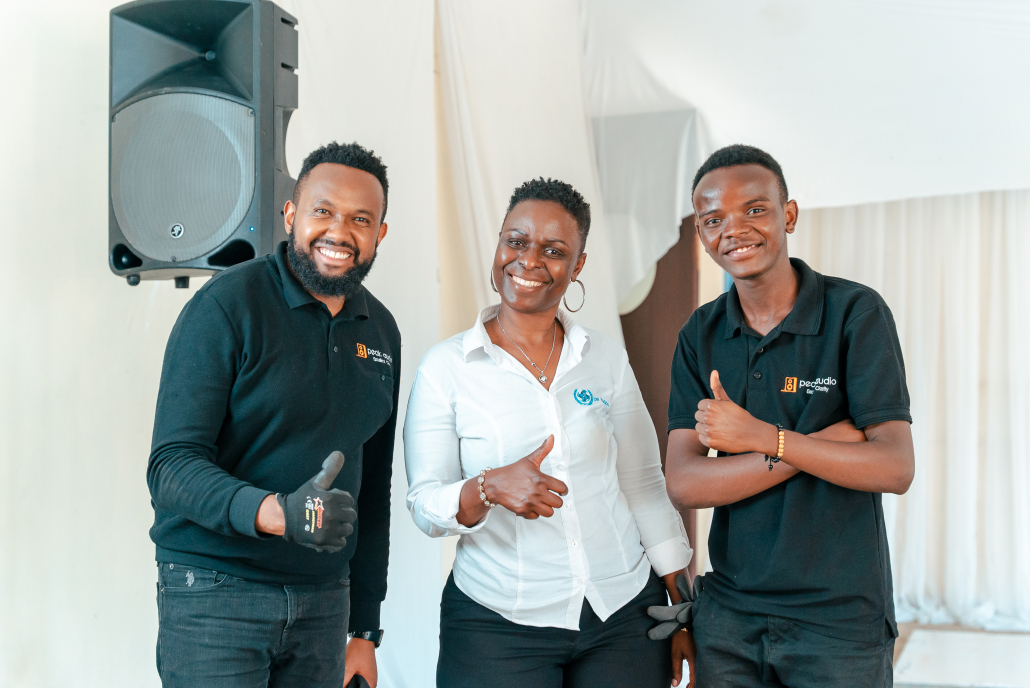
Professional Event MC and Production Services in Kenya
Professional event MC and production services in Kenya play an essential role in delivering successful, engaging, and well-coordinated corporate events. Combining experienced event hosting, effective communication, programme coordination, audience engagement, audiovisual technology, staging, lighting, and technical production helps ensure events run smoothly from opening remarks to closing sessions. Whether organizing corporate conferences, business summits, awards ceremonies, gala dinners, product launches, annual general meetings, NGO conferences, government functions, or corporate celebrations, selecting the right master of ceremonies is essential. A professional MC should demonstrate relevant event experience, strong public speaking skills, corporate etiquette, audience engagement abilities, adaptability, effective time management, and the ability to coordinate seamlessly with event organizers and technical production teams.
Successful corporate events require more than a confident and experienced MC. Professional sound systems, wireless microphones, LED screens, staging, conference lighting, livestreaming, multi-camera video production, simultaneous interpretation systems, and reliable technical backup arrangements are equally important for delivering clear communication, engaging presentations, and seamless event experiences. Organizers should prioritize detailed event planning, MC preparation, clearly defined production schedules, technical rehearsals, transparent supplier quotations, effective coordination, and reliable event-day management. Close collaboration between the MC, event planners, speakers, audiovisual technicians, and venue teams helps prevent unnecessary delays, maintain programme flow, manage unexpected changes, and deliver a professional experience for both physical and virtual audiences.
At Peak Audio, we provide professional MC support, sound systems, LED screens, staging, lighting, livestreaming, hybrid event solutions, multi-camera video production, and comprehensive technical services for corporate events in Nairobi and across Kenya and East Africa. As a trusted event hosting and audiovisual production partner, Peak Audio supports corporate organizations, conference organizers, business summit planners, NGOs, government institutions, industry associations, and professional event planners with customized event production solutions. By combining professional event hosting, experienced technical personnel, modern audiovisual equipment, and carefully coordinated production services, we help organizations deliver engaging, memorable, technically reliable, and professionally executed events that achieve their objectives and create lasting impressions.
Leave a Reply
Want to join the discussion?Feel free to contribute!